
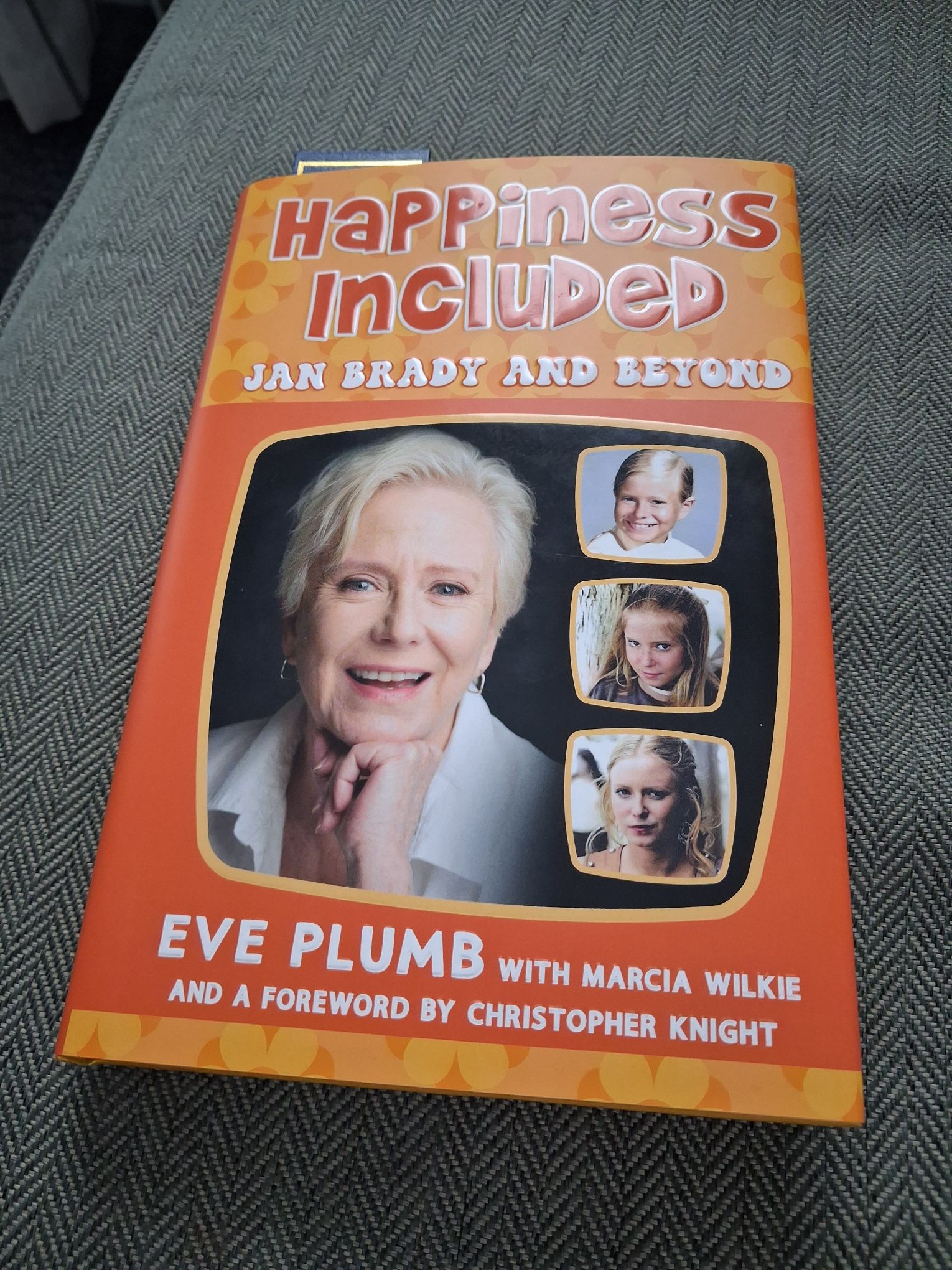
For those British children who grew up in the early to mid 70s, a select number of US shows came over to us. They included cartoons, police shows (which you might be allowed to watch on a Saturday night) and one or two family shows firmly aimed at children. For me, one programme more than any other captured my childhood imagination. It was the story of a widow with three daughters and a widower with three sons called The Brady Bunch. I haven’t seen it in perhaps 50 years, because unlike in America where it is always being shown somewhere, none of the British TV channels or DVD companies have ever seen fit to repeat it or make it available to buy, but I can still recall the theme tune and the middle daughter Jan Brady. I was about eight years old when I first saw it, too old to identify with Cindy, too young to identify with Marcia but just the right age to see the programme through Jan’s eyes. It helped that Jan was the misfit of the family as that is how I felt most of the time. So, The Brady Bunch became weekly comfort viewing with its mix of comedy and sentimentality. When I found out that Eve Plumb had written an autobiography I wanted to get it when it arrived in the UK. I did, and here’s my review.
The introduction sets out the central approach of the book with one sentence; I have no child actress horror stories to sell in this book. If you’re looking for gossip, you have definitely come to the wrong place, but if you’re looking for a fascinating account of a TV and film world that has disappeared, this book is for you. Eve is candid about her own failings and those of others where necessary, but her career as a child actress in the pre-social media days now looks like an innocent halcyon time. What makes her clear eyed view so captivating is that in those clear eyes there is an ever present twinkle. She brings you into her world as a confidante, telling you stories and making you laugh. She is everything I thought Jan would be and more.
Eve had a varied and busy career as a child actor before The Brady Bunch, using her talent, looks and most importantly her instinct for other people to keep up a good strike rate for auditions. At one stage, if you needed someone to play a young girl who was in danger or dying, she was your go to! She was professional, talented and interested in what was going on around her. For The Brady Bunch audition, it turned out that her talent was taken as read. The choice of Eve as Jan Brady was made on the basis that she was the actress in the middle child category who most resembled Florence Henderson, the actress chosen to play Carol Brady. While that was clearly good fortune, she had earnt it by her previous performances that made her popular with programme makers and known throughout the industry as a safe pair of hands.
The Brady Bunch section is the main reason why I bought the book and it is a delight. She clearly has great affection for the programme and for the people she acted alongside. Her relationships with both of her onscreen parents, Florence Henderson and Robert Reed was very similar offscreen with both of them making sure that all six children were looked after and, in the case of Reed, treated to a cruise to London on the QE2 at his expense! There was frustration at storylines, particularly for Eve Plumb herself as Jan became a kind of one girl string of issues from imaginary boyfriends and sibling jealousy to not wanting to wear glasses. However, she always gave the best performance she could even when she didn’t enjoy the scenario. She does reference the clear jealousy of other students and even some of her teachers at ‘ordinary school’ but her real irritation is reserved for the subsequent use of one line from one show taken out of context by Melanie Hutsell of Saturday Night Live and repeated ad nauseum. ‘Marcia, Marcia, Marcia’ was the catchphrase of Hutsell’s ‘Jan Brady’ and it became a bone of contention for Eve as she saw it as the resurfacing of bullying of the ten year old girl she was. Sadly, it is now on Tik Tok so this may continue to be seen far more often than the original programme.
The rest of the book deals with her professional and personal life after the show was cancelled and is just as fascinating. The ups and downs of her life continue to be dealt with using humour, occasional sadness and the benefit of hindsight. As with a number of child actresses she didn’t manage to keep up the success of her early years, but a look at IMDB shows no fewer than 74 acting credits, the majority post The Brady Bunch. Acting, however, became more of an enjoyable hobby as her ability as an artist became more of a focus. She creates home decor, along with her excellent paintings, which can be found on her website https://www.eveplumb.tv/ It is clear that she is a happy fulfilled person and that is a lovely note to end on, one that the misunderstood middle child Jan would have been very pleased with. Thank you Eve for some of the most memorable television of my childhood and for being just as lovely in real life as I always imagined Jan to be.
What’s a moment that made you question reality?
I have genuinely never had cause to question reality, and I am not sure why I would. I am sure that other responses to this prompt will explain the situation eloquently, but to me reality is the only reality of life. Only what you can see exists and anything that seems supernatural or unreal in nature is simply a phenomenon that hasn’t been adequately explained by science yet. That said I have had many occasions to question the mass of people who exist in the same reality as me!
I have almost favourite sweatshirt that my wife tolerates me wearing and which my youngest daughter hates! It was a present from my younger son and it reads ‘People Ruin Everything’! My 60 years of life experience is summarised in those three words! People exist in the same reality as me but they make decisions and form opinions that I genuinely can’t understand. Now I am by no means saying I am right in even the majority of my opinions and decisions, but I sometimes find myself utterly baffled by other people’s reactions to the same events and situations.
As we become ever more divided, we have left behind the post war consensus that created the welfare state and the brief one or two generation experiment with something approaching an egalitarian society. Yes, that egalitarian experiment wasn’t perfect, indeed it had many problems, but under leaders like Wilson, Heath and Callaghan in my early years we seemed to be moving towards a rough sort of meritocracy. That concept itself is now anathema to so many people, and our increasingly awful politicians across the world are taking advantage of this. There’s probably two or three politicians over the past twenty years or so who I believe genuinely wanted the best for everyone in society and they are all out of power having never been able to change the basis of human nature which is to hate anyone different.
Reality is completely fine, it’s human beings who ruin it!
Pip: There is something quietly audacious about sitting down with a stack of old magazines and deciding that they are, in fact, history — and David Pearce Music Reviewer has been doing exactly that.
Mara: This episode covers a series of Christmas magazine deep-dives spanning more than half a century, from a 1970 Woman’s Realm to a 2025 Woman and Home, plus a summer 1980 Radio Times souvenir issue that turns out to be its own kind of time capsule. Let’s start with what those Christmas editions reveal about the eras they came from.
Christmas Magazines as Time Capsules
Mara: The central question running through all of these pieces is what a magazine’s Christmas issue actually reflects — not just the season, but the class, the anxieties, and the assumptions of whoever was buying it at the time.
Pip: The 1996 Country Life piece sets up that question sharply, opening with a full survey of the year — Dunblane, the IRA ceasefire collapsing, Euro 96, Three Lions — before landing on the magazine itself, where the cover promises snow, sledding children, and an idealized old England. The editorial, meanwhile, argues that Winter was once a season of genuine rest, and that the switching on of Christmas lights has now superseded the first service of Advent as the start of the festive season.
Mara: That quote is worth sitting with. The 1996 Country Life editorial is making a claim that the religious and rural calendar has been displaced by a commercial, urban one — and the rest of the magazine reinforces it, from the article introducing children to traditional wooden toys over plastic alternatives, to a letters page where two correspondents actually bemoan the post-Dunblane handgun ban, accusing politicians of lacking the courage to ignore public outcry.
Pip: One of those letter writers predicts the ban will fail to prevent future massacres. He has been, as the piece notes, comprehensively proved wrong in the twenty-nine years since.
Mara: The 1986 Field Christmas Number operates in similar territory but is even more tightly targeted. The advertisements alone tell the story — Sotheby’s selling guns with a guide price of seven to eleven thousand pounds, the National Stud, Veteran Gunmakers of Spain. The editorial frames the countryside’s custodians as agents of renewal, closer to the simplicity of the Nativity than city dwellers, while also taking what is described as a handbrake turn into politics, arguing that “it is charitable to refrain from interference.”
Pip: The 2007 Country Life special is where the Christmas spirit quietly excused itself from the room. The editorial is entirely about a campaign against the EU Common Fisheries Policy.
Mara: That contrast with the 2019 Country Life is stark. The 2019 editorial returns to Christmas directly, connecting hope for the future with the hope of a newborn, and the piece on the history of Hark the Herald Angels Sing sits alongside a report on a camel farm whose residents are in high demand for Nativity plays — described as a marvellous peek behind the curtain of some very British eccentricity. The gift guide tops out at a personalized backgammon set for twelve thousand pounds, but the mince pie test finds Sainsbury’s beating Fortnum and Mason at four to six times the price.
Mara: The 1975 Illustrated London News sits at the other end of the social register from Woman’s Realm but shares its certainty. The Bishop of London’s Christmas piece, a four-page history of Frost Fairs on the Thames, and an article furiously lamenting the use of forenames over surnames — described as reading like a parody, but almost certainly received with nods of agreement — all sit alongside advertisements for Jaguar cars and Philips televisions encased in mock Georgian cabinets to disguise the vulgarity of owning one.
Pip: The 1970 Woman’s Realm is the sharpest time capsule of the set, because it is caught between two eras. The cover shows a woman in skiing gear on a mountain — aspirational, dynamic — while the recipes inside include Drunken Prunes and Black Bun, and the reader is expected to also knit the sweater before hitting the slopes.
Mara: And women in 1970 could not open their own bank accounts without a male guarantor. The magazine’s vision of independence was, as the piece puts it, at odds with a time when women wouldn’t be trusted with their own money — but change was in the air, and Woman’s Realm could sense it.
Mara: The 2025 Woman and Home brings the arc forward. Joanna Lumley is on the cover, and the front page is described as designed to be seen digitally — a blizzard of cover lines, twelve celebrity names, seven story hooks, a quote about not drinking champagne before midday. The contents page, with its short articles and skimmable sections, is described as set up like the main page of a website, where even reading it in print you find your brain defaulting to a skimming approach.
Pip: The food section is the one a 1950s reader would most recognize, though the recipes are now as much about appearance as taste. The health section starts with sex and ends with a flatter tum for Christmas — a phrase that, it is noted, the magazines of the fifties and sixties would have considered too common to print.
Mara: What the piece mourns, gently, is the loss of shared experience. Morecambe and Wise drew over twenty million viewers. The most-watched Christmas programmes now struggle to reach ten million. The magazine has become a buffet rather than a meal, and Christmas, the piece suggests, may be the last remaining shred of a shared tradition.
Pip: From Christmas issues to a summer week in 1980 — the Radio Times turns out to be its own kind of archive.
A 1980 Radio Times and What It Preserves
Pip: The Radio Times Queen Mother Souvenir Issue for August 1980 is a different kind of document — not a seasonal special but a week of ordinary summer television, which turns out to be its own revealing record.
Mara: The piece opens with the advertising, and one price comparison anchors the whole section: “Lifetime Membership for the National Trust in 1980 was £125, whilst yearly membership was a mere £7,” compared to 2430 pounds and 100 pounds 80 pence respectively in 2026 — meaning the breakeven point for lifetime membership has stretched from under eighteen years to over twenty-four.
Pip: The Fine Fare grocery ad is similarly revealing — loose Typhoo Tea at twenty and a half pence, no ready meals, no sugary cereals. The shopping list is recognizable as a cupboard staple, but the absence of convenience food marks a different kind of domestic life.
Mara: The programming survey is equally candid about what summer BBC actually looked like. Two and a half hour closedowns, Trumpton on its umpteenth repeat, an Elvis film described as perhaps the worst of the lot. The piece is honest: for every classic programme there were half a dozen ranging from forgettable to appalling, and Christmas is what we tend to remember when we talk about how good television was in the seventies and eighties.
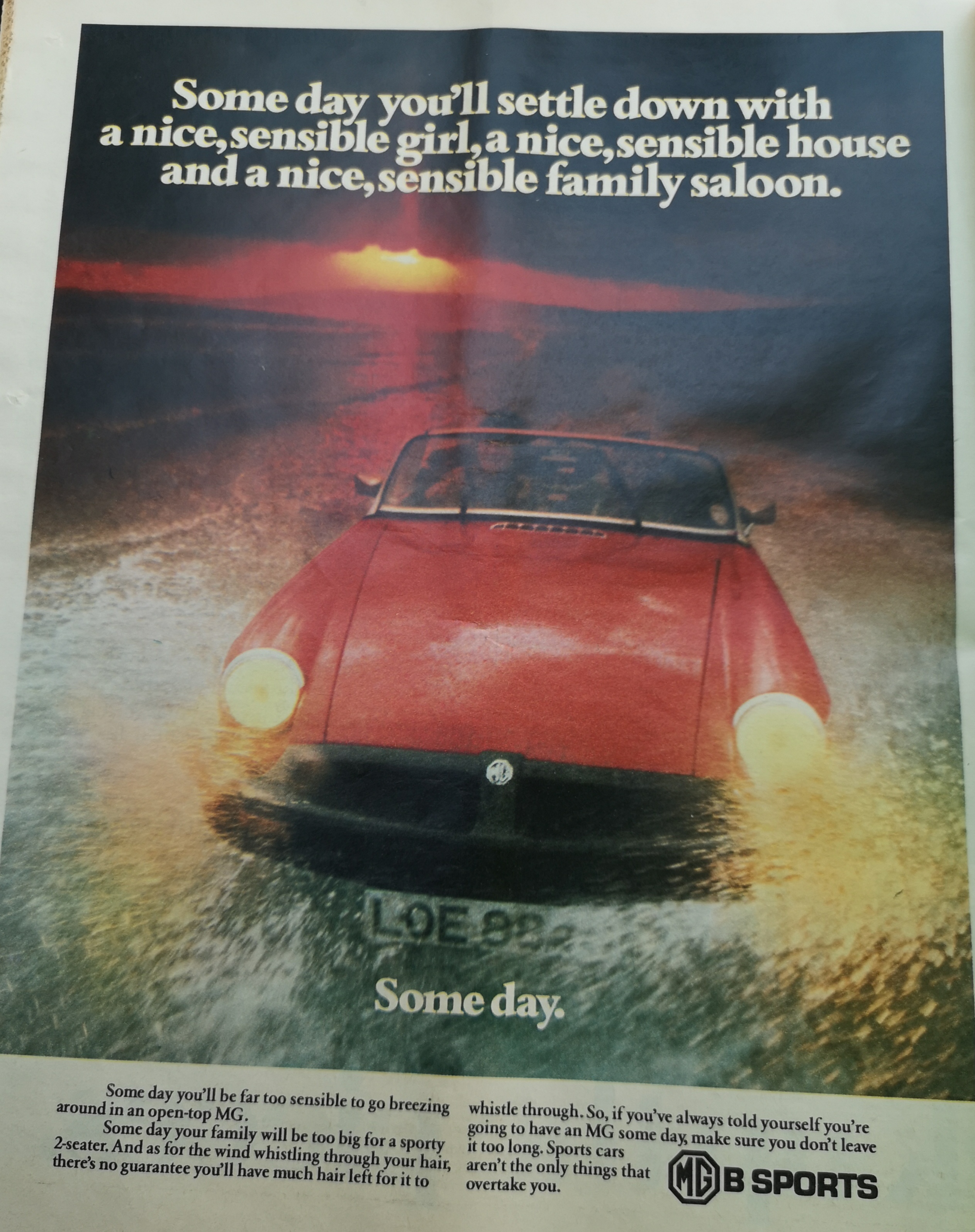
Pip: The MG car advertisement, marketed solely toward the single carefree man, sits alongside the Austin Allegro, marketed toward the family — a neat pair that captures a country that had passed the Equal Pay Act ten years earlier and was still treating independence as a male privilege.
Mara: What connects all of these pieces is the idea that a magazine’s Christmas issue or even a Radio Times issue from a summer week of programmes is never just about Christmas or television — it is a snapshot of who the reader was supposed to be or who they may aspire to be.
Pip: And whether that reader was knitting their own ski jumper in 1970 or skimming past celebrities they don’t recognize in 2025, the tension between what was and what might be is always there on the page.
What’s a movie you expected to hate but ended up loving?
I can easily recall concerts I enjoyed far more than I expected. I can think of many books that very pleasantly surprised me. I can think of songs and albums from artists I had never been impressed by which I loved. When it comes to films, however, there is very little comparable.
It reflects, I think the relative unimportance of films in my life. Yes, I have watched many, yes I have perennial favourites especially at Christmas, but I find them by and large disposable. I would not go to the cinema to see a film I expected to hate, especially nowadays, as a visit to the cinema is a very rare occurrence for me. I have probably seen, on average, one film a year on the big screen in the past decade, so you can guarantee that if I go, it’s because I know I am going to enjoy it. When I watch a film at home it is often one chosen by someone else or the result of a random choice from a streaming service. Again, I only pick films I expect to enjoy and in a significant percentage of cases I do. If I don’t I tend to give a film 10 to 15 minutes to impress before giving up on it.
For many people, films are a significant element of life, but for me they just don’t have a massive position in my entertainment universe. They are fine if I am bored but will almost certainly be the last choice for staving off that boredom.

