
What book could you read over and over again?
I have a number of books that I can happily return to, however many times I read them. In this short post I will share my top choices and briefly explain why.
A Christmas Carol – My favourite ever book and one I try to reread every Christmas. No other book encapsulates my favourite time of year better.
A Week in December – A state of the nation novel by Sebastian Faulks that seems to become more relevant every year. I read it as a precursor to my Christmas books every year and have done since it was published.
To Serve Them All My Days – A book I wrote about yesterday. It informed the type of teacher I wanted to become and, although I know every twist and turn of the story, it still makes me feel emotional and lifts my spirits.
The History Man – A satire by Malcolm Bradbury featuring Howard Kirk, a self serving and unpleasant sociology professor who demands personal loyalty from all around him whilst showing none himself. I first read this during my A Level English and my viewpoint about the characters changes at each stage of my life.
The Chronicles of Narnia – Mainly, it must be said, the first two, The Magician’s Nephew and The Lion The Witch and The Wardrobe. They are marvellous comfort reads that take me right back to my childhood and I can’t wait to see the new Greta Gerwig film later this year.
Merry Christmas Sleepover Club – This was a book I read to my children every year and it holds precious memories of the joy of sharing books. I have my own copy now and I read it every year to remind me of some of my favourite times of being a parent.
Happy rereading everyone!
A true story from this morning in verse form. Thank you to all the artists mentioned for making me feel better.
Waking up this morning
A bad mood hung about
For everything annoyed me
I was truly wrong side out

I was anxious, I was angry
And frustrated with my mind
What could I do to change things?
What might help me unwind?

I did some music challenges
I just went through the motions
Then the songs began to work
Upon my mood like lotions

It started with Marc Almond
Then Welsh firebrands The Alarm
Then Toni Basil Ringo Starr
Those songs worked like a charm

I rediscovered Karmaa
With her passion and her power
Then I shifted on to Cats in Space
My good mood starts to flower

There's magic in the music
It works upon your mind
It had its usual impact
I had left my mood behind

The next time you are feeling low
And you want an end to gloom
Give music therapy a go
You'll see your good mood bloom
If you could be a character from a book or film, who would you be? Why?
One of my favourite books is To Serve Them All My Days by R. F. Delderfield. It is about a young man called David Powlett-Jones from a small mining community in Wales. After being injured in the First World War he is offered a post at a small public school in Devon called Bamfylde. The novel then follows his life over the next twenty years or so through happiness, tragedy, triumph and disaster. It is an incredible piece of writing that I first found as a teenager. It was the first long novel I ever read and I was completely lost in it for days on end. When I had read it for the first time I thought, quite hypothetically, that if I ever became a teacher I wanted to be like him, charismatic, caring, humorous and wise. At that point I had no hope of becoming a teacher. I was struggling at school with the bullying of 90% of the students and at least half of the teachers, and the last thing I wanted to do was go back to that as a career.
Well, life has a funny way of working out and I ended up back in the classroom but at the front of the class. I tried to model myself on David Powlett-Jones with all of his positive qualities and his chatty style in class. Real life being what it is, I fell a long way short, but I am certain that I became a better teacher because of that book and that character. So, not only did I want to become a character in a book, to all intents and purposes I did.
What animals make the best/worst pets?
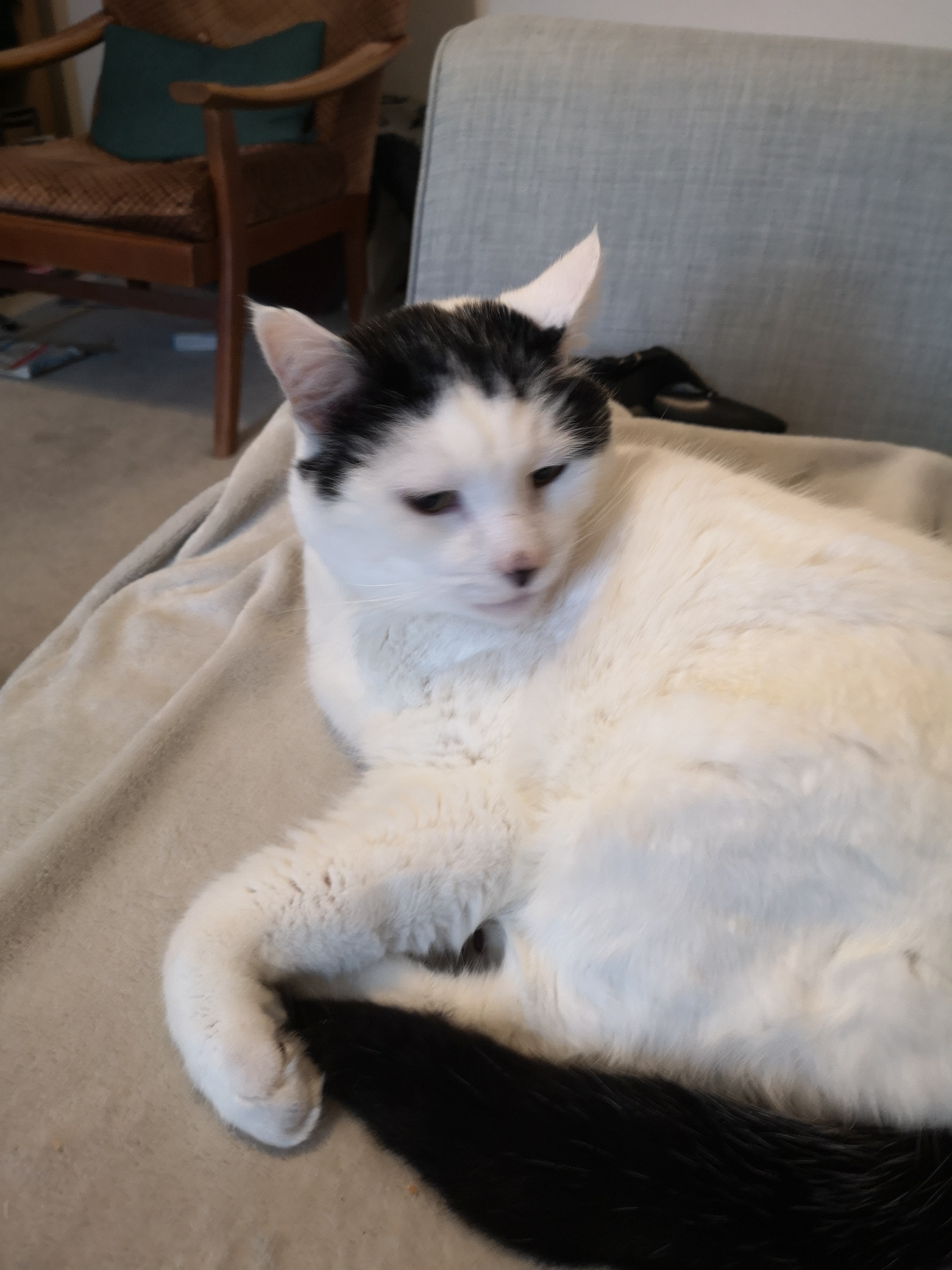
No animal in and of itself makes a good pet or a bad pet. It’s down to how you treat them. If you are affectionate they will be affectionate, if you are withdrawn they will be withdrawn, if you are aggressive they will be aggressive. Our cat Albus is treated with love, affection and as a fully fledged member of the family. He responds in kind. When people say that cats are indifferent, what they are really saying is that they are indifferent to the cat. When the animal in your household feels like a true part of that household, they will treat you as family and the house as their safe place. Whatever pet you have, be it cat, dog, fish, snake or tarantula, it will be the best pet if you treat it with love and care and it will be the worst pet if you don’t. If you are not going to make your pets absolutely central to your life then don’t get any because you don’t deserve them and they deserve a house and family that will open their hearts freely. A pet is not an accessory or an optional extra, it is a living, breathing, feeling creature that must have a nurturing and loving house. I think everyone who wants a pet should be inspected first and asked questions about the relationship they intend to have with their fellow animal – remember that humans are animals too, not some unique divinely inspired creation – and if they don’t answer those questions satisfactorily they should not be allowed to have a pet.
What job would you do for free?
After 35 years of being paid for teaching, I suppose it was inevitable that when I had time to volunteer, my chosen field would be very similar. Currently I have two volunteer positions that I have gone through the application process for and they are both related to the skills I have developed and honed over three decades at the chalk face! I will be starting with a school in the summer term as a reading helper. It is arranged through a charity called Coram Beanstalk who train you in preparation for volunteering in a local school. I will be working one to one with the same students every week for a minimum of a year. The first thing we were told at our first training session was that we were not there to teach the children to read. We are there to give them confidence and encouragement to make reading a positive part of their lives. Yes, there will be the use of teaching ideas and strategies that I have used so many times before, but there are no exams at the end of the year so I can concentrate on the children learning through enjoyment.
The other volunteer position I have taken up is with a website called Write the World. It runs competitions for 13 to 19 year olds across all styles of writing. My job at the moment is to shortlist pieces of writing that then go through to expert judges. The first piece of shortlisting I did was to assess screenwriting. Well, that was a steep learning curve I can tell you. I had never written or read anything in that format before, but I know what is good across a number of different writing disciplines so after a while I was able to look at whether the story being told was one that drew me in and then to look at the specific elements of screenwriting to see how they met the rules of the format. In a few months I hope to move onto reviewing which is a form of the feedback that I enjoyed so much as a teacher when I saw it come to fruition. Now, with this site there are prizes but the focus is on improving writing so once again I can concentrate on developing the students rather than preparing them for exams.
So, teaching turns out to be a job I would do for free! Would I have done it for free in the previous 35 years? You must be joking!!
 David Pearce - Popular Culture and Personal Passions