
Podcast Version: Unveiling the Story Behind Christmas Magazines
Pip: There is something quietly audacious about sitting down with a stack of old magazines and deciding that they are, in fact, history — and David Pearce Music Reviewer has been doing exactly that.
Mara: This episode covers a series of Christmas magazine deep-dives spanning more than half a century, from a 1970 Woman’s Realm to a 2025 Woman and Home, plus a summer 1980 Radio Times souvenir issue that turns out to be its own kind of time capsule. Let’s start with what those Christmas editions reveal about the eras they came from.
Christmas Magazines as Time Capsules
Mara: The central question running through all of these pieces is what a magazine’s Christmas issue actually reflects — not just the season, but the class, the anxieties, and the assumptions of whoever was buying it at the time.
Pip: The 1996 Country Life piece sets up that question sharply, opening with a full survey of the year — Dunblane, the IRA ceasefire collapsing, Euro 96, Three Lions — before landing on the magazine itself, where the cover promises snow, sledding children, and an idealized old England. The editorial, meanwhile, argues that Winter was once a season of genuine rest, and that the switching on of Christmas lights has now superseded the first service of Advent as the start of the festive season.
Mara: That quote is worth sitting with. The 1996 Country Life editorial is making a claim that the religious and rural calendar has been displaced by a commercial, urban one — and the rest of the magazine reinforces it, from the article introducing children to traditional wooden toys over plastic alternatives, to a letters page where two correspondents actually bemoan the post-Dunblane handgun ban, accusing politicians of lacking the courage to ignore public outcry.
Pip: One of those letter writers predicts the ban will fail to prevent future massacres. He has been, as the piece notes, comprehensively proved wrong in the twenty-nine years since.
Mara: The 1986 Field Christmas Number operates in similar territory but is even more tightly targeted. The advertisements alone tell the story — Sotheby’s selling guns with a guide price of seven to eleven thousand pounds, the National Stud, Veteran Gunmakers of Spain. The editorial frames the countryside’s custodians as agents of renewal, closer to the simplicity of the Nativity than city dwellers, while also taking what is described as a handbrake turn into politics, arguing that “it is charitable to refrain from interference.”
Pip: The 2007 Country Life special is where the Christmas spirit quietly excused itself from the room. The editorial is entirely about a campaign against the EU Common Fisheries Policy.
Mara: That contrast with the 2019 Country Life is stark. The 2019 editorial returns to Christmas directly, connecting hope for the future with the hope of a newborn, and the piece on the history of Hark the Herald Angels Sing sits alongside a report on a camel farm whose residents are in high demand for Nativity plays — described as a marvellous peek behind the curtain of some very British eccentricity. The gift guide tops out at a personalized backgammon set for twelve thousand pounds, but the mince pie test finds Sainsbury’s beating Fortnum and Mason at four to six times the price.
Mara: The 1975 Illustrated London News sits at the other end of the social register from Woman’s Realm but shares its certainty. The Bishop of London’s Christmas piece, a four-page history of Frost Fairs on the Thames, and an article furiously lamenting the use of forenames over surnames — described as reading like a parody, but almost certainly received with nods of agreement — all sit alongside advertisements for Jaguar cars and Philips televisions encased in mock Georgian cabinets to disguise the vulgarity of owning one.
Pip: The 1970 Woman’s Realm is the sharpest time capsule of the set, because it is caught between two eras. The cover shows a woman in skiing gear on a mountain — aspirational, dynamic — while the recipes inside include Drunken Prunes and Black Bun, and the reader is expected to also knit the sweater before hitting the slopes.
Mara: And women in 1970 could not open their own bank accounts without a male guarantor. The magazine’s vision of independence was, as the piece puts it, at odds with a time when women wouldn’t be trusted with their own money — but change was in the air, and Woman’s Realm could sense it.
Mara: The 2025 Woman and Home brings the arc forward. Joanna Lumley is on the cover, and the front page is described as designed to be seen digitally — a blizzard of cover lines, twelve celebrity names, seven story hooks, a quote about not drinking champagne before midday. The contents page, with its short articles and skimmable sections, is described as set up like the main page of a website, where even reading it in print you find your brain defaulting to a skimming approach.
Pip: The food section is the one a 1950s reader would most recognize, though the recipes are now as much about appearance as taste. The health section starts with sex and ends with a flatter tum for Christmas — a phrase that, it is noted, the magazines of the fifties and sixties would have considered too common to print.
Mara: What the piece mourns, gently, is the loss of shared experience. Morecambe and Wise drew over twenty million viewers. The most-watched Christmas programmes now struggle to reach ten million. The magazine has become a buffet rather than a meal, and Christmas, the piece suggests, may be the last remaining shred of a shared tradition.
Pip: From Christmas issues to a summer week in 1980 — the Radio Times turns out to be its own kind of archive.
A 1980 Radio Times and What It Preserves
Pip: The Radio Times Queen Mother Souvenir Issue for August 1980 is a different kind of document — not a seasonal special but a week of ordinary summer television, which turns out to be its own revealing record.
Mara: The piece opens with the advertising, and one price comparison anchors the whole section: “Lifetime Membership for the National Trust in 1980 was £125, whilst yearly membership was a mere £7,” compared to 2430 pounds and 100 pounds 80 pence respectively in 2026 — meaning the breakeven point for lifetime membership has stretched from under eighteen years to over twenty-four.
Pip: The Fine Fare grocery ad is similarly revealing — loose Typhoo Tea at twenty and a half pence, no ready meals, no sugary cereals. The shopping list is recognizable as a cupboard staple, but the absence of convenience food marks a different kind of domestic life.
Mara: The programming survey is equally candid about what summer BBC actually looked like. Two and a half hour closedowns, Trumpton on its umpteenth repeat, an Elvis film described as perhaps the worst of the lot. The piece is honest: for every classic programme there were half a dozen ranging from forgettable to appalling, and Christmas is what we tend to remember when we talk about how good television was in the seventies and eighties.
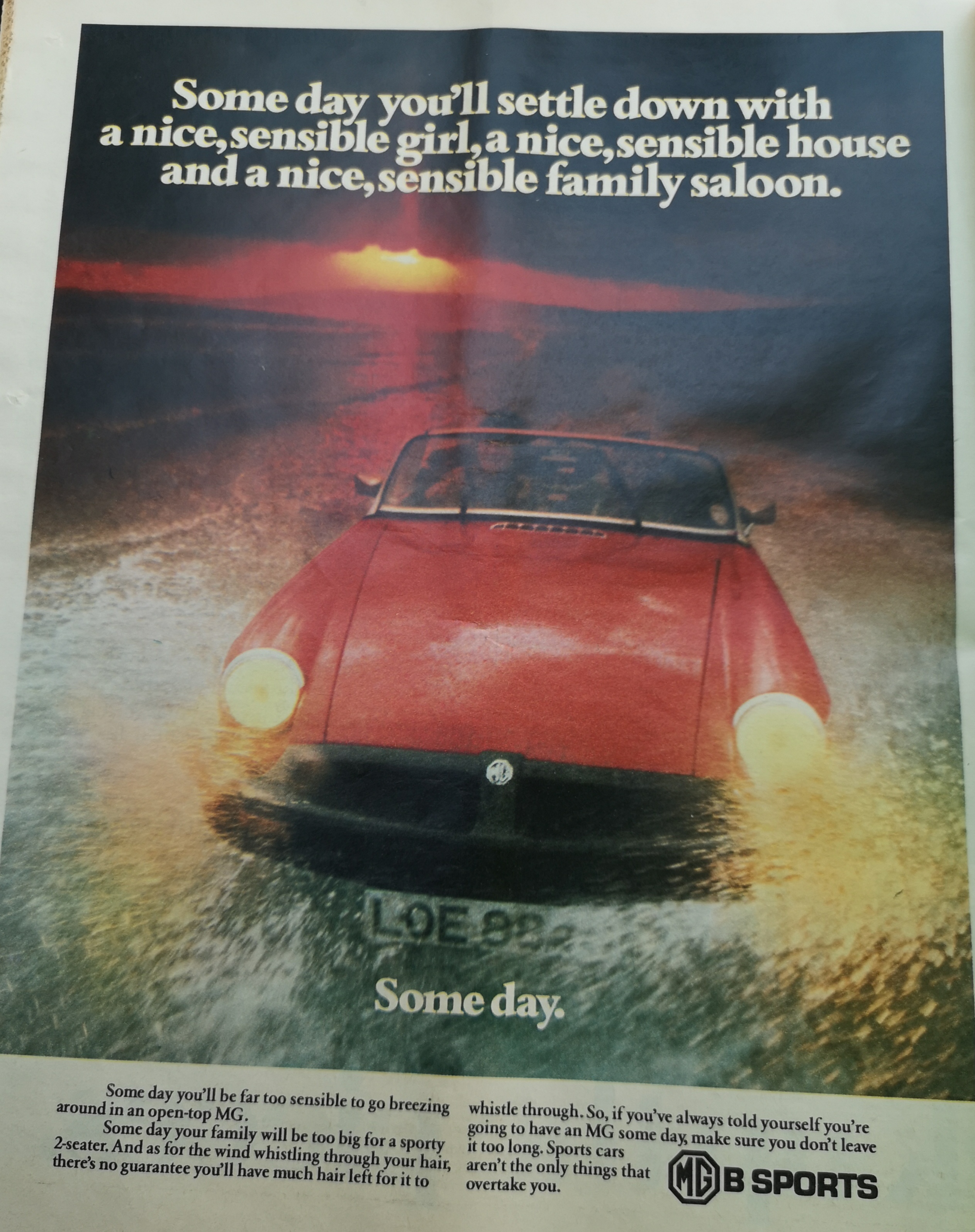
Pip: The MG car advertisement, marketed solely toward the single carefree man, sits alongside the Austin Allegro, marketed toward the family — a neat pair that captures a country that had passed the Equal Pay Act ten years earlier and was still treating independence as a male privilege.
Mara: What connects all of these pieces is the idea that a magazine’s Christmas issue or even a Radio Times issue from a summer week of programmes is never just about Christmas or television — it is a snapshot of who the reader was supposed to be or who they may aspire to be.
Pip: And whether that reader was knitting their own ski jumper in 1970 or skimming past celebrities they don’t recognize in 2025, the tension between what was and what might be is always there on the page.
Discover more from David Pearce - Popular Culture and Personal Passions
Subscribe to get the latest posts sent to your email.


Great way of doing it with the AI, but I prefer your own voice. Would be interested to know what you used?
LikeLiked by 1 person
It was a beta test so it was a AI generated voice. However, having seen and heard it I have a good idea of how to do it for myself so the next one will be me!
LikeLiked by 1 person