
What is the meaning of life?
Over the years I have come to believe that there is no higher power, no higher purpose, no higher meaning governing everything. We are no more than specifically gifted simians who have evolved over millions of years. The religious texts were written in a period of human history when the science of evolution was not understood so it is little surprise that the whole process was ascribed to a higher power. In the modern world there is very little evidence to support the religious view of divine creation so I have accepted for myself that it didn’t happen. I know very many people will disagree, but that is part of life especially these days on social media!
Once that is decided then it clearly follows that any meaning to life comes from the meaning you give to it. My meaning comes from my family unit. Everything that gives my life purpose arises from my wife and children. Yes, my profession gave me purpose and meaning to my life, and to some extent still does, but it would mean nothing in and of itself if I was on my own.
What’s a word or phrase that annoys you?
I have always detested management speak since it first raised it’s ugly head. It is used by those with little of any use to say and less still to contribute. A sort of code where those of limited ability come together to make themselves seem important whilst doing nothing for those who they supposedly lead. When you look at modern management you see those with great self promotion abilities overshadowing their lack of actual abilities. The words they use are often meant to be deceptive and to disguise a lack of progress. I will pick the two phrases I hate the most but they are simply two examples of an impoverished language used by impoverished people.
Going Forward – absolute nonsense! In the context in which it is used, it means in the future, but I am sure it makes the users of this useless phrase feel like they are dynamic in some way. They aren’t! The people who use phrases like ‘In the future’ or ‘From now on’ have far more of practical use to contribute. They are, in essence, old school managers who are more interested in those they lead rather than those they are joining on the top table. At an interview, those who look at the ‘big picture’ and parrot the correct phrases are far more likely to get the job than those who focus on their much more significant role of helping those they lead achieve their potential.
Cascade – as in ‘please cascade this information to your staff’, is another abomination that does not exist outside of self important types who are only interested in their own position. What’s wrong with ‘Can you let the staff know?’ As far as I can see, there is nothing wrong with it. As with going forward, cascade provides the illusion of movement and urgency and gives the user a spurious impression of actually achieving something. I remember shocking a member of an inspection team when he asked us to cascade the results of a meeting to our teams if we had supervisory duties. I replied that I would never cascade anything but that I was quite happy to write an email letting them know what happened!
I really dislike language that is designed to protect those that use it and to mislead, perhaps in both senses of the word, those who they are responsible for. Management Speak is guilty on both counts and is the symptom of the disease of increasingly poor, and occasionally nasty, management that we have seen spread across the world into every sector like a plague over the past 25 years or so. When I first started working, all of our management team had worked their way up through the organisation and were respected for their knowledge and their experience. I was a very poor insurance clerk in my first job, despite their attempts to guide me, but before I left a couple of them gave me advice and encouragement even though I had been there less than a year. When I finished full time work after over seven years of excellent work for my final employer, my office manager never said thank you to me as a person or asked me what I was doing next. She presented me with a pointless trophy and an insincere public thank you to make herself look good, having not said a single word to me for the duration of my three month notice. That encapsulates modern managers as does their language of self importance and obfuscation.
How do you plan the perfect road trip?
I am not a fan of road trips at all,so by definition there cannot be a perfect road trip. The driving on our increasingly crowded roads gets worse and more aggressive by the year and the whole process is something to be endured not enjoyed. We are in a very nice holiday park just outside Chichester at the moment and that is our base for day trips. This to me is a much more enjoyable approach to a holiday than a road trip.
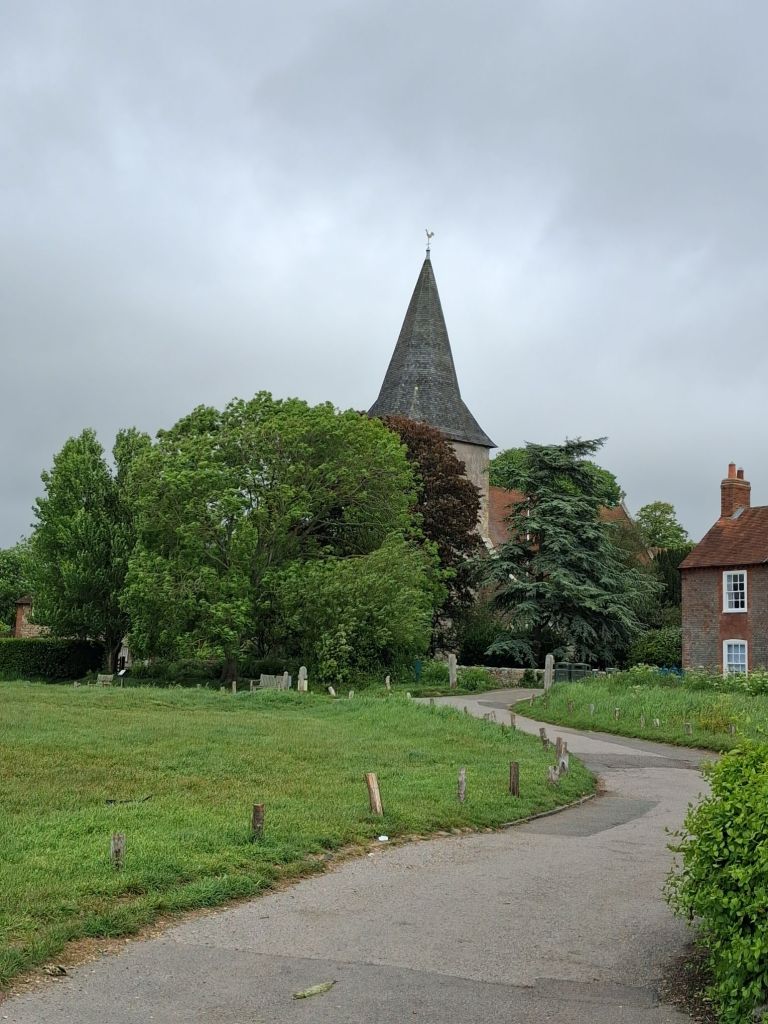
We have been into Chichester twice, and yesterday we went to Fishbourne Roman Palace, Bosham which has a church that is featured in the Bayeux Tapestry and West Wittering where we spent an hour or so in the very brisk winds of a British late spring. After that it was back to our static caravan at the holiday park where I made dinner. That’s the perfect holiday day for me, sightseeing and then returning to a place where you can sit back and relax in, rather than going to a new place and unpacking the clothes you packed up that morning. By staying in one place we have been able to buy food for the week, thereby significantly reducing our costs. It is a far more relaxed holiday lifestyle and gives us the opportunity and freedom to explore an area.
If road trips are your thing, good luck to you but I am staying put because they are simply the triumph of hope over experience!
What’s a moment that made you realize you were stronger than you thought?
I don’t think I can pick one moment because most times the moments when you show strength are only obvious in retrospect. Over my life I have faced a number of challenges and I have either overcome them or learnt from them. That’s what life is all about. You never stop learning, often through setbacks and bad experiences, and you never face the same experience twice because if the situation repeats itself you are a different person and you sometimes approach the solution from a completely different angle. To look back and say that a particular event was the time you realised anything is just imposing a narrative after the event. The narrative may bear some relation to real life as it was but not to the extent that you think. Memory is a very fluid process and we choose what we remember, how we remember it and what lessons we decide to take from it, if any. Rather than looking for a specific incident or moment I am content to accept that I have grown, shown courage in some areas, though definitely not in others, and done the best I can. Anything else is just revisionism for the sake of it.
What’s a simple pleasure in life that brings you joy?
I have almost aways been the first person to get up in my house, at least since I finished uni. The first half hour or more of being on my own is the time I ease myself into the day. I often read or put together these posts. On holiday, as I am now, the early starts give me a lot of time just to relax into myself and my surroundings.
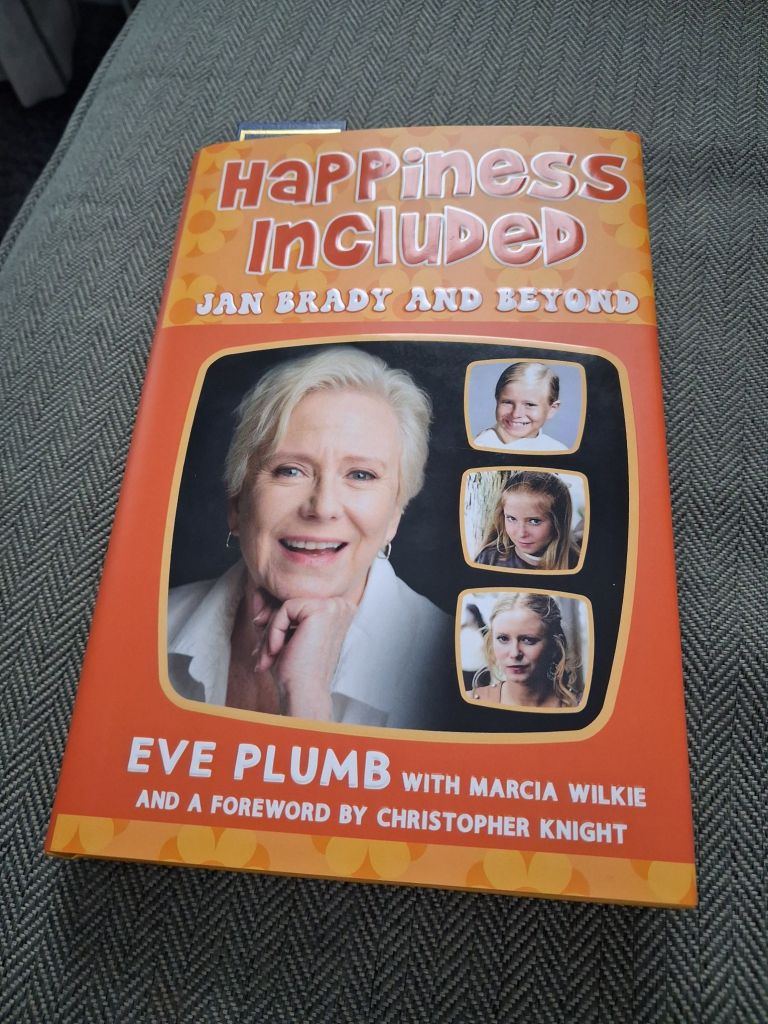
This morning I got up just before 6.30 and came out to the lounge and kitchen area of the static caravan we are staying in. I made myself a cup of tea and settled down to read my new book, bought especially for the holiday, by Eve Plumb called Happiness Included Jan Brady and Beyond. I used to be a huge Brady Bunch fan as a kid and Jan was my favourite character. It’s a lovely trip down memory lane and the perfect book to start the day with. I have just made myself a second cup of tea and I will return to the book after I have posted this. When Janet is awake I will make her a coffee and, after some yoga, do her some breakfast. I can’t have breakfast until I have been awake for at least a couple of hours as my stomach tends to feel very heavy if I do.
Some mornings are of course much more intense but that makes the quiet mornings much more appreciated. As Eve Plumb says Happiness Included!

