
What do you love now, that you hated when you were younger?
When I was younger, the type of food I ate was, quite naturally, dictated by what was dished up. As with every other child at the time I was given two options every meal time, take it or leave it! It still baffles me to see these families on TV who are cooking 5 different meals for 5 family members, all of whom seem to have a combination of allergies or particular foods they won’t eat, but I digress!
One thing I hated when I was younger was curry, but that was based on just one meal I had when I was a kid. It was too spicy for me at the time because we didn’t have spicy food at home or when we went out to eat on the odd occasion that happened. I absolutely love it now. Until I started cooking for myself or buying my own food in restaurants or pubs I never discovered any type of spice in my diet, but you have to remember that this was extremely common in British homes at the time. Macaroni Cheese came out of tins and Vesta Curry was the nearest thing to exoticism on the table!
Actually it’s generally been the other way. Our food included lots of things that I have never touched since. My Dad came from the East End of London and he left most of that childhood behind as he reinvented himself. One thing that remained constant was his regular meals with roast and vegetables every Sunday without fail unless we were away on Scouting weekends. Avoiding the Sunday roast which I had grown to dislike over the years was a big reason I looked forward to camping at the time! The other things that made semi-regular appearances on our plates was liver and onions 🤢 which I detested but ate, because the reaction to me wasting it was even worse than the meal itself. I also disliked sweet and savoury together in any form and I dragged myself through gammon and pineapple whenever it appeared. The combination of sweet and savoury is something I will always hate. As far as I and my taste buds are concerned they must always make up different parts of the meal. As I am in charge of cooking that has remained an unbreakable rule for over 40 years! No point trying to convince me that they can be complementary, because it’s never going to happen!
What’s a time you followed your gut and it turned out to be exactly right?
I wonder how much we really follow our ‘gut’ or as I think it should be more properly called, instinct. There are probably very few times on big decisions that we allow the, arguably, more primitive version of ourselves to take charge. I say arguably because I see the gut as being the way that the average person removes all the outside noise from the situation and reduces it to the basics. That process tends to go on behind the scenes until the conscious brain starts to catch up and then adds in it’s own ‘two pennorth’. The change to the decisions the gut might make is probably more to do with tinkering rather than wholesale overhauling.
The only times we might entirely go with our gut is when we have to make a life or death decision and the necessity for that is far less common than perhaps it once was. Also, it might happen if we see something happening that requires an instant response, such as a medical emergency.
I may feel that I went with my gut on many occasions but I think it’s more likely that I went with a mediated version of my gut. As someone who is not an expert I am only giving my own view backed by a small amount of reading but I really don’t think I am far off.
Emperor Palpatine has announced open elections for a new Emperor — and he’s nominated Darth Vader. You get to nominate one challenger.
This is a prompt that I would have been all over back in 1980. Nowadays, I have no interest in Star Wars anymore. I watched the original film half a dozen times in the cinema, I saw The Empire Strikes Back in Leicester Square as a birthday treat and was as shocked as everyone else when I found out the true connection between Luke and Darth Vader. The third film, Return of the Jedi was something of a disappointment but I only found that out a couple of years later on video. The original run in the cinema was during my A levels so it pretty much passed me by and I wasn’t too fussed afterwards because I was searching for my first job. That may have had an impact on the way I reacted to it.
I took my sons to Phantom Menace when it came out and I was really looking forward to it. I came out of the cinema over two hours later so disappointed by how bad the film was that I vowed never to watch another moment of any Star Wars film and I never have. So, in many ways, my love for the franchise ended in 1980, but then again I just saw it as a few connected films like Bond or Carry On, not a way of life. For that reason I will let Vader take over because I don’t care about the fate of that galaxy far far away!
Lola Young and Annabelle Dinda O2 Brixton Academy June 18 2026
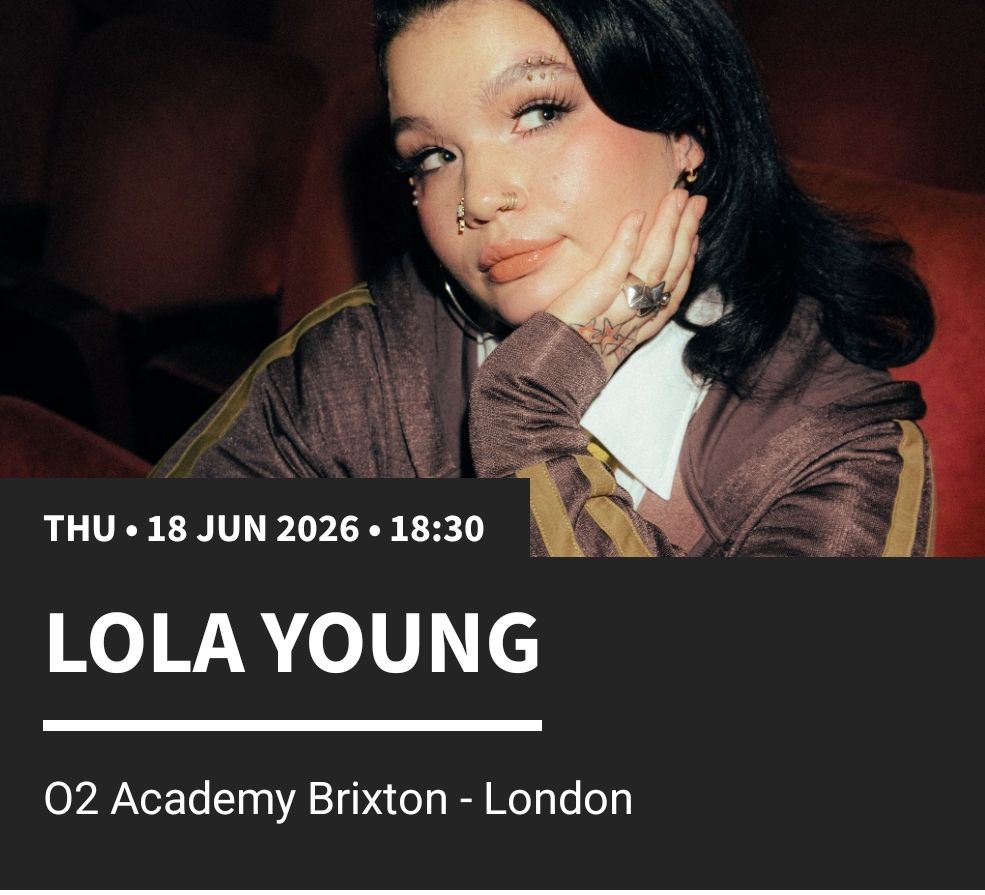
The return of Lola Young was an eagerly awaited event and my daughter was over the moon when I managed to secure tickets after refreshing numerous times! I really enjoyed her music because of the humour and the determination to be authentically herself. She is perhaps the most individual of today’s singers, marching to the beat of her own drum and no one else’s. So, would she command the stage the way she commands the zeitgeist?
Before Lola herself took to the stage, it was the opportunity for Annabelle Dinda to make an impact and some new fans. She is an American singer songwriter who I immediately took to when she bounced onto the stage. An absolute ball of energy, you couldn’t help but be impressed with her. Dinda has one of the sunniest and most appealing stage personas I have ever seen. Her bubbly enthusiasm was genuine and completely contagious. That would have been enough to make her a good support act, but what made her one of the best support acts I’ve ever seen was the quality of her songs and the quality of her voice. There were two standout songs, in a high quality six song set, The Hand and Whatever You Wanna. The Hand takes a wry look at a patriarchal world which foregrounds men whatever they do and pushes women into the shadows. Whatever You Wanna is, by contrast, a song revelling in the excitement of a new relationship. It’s funny, catchy and totally irresistible especially live, where Dinda’s band lifted it to the level of an anthem. Her voice swooped and soared, with a style all her own. However, I heard echoes of Siouxsie Sioux and Kate Bush as well as hints of Joni Mitchell. For such a young artist she has such a range and she has a huge future as well. By the end of her set, the entire audience was enjoying her songs and I am sure I am not the only fan she won last week. If I get another chance to see her I will take it, and I absolutely recommend that you do the same.
When Lola Young appeared on stage the entire audience rose to applaud before she had even sung a note. She was obviously moved and later mentioned that she wasn’t sure whether anyone would buy tickets to see her after her enforced hiatus. Well, the audience didn’t agree with that at all, having gone all out to get the precious seats on Ticketmaster and they were totally behind her from the very first song.
Young started as she meant to go on with three superb songs from her latest album ‘I’m only F***ing Myself’ which is, in my view a modern masterpiece. It won’t be a surprise to anyone who has heard the album that SAD SOB STORY! 🙂 and d£aler had the audience singing backing vocals as they were to do throughout. In fact I have heard very few crowds as word perfect as this one. Over three quarters of the audience around me were singing every song for the entire night. The third song One Thing just confirmed how much her fans have taken the album to their hearts. Conceited and Big Brown Eyes from the album This Wasn’t Meant for You Anyway were a reminder of how good that whole album was.
The next two songs were an impromptu decision by Young to take a turn at the keyboard and she played it superbly, but that’s not what really struck me. It was the quality of the vocals on the ballad Bad Game 3am. I have been going to concerts since I was 13, which is more years ago than I like to admit (!) and this song confirmed what I had thought from the beginning of the set, that her voice is in the top 3 of any I have ever heard live. I genuinely can’t explain how awestruck I was by her voice all night across a huge range of songs, but this and SPIDERS, a spine tingling and unsettling song from her latest album, were up with anything I had ever experienced. Before SPIDERS there were three great songs, Walk On By, not a cover of the 60s classic, but her own song, and two more from the current album, why do I feel better when I hurt you and Post Sex Clarity. Young’s lyrics are very funny at times, deeply upsetting at others, confronting and uncompromising throughout and in songs like these, almost painful in their rawness.
The final song prior to the inevitable encore is my absolute favourite of hers. The funny and defiant Not Like That Anymore is one of the best songs of the last few years, and live it turned into the biggest singalong of the night for me as I had been listening to it on repeat that afternoon! It’s irresistibly catchy and as good as it gets. The finale was, of course, Messy, the song that announced her on the music scene across the world. There are only a few songs which break through and become familiar to just about everyone and Messy is one of them, but live it just hits new heights as the audience belts out every word and reaches the heights of ecstasy in the chorus.
Before I came to this gig I thought Lola Young was one of the best artists of the 2020s. After the gig I came to the conclusion that she is actually a generational talent who can compare to just about any of the great performers who you might care to mention. If anyone tells you that music isn’t any good anymore, they clearly haven’t heard London’s finest singer.
What’s something you used to believe as a kid that seems ridiculous now?
As children we are told many stories by our parents and other adults. Some of them we believed for longer than others, but all of them had an important role in our lives. By believing in Santa Claus and the Tooth Fairy we understood that we were in a world where things were ordered and looked after and that there was an element of certainty.
There was a lot of upheaval in my early life. By the time I was 11 I had lived in four different countries and had had around 10 different addresses. It was true that financially we were comfortable but when you go to four different schools in your first four years of primary education it becomes very unsettling. I have written at some length about my primary school experience before, but the effect of all that moving was to make belief a very important part of my younger life. That may explain the fact that I was still waiting for Santa Claus to arrive the Christmas after I started Secondary school. Let’s face it, after finding out how bad pretty much everyone was in that school I needed something to look forward to.
Terry Pratchett explores the nature of belief in one of his finest books, The Hogfather. He reflects upon the reasons for it in one of the best exchanges in any book, between Death and Susan, who is Death’s granddaughter.
“All right,” said Susan. “I’m not stupid. You’re saying humans need… fantasies to make life bearable.”
REALLY? AS IF IT WAS SOME KIND OF PINK PILL? NO. HUMANS NEED FANTASY TO BE HUMAN. TO BE THE PLACE WHERE THE FALLING ANGEL MEETS THE RISING APE.
“Tooth fairies? Hogfathers? Little—”
YES. AS PRACTICE. YOU HAVE TO START OUT LEARNING TO BELIEVE THE LITTLE LIES.
“So we can believe the big ones?”
YES. JUSTICE. MERCY. DUTY. THAT SORT OF THING.
“They’re not the same at all!”
YOU THINK SO? THEN TAKE THE UNIVERSE AND GRIND IT DOWN TO THE FINEST POWDER AND SIEVE IT THROUGH THE FINEST SIEVE AND THEN SHOW ME ONE ATOM OF JUSTICE, ONE MOLECULE OF MERCY. AND YET—Death waved a hand. AND YET YOU ACT AS IF THERE IS SOME IDEAL ORDER IN THE WORLD, AS IF THERE IS SOME…SOME RIGHTNESS IN THE UNIVERSE BY WHICH IT MAY BE JUDGED.
“Yes, but people have got to believe that, or what’s the point—”
MY POINT EXACTLY.”
― Terry Pratchett
As this brilliant piece of writing makes clear, nothing you believe in childhood is ridiculous, because it’s an integral part of the process of growing up and understanding yourself and your place in the world. If you have a childhood without these beliefs you are being cheated of an innate need. So, embrace your childhood beliefs and help other children embrace theirs, especially Santa Claus who is of course absolutely real!

