
Use AI Effectively
What’s the best advice you’d give to someone younger than you?
We are in a situation where the debate around AI has become polarised and where it’s been demonised by people in education and beyond. Well, it’s here, it’s not going anywhere, and indeed it will just carry on getting more advanced, so younger people need to work out how to use it properly.
What do I mean by properly? Well, to an education professional it means to use AI to help you and scaffold your learning but to do the hard work of thinking and writing yourself. Use it to brainstorm ideas on ChatGPT, use it to ask questions of the articles that may or may not be useful to you on ChatPDF. Learning how to craft effective prompts is central to using AI and it’s a skill that must be taught in schools from the early stages. I am still learning how to craft prompts myself, and will continue to learn as I get more experience with AI. Younger people should never stop learning about AI and, indeed, any other aspects of life and education that they are inspired by.
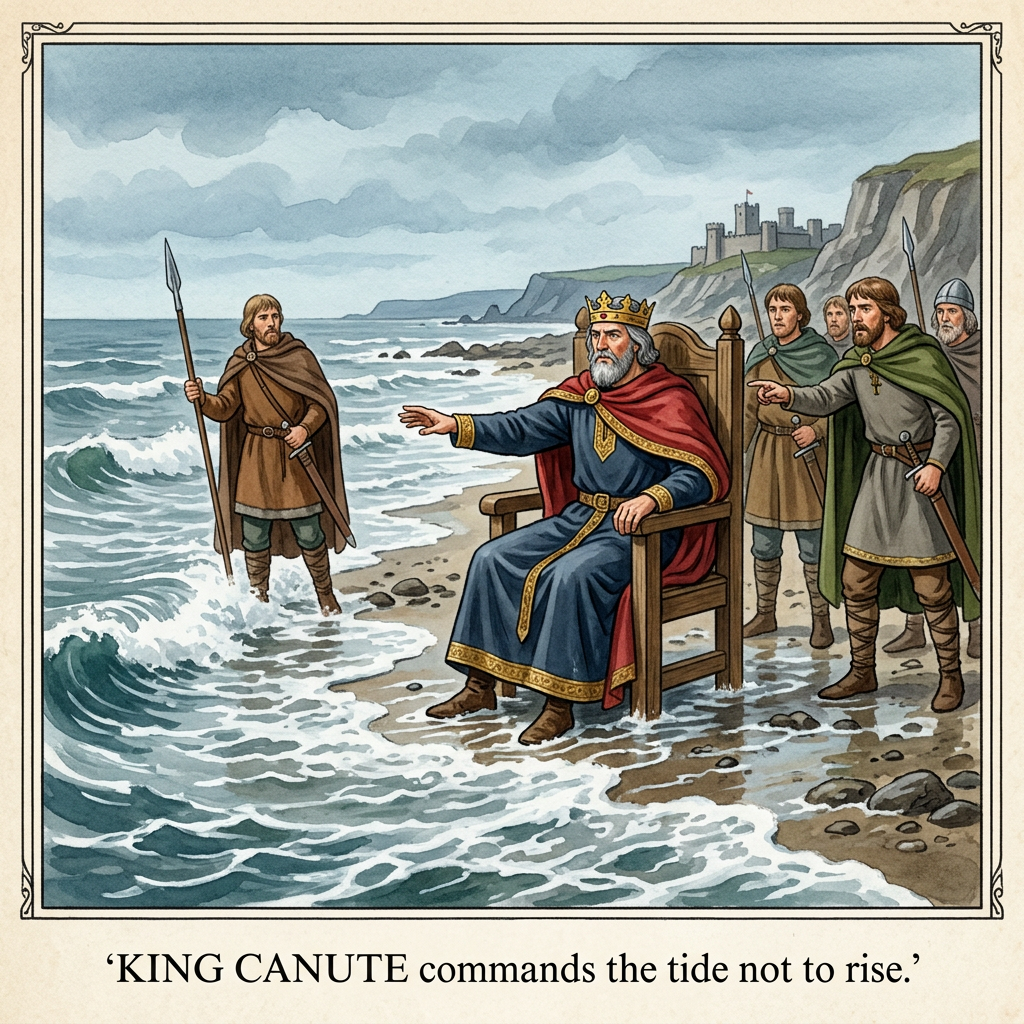
AI is not the enemy, well apart from environmentally, and we need to be as focused and logical as possible when looking at the power it possesses and we know it will continue to become intertwined with our lives in ways we can’t yet imagine. As young people step into that new reality they need to have the attitude of open minded experimentation in order to make the most of it. We have spent too long misunderstanding King Canute. He never tried to command the waves, he showed his courtiers that he couldn’t. AI is a tide we must work with not against.
Discover more from David Pearce - Popular Culture and Personal Passions
Subscribe to get the latest posts sent to your email.
 David Pearce - Popular Culture and Personal Passions
Jacob Coxon does not think like you 🙂
LikeLiked by 1 person
I have no idea who Jacob Coxon is I’m afraid. No doubt I should. However, my advice is based on 5 years teaching Foundation Courses. Students are going to use AI throughout their studies and into their working lives. I am trying to be pragmatic. My own experience is that giving students advice on ethical use of AI leads to more ethical use of AI. I am aware that I am an outlier in this area but I have seen positive changes in behaviour from taking this approach and I am not going to stop.
LikeLiked by 1 person
I was just referring to the news around AI lately…
LikeLiked by 1 person
I agree with Jacob Coxon. We need to slow things down and ensure that safe guidelines and security are in place. Also, i don’t think that any type of art solely created using AI should be allowed to treated the same as that created by people using their own imagination and skill.
LikeLiked by 1 person
As I said in answer to Fifienne, I have no idea who Jacob Coxon is. I can only base my advice on my experience of being a Foundation Course teacher over the time that ChatGPT etc have become ubiquitous. Governments and business are not going to put guardrails in place, the former because they are funded by the latter particularly in the US, the latter because AI is a great business model for them. All that I can say is that my approach has been successful at helping students to put their own personal guardrails in place. BTW, the art comment was something of a straw man because I didn’t mention art at any point. In fact, having taught art and design students I couldn’t be more aware of the dangers of equating the two. Just because I am in favour of teaching students how to navigate AI which will be with them throughout university and into their working lives, it doesn’t mean I am a defender of AI slop.
LikeLiked by 1 person
I have recently discovered JSTOR and Science Direct are embedding tools into their platforms that allow students and scholars to interact with their articles, which I must admit I felt vindicated by. After facing resistance from some fellow teachers when trying to push the same with Chat PDF (a third party tool) it seems two databases students access from withim the library ecosystem have caught up with how research is often now done in the academy.
LikeLiked by 2 people