
As a kind of primer for the big day I wanted to share some of the most interesting facts about the Festive Season that I have come across in my fairly extensive reading about Christmas. Some you will know, others you may not. If you are familiar with all 20 then you are as much of a Christmas addict as I am!
Here goes, and if your next pub quiz has a Christmas round you are set for full marks!
- The date of Christmas Day may have been tied to the Winter Solstice celebrations associated with the pagans. Under the Julian calendar the Solstice took place on December 25 until the Leap Year was instituted. This change required the movement of the Solstice to December 21, separating the two festivals.
- Saturnalia, a Roman celebration for the god Saturn took place from December 17 to December 23 and involved eating, drinking and gambling. This was followed by Kalends, the secular New Year, a three-day holiday from January 1where people put evergreens up in their houses and exchanged New Year gifts. Parts of each festival survived to become elements of our modern Christmas.
- The Norse people called this time of the year Jul (which became Yule in English) and marked the ‘dying’ of the old year. Perhaps this festival contains the origin of Santa Claus and his reindeer, following the example of Odin who rode his eight-legged horse Sleipnir across the sky. Children would put out straw and sugar for Sleipnir on the night of Odin’s annual hunt.
- In the Middle Ages, the churches celebrated in December with a Feast for Fools. The festival, which started on St. Nicholas’ Day included cross dressing, masters becoming servants and vice versa and the election of a Boy Bishop. This topsy turvy festival took elements of the old Kalends festival.
- Boxing Day, December 26, developed from the tradition of landowners giving each of their tenants a Christmas ‘Box’ on the day after Christmas consisting of either food or money.
- Parliament banned the celebration of Christmas in 1643, but it only really took hold in 1649 once Oliver Cromwell became Lord Protector and started to enforce the law vigorously. Fortunately, Charles II reinstated Christmas celebrations upon his restoration to the throne in 1660.
- There are records of Christmas Trees being put up by George III at Windsor Castle in the 1790s. However, it was only popularised amongst the wider population in 1848 when Illustrated London News published a picture of Victoria and Albert next to a tabletop Christmas Tree.
- A Visit from St Nicholas, the 1823 poem by Clement Clarke Moore introduced and named the eight reindeer.
- A Christmas Carol by Charles Dickens was published in 1843, and was followed by four other Christmas Books, The Chimes, The Cricket on the Hearth, The Battle of Life and The Haunted Man.
- A Christmas Carol was originally a pamphlet that Dickens was writing called ‘On Behalf of the Poor Man’s Child’. He turned it into a story which he thought would have more effect and used the Ghost of Christmas Present to voice the ideas contained in the pamphlet.
- Dickens himself set A Christmas Carol in a snowy Christmas because he had seen a number of White Christmases in his childhood and thought it integral to the perfect Christmas Day.
- The first Christmas Card was sent in 1843 and Christmas Crackers appeared in 1846 thanks to Thomas Smith, a London sweet maker.
- Christmas Presents were not routinely exchanged until the 1860s. Prior to this, they were exchanged on New Year’s Day.
- The Christmas pantomime took elements of the Kalends festival, with the Dame, played by a man, and the Principal Boy, played by a woman.
- The Coca-Cola company wasn’t responsible for putting Father Christmas in a red and white outfit. The colours had become popular in Victorian times with Christmas cards showing him in these colours.
- Rudolph the Red Nosed Reindeer was a poem written by Robert May in 1939, but only became widely popular when Gene Autry set the words to music in 1949. Since then, there have been various versions by many different singers which, between them, have sold over 80 million records.
- The first official Christmas Number One was Al Martino’s Here in my Heart in 1952. Dickie Valentine had the first Christmas themed Number One with Christmas Alphabet in 1955.
- The first Christmas chart battle is generally accepted to be that between Slade and Wizzard in 1973. Slade won the battle with Merry Christmas Everybody getting to Number One for six weeks. They were still in the Top 40 in February!
- In 1984 Band Aid sold over 3 million copies of Do They Know It’s Christmas. It completed a unique treble for Paul McCartney who appeared on the best-selling single of the 1960s, She Loves You by The Beatles, the 1970s, Mull of Kintyre by Wings and the 1980s with Band Aid.
- In 1985, Shakin’ Stevens reached Number One with Merry Christmas Everyone, a record he’d recorded for release the previous year, but quietly shelved when he saw the competition from Band Aid and Wham!
Hope you enjoyed that rundown of my favourite Christmas Facts!
I have taken my facts from a range of different places, but special mention must be made of Judith Flanders Christmas: A Biography which is a very interesting read and highly recommended.

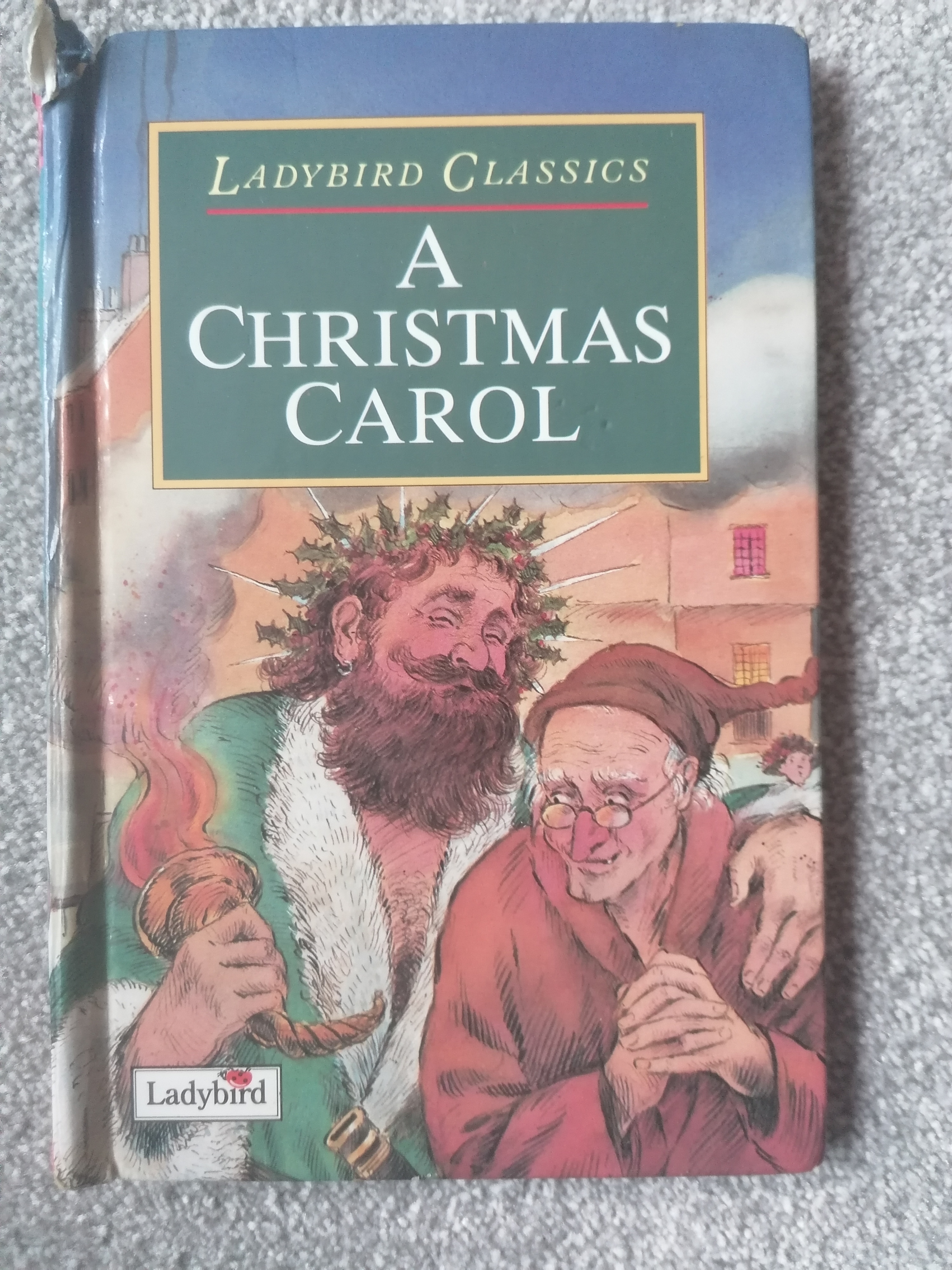
I think perhaps we all have that one book, film, TV show or piece of music. It’s a piece of art that, for whatever reason, had a huge impact on us when we first read it, saw it or listened to it, and a piece of art whose influence on our world view and our very character is an influence that continues to grow throughout our lives. For me, that piece of art is Charles Dickens’ A Christmas Carol and I wanted to take the opportunity to explore the reasons why I love it, and the reasons why it continues to resonate with me 50 years after the story came into my life.
The First Time
I have always had this vague memory of sitting in my lounge, watching Richard Williams outstanding version of A Christmas Carol as a young child. When was it, though? I narrowed it down to 1972 or 1973, but until about two months ago I had no way of checking where and when it was. Luckily, I came across the BBC Genome project during a web search. They have digitised every issue of the Radio Times and their listings page is no less than our personal histories kept safe in the corner of the Web. I clicked on the double issue covering December 16 to December 29, and there, on Christmas Eve 1972 was this!
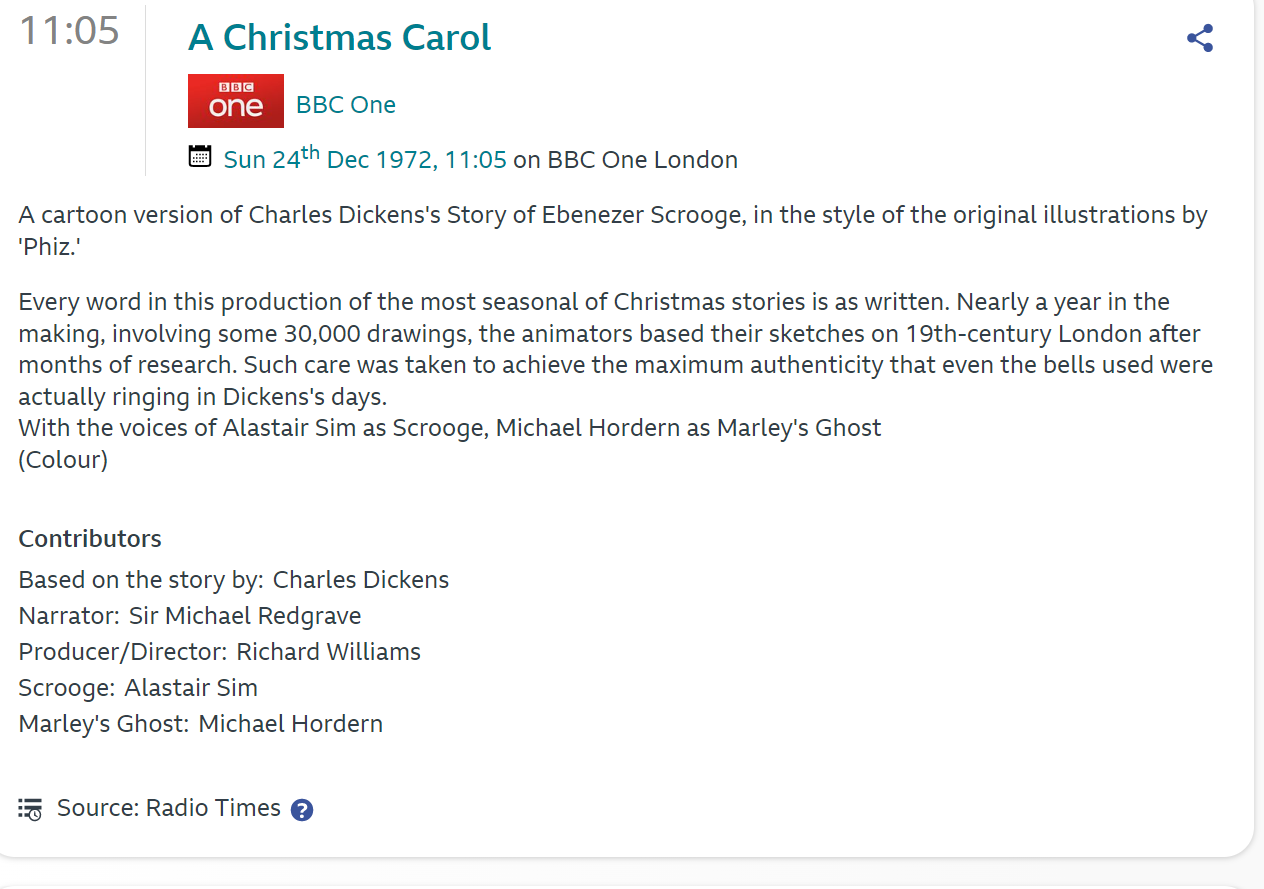
The moment that I first encountered it now had not only a day, but a time to go with it. At 11:05 on Christmas Eve, 1972, I sat down in front of A Christmas Carol for the first time. Even if I didn’t have a copy of the film to rewatch, there would be scenes that would be burned into my mind to this day. Marley’s Ghost, the flight of Scrooge and the Ghost of Christmas Present from a mining village to a lighthouse and from there onto the deck of a ship. Looking at the animation today, it did not ignore the poverty and sorrow at the heart of Dickens’ original vision, but that, of course, didn’t resonate as much with me then as it does now. However, I always had a social conscience as a child, and I wonder if it could be traced back to that first viewing? I think it’s likely that it can.
Scrooge at school
One of the few times I actually enjoyed being at my secondary school was when they treated us to a Christmas film. There was a film club at the school which I was a member of. A few times a term, the organiser would hire a film projector and show us old films of varying quality on a big screen. In my second year there a Christmas film was shown, and much to my delight it was Scrooge, the 1970 musical version with Albert Finney. It was the first time I’d seen it, because in those days there were only three channels, so films tended to come around far more infrequently than they do now! Most of the pupils around me were bored but I was gripped by the film, and from that first viewing it became a firm favourite. With superb songs like ‘December the Twenty Fifth’ and ‘Christmas Children’ it was a delight, but the highlight was the brilliant Anton Rodgers as Tom Jenkins with the showstopping ‘Thank You Very Much’. Yes, it took liberties with the story, but it had a verve and a heart that made it irresistible. There was some darkness along with the songs and in many ways, it was a victim of fashion as filmgoers moved away from the big Oliver style musicals. However, Leslie Bricusse, the writer, felt that there was unfinished business and just over two decades later, he revived it as a musical play. We’ll return to that later.
The book itself
I first tried reading the book when I was about 14, and I do remember finding it quite hard going in places. It seemed to be a mass of description that had little to do with the story at times. When he described the food and drink at Fezziwig’s party and the room in which the Ghost of Christmas Present sat, he seemed to a teenager to go into almost absurd detail. I found myself flicking through those parts, but when it came to Jacob Marley and the Ghost of Christmas Present in particular, I was gripped. Marley was a fascinating combination of vengeful spirit and friend to Scrooge, whilst Christmas Present was a jolly giant with an angry and sarcastic side to him. This mixture of dark and light really appealed to me and gave me my entry to the novel. Although I was somewhat older before I really understood the intricacies of the novel, I knew that it was a story about complex characters. Scrooge himself was clearly damaged, although we only get hints as to why that is, but he never seemed to be a fully rounded character. It was Bob Cratchit who I really identified with. He was the ultimate underdog who did his best but never got much out of life. The Cratchit family Christmas was deeply affecting because he was surrounded by love, and this was his protection from a harsh world. The trouble was that his family time was only fleeting in a time when people worked 6 days a week. He was a good man who made the most of a bad hand. He is the everyman character that Dickens identified with on a personal level given his own experiences of poverty. All these elements would keep me coming back to the book again and again until it became my favourite novel.

The Book at Bedtime
I always enjoy sharing my discoveries with other people, be they books, TV shows, films or music. You might have noticed that! It is probably the reason why I became a reviewer. One of my favourite versions of A Christmas Carol comes from the long-running BBC Book at Bedtime series. Read by Martin Jarvis and Denise Briars, this is a fantastic version of the story with well-chosen abridgements and an extra dimension that all the others lack. Every other version is read by a man on his own, who has to provide all the voices including those of women and children. Here, Denise Briars is an equal partner in the reading, giving more authentic life to the voices of those who had previously been impersonated with varying degrees of success, by which I mean very little in most cases! From the start of every episode, which begins and ends with the music famously used by Box of Delights – Hely-Hutchinson’s Carol Symphony – the quality never falters, and all 8 episodes keep me gripped whenever I listen to it. My wife’s first introduction to the story was with the tape, which I took away with us on holiday one early autumn, at her request I might add, to listen to over 4 nights. Although she has never quite taken to the story with quite the fervour I have, which is probably nigh on impossible given my obsession with it (!), she is now also A Christmas Carol lover herself.

Scrooge The Stage Musical
When I found out that the musical Scrooge was heading for the stage I was determined to get tickets for it. That was before I found out that my first Doctor Who, Jon Pertwee was playing Jacob Marley! Alongside him in a high powered cast were Anthony Newley as Scrooge, Tom Watt as Bob Cratchit and Stratford Johns as The Ghost of Christmas Present. All four were perfect for their roles and the extra songs that Newley and Leslie Bricusse had written gave the musical a real boost. It was a real privilege to see those four and the uniformly excellent supporting cast breathe new life into the story. However, my real Christmas present was still to come. I wrote to Jon asking if I could meet him after the performance and got a reply pretty much return of post saying he would be happy to meet me in his dressing room. To say that he was imposing under states the fact. I immediately became as nervous as the kid I was when I first saw him. He may have been in his seventies but he just exuded power and a star quality I have never experienced before or since. He was the one person I have met who genuinely overawed me and I would not have missed it for the world. That was definitely the highlight of my year and one of the highlights of my life.
The collection and the gaps
It’s been a long time since I first fell under Scrooge’s spell, but over the years, that spell has become stronger and stronger. My collection of Christmas Carol based films and other it shows no sign of stopping. I have the famous versions mentioned here, and some much less familiar versions such as the Ross Kemp modern day version which was genuinely good. What am I still on the look out for? Many years ago I saw the brilliant A Christmas Carol ballet, performed by the Northern Ballet, a couple of times, but it has not been revived in decades. I would love to find a Dvd of the ballet, or better still, go to see it in a theatre once more. I would love a Dvd copy of the Guy Pearce Christmas Carol from a few years back, but that is only available as a stream or download as far as I can tell. Finally, the crowning glory of my collection would be one of the earliest copies of the book from 1843, but miracles only happen on Christmas Eve after 4 ghosts have visited you! I hope you have enjoyed this trip through time with the ghost of Christmas Past and that you may be inspired to read, watch or listen to the book that set the template for the Christmas season.
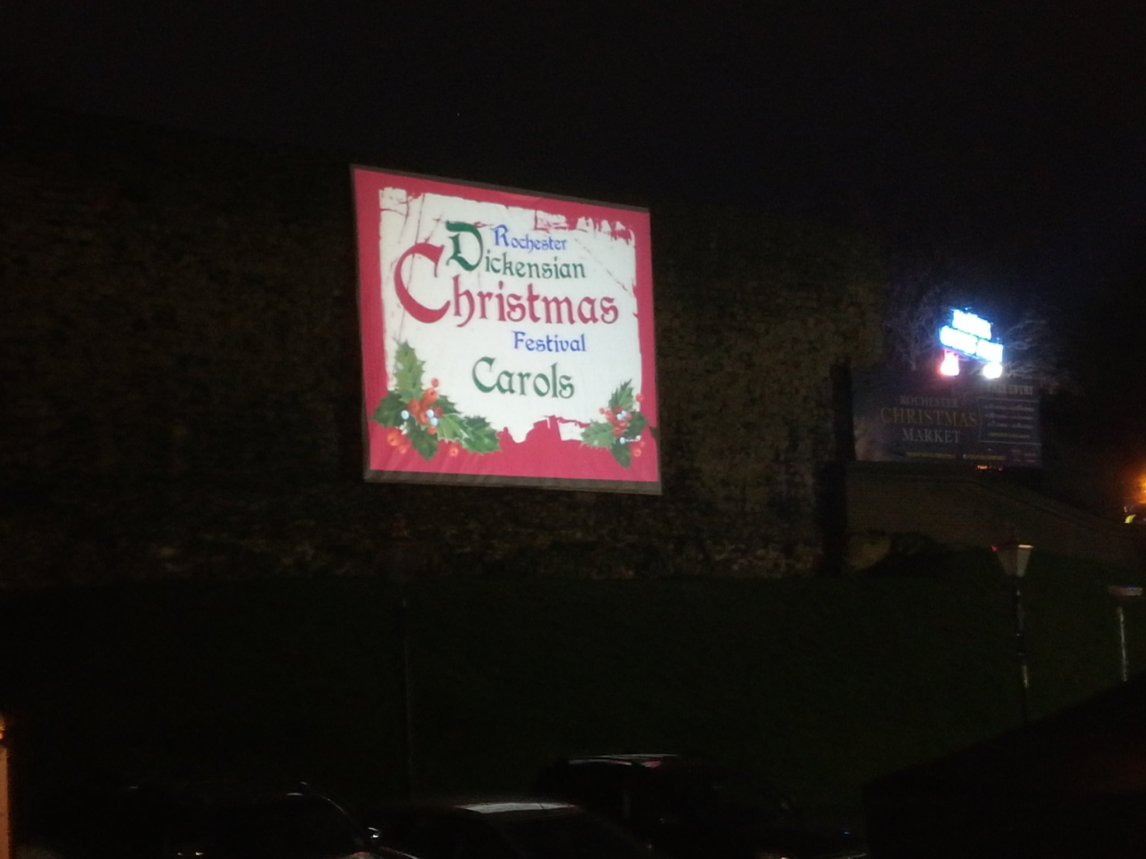
What is the Dickens Christmas Festival?
Every year, on the first weekend in December, Christmas lovers from near and far gather together in Rochester in Kent to celebrate the genius of Charles Dickens. Although he was born in Portsmouth, Dickens spent many happy years in the Rochester area, living in Gads Hill nearby, setting the opening scene of his novel, Great Expectations in nearby Cooling and using many local places in his writing. Rochester has always been rightly proud of the Dickens connection and hold two festivals each year to mark his connection with the city. The Dickens Christmas festival was first held in 1988, and with the exception of 2020, has been held every year since.
What’s On?
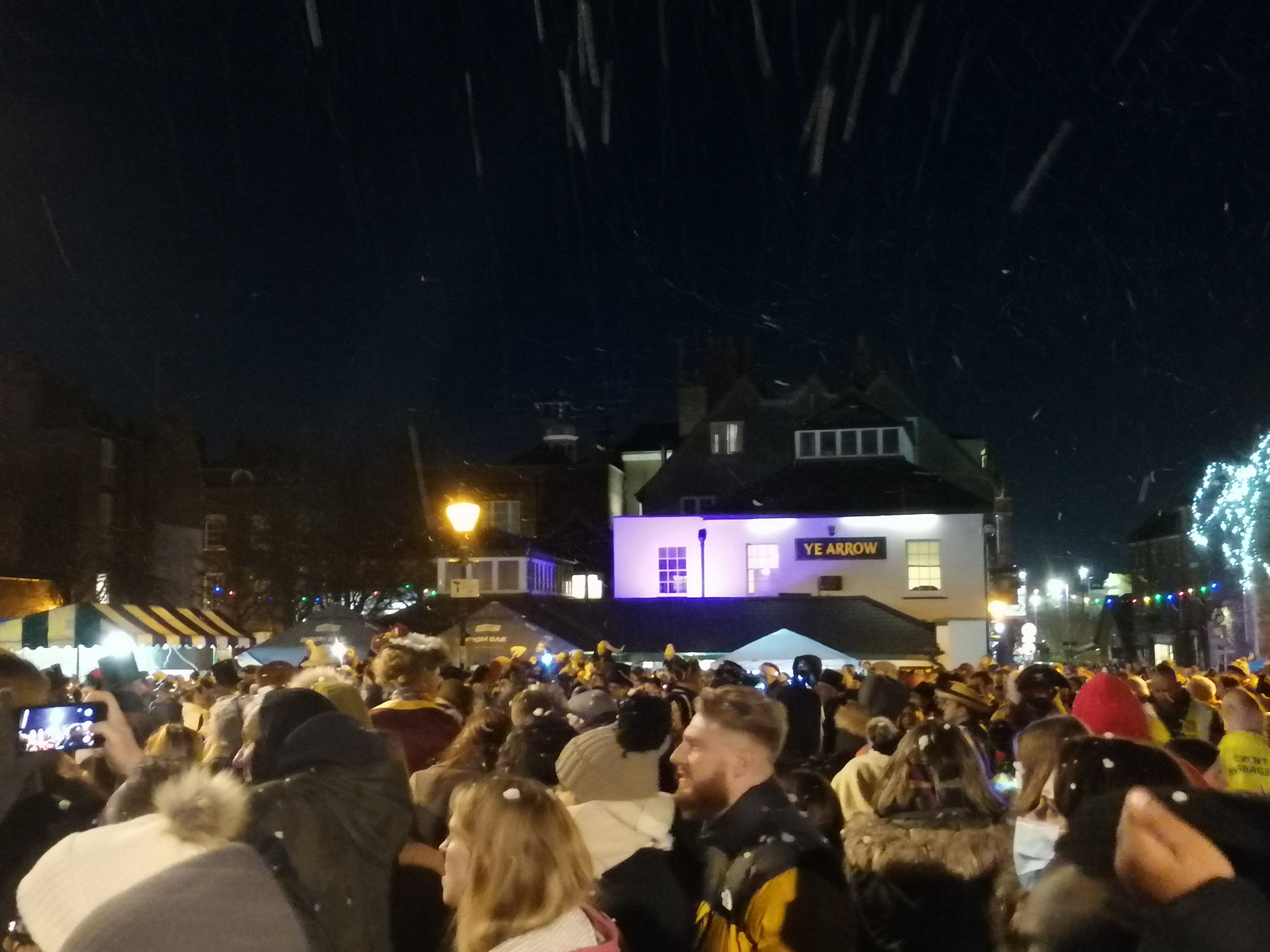
There is a huge amount going on at the festival, and everywhere you look there is something to catch your eye and a myriad of Dickensian characters walking around the city. There are street entertainers in various sites around the city with Morris dancing, singing, storytelling and brass bands amongst many other attractions. In the shadow of Rochester Castle there is a Christmas market and a funfair. At 12 noon there is a parade featuring a pipe band and all the Dickensian characters you can imagine. There is also a parade at 4.45, which precedes the highpoint of the festival. At 5pm with the Cathedral behind and the Castle in front a huge crowd gathers to sing Christmas carols such as Hark the Herald Angels Sing and favourite songs like Jingle Bells. Everyone joins in with enthusiasm, and for our family it has always been the real start of Christmas.
Where can I get more information?
If you want to come along, Rochester is well served with trains from London which take around 45 minutes to get there. All the details are here and you are guaranteed to get into the Christmas spirit. I will be there on Saturday as usual and will be making merry, whether Scrooge approves or not!
Christmas Morning
Christmas Day dawned very early in 1974, as I woke up at about 5am to see what Father Christmas had left for me. Perhaps mindful of my parents, he dropped a big bag of presents off in my bedroom. I saw a fairly big rectangular box and, as most 9-year-olds would, I opened that first. To my delight it was my first cassette player, and it came with two cassettes. The Greatest Hits of Walt Disney and Keep on Wombling were the two main reasons why I was kept quiet for pretty much the next few days as I played both endlessly to learn the words. How do they sound now that I am no longer 9 years old? Well, vinyl now has the answer. I got the Disney album two or three years back, and I got Keep on Wombling earlier this week. So, it’s time for that time travel that music is so effective at providing to start. Let’s give classic Disney a spin first.

The Greatest Hits of Walt Disney
This record contains tunes from pretty much all of the Disney films from Snow White to Robin Hood, the ‘new’ Disney film which had come out the year before. All of the songs are taken from the original soundtracks, and feature artists such as Peggy Lee, Phil Harris, Julie Andrews, Dick Van Dyke and Angela Lansbury. It is a goldmine of catchy tunes, emotional tunes and flat-out odd tunes! On the first side, the catchiest tunes are definitely Bare Necessities, and Everybody Wants to be a Cat, which both feature the brilliant Phil Harris who played Baloo and Thomas O’Malley. The latter needs to be listened to through the prism of the time as it does feature some fairly broad and, in the case of the Chinese cat, borderline offensive stereotypical accents and lyrics. Of course, as a 9-year-old in the 70s I found it funny and, in any case, it just reflected culture and society of the time. The gorgeous, and atypical, song which shines above all the others to adult ears is The Age of not Believing from Bedknobs and Broomsticks, sung by the legendary Angela Lansbury. It reflects the skill of the Sherman Brothers who wrote a song aimed squarely at the adults in the audience, but which I loved as a child. It is scarily accurate, and as of yet I still appear to be in that age.
With 12 songs on each side that just zip by, it is a real lesson in the way that the studio could write songs that appealed to everyone, and which packed in multitudes of emotions in 2 or 3 minutes. Side 2 carries on in the same vein as the familiar tunes just follow each other with scarcely a break. From Mary Poppins comes Supercalifragilisticexpialidocious and from The Jungle Book comes I Wanna Be Like You featuring a jazz style duet from Phil Harris and Louis Prima. They are two of the most celebrated songs of the studio’s history, but they are overshadowed by When You Wish Upon a Star from Pinocchio which became the theme tune of Disney almost as soon as it was released. For an opening trio of songs on any side of any album they take some beating. When I first got the cassette The Wonderful Thing about Tiggers from Winnie the Pooh was my favourite to learn and then sing along with, and it still hits the spot! It’s worth remembering that in those days of three channels the original Disney films rarely turned up on TV, so we had little chance of seeing them after their original release. It made the cassette both a treasure and a time capsule, and it’s perhaps even more so nowadays, ironically, as Disney’s original songs have been quietly shelved in favour of the more modern tunes. It is a reminder of a more innocent age that just melted away all those years and left a nostalgic smile on my face.


Keep on Wombling
Anyone who has ever read my tweets will be in no doubt as to the extent of my love for The Wombles, and the Keep on Wombling album in particular. That was the cassette that I kept returning to after that first few days for the sheer range of music that it introduced me to. The album goes from classical to music hall to rock ‘n’ roll to country and ends up with one of the finest Christmas songs ever written. For my 9-year-old self it was an album that set up my ability to appreciate a whole range of music, something that has stayed with me for the rest of my life.
It starts with a David Bowie style track, Womble of the Universe, which borrows from Space Oddity, but which makes its own way through space. I will never tire of this song, and its opening chords are as familiar to me as any song in my vast musical memory bank. The other highlight on the first side, in a very strong opening sextet of songs, is the incredible Underground Overture which takes in a range of classical inspirations, and which just captivated me from the very first time I heard it. On Side 2, the Rock ‘n’ Roll of The Wombling Twist was a huge favourite of mine at the time as I was then, and remain now, a massive Showaddywaddy fan, and this just channelled that 50s sound perfectly. Listen, in particular, for a Jerry Lee Lewis style piano solo that the man himself would be proud of. The country ballad Wipe Those Womble Tears from Your Eyes would be a bit much for the average 9-year-old without Mike Batt’s beautiful lightness of touch and incredible ear for a tune. In his hands, it became a song that made me emotional as a child and still does nowadays. Well, the final track is their biggest hit and perhaps The Wombles’ finest single track. It is Wombling Merry Christmas which never fails to move me and make me feel like the festive season has started. I have, of course, played it every Christmas to my own children and they are, I’m glad to say word perfect! No group and no album can compete with Keep on Wombling when it comes to recreating my childhood. The dizzying creativity of Mike Batt has arguably never been better showcased than it is by this album. It is The Wombles own Sergeant Peppers!

How did it feel?
The interesting thing about the two albums wasn’t that I remembered the words. That’s par for the course with me. It was that I remembered the order and knew exactly what was coming before the first note was played. It has made me realise anew how influential your first musical loves are. These two albums set my musical tastes in a big way, and they have one vital thing in common. Not one of those songs talks down to its audience. Quite the contrary. It requires the young listener, and the older listener, to rise to meet them. What a privilege it has been to recreate that Christmas morning of so many years ago.

This year I am taking part in Blogmas for the first time. I am looking forward to it, although I have more than a bit of trepidation as I consider the size of the task! I will be writing a number of entries in advance and hope to keep up the pace by being organised.
However, I feel that I need to have an incentive. This post is my incentive, as well as being a trailer for December, because by making this public I will have no choice but to complete it to avoid looking silly!
I also need to have an order to my entries. For me, it has to be like my music mixes in that there are no abrupt changes of tone, so I have been tinkering with the subjects and the order for the last two weeks. Now, I am fairly satisfied, so I want to get the entries down in black and white rather than the red and white they are in now in my Christmas Planner! So here goes!
25 Days of Blogmas
- The Dickens’ Christmas Festival Rochester
- A Christmas Carol and Me
- 20 Facts About Christmas
- The Christmas Wish by Lindsey Kelk Book Review
- The Hogfather by Terry Pratchett Re-Read
- Christmas Traditions
- Christmas TV Classics
- Christmas Pop Songs
- Christmas Pop Songs? Not Quite!
- Christmas Carols
- Children’s Christmas Music
- Children’s Christmas TV and Films
- Children’s Christmas Books
- The Christmas Attic by Trans-Siberian Orchestra Re-Play
- The Original Now Christmas Album Re-Play
- A Classic Christmas Re-Play
- Isla by Isla St Clair Re-Play
- A 70s Christmas
- Christmas in Australia
- Christmas Jumpers
- 5 Less Familiar Christmas Movies
- The Christmas Truce 1914
- Christmas Cooking and Baking
- The Queen’s Christmas Messages
- My Christmas Message
December Might Be Magic Again!
Well, I hope that at least some of those entries appeal and that you check out even those that don’t! Please let any other Christmas fanatics know about this and I will see you for the start of this Blogmas attempt on December 1!

