
So, in the last two weeks I have finished the book I was reading at the end of Week 1, read another and completed half of a third. Oh, and I have read a few chapters of a Kenneth Williams autobiography that is there when I can’t properly concentrate on a storyline on the evening train! Not much for me, but I am not back to my full 4 day a week commute which is what helps me speed through my reads.
Broken Homes by Ben Aaronovitch
Broken Homes is the fourth book in the Rivers of London series which I have read entirely through my local library. It is simply brilliant, unsurprisingly as the rest of the series is also brilliant. The series features, as its central character, PC Peter Grant, who discovers that he has latent magical abilities. He is seconded to a magical unit, which is under the charge of Inspector Thomas Nightingale, and exceptionally powerful wizard, that operates from a house called The Folly. He and his partner, PC Lesley May, learn basic spells and operate within the grey area of crime and magic. Lesley, having suffered catastrophic damage to her face, is on semi-permanent leave from the regular police but has become a de facto member of Falcon, the name given to the Folly and its supernatural remit by the Metropolitan Police.
This book is centred around the Elephant and Castle, specifically the Skygarden Tower, which is a 60s tower block built in the brutalist style but bafflingly a listed building. It becomes clear that magic is afoot when Peter finds out that the garden that rings the block contains river spirits and tree nymphs. Before long, Peter realises that the block itself could be the source of dangerous magic that would be impossible to control if it was allowed to escape.
The series just gets better and better in my view, and reading the books in order has been a fantastic way to immerse myself properly in the world of Rivers of London. Ben Aaronovitch writes in a style that is a hybrid of police procedural and Terry Pratchett, and it is utterly addictive. The confidence in his world and his writing just jumps off of the page, and it this confidence that allows him to throw in a jaw dropping twist very near the end that left me completely shocked. I know that there are a further four books in this series, and I intend to borrow all of them from the library before the year is out, assuming they are available. Indeed, I am reading the sixth book at the moment.
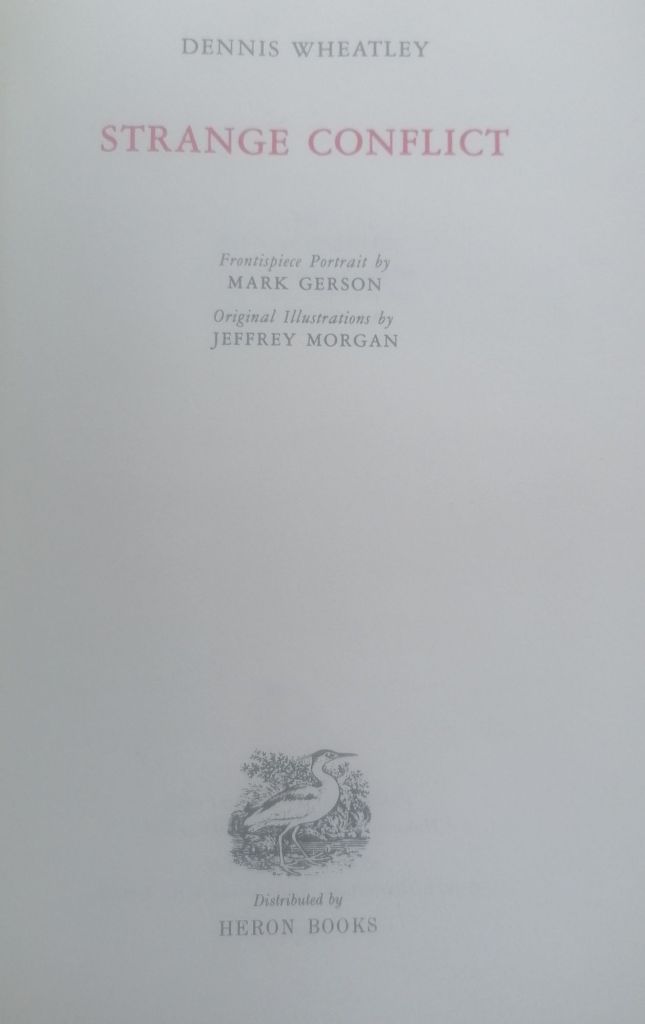
Strange Conflict by Dennis Wheatley
Just before this challenge started I bought a book from eBay which I read two or three times as a teenager during my horror phase! My original copy had gone ages ago, and I hadn’t been able to find it since in any charity shop or second hand bookshop. Strange Conflict was published in 1941 and, being set in WWII, was an extremely contemporary tale of espionage centred around the losses suffered by the Atlantic Convoys. When the Duc de Richleau suggests to Admiral Pellinore that the Nazis are using Black Magic, it is initially dismissed out of hand, but once he has convinced the admiral that the threat is real, it is time for him and his companions to take the battle to their mortal enemies on the astral plane. Duc de Richleau and his friends, Simon, Rex, Richard and Marie Lou, were featured in a number of previous books so you get little real backstory here, but they are already a tight knit team having faced Black Magic practitioners of many types already. These adventures are alluded to but not concentrated on in any detail.
OK, I have to give you a very clear warning. As Talking Pictures TV might say, the book features language and attitudes that some people may find offensive. The amount of overt racism, by modern standards, is quite shocking, but it is little different to anything that you might read in James Bond, and it does avoid the rampant misogyny of Ian Fleming’s original novels. If you accept it as being of its time, you are left with a very well written, well paced and thought provoking novel. I enjoyed the story probably as much this time around as I had as a teenager, but I don’t know if it was the nostalgic pull of rereading an old favourite. What I can say is that it would make an excellent film or TV series with its fast paced plot, and that if you can get past the overtly colonial attitudes of its writer, I do think it stands up well as a work of literature.
In Progress
Foxglove Summer by Ben Aaronovitch, the fifth book of the Rivers of London series. Also borrowed from the library the final Geek Girl novel which I can’t wait to read. Until next week then, it’s bye for now. Happy reading!

September 1 – 7 2024
In the first week of my rereading challenge I have finished one library book, started another and read an August purchase. The three books could be described as eclectic, matching my usual reading and blogging habit, although I think there is a tenuous connection between the two I have finished. Anyway, here goes.

Geek Girl : Head Over Heels by Holly Smale
Head Over Heels is the fifth book in the Geek Girl series, all of which I have borrowed from the local library. That’s perhaps quite geeky in itself, or maybe not! Anyway, I am totally hooked on the character of Harriet Manners, the heroine of the series. She has been scouted by a model agency and has become successful against the odds. She has overcome her own shyness and inability to walk in heels (!), the machinations of jealous rivals, run-ins with borderline psychotic fashion designers and the cultural shocks involved in travelling to places like Japan and Russia. Through it all, however, she has retained the same core behaviour, values and thought processes. That to me is the most amazing element of the books. Harriet has never been a caricature, she has never found anything easy and she has been bullied on and off the catwalk because of her perceived oddness. What has changed from Book 1 to Book 5 is her self-reliance as she has found reserves of determination and fight whenever she most needed them.
I have read that Harriet was based on Holly as a child and the main bully, called Alexa in the books, actually received a ‘thank you’ in the dedication of the first book for inspiring the novel! I hope the bully hates seeing Holly’s success. There are definitely parallels with my own school days. Although I was never going to be a model (!), like Harriet I was bullied incessantly at school because I was different. Books, facts and music were my escape from the age of 6 or 7, and I have no doubt that many of the readers of this series, like me, are way past the age group for YA novels, but love the character and the way she has overcome what we perhaps couldn’t.
This particular entry takes Harriet’s story into new territory as she realises, perhaps for the first time, that she can have more control over her modelling and her life. We see her grow and we see her deepen as a character. I think that this book is the best of the five I have read so far, and I am looking forward to seeing how her story ends in the sixth and final book, although I will miss Harriet once that story is over.
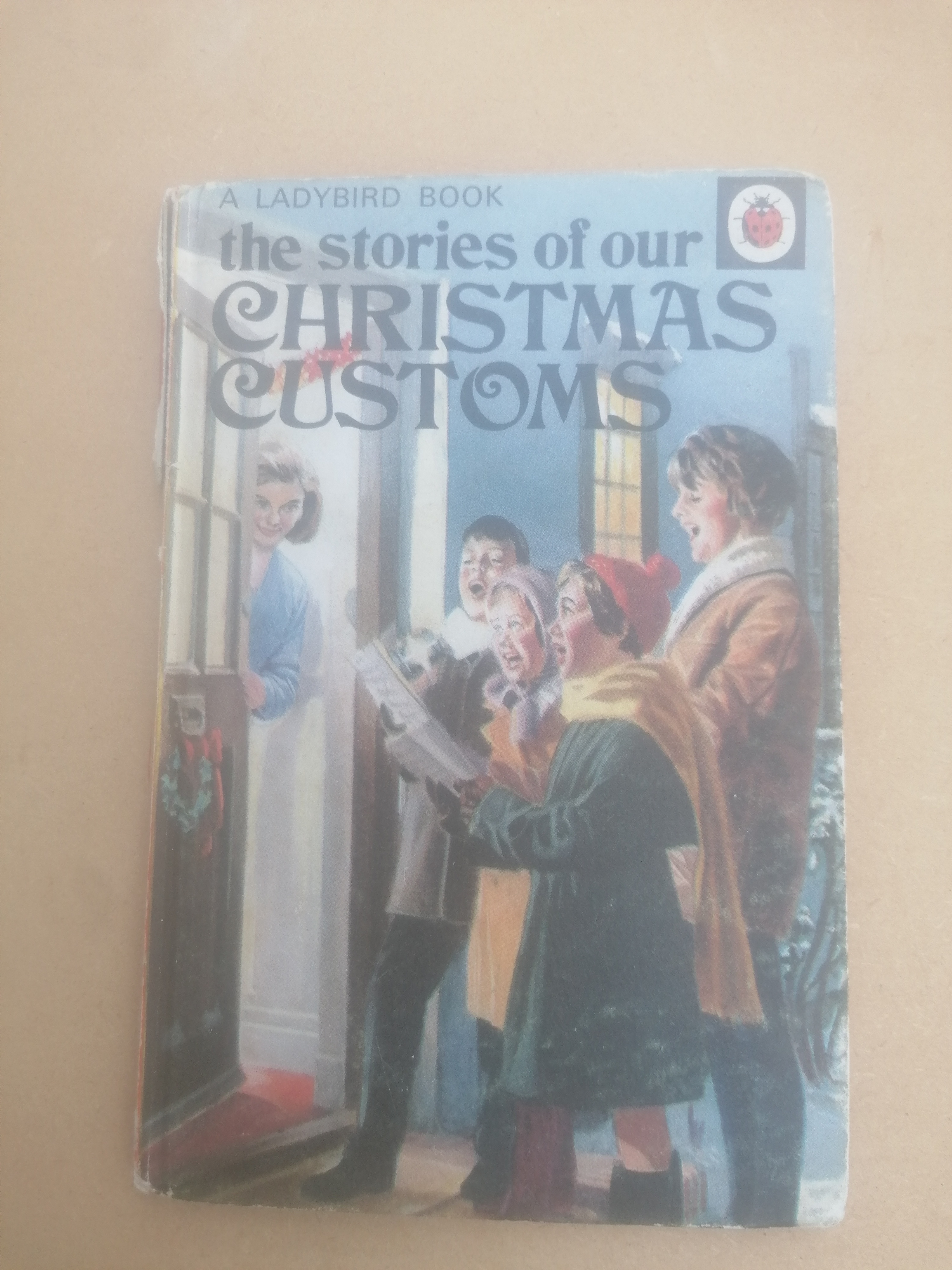
The Stories of our Christmas Customs by N.F. Pearson with illustrations by Frank Hampson
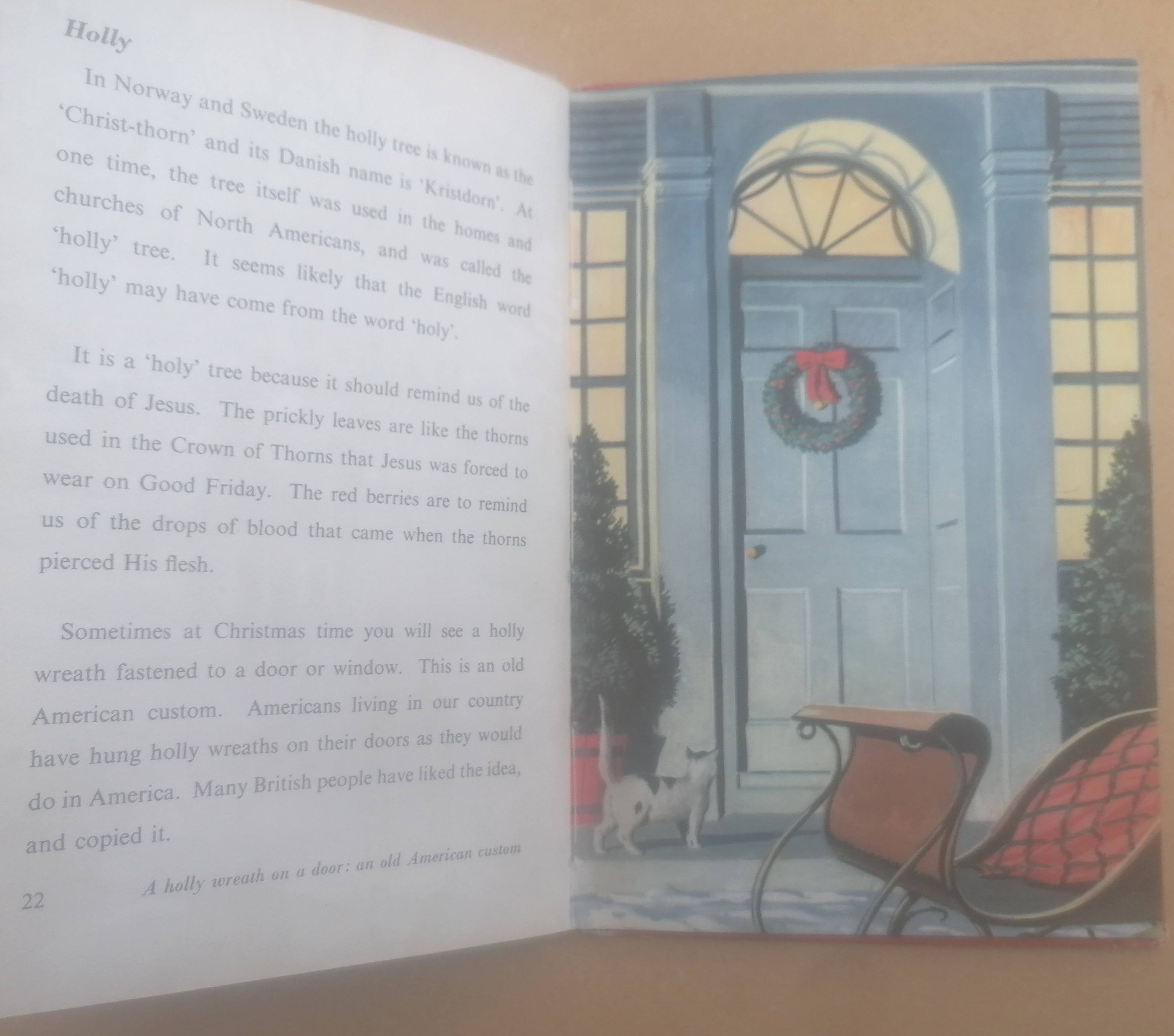
Now, I have always been a Christmas fanatic from as early as I can remember. Like Harriet I am very likely to tell you fact after fact about my favourite season of the year! I have written articles about it for the h2g2 online encyclopaedia, taken part in Blogmas twice and present a talk about Christmas to my foreign students every year! You could say I am obsessed with Christmas and you wouldn’t be far wrong. Now, this Ladybird book is one I never owned as a kid, but I am sure I recognised some of the pictures, so I wouldn’t be surprised if I took it out of the school library. The illustrations by Frank Hampson are gorgeous and evocative and the text by N.F. Pearson is superb. Even after all my reading and writing on Christmas I learnt a few new things about the subject. As a piece of social history this book is an absolute find. It cost me more than the 18p cover price (!) but it was worth every penny.
In progress
I am currently reading another library book, Ben Aaronovitch’s Broken Homes from the amazing Rivers of London series. I will be reporting back on that next weekend. Happy reading everyone!
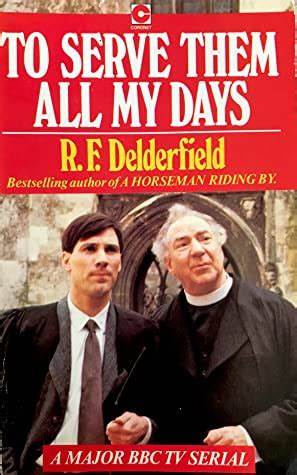
This year, I have been attempting to curb my spending on books with, it should be noted, some success. However, old habits started to creep in during the summer months, and my spending on books online and in charity shops started to increase once more. On September 1, I decided that for the rest of the year I would reverse that by going to the garage! In common with many people we do not have a car in our garage, so it is a repository for exercise equipment, puzzles and games, sports equipment and books. In amongst those books are favourite authors or stories that I haven’t looked at in perhaps two decades. It was time to bring these books out of storage and make them the focus of my challenge.
Rules of the challenge
The rules are quite simple. The books you choose should be books you really enjoyed when you first read them but which have been stored away during various moves or which have stayed on your bookshelf untouched for at least a couple of years. You are allowed to sprinkle in new books, but they must be from your local library not your TBR list. If someone buys you a book, thank them and then put it away until January unless it is a new copy of an old favourite that you lost or gave away years ago.
Books I will be rereading
I will be working my way through four R F Delderfield novels, To Serve Them All My Days and the A Horseman Riding By Trilogy. Following that I will revisit Don’t Cry for Me Sergeant Major by Robert McGowan and Jeremy Hands, a journalist’s eye view of the Falklands War. Once those have finished I will move onto my Christmas reread starting, as I always do with A Week in December by Sebastian Faulks. I will be reviewing all my rereads focusing mainly on my reaction to them after not reading them for ages. Please join me for this challenge here and all my social media outlets, and let me know if you are inspired to undertake a similar challenge.
Happy Rereading!

Taylor Swift, Paramore and Holly Humberstone Wembley Stadium London August 16 2024
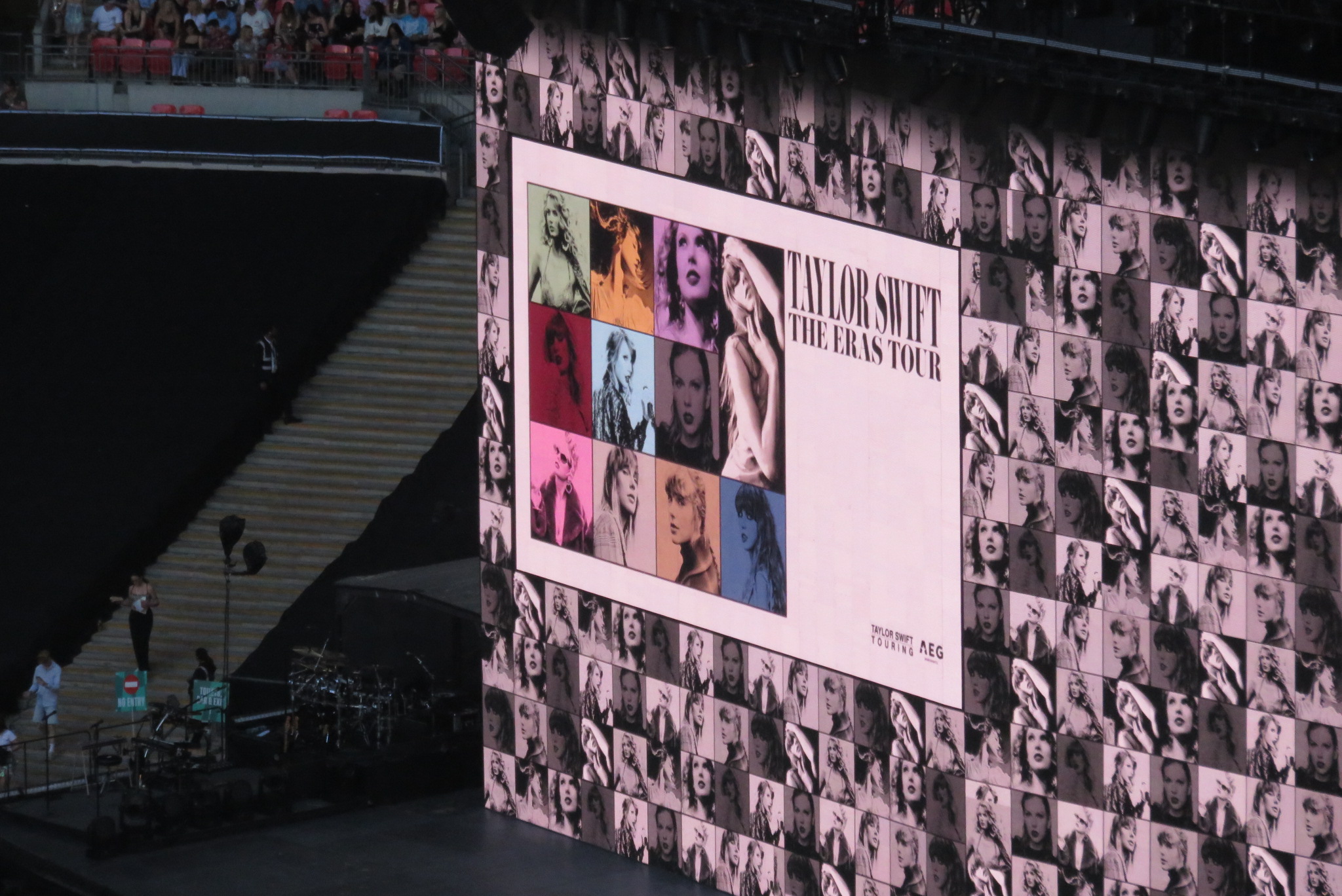
WOW!
OK, that doesn’t quite work as a gig review (!), but there was only one word for last night and that was it. By 5 O clock I was part of a 92,000 crowd at the Eras Tour, up in the nosebleed seats, 14 months after getting tickets and looking forward to the longest concert performance I have ever seen. A total of 61 songs across over four hours of music presented by three artists. So, let’s dive in with the first act.
Holly Humberstone

Holly Humberstone came highly recommended by my daughter who had seen her in concert before, and it didn’t take long to find out why. Her first song was The Walls are Way Too Thin, a reflection on moving away from home for the first time and finding yourself completely isolated even in a house with other people around. It’s a really well crafted song that resonated with me when I thought back to my own days moving from rented room to rented room. Falling Asleep at the Wheel and London is Lonely both deal with relationships. The first one is about the tension as you navigate that difficult time once the flush of first love has faded and the second is about the difficulties of a relationship when you are in two different places. Both songs hit upon universal truths about those early days which combine the certainty that the other person is ‘the one’ with the worry that it won’t work out. Down Swinging is a defiant song about dealing with depression, accepting that it is there but refusing to let it define you. Ghost Me contains a lyric that definitely struck a chord with me, ‘And where the hell did our childhood go?/ It freaks me out how fast we grow’. Sitting there with my daughter, whose musical taste I largely share despite the difference in our ages, I wondered how she can possibly be turning 24 this year! I am just really pleased that we can still go to concerts like this together even if I occasionally embarrass her! The final song of the six song set was Scarlett, about a one sided relationship her childhood friend endured. It contains a great one liner that made me grin, ‘We go together like bad British weather’! As an introduction to Holly Humberstone, this set was perfect. It showcased her excellent voice, great way with words and her genuine love of performing. She clearly couldn’t believe her good fortune at being asked to support Taylor Swift and she seemed to be pinching herself at times. I can see the common thread between these two singer songwriters who wear their hearts on their sleeves and are not afraid to expose their weakest moments alongside their strongest ones. Taylor mentioned Holly in her set saying that she often listened to her music and that was why she asked her to start the evening’s entertainment. All I can say is what a great choice it was. Wembley was about half full when she was playing, but those of us who were there thoroughly enjoyed her set, and those who arrived late definitely missed out. I will now dive deeper into Holly Humberstone’s music and look forward to hearing much more from her.
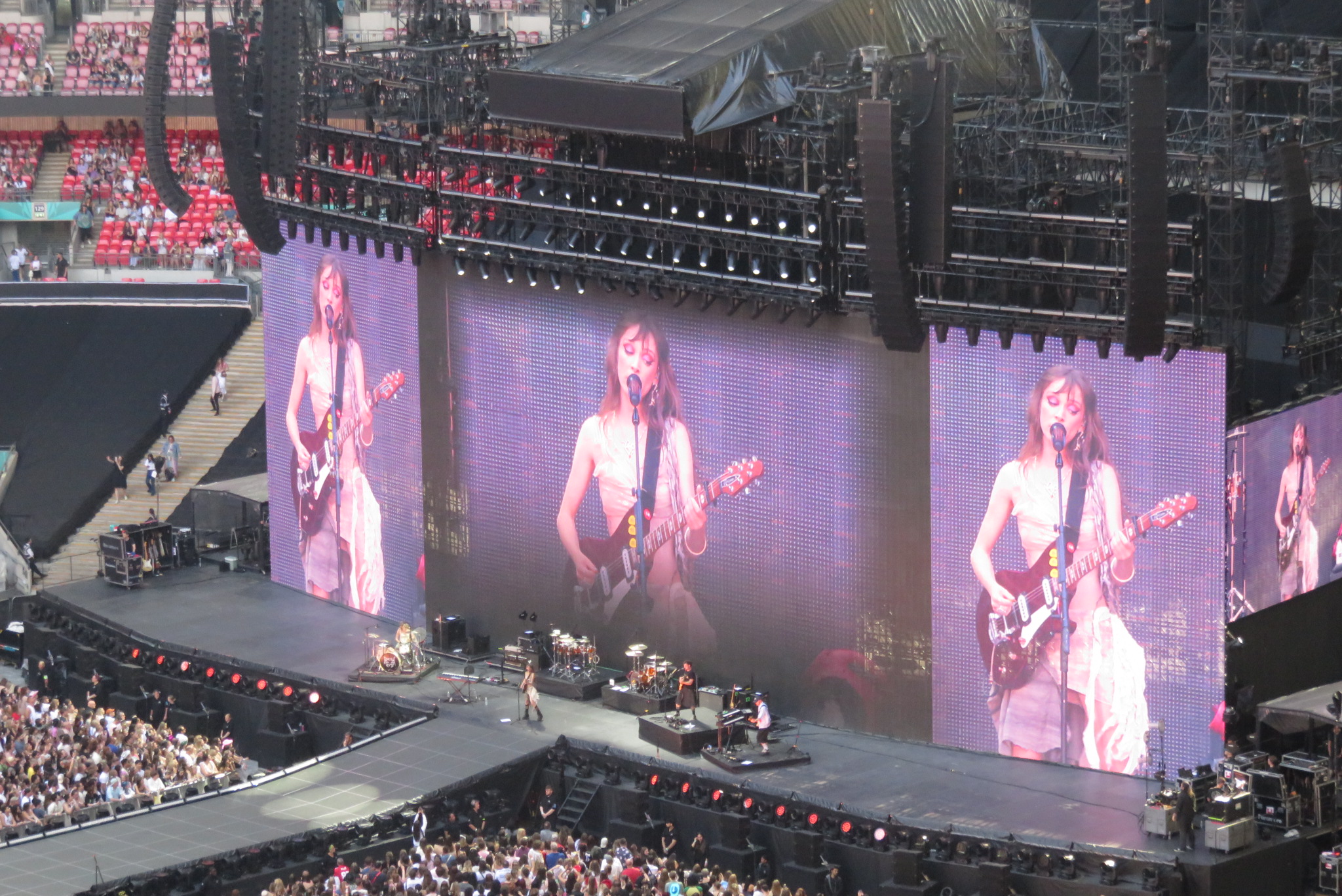
Paramore

Paramore were a group who all my children enjoyed listening to as they were growing up, but I never really ‘got them’ at the time. I know from many years of concert going, however, that you never really know an artist, or their songs, until you see them perform live. As a result I decided to start from scratch when listening to them. Well, Hard Times, their first song, featured elements of Heart of Glass which immediately made me listen up and Burning Down the House, their second, was a riotously good cover version. Within two songs I realised that live they were an excellent band while Hayley Williams in particular was an absolute revelation. What a frontwoman she is. Her voice is simply brilliant live with a massive range, real power and a versatility that allows her to move between funk, rock and metal with consummate ease. She reflected on how the opportunity to play on the same bill as Taylor Swift, despite the two being friends from their teenage years, was something she could never have imagined being able to do in the past when there was a clear barrier between rock and pop. Williams also acknowledged that there would be a large number of Taylor Swift fans who had never listened to Paramore and that she was looking forward to trying to reach a new audience. It was a really interesting approach, because she could easily have just focused on the fans, of whom there were a large number in the rapidly filling stadium, but instead she successfully reached the whole audience. The guitar work was great throughout, but on Forgiveness it was absolutely awesome and I completely bought into Paramore from then on. I did recognise The Only Exception, which Williams introduced as a very rare romantic song. I remember quite liking it at the time, but live it was amazing with her voice giving depth and power to it in a way that lifted the song beyond its studio version. Then after that, as a reset to their more familiar style, it was on to instructions as to how to release your inner rocker by use of the horns! Misery Business and Ain’t it Fun gave the audience a blast of pure rock and roll, before This is Why brought the set to an end with fans old and new wanting more. I’m really glad I got the chance to see them live and to reassess them after all these years. It’s one of the delights of gig going that I can still open myself to new acts and changed perceptions. Well, Paramore, you convinced me that I have been wrong about you all these years and I salute you with my horns!

Taylor Swift

The concert was unlike any other I have been to not just because of its sheer size. A full house of Swifties gave Wembley a carnival atmosphere with slogan t-shirts, cowboy hats, glitter and friendship bracelets very much in evidence. Friendship bracelets were being exchanged as concert goers walked up Wembley Way, and when they arrived in the stadium, creating a sense of an extended family. At every concert there is, of course, the anticipation before the main act comes on. Taylor Swift cleverly managed that in a way I haven’t seen before with a countdown on the huge screen starting with two minutes to go. As soon as the clock came up the already electric atmosphere went up a few notches. When the countdown hit zero the noise was amazing and many of the audience were already on their feet.

The first era was Lover, an album I reviewed for Subba Cultcha when it first came out and my first real introduction to her music. Looking at that review five years later I was already someone who enjoyed her music, but I was totally converted by the time that album finished. Cruel Summer had the crowd around me singing the lyrics, and The Man with its defiant chorus sent the volume up still further. The final track from this era was the title track with one of my favourite lyrics ‘We could leave the Christmas lights up till January’. The use of effects was very clever with the staging reflecting the clouds and colours of the album, but Taylor herself was the centre of everyone’s attention. In terms of her ability to control an audience with a look, a gesture or a facial expression she is without doubt the best I have seen. The connection with her fans felt personal in a way that was totally at odds with the massive crowd. You could tell that to pretty much everyone in the stadium she was their hero, their icon and their spokeswoman. It was a level of connection that only the greatest artists have, and be in no doubt she is one of the greatest artists the music industry has seen.

Her second era was Fearless, an early career album that demonstrates the way that her song writing abilities were in evidence right from the start. The title track set up a trio of songs that continues with You Belong With Me, one of my favourite tracks from her entire career. She was still a teenager when she wrote this track so the story of the girl who isn’t noticed by the boy she knows inside out! The lyrics are beautifully observant and the lines ‘Cause she wears short skirts, I wear t shirts/ She’s cheer captain and I’m on the bleachers’ just sums up senior school for so many. How times change! Love Story finished off three songs that truly stand the test of time. The Red era starts with the song 22, during which Taylor always gives her hat to a young fan along with a hug and a quick chat. It’s a lovely moment not just for the lucky young person but for the whole crowd as it just sums up her relationship with her fans. The one-two punch of We Are Never Ever Getting Back Together and I Knew You Were Trouble had the entire stadium singing along with the defiant lyrics before Taylor announced that she would do more song from the album if we had ten minutes to spare! It was of course the introduction to All Too Well in its full 10 minute version and the crowd went absolutely wild. It is the break up song par excellence and it gave the crowd the chance to scream ‘F*** the Patriarchy’ as one! It is a moment of catharsis that shows how she can turn a few words into a rallying cry for her fans.

On the train going to the concert I sat next to a teenager carefully drawing a snake onto her arm ready for the Reputation era. I really loved the effects for this section with the massive stage being turned into a snake matching the fiery snake outfit that Taylor was wearing. It was a moment of pure theatre as the songs matched the drama of the staging and everyone was definitely ‘Ready for it’! Reputation is the album Swifties are eagerly awaiting an announcement for as the choice for the next Taylor Version. I wonder if it’s going to be announced on the last night of the tour? The final song of a quartet of massive tunes was Look What You Made Me Do with its killer chorus. It’s time I paid tribute to the dancers who made the songs take flight with their energy, joy and incredible choreography. They were absolutely integral to the whole staging and they matched the brilliance of the songs in every respect. I reflected as I watched these first three eras that I had never seen anything this theatrical since the very first Pet Shop Boys tour MCMLXXIX which set the bar for that kind of spectacle. In imagination it was the equal of Eras, but Eras had the advantage of a massive stadium that showed that spectacle to awesome effect.
Folklore and Evermore were her pandemic albums which, she reflected, she never knew if she was going to play live. They were a vital stepping stone for Taylor as an artist where she moved from a chronicler of her own life to a storyteller of other lives. The eight tracks from these more reflective albums gave the audience a chance to take a break from the standing and the dancing that most of us had been doing since the very start. The set was gorgeous with a moss covered piano that initially, to me at least, seemed to be part of the organic effect of the stage until she sat down at it for Champagne Problems. At the end of that track she received a standing ovation that went on and on, building in intensity throughout. It went on for at least five minutes and got louder and more ecstatic and she took her earplugs out to soak it up in what was a genuinely emotional moment for artist and crowd.
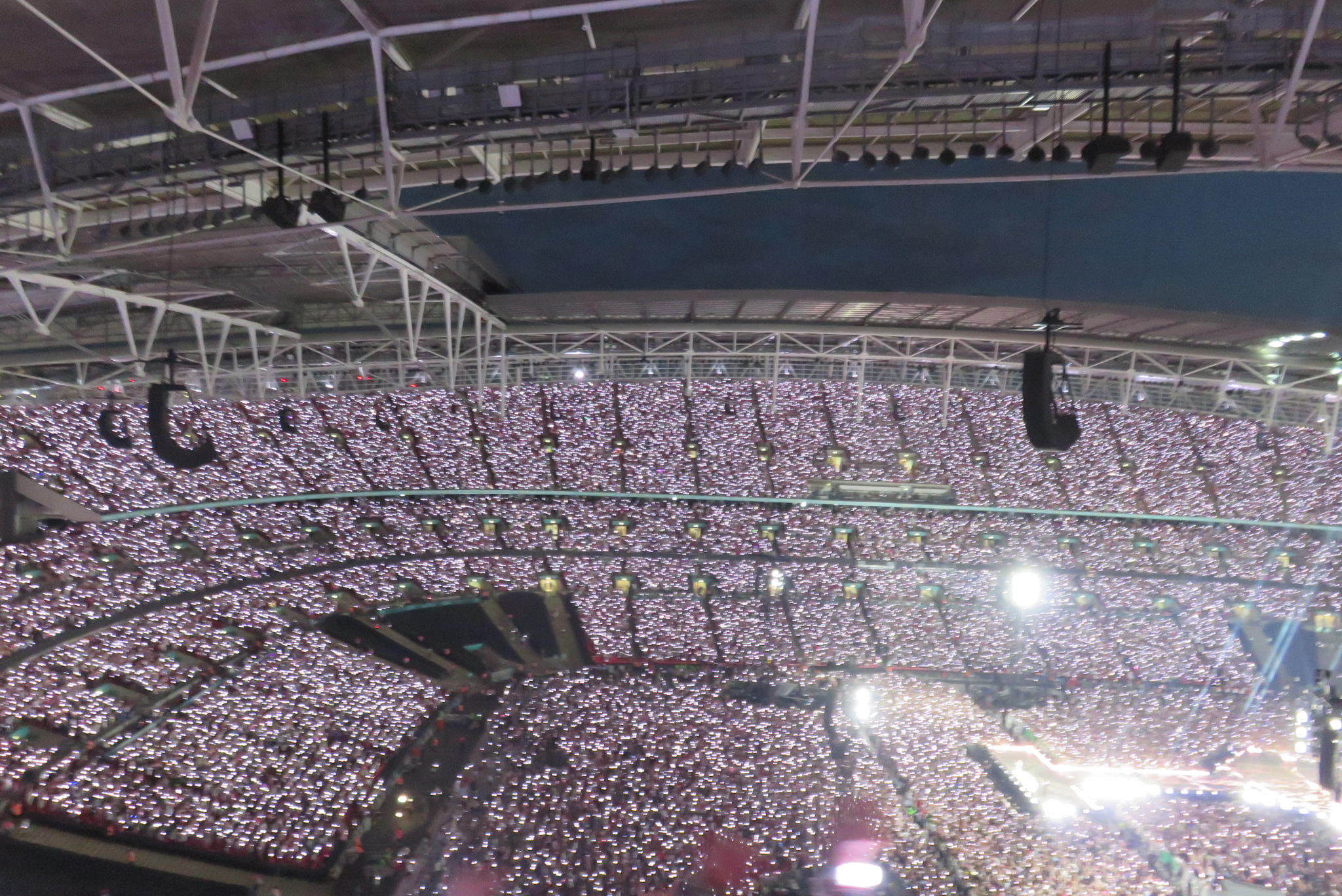
For the 1989 era the wristbands we had been given at the start of the concert came into their own with the entire stadium lighting up the now dark night. It was absolutely spectacular and a fitting backdrop to, arguably, her most critically acclaimed album. The highlight for me was Shake It Off which got the full singalong treatment after the break the crowd were given during Folklore and Evermore. Taylor herself is in possession of seemingly endless amounts of energy, which is just as well in a show that stretches over 3 hours and 46 songs. She never looked tired, her dancing was as full of energy at the end as it was at the beginning and the voice was just as amazing for Song 46 as it was for Song 1. The preparation she did involving running on a treadmill for three hours while singing all 46 songs paid dividends as she proved to have stamina to burn. It goes almost without saying what a great performer Taylor Swift is, but that performance night after night on a tour like this is the result of massive amounts of preparation rivalling the athletes we saw in Paris over the past few weeks.
The Tortured Poets Department has had a mixed reception since its release, but you wouldn’t guess that from Friday night. For her adoring fans Taylor can do no wrong, and when you hear these songs live it really gives you much more of a sense of their power. I think that even the fans who were uncertain about the album were totally caught up by the staging and the fact that they did not seem to pale compared to what had come before. The seven songs were carefully chosen, brilliantly performed, and here I must mention the band’s role in this era. They were fantastic throughout the three hours, but the backing for this section in particular really helped those songs fly off the album and arrive fully formed and more impressive on the night.
The Surprise Songs are always a closely guarded secret and a subject of fan speculation. The Lover album was the era that started the show but one song that hadn’t been played for five years made its long awaited reappearance to a huge roar of delight. Taylor introduced it with a reflection on one of her favourite cities and ended by saying ‘I love the English’ which could only mean London Boy, a song I really enjoyed when I first heard it and enjoyed even more surrounded by the crowd in Wembley Stadium. I don’t think that Taylor Swift gets enough credit for her guitar playing. She is top class on the acoustic guitar and here it added a layer of richness to a fan favourite. The second Surprise Song was actually two for the price of one as Taylor mashed up Dear John from the Speak Now era, which is only represented by Enchanted on this leg of the tour, with Sad, Beautiful, Tragic from Red. These songs were beautifully played on the piano. I thought we were really fortunate with the choice of surprise songs.

The final seven songs of the night were from the Midnights era which was released to a very positive reception in 2022. The spectacular effects on the stage lifted a set of songs that on the face of it could seem like a slightly low key finish to the night. However, with Taylor Swift nothing is low key! Bejeweled saw the stage literally covered in jewels courtesy of the special effects while the wristbands pulsed to magical effect. Karma was the final song bringing to an end 3 hours and 15 minutes of magic.
I have never, and will never, see another concert to equal this one. The dancers and the band were incredible but it was the love and affection flowing from the stage to the seats, even those near the very top of Wembley Stadium, and back again that made it so special. There were young girls at their first concert who will remember this for the rest of their lives, teenagers and those around the age of 22 who were transported to a place of love and joy and finally older gig goers like me who were reminded of the power of live music and spectacle all over again. What a night, and as I said at the start ‘WOW’!

All Photographs by the writer.
Prom 27 Royal Albert Hall August 9 2024

Attending a concert at the Proms is something I have wanted to do for many years, but I only ticked this off of my personal wish list after missing out on the reasonable price tickets for the last few years. I certainly didn’t want to stand in front of the orchestra with the seasoned ‘Prommers’ and I always have my pre-set spending limit for every ticket I purchase, so this year I joined the queue for Prom 27 more in hope than expectation. Luckily, my efforts and patience were finally rewarded for a performance featuring a favourite piece of music, Richard Strauss’ Alpine Symphony.

Act 1
The first piece, Mirage by Finnish composer Kaija Saariaho (1952 – 2023), was challenging to say the least! I equate it to Modern Art, in that it would definitely speak to someone who was on the correct wavelength, but utterly bemuse anyone who wasn’t. Suffice to say I wasn’t, and the tone poem translated from Maria Sabina’s chant Shamanic trance went completely over my head. A duet for soprano and cello, it could be appreciated for the vocal and instrumental virtuosity, but that is sadly where it ended for me. I saw people around me completely enraptured and I recognised their connection with the music so on that score at least, I knew it was a piece of music with something to say.
The second piece, by contrast, was an absolute delight and very firmly in my comfort zone. Piano Concerto No 9 in E Flat Major, K271 ‘Jeunehomme’ by Wolfgang Amadeus Mozart (1756 – 1791) was written in 1777 while Mozart was travelling to various courts around Europe looking for a permanent position as a composer. It is perhaps an encapsulation of everything I love about Mozart. It is playful in places, as indeed you might expect from someone of 21 years of age, but it shows a musical virtuosity that epitomises his gift for the piano concerto as a setting for his genius. The soloist Seong-Jin Cho, the Seoul born pianist who is currently Artist in Residence with the Berlin Philharmonic, had magic in his playing that was a perfect match for the magic of the music. Even as someone who is definitely not an expert I could appreciate that I was in the presence of a rare talent. The five ovations and the encore certainly were richly deserved for such an incredible performance.
Act 2
An Alpine Symphony by Richard Strauss (1864-1949) is a painstakingly developed tone poem that he started in 1911, but did not finish until 1915. It shares many of the features of my favourite piece of music, Vltava by Smetana, and that is why I have always been drawn to it. It is drawn directly from nature, in this case from the Bavarian Alps, and in Smetana’s case from the river that runs through his Bohemian homeland. Each section is a specific natural feature or an event that is given musical form, and these sections knit together through underlying themes to create a coherent and satisfying whole. An Alpine Symphony follows the journey of two climbers to the summit of the mountain and their return at the end of a fulfilling day. The most impressive and memorable section is the Thunderstorm, descent which sees Strauss throwing everything he’s got at the music. Percussionists are usually the undercurrent in an orchestra, but in the storm they take centre stage. I had never seen a wind machine or a thunder machine before, but their effect was incredible. When these two instruments were combined with drums and the massive Royal Albert Hall organ, the impact is unlike any other classical piece I have heard live. On CD, the symphony is great, but live it is simply outstanding.
Final Reflection
Classical music has been a part of my musical life from the days of Tom and Jerry onwards and it is strange that I have not attended more classical concerts, but, like live rock or pop, you never really hear a piece of music until you have heard it in concert. I shall seek out Jeunehomme and I will definitely play An Alpine Symphony again, but I know that however good the recording it will never match last night’s experience.

