Welcome to the seasonal offshoot of my record by record trawl through my huge singles collection. I have separated my Christmas singles from the rest and it’s these I am going to look at here. My definition of a Christmas single is quite simply a record with an A Side that explicitly mentions Christmas or is based on a carol. So, here goes, it’s time to get festive!

The Barron Knights had a run of success in the late 70s and early 80s with their parody tracks. Never Mind the Presents is a typical set of three songs being parodied, together with a linking tune and lyrics. The three songs in their sights at Christmas 1980 were Another Brick in the Wall Part 2, about a drunk Father Christmas, Day Trip to Bangor, about the office Christmas party and The Sparrow, about a fairy at the top of a tree. It was great fun at the time and still raises a grin all these years later. White Christmas by Bing Crosby was re-released in 1977 after his death and I had to get it. Yes, it’s old fashioned, yes it sounds a bit corny in places, but for sheer Christmas spirit it perhaps encapsulates the traditional feelings of the season better than any other. It’s always interesting for me to look at why certain records don’t stand the test of time in the way others do. With Dana’s gorgeous I’s Gonna be a Cold Cold Christmas it’s definitely not about the quality. It’s arguably a better seasonal ballad than pretty much any other from the era, and it’s beautifully sung by Dana. However, Dana has slipped from the collective musical consciousness, due I think to the unfair perception of her music as old fashioned and I think this explains why one of the superior Christmas singles, which got to Number 4 in 1975 has been unjustly forgotten. If you find it on YouTube I think you will agree with me. I said from the start of this series that I would include every single and I have. Another Rock n Roll Christmas has fallen foul of the singer’s crimes, quite understandably, but I bought it, I loved listening to it and although I have obscured his name to avoid offending sensibilities, it stays in my collection. Jethro Tull’s Solstice Bells is a very classy piece of folk/pop and is, as far as I know the only festive record to reference December 21st! Given the fact that so many of our Christmas traditions were taken from Yuletide, it counts as Christmas for me. Finally, we have Aled Jones A Winter Story from the cartoon of the same name. It was clearly designed to repeat the success of his version of Walking in the Air from The Snowman cartoon (originally sung in the cartoon itself by Peter Auty in case you get that question in a pub quiz!) the previous Christmas. It was sung by Aled Jones who was on the crest of a wave, was from the soundtrack of a Channel 4 cartoon shown at Christmas and had a similar sound. It looked all set to hit similar heights. However, A Winter Story released in 1986, didn’t get much airplay simply because it wasn’t as memorable, and crawled to Number 51 in the charts.

I know I said it based on whether the A Side was a Christmas record, but as I only picked up the single from Johnny Mathis and Henry Mancini because of When A Child is Born I have decided to count it! Even if Dave Bartram of Showaddywaddy hasn’t forgiven Johnny Mathis for stealing the Christmas Number One from under their noses in 1976, it’s still a gorgeous song beautifully sung and when I saw it in a charity shop I thought ‘Why not?’ Stop the Cavalry is simply a seasonal must listen and has been every year since 1980. Jona Lewie may not have intended it to be a Christmas single, but it has been a welcome returnee to my playlists every Christmas and will always be a cherished song of my mid teens at a time when the Christmas record arguably seemed to be in decline. Mud were Number One in 1974, following the previous year’s Christmas themed monster, of which more later. An Elvis pastiche, it was performed by Les Gray on Top of the Pops with his trademark lack of seriousness. He had a ventriloquist’s dummy that ‘delivered’ the spoken section to camera on a set which was covered by snow by a very enthusiastic stage crew! Listening to it devoid of the memories of the time, it probably sounds a little pedestrian, but it’s a song that caught the imagination of the record buying public in no uncertain terms. Shakin’ Stevens was one of those artists whose singles I bought without hearing them in virtually every case, so sure I was that I would like them. As a result I bought three of his Christmas singles as soon as they were released. His Elvis impression is even better than Les Gray’s on Blue Christmas. Not surprising really as his big break was appearing as the Young Elvis in the West End. The star on the top of the Christmas tree from Shaky is of course Merry Christmas Everyone, a seasonal classic in the top tier of the genre. It is so good that it was always going to be a Number One, except of course it wasn’t. He recorded it in 1984 but as soon as he saw the competition, Band Aid and Wham, he postponed its release until the following year when it stormed to Number One! For anyone else, The Best Christmas of All would have been a signature Christmas tune, but so good were both predecessors that, good though it is, it has the air of an also ran. I still enjoy listening to it though.

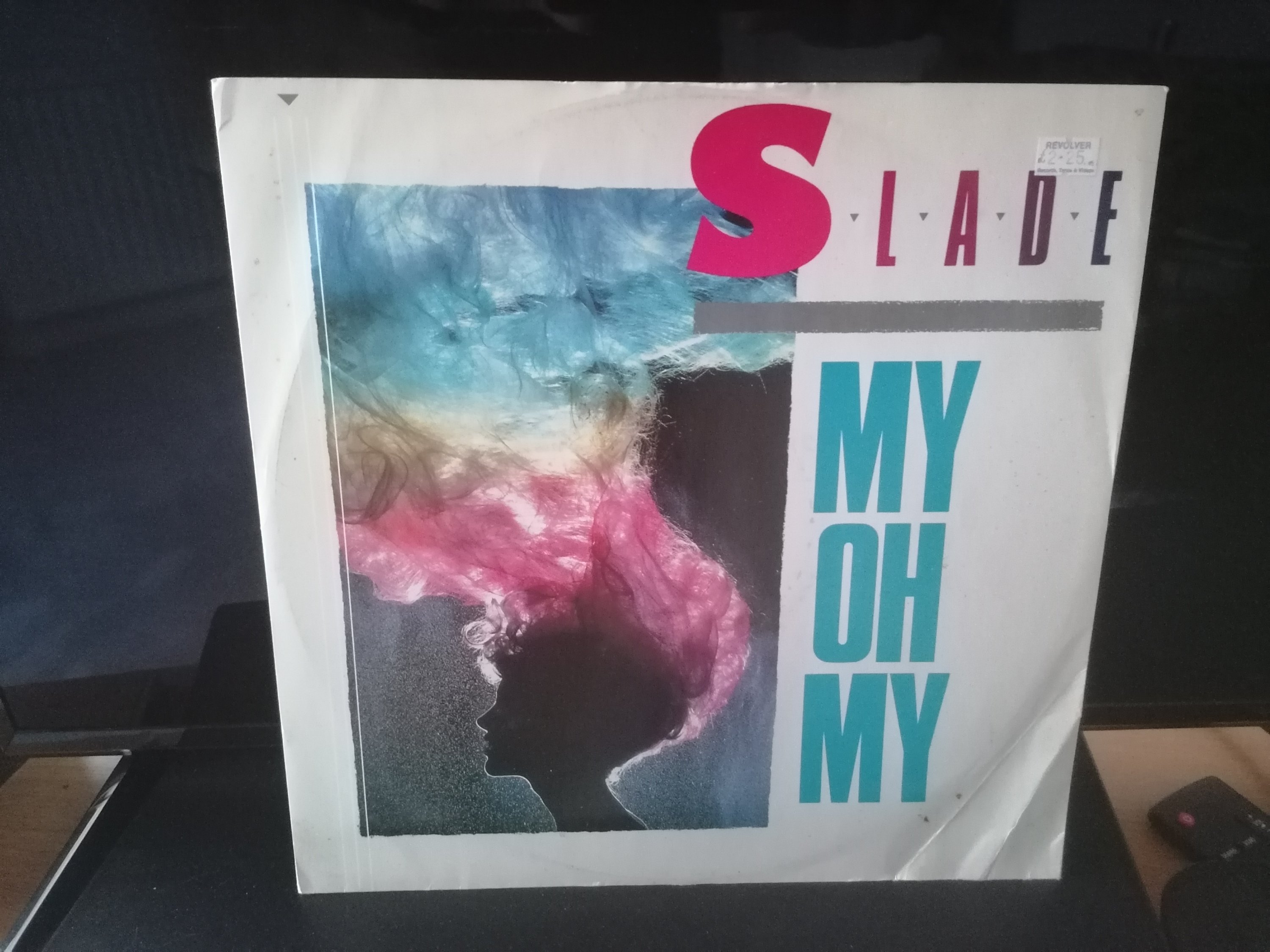
As already mentioned, Showaddywaddy missed out on the Christmas Number One by a whisker in 1976. Two years earlier they released their self-penned festive song, Hey Mister Christmas, a catchy rock n roll number that is better than a lot of people give it credit for. Sentimental verses and a singalong/shoutalong chorus makes it proper Christmas fare and it is definitely due a reappraisal so just give it a chance. I think it may just surprise you. Next, it’s Slade, it’s Noddy, it’s Christmaaaaaaaaas!! Arguably, without them and Wizzard in 1973 the Christmas chart battle and perhaps the whole genre of Christmas songs may never have been developed in the same way. It’s brilliant and I can listen to it time after time every December and never get remotely bored of it. Given the number of novelty records that hit the charts in December it’s perhaps surprising that I don’t have more of them in my collection and that so few of them are directly Christmas themed. One that is, is a very funny record from Dennis Waterman and George Cole in their characters of Terry McCann and Arthur Daley from the hit TV series Minder, What Are We Gonna Get for ‘Er Indoors? It’s a genuinely good record in its own right and on its own terms. In the song, Arthur is agonising over which of his knock off goods to give to his wife at Christmas! The comic timing displayed and the singing of Waterman are both top notch and they combine to produce an excellent Christmas single. As I am putting this entry together, the Number One is Last Christmas by Wham. My single is from the original release in 1984, pretty much on the day it came out. Again, no introduction is necessary. The only thing that I cannot understand is why people want to play Whamaggedon every year. I can’t wait to hear it as soon as possible. The final original single is the fantastic, timeless Wombling Merry Christmas with the ultimate sax solo, gorgeous lyrics and the typically multi-layered Mike Batt lyrics. Pure magic that takes me right back to 1974

As a bonus, I end up with two modern day Christmas classics from Cats in Space, a group who hark back to the 70s and 80s with their sound and also in terms of their release of vinyl singles. My Kind of Christmas is simply fantastic and the sound is a throwback to every classic Christmas track you’ve ever heard. Tongue in cheek lyrics with the 70s flowing through them and I only wish it could have been given a chance to get a wider audience. As you can see I have two copies, one a single disc, the other one a double disc pack. Finally, I have their version of I Believe in Father Christmas, which loses nothing in comparison with the original. The voice of Damien Edwards is one of the best in modern rock music and he really shows it on this track.
So there you have it. My Christmas singles collection of the good and the not so good. I hope you enjoyed the journey through Christmas past and that some of these will get you singing along in your head and going on to Spotify to relive your youth.

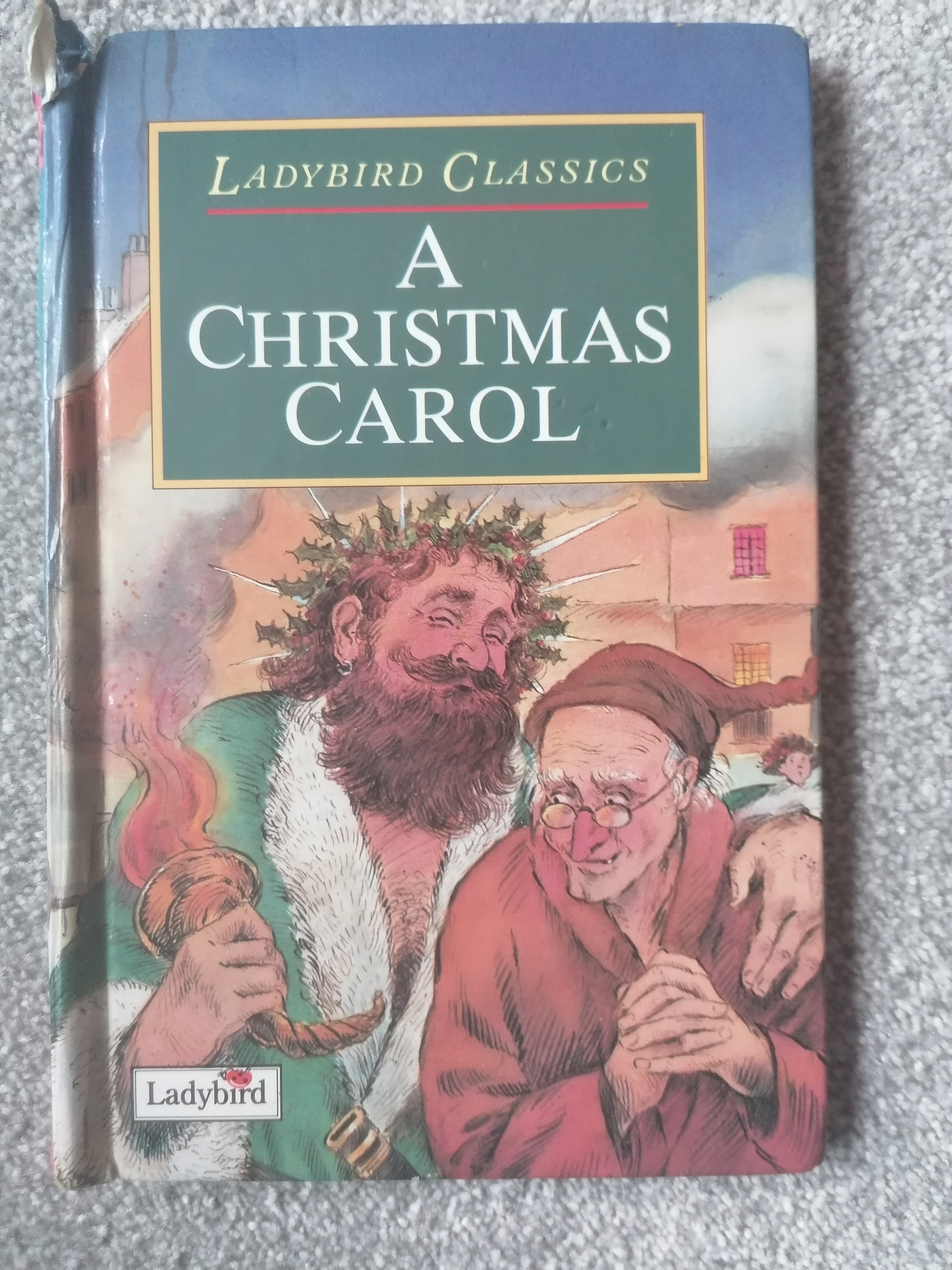
In 1970, arguably at the end of the heyday of movie musicals, the story of A Christmas Carol got a musical treatment from the pen of Leslie Bricusse who went on to write songs for the following year’s Willy Wonka and the Chocolate Factory another of my all time favourite movies. The fact that neither movie really set the box office alight hinted at changes in the tastes of the cinema going public. However, both have their die hard fans and both have remained cultural touchstones for the generation that first saw them and the succeeding generations. So, what is special about Scrooge?
The Cast
Rather like the George C Scott version I blogged about yesterday this version of Scrooge has household names sprinkled throughout the cast. Albert Finney is a marvellously bitter Scrooge who plays him as an unrepentant miser at the start. You could argue that his redemption arc is perhaps a little extreme, but what would you expect in a musical? He inhabits the role with gusto and his speak singing enables him to overcome the limitations of his musical abilities as he delivers the songs with a depth of emotion especially in I’ll Begin Again. The first three ghosts he meets with are played by British acting legends Alec Guinness as Jacob Marley, Dame Edith Evans as The Ghost of Christmas Past and Kenneth More as The Ghost of Christmas Present. All three enjoy themselves tremendously with Guinness in particular chewing the scenery with relish! However, of the three, it’s perhaps Edith Evans who leaves the biggest impression of acting excellence as the faintly disapproving and gently acerbic spirit looking on with a mixture of disappointment and interest at Scrooge’s past. She plays it completely straight and it’s all the more effective for that. Laurence Naismith is a magnificent Mr Fezziwig, embodying the spirit of the character more than in any other filmed version, and in my fantasy Christmas Carol with my favourite actors in the roles, he would definitely be my Fezziwig of choice. Try to avoid singing along with December the 25th if you can as his infectious joy lights up the screen. Alongside these names one other actor stands out for his bravura performance of the film’s most famous song. Anton Rodgers as Tom Jenkins was given the opportunity to sing the Oscar nominated song Thank You Very Much and he absolutely knocked it out of the park. When he is singing a song filled with sharp, occasionally bitter humour, he brings out the underlying hatred of the mean moneylender whilst still singing and dancing with infectious good humour.
The Songs
I have already mentioned two of the songs, but the soundtrack is packed with the superb song writing of Leslie Bricusse at every turn. From the riotous Father Christmas to the misanthropic I Hate People to the sweet and sentimental Christmas Children this film has every mood catered for. Almost every song is a singalong classic that would really suit a singalong version at the cinema. However, it doesn’t seem to have been revived in the wider public affection in the way that Willy Wonka has, to the extent that the prequel, Wonka, released on Friday (8 December), which uses some of Bricusse’s original music, in the UK has become one of the most anticipated and critically lauded films of the year. The songs in Scrooge are arguably much more effective as a score and the theatre revival of the early 90s with some well judged additions proved to be one of the best stage shows of the decade.
The Secret of its Success
For me, Scrooge has become a Christmas classic for a few reasons. I have already mentioned the cast and the songs, but the other main ingredient is more intangible. Bricusse loved A Christmas Carol and he wanted to share his affection for this marvellous story. He does so by investing each role, large or small, with a rich characterisation and an actor that embodies that role perfectly within the film. Look at Fred’s friend Harry, with just a few lines, played by the legendary Gordon Jackson, the toyshop owner with only a couple of scenes played by Catweazle and Magic Grandpa (depending on your age or the age of your children) star Geoffrey Bayldon or one of the two charity collectors, played by Roy Kinnear. Each of these minor roles is brought to life with care and with a seriousness that shows actors who were committed to the character and the film. Yes, Scrooge doesn’t really reflect the grittiness of Dickens’ novel, but it’s not supposed to. It is there to reflect the redemption arc, almost from the very beginning. I can also see that the addition of scenes in Hell aren’t really the film’s finest moments as they don’t really make sense, but Guinness saves the scenes with his playful acknowledgement of their absurdity. In the final reckoning, though, this film is simply great fun and what’s wrong with that at Christmas? It will almost certainly be on a TV channel at least once during Christmas, so even if you don’t have it on Blu Ray like I do, why not settle down in front of it for two hours of total enjoyment?

There are many versions of A Christmas Carol – I have more than a dozen myself! – and I am sure each one is someone’s favourite. I don’t have a specific favourite overall, but I have favourite scenes and favourite actors. In my opinion, the version that has the finest portrayal of Scrooge comes from 1984 when acting legend George C Scott had his turn at the role. In addition, the portrayals of Bob Cratchit, by David Warner and Ghost of Christmas Present by Edward Woodward, in particular, are absolutely fantastic. There is a huge array of talent in front of the camera, and all of them play their parts, large or small, with aplomb. Director Clive Donner was usually found behind the camera on TV shows but although this film was billed as a TV movie, he clearly had a much larger canvas to paint on. That canvas was Shrewsbury which stood in for Victorian London very well and became one of the characters in the film in its own right.
The Setting
For me, the main element that sets this film apart from all the others is the way that this version’s London is dark, grimy and claustrophobic. It is also very real and totally convincing. This setting is far closer to the way in which Scrooge, Bob Cratchit and Scrooge’s clients would have lived. There is squalor, there is danger, there is despair and Scrooge builds his business on all three. Even Scrooge himself lives in one room of a large but dilapidated house, that looks like a place that hasn’t seen any maintenance in decades, having walked home through streets that are dark and threatening, where beggars and thieves could be waiting around any corner. Scrooge’s first workplace, Fezziwig’s, does not resemble a ballroom ready for a dance, it resembles a warehouse which has been swept and cleared. The Cratchit house is clearly not warm or even particularly comfortable, although they make the best of it. This is all at variance with the other more genteel versions of Scrooge that show a sanitised London within which even the Cratchit family look fairly content. When Scrooge is led through the streets on Christmas Morning by the Ghost of Christmas Present, the people look happier but the streets look as dark and grimy as ever. This is a real world within which we see a real Scrooge.
Ebenezer Scrooge played by George C Scott
George C Scott plays Ebenezer Scrooge not as a pantomime villain but a real person. Gone is the ogre growling at children, counting his money into piles of gold or licking his pencil to put another name in his book. In his place is a businessman with his eye on the earning potential of his company, to whom his debtors are simply entries in a ledger. He is not immoral but amoral, not evil but uncaring and not angry but baffled by those who don’t think like him. He would fit perfectly into modern Britain and would no doubt recognise it straight away – although I mustn’t stray into politics here! Scrooge in this version is self contained, as Dickens imagined him, and, as a businessman should, very ready to negotiate with the ghosts in order to make things easier for himself. Scott was always a powerful actor, and he could have made it the Scrooge show by dialling up the pantomime villainy or by chewing the scenery, but he doesn’t. His Scrooge is a product of his time, his upbringing and his choices and he remains entirely true to that. His reaction to the visions reflects a tendency towards sober consideration rather than emotional outbursts and logical questions rather than flights of fancy. Throughout the film he doesn’t struck the wrong note once, even in the final scenes when he could have been forgiven for throwing caution to the wind. He is the definitive Scrooge for me, the one all others are judged by and the one they should aspire to be.
Bob Cratchit played by David Warner
I would put David Warner’s portrayal of Scrooge’s long suffering clerk on a par with that of Mervyn Johns in the 1951 Scrooge, and there is no higher praise from me! The Bob Cratchits of both films are perfect foils for their Scrooges so Warner’s Cratchit is downtrodden but occasionally defiant and constantly struggling by a weight that is emotional rather than physical. When he meets Tiny Tim outside his office after closing up you can tell he is happy to see him, but far too tired to run to the end of a queue to slide down Cornhill. At home, he is very much the family man, but he isn’t the focal point until he proposes the toast to Scrooge, at which point his wife slaps him down, showing who is the real boss at home! With limited screen time Bob Cratchit can fail to make much of an impression, but in David Warner’s capable hands he becomes a vital element of the storyline.
The Ghost of Christmas Present played by Edward Woodward
This Ghost of Christmas Present is hands down the best of any of the films. He is sarcastic, angry, acerbic and clearly despises Scrooge and all of his ilk. He is also endlessly compassionate to those who are forced into poverty, pain and fear by a system that is completely weighted towards the Scrooges of this world. Edward Woodward delivers both sides to perfection. He, more than any other Ghost of Christmas Present, makes you remember that A Christmas Carol was going to be a pamphlet called On Behalf of the Poor Man’s Child. Dickens was appalled at the conditions he saw about him in London and wanted to speak out about it, and the original pamphlet he wrote ended up almost verbatim in the mouth of the Ghost of Christmas Present. Given the angry nature of the contents, why wouldn’t the character be angry? Woodward delivers that anger better than any other iteration of this character in any other film. He is simply magnetic.
If you haven’t seen this version before then give it a chance if it comes on TV or, better still have it available whenever you want to watch it by buying it from the usual outlets. It’s worth every penny, and maybe even Ebenezer himself would agree!

One of the great things about Christmas is that every so often a new song, album, TV show or film comes along to become part of your own personal Christmas. This has happened with Lost at Christmas which I first came across on BBC Scotland two years ago. I watched it again last year and thoroughly enjoyed it once again, so this year I took the plunge and bought the DVD. So what is so special about this film as far as I am concerned? Why should you ignore the ridiculously low rating on IMDB? Well, read on.
The Story
In a small Scottish town, two people are making big decisions that will be life changing. Jen is heading there to surprise her boyfriend and Rob is about to propose to his long term girlfriend. Suffice it to say, things do not go to plan and the two find themselves on a station platform, only to find that there is no chance of getting home that way. Jen takes her former boyfriend’s car and the two of them head into some typical Scottish (Christmas movie) weather. Having to stop at a remote inn when their car grinds to a halt, the two, who don’t really understand each other, having to share a room. So far, so predictable, but there’s some twists that really make the film different from a traditional Hallmark style movie.
The Cast
One of the main reasons I first gave this a chance is because of its very strong Doctor Who connection. We have the Seventh Doctor himself, Sylvester McCoy, 60s companion Jamie McCrimmon, Fraser Hines and young Amelia Pond from the new series, Caitlin Blackwood. Add the star power of Gregory’s Girl alumnus and Altered Images lead singer Clare Grogan, and you have a central supporting cast packed with talent. The two main characters, Natalie Clark’s Jen and Kenny Boyle’s Rob are, on the surface a typical rom-com couple with one being a free spirit, or at least trying to be, and the other being an initially taciturn and unhappy man at a crossroads. The way they introduce you to the hidden depths in the characters is part of the charm of this film for me.
My reflections
I have always enjoyed my trips to Scotland and I feel at home in Edinburgh whenever I visit. The Scots seem to have a kindness mixed with a no nonsense attitude and a sense of not suffering fools at all, let alone gladly. As a result, I have always enjoyed films, TV, music and sport from there. To me, Lost at Christmas captures the irreverence and warmth of the people who are often very happy to poke fun at themselves as well as others. It is a film that is a very welcome contrast to the syrupy Christmas movies common at this time of year – not that I am averse to them either! The characters all have their own charm but they are not instantly appealing. You have to get to know them and appreciate them, just as you do people in real life. It makes the film more true to life than most and gives it a welcome edge especially early on. This film will no doubt be on the BBC sometime this month and if you spot it, I really urge you to give it a chance. If you’ve had too much sweetness you will appreciate the occasional tartness of Lost at Christmas.