

Background
For the first of my Re-play posts, I have decided to focus on a classical album of the type that have purists throwing their hands up in horror! I think it’s important to reflect on the aim of these records at the time. Rather like Classic FM the aim was perhaps to introduce listeners to a range of ‘light classics’ as a gateway to more extensive research into the classical realm. Well, that’s the way it worked with me. Many listeners, of course, will have stayed with the selections on this album and, to quote Paul McCartney, on the subject of Silly Love Songs, ‘What’s wrong with that, I’d like to know?’
I think that there is an element of gatekeeping when it comes to classical music, with a ‘ranking’ of pieces according to their perceived value. Once a piece of music appears on a TV programme, or worse still an advert, it is regarded by some as in some way tarnished. Now, many of my generation will have first heard classical selections on cartoons like the Looney Tunes classic, ‘What’s Opera, Doc?’ featuring the Ring cycle in about 10 minutes and ‘The Cat Concerto’ built around Liszt’s Hungarian Rhapsody No. 2. There are many other examples, some of which are on this album. Sadly, this accessibility that young children have to classical pieces reduces as they get older, and eventually classical music becomes a more elitist pastime. Schools had a lot to do with this in my childhood, not because they didn’t play any classical music, but because the focus was on analysis not enjoyment. When the Classic Experience vinyl arrived, I was in the right frame of mind to explore classical music and I never really looked back.
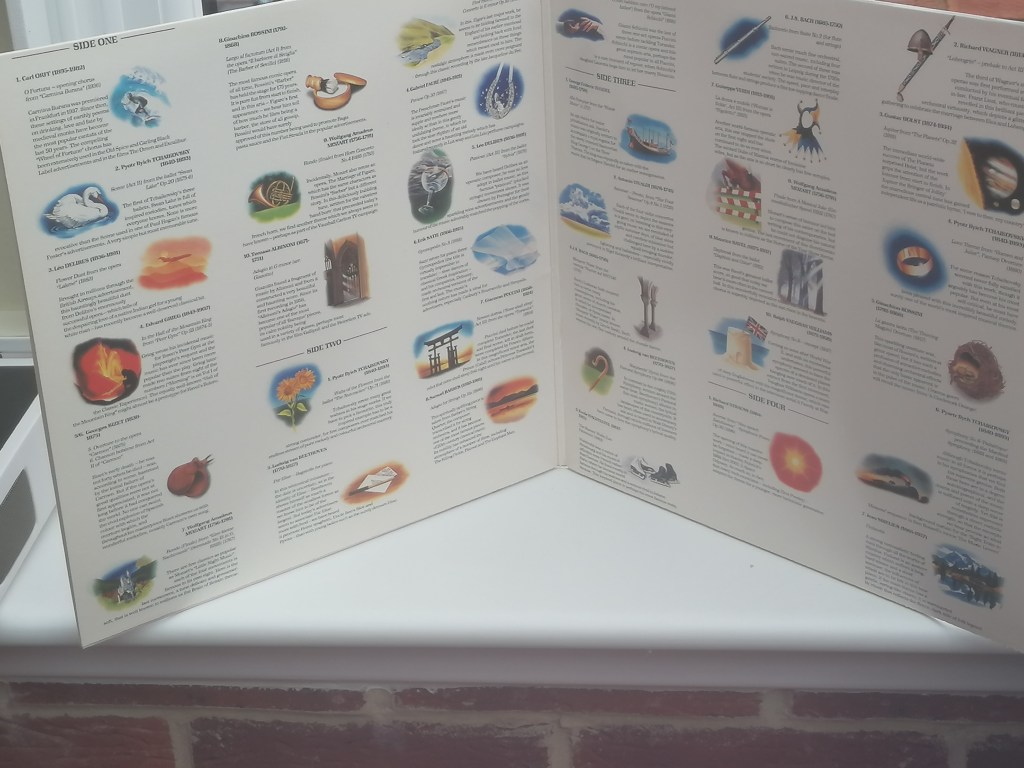
Classic Experience II – Standout Tracks
Side One starts off with a heavy hitter. It’s the X Factor judges walk on music, or the Old Spice advert or the song from Final Fantasy VII, depending on your cultural background! Oh, OK, it’s O Fortuna from Carl Orff’s Carmina Burana! The first thing you notice is that the power of the piece is intact despite its regular use outside of the concert hall. What this album does is to separate the tracks from their cultural baggage allowing you to listen to them in their ‘natural’ settings. This is helped by the quality of the performance which is very high, in common with the rest of the album. EMI records who produced this compilation didn’t go down the route of re-recording these tracks, but then why would you when you have access to the cream of classical artists like Andre Previn (though not Greig’s Piano Concerto sadly), Jacqueline Du Pre and Nigel Kennedy amongst others.
Hall of the Mountain King by Greig, the fourth track on Side One is the Halle Orchestra conducted by Sir John Barbarolli and they produce a bravura performance which takes full advantage of the gradual increase in pace throughout the piece. I first came across this piece as Hall of the Mountain Womble arranged by Mike Batt and it’s all I can do not to chant ‘Womble, Womble. Womble, Womble’ at the appropriate point! Those of you in the UK may know it best as the tune used in the Alton Towers advert.
Side Two, Track Eight is the Adagio for Strings by Barber used most famously in BBC comedy drama Butterflies as Ria’s theme and in the 80s movie Platoon. The mournful, reflective nature of the piece is extremely moving and lends itself very well to deep sadness. Played here by the Philadelphia Orchestra it is able to leave its popular culture past behind and impress you anew with its aching beauty.
My favourite track on Side Three is the Eighth track, A Musical Joke by Mozart. For anyone brought up in the 70s this incredibly infectious piece of music was the introduction to the Horse of the Year Show. According to the fascinating sleeve notes, one of the best aspects of the series, it was written as a parody of the bad music written by his contemporaries. Mind you, probably everything that Mozart heard was a poor second best so he may have been setting an impossibly high bar!
My final choice is the Third track on Side Four which is an excerpt from Jupiter by Gustav Holst with the music that became the setting for the hymn I Vow to Thee My Country. That is something else that this selection does so well. It focuses in on the most familiar elements of the tunes and it is this that makes the entire collection so appealing. Once again, the conductor is a true legend, Sir Adrian Boult.
Reflection
I had not listened to this album in perhaps 30 years, but it was full of instantly recognisable music and it was a perfect background to my essay marking. Whereas I might find odd pieces of classical music if I was on You Tube or on a streaming site, I would not have settled properly to listen to all of the selections. The rediscovery of complete albums and the pleasure I get from them is definitely one of the best parts of reuniting with vinyl. Don’t dismiss albums like this, whether you are a purist or a populist, because in the Classic Experience collection they knew how to put the pieces together, choose the best performances and develop fantastic notes for non-aficionados.
Well, we have reached 1984, the final full year of my teens and my favourite ever year musically. The first part of that first sentence probably explains the second. It was a year when my life changed irrevocably, not for the last time, as I made a decision that shocked everyone close to me. More of that later. As such, it seems like the best finishing point for this long series of reminiscences. Yes, there were other years that I enjoyed musically, and other life changing decisions but the two never dovetailed as perfectly again.
The world around me
In 1984, I was working at Lloyd’s of London in Dock Road, Chatham. However, the dockyard itself was closed after 400 years as a result of the government’s decision to concentrate on building and repairing ships elsewhere. 7000 people lost their jobs, as did most of the 10000 non-dockyard workers whose livelihoods depended on it, and the local economy was devastated. The unemployment rate in the Medway Towns hit 24% and whole families were affected as sons often followed fathers into the trades available there, whilst mothers and daughters were regularly employed to provide administrative support. The area took years, indeed decades, to recover and many people will say that it never did. While my job was fairly safe – well apart from my complete incompetence that is – it became a year where the full reality of deindustrialisation hit home and affected the mood of the entire area. Also that year, in politically febrile times that were the cause of huge divisions across the country, the miners strike took place. Unlike her predecessor Ted Heath, Margaret Thatcher was ready to wait for the miners to capitulate, having taken the opportunity to stockpile huge amounts of coal when the possibility of a strike was first mooted. In a year which started with The Flying Pickets at Number 1 it was probably appropriate that their namesakes featured in the news very regularly. The battles between police and miners and between working miners and striking miners were of course the backdrop to Billy Elliott and the film and play managed to recapture the anger and despair of those times very effectively. The Greenham Common Women’s Peace Camp also hit the news that year, but unlike the miners, described as ‘the enemy within’, the peace campaigners were treated with more than a little condescension and levity by the public at large who had little time for them or CND. Whichever side you were on politically, however, the Grand Hotel bomb that narrowly missed killing Margaret Thatcher and many of her cabinet was a truly shocking moment that, temporarily at least, united the whole political establishment and the vast majority of voters in rightful condemnation of the IRA, whose bomb this was.
The cricket this year saw West Indies perhaps at their peak. They destroyed England in the Test Matches, recording a 5-0 series victory, the only touring side to record a clean sweep. Probably the most famous match of the series came at Lords when David Gower, the England captain, declared on the final morning with a 342 run lead. The idea was that it might give England a chance to avoid defeat or even sneak a victory. My favourite West Indian batsman, Gordon Greenidge, had other ideas as he hit a majestic double century in a 9 wicket win! It was a jaw dropping piece of batting that knocked the stuffing out of England who proceeded to lose the next three tests by a distance. The main positive to come out of this series was a novelty record recorded by Rory Bremner that had a touch of class that other records in that genre rarely had. It was credited to The Commentators, with Bremner impersonating Richie Benaud, Jim Laker and Brian Johnston amongst others. Called N-N-N-N-Nineteen Not Out, it was a parody of Paul Hardcastle’s 19 from earlier in the year. The original record referenced the average age of the US soldiers sent to fight in Vietnam, the parody referenced the batting average of David Gower! I was not initially a fan of 19 (although I came to appreciate it later), but I loved N-N-N-N-Nineteen Not Out and I sometimes wondered what Hardcastle thought of it. Reading a bit of background I was astonished to find out that it was Hardcastle himself who played all the instruments on The Commentators parody!
Beneath the shadow of the mushroom cloud
For many years we had been living with the cold war and the continual sabre rattling from both sides, but it was 1984 when the possibility of nuclear annihilation made its way into the pop charts with four of the most recognisable records of the year. Why was this? Well, partly because of the mood music coming out of the White House at the time, where Ronald Reagan referred to the Soviet Union as the ‘evil empire’ in a speech the previous year and unveiling the Strategic Defence Initiative involving missiles being stationed in space to shoot down Soviet warheads. Unsurprisingly it was referred to by the public and the media alike as the Star Wars Programme! In 1983, the film Wargames starring Matthew Broderick saw a teenage hacker get into the US Defence System and challenge the computer to a simulation that became all too real. Actually, that year there was the closest near miss of the 80s when a Soviet early warning system detected a US missile strike and it was only the determination of Stanislav Petrov to wait for official corroboration that saved the world from nuclear destruction. We didn’t know about this until many years later but it was a presence in all our lives especially around this time.
The first of the singles referencing nuclear destruction was released in February and reached Number 1 in early March for 3 weeks. The original was in German and was called Neunundneunzig Luftballons. Both versions were sung by Nena, and in the UK it was, of course, better known by its English title ’99 Red Balloons’. It references Captain Kirk and it talks about a war machine that ‘opens up one eager eye’ and can’t wait to subject the entire world to nuclear devastation. Yes, it seems a little exaggerated now, but at the time it seemed all too likely. Reaching Number 3 in June, Ultravox gave us the majestic Dancing With Tears in our Eyes with it’s amazing video. It told the story of a man who is rushing home to spend his last few minutes on Earth with the woman he loves, and, for my money at least, was the nuclear song with the biggest impact, because it shrank the story down to a human level so well. Later that month the summer smash from Frankie Goes to Hollywood, Two Tribes, reached the top of the charts and was Number 1 for 9 weeks. A more exciting record than Relax, , musically and lyrically, it was a song that did not need confected outrage to hit home. The brilliant video had the sight of Reagan and Andropov fighting each other in a ring and sinking to lower and lower tactics. As satire it was fairly broad brush, but it worked very well for younger record buyers like me. The final piece in the puzzle was the sampling of the Protect and Survive public broadcasts by Patrick Allen. As Raymond Briggs indicated in his masterful book and film, When The Wind Blows, the government advice would do neither! One of the records kept off the top by the FGTH juggernaut was Nik Kershaw’s contribution to the Nuclear Annihilation playlist, I Won’t Let the Sun Go Down on Me which reached Number 2 at the end of June. Once again, it envisaged the inescapability of nuclear conflict, but this time as a political goal.
Forty winks in the lobby, make mine a G&T
Then to our favorite hobby, searching for an enemy
Here in our paper houses, stretching for miles and miles
Old men in stripy trousers rule the world with plastic smiles
Mother nature isn’t in it, three hundred million years
Goodbye in just a minute, gone forever, no more tears
Pinball man, power glutton, vacuum inside his head
Forefinger on the button, is he blue or is he red
Break your silence if you would
Before the sun goes down for good
Yes, it was definitely sixth form politics of the type that I had very recently left behind, but lyrically this was the one that I enjoyed listening to and dissecting the most!
A complete change of direction
As I alluded to at the beginning of this article, 1984 saw me take a decision that completely changed my life in a variety of ways. Back in the early 80s we had something called flexi-time. For those of you too young to remember this it was basically treating workers like discerning adults – not a good idea if you were a bored 19 year old, but there you go! – by allowing you to choose your working pattern outside a core set of hours. Our core hours at Lloyds were 9.30 – 11.30 and 2.30 – 4.30, meaning that you could theoretically work just 4 hours on any one day and have a 3 hour lunchbreak! I took this policy to the very limit one day in May as potential sacking loomed into view. I was, as I have said before, completely unsuited at the time to the focus, discipline and attention to detail required for insurance. Therefore, at 11.30 one morning I headed on the short walk to the Careers Information Office and went in to see the Royal Air Force recruiting team. Within 15 minutes I had agreed to take the aptitude test there and then, which I passed very comfortably (the highest marks for the language section they’d ever recorded apparently) and two hours after arrival I had signed on the dotted line agreeing to join the RAF! The aptitude test, ironically said that I was best suited to working in the Administrative section where I needed to demonstrate focus, discipline and attention to detail!! Oh well, office work was something I could get used to if it got me away from Lloyds! In those days, the recruitment process was far quicker and I got the letter in June telling me that I should report to the Careers Information Office to take the oath of allegiance on November 6, 1984.
Well, by then I was working my 4 week notice at Lloyds and I needed to take things seriously if I was going to be able to deal with the levels of physical fitness required. To pass training, one of the tests was a one and a half mile run which needed to be completed in 11 minutes. The Monday after finishing at Lloyds I got out of bed, got my tracksuit on and ran my first two miles since school … which took me 20 minutes!! Clearly I was nowhere near the required level, so every morning for two months I got out of bed and ran, first increasing my speed, then increasing my distance. By the end of October I completed a 6 mile run in just over 30 minutes as my final hurrah!
My main focus other than the running was to get the most I could out of the cricket season. As the scorer for Frindsbury Cricket Club I had been restricted to weekends only by my job during the last month of the1983 season and the first part of the 1984 season. Now, I could be the scorer whenever I was needed, so I pretty much made the cricket club my second home. I got a couple of pounds for scoring, tea provided and most of my drinks bought for me all season. For a cricket nut like me this was paradise, and in return for the pay, food and drink I increased the complexity of my scoring to incorporate ball by ball and different colours for each bowler! It was the summer I had really wanted to have after my A Levels and I made the most of it, albeit a year later.
Now, the reaction to my decision ranged from disbelief to incredulity pretty much across the board. Most of my friends and family thought I was mad! From the vantage point of nearly 40 years later I now completely understand it, but at the time it was my only real option after resigning from Lloyds. I turned a deaf ear to all objections and ploughed on regardless with the full inexperience of youth behind me!
During 1984, my best friend’s parents were working out in the Middle East, leaving him in charge of the house when he was home, from his own posting in the RAF. He seldom stayed on base when he was not on shift for 4 days so most months we had at least two parties at his house! The party to send me off to the RAF was a particularly riotous one with enough alcohol to float a dinghy and very little food to soak it up. Even though I was guest of honour I still insisted on taking charge of the music, and what an embarrassment of riches I had to choose from. This was mainly because I spent a lot of my money on singles throughout the year. Saving my money never came into it and as a result I ended up each month spending up to or occasionally above my monthly salary! It was the year of film music like Together in Electric Dreams, Ghostbusters, No More Lonely Nights, Footloose and Never Ending Story, the year that George Michael released Careless Whisper as a solo artist and my favourite song of the year, Freedom, as half of Wham! Queen’s The Works album gave them three huge hit singles, and Lionel Richie’s Can’t Slow Down staked its claim as the best late night album of the decade. All of these songs, and many more, got an airing that night as we all got steadily more drunk and steadily louder! Lucky for us the next door neighbours were deaf, but it astonishes me that we didn’t get several knocks on the door. Three days later I swore the Oath of Allegiance and the day after that a spectacularly unfriendly welcome from Corporal Hunter who met us at Newark Northgate Station did make me wonder if I had indeed made a huge mistake!
Christmas 1984
I was supposed to be taking part in my passing out parade on December 19, but I was backflighted for being rubbish at drill. That meant I had to start all over again with the intake 3 weeks behind me. I was devastated to such an extent that all my confidence and enthusiasm went out of the window, and I was backflighted a further 3 weeks just before Christmas and told I’d be starting all over again in the first week of January. My abiding memory of December 19 was seeing my former colleagues in 9 Flight dressed up to the nines in their Number 1 uniform and marching past me to the tune of the RAF Swinderby band playing Winter Wonderland as I swept out a hangar for some misdemeanour or other. It was years before I could listen to that song again without flashbacks! It all made for a very bleak Christmas as I returned home to lick my wounds. On the plus side, I did get to watch the best Christmas Chart battle ever, even if the Number 1 was a foregone conclusion. If you’re interested in reading about it here is my h2g2 article about the Christmas singles of the 80s
Final thoughts
This has been a fascinating look back from my point of view, and I hope some of you have found it interesting too. This final article has perhaps more about me and less about the music than I intended, but I hope you forgive me for that. I may return to my musical history in the months ahead, but for now this is (or was) AC (Aircraftsman – the lowest of the low) Pearce signing off!
One of my bugbears when it comes to Christmas movies is not the movies themselves, but the reviews that they get from professional and non-professional reviewers alike. It seems quite acceptable to sneer at them and point out their faults, real and imagined, as a way to denigrate not just the movie itself, but the whole genre. The same thing happens with Christmas music, where people tend to demonstrate their ‘superior’ taste by parading their dislike of ‘Christmas songs’ as if they are all of equally low musical merit. This isn’t to say I give anything with a Christmas theme a free pass, far from it. However, I am open to the possibility that it will be very good.
In that sense, given that it is a film about Christmas that revolves around Christmas music, it was probably predictable that the new Sky Movies production, A Christmas No. 1, was not going to get many good reviews, but I hope that after you have read my review you will give it a chance. You may not like it, but hopefully that will not be purely down to the fact that it is a Christmas film.
The Plot
Iwan Rheon plays Blake Cutter, the bassist in a thrash metal band called Scurve. He is also a songwriter whose work is not entirely appreciated by his bandmates. Although he enjoys playing, he and the band seem to be pulling in different directions with the drummer as a kind of uneasy peacemaker – very Abbey Road in a film packed with ‘guess the band/singer’ moments! His niece Nina, played by the amazing Helena Zengel, is a vlogger whose two passions are Christmas and her favourite boyband 5 Together! She is in hospital receiving treatment for cancer and Blake visits her whenever he can. They have a kind of brother/sister relationship full of knockabout humour and often Nina seems to be the more focused and sensible of the two. She asks him to write a song for her. He initially gives her a grindcore howl of anger that does not hit the right note. She tells Blake that she wants a Christmas song, a genre that Blake is extremely cynical about. Nevertheless, he puts his mind to the task and comes up with a song that she films for her vlog. Enter Meghna Rai, played by Freida Pinto who has been ordered, by her ogre of a boss Grainger Cocksmith (played with, perhaps, cathartic zeal by an unrecognisable Alfie Boe) to find a surefire Christmas Number 1 for failing boyband 5 Together. She sees the video, hears the sound of that Christmas Number 1 and decides to ensure that she gets hold of the track by underhand means. Blake is horrified and makes her promise that all the profits will go to cancer charities and that he will be the producer. As the track nears completion the two grow closer, much to Nina’s delight, until the record company reneges on its promise to donate all profits to charity. Can anything be rescued from the situation with Blake seemingly unable to trust her again?
The Cast
Iwan Rheon uses his singing and acting background to excellent effect as Blake Cutter. He is every inch the frustrated pop star looking at a career that never seemed to deliver what it promised. When he is singing or playing you just know that he is having a blast and he has a really good voice on songs ranging from the plaintively gorgeous Christmas Morning to the existential scream of Godkiller written for his band Scurve as a reaction to Nina’s condition. What the two songs have in common is an outpouring of love and fear as he faces the illness that scares him more than it seems to scare Nina. Rheon absolutely inhabits both songs, and a rendition of Christmas Morning near the end of the film is just a beautiful, emotional piece of vocal work. As a romantic lead he is pleasingly off kilter and cynical, but he shows Blake’s tenderness very well indeed and works very well in his pairing with Freida Pinto. His connection with Helena Zengler’s Nina is almost telepathic and the way he combines love, anger, fear and a determination to do everything he can for her, gives the film its emotional core.
Freida Pinto as Meghna Rai has a much less sympathetic character to play. She is cynical, opportunistic, selfish and career focused at the expense of everything and everyone else. She will do anything to get what she wants, including exploiting a sick child, something that Blake calls her out on. We learn that she had a bad experience with a former lover who she used to manage and who she broke up with after finding out that he was sleeping with her best friend. To make matters worse, she became the subject of his next album in its entirety! Although she has been successful, she knows that her job is completely dependent on ensuring that 5 Together remain a success. For all the reasons above, she is determined not to get into any kind of relationship with Blake.
The thread that holds the whole film together is 13 year old Nina Cutter. It is a simply amazing performance by young German actress Helena Zengler. She is the emotional core of the film, with her condition a central preoccupation of the people around her. We know that things are quite bleak, but we hardly ever feel sorry for her because she never feels sorry for herself. Nina is opinionated, passionate and determined to fill the unforgiving minute with 60 seconds worth of distance run. She catches the eye of one of her fellow patients, Harold, played sensitively by Marcos Byrne, who has more in common with Blake musically, but finds his efforts derivative!
She knows everything there is to know about the theory of writing a great Christmas single and she is only wrong on one thing in my view – the highpoint of the Christmas single was in the 80s not the 70s!
Alfie Boe, who I didn’t recognise even after seeing his name on the end credits, makes Grainger Cocksmith a completely reprehensible, irredeemable human being! He provides a number of comic moments that perhaps have certain impresarios looking uncomfortably away from the screen. I would just love to know which moguls form the basis for the character, but I would guess it’s a composite of personality traits and incidents from the music industry. Either way, it is clear that he, and the writers, are having a whale of a time skewering certain people who have annoyed them in the past!
Finally I really must give a shout out to the various singers and musicians who fill out the roles in the two main groups so well. Henry Perryment does a great job as Ryan, lead singer of Scurve. He comes across as egotistical, as all frontmen need to be, but when Blake calls on him for help he is right there. It’s a pitch perfect performance in both senses of the word, as Scurve’s version of Christmas Morning shows off his excellent singing. Georgia Small, as lead guitarist Kandy Caine gives a really good performance as the apparently unbothered musician whose insouciance keeps people at arms length, but who gives Blake the support he needs. Finally, peacemaker and drummer Mark played with perhaps a nod to Derek Smalls by Claude Pelletier is a lovely character and clearly holds the band together in the face of the egos around him.
Boyband 5 Together genuinely seem like a real boyband from the first scene – or at least the popular perception of a boyband. Their vacuous but well produced pop borrows its songs and image from Take That, East 17 and Blue, but thanks to the five actors their pretensions and rivalries ring true throughout.
The music
Any film based on the music industry lives or dies on its soundtrack and this soundtrack is fantastic. Songs written by Guy Chambers are always pretty much on the money, but especially so here. Spanning a huge range of genres, every song is equally effective as a pastiche and as a genuine song. In that sense, it is the best pop movie soundtrack since Music and Lyrics. Iwan Rheon shows his musical chops by having co-writing credits on the gorgeous Christmas Morning which appears on the soundtrack in three versions. It really is an incredibly affecting song, most of all in the version sung by Rheon himself. The boyband songs are of course spot on, and I have a shrewd suspicion that Chambers may have taken some of his knowledge of Robbie Williams’ time in Take That to inspire the music! It’s definitely a soundtrack that will be gracing future Christmases in our house.
Overall
As with any Christmas movie, you have to suspend disbelief and accept that all the elements have an internal logic to them. Director Chris Cottam handles three separate strands with skill to ensure that the film succeeds as a coherent whole. The way he frames Nina through her vlog gives her a unique voice and makes her effectively the narrator of the film. At no point did I feel that the different strands collided with each other and that helped enormously. If you like Christmas films you should enjoy this. If you like music industry satire you should enjoy this. If you like rom coms you should enjoy this, although in many ways this particular aspect is a minor subtext rather than a major strand. Sit down, relax and let this warm seasonal film slip down like the best hot chocolate.
In this post we go straight into the Christmas season in a big way! We start off with a fantastic story to share with your younger children that you and they will love reading, then a book for older children that became something of a Christmas tradition in our house. Next we have two romantic comedies that are irresistible, and finally the greatest Christmas book ever written.

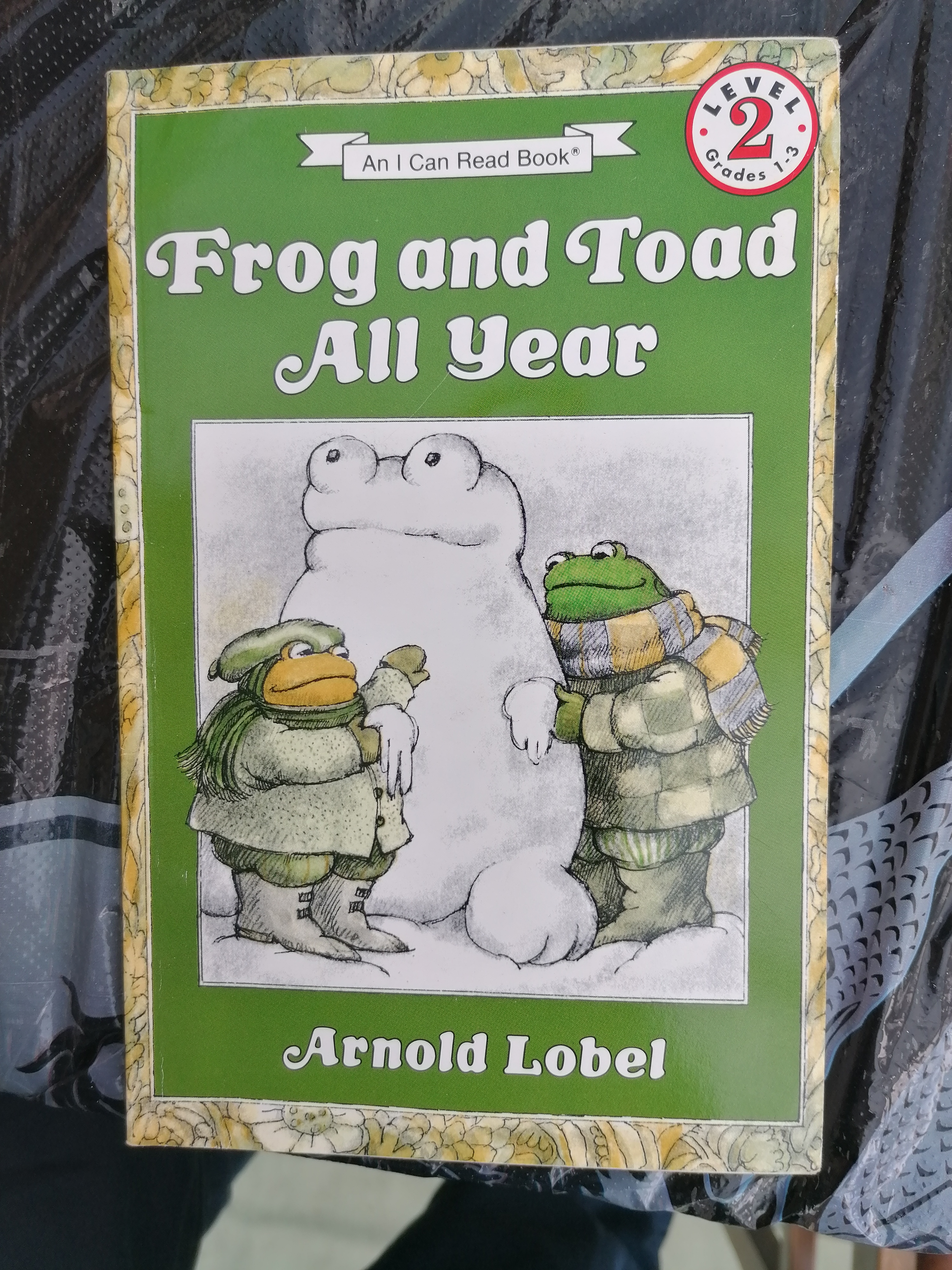
Frog and Toad All Year by Arnold Lobel
Frog and Toad are two amphibian best friends whose lovely adventures are always a delight to read for parents and children alike. In Frog and Toad All Year there are four stories, one for each season, and a fifth called Christmas Eve. The final story is perfect for any night of December, but reading it on Christmas Eve is a perfect prelude to bedtime on the night before Father Christmas arrives. It is a meditation on friendship as the very excitable Frog realises that Toad is late for their Christmas Eve dinner and starts to imagine all sorts of horrible things that may have happened! The whole Frog and Toad collection is quite simply a delight, but this is extra special. It is a reading book that 6 – 8 year olds may be able to read for themselves but one that they can be introduced to far earlier at bedtime.
Merry Christmas Sleepover Club by Sue Mongredien
The Sleepover Club is a series of books about five girls from Cuddington near Leicester who form the club of the title and whose adventures eventually filled over 50 books and served as the inspiration for two series on Australian Television. This book, the only Christmas themed book, is a treat for older and younger children alike. It is based around the school panto that the girls get involved in and has a couple of subplots that revolve around a parent of one of the girls dating again, and the mystery of who is stealing food from donations to the homeless. It is tightly written, entertaining, very funny and even a little sad in places as the five girls get into their usual scrapes. The set piece finale is heartwarming and satisfying as is the resolution of the subplots. It is a perfect book for the middle of December when you don’t really want to read another story about the big day itself. As an introduction to Rosie, Frankie, Kenny, Lyndz and Fliss it is pretty much perfect and the Christmas theme made it my personal favourite. The only word of warning is that if my daughters and my goddaughter are anything to go by you will be scouring the internet and charity shops to fill in the gaps in their collection until you have bought all 54! By the way, the author of this book may be better known to some of you as Lucy Diamond, writer of female centred stories like The Beach Cafe.

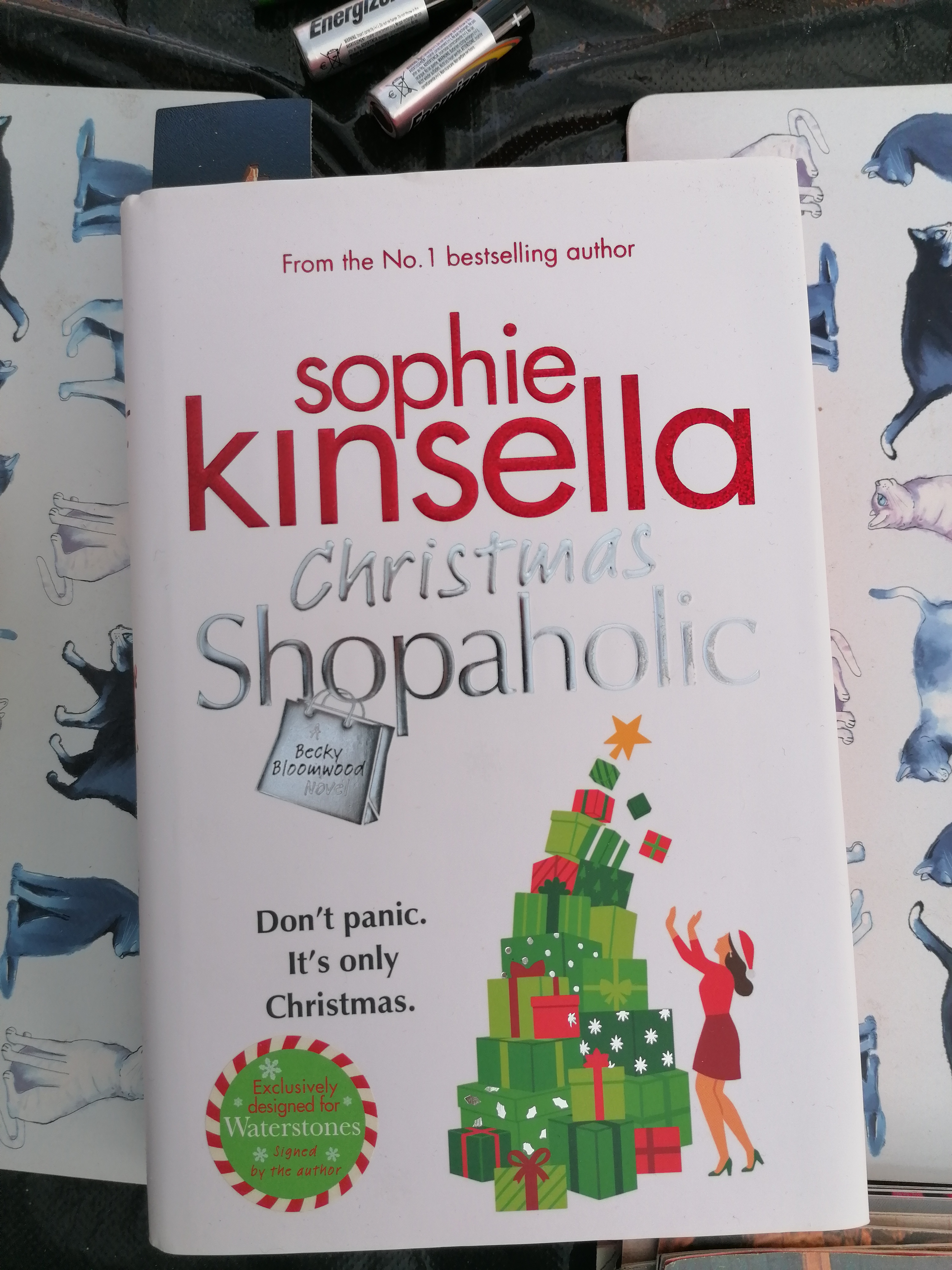
Christmas Shopaholic by Sophie Kinsella
It was perhaps inevitable that Becky Bloomwood would have a Christmas book written about her as Christmas is the season where many of us become Shopaholics ourselves! This is one of my favourite books of the entire series with a mixture of drama and some absolutely brilliant comic situations that render this book completely unsuitable for trains! Anyone who has read any of the Shopaholic books will know what to expect as Becky’s spending habits lead her closer and closer to disaster and her family and friends are left alternately picking up the pieces and shaking their heads. My favourite idea from the book is Sprygge which really could catch on! As befits a Christmas book it is a warm hug of a story that eases you into the festive season and warms you like a glass of mulled wine.
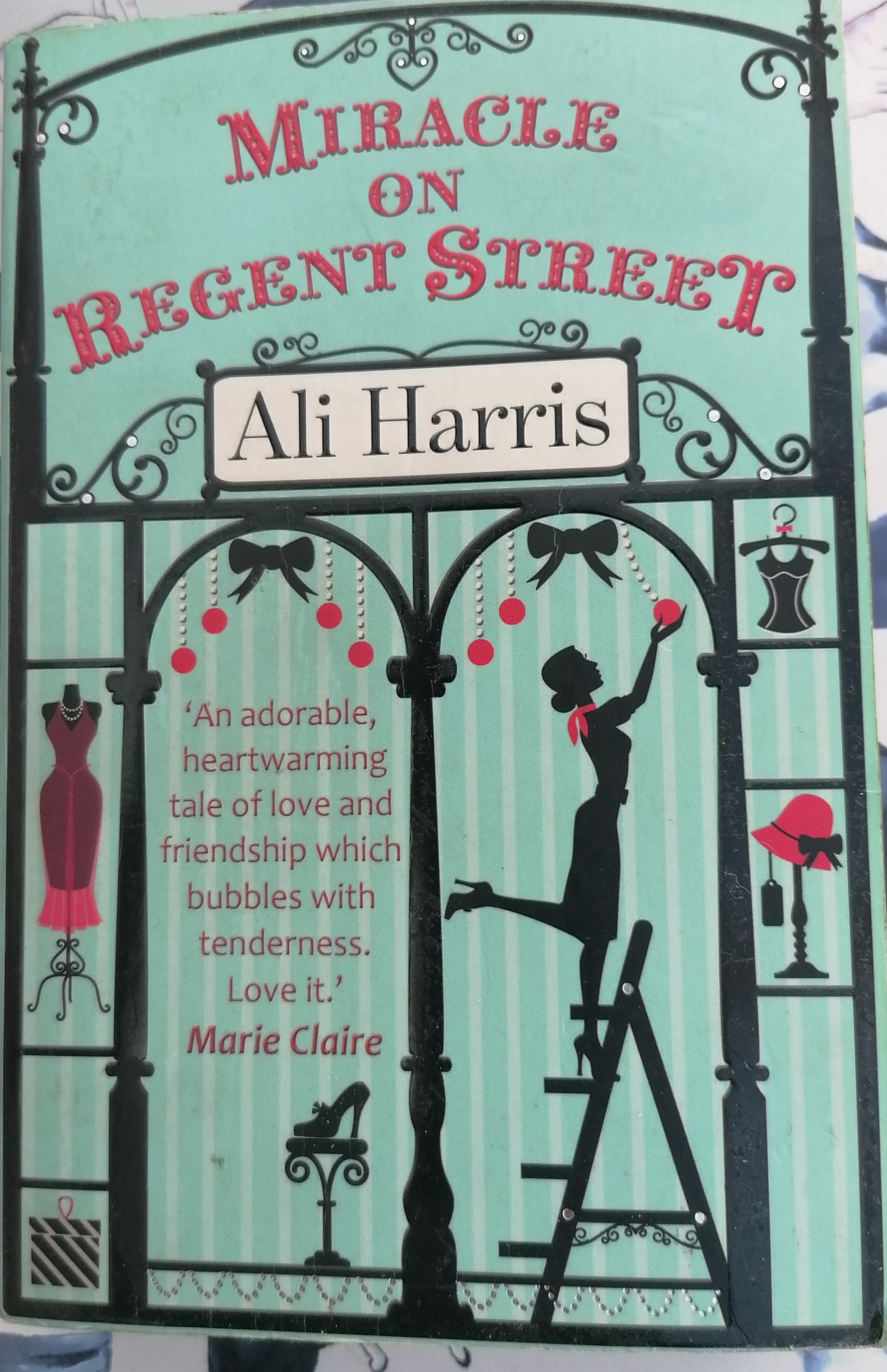
Miracle on Regent Street by Ali Harris
This is one of my favourite festive books, one that I’ve read 4 or 5 times over the years. Evie Taylor is a lowly stockroom girl in a store called Hardy’s which has seen better days and is on the verge of a possible takeover. She loves the store as it was the venue for her parents’ whirlwind romance and yearly visits as a young child and has ambitions to be a designer. However, she seems fated to remain unnoticed in a place where hardly any of her colleagues even know her name. That all changes as the store comes under threat and Evie decides she is the only person who can do anything about it. She also has a budding romance with a successful American businessman who doesn’t know her name or what she does, but whose attention gives Evie a glimpse of who she could be. She starts to dress herself and the store in order to get noticed, but is it too late for either of them? This book is consistently funny and consistently engaging as the two plots intertwine at various points, but there are some more reflective moments that make it a wholly satisfying read.
A Christmas Carol by Charles Dickens
What can I say about one of the most famous and most marvellous books ever written? Well, I have said a lot about it as the writer of an article for h2g2 and I have looked at the background, both historical and literary, thanks to books like The Annotated Christmas Carol with copious notes from Michael Patrick Hearn. It is truly amazing to reflect on the impact it has had over the years since its first appearance in 1843 both culturally and in terms of the very essence of the season itself. It is quite simply one book I will not go through December without reading in one of the five versions I own. If all you know of the story has been filtered through one of its many adaptations then read the original and marvel at the humour, anger, love and passion for humanity itself and the Christmas season in particular.
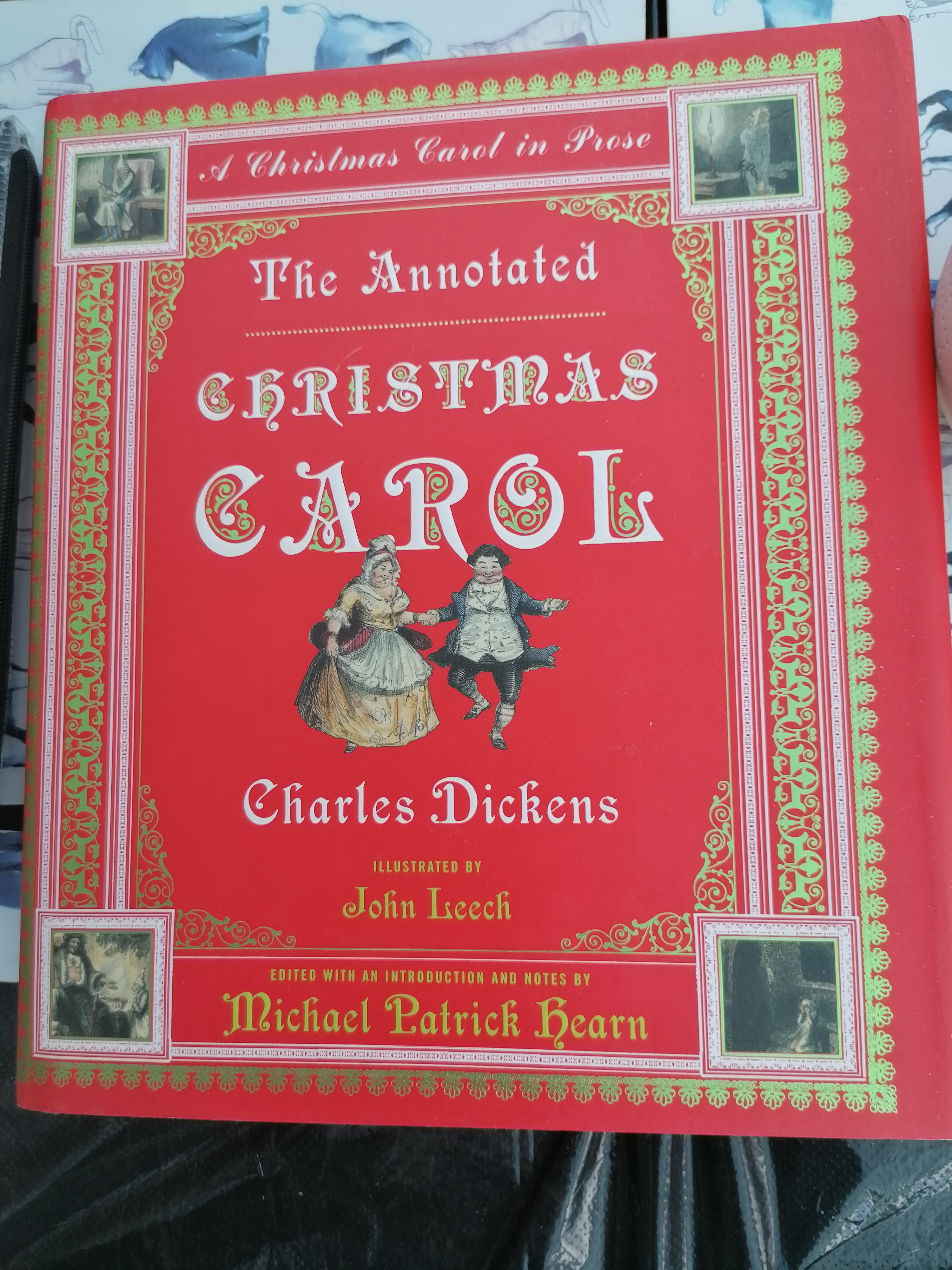
So there you have it. Part 2 of my Books for Christmas and a selection for all ages. If you do take up any of my suggestions please let me know below, and if you like my blog post please let other people know. Merry Christmas to all of you.
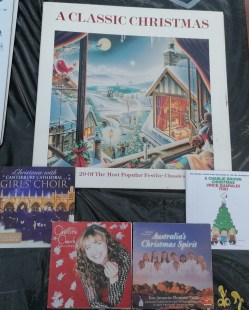

Now I like a Christmas Pop Song as much as the next person. Oh, all right, full disclosure, I am absolutely hooked on Christmas Pop Songs and play them endlessly from the beginning of December! If I like songs as much as the next person, that person is Noddy Holder after his latest royalty cheque! That said, I also love more traditional Christmas albums that act as a useful palette cleanser when you want it after a diet of Slade, Shaky, Wham and The Wombles. This blog will introduce you to some albums you may not have considered or even heard of, and they can all be tracked down on Amazon, EBay or Discogs if I have whetted your appetite for any of them.

A Classic Christmas – Various Artists
In the early 90s, EMI hit upon a winning formula with the release of 3 highly successful classical music compilations called ‘Classic Experience’. In 1991, they released A Classic Christmas showcasing carols and classical pieces. It is an absolute joy from beginning to end with 20 very well chosen and well played festive favourites. I would like to particularly recommend three of the tracks. Troika will be instantly recognisable as the music from Greg Lake’s I Believe in Father Christmas, but stripped of the words, the real beauty of the tune shines through in this version from the London Philharmonic Orchestra. Sleigh Ride is instantly recognisable and takes you on a magical, invigorating journey thanks to a brilliant performance by the Halle Orchestra who sound as if they are having a whale of a time! The recording of The First Noel comes from the gorgeous A Carol Symphony by Victor Hely Hutchinson, which is well worth tracking down in its entirety. Those of you who know the BBC series Box of Delights will certainly recognise this one.
Christmas with Canterbury Cathedral Girls’ Choir

This is quite simply marvellous. Choirs of all kinds release Christmas albums because they guarantee decent sales. However, most of them sound pretty similar after a while. The Canterbury Cathedral Girls’ Choir is striking from first note to last. First of all, the sound of their voices is clearly different to that of a boys’ choir and this instantly gives it a different feel. Second, the arrangements by Julian Reynolds breathe new life into old favourites through clever use of the girls’ gorgeous harmonies. Three tracks stand out for me. O Holy Night is a Christmas staple and has been voted as the UK’s favourite Christmas carol for the last few years, but there is a real beauty to this arrangement that reclaims it from the divas of this world and reminds you that this is a song for church not TV talent shows and pop albums. The Carol of the Bells is joyous and infectious. I defy you to listen to this without your heart being lifted by the incredible arrangement and the dizzying pace of the singing. Finally, I would recommend the version of White Christmas on this album, a secular song given a devotional air in a clever arrangement that freshens up this most familiar Christmas classic. They are always the first choir I turn to at Christmas and the amazing voices of these incredibly talented girls never fails to bring joy to the house.
A Charlie Brown Christmas – Vince Guaraldi Trio

A Charlie Brown Christmas is one of the most beloved Christmas Specials in the history of US TV. It may not be quite as familiar to UK viewers, but I would say a fair few Brits will have seen it over the years. The jazz soundtrack performed by the Vince Guaraldi Trio is a masterpiece that was named by the US Library of Congress as being of ‘cultural, historical or aesthetic significance’. It certainly deserves to be preserved with the other important albums in the collection as it has been the first introduction to Jazz for generations of young Americans in the same way as Looney Tunes and Tom and Jerry introduced generations of children to classical music. It is one of those albums that you can put on in the background to great soothing effect, but it definitely rewards concentration as you really start to appreciate what an incredible soundtrack it is. The soft drums and the stripped back piano give a softness and warmth to the tracks that make you feel warm inside and the remixed version of the album from 2012, when it was chosen by the Library of Congress makes the richness of the musicianship clear. This is a soundtrack that could have been dashed off, because it was ‘just’ for children, but infinite care has been taken with every note. My three favourite tracks on this album are Linus and Lucy, Christmas Time is Here and Christmas is Coming which are as warm and comforting as a cup of hot chocolate. A truly gorgeous listening experience throughout.
Dream a Dream – Charlotte Church

Dream a Dream was Charlotte Church’s third album, released in 2000 when she was 14 years old. Her talent was already widely recognised by this point and the album sold over a million copies in the US in the first month of release. You can hear a hint in this album of her maturing voice and her ability to find something different in the most familiar of songs. A great example of this is Winter Wonderland. It has a lightness of touch and an excellent arrangement, but what really sets it apart is the childlike effervescence in Church’s singing that gives the song that real sense of wonder that adult versions somehow lack. Her take on Gabriel’s Message is one of unusual sensitivity and beauty that really communicates a sense of the divine nature of the words. Finally, I can only say that her version of O Holy Night is just spectacular with a power, beauty and control beyond most adult singers let alone a girl of 14. Charlotte Church had a voice that was natural and suited to virtually any kind of music. I thought her Tissues and Issues album that marked her pop phase was an absolutely superb album. Indeed it was one of my favourite albums of the 2000s, but it suffered from the pigeonholing that she experienced of only being a classical artist. Take a listen to it and you will see exactly what I mean.
Australia’s Christmas Spirit – The Australian Girls Choir and The National Boys Choir

In 1998, Qantas produced an advert that became a classic of its kind and a firm Australian favourite. Children from two choirs were filmed around the world at various landmarks singing the dei facto anthem, I Still Call Australia Home. I happened to be in Australia that year and I fell in love with that track, so when Qantas released Australia’s Christmas Spirit with that as the final track I simply had to get the album. As with the Canterbury Cathedral Girls’ Choir, the presence of the female voices gives the album a quality that others don’t have, and here the boys and girls voices blend perfectly. There are three tracks that epitomise the quality of the album. First, an absolutely beautiful arrangement of O Come All Ye Faithful which swaps the bombast of most versions for a subtlety that allows the words to take centre stage. Then Good King Wenceslas, which gives a real pathos to the plight of the poor man and makes the King’s generosity more effective. Finally, a rousing version of Jingle Bells that just explodes with joy, breathing new life into a song I don’t particularly like in any other recorded version.
So, there you have it. Five albums that you can listen to when the constant soundtrack of more modern songs leave you feeling somewhat jaded. It has never happened to me, but I understand it is a possibility! Happy listening.
 David Pearce - Popular Culture and Personal Passions