
In this blog post I will introduce you to five of my favourite Christmas films that perhaps have slipped under your radar for one reason or another. All five of them have given me a full measure of Christmas enjoyment in their various ways and have stood up well to repeated viewing.
So, when does Christmas film season start? Well, that is a matter of personal choice, and I know people who will happily watch them all year round. For me, Christmas film season is any time from the beginning of November until the end of December. Whenever your Christmas viewing starts and finishes I hope you find something here to whet your appetite.
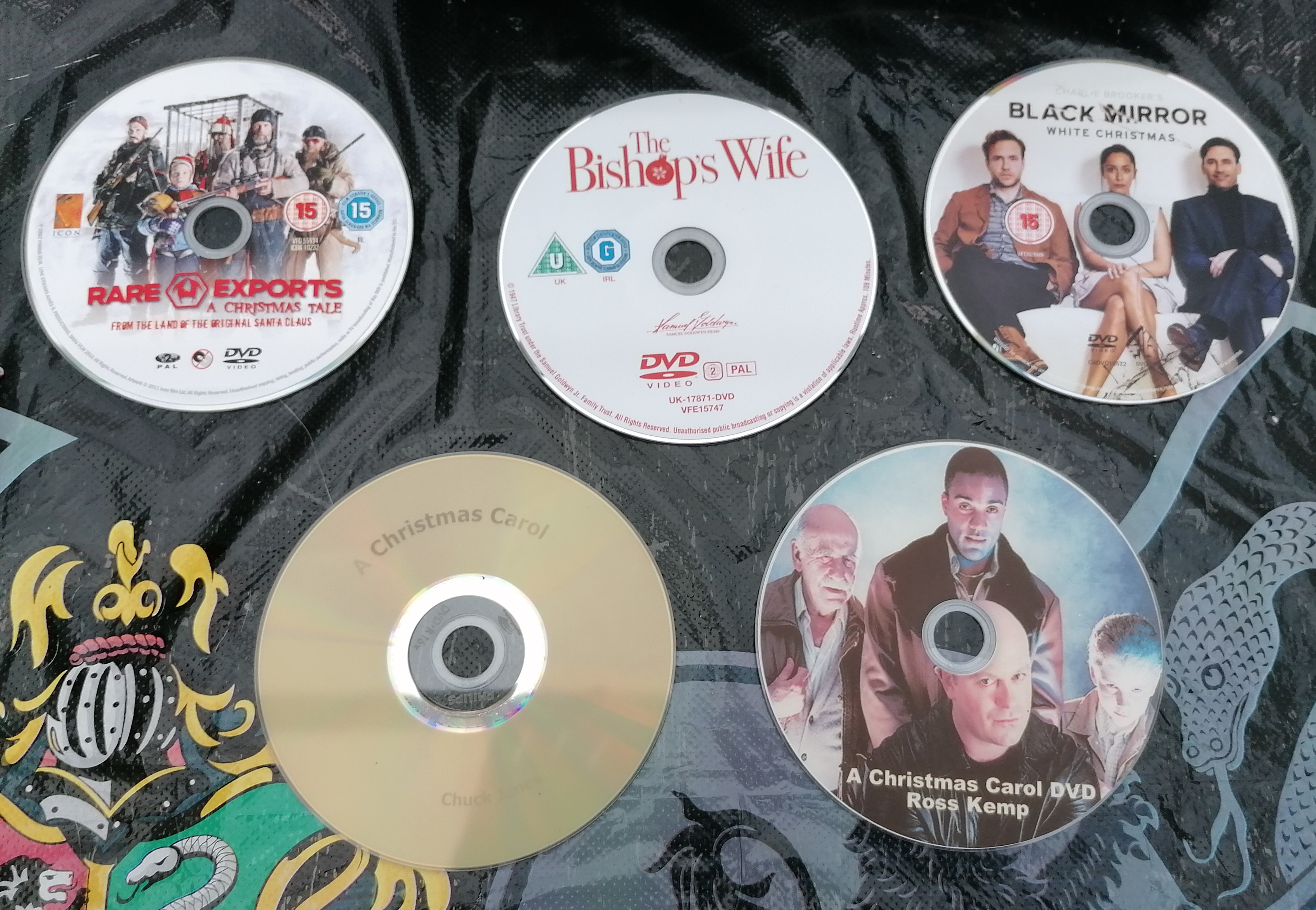
Rare Exports 2010
I will start off with the film that will split people right down the middle between those who love it and those who hate it. Rare Exports is a Finnish film that deals with a very different Santa Claus myth. A horror comedy that is pitch black and cynical; it really makes a change from the romantic comedies beloved of film makers at this time of the year. The film starts with an American corporation excavating part of the Finnish wilderness, although it is unclear at first what they are there for. However, whatever it is they are looking for is clearly dangerous, and the young hero at the centre of the film, a gun toting 10-year-old, has a shrewd idea what it is. The ‘home’ of Santa Claus himself definitely go in a very different direction from other origin stories and it is a very engaging and original film if you get on the wavelength of the writer. A couple of warnings. In the UK it has a 15 certificate for violence and nudity, so it definitely isn’t a film to share with your kids, but when you have been force-fed sweetness for 12 days, it is a nice palate cleanser.

Black Mirror: White Christmas 2014
If you have ever seen Charlie Brooker’s Black Mirror series, you will have a shrewd idea of what to expect. It stars Mad Men’s Jon Hamm and the excellent Rafe Spall, who have been together in an Arctic cabin without really talking to each other. Matt Trent (Hamm) decides to get Joe Potter (Spall) to open up to him as it is Christmas. This is a story with three distinct parts, the first two of which feature Trent’s stories of the outside world and the third told by Potter who has finally opened up to the friendly American. The level of imagination on display, and the way that the ideas teeter on the edge of reality – more so as technology catches up with Black Mirror – is both amusing and unsettling. The payoff is a marvellous piece of storytelling and you may never look at a favourite Christmas song the same way after this! Arguably, this is the finest instalment of the series because you get the sense that Brooker may have a sneaking regard for the Christmas season.

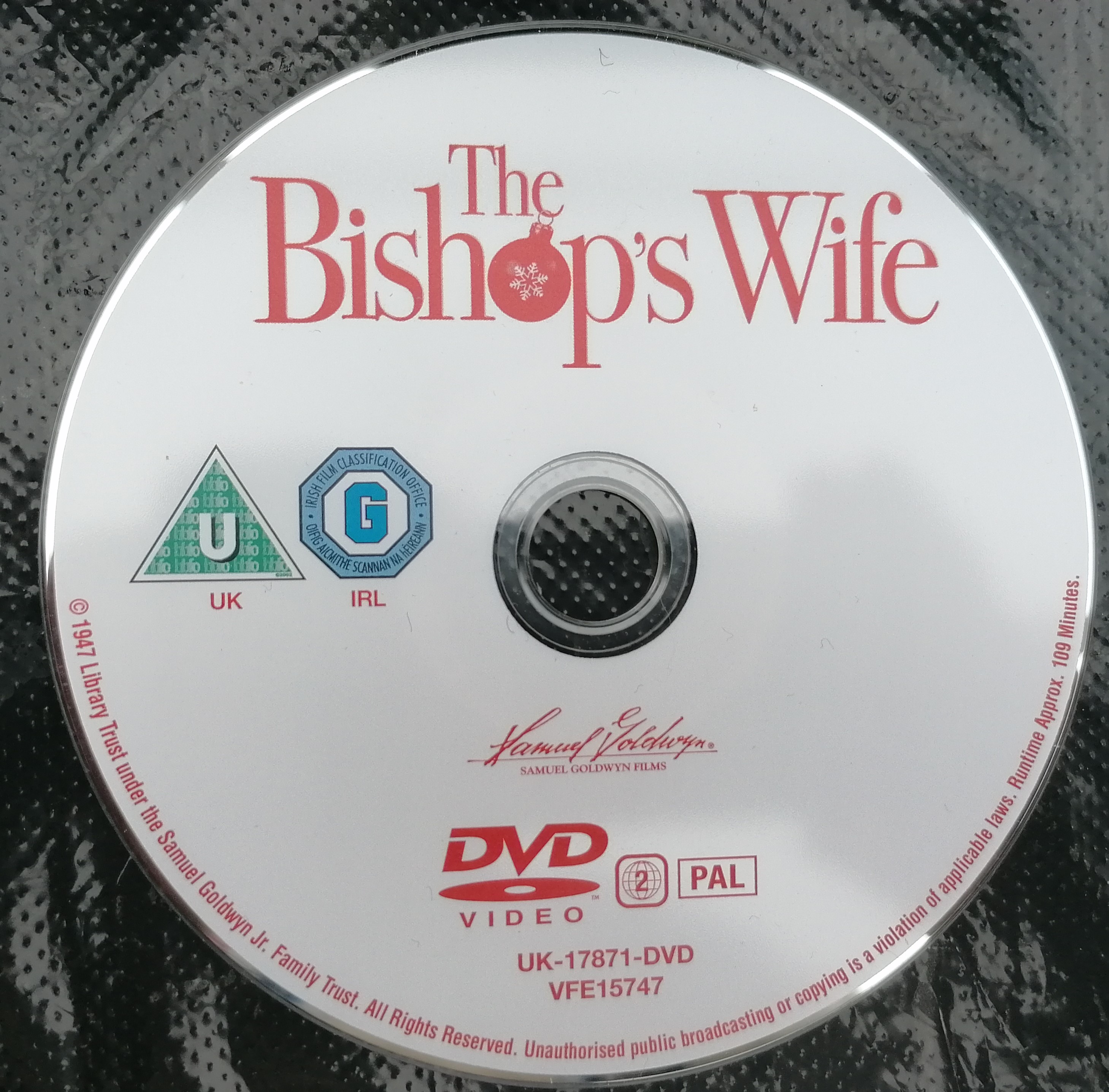
The Bishop’s Wife 1947
Released the year after It’s a Wonderful Life, The Bishop’s Wife was more critically acclaimed but less successful at the box office on its original release and, in my opinion, is the better film. I know that’s controversial, but the central trio of David Niven, Cary Grant and Loretta Young are simply marvellous in their roles and in their interplay with each other. Niven is the Bishop, Henry Brougham, Grant is an angel called Dudley and Young is Julia Brougham, the Bishop’s wife of the title. The bishop prays for divine guidance and that prayer is answered by Dudley. However, the intention behind the prayer and the guidance that Dudley wishes to give the bishop may be two very different things! The prickly Henry is always second best to the urbane angel with a twinkle in his eye and a quip at the ready. Interestingly, the two parts were cast the other way round at first until the director was changed and Henry Koster decided that the opposite parts played to each actor’s strengths. For the time, the special effects are very good, and every part is cast perfectly. The daughter in the film is played by Karolyn Grimes who also played Zuzu in It’s a Wonderful Life, and the lead chorister of an inner city church is Bobby Anderson, the young George Bailey. It really is the most open-hearted of films and if you see it on a TV channel somewhere pop it on record, you won’t regret it.
A Christmas Carol 1971
This 25-minute cartoon, almost impossible to track down until YouTube came along is quite simply the model for presenting the story to a younger audience. I first saw it on television as a child and just adored it. This is no cute version of the story though. Richard Williams, who went on to direct Who Framed Roger Rabbit?, understood Dickens’ original novel and knew that it was the horror and the despair that made the story’s happy ending powerful, so you get a gothic version of the novel that does not downplay the darkness, both figurative and literal. Some of the work is amongst the most striking ever seen in an animation, with the scenes of Scrooge visiting a coalmining community, a lighthouse and a ship at sea staying in my head for over 30 years before I had the chance to see it again. The voice cast is stellar, with Alastair Sim reprising his role from the classic 1951 version as Scrooge with Michael Hordern playing Marley as he did in that film, 6 years before appearing as Scrooge in a BBC production (the only actor to play both roles on camera) and Michael Redgrave as the Narrator. The animation won Best Animated Short at the 1973 Oscars after being briefly released in the cinema to make it eligible. Head over to YouTube to see this amazing piece of work and hope that someone will eventually give it the proper DVD release it so richly deserves.

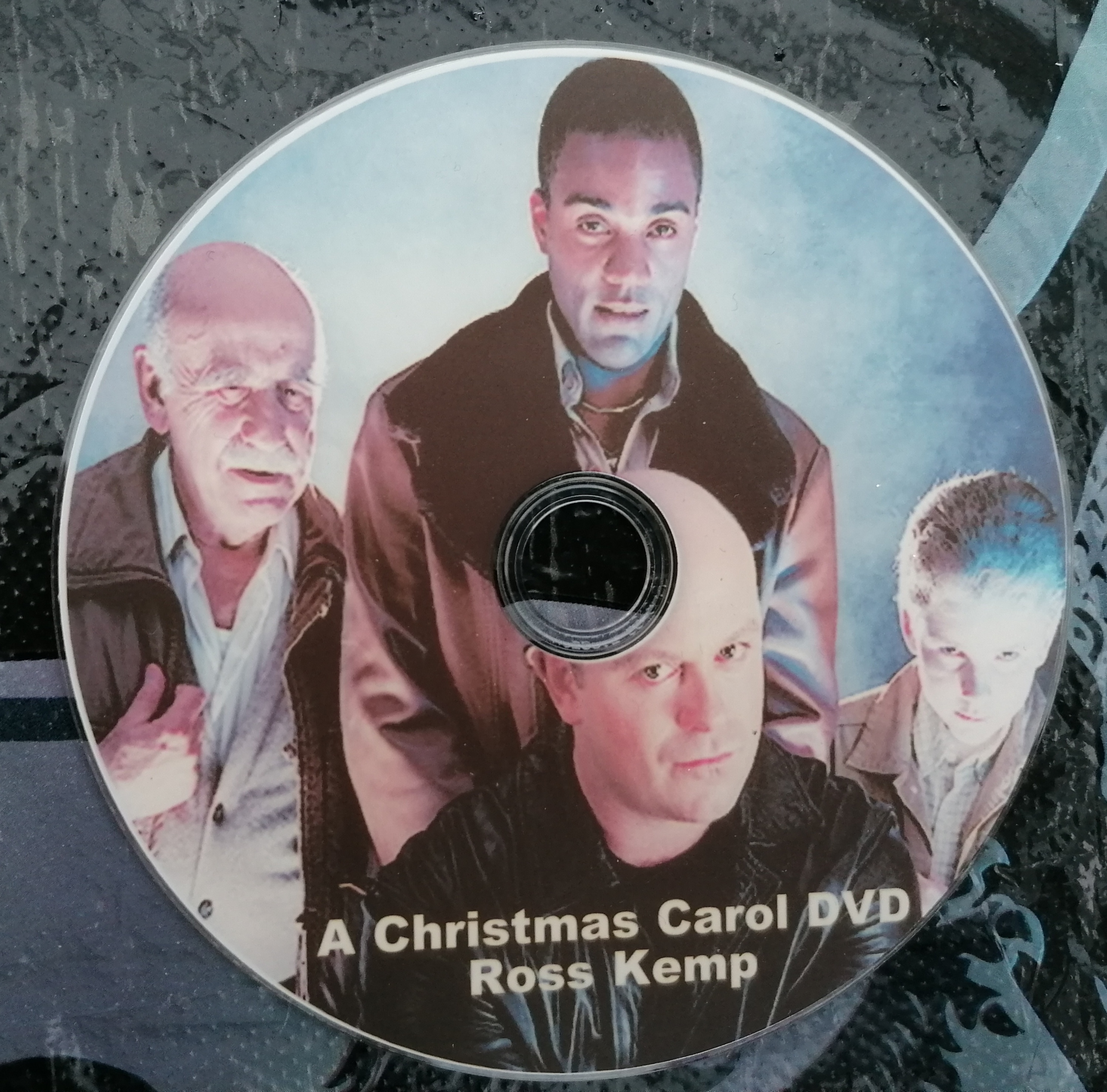
A Christmas Carol 2000
Anyone from the UK reading this will know Ross Kemp as Grant Mitchell in Eastenders or as the presenter of documentaries from the most dangerous parts of the world. Ross Kemp as Scrooge may be very hard to believe and some people may indeed wonder whether I have taken leave of my senses! However, he is excellent in the role of loan shark Eddie Scrooge in modern London, dialling down the violence and dialling up the menace and coldness very effectively. With excellent supporting turns from comedy legends Warren Mitchell as Eddie’s Dad and Liz Smith as Joyce, the mixture of understated humour and effective chills really brings this close to the feel of the original novel. Most of the updates of the story do not work, but this does, so keep an eye out for it.
I hope you’ve enjoyed delving into the more unfamiliar areas of Christmas viewing and that at least one of my suggestions hits the spot. In my next blog I will look at some Christmas music that won’t drive you crazy before November 30!
Lead up to the festive season
OK, full disclosure. I am a Christmas addict and I don’t care who knows it! I have huge numbers of Music, Films and Books to see me through November and December – although the music always waits until December 1! During the next few weeks I will introduce you to my favourites from each area and also introduce you to some of the many articles I have written about the most wonderful time of the year.
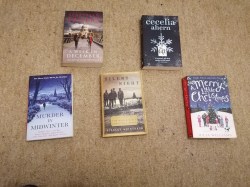
In this first section I will introduce you to 5 books which, although related to December and the Christmas Season, can be read in November without ruining your festive appetite!

We will go clockwise from bottom right so we start with
A Merry Little Christmas by Julia Williams
This is actually the second book in a three book series featuring the idyllic village of Hope Christmas. The first in the trio was Last Christmas and the follow up to this book is Coming Home for Christmas. I picked this book up at my local charity shop because I was amused by the idea of a Christmas book featuring Cat Tinsall, Pippa Holliday and Marianne North! It seemed like a Hallmark movie in book form and, yes, I even love those! However, you know the old saying you can’t judge a book by its cover? Well that is definitely true for this book.
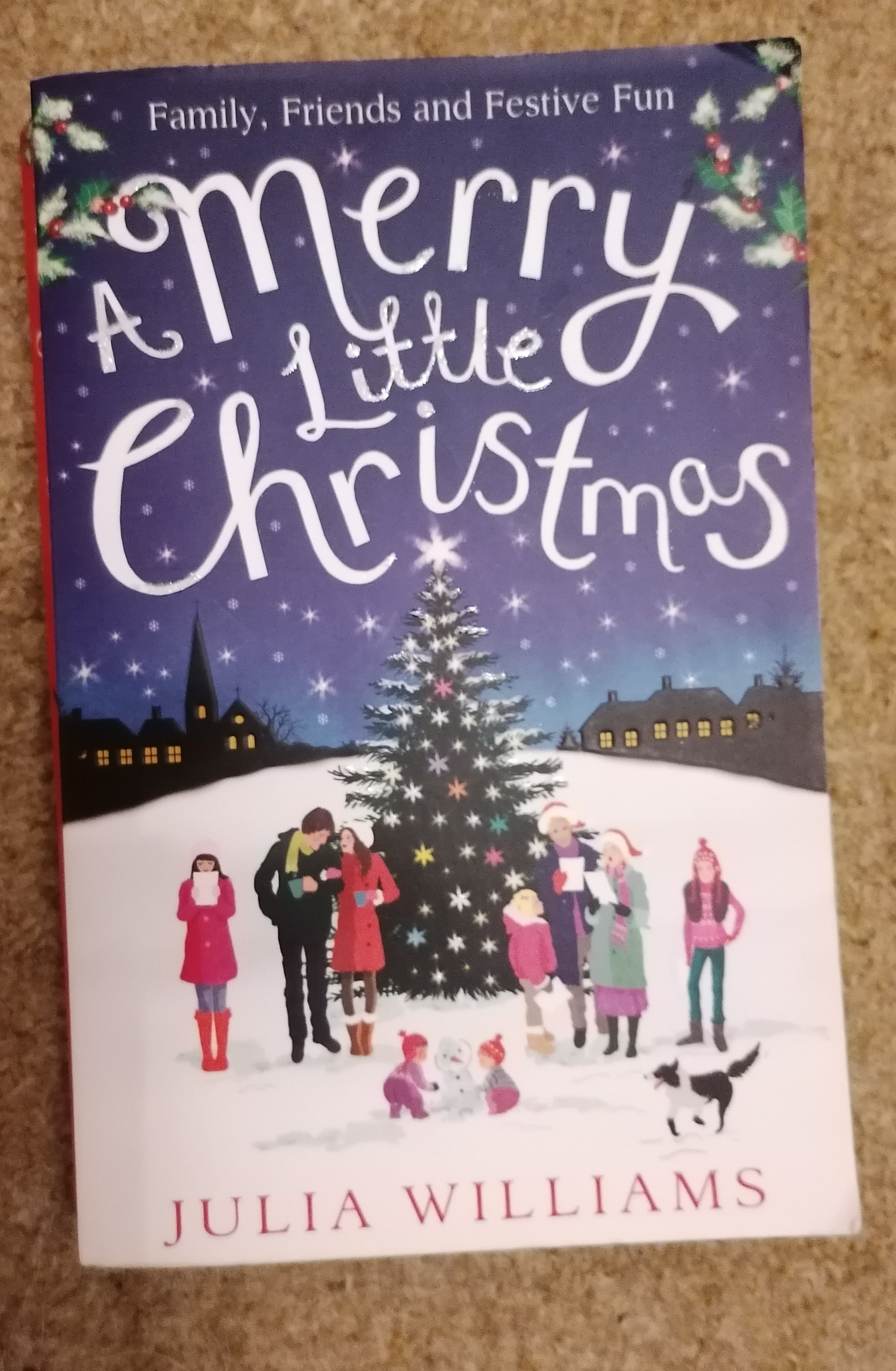
In fact, this is a book that tells the stories of these three central characters, their families, their friends and the villagers of Hope Christmas throughout the course of a year, finishing with Christmas Day itself. All three characters have real challenges as they navigate the problems of life with teenagers, young children, exes and aged parents. I expected to laugh, which I did, but I never expected to find myself with tears in my eyes. I think that the familiarity of the situations makes the sad parts even more hard hitting. This is not a Hallmark movie, but neither is it an EastEnders style misery fest. It is perfectly balanced as it navigates the tricky line between the two. As soon as I was halfway through I ordered Book 3 off of the internet and I will be doing the same with Book 1 in the near future. It is a warm, comforting book with a real sweetness – the reading equivalent of a cup of Hot Chocolate!
Silent Night by Stanley Weintraub
This is an exhaustively researched and brilliantly told history of the Christmas Truce of 1914. The event has gained near mythical status and has been the subject of a brilliant song by The Farm, the video for a Paul McCartney chart topper and, less happily, a Christmas advert by Sainsbury’s. However, as with so many events, the truth is far stranger and more interesting than the fiction.
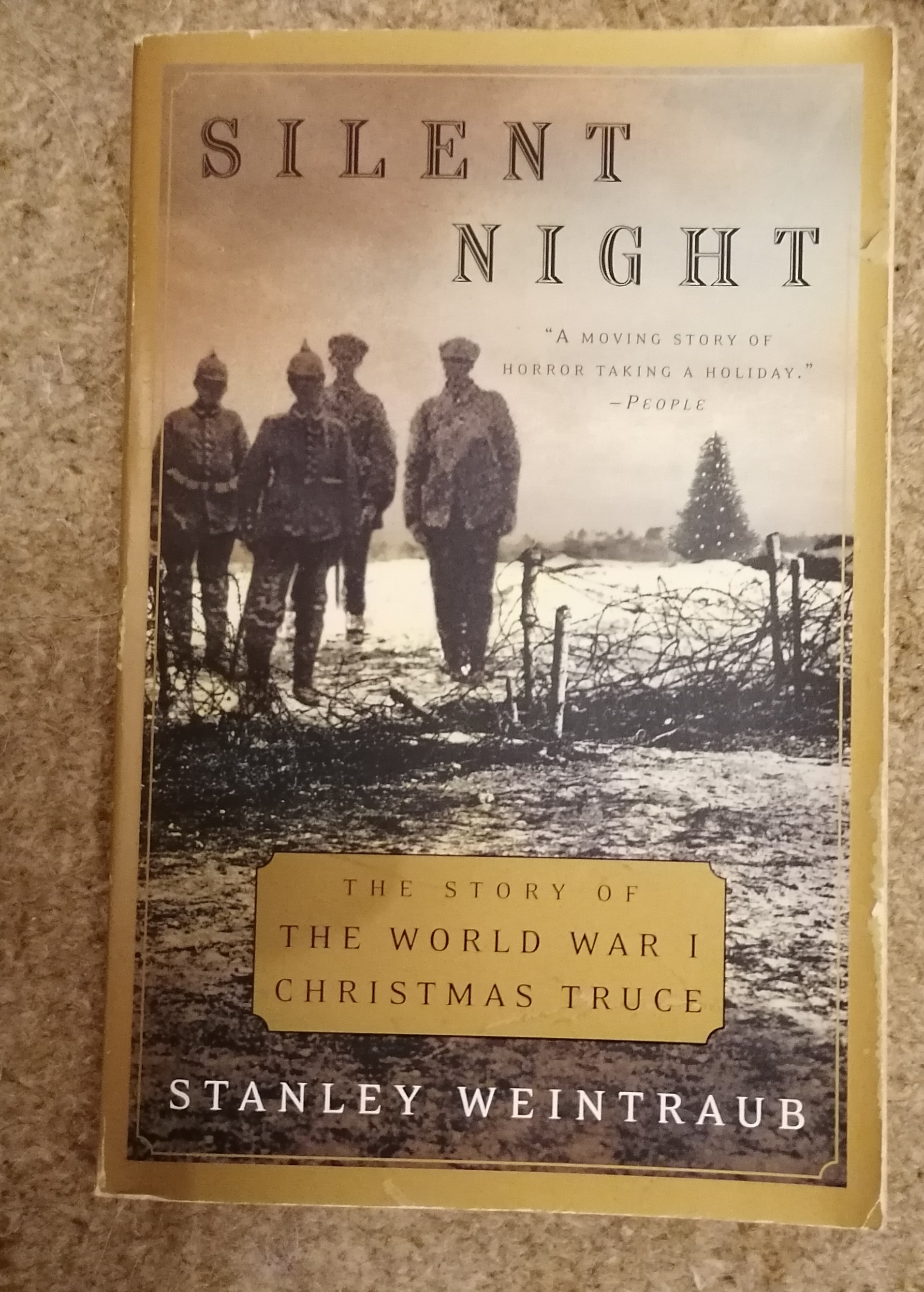
Weintraub skillfully blends together official records, newspaper accounts and, most effectively, the letters from the soldiers themselves. It paints the picture of an entirely spontaneous resurgence of human nature when they find a common experience of worship and celebration. The British soldiers and the German soldiers find out that the people they have been trained to hate and to kill are actually very similar to themselves. They are not butchers, they are fellow human beings who have been plunged into hell by politicians, not for the first or the last time. It is a superb book that will make you consider your own humanity.
Murder in Midwinter Edited by Cecily Gayford
I have been a huge fan of Cecily Gayford’s crime short stories since reading my first Christmas themed set a few years back. Each book contains 10 short stories, mainly from the golden age of crime fiction. In this one we have stories featuring Campion, Lord Peter Wimsey, Sherlock Holmes and Horace Rumpole in a set of well chosen stories that are sometimes humorous, sometimes chilling but always entertaining.
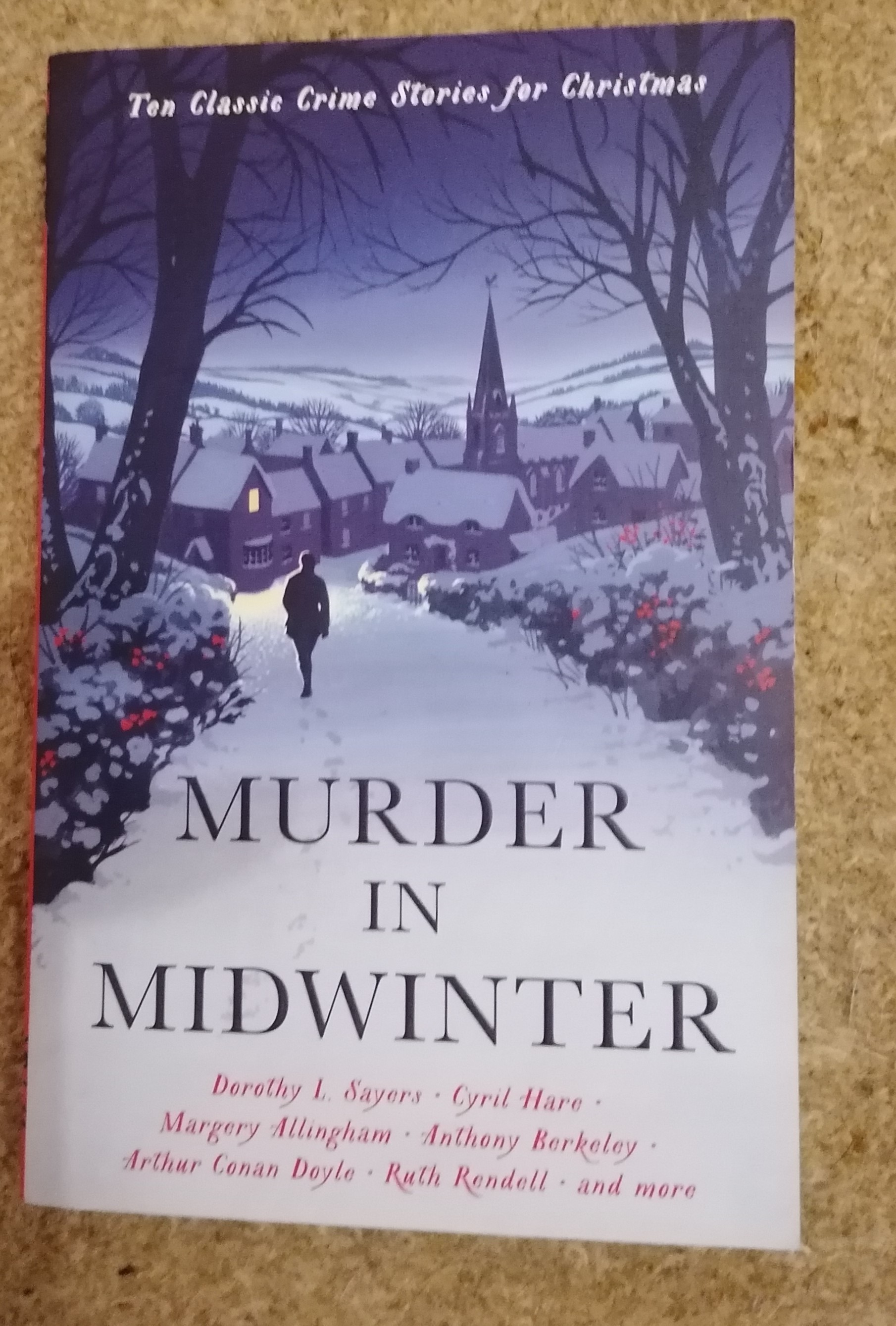
You may not find every story to your taste, but I guarantee you that you will find more hits than misses as you settle back and let some of the greatest characters in crime fiction wash over you. This is pretty much the perfect bedtime book as you can easily devour one story a night without being concerned about a sleepless interlude. The stories may occasionally be scary, but they are never horrific. Just perfect for a winter evening!
A Week in December by Sebastian Faulks
Quite simply, A Week in December is one of the finest state of the nation novels of the last 20 years. Although it was written in 2009, the stories of seven disparate characters, whose lives intertwine at various points, is just marvellous in highlighting issues that seem to become more relevant and timely as each year passes.
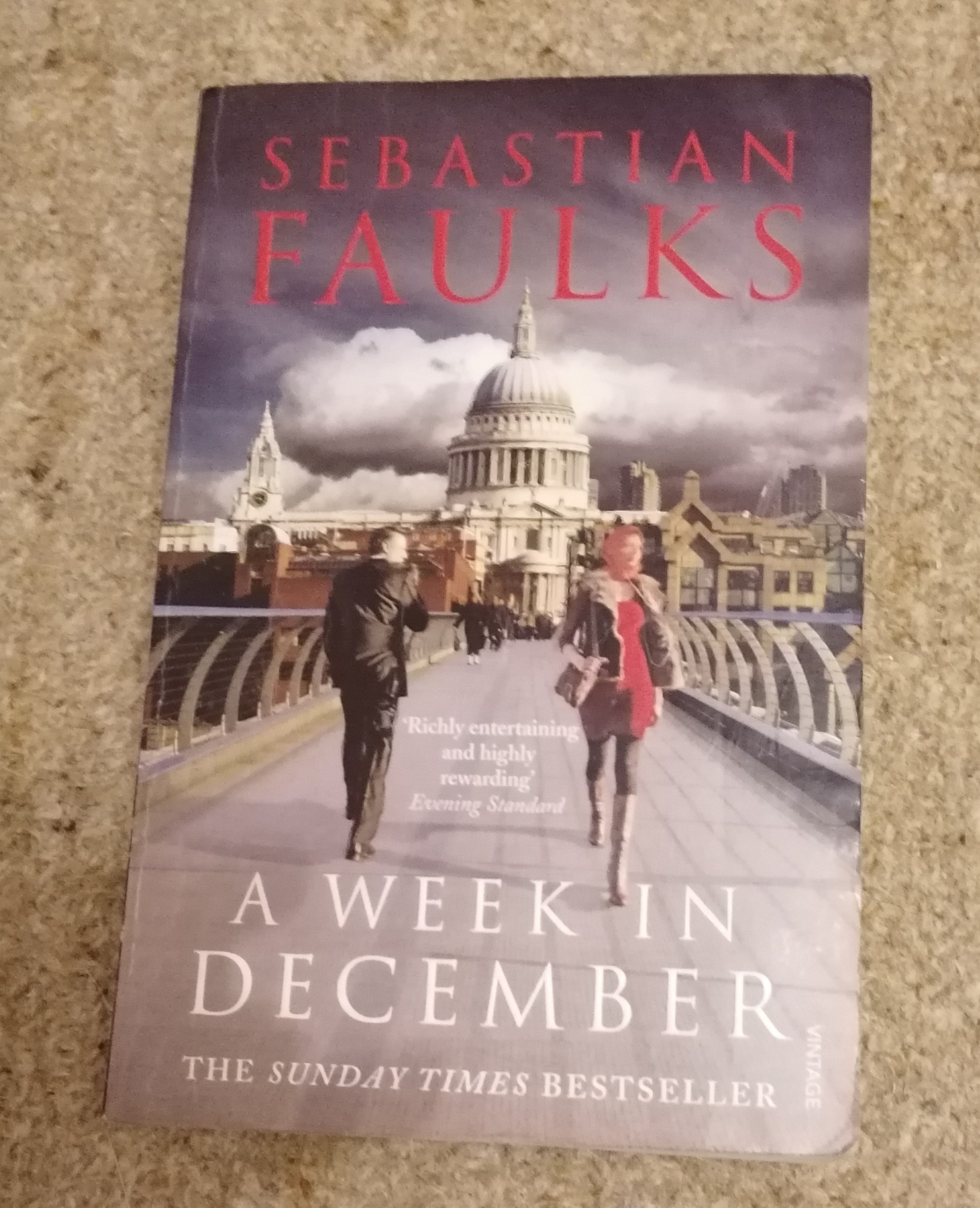
The characters are, a hedge fund manager, a book reviewer, a solicitor, a student being led down a dangerous path, a schoolboy with a fascination for drugs, reality TV and fantasy football, a professional footballer and a tube train driver. What sets this novel apart for me is the superb combination of humour, polemic, humanity, anger and a fascination with what drives us all. I have read this book every year since 2010 and I never tire of it. It is quite simply a masterpiece. The interesting aspect of A Week in December is the fact that Christmas is only mentioned a handful of times! This alone makes it quite unusual and gives the book a year-round quality.
The Gift by Cecelia Ahern
This will no doubt be the most familiar of the five books for most of you reading this, but it is one that seems to have been somewhat sidelined at Christmas. Like A Week in December, Christmas is not its focus, although it is mentioned. It also shares a love for the human condition with Sebastian Faulks’ book, but where Faulks deals with reality, Ahern deals with fantasy.
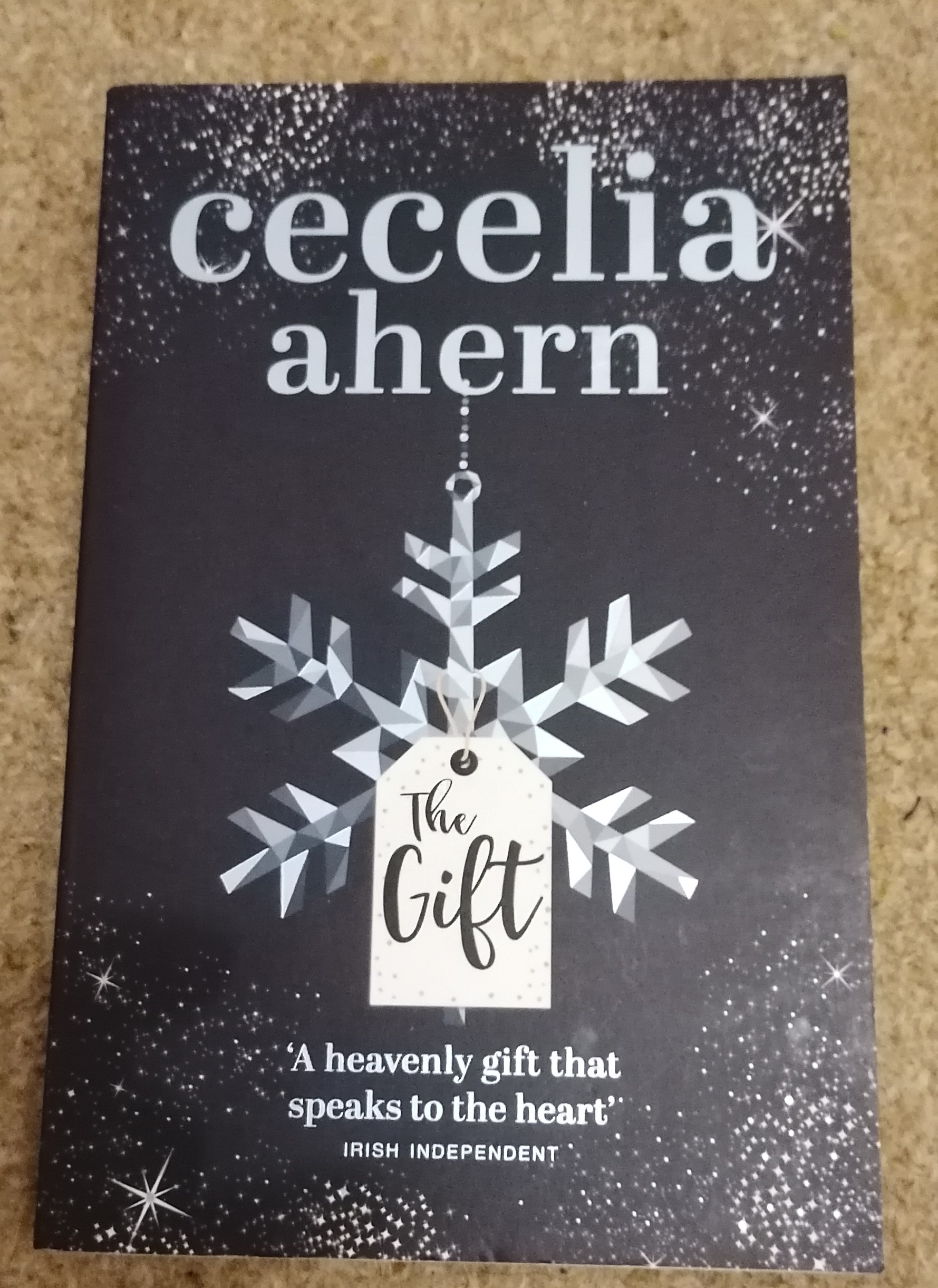
The Gift features a very unsympathetic protagonist, the selfish, amoral and uncaring Lou Suffern. We learn very early on that he is a very successful executive who has fallen out of love with his entire family, who he sees as an obstacle to him earning even more money. At the beginning of the story he acts out of character by buying a homeless man called Gabe (or Gabriel?!) a cup of coffee. Gabe somehow worms his way into Lou’s head and becomes a kind of conscience, but most intriguingly he offers Lou the chance to be in two places at once! The Gift is a brilliant lead in to Christmas because it speaks directly to the reader about what really matters in life. Just let the story take you away, park any cynicism and simply enjoy it on its own terms.
Well, there you have it. 5 books for the lead up to Christmas. I hope I have inspired you to pick up at least one of them. Do you have a favourite book for November? If so, let me know in the comments below. I’ll see you for more Christmas themed entertainment next time!
Well, it took 8 months, but I finally got my hearing back thanks to 2 attempts at ear syringing and a long overdue hearing test.
On a superficial level, just being able to listen to my CDs was great, but once more being able to pick up on the subtle nuances of the music was even better. It really reminded me what I’d been missing even though music on the computer with headphones allowed me to continue reviewing. I am working my way through the CD backlog I’ve built up and once I have done that I will set about rediscovering some old favourites.
On a deeper level though, my hearing loss has changed my view of life in many ways. I suppose I had just accepted diminished hearing as a part of getting old, and in a way it crept up on me. The volume on the TV going up by a couple of notches, asking people to say things again more often, not being able to hear conversations in crowded rooms and having to guess what people were saying to me based on context. All of these things were irritating but nothing I couldn’t deal with. Then, when my ‘good ear’ was completely blocked, I was reminded that there was so much I took for granted previously.
I can hear Albus purring once again, a lovely calming sound. I can hear birds in the garden, bringing me closer to nature whether I am out in the open or in the conservatory. I can hear people through their masks once again, although that is still a little hit and miss.
The isolation of deafness led me to retreat within myself and restricted interactions with other people to an extent that actually quite shocked me. Without the assistance of headphones and Zoom calls, work would have been virtually impossible, as I found out when I returned to the centre last month.
Deafness caused me to become angrier when things didn’t go right, more miserable when I couldn’t do things I wanted to and more frustrated with life in general. All of my negative emotions were heightened in ways that made everything more confrontational in my head. I found myself with a much shorter temper and more liable to give up on anything that required concentration, another thing in short supply.
I now have some insight into what is important to me, outside of family of course. It is my ability to communicate both internally and externally. I think to an extent that I had stopped listening to myself. It has forced me to re-evaluate what I need in terms of my day to day life and it is this that has led me to return to learning. I am reading and taking notes about Popular Culture from John Storey’s excellent book as I start to put into motion my long held intention to do a PhD which I always promised my Dad I would do. Yes, it may be a couple of years or more before I am ready to study full time, for obvious financial reasons, but I now know what area and what subject I want to study. It is huge progress and it is progress I would not have made if the deafness had not concentrated my mind so clearly.
Hearing is a gift which I lost and a gift that I can, and probably will, lose again in the future. While I have this gift I will use it to its fullest. Yes, there will be times when I take it for granted again, but I now know that my time is precious and I need to use that time wisely.
Wish me luck!!
David
The Story
The final story of Series 8 is an all time classic and one of the best stories of any incarnation of the Doctor, classic or modern. The Dæmons was a Dennis Wheatley style supernatural story with the Doctor attempting to put in the ‘scientific’ explanations. According to the show’s ethos everything had to have a rational explanation, but never was the rational explanation so thin or so unimportant as it was in this story.
The village of Devil’s End is the site of an archaeological dig that promises to unearth something more spectacular than Sutton Hoo according to the archaeologist in charge of the dig, Professor Horner. However, local white witch Miss Hawthorne is sure that it will unleash the devil himself and tries to persuade him to stop it. Professor Horner refuses, sending the Doctor and Jo down to Devil’s End in a desperate attempt to stop the excavation which is due to occur on April 30 at midnight. However, it seems as though dark forces are conspiring against them as they find themselves lost after a freak wind sends them in the wrong direction. They arrive just as the tomb is being opened and it is instantly clear that things have taken a frightening turn.
This story sees the UNIT family bonding together in a way that make them the archetypal Doctor Who team. Every member of the team has their moment to shine and together they are superb. Roger Delgado has huge fun playing the new vicar, Mr Magister! His scenes in the cavern – the programme wasn’t allowed to call it a crypt in a nod to Christian sensibilities – stay very slightly the right side of parody most of the time, but that only serves to make the scarier scenes that much scarier.
The director doesn’t usually get a namecheck in reviews, but this was directed by the legendary Christopher Barry. Barry had directed 4 episodes of the original Dalek story, spoof serial The Romans, the Patrick Troughton classic The Power of the Daleks, sadly wiped by the BBC in their senseless purge, Robot which introduced Tom Baker and Brain of Morbius which rewrote the history of Doctor Who and which featured Barry himself very briefly. Every one of his stories were special, but even he thought that The Dæmons was the best of the lot.
Damaris Hayman was a character actor in the best meaning of that term. You could put her in a part, however small, and she would make something more of it than you expected. The Dæmons was the highlight of her film and TV career as she got not only the character of Miss Hawthorne to work with, but also found herself with the extra role of advisor in any occult matters. Initially envisaged as a dithery old lady by both script writers and director she point blank refused to play the part that way and she proved to be absolutely correct, something she took great delight in reminding Christopher Barry of whenever they met subsequently! Miss Hawthorne becomes the serious centre of the story and by making her a character of real strength she made that centrality far more realistic.
Azal, the last of the Dæmons, is played by radio and TV actor Stephen Thorne. Christopher Barry chose him because of his voice, knowing that he could give real weight to the character. This wasn’t his final part in Doctor Who as he would appear in Series 10 in another all-time classic, The Three Doctors, as renegade timelord Omega.
Favourite Moments
Well, where do I start? I could pick at least a dozen, but I will restrict myself to the three that really made an impact on me as an impressionable child and as a more cynical adult! The trouble is that a number of the scenes that I would love to include give away important plot points.
The first ceremony involving The Master could have come straight out of the Hammer films of the 50s, 60s and 70s. It is a masterpiece of increasing tension and fear. Definitely a scene to send you behind the sofa.
The first appearance of Bok, a gargoyle who acts as an advance guard for both The Master and Azal, is extremely well done. It could have been somewhat laughable, but Stanley Mason gave him a real malevolence and presence.
Finally, I would have to choose the finale from the battle with the forces of evil, including its iconic line for the Brigadier, its explosive denouement and most marvellously its character moments for each of the UNIT family. I won’t say any more because I would hate to spoil it for you.
Final Thoughts
The Dæmons was the story that made me fall in love with Doctor Who – well Katy Manning really! – and all these years later it is still a fantastic piece of television. If you want to show a modern Doctor Who fan, or a complete non-fan, how good classic Who can be there is no better programme than this. It is quite simply the best of the best.
Looking Ahead
I have a number of other classic Doctor Who stories in my DVD collection so watch this space!
Story
The Doctor is working on the TARDIS as ever, but this time he allows Jo a glimpse inside. Cue the ‘it’s bigger on the inside’ observation! Completely without warning the TARDIS starts to dematerialise, whisking the Doctor off to a far distant planet 500 years into the future. On this planet, a group of colonists from earth are trying to scratch a subsistence living whilst being threatened by the International Mining Corporation (IMC) who are aware of a massive seam of the valuable duralinium. As well as verbal threats from IMC, there are ‘monsters’ who attack their camp and a subterranean city whose inhabitants often kidnap colonists in return for a ransom paid in food. When the Doctor arrives he is met with suspicion from some of the colonists, but generosity from Ashe, the colonists’ leader. IMC have called in an Adjudicator from Earth who turns out to be very familiar to Jo and the Doctor! He is there with his own agenda which involves finding a very powerful weapon belonging to the underground city and it is up to the Doctor to protect the colony and stop the Master in his plans while fighting against the evil machinations of the IMC.
The strength of the story lies as much in its cast as it does in its excellent writing by Malcolm Hulke. Ashe is played by John Ringham, a very familiar face from 70s and 80s television. He is best known for playing Norman Warrender, Penny’s Dad in the brilliant Just Good Friends. He had appeared in two previous Doctor Who adventures and had a large role in The Aztecs as High Priest Tlotoxl, but Ashe was arguably his finest moment in the series and one of the best guest star performances in this Season. Ashe is fair and brave, the type of leader we crave in uncertain times (!) but he is not played as a cipher or charicature. He is recognisably human in his occasional doubts, but you know he is going to do his best for everyone in his care. John Ringham gives him power, gravitas and wisdom but above all compassion for those in his charge. Ashe’s daughter, Mary, is played by Helen Worth who was to become very, very familiar to TV viewers a few years later when she stepped on to the cobbles of Coronation Street to play Gail Potter in 1974 – a role she still holds 47 years and nearly 4000 episodes later! In this story she is resourceful, smart, brave and delightful as she bonds with Jo, two young women born 500 years apart but with the same approach to danger and hardship. Their few scenes together are superbly played by both actresses.
Finally, we have Morgan, played by stalwart hard man Tony Caunter. The most famous of his 143 credits would nowadays be Eastenders, where he played Roy Evans for nearly a decade. Like John Ringham, however, he was one of those faces from the heyday of three channel TV who became instantly recognisable. He underplays Morgan very cleverly to give him a more threatening air, not always the case in an era when some villains chewed scenery with relish both in Doctor Who and other programmes. His character is completely ruthless and has absolutely no problem with killing whoever he is told to kill as long as it is to the benefit of IMC and himself.
If Doctor Who’s producers had had their way, Morgan would have been played by the fantastic Susan Jameson, later to appear in When the Boat Comes In, To Serve Them All My Days and New Tricks. The powers that be, sadly, called Barry Letts into the office and told him that such a strong female character would be too ‘kinky’! What they meant by that in those sexist times was no doubt that they hated the idea of a woman being seen as in any way the equal of, or better than, men. You could imagine the suits at the BBC getting very worried. I mean, who knows what ideas women would get if they saw themselves portrayed in positions of power?! There would be a woman Prime Minister next if things weren’t brought under control! They lost what would have been a brilliant study in female emancipation, but Susan Jameson at least had the consolation of being paid in full for the role.
Favourite Moments
It’s always a great moment when a companion steps into the TARDIS for the first time and Jo’s reaction is textbook bemusement, disbelief, and mild panic. Her ability to take it and her visit to an alien planet in her stride shows that Jo is not to be phased. When she meets Mary Ashe, there is a lovely little scene between the two thoroughly self-reliant women that has a funny moment when Jo finds out that Mary left Earth in ’72, only to find out that she means 2472! Even when you know who the adjudicator will turn out to be, there is a lot of pleasure to be gained from the reaction of Doctor and Jo and the urbane self-assurance of our favourite villain.
There are two TARDISes on the planet and great play is made of the fact that the Master is completely free to go where he wants in a TARDIS that is way better than the Doctor’s own! I won’t spoil it, but there is one shocking moment in the final episode which shows that Doctor Who old and new is often an incredibly powerful and upsetting programme.
Final Thoughts
After the frankly dreadful Claws of Axos, the Colony in Space is an absolute delight. I had never seen this story before, so I was completely entranced by its quality, its power, its twists and turns and its ability to hold true to its convictions. It is 70s Doctor Who at its best and, if you ignore the special effects, every bit as good as anything in the modern series. It is a 6 parter that doesn’t drag at all and is full of brilliant performances from top to bottom. If you get a chance, give this one a watch. I guarantee you won’t be disappointed.
 David Pearce - Popular Culture and Personal Passions