
For the second year I will be taking part in Blogmas. Although last year was a bit hectic at times, I was able to keep up with my entry schedule by writing some in advance and having clear ideas on where shortcuts were on the rest. The whole process was great fun and I got some great feedback on the entries. I will not be repeating any entries from last year, although there may be some crossover. As I did last year, I am setting down my Blogmas schedule now so I have an incentive to follow it! Hope you find some of the titles below to your liking. If you do, I love to read comments on them and always reply.
December 1 Christmas Songs from Singing Together 1970 – 1972
December 2 Christmas Songs from Singing Together 1973 – 1975
December 3 Carols at Christmas King’s College, Cambridge Choir Vinyl
December 4 A Partridge Family Christmas Card Vinyl
December 5 Jon Anderson 3 Ships Vinyl
December 6 Book at Bedtime A Christmas Carol Martin Jarvis and Denise Bryer Cassette
December 7 The Signalman Re-watch
December 8 Lost at Christmas Re-watch
December 9 A Christmas Carol 1984 Re-watch
December 10 Scrooge 1970 Re-watch
December 11 My Christmas Singles
December 12 The Bishop’s Wife Re-watch
December 13 Christmas TV 1975
December 14 Christmas TV 1977
December 15 Blue Peter Eleventh Book Re-read
December 16 One Foot in the Grave Who’s Listening? Re-watch
December 17 The Good Life Silly but It’s Fun Re-watch
December 18 The Wonder Years Christmas Re-watch
December 19 Ever Decreasing Circles The Party Re-watch
December 20 Eternal Peace Gregorian Chant for Christmas CD
December 21 Christmas Cookbooks and Favourite Recipes
December 22 The Role of Family Christmas Traditions
December 23 Christmas Yet to Come
December 24 The Changing Face of Christmas Music
December 25 My Christmas Message


Extended Review Part 1
Thrones EP by Karmaa
I wanted to start this review with a shout out to Karmaa’s regular collaborator, the producer FPN Norway. He has been working with Karmaa for 5 years, and there is no doubt that his ability to give her the widely diverse sounds you hear on every track has been a key part of Karmaa’s rise. It has kept the music fresh, interesting and constantly surprising. You can hear the partnership in every bar and never more so than in this new EP. It is often the case that producers go under the radar, sometimes through choice, but FPN Norway is an integral part of the Karmaa sound and the Karmaa story.
King & Queen
The opening track of this EP sets the tone for what’s to come. Fans of Karmaa have always known that she’s determined and that she uses knockbacks and detractors as fuel to her fire. She’s never made it as clear as it is here though. The lines come thick and fast, angry, funny and often both as she unloads on those who doubt her.
Karm-Double-A/Movin’ like a boomerang/Got y’all mad cause when I fall/Always get back up again/I know the love is fake/It’s always laced and full of hate.
This is just a flavour of the defiance and disdain she unloads in this urgent stream of lyrics that have become her trademark. What saves this from becoming a diatribe is the knowing tone of voice that says, ‘Y’all not sure whether to take me seriously or not, are you?’ Karmaa is really treading a tightrope here and I don’t think many artists could pull this off quite so effectively.
In My Hands (OMW) ft Ripjacub
The second track features a fellow Texan, Ripjacub, who brings a very different flavour to this track. It has a really laid-back vibe which allows both artists to show their ability to make a song fly. They duet with real sensitivity and their bars blend together perfectly as the song takes shape. The contrast with the opening track could hardly be greater, and yet it represents a counterpoint to King & Queen by showing Karmaa throwing off the weight of hate and reflecting on the other side of the coin. Anyone who has listened to Karmaa knows that she is as adept when rapping about positive emotions as negative ones, but this track is perhaps the best example of this so far in her recording career. I feel that this may not be the last collaboration between Karmaa and Ripjacub as both bring their own strengths to the partnership and give each other a perfect foil to demonstrate their skills.
Sunken Ship
The third track is a satisfyingly old school sound combined with superb lyrics reflecting the modern dating game in all its fluidity. However, at the heart of the song is a timeless theme of wanting someone who isn’t good for you. Whilst the other person is living a life of moving from one lover to another, Karmaa’s character who was stuck on the wrong person and the wrong relationship has also moved on, albeit sadly.
Though you’re gone I’m here if you come back again/Only as friends cause I don’t want another sunken ship/The heart wants what it wants but I wish it didn’t.
As ever, Karmaa gets right to the heart of things in the dating game, reflecting the timeless fact that you can’t control what your heart does, but sometimes you have to make your peace with it and move on.
Nobody Above Us ft Lowkea
Lowkea is an artist who covers all the bases musically and is equally at home with rock and pop as well as rap. With both artists autotuned it gives the song a really interesting effect where the personal and the technological blend together as if the artists are seeing their situations from outside. Their different rapping styles blend perfectly to create another ode to defiance. The lyric that made me laugh was
God bless my haters/Who see me as Darth Vader/Luke I’m ya father/Here for now but not for later
Karmaa has such a sharp wit and this really shines through here.
Throne, Crown, Gold
The final track on this EP is Throne, Crown, Gold and it is a meditation on the path to success. Delivered very reflectively, the contrast between the beautiful music and the occasionally angry lyrics is just amazingly effective. Karmaa compares herself to two very different people here in another amusing verse
Stackin’ Cheddar, I’m the header/Cause I stay at the top like Roger Federer/Call me Khaleesi cause I’m burning every bridge.
The juxtaposition of these two unexpected comparisons keeps you on your toes as a listener. In essence though, this is a song of ambition delivered to Karmaa the person by Karmaa the artist. It is perhaps the most surprising song of the five but it wraps up this incredibly strong and mature EP from an artist who is continuing to grow apace. With any justice, real success should be within her grasp.
Extended Review Part 2
David’s Questions for Karmaa
- For anyone who doesn’t know you, who is Karmaa?
KARMAA is only a small part of who I am and was brought here to be. Music has been a part of who I am since I can remember. It’s like breathing for me. Whether I’m listening to the radio, creating music myself, or even thinking of lyrics, music just stays in circulation. It’s how I communicate my deepest thoughts, my every goal, and my biggest fears. I am a big advocate for mental health awareness, equality and paying it forward.
I intend to be a difference maker and a leader of change. I’ve never been one to stick to the rules and never intend to follow the crowd. I was raised to be who I am and to be proud of it. My ultimate goal is to inspire the uninspired and change lives by being able to relate to others and talk about “taboo” topics that others don’t like to or won’t acknowledge and speak on such as being queer, battling depression and anxiety, having had suicidal thoughts, etc.
Being part of the LGBTQ community I want those discovering themselves to know they’re not alone. This has heavily influenced many of my songs and is a known fact about me. I want people to know that it’s okay to be proud of who you are and love yourself. Show your pride and never be ashamed of it. Live and love your life, love yourself and others shamelessly, and embrace who you are. There’s only one you, flaunt it.
- What were your main musical influences growing up and how have these fed into your music?
I love 80’s and 90’s music. From Salt & Pepa to Aaliyah to En Vogue to Erykah Badu all the way to Pat Benatar. I have always been obsessed with TLC and Missy Elliott’s music, videos, style, swag, confidence. I just feel like artists back then were unique and shamelessly themselves. I love that. That’s what inspired me. That’s why I promote self love, positivity, mental health, and most importantly just being who you are because there’s only one you!
- What is your new EP about?
“THRONES” delves deep into the realms of ambition and self-discovery. The EP serves as a testament to KARMAA and FPN norway’s unwavering dedication to personal growth, their unyielding will to succeed, and their relentless drive to be the best versions of themselves.
Through their poetic lyricism and captivating beats, they take listeners on a rollercoaster ride through the complexities of love, from the intoxicating highs to the heartbreaking lows. Every track is a reflection of their inner journey, inviting you to connect with their stories and find your own within them.
KARMAA and FPN norway’s chemistry is palpable, with each song on “THRONES” showcasing their synergy and creative prowess. The EP is a reminder that greatness lies within, waiting to be realized, and it’s a call to action for all who dare to chase their dreams.
But what truly makes “THRONES” an exceptional musical experience are the incredible features from Ripjacub and Lowkea. Ripjacub’s collaboration on “IN MY HANDS (OMW)” brings a mesmerizing synergy to the track, blending his unique style seamlessly with KARMAA and FPN norway’s artistry. His lyrical prowess and distinctive delivery amplify the emotional resonance of the song, creating a powerful narrative that resonates with listeners on a profound level.
Meanwhile, Lowkea’s contribution on “NOBODY ABOVE US” is nothing short of sensational. Lowkea’s distinct voice and lyrical finesse infuse the track with an unparalleled energy, elevating it to anthemic proportions. The chemistry between Lowkea, KARMAA, and FPN norway is electric, resulting in a collaboration that leaves an indelible mark on the EP.
With Ripjacub and Lowkea by their side, KARMAA and FPN norway have crafted an EP that not only showcases their own artistry but also pays homage to the incredible talents of their featured collaborators. Together, they create a musical tapestry that is both compelling and unforgettable, making “THRONES” a must-listen for music enthusiasts everywhere. Get ready to be captivated, moved, and motivated by the magic of “THRONES.
- You collaborate with many other artists and producers, more so than any other artist I’ve followed. How does this help your music to develop and who would you like to collaborate with in the future?
I love to collaborate because it’s not only a way to connect with others but also a way to challenge myself to create, write and gain a new perspective on life, music and others. Everyone is different and everyone is talented in their own way. To not collaborate with others would only hold me back in opinion. Working with artists like FPN norway, Corri, the men of TTO, Lowkea, A2thaMo, Clayto, B-Funk, Ripjacub has helped me improve and grow as an artist. Each of them is unique and provides music with a different sound, flow, perspective and I think it’s important to showcase each of them for that reason. To work with producers like FPN norway, Smoke Gzus, Ellipsi, Johnny Xodus, Clayto, B-Funk, King Madi, Christian Sombra, A2thaMo, Madame Jae, Ntrospec, Maya Mida, Sweet Speaker, Chasing Haze, Semidubs and INSMNC has allowed me to create freely and not be boxed i to any one genre. Every track shows growth and progression and that’s something I’m proud of and grateful for. Each name mentioned has contributed to that progression and that’s something I’ll forever be in debt to them for.
- What is the best and worst thing about making your way in the music industry of today?
The best part is that there is an ear for every artist. 10 solid fans is better than 10k followers who don’t engage with your music. When you find your target audience and they cling on to you, it’s special. The relationships you build and the friends you make truly make chasing this “unrealistic dream” very much your reality. People get too caught up in wanting fame, money and materialistic items rather than just creating for love of music and that’s the worst part of the industry. Record labels taking advantage of vulnerable artists by selling them lies as a means for them to basically sell their livelihood is disgusting. READ YOUR CONTRACTS BEFORE SIGNING! IF IT SOUNDS TOO GOOD TO BE TRUE, IT IS!
Karmaa’s Questions for David
- What age did you fall in love with music?
I remember being drawn to all different kinds of music from a very young age. The first song that made a huge impression on me was Vincent by Don McLean. I have always been drawn to songs with a story at their heart, and that track was so special to me at the age of seven. I think it was then that I realised that I needed music in my life as a central part. I can’t play an instrument and I am just about an OK singer, but I can put into words what a track or an album says to me with heart and sincerity, and that will always be my way of keeping the music central.
- What were you expecting to hear when I sent the EP over?
I was expecting to hear brilliant tunes, superb lyrics and a set of songs that would make me think. I also expected to hear further growth in Karmaa the artist. You were 4 for 4!
- Which song stood out the most?
Throne, Crown, Gold because of the way you chose such a different tune and the way that the song was delivered. It showed a side of you that really resonated with me.
- Were there any lines that stuck with you?
Though you’re gone I’m here if you come back again/Only as friends cause I don’t want another sunken ship/The heart wants what it wants but I wish it didn’t. I think those feelings are universal, but I’ve rarely heard them expressed so brilliantly.
- What would you like to hear from me in the future?
That you are touring the UK! Failing that, I would love to hear you cover some songs from your musical influences. You could definitely bring something very different to those old school songs. Karmaa’s take on Love is a Battlefield would be fascinating. I know that whatever I do hear will be excellent. Oh, and finally, as a physical media collector I would love to see CDs of the Queen of Hearts album and the Thrones EP if that’s possible.
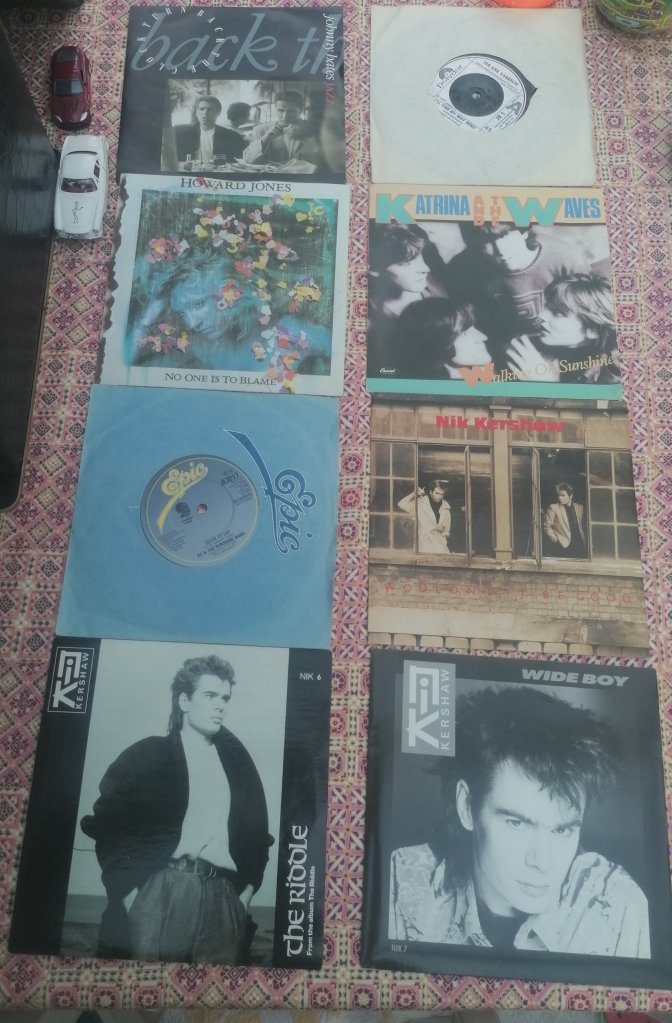
This section of my singles collection starts with the rather lovely Turn Back the Clock from Johnny Hates Jazz. It’s the story of a man looking back at his childhood and realising that despite the heartaches and difficulties they were the best times of his life. A beautiful tune and thought provoking lyrics come together to create a song that resonates through the years. If that’s the case for Turn Back the Clock, it goes at least double for the all time classic – in my opinion anyway – I’ll Find My Way Home by Jon and Vangelis which was released just before Christmas in 1981. The beauty of the tune and the purity of Jon Anderson’s vocals come together to create one of the all time great songs. It got to Number 6, but in my opinion we sold it short in the UK. Howard Jones was one of those artists who was always on the edge of my musical likes but he hit the spot with the gorgeous No One is to Blame, which, in common, with the previous two songs has a lovely tune and thought provoking lyrics. Howard Jones was well covered on the Now albums so I didn’t have to buy the singles very often, but this one definitely earnt its place in my collection. The B Side ‘The Chase’, an instrumental synth tune was memorably described by a friend of mine at the time as a case of ‘turn the instrument on and go for a cup of tea’!
The next tune could not be more different. An 80s classic, belted out in bedroom, bar and disco alike, Walking on Sunshine is immediate, visceral, exciting and uplifting. Katrina and the Waves may have won Eurovision later in their career, but this was their finest moment without any doubt. Give it Up by KC and the Sunshine Band was the summer hit from 1983, the year I finally escaped my secondary school. Those words were ones I sang loudly because I’d finally given up 7 years of misery so it is a song that will always be amongst my favourites. Added to that, it’s just a very good tune and added to that it has a cracking vocal performance.
We finish off this picture with three songs from early 80s hit maker Nik Kershaw who had an unerring ear for a tune. These three really give a good picture of what made him special. There’s the serious, thoughtful and occasionally gloomy lyrics of Wouldn’t It Be Good as a contrast to the tongue in cheek lyrics of Wide Boy dealing with a young man who has had overnight success and doesn’t have the ability to handle it! However, if I could keep just one single from Nik Kershaw it would be the marvellous The Riddle. There were many rumours that the track, if it were deciphered, would lead to a Masquerade style prize. Kershaw himself confirmed that it was simply a nonsensical guide vocal, but what a nonsensical guide vocal it was. It sounds full of meaning and the video added to the mystical feeling that pervaded, but it was just as much about the Celtic style undertone of the track that it had that added heft. A marvellous track in every way.
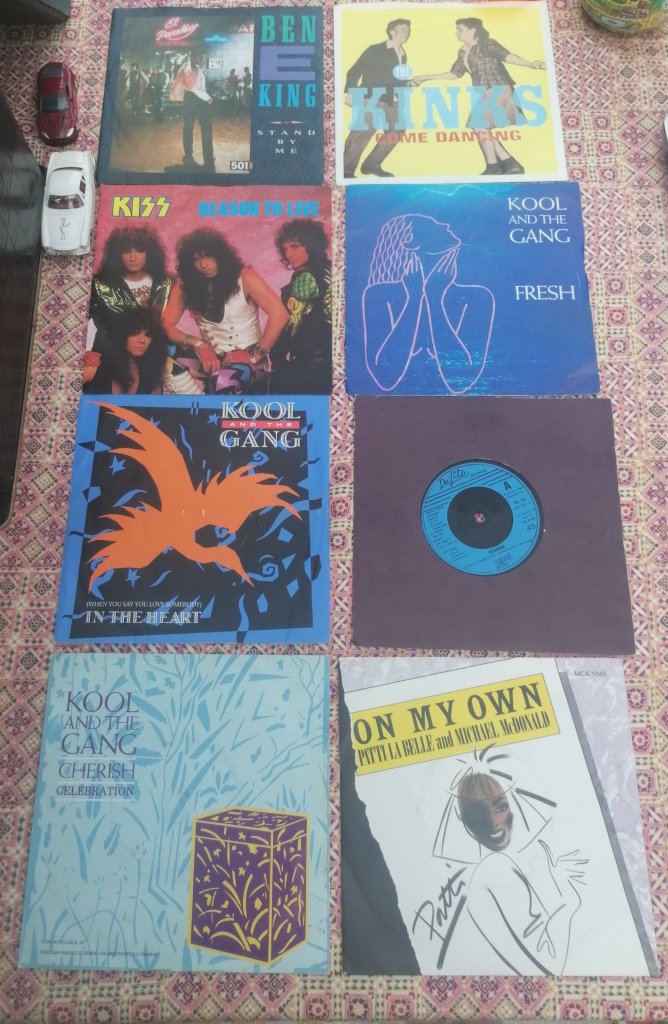
In the 80s, the best way to revive an old song was to put it in an advert or a film. Ben E King’s all time classic Stand by Me, benefitted from both. It was the advert that pushed its ascent to Number 1 as the Levi’s 501 cover indicates. The original release saw the song reach Number 27 in 1961! The three weeks at the top was a far more deserved chart placing. The Kinks were one of the best groups to come out of the 60s, but for their revival in the 80s they didn’t have to rely on films or adverts. Instead, they released a new track that showed they could still capture the ears and hearts of the listening public. Come Dancing with its story of the local palais was full of character vignettes, London character and a fantastic chorus that made it irresistible. It encouraged me to listen to The Kinks from the 60s, and I bet loads of teenagers followed me down that route. The only Kiss song in my singles collection is the Foreigner style soft rock of Reason to Live. I really enjoyed it, more than the successful Crazy Crazy Nights which reached Number 4. The fact that it reached Number 33 indicated that not for the first time I was in the minority!
For a good few years, Kool and the Gang were reliable hitmakers who produced dance tracks and ballads with, seemingly, equal ease. My four singles from them tend more towards the latter with the clear standout for me being the gorgeous, emotional Cherish. It is just a superb song that has stood the test of time to earn its place amongst the best ballads in an era absolutely chock full of them. Speaking of ballads, we finish off this section with Patti La Belle and Michael McDonald’s On My Own, another excellent example of the genre. Written by songwriting giants Burt Bacarach and Carole Bayer Sager, this song reached Number 2 in the UK and Number 1 in the US. It was an unusual duet though, because the two singers never met, recording their parts separately, something that the video reflects.
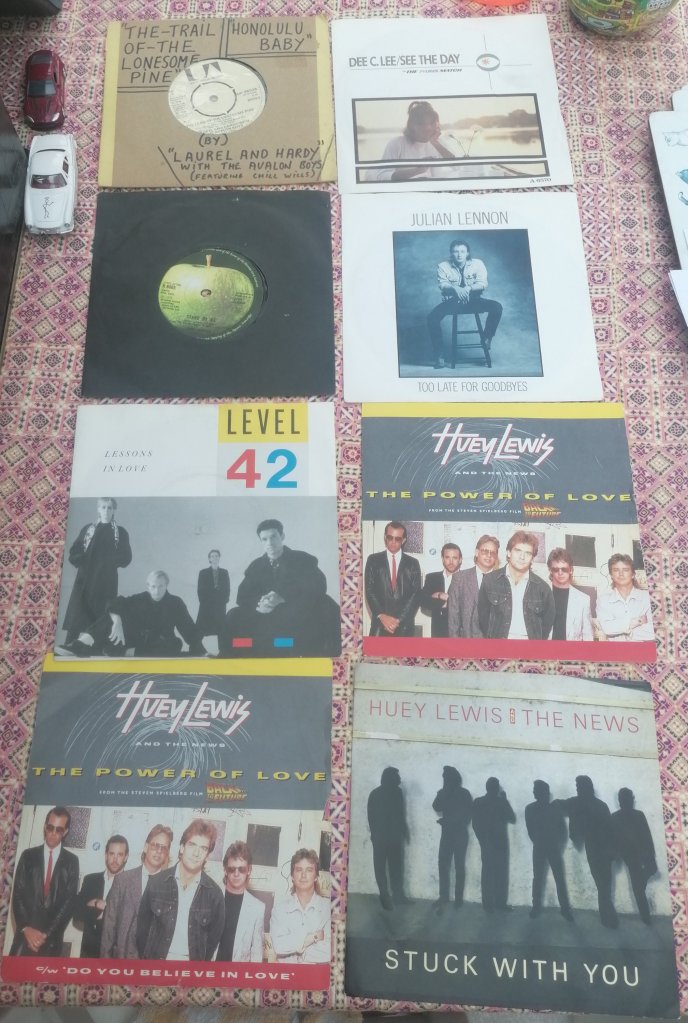
The final section starts with perhaps the strangest Christmas hit of them all. Seemingly out of nowhere, Laurel and Hardy’s Trail of the Lonesome Pine from the 1939 film Way Out West looked set to be the Christmas Number 1, or at least a Number 1 early in the New Year. Instead, it spent five weeks in the Top 3, swapping the Number 2 and 3 position with Greg Lake’s I Believe in Father Christmas. What stopped these two tracks from hitting the top? Bohemian Rhapsody which stayed at Number 1 for 9 weeks. I remember as a 9 year old being incredibly frustrated that Lonesome Pine didn’t get there, but my older self freely admits that its two competitors were far superior songs!
As forgotten ballads go, they don’t come much bigger than the outstanding See the Day by Dee C Lee. Lee was a backing singer for Wham! and her vocals were a huge part of The Style Council’s sound as well. However, solo success largely eluded her. See the Day was her only Top 40 hit, but if you’re only going to have one then it’s the one to have. This is the type of song that just fades from the memory and then reappears crystal clear as soon as you hear that soaring chorus. Next is a John Lennon cover of the Ben E King track mentioned earlier, which is decent enough but fades into obscurity compared to the original. His son, Julian, had a couple of hits in the 80s, of which Too Late for Goodbyes was my favourite. He had a decent voice and he was a talented musician, but he fell foul of the famous child of a famous father syndrome. If his name had been Julian Smith he would have appeared much later in my singles collection (!), but he might also have been judged more fairly on his own merits rather than being compared to John.
Level 42 were a group I always enjoyed listening to, but as far as their singles go their 1986 smash Letters in Love was their high point musically speaking, at least in my opinion. I loved it from the first time I heard it and it is still a favourite to sing. Mark King is still front and centre 40 years after they started and that instantly recognisable bass style is still the percussive heart of one of the most fondly remembered British groups of the era. From the other side of the Atlantic, Huey Lewis and the News were a very important part of my musical journey. Why? They were the first act that I saw live in a big London venue. The support act was Bruce Hornsby and the Range, so it was a high class night from beginning to end. It was a night that gave me a lifelong affection for the group and the album they were touring at the time, Fore. Yes, I know I have two copies of The Power of Love, but unlike Walk of Life by Dire Straits, it isn’t a mistake! I bought the second copy for perhaps my favourite song by Huey Lewis and the News, the amazing Do You Believe in Love. I bought Stuck with You and then picked up the Fore album, and for a good while it didn’t spend much time off of my cassette deck!
Hope you enjoyed my ramblings! The latest selection of tracks is on Spotify so please take a listen The A-Z of my Singles Collection Part 3
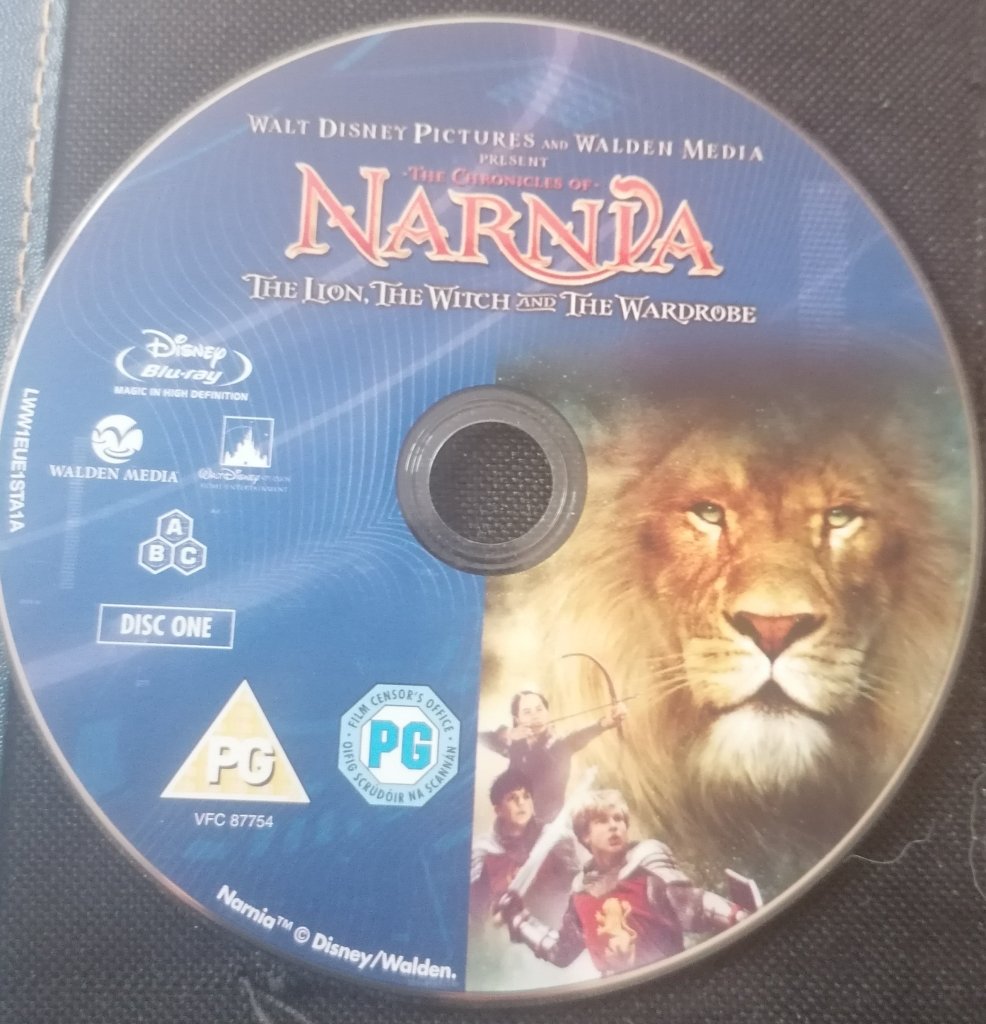
Sometimes, when I am looking through my DVD/Blu-ray collection, I come across a film or series I haven’t watched in ages. I put it on and I am reminded why I liked it in the first place and why I still enjoy it. One such film is the 2005 version of C.S. Lewis’ first Narnia novel. In order to focus properly on that film, I will address one of my irritations, the continued lack of a film or TV series based on The Magician’s Nephew. Why don’t the film makers start there? It explains how Narnia came into being, and is my favourite Narnia, perhaps because it was after all but The Last Battle had been completed, when Lewis had the entire story of Narnia from beginning to end. It fills in gaps in the narrative and provides Jadis with a fantastic backstory. There are often rumours of a new Narnia series being made, so I hope that my favourite Narnia story finally makes it to the screen. It is only fair to say that a number of scholars disagree with me on this, and suggest that the order in which Lewis wrote them with The Magician’s Nephew the penultimate book and The Last Battle, the final story, were always intended to be read after the rest of the Narnia Chronicles. Now that’s out of the way, I can get down to reviewing the Disney studios answer to the Harry Potter phenomenon.
The Plot
This must be a plot that must be extremely familiar to most of you reading this, but in case you aren’t, it sees the four Pevensie children, Peter, Susan, Edmund and Lucy evacuated during WWII to a large house in the country owned by Professor Kirke. One day, while playing hide and seek, Lucy hides in a wardrobe, but it’s no ordinary wardrobe. It turns out to be a portal into another world. This world is snowbound and apparently deserted, but whilst exploring she meets a faun, Mr Tumnus, who takes her home for tea after finding out that she is in fact human, something Tumnus seems unsettled by. When she gets home after hours spent in Narnia, she tells her siblings that she is back safely, but it turns out that no time at all has passed. Edmund is the next one to discover Narnia, and he runs into the White Witch, the self-styled ruler of Narnia, who finds out that he has three siblings and tells him to bring the others back after enticing him with hot chocolate and Turkish Delight. When all four finally make it into Narnia, they find out that the White Witch is an evil ruler who has enchanted the land, and that Tumnus has been arrested after Edmund carelessly told the Witch about Lucy’s visit to the faun. When the White Witch moves against the four children and their supporters, the stage is set for a battle between good and evil.
The Cast
As with the book, the story is seen largely through the eyes of the youngest of the siblings, Lucy. As such, the film makers had to get the casting right, and with Georgie Henley they succeeded. Although it was her first film, Henley proved to be equal to the task of guiding the audience into Narnia. She is appealing as a central character and her ability to show a combination of vulnerability and bravery made her performance strong enough to carry viewers with her. The relationship she has with her older siblings is believable, with the fraught dynamic between her and the second youngest Pevensie, Edmund, nicely authentic. Skandar Keynes has the most difficult journey as the treacherous Edmund, having to make himself unlikeable and occasionally spiteful, whilst leaving just enough goodwill in the audience to accept a possible redemption. Keynes walks this tightrope very well, and allows Edmund to be a character with shades of grey, and occasionally jet black. Anna Popplewell plays the older sister, Susan, and does an underwritten part full justice. In the original novels, Susan is given little character development and her main role seems to be as a viewer of events rather than integral to them. She becomes a very peripheral character in Prince Caspian and it seemed to me that C S Lewis spent little time trying to give her any defining traits. The final novel, The Last Battle, sees Susan shut out altogether in a move that outraged me as a child, and is the reason why I have never read that book again. Popplewell manages to show Susan’s strength and her role in bringing her occasionally warring siblings together. Finally, as the oldest sibling, Peter, William Moseley gets the bulk of the action sequences, having the chance to fight at the head of the forces of good. It is a role that could be a little one note, but Moseley shows concern for his brother and sisters that hints at a softer side.
The two main protagonists, at the head of their respective armies are Aslan, with the voice of Liam Neeson and the White Witch played by Tilda Swinton. Neeson has the required power and gravitas to portray the God of Narnia and is helped by a very effective realisation of Aslan on screen. It is, however, Tilda Swinton who takes her chance to steal the movie from everyone else with a truly superb and scary performance. Even as an adult with a good few viewings of this film under my belt, Swinton could still be genuinely terrifying at times, never more so than in the brutal Stone Table sequence, which is as dark as it gets in a family film.
Finally, I must mention Mr and Mrs Beaver played by Ray Winstone and Dawn French, who give the film humour in some of the darker moments with their excellent characterisation and comic timing. They were my children’s favourite characters when they first watched it, and remain so even now.
Overall
Nearly 20 years on from its first appearance when, by the way, it outperformed Goblet of Fire at the Box Office raking in $750m in cinemas, how does it hold up? Visually, it is still magnificent and the CGI is still extremely effective. The performances are strong throughout, and they help to create a fully rounded world that is built up in just a couple of hours. The story races along and the pace is never allowed to sag once the four Pevensies get to Narnia. Finally, the portrayal of the four as adults in Narnia shows how to do a 19 years later style epilogue! So why was it the only truly successful film in the series? A few reasons, but perhaps the three year gap between this film and its sequel, Prince Caspian, betrayed a lack of forethought that the Harry Potter films had in abundance. Each year, there was a new Harry Potter film, and the connection with the audience grew larger with each one. The audience, having waited three years between films, moved on in many cases to the darker toned fantasy films and never returned. Prince Caspian was a much darker film which further alienated their core audience of younger viewers, and when the more tonally similar Voyage of the Dawn Treader finally arrived in the cinemas 5 years after the first film, the Narnia bubble had well and truly burst.
While writing this entry, I have discovered that Netflix have bought the rights to all seven Narnia stories, and rumours are that Greta Gerwig will be directing two of the films. Nothing is confirmed yet, but it looks promising, and who knows, a new audience may yet be entranced by the adventures beyond the Wardrobe.

On September 5, 1983 I entered the world of work for the first time, starting a career that has had more twists and turns than most! 40 years on, I thought it might be interesting to look back to what the office looked like in the analogue days of the early 80s. Now, this is just my experience of one firm, but, from chatting to people at the time and after, I think it is fairly representative of what we faced in those far off times. Follow me through the doors of my first office.
Lloyds of London
My first job was in the Non-marine section of the famous insurer, based in Gun Wharf in Chatham. I had left the Maths School in July of that year with huge relief, and with one final piece of bad advice from the disinterested careers officer in a school that only cared about university entrants. I had done A Levels so I should look for a job in banking or insurance. Accordingly, I applied for every bank and building society I could and it was Lloyds who were unlucky enough to employ me! I was hopeless as a non-marine insurance clerk as I had absolutely no eye for detail and made mistake after mistake during my 10 months there. Despite this, I actually enjoyed the people I worked with and the opportunities I had on the social side. My pay was the princely sum, at least to me at the time, of £3,600 a year. This kept me in the manner of most 18 year olds at the time, funding pub visits and records quite happily! Savings were not an issue for me at the time, so it was purely spending money after I paid rent to my parents. My biggest purchase was a ZX Spectrum 48K for £175, the equivalent of a whole month’s disposable income! My friends loved it, but I was rubbish at computer games so it was by any measure an irresponsible purchase as it turned out!
The Office
In 1983, the office was a very different place in many ways. First of all, there were no computers of any sort on our desks. The whole idea would have been laughable when the computer rooms were huge spaces containing giant mainframes that had less processing power than the phones we carry in our pockets today. Instead of endless emails we had the post room where letters were sorted and delivered to offices twice a day. The post room staff were extremely efficient and, for the most part, enjoyed their jobs as they were not bothered by management and could work at their own pace fuelled by tea, coffee and cigarettes! In those days you could smoke in the office, and over half of the employees did. Looking back, that seems to be the relic of another age, but at the time we thought nothing of it. Our colleagues were not the chain smoking types, and they often took the chance to go for a walk when they were smoking so there wasn’t a permanent fog of smoke in the place.
The benefits of a computer less office lay in the ability to think, plan and consult with colleagues when they were less busy. If someone had a query for your department, they didn’t expect a reply immediately even if they phoned up. These days, the instant nature of communication means the expectation of instant answers. The effect of that is to reduce the effectiveness of some of those answers and to increase the stress on the employees providing them.
My colleagues were a mix of older time served employees in their 50s and 60s, many of them with 30 or more years of service under their belts, and a large proportion of new employees, hired year after year on the basis that not all of them would stay. I sat opposite a couple of older employees who would regale us with stories of WWII and their experiences of Lloyds during the many years they spent there. They were, as a group, fascinating, caring men and women who had a clear policy of watching the backs of the younger employees. From their own experiences of being new workers, they were able to see the pitfalls way before us and often had a quiet word to help us correct our mistakes before the managers spotted them. It was very much a them and us approach in the office that gave us a bond with each other and made for a very supportive work atmosphere. They shook their heads and smiled on occasions when they saw the younger crowd walk around as if we’d got it sorted out, but were endlessly patient with us. The managers themselves were accorded respect because they had all worked their way up through the ranks. You could go to a manager for help if you needed to, safe in the knowledge that they had the skillset to help you. Our assistant manager and manager in my department had over 50 years between them in Lloyds.
What a contrast to today when being a ‘manager’ is simply a career path chosen by people who in nearly every case have no idea about the field they work in. All they care about is enriching themselves and their opportunity to get even more money in another field they are similarly clueless about. Yes, I know there are exceptions, but the general lack of understanding or interest in the management class is what has led to many of the problems we have today in terms of business stability and relations between junior and senior staff.
Lloyds, in common with many other places at the time, had a system called flexitime. This involved employees being treated as responsible adults, which was probably not ideal in my case! You had to work a set number of hours each month, and at the end of the month you were required to have a surplus or to have ‘broken even’ by working that required amount of time. In my case, I treated myself as a part-timer for the first 2 or 3 weeks of my first few months and then worked 8 – 6 with 15 minutes for lunch in order to play catch up! This was not the ideal strategy, and one month I was sick for the last two days and ended up with a deficit for which I was rightly taken to task. After that, I was much more responsible and came to enjoy a system that allowed you time to recover from a bad morning or a ‘heavy night’ and, if you built up enough time, take the odd day off. It was a system that both employees and employers benefitted from and a system that would be significantly better for morale than the enforced or zero hours we have now. Holidays in those days meant someone else doing your job for two weeks and no inbox with hundreds of emails to return to. It gave you the opportunity to really relax for two weeks and pick up the work when you returned with no backlog.
Lunch time
Lloyds, in common with many other places had a subsidised canteen. If you just had a main course it was 9p, but if you pushed the boat out and had 3 courses it was the princely sum of 27p – less than the price of a half pint of beer! There was no sitting at your desks eating, you had to leave the office for a minimum of 15 minutes at lunchtime as that was considered essential to maintain concentration. In practice most lunches were 30 – 45 minutes long. Steve Reid, my inseparable work buddy, and I used to spend lunchtimes chatting, playing snooker on the 6 by 3 table downstairs, or occasionally taking part in indoor bowls (More of that later)! On Fridays, however, we went to the Command House nearby and, unless I was playing catch up on my hours, spent sometimes up to an hour and a half drinking and eating with the many of our younger colleagues. Friday afternoon saw very little useful work being done by most of us as we struggled to stay awake, let alone read insurance forms through our self-induced alcoholic hazes! Occasionally, our senior colleagues joined us, or went out with their compatriots to toast the upcoming weekend. It was an accepted part of work behaviour pretty much everywhere as long as you didn’t overdo things, although if my friend Gavin’s drunken Friday afternoon phone calls were anything to go by, the London banks seemed to be a free for all! Yes, it could be one of those privileges that was abused, but we knew what the limits were and for the most part kept within them.
Social Life and your employer
Back in the 80s, we were probably in the last decade or so of the expectation of jobs for life. Many of the post-war generation were reaching the end of their careers and had dedicated their working lives to Lloyds. In return, they were treated very well by the company both inside and outside work. Those of us who were just passing through were also beneficiaries of this approach and probably didn’t really appreciate how lucky we were until later on in our careers.
Lloyds had sports grounds in the Medway Towns and in London with a number of cricket teams in the summer, football, rugby and hockey in the winter and well used clubhouses in both venues. They were not unusual in this respect as other companies such as Lloyds Bank, Barclays Bank and Cuaco (Commercial Union Assurance Company) ran 5 or 6 teams in each sport whilst smaller companies commonly ran at least one team in many sports. This fostered a sense of belonging and gave employees an outlet for their interests that cost very little and was well supported. We had games evenings against other companies which were great fun and definitely competitive! Steve and I played indoor bowls in a Lloyds league organised by a couple of the employees. The combination of Steve’s skill and my brute force occasionally paid dividends, but I definitely wasn’t the most reliable partner, that’s for sure! All of the above examples compare very favourably with today’s employers who, in the vast majority of cases, expect full loyalty from employees without acknowledging a duty of care, mental or social, to those they expect so much from.
Education and training
Finally, all first year employees were working a four day week during college terms as it was considered essential to have a workforce with as much training as possible. We went to the nearby Mid Kent College every Friday to study for our Introduction to Insurance qualifications. At the end of the course, we had to take exams, and, as our part of the deal, needed to pass two out of the three subjects to protect our college day. If anyone didn’t pass two exams, they were allowed to resit them the following year, but they had to study on their own time as they went back to a full 5 day week. Ironically, given that I didn’t last a full year, I was the only one eligible to keep my study day after the exams! It was the perfect combination of incentives, and if you went back the following year and passed the missing subjects you could move on to Stage 2 and get your study day back. Now, that’s what i call professional development!
Final Thoughts
So there you have it, work 1983 style. I know I have painted it in a very positive light, but at the time it didn’t seem that positive. It’s only in retrospect that you realise it was a very much better time to be a common or garden worker in an office than pretty much any era that followed it. Did I enjoy it much at the time? No way. Work is work, particularly in a job you are completely unsuited for, and I hated the feeling of not being up to the job. However, even at the time I appreciated my colleagues and my employer for making it significantly more comfortable than it otherwise would have been. These days, I doubt that many modern firms would have the patience or understanding required to do anything to smooth my path.
 David Pearce - Popular Culture and Personal Passions