
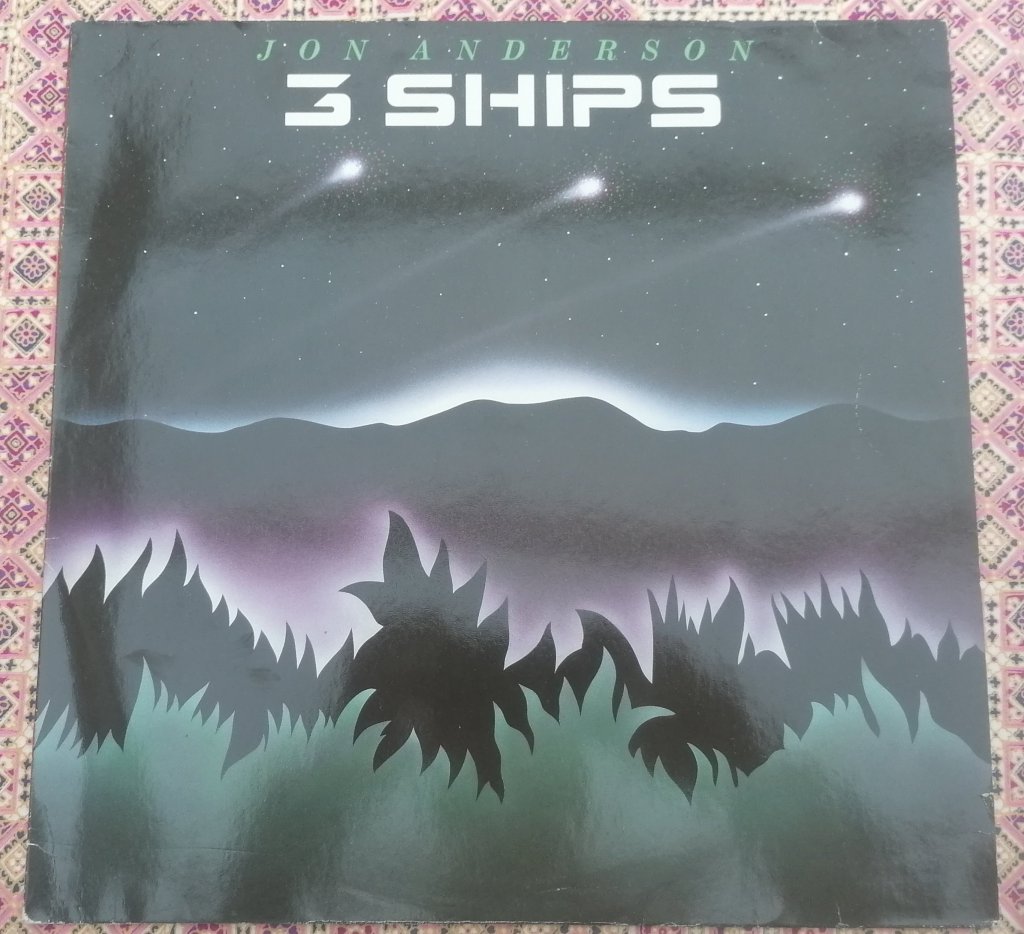

For Day 5 of Blogmas it’s another vinyl, this time something of a lost Christmas classic. Jon Anderson is perhaps most famous to many as the occasional partner of Vangelis in the 70s and 80s. However, prior to that he was the driving force behind the prog rock supergroup Yes, along with Rick Wakeman amongst others in a changing line up of incredibly innovative musicians. By 1985, he was contributing to soundtracks, making appearances on St Elmo’s Fire, Biggles and Legend, In this busy period he made his Christmas themed album 3 Ships. It didn’t chart in the UK, scraped into the Top 200 in the US and only charted in one other country, reaching Number 66 in the Dutch charts! It did not get a great critical reception at the time. This could be because his unusual move of recording a Christmas album when they were perhaps less of a seasonal banker didn’t go down well with the more purist vision of the critics. It could be that it was such a personal vision that they just didn’t buy into it, especially coming from the leading light of progressive rock. It may be this lack of critical enthusiasm that accounted for the poor sales. However, when I discovered it a few years ago and bought it on the strength of his name I was able to come to it completely fresh. So, let’s take a listen.
Side 1
The album starts with Save All Your Love and the first thing that hits you is the incredible purity of Jon Anderson’s voice, one of the most beautiful male voices in rock music. He can lift the quality of any material simply by singing on it, but in the case of the opening track which is short and sweet at less than 90 seconds he just makes a lovely song even better. Already Said and Done is a track that has the 1980s writ large and it is one that may sound rather underpowered to modern ears, but it has its own charm and once you let that voice wash over you it is a song that works its own understated magic of the season. Three Ships is great fun as it gives the listener a synthesised treatment of the famous carol complete with fast paced verses which I really enjoyed. Not for the purist perhaps, but if you want something different in your Christmas carols it definitely works very nicely. Forest of Fire is a Christmas themed song set in a jungle! It sounds like a prototype of The Lion King in places and is one of the most unusual festive songs you could ever hear. Ding Dong Merrily on High has a synthesised backing that takes the familiar carol into some quite interesting territory! Once again, the voice rises above the material and gives it its own individuality and appeal. The final track is a reprise of the gorgeous Save All Your Love which could easily be a companion piece to the classic I’ll Find My Way Home. By the end of this side you will either be into the album or you won’t, but I can guarantee you that you won’t have heard another Christmas album quite like it!
Side 2
The Holly and The Ivy has a Mike Oldfield Tubular Bells feel to it and it gives this familiar carol a very different feel. Despite the synthesiser backing it actually has a more medieval feel than most with the use of trumpet fanfares and the use of a tune that sounds like an Elizabethan dance in places. The next three songs reflect upon the same event, namely the birth of Jesus. Day of Days is an interesting song that has hints of a spiritual alongside an unmistakeably 80s touch that contrasts with very traditional lyrics about the Nativity. 2000 Years covers similar ground in a track that is short but effective, and my favourite of the trilogy of more devotional songs. Finally, Where Were You? reflects on the experience of the shepherds before looking at the event in a more global perspective. O Holy Night is an instantly recognisable piece of music, or at least it usually is! On this track Anderson gives us a version utterly unlike any other with a much more minimal backing than we are used to. With the now traditional huge ballad approach on pretty much every other Christmas album, I found this a very nice change of pace, and with his gorgeous voice you can’t go far wrong anyway. How It Hits You can be read either as a love song or a devotional anthem according to taste and has a soft rock feel that sets it apart from the rest of this album. The vocals and the tune put me in mind of Mr Mister in places and also The Thompson Twins, so I for one thoroughly enjoyed it. The final track is Jingle Bells! By this stage nothing really surprises the listener so why not? It’s definitely an album where you have to go with the flow. It is the briefest of codas with a very soft child’s voice singing the famous refrain and in that way it is a fitting end to a very atypical Christmas album.
What I really like is when artists follow their vision and back it to the hilt as Jon Anderson did in this case. It won’t be for everyone, but that’s actually a good thing because so many Christmas albums play it safe and become interchangeable. Three Ships definitely goes out on a limb and if you are prepared to follow it out on that limb, you are in for a treat – or at least a very original listening experience.
It’s not on Spotify as far as I can see, but the vinyl is here on Discogs. Go on, give it a try!
Today, it’s a charity shop find that I couldn’t resist. I have no idea whether it will be any good, but I am playing it and writing the blog at the same time so you will know what my thoughts are as I have them! The Partridge Family were TV stars on both sides of the Atlantic and David Cassidy was Donny Osmond’s chief rival in the heartthrob stakes! Every episode featured a song and the single I Think I Love You was well known enough to be namechecked in Four Weddings and a Funeral by Hugh Grant! So, their Christmas album with Cassidy and Shirley Jones taking on vocal duties must have seemed like a sure fire winner. The original albums contained an actual Christmas card from the Partridge Family with facsimile signatures, but sadly my version doesn’t have that piece of kitsch memorabilia. Oh well, I think I will cope without it. In the meantime, here’s the real time review of this quintessentially 70s Christmas album.


Side 1
The first track is the only original track on this side. It’s called My Christmas Card to You. It really is so 70s it’s incredible! I don’t know if anyone else remembers the songs in the programme, but calling it easy listening somewhat oversells a track that I found completely forgettable. David Cassidy’s version of White Christmas is actually a lot better because he could really sing. The vocals are good, although they are occasionally buried beneath a musical accompaniment that really overdoes it after the first verse. I think it would have been more effective as a straight solo track. Still, Cassidy’s voice just about rescues it. Santa Claus is Coming to Town is another very 70s mix, but it actually works in this case. Once again, Cassidy is on fine form, but the music and the backing vocals complement his performance and you end up with a bouncy, fun version of this Christmas staple. Blue Christmas doesn’t try for an Elvis copy, very wisely. Instead it reverts to the country version of the original sung by Ernest Tubb, and it really works in a side that gets stronger as it goes on. Jingle Bells has to appear on a Christmas album somewhere, it’s the law! This one swings along really nicely in the verses although the chorus doesn’t really work with the backing vocals intruding on the song rather than complementing it. It’s a different version and it definitely gets your toes tapping even if it doesn’t completely convince. The final track, The Christmas Song features a long overdue lead vocal from Shirley Jones which is superb and as smooth as hot chocolate. This is a touch of class to end this side on a high note.
Side 2
Rockin’ Around the Christmas Tree can scarcely have had a less rocking version than this one! I almost had to check it was at the right speed to start with. This reminds me of the variety shows of the 70s when easy listening versions of uptempo songs were very popular, and it works as well as it did on those – not very! Still Side 1 started badly and improved so what’s next? Well, it’s Shirley Jones duetting with Cassidy on Winter Wonderland. It’s not a bad version despite another mix that has me asking ‘Could it BE any more 70s?’! Both the singers were extremely good in their own right and here their voices blend very well indeed. If you wondered what Frosty the Snowman would sound like on a John Lewis advert, well the answer is on here. You really have to hear it to believe it, but yet again Cassidy’s voice makes a silk purse out of a sow’s ear. This is the one you really have to listen to, so the link is below. Trust me, it is a John Lewis advert in the making!
On the home stretch now with Sleigh Ride. When Leroy Anderson wrote it, I can’t imagine he imagined this, but if you want to have an alternative to the classical version or The Ronettes version, well this is definitely it. The vocals are the nearest to a family sound on the album, but it needs more oomph! The final track is Have Yourself a Merry Little Christmas, and here the arrangement and the vocals match perfectly giving Jones a lovely backing for her clear as a bell vocals. It reintroduces the melancholy of the original very effectively and provides a very nice end to this album.
Final Thoughts
This is definitely a curates egg of an album with a few clear misses, but it really would be good as the backing track to present wrapping and you can find it on YouTube or Spotify. Indulge your kitsch side at Christmas and let The Partridge Family transport you back to the 70s with everything that entails.
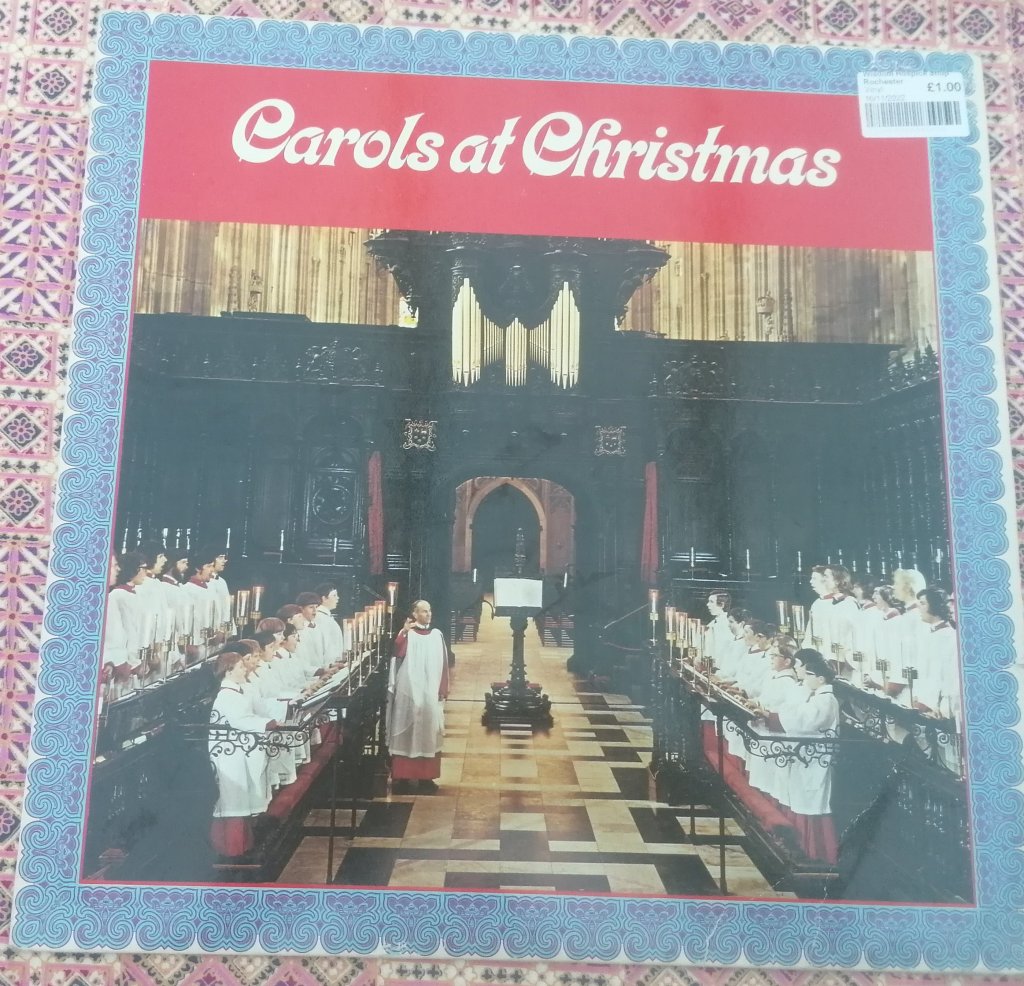
For many people, myself most certainly included, one of the central events of Christmas is the televised service of Nine Lessons and Carols from King’s. As soon as that solo of the first verse of Once in Royal David’s City begins you know that the big day is just hours away. You may imagine that the service and the singing has been pretty much the same for decades. Is that true though? For many years the choir has actually been honing and adjusting under their directors of music. In the 50s and 60s that director was Sir David Willcocks, and that is the era from which these recordings are taken. Even though this Reader’s Digest vinyl is dated 1983, if you look at the dates of the recordings, they come from a six year span between 1959 and 1965. As you can see from the track list the usual crowd pleasers are there. As the carols themselves need no introduction, I will concentrate on the singing and the atmosphere of the season they evoke. So, let’s have a listen.

Side 1
Once in Royal David’s City starts with the solo which is almost too quiet to hear, even with the volume turned up higher than usual. It accentuates the ethereal, haunting nature of the solo which affects me anew every time I hear it. It is one of those musical set pieces that does not get old, however many times you hear it. By the time the full choir comes in and the music from the organ swells along with the voices, it has worked its yearly magic once again. I think it is The First Nowell that really gives you the clue as to the difference between the choir 60 years ago and now. There are very few of the descants and variations of voices that today epitomises the way that modern choirs express their musical virtuosity. The First Nowell, for example only delivers a descant on the final verse. Instead, you have a straightforward but beautiful choral rendition of favourite carols that sound like those you would sing yourself in a church service. I think that was expected in a time when a very large proportion of the population would have attended carol services and would know what they expected of a song. O Little Town of Bethlehem is quite simply a beautiful tune and it is delivered in a multi-layered style where the boys voices are joined softly and subtly by those of the older choristers. Yet again, only the last verse branches out into the descant. As a variation, While Shepherds Watched has the alternation of the descant, which appears on the second and fourth verses, and the familiar tune, and works very well. In Dulce Jubilo is slow, stately and simply beautiful. O Come All Ye Faithful is sang with style and grace and sounds very different to when I belt it out! However, it is easy to imagine yourself comfortably singing along with this, despite your relative lack of vocal prowess. In that sense it is different from, say, the use of sopranos to sing the anthems at rugby matches meaning that the crowd, who are very definitely not sopranos in the main (!) find it almost impossible to sing along with any comfort.
Side 2
The second side, which I would characterise as largely a choir only side where the choir demonstrate their versatility, starts with the rarely sung I Saw Three Ships. At least my perception is that it is more rarely sung. The alternate verses taken by boy choristers and adult choristers just works perfectly for a carol that the congregation itself usually just listens to. The first unfamiliar carol to me is There Is No Rose, a traditional carol that sounds as though it originates in the 16th or 17th Century. It is a beautiful carol that simply washed over me. The other carols follow a similar pattern as they demonstrate the breadth and depth of the choir’s singing. God Rest Ye Merry Gentlemen is one of my favourite carols due to its association with A Christmas Carol, and rarely have I heard it more beautifully delivered than it is here. After six carols that you can just listen to and admire, the final one is my absolute favourite, the fantastic Hark the Herald Angels Sing. For me, it is the epitome of the crowd pleasing nature of any carol service. Whenever I sing it, I do so loudly and extremely enthusiastically! This final tune finishes off an album of carols that for me cannot be improved upon.
Should your appetite be whetted by my review, you can find it on Discogs !
Blogmas Day 2
So, yesterday I looked at the first three years of my Primary school experience as I moved from school to school on an annual basis. This post reflects upon the last three years as I settled into the only school I ever felt a part of. Once again, we have songs from a wide variety of cultures that, looking back, probably helped to shape my eclectic approach to music all these years later. Some of the songs will be instantly familiar, some will jog memories, and some will have disappeared into the ether and possibly the internet altogether. Why is that I wonder? Well, fashions change and many songs that were on the lips of people 75 or 100 years ago are now forgotten by all but the cultural magpies. Incredible though the internet has been at reconstructing our history, it is only as good as the people who want to write about it. As before, if a song fails to register on a search, I will put the sheet music on here in the hope that someone can play and hopefully post the tune somewhere.
Autumn 1973
St Andrew’s School Rochester 2nd Year Juniors
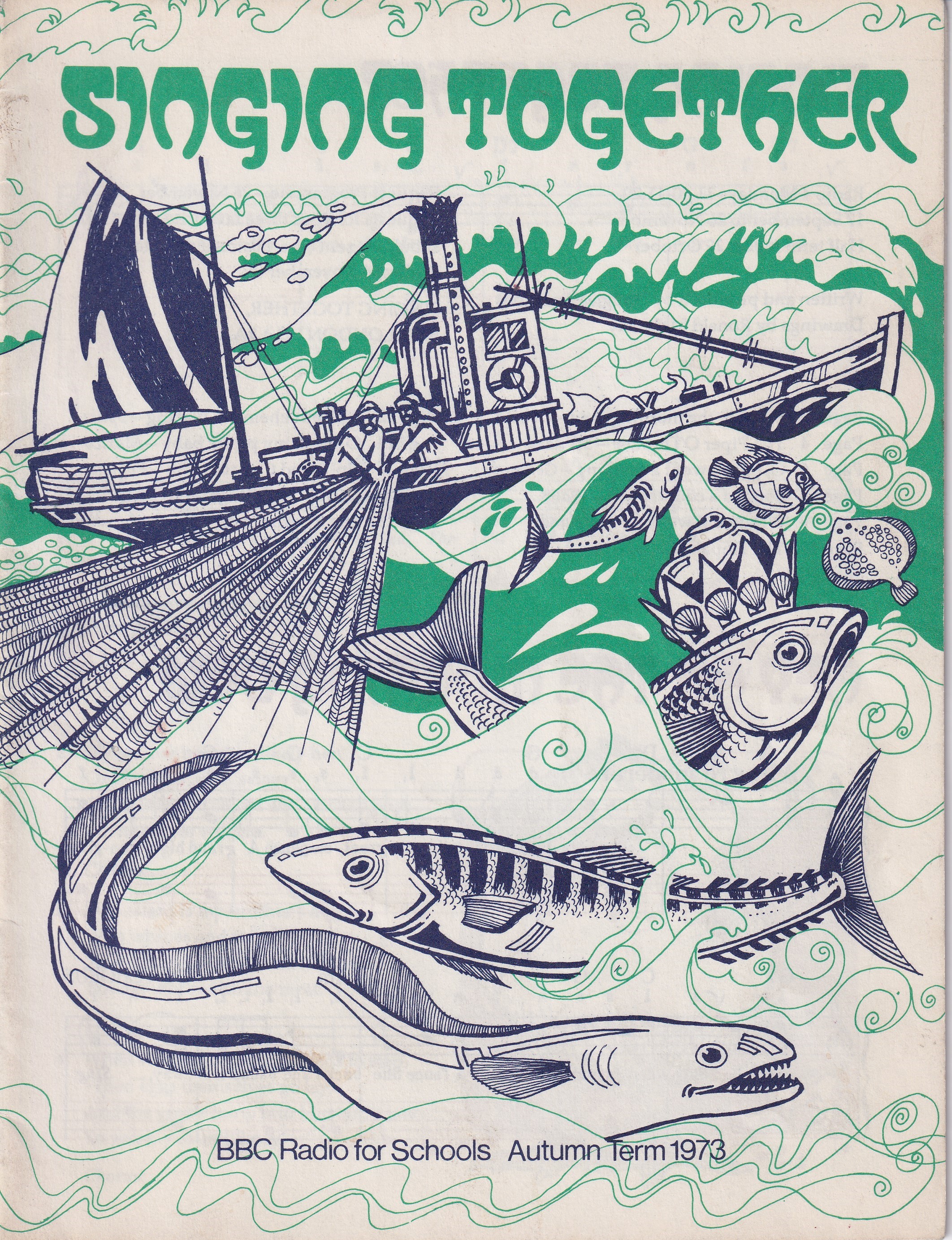
As ever, there were five festive themed tunes from five different cultures. We start off with All Bethlehem’s a-blazing which comes from Spain. This is another song that has slipped down the back of the internet, and I don’t remember it from the lyrics, good though they seem to be, so below is the sheet music.

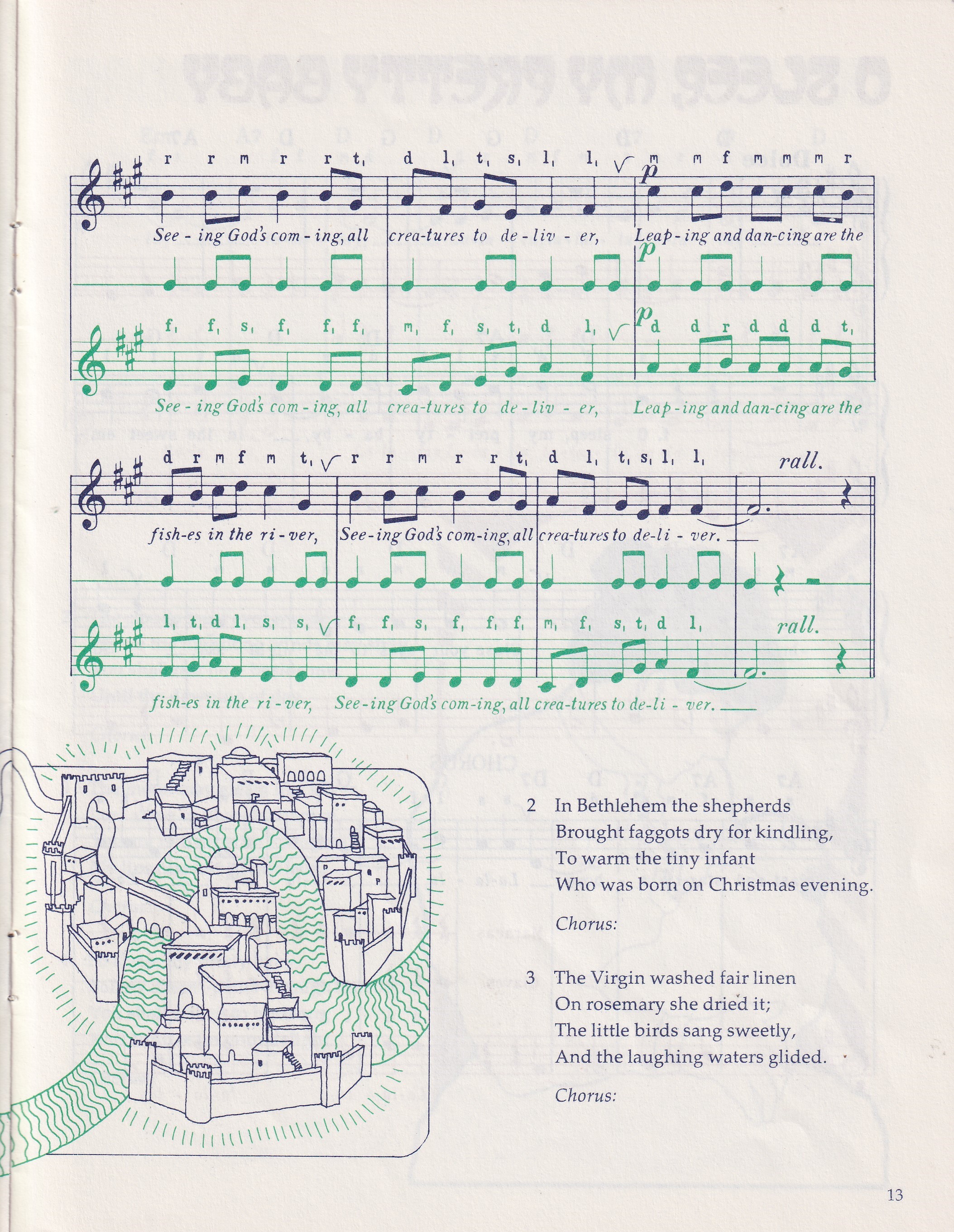
Lullabies seemed to be popular, especially at Christmas time, and from Mexico we have O Sleep My Pretty Baby. It was not the type of song that would have appealed to me too much at the time, but having found it on YouTube and listened to the lovely rendition below, I can imagine that some of the more adept singers at St Andrew’s would have done very well with this. It is definitely a song for a child to sing but there is also an instrumental version by Yolanda Kondonassis on the harp that is ethereal.
Next, we return to England for Up! Good Christen Folk, a carol based on bells as a couple of the more famous ones, Ding Dong Merrily on High and Carol of the Bells, are. Again, the tune doesn’t stir any memories, but in this version from King’s College Cambridge it sounds gorgeous. At various points as you can hear, you have to stretch a single word over four beats, which I do remember annoying me on any song, because I couldn’t see any point to it. To be fair I still can’t!
Next is an absolute favourite of mine that I recognised instantly as soon as I turned over Sting’s 7″ single, Russians, and put the stylus on the B Side. At the time, I had no idea why I knew it, but all these years later I found out. Gabriel’s Message is a brilliant singalong carol, from an Old Basque Melody apparently, and I don’t know why it doesn’t appear far more regularly at carol services. Good though Sting’s version is, I have chosen the Charlotte Church rendition from her Christmas album, Dream a Dream, which I cannot recommend highly enough.
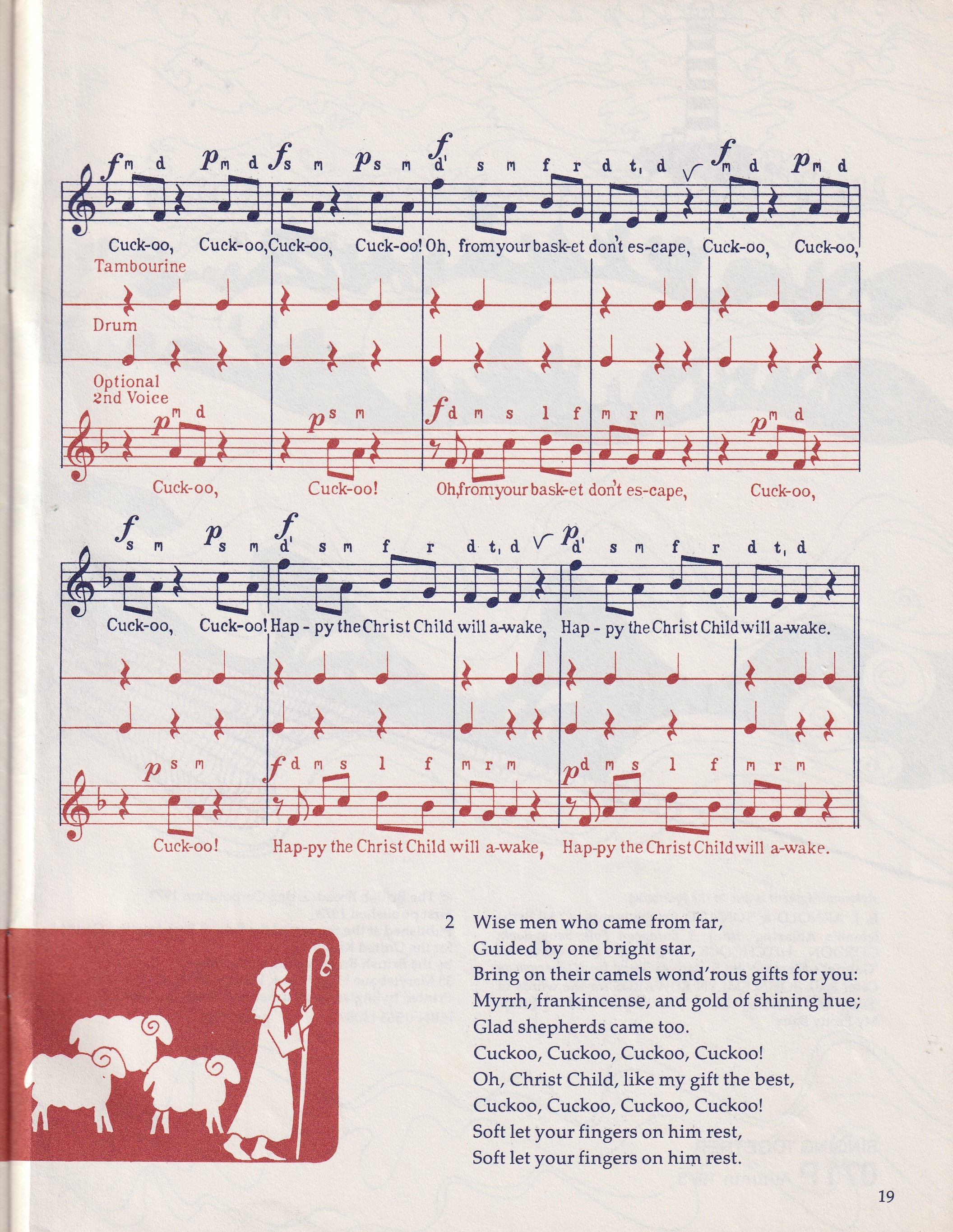
Our final stop on the global odyssey in 1973 was Czechoslovakia from where the Cuckoo Carol hails. Well, it might hail from there, but it doesn’t seem to have made it onto the world wide web. There are other songs bearing that or a similar title, but this particular one doesn’t seem to appear on YouTube at all. As before, it’s over to you.

Autumn 1974
St Andrew’s School Rochester 3rd Year Juniors

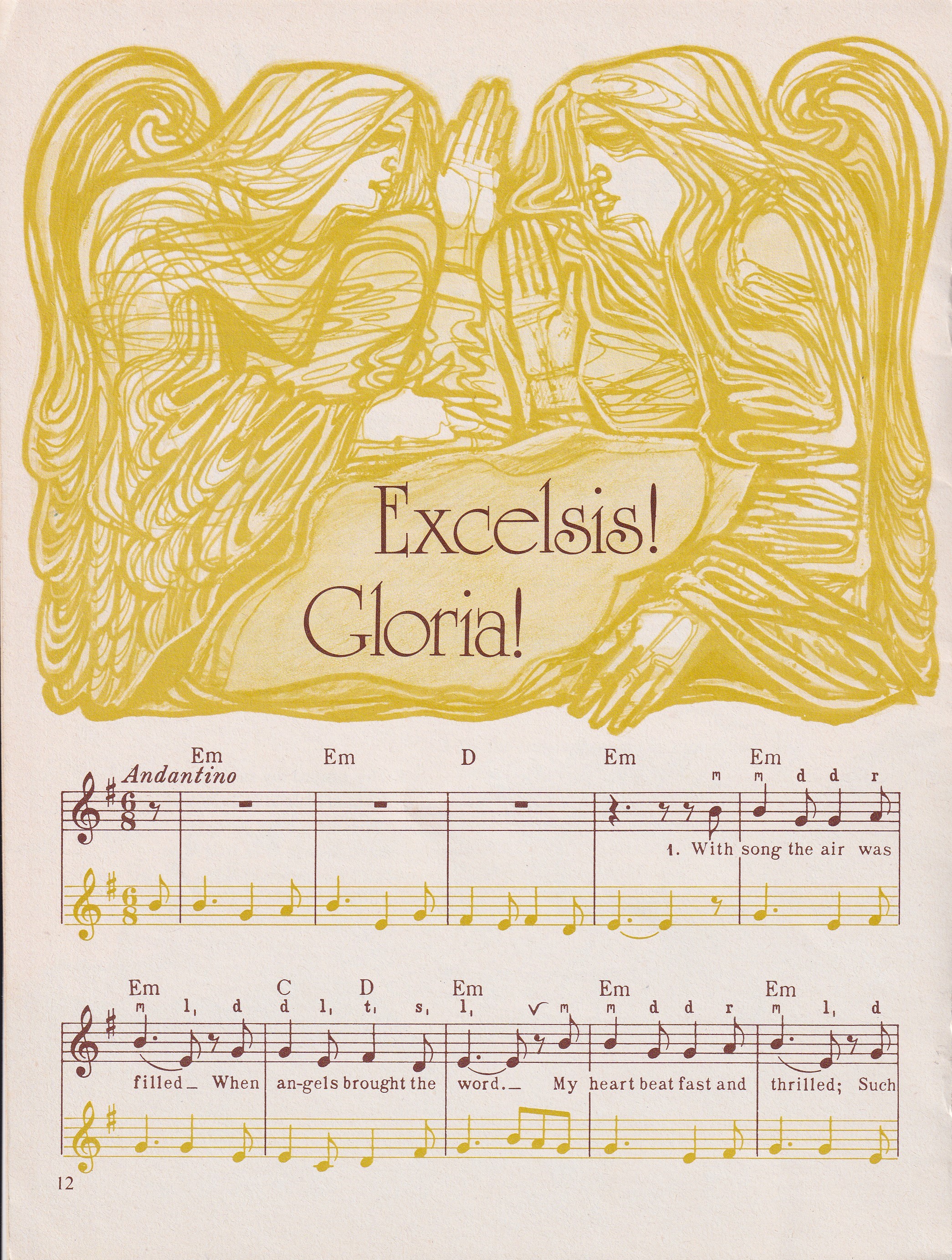
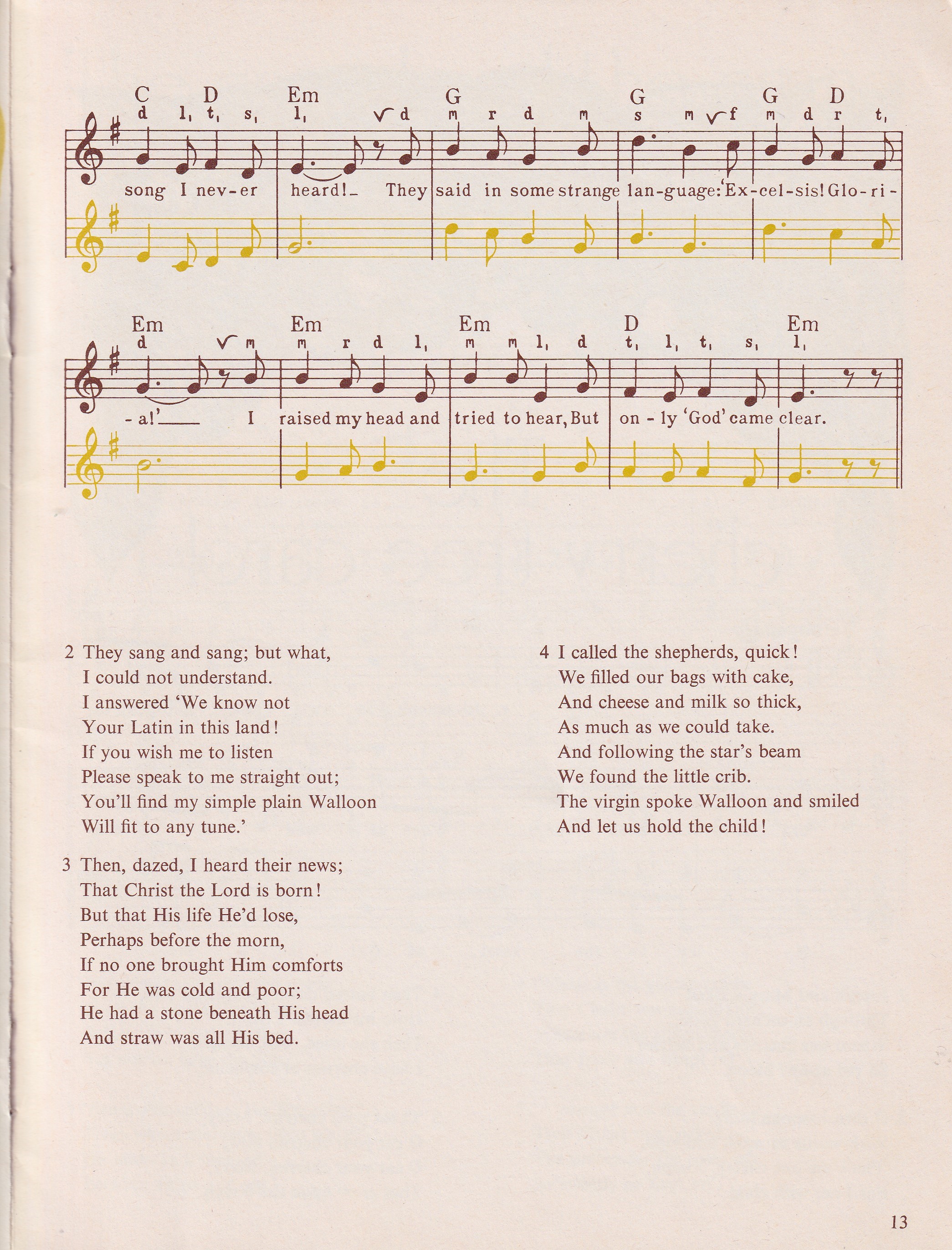
Excelsis! Gloria! is a carol that mentions the Walloon language so it’s reasonable to suppose that it comes from Belgium. However, the Singing Together booklet doesn’t give this information, and it seems like it dispensed with the origins of each song on the listing from here on in. This is quite frustrating given the assistance it was in pinning down the derivation of the songs. However, it probably wouldn’t help me because this is another song that the internet forgot. I typed in the first line of the lyrics to find more details, but the only hit I got was from someone who had got them from Singing Together. Over to you for the sheet music below.
The next carol is The Cherry Tree Carol, which, according to The Child Ballads has fourteen verses. Luckily we were only expected to sing five! The Child Ballads, by the way, was one of a set of 305 ballads collected by Francis Child in the 19th Century. It’s quite a fascinating story which you can find here if you are interested. So, I went on to YouTube to find recordings and this time I was in luck. There are any number of recordings from a diverse range of artists. I chose the Shirley Collins recording from 1959 which seemed most representative of what we might have sung.
The Carnal and the Crane is a conversation between two birds about the birth of Jesus and is Child Ballad 55, following directly on from the previous song, Child Ballad 54. As with the previous song some cutting down was required as the original version had no less than 30 verses! I chose a version by Maddy Prior, famous for her work with Steeleye Span, a folk group that had one Top 10 hit with the song All Around My Hat in 1975. The album this comes from features Christmas music which her band plays on Renaissance Instruments that were common in the 15th Century. It was definitely a tune that jogged some memories. Presumably it was in there somewhere because it was a song I enjoyed singing.
The Search for Lodging is the exchange between Joseph and the Innkeeper when they get to Bethlehem and are looking for a place that Mary can give birth. As with most of these two character songs I can imagine that we took it in turns with half the class taking Joseph and the other half taking the Innkeeper. The original carol comes from Mexico and was sung in Spanish with the title Pedida de la Posada or perhaps simply Las Posadas. As with a couple of other tracks, I have found some difficulty in tracking down the English lyrics, so this time I thought I’d choose the Spanish version so you can hear the lovely tune which does sound vaguely familiar.
The final carol for this year was Jesu is Crying which does not appear anywhere as far as I can tell, even in the form of lyrics, so the sheet music is below.

So that is it for 1974, a fairly unremarkable year with no instantly familiar carols I’m afraid.
Autumn 1975
St Andrew’s School 4th Year Juniors

So, on to my final year of junior school. The Autumn Term wasn’t one I remember with any fondness, the only one of my 9 terms at St Andrew’s that I can say that about. I was moved to the other class (we had two in each year group) which was, I think, seen as the top class. Unfortunately, it was a class where I didn’t really fit in as I was very much the outsider in a tight knit group. Luckily for me, I was moved back to my old class with my friends in the New Year as the school realised quite quickly that I was struggling. Anyway, was there anything to hold my interest in the Christmas songs of Autumn 1975? Well, straight off the bat we have The Carol of the Drum, also known as The Little Drummer Boy with its instantly recognisable ‘Pa rap pa pa pum’ refrain. I absolutely loved this carol and still do as it carries memories of getting lost in the music when everything else around me was becoming more difficult. It is a song that you can’t help getting lost in, or at least I couldn’t! Here is a live version of the track from Charlotte Church’s fantastic Dream a Dream album.
Masters in this Hall is an English Carol written by William Morris to an old French tune. It was one that I recognised instantly as soon as the music started playing. It’s a fantastic tune and one I must have enjoyed at the time to have such a clear recollection all these years later. It’s stirred another memory, vague though it may be of the classroom I was sitting in at the time, a room I hadn’t been able to picture in my head for years. The version I have chosen is by The Robert DeCormier Singers. I hope you enjoy it as much as I do.
The next carol is the Tyrolean Cradle Song, another lovely tune in a term packed with them. This one doesn’t stir any obvious memories, but it’s definitely a carol that I can imagine being sung as an alternative to Away in a Manger as it covers a similar subject area.
The next carol in this book and another anthropomorphised carol of my Singing Together journey is Hey Little Bull. As children we often enjoy songs and stories where animals are given human personalities or thoughts and this is a good example. Once again, it is a tune that I definitely remember. It’s catchy and easy to follow and in that sense an archetypal Singing Together song. I had difficulty finding a vocal rendition but YouTube came up with one of those oddities that it seems to specialise in. Here we have a recording from Great Moor Primary School in 1981 that someone has fortunately been able to save for posterity on YouTube as it’s the only version I can find that has singing!
We now move on to the final song in this journey through Christmas via Singing Together. It contains the story of the shepherds recounted in the bible and in many carols. Thinking of bible readings, I was chosen to read from one of the gospels for our Christmas service that year. Commander Starkie, the headmaster, chose readers in the most unusual way you could imagine. He made us go down the stairs from his office to the next landing and read a script out. If he could hear us through a closed door without us shouting then we were in. My loud voice for once paid dividends and I remember being very proud when I read the lesson at the end of that term. Anyway, back to the song. It isn’t one I remember, but given the strike rate on the rest I can definitely say it was a good term’s work from the Singing Together compilers.
So that’s it. Thirty songs over two days, most of which I have been able to find in some form on the internet. Some were instantly recognisable from later years and, quite unexpectedly, some rushed back to the forefront of my mind as soon as I heard the first few notes. In some cases, they even brought back memories of my old classrooms. For me, music is a time travelling device like no other as I can associate people and places with the different songs so readily. I hope you have enjoyed reading these articles for the first two days of Blogmas and that some of the carols brought back memories for you. If you can fill in any of the gaps I would be incredibly grateful, so any musicians who would be able to play the tunes for me once again, please get in touch.

Blogmas Day 1
I have previously taken a look at Singing Together in a blog from earlier this year and I mentioned some of the Christmas songs I was introduced to over 6 years of fondly remembered singing in class. For these first two days of Blogmas I will be taking a song by song look at the Christmas songs that appeared in the Autumn issues. Some of these songs have disappeared from the face of the internet, but for those I will include pictures of the sheet music in the hope that those who are able to read it might be able to reconstruct the tune. Well, why not? I know an awful lot of talented people! So here goes with the carols and festive songs of Singing Together.
Autumn 1970
Potterspury Primary School 1st Year Infants
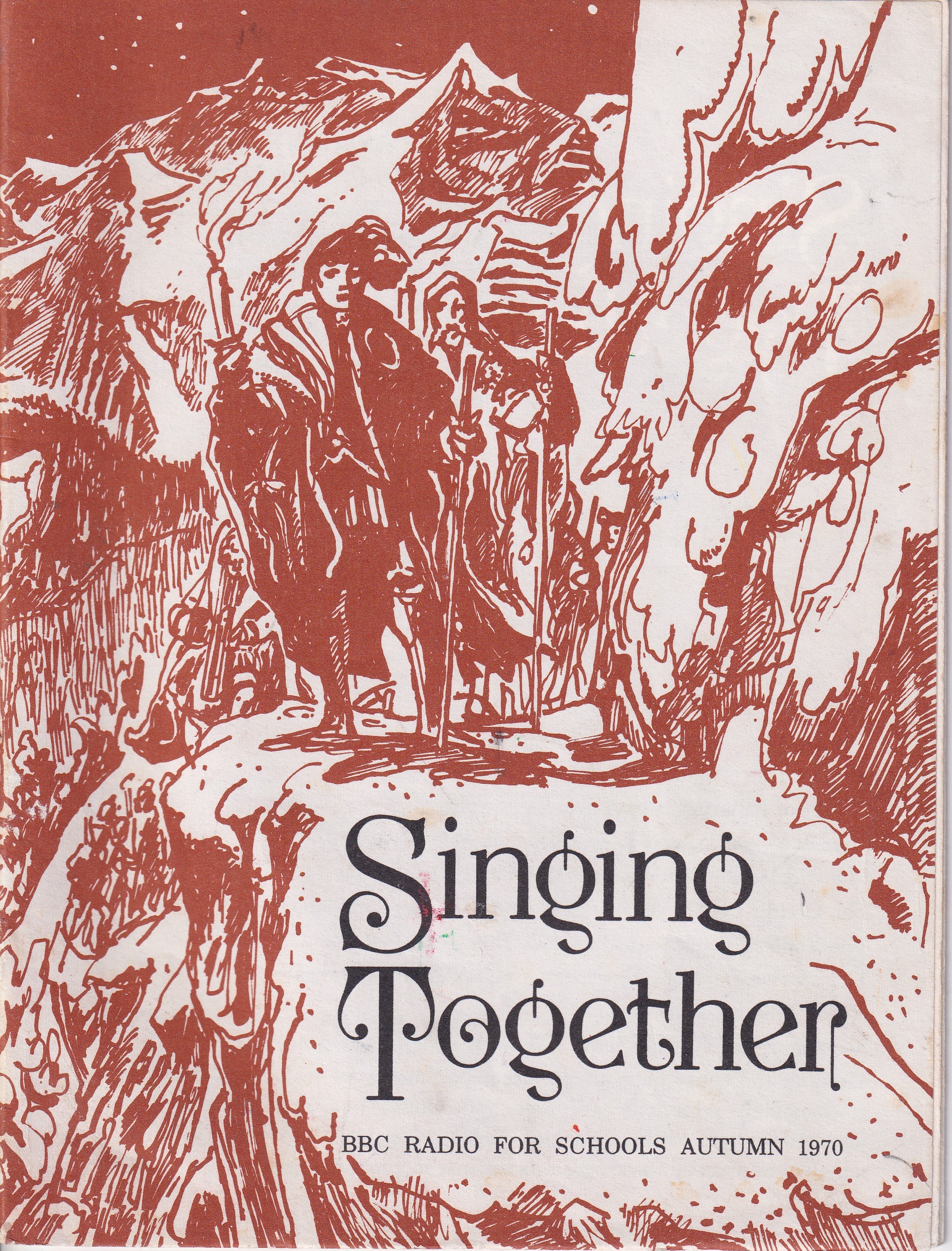
The Autumn 1970 Singing Together booklet contained 5 Christmas themed songs. The first one, The Child’s Carol is absolutely nowhere to be seen on any search term, so I can only assume that it has fallen completely from favour. So, below is the page with the accompanying music which I hope someone could reconstruct.
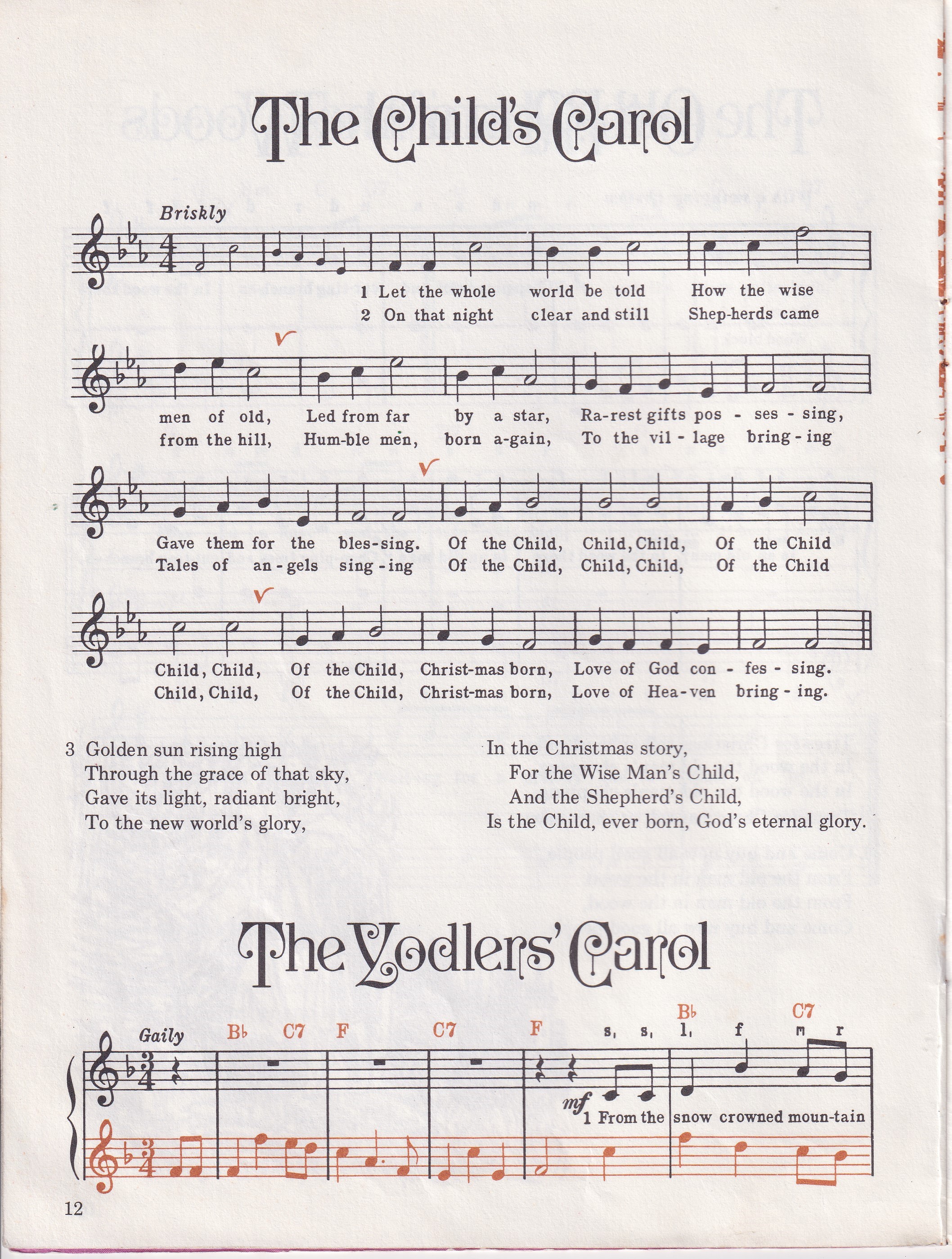
The Yodler’s Carol does, however, appear both on YouTube and also on music sites with lyrics that match perfectly. I can see why it appeared in Singing Together, because in many ways it’s an archetypal Singing Together choice, a brisk and cheerful tune together with lyrics that actually stretched a primary school child in terms of content. Having listened to it, I can say that I enjoyed it and that there were flashes of memory when I heard the chorus. Here it is from YouTube.
The next song, The Twelve Days of Christmas, is, of course, universally familiar and a great song to sing for all ages. It is also, a very good song to test your memory, although I remember getting geese, swans, lords and drummers mixed up for years! Here is my favourite version as a kid, from one of the few albums my parents owned. It’s English folk group, The Spinners.
The Huron Indian Carol is another carol, like The Yodeler’s Carol that definitely jogs memories over 50 years later. Here is an absolutely gorgeous rendition from Sarah McLachlan.
Finally we have the beautiful See Amid the Winter’s Snow that barely gets played or sung these days at carol services which is a real shame. It is a carol that simply needs to be heard and sung far more often. When I heard it as an adult I just knew it was familiar from somewhere. It’s another song from Singing Together that shaped my musical hinterland.
Autumn 1971
Bligh Way Primary School 2nd Year Infants
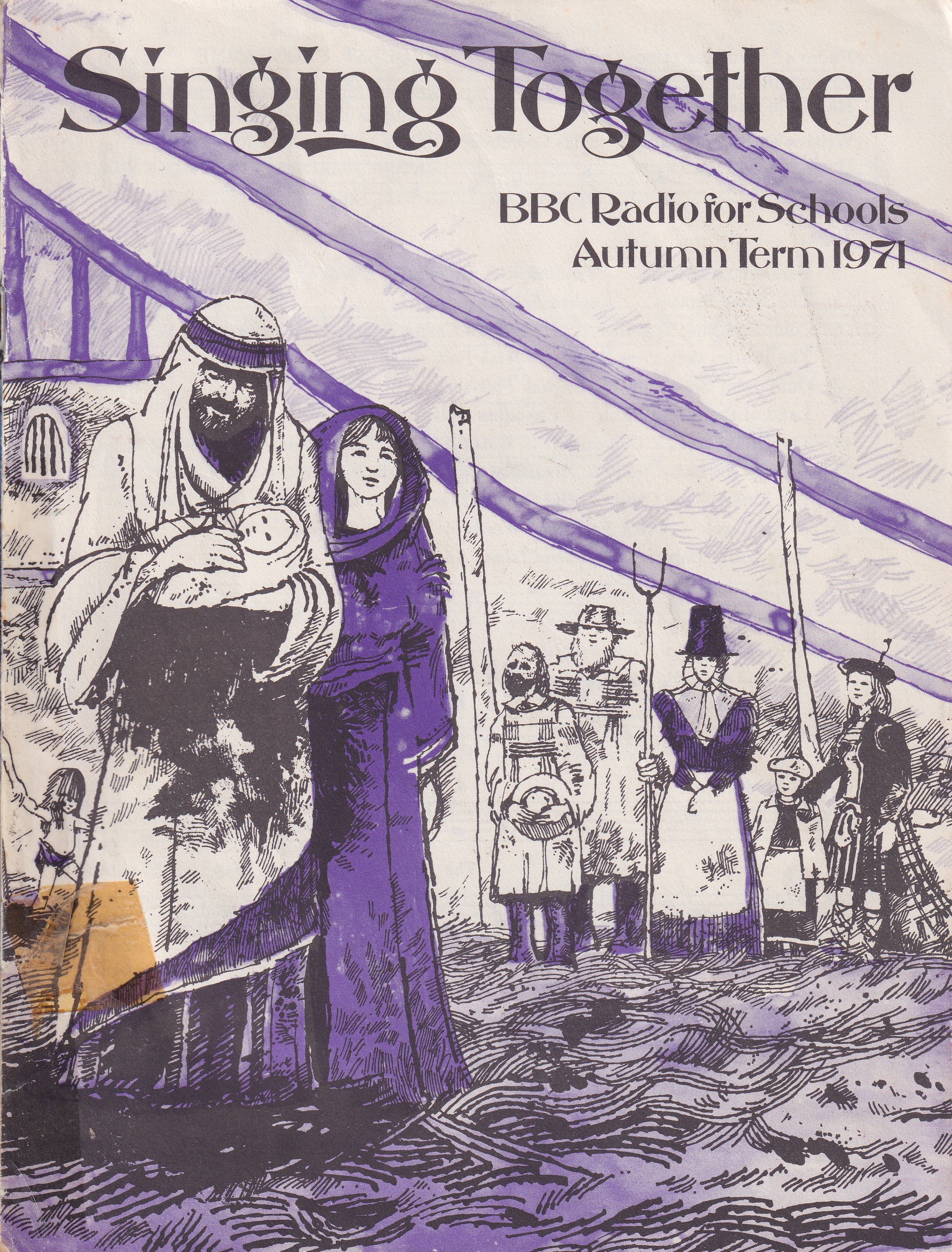
The 1971 Autumn Singing Together had five Christmas songs from the usual variety of backgrounds. First on the list was The Holly Tree (Y Gelynnen) a Welsh folk song that is perhaps more tangentially attached to the season. Once again, you look at the lyrics and realise that they were quite a stretch, content wise for the average 6 year old – as I was then – or even the average 11 year old. However, it was very common for children’s programmes to assume a wider vocabulary back then as you will see if you watch clips of 1970s television aimed at a younger audience. Well, I wandered around YouTube for a while listening to all the different versions, searching for one that gave the proper Singing Together vibe. The instant recognition of the tune really took me aback, because it was there in my long term memory just waiting for the synapses to be triggered again! The version I chose was from the YouTuber ‘threelegsoman’ who has recorded videos of the lyrics and tunes for a number of Singing Together songs. So here is The Holly Tree.
Next, is Lullaby for Baby Jesus. A Christmas carol from Brazil, to follow one from Wales. The compilers of each term’s songs had huge musical hinterlands, of the type that have perhaps changed beyond recognition over the years. In a sense, they were aural historians who were saving tunes and lyrics for posterity. It has beautiful, tender lyrics that make it perfect for Nativity plays. I wonder if it was used by schools for that purpose at the time? Whether it was or not, it is another carol that has been overlooked by the internet, so below you will find the sheet music in the hope that someone can reconstruct it.

The Linden Tree Carol is next, a song with a German tune. The words are traditional and full of references to the Virgin birth. I don’t remember this one, and even when hearing the tune, no memories were jogged. Anyway, here is a beautiful rendition from Max Thomas, a boy soprano.
The Zither Carol is a Czech folk song with lyrics by Malcolm Sargent and, once again, not one I recognise. The pace and the complexity of the words, however, indicate that it would have been very tricky to sing for primary school children, so perhaps I just didn’t take to it. In this version by St Albans Cathedral Choir, it sounds absolutely beautiful.
The final Christmas song from 1971 is one that I absolutely loved. Mary had a Baby is a carol from the West Indian island of St Helena and I remember singing it with gusto. We were encouraged to sing it in ‘the style of’ West Indians, a move that would definitely raise eyebrows now, but at the time cemented it in my affections. It’s a jaunty tune, and one you could learn very quickly, a carol just right for belting out! Here is a version that captures its energy and power.
Autumn 1972
Cobham Primary School 1st Year Juniors
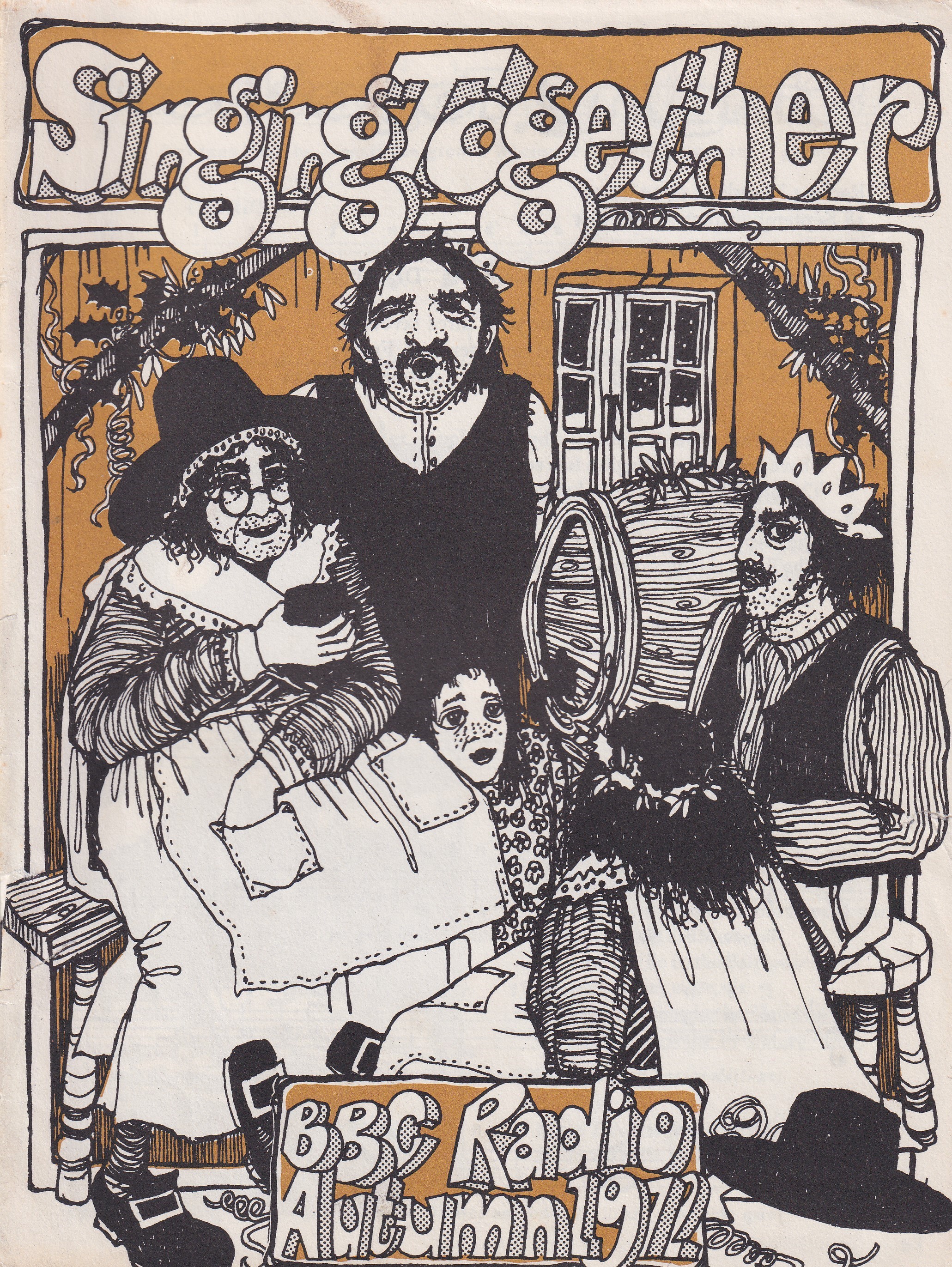
So, on to 1972 where we had settled, temporarily into the village of Cobham in Kent. This year’s Christmas songs included a very famous carol from Wales, one song described in very 1970s terms (!) and three European carols. So, let’s start with Rise up, Shepherd. It’s based on a spiritual so in a sense the choral versions don’t really come close to reflecting the way that we would have sung it on Singing Together. Luckily, this version by John Gary is nearer to what we might have sung.
Fum! Fum! Fum! is not a Beach Boys misprint, but a Catalonian Carol. Singing Together lists it as a Spanish Carol, but I imagine your average Catalan might have something to say about that! It is bouncy and infectious, with a round sung in this recording, although I think it’s more likely that we would have sung it as a straightforward song. I could never get the hang of ’rounds’ because by the time you have three or more sets of voices joining in, I ended up getting confused which round I was supposed to be singing.
Now for the Welsh Carol, and I had forgotten that it came from Wales, the marvellous Deck the Halls. Strictly speaking, I suppose, it would be more associated with the traditional pagan celebrations of Yuletide given that there is no mention of Jesus, but plenty of mentions of feasting and drinking! Looking for versions of this Christmas staple I wanted to find something a bit different and The Muppets always are!
The Two Shepherds was a German song that split the singing into two parts. I have a very vague memory of the boys singing one part and the girls singing the other. Now, I can’t find anything on the net with the original lyrics but this version is clearly from the same stable (!) as the lines paraphrase the original that I would have sung. As before, no real memory of this exact song, but here is the version from Heidi Grant Murphy.
Finally, we visit Poland for the Lullaby Carol. There seem to be a number of different translations for the original Polish lyrics, so the words are often quite different to those in the book. It makes sense, therefore, to go back to those Polish words which sound absolutely beautiful.
Well, that’s the first three years of my Primary school journey. It has been a joy to revisit some songs that I remembered instantly and some that brought back strong memories of my childhood quite unexpectedly. If any of my talented friends would like to fill in the tunes for the two missing carols, that would be amazing. Join me tomorrow for 1973 – 1975.
 David Pearce - Popular Culture and Personal Passions