
What was 1986 like?
Queen Elizabeth II was in the 34th year of her reign and Margaret Thatcher was in the seventh year of hers. As with most of the preceding years of the 1980s, politics appeared to be on fast forward, though looking back it seems like a decade of relatively slow, thoughtful politics in comparison to the 2010s and 2020s.
(24 hour news had not started yet and neither had social media. As a result, politicians were not chasing the next headline or curating 30 second sound bites. In banking, however, the Big Bang was in progress throughout 1986, a precursor to the effects that computerisation was going to have on everything. Enough crystal ball gazing in a Tomorrow’s World style, let’s get back to what actually was happening!)
Unemployment reached a record high of over 3.2 million in June, just under 15% of the workforce, and the Labour Party were then 9% ahead of the Conservatives. The Channel Tunnel was given the go ahead, and this time it would be built. In other European news, the UK signed up to the Single European Act which promised a single market for goods, services, people and jobs across the European Union by 1992. British Gas was privatised and the shares offered to individual members of the public in a heavily oversubscribed flotation of the previously nationalised industry. Part of the interest was engendered by the brilliant ‘Tell Sid’ campaign, a series of adverts that communicated the flotation with real imagination. Here’s the second advert in the series.
Despite the deregulation and privatisation, the one change that Thatcher wanted to force through was defeated as 72 Conservative backbenchers defied a three line whip and voted against the Shops Bill 1986 which would have introduced largely unregulated Sunday Trading. It was the only time in 11 years that she would see an entire bill defeated in Parliament. Meanwhile, the education sector steeled itself for two huge changes. The GCE O Levels and CSE Qualifications were done away with after the final cohort took the examinations in June and the two exams were combined to form the new GCSE. It was a change designed to introduce more fairness into the system. The CSE qualifications were taken by students who were deemed ‘likely to fail’ their O Levels, and even though a Grade 1 in CSE was ‘equivalent’ to a Grade C O Level, nearly every employer in the country dismissed any qualification other than the O Level. The new system was seen as a level playing field because everyone took the same exam and it was also criterion referenced not norm referenced. Under the previous O Levels only a specific number of students could achieve each grade, whereas under the GCSE you could theoretically get 100% A Grades or 100% Fails. The ‘pass’ was still set at C by all schools and employers, so in practice the less academic students were still disadvantaged, and the perception of easier exams meant that for a good few years afterwards those who took O Levels were seen to have an advantage over those taking the GCSEs. The other much more welcome change for many was the outlawing of Corporal Punishment in schools, consigning the cane and the slipper to well deserved oblivion.
In 1986, a struggling Manchester United sacked Ron Atkinson and brought in an abrasive Scot called Alex Ferguson. His first season was anything but stellar, although he took from second from bottom in November to mid table safety in May 1987. Players were starting to command ever higher fees with Gary Lineker moving to Barcelona for £2.75 million and Ian Rush moving to Juventus for £3.2 million before immediately being loaned back to Liverpool for the whole of the 1986/7 season. On the pitch, Liverpool became only the second club in the 20th Century to achieve the League and F A Cup double under the leadership of player/manager Kenny Dalglish. Joe Johnson, a 150/1 outsider beat the favourite Steve Davis to win the World Snooker Championship.
Two comedies that have stood the test of time like few others started in January, and they were both sequels. Blackadder II was the sequel to a poorly received original so it had an easier ride in terms of expectations, but even if those expectations had been sky high it would have met them. Yes, Prime Minister gave itself a massive act to follow and ended up outdoing even the brilliant Yes, Minster. Grange Hill, no stranger to controversy, shocked viewers with the Zammo McGuire drug addiction storyline, which produced the unforgettable image of the character comatose in a toilet stall after overdosing on drugs. Also controversial at the time was Eastenders introduction of Colin Russell, played by Michael Cashman, the soap’s first gay character. Despite this, the soap reached new heights on Christmas Day when that night’s episode attracted an audience of 30 million, a record for a British drama that will never be approached let alone beaten.
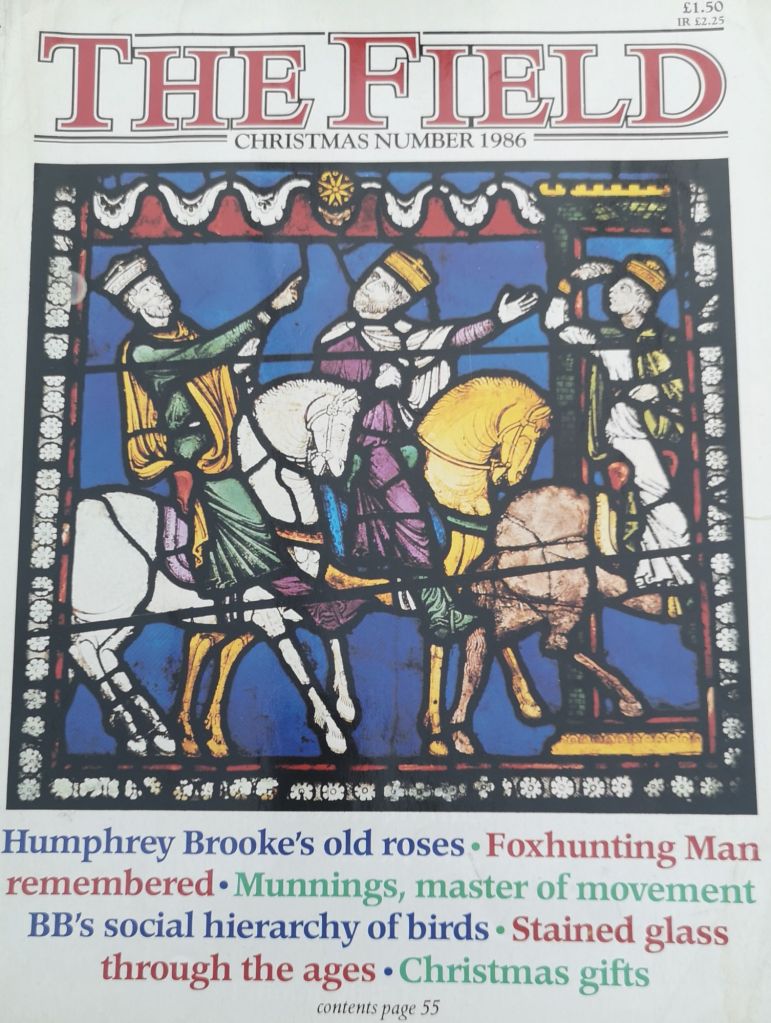
The Field Christmas Number 1986
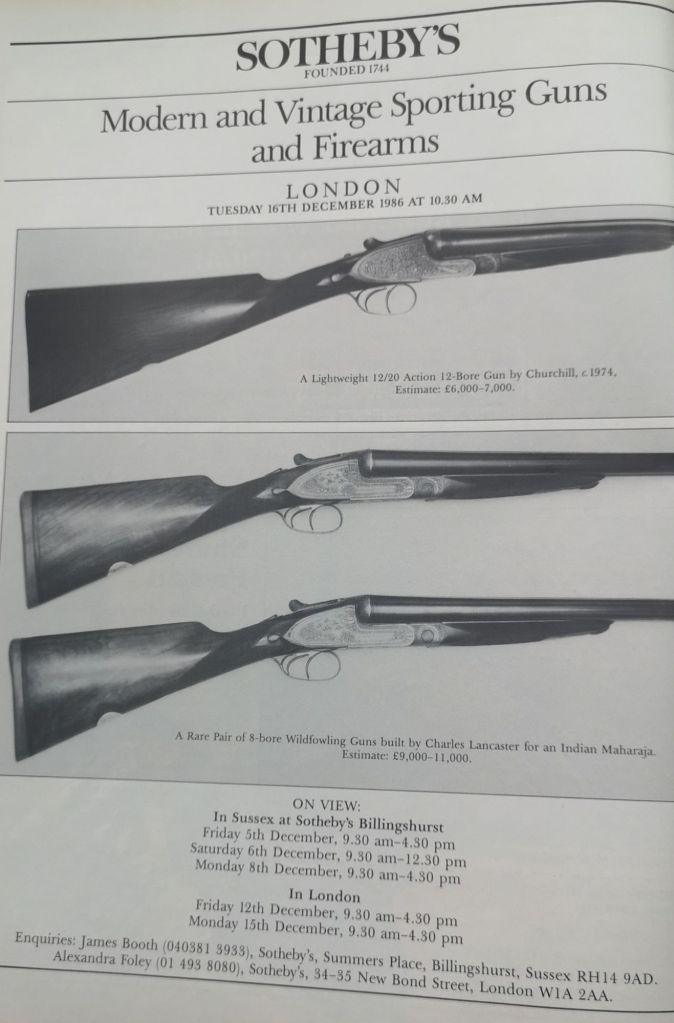

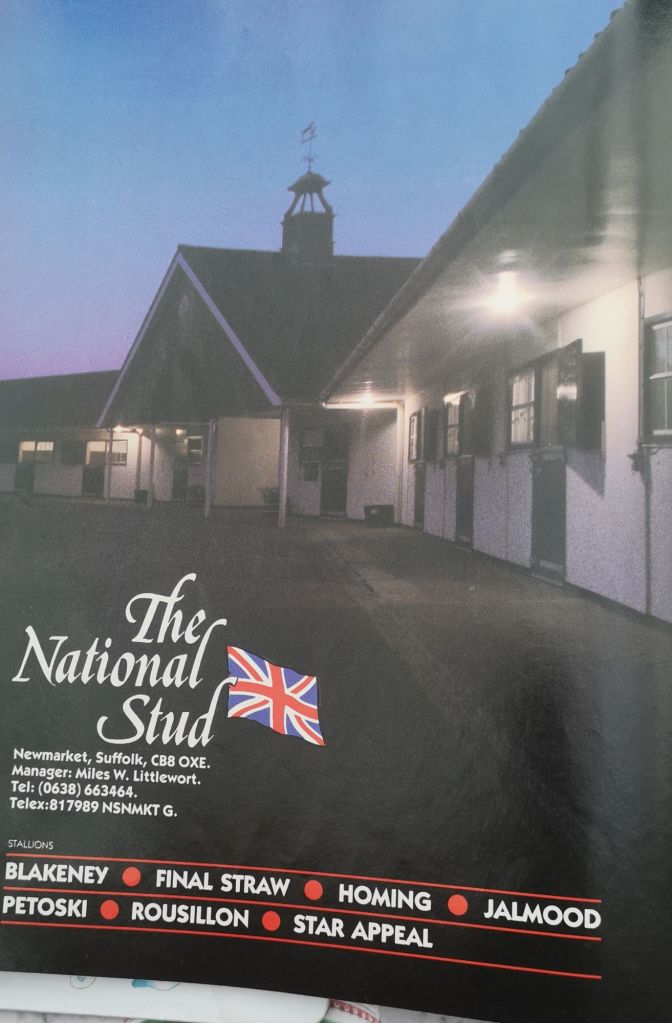
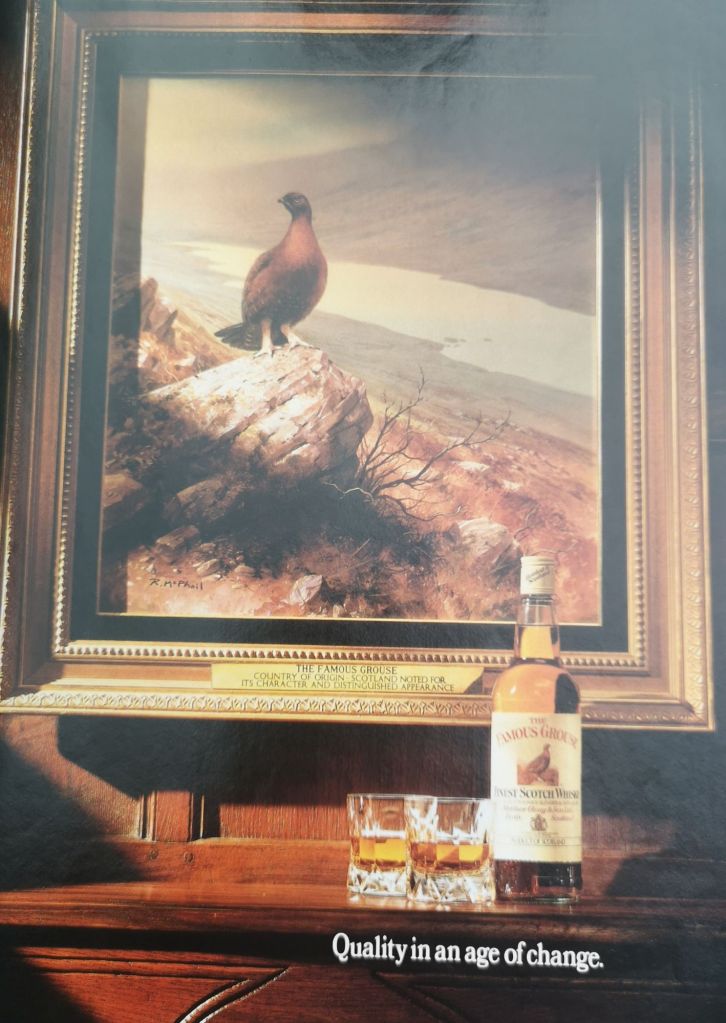
Advertisements
I am starting with advertisements this time because it is in those that you see the real flavour of the magazine. The title of the magazine is, of course, a clear indication of the demographic, but the firms who advertise their goods and services in this issue are clear as to their approach. The items are, in the vast majority of cases, only for the very rich. We start with Sotheby’s, one of the most prestigious auction houses in the world. For a start, the advertisement is for guns which have a guide price of between £7000 – £11000 at a time when a Sales Executive, who would have been comfortably off, earnt on average around £27500 a year. This advertisement would not have appeared in Good Housekeeping, which would have catered to the relatively comfortable middle classes, for example! It also tells you that it is not aimed at struggling farmers with limited acreage, but landowners with large estates. If you wanted a new gun for your hunting, Veteran Gunmakers of Spain would provide the ‘ideal game gun’ for a mere £9000. Moving up the social and income scale you could avail yourself of the services of the National Stud, whose covering fees would no doubt be well known to trainers and owners. Even Famous Grouse, a company who probably would have advertised in Good Housekeeping, have aimed their advertisement fairly and squarely at the traditional ‘huntin’ shootin’ and fishin” types with their tagline ‘Quality in an age of change’. As we will see when we look at the articles, the sense of the traditional custodians of the country protecting the things that really matter is clear throughout. All of the advertisements are targeted in a way that is very unusual in the magazines I have looked at during this research.
Contents
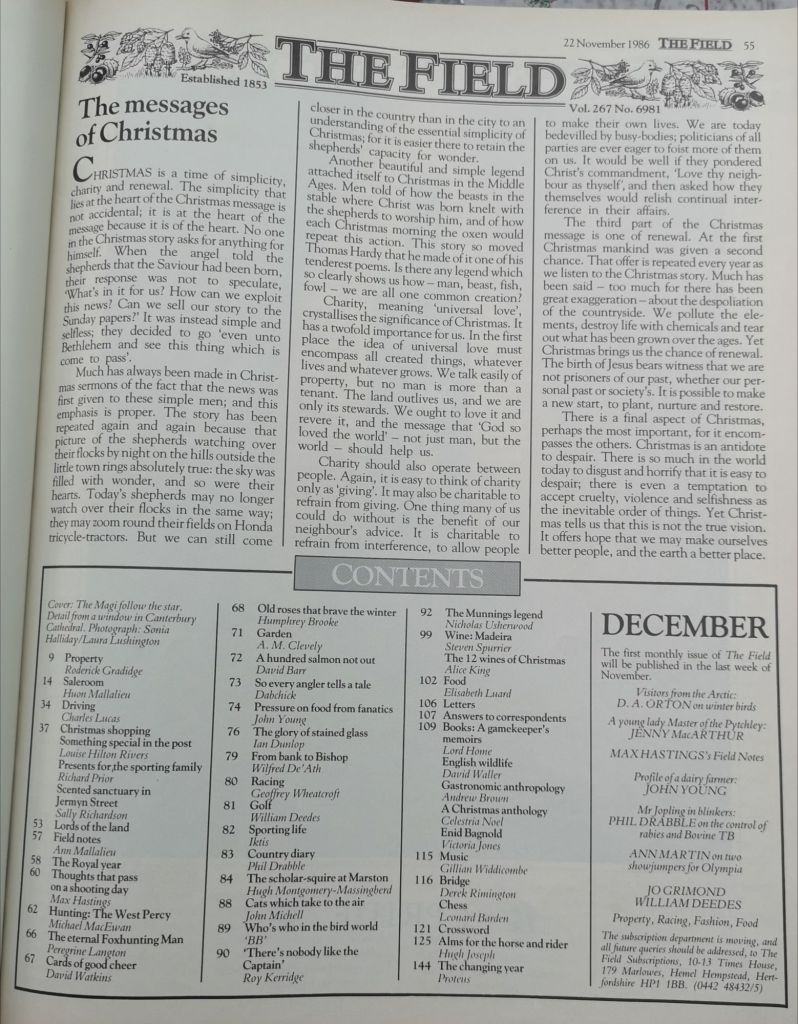
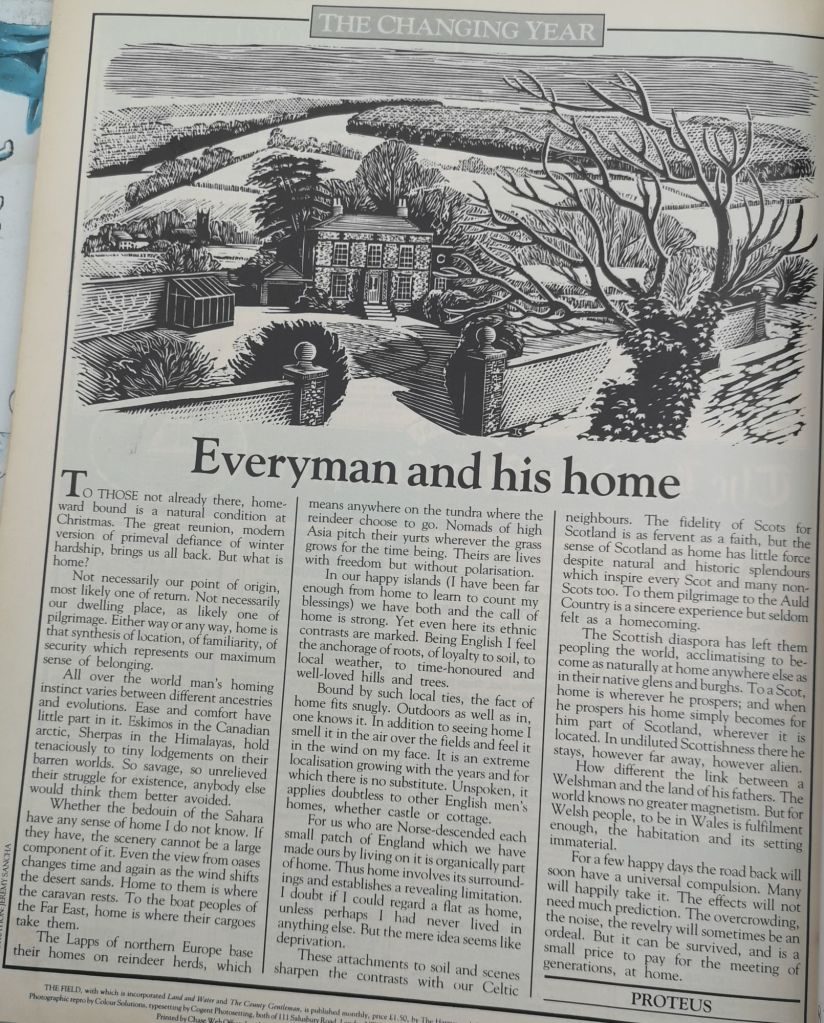
The cover of this magazine, the traditional stained glass window, comes from a window at Canterbury Cathedral, the oldest continuous seat of the Christian religion in the British Isles. It is the Magi following the star, but look more closely at what they are riding. They are on horses, not camels. It is a very Anglo centric portrayal not only in terms of their transport, but also in terms of their looks, with the full beards favoured by nobles in the middle ages and beyond. It is similar to the hymn Jerusalem in that sense, with the unspoken idea that ‘God is an Englishman’ an idea humorously outlined in the quote by E M Delafield who said; ‘Most Englishmen are convinced that God is an Englishman, probably educated at Eton.’ The editorial ‘The Messages of Christmas’ focuses on simplicity, charity and renewal. It observes that no one involved in the Nativity wanted to know what was in it for them or what they could get out of it. The assertion is made that farmers and those who live in the countryside are closer to understanding the message of Christianity than those in the towns as they can keep a sense of simple wonder in close proximity to nature. It is arguable in some ways, but the idea that it is easier to live a life of simplicity seems to have merit. When the editor gets to charity he takes a handbrake turn into politics saying that ‘it is charitable to refrain from interference’, something that politicians of all parties should remember! He stays in the political sphere with a message to those who refer with ‘great exaggeration’ to the despoiling of the countryside. The Field’s readers are actually the agents of renewal as people who know the land. The final paragraph warns against despair, proving that 39 years ago there was unwarranted pessimism about the future similar to that found in 2025. The final page of the magazine contains a lovely reflection about the importance of home at Christmas. However, it echoes the idea of the editorial by saying that it is in the scenery and land of a country that we find our true home, not in a specific plot of land with a building. As he observes ‘I doubt if I could ever regard a flat as home’! Once again the magazine raises its readership above the herd by giving them a greater insight into life than city and town dwellers.
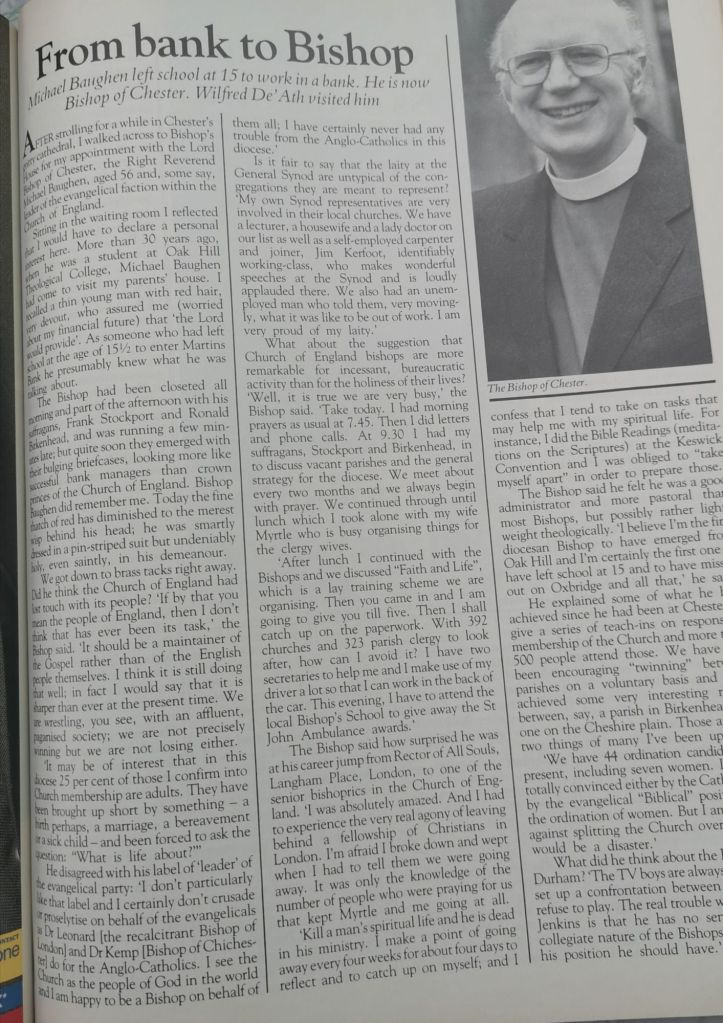
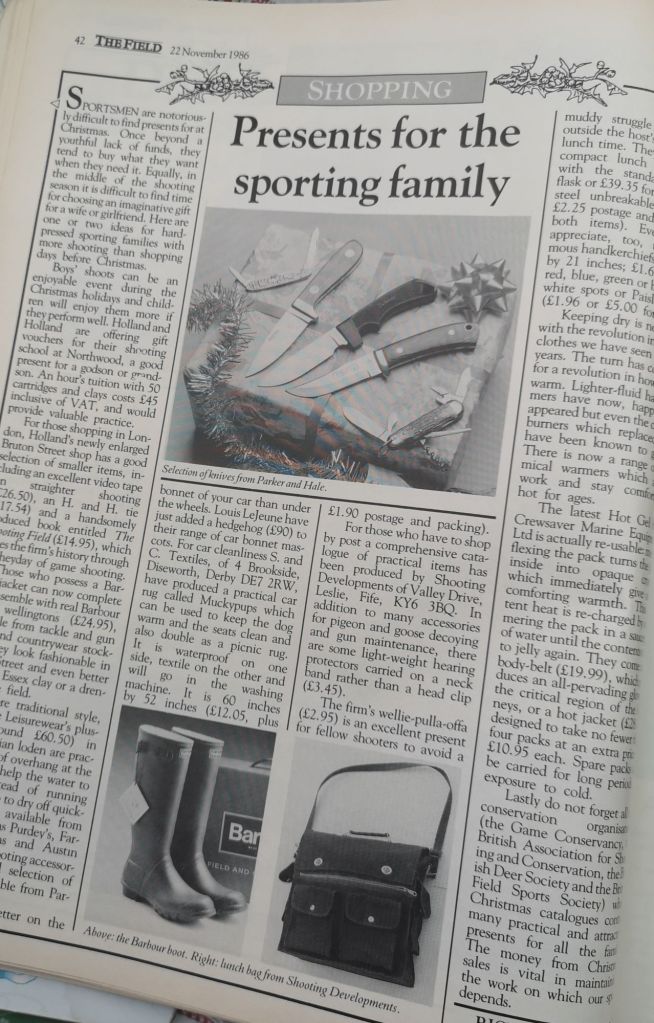
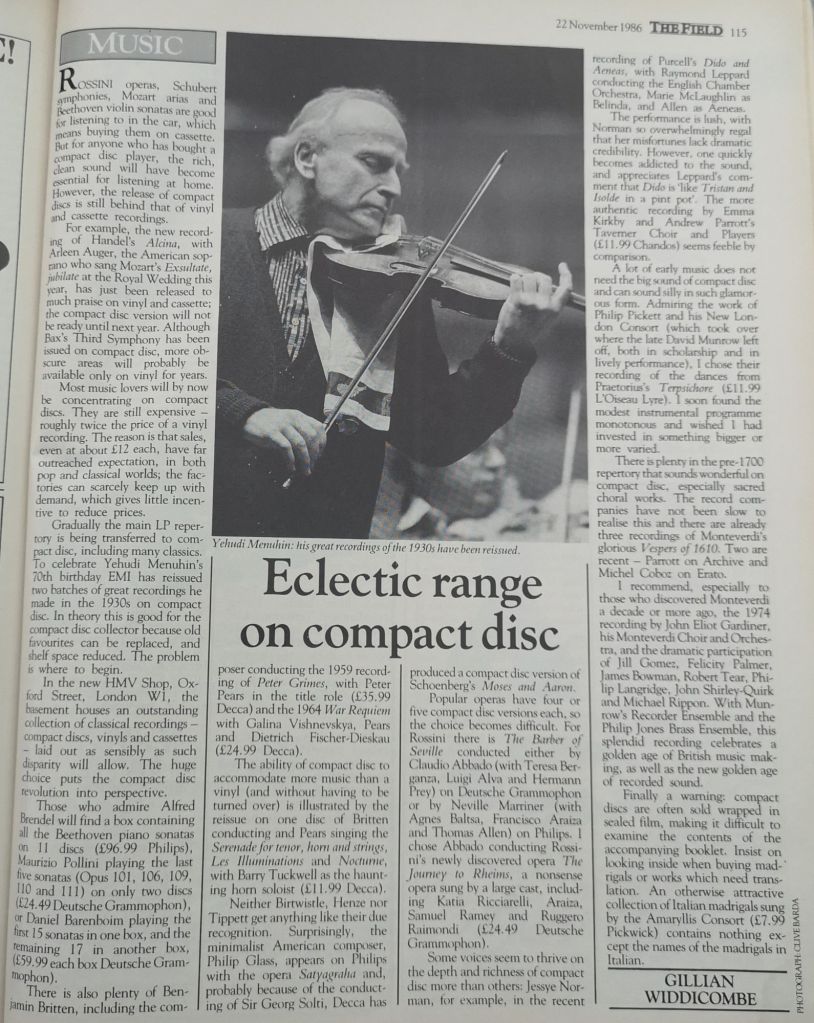
The three articles I have picked out are very good at illuminating the preoccupations of the readers. First of all, you have an interview with Bishop of Chester, Michael Baughen, who left school at 15, worked in a bank and then studied at theological college. He comes across as a light touch churchman, which no doubt the readers will approve of, and he plays a dead bat to the more controversial questions, although he does mention the then famous David Jenkins, Bishop of Durham, who ‘has no sense of the collegiate nature of bishops’. It is 19th century style ‘muscular Christianity’ of the type that would definitely find favour with the traditional readers of the magazine. The gifts for a sporting family article is interesting in the insight it gives us to the way of life in the upper echelons of the country classes. You can buy Boys’ shooting tuition for £45 an hour, as presumably girls don’t need to know about things like that! However, for our no doubt fashion conscious younger female recipients, Burberry wellington boots apparently look fashionable in Sloane Street! Knives are very useful, no doubt for skinning the game you kill. It is a world closed to all but those in the know and with the money to access it, a network of landowners who have access to an influence up to and including the Royal Family in some cases. Finally, the Compact Discs reviewed on the music page are all classical, all reassuringly expensive and of the required cultural level for its readership.
Final Reflections
This has definitely been the most targeted magazine of those I have read, and because of that it has a continuity of approach that I haven’t found anywhere else. The readers are not being encouraged to experiment, either as consumers or thinkers. Everything in the magazine is designed to reinforce their certainties and the correctness of their position in the life of the country. That said, even for those who share nothing of the background, the writing is accessible, of a high standard and full of insight. It is an incredibly masculine world laid out in front of us, but I don’t think that is because of the era. My guess is that 39 years later Girls’ shoots still don’t exist and the same gripes about politicians and town and city dwellers are still very much in evidence. Perhaps they are, as a group, less religious but I would venture to suggest that they are still Christians with at least a small c who are found in the pews at this time of year.
What was 1975 like?
In the 23rd year of Queen Elizabeth II’s reign her Prime Minister was Harold Wilson. On the Conservative side, Ted Heath, who Wilson had beaten twice in February and October 1974 was forced from the leadership of the party after a challenge by Margaret Thatcher. The ‘big beasts’ were much in evidence in the second round of the contest, expecting Thatcher’s tilt at the crown to run out of steam, but she reaped the benefit from her performance in the first round to secure the party leadership and become the first female leader of a major UK political party. It was, as it turned out, a pivotal moment in British political history. The other, seemingly pivotal moment was the referendum on EEC membership which was overwhelmingly rubber stamped by the British public. Sadly, it wasn’t the final word on the matter.
The Troubles in Ireland were brought shockingly into focus for my ten year old self, as they were for so many children at the time. Ross McWhirter, along with brother Norris were household names as co-presenters of the BBC show Record Breakers, based on the Guinness Book of Records which they co-edited. In November, he was assassinated by the Provisional IRA, leaving the many fans of the programme deeply upset. What we didn’t know at the time, of course, were that Ross McWhirter was very involved in politics and, in particular, Irish Politics. He wanted the death penalty for terrorists, not that this was a fringe view at the time, but he also wanted the Irish Community in the UK to face compulsory registration with the police and restrictions of their daily activities, for example renting flats or booking hotel rooms. He also put up a reward of £50,000 for information leading to capture and conviction of IRA terrorists. He freely accepted that this made him a target and so it proved.
1975 saw the release of one of the most significant pieces of music in popular culture history. Bohemian Rhapsody by Queen is 50 years old as I write, but it has never lost its place as one of the crown jewels of music in that time. There are, of course, many who dislike it but its position at the pinnacle of music can’t really be argued against. Nine weeks as Number 1 in 1975/76 keeping Greg Lake’s I Believe in Father Christmas from the top spot on December 25, and another five weeks, including uniquely at the time its second appearance as the festive chart topper following Freddie Mercury’s death in 1991.
In other cultural news, The History Man by Malcolm Bradbury was published. One of the great modern novels it features a brilliant antihero in Howard Kirk the self centred sociology lecturer. It is a fantastic satire of university life that is as recognisable today as it was then, but perhaps is even more relevant as a critique of organisations in general.
Average wages in 1975 were about £54 a week, slightly less for male manual workers who were paid an average of £48 a week. However, if you were a female manual worker you were paid just £27 a week, half the National average! The Equal Pay Act of 1970 had been ignored under the previous government, and not properly enforced by the Labour government either. In an effort to ensure that this no longer happened, the Sex Discrimination Act of 1975, and the introduction of ACAS with a remit to rule on disputes between companies and workers, sought to strengthen the legal framework. The fact that we still don’t have equal pay 50 years on shows the difficulties faced by anyone trying to get fairness in the workplace.
The Illustrated London News Christmas Number 1975
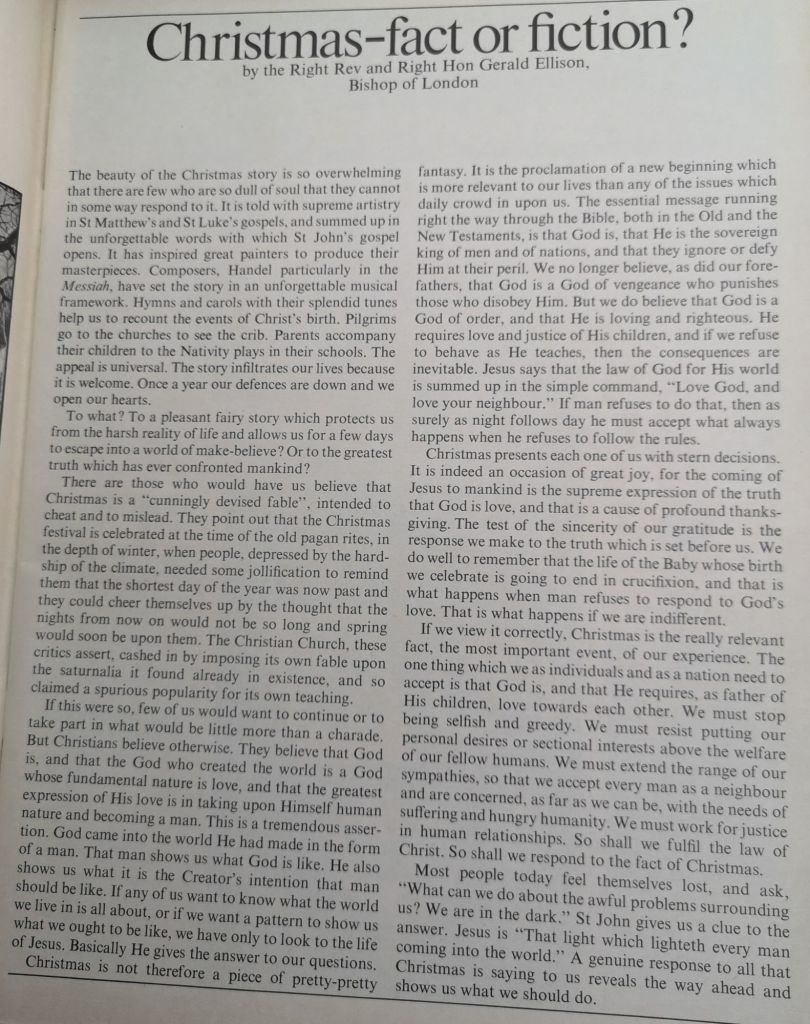
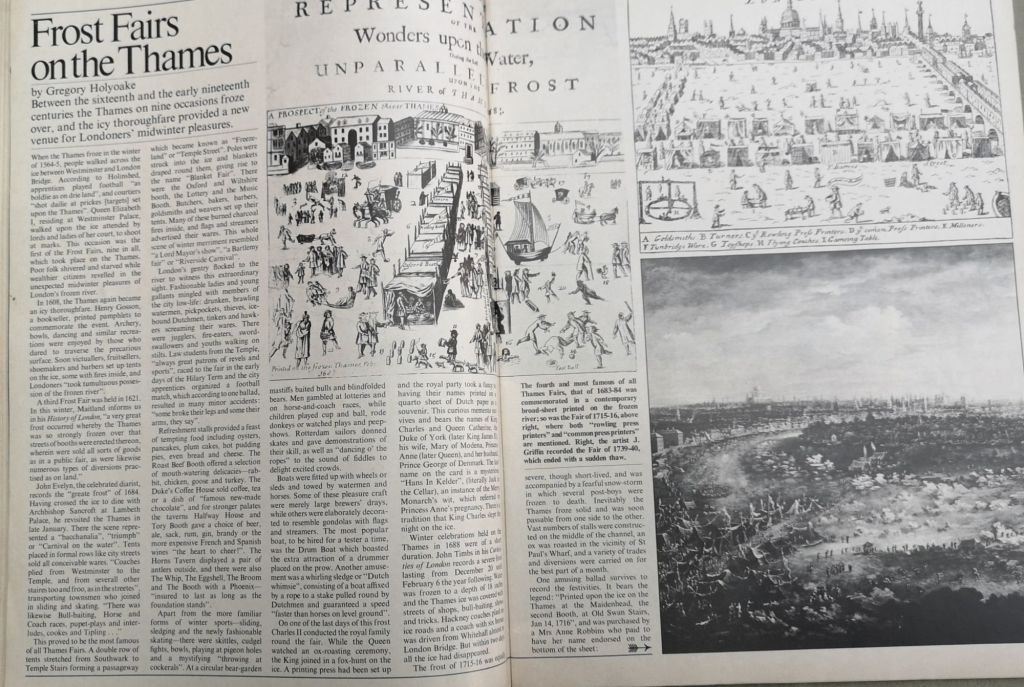
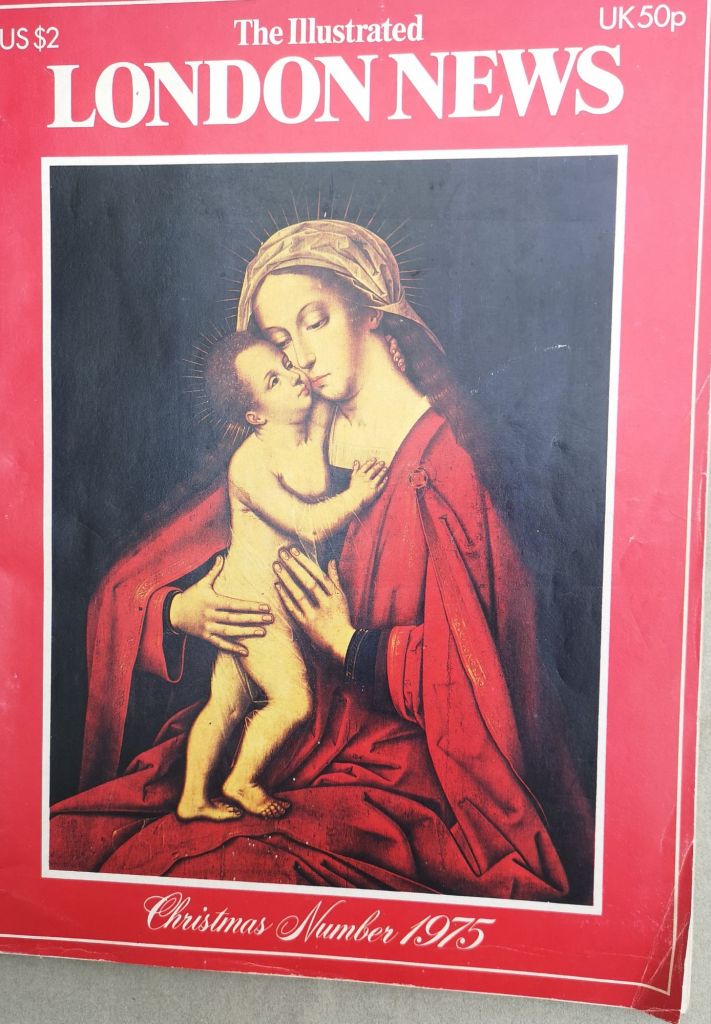
The cover of this magazine is absolutely gorgeous and definitely my favourite of those I have been working with. It is ‘The Madonna and Child’ by Ambrosius Benson, painted in the 16th century and sold by Bonham’s that year. It is a cover that hints at the traditional viewpoint of the magazine as we shall see. The first article I want to concentrate on is the Bishop of London’s piece, Christmas – fact or fiction? Unsurprisingly, this piece of writing comes down firmly on the side of fact, but it is not totally dismissive of those who hold the opposite viewpoint. It is an unequivocally ecclesiastical take on the season and, in 1975, there was no requirement for someone to put the opposite view forward. The traditional and historical approach that this magazine takes is present in the marvellous four page history of Frost Fairs on the Thames. There are marvellous details from letters and diaries of the time and it is a fascinating read. It expresses sadness that the Thames has never frozen over so completely since then, although 1947 and 1963 came close. The same view is echoed nowadays as we realise that due to climate change those of us in the South of the UK are unlikely ever to have a White Christmas again as warm, wet conditions are now the rule for Winter.
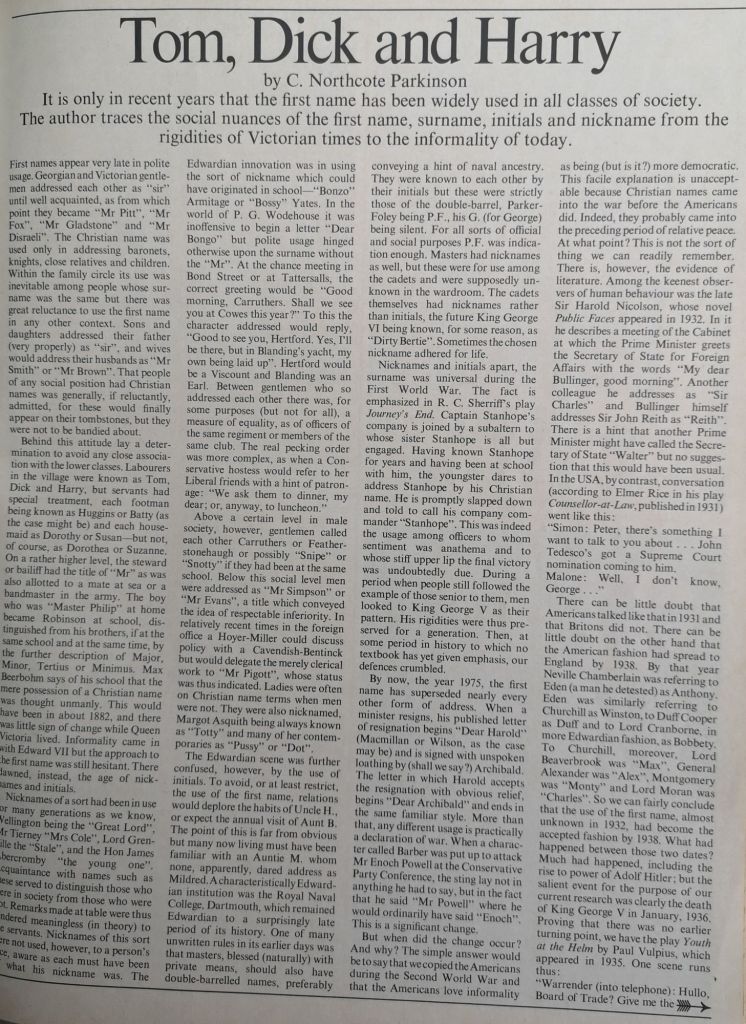
I was greatly amused by the irritated tone taken by the writer of Tom, Dick or Harry. It is a masterpiece of upper class parochialism bemoaning the use of forenames instead of surnames when people address each other. They, according to the article, ‘appear very late in polite usage’, sons addressed their fathers ‘very properly as sir’ and the fact that people had forenames was something that ‘would finally appear on tombstones’! The article continues in this vein and could not possibly be taken seriously today. It reads as if it is a parody, but in this magazine, when it was first published, it was very likely to have seen readers nodding furiously in agreement!
Advertisements
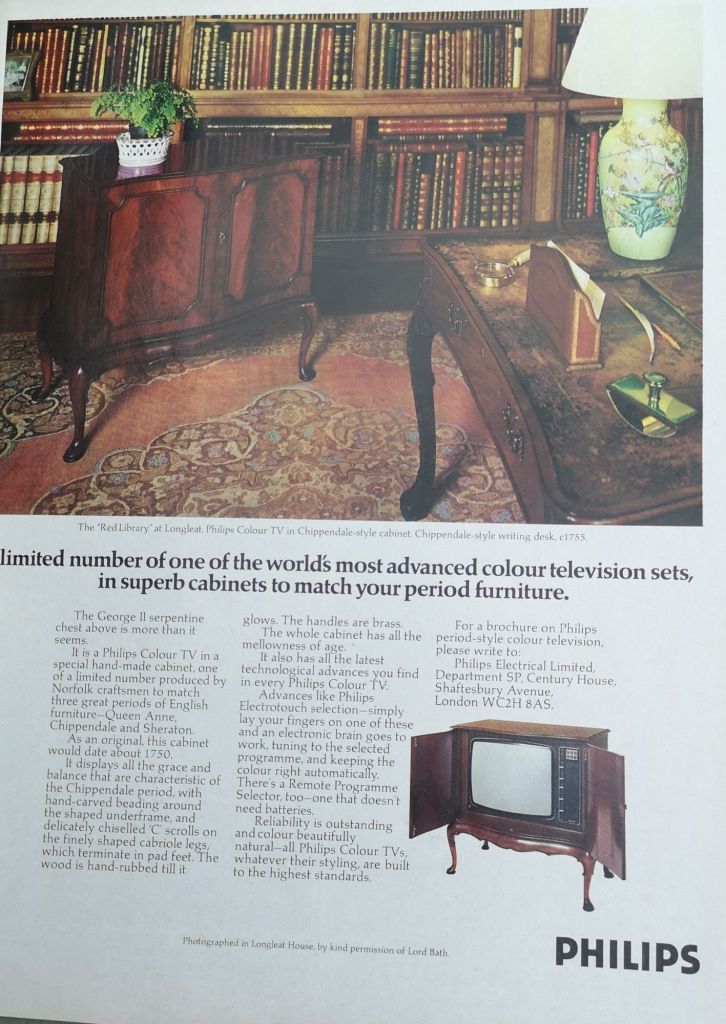
The advertisements (they would never have been referred to as adverts!) in this magazine definitely require closer examination, because they illuminate the class structure of the time very effectively. Dotted throughout the magazine are advertisements for high end products such as fine arts, Jaguar XJS cars and Burberry scarves and coats. These were clear markers of the social and financial standing of the readership of The Illustrated London News, but nothing epitomises the viewpoint of the Upper Middle and Upper classes better than our first advertisement below. Philips Televisions genuinely came encased in a mock George II Serpentine cabinet to hide the fact that you had anything as ‘non-U’ as a television! It is worth remembering that this was a time when many people still refused to watch ITV because it was lowest common denominator programming for the working classes whereas the BBC was still the gold standard of world broadcasting. Philips are at pains to point out that the set inside is state of the art, even including a remote control which was very unusual at the time. (Perhaps it was there in case the butler was on holiday!!) The snobbishness on display is simply jaw dropping, but it was snobbishness shared even by those who had neither the background nor the money to gain admittance to even the middle echelons of society.
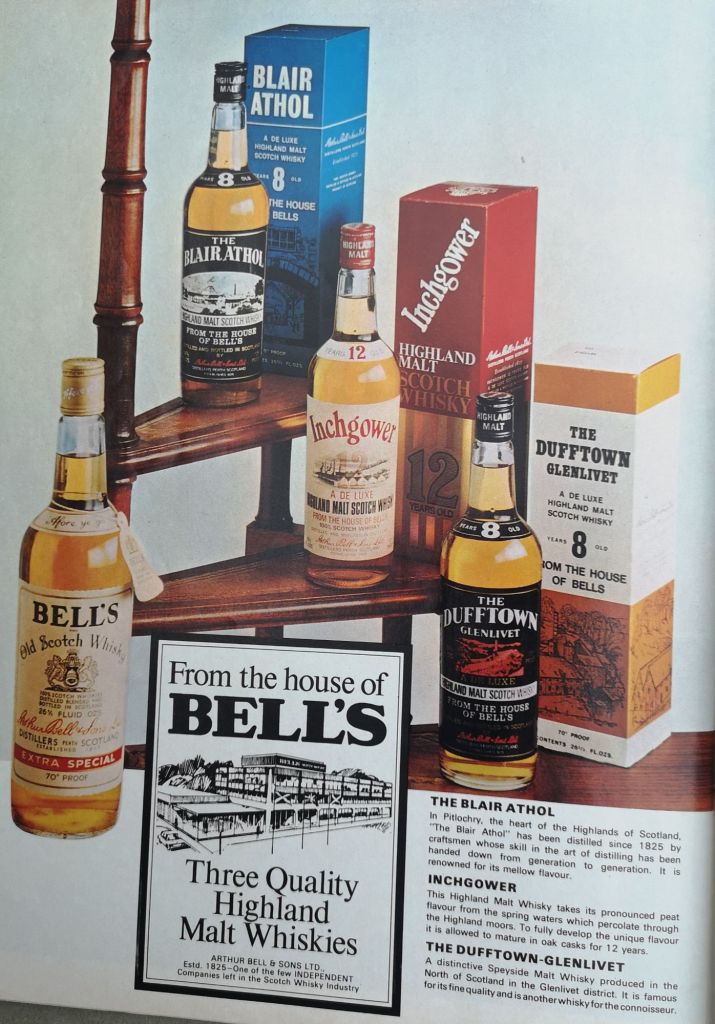
The number of advertisements for smoking and drinking is quite surprising even for the time, but they were restrained and, in terms of the alcohol particularly, skewed to the higher end of the market. Havana Cigars and high priced single malt whisky and top quality brandy was definitely the order of the day for the upper class table.

Final Reflections
This, in purely social and cultural terms is the most fascinating of the magazines I will be looking at. It captures a moment in time when the upper classes were still very much about keeping the barriers up. This magazine represented their world view in all its shades and gives us an invaluable insight into how the other half lived 50 years ago. To read it is to be taken back to drawing rooms virtually unchanged in a century. For better or for worse it is a world that has completely vanished from our lives, but which stays alive in our popular culture and our stately homes.
What positive events have taken place in your life over the past year?
- After a bit of a scare with a raised PSA level I still have good health for someone of my age. Get your prostate checked guys whatever age you are.
- I marked my birthday by handing in my resignation and embarked on a new journey in life. It hasn’t always been easy but it has been right.
- I got the chance to teach an amazing class of art students online during the summer. After two very difficult years it reminded me why I am a teacher.
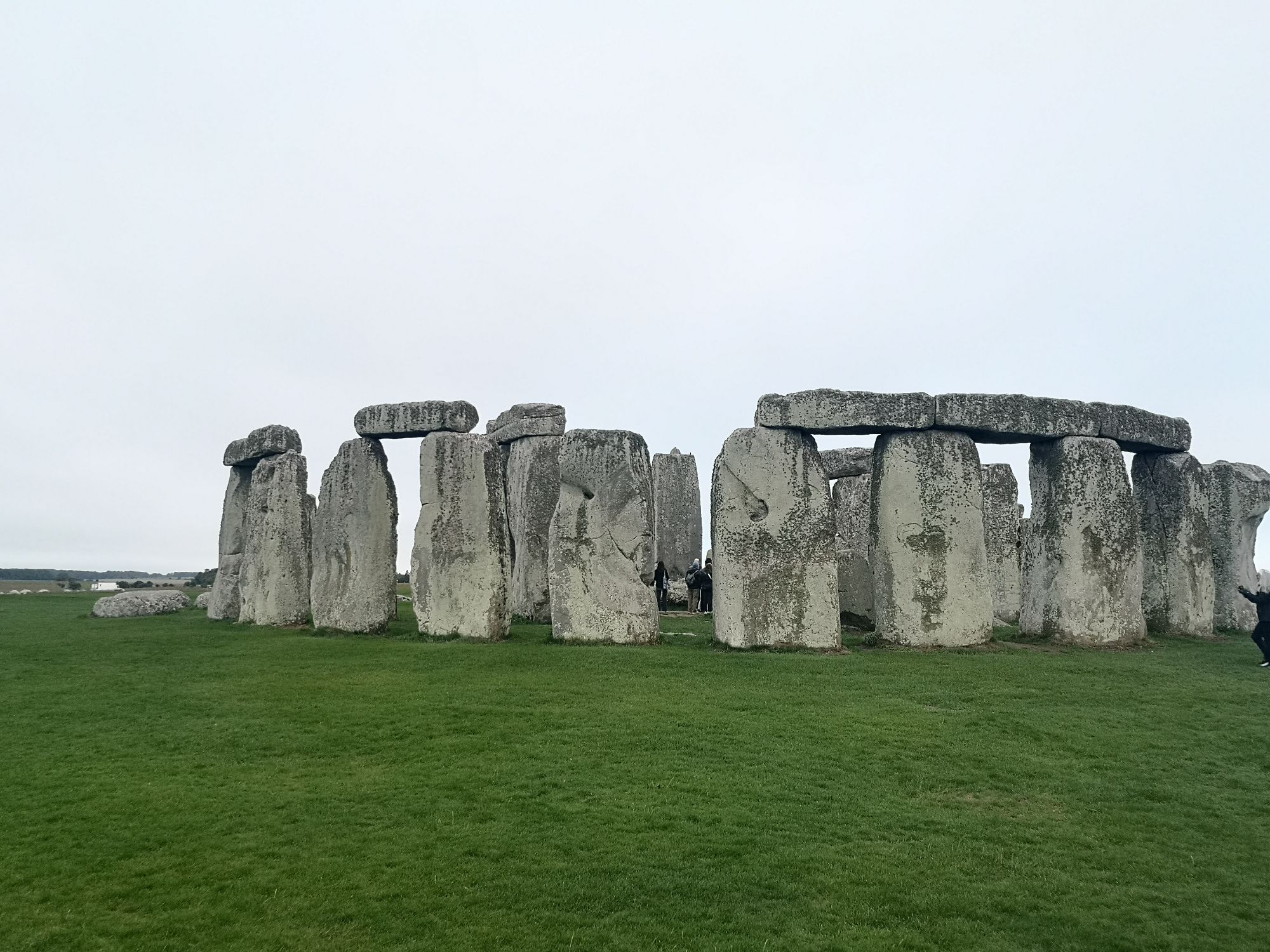
- I visited Stonehenge and entered the Stone Circle. It was an amazing experience and I would recommend it to anyone.
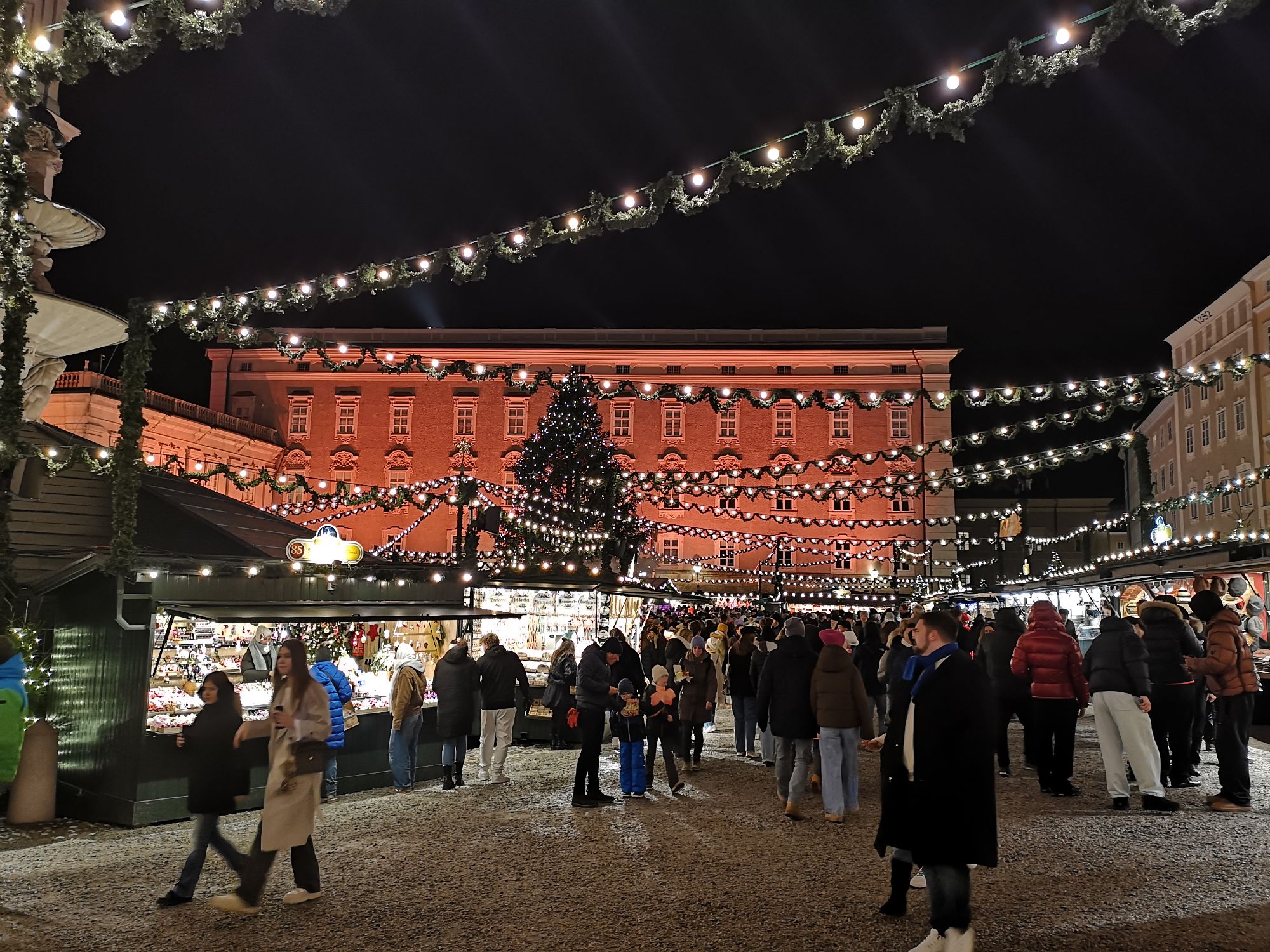
- I visited Salzburg and went to the Christmas Market. I have always wanted to do that, but with my teaching schedule I have never previously had the opportunity. It was every bit as good as I could have imagined.
- I have used my extra time to focus on my writing in general and my blog in particular. This has enabled me to develop as a writer.
- I have increased my blog views by around 300% this year! Writing every day has given me a regular and increasing audience. The links for some of my articles are throughout this post so why not click on a few?!
- I set myself the challenge of analysing Christmas Magazines from 1896 to 2025. It’s been a real undertaking and I haven’t had many views on those posts yet, but I have no doubt it’s been well worth doing. The link is for the latest one, but look for Blogmas 2025 on my blog for the rest. They’re really good and well worth a read.
- My family are healthy and all four of my children have made progress this year in different ways. As a parent you can ask for no more than that.
- I am looking forward to what 2026 will bring in a way I can’t remember doing for any New Year in a really long time.
What was 1970 like?
The 18th year of Queen Elizabeth II’s reign featured a general election in June that neatly split the political year into two halves. For the first half of the year Harold Wilson led his Labour Government with a very thin majority. Despite this, they were able to pass the bill reducing the Age of Majority, the legal definition of adulthood in effect, from 21 to 18 for the most purposes. The election was almost impossible to predict with the Conservatives coming into 1970 with a 20 point lead in the opinion polls and Labour calling the election with an apparently healthy 5 to 8 point lead themselves. In the end, the Conservative and Unionist Party which included the Northern Irish Ulster Unionist Party at the time, won by a surprisingly comfortable 30 seats. Some tongue in cheek commentators suggested that England losing their 1970 World Cup Quarter Final to West Germany just before the election was what swung it back to the Conservatives! Even more surprisingly for anyone brought up in today’s political environment was the fact that Harold Wilson did not instantly resign, but stayed on largely unopposed to fight and win two elections in 1974.
A number of events from 1970 caught my eye because of their offbeat nature. On 31 July the Royal Navy issued its last ration of grog to all sailors. Usually, consisting of rum and water, grog was distributed to all sailors from 21 August 1740! It’s amazing to think that this tradition continued unbroken for very nearly 230 years. Glastonbury Farm held its first festival, headlined by Tyrannosaurus Rex (soon to become T Rex), with an attendance of 1500! It would become somewhat more popular over the next half century! Finally, I must mention a staple of many teenage years in the 70s and beyond which debuted on November 17, the Sun Page Three Girl, an almost perfect microcosm of the permissive society of the late 60s and the saucy postcard from the UK’s beach resorts. It made stars out of some of its topless models and gave writers free rein for innuendo for decades to come!
Musically speaking it was the end of one era and the dawn of at least two others. The Beatles released their last single and album as a group and on 31 December Paul McCartney filed a lawsuit against the rest of the band to dissolve their partnership. In February, Black Sabbath released their eponymous debut album which was the acknowledged start of the heavy metal genre. T Rex were already experimenting with what would become Glam Rock, a genre that became the predominant chart music of the first half of the 1970s.
The start of the 70s was a watershed for the UK’s younger viewers. The first colour episodes of Doctor Who were shown as Jon Pertwee took over the role and gave an iconic portrayal of the Doctor. Three programmes from the US that were to become staples of children’s viewing were all shown in the UK for the first time. Scooby Doo, Where Are You?, The Banana Splits and Dastardly and Muttley all burst onto our screens with a verve and humour unknown in their more restrained UK counterparts. That said, the UK always had the edge when it came to quality drama, and Timeslip also debuted this year.
Woman’s Realm 1970
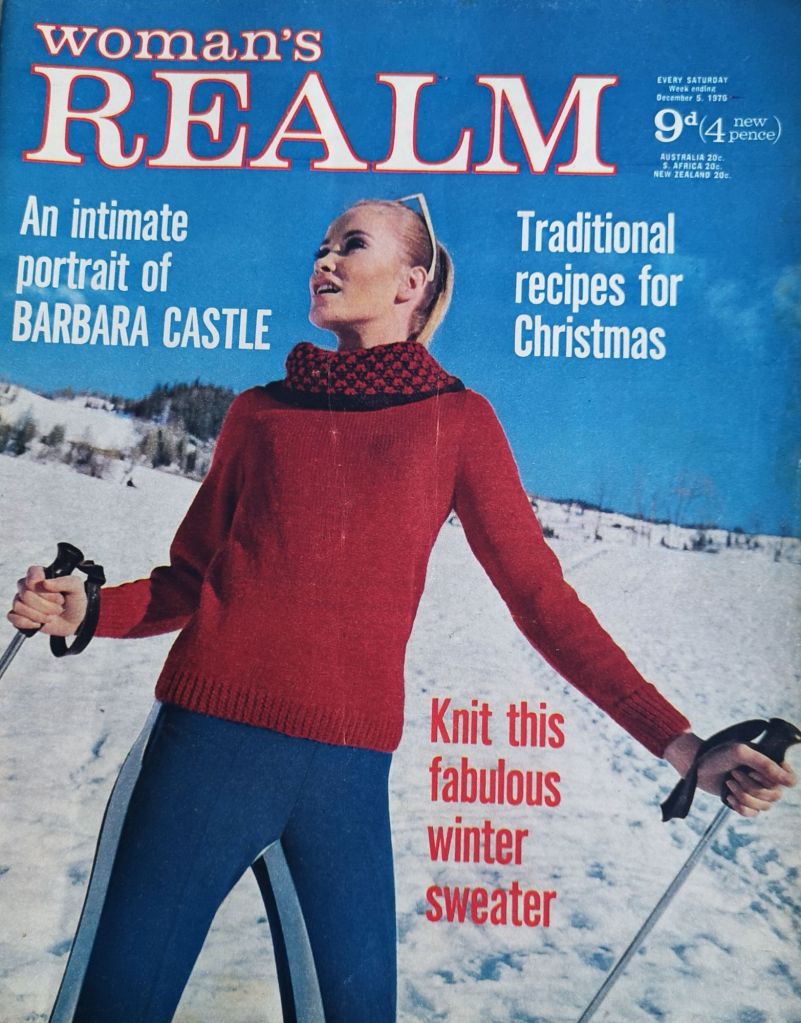
The first thing I want to reflect on is the completely atypical cover. The woman in skiing gear on a mountain reflects the anticipation of a new decade and a new more dynamic female approach to life. For most women, this vision would have remained just that, as everyday lives carried on for most in a typically low key fashion. However, it indicated a new aspirational image that would see in the decade of the Women’s Liberation movement that pushed for women to be independent and equal participants in UK society. Remember, that in 1970, women could not open their own bank accounts or apply for credit without a male guarantor! It’s incredible to think that it was 1973 before women were allowed to be financially independent. At the time, they would have had to rely on a husband or father to buy that skiing gear. Looked at from our modern perspective they really were the dark ages! However, there is a nod to the everyday reader as they are going to have to knit the sweater themselves before they hit the slopes!
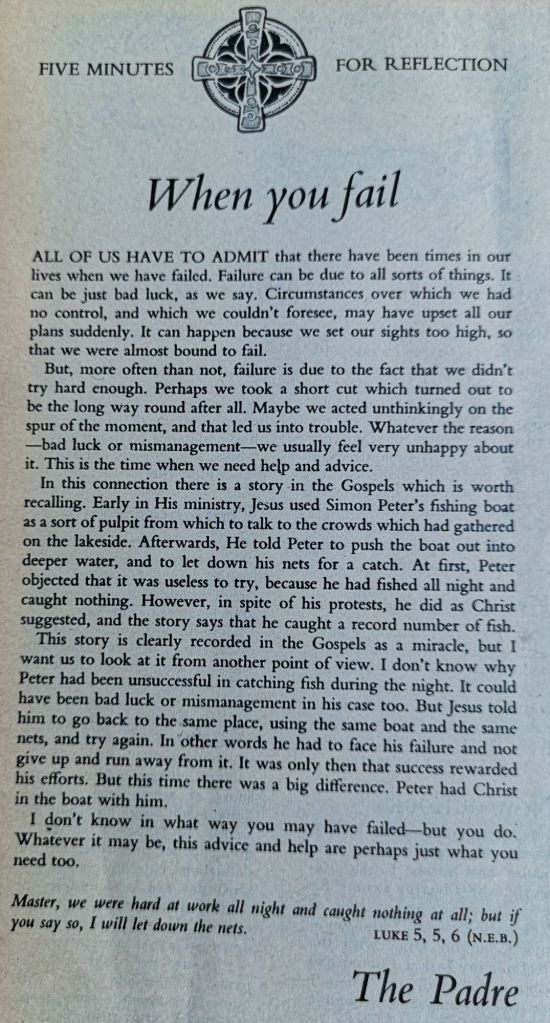
On Page 5, there is a reflection on the gospels from The Padre who talks about failure and how to deal with it. This is interesting from two perspectives. Firstly, you have the fact that it puts a religious element right at the start of the magazine, something that would be unthinkable today in our more secular times. Secondly, the acknowledgement of failure as a likelihood would be incredibly unlikely in today’s magazines where everything is seemingly rosy and life is there for the taking. Actually, if you read it, the advice is as pertinent to 2025 as it is to 1970, pointing out that very often you are just tired and that’s what leads to failure. A companion article appears later on in the magazine, entitled ‘So Depressed!’ which focuses on recognising the difference between sadness and depression and some strategies for dealing with the situation. Once again, the advice is timeless although the final paragraph betrays its origins in a different medical time by mentioning ‘… skilled care either with drugs or with electrical treatment’.
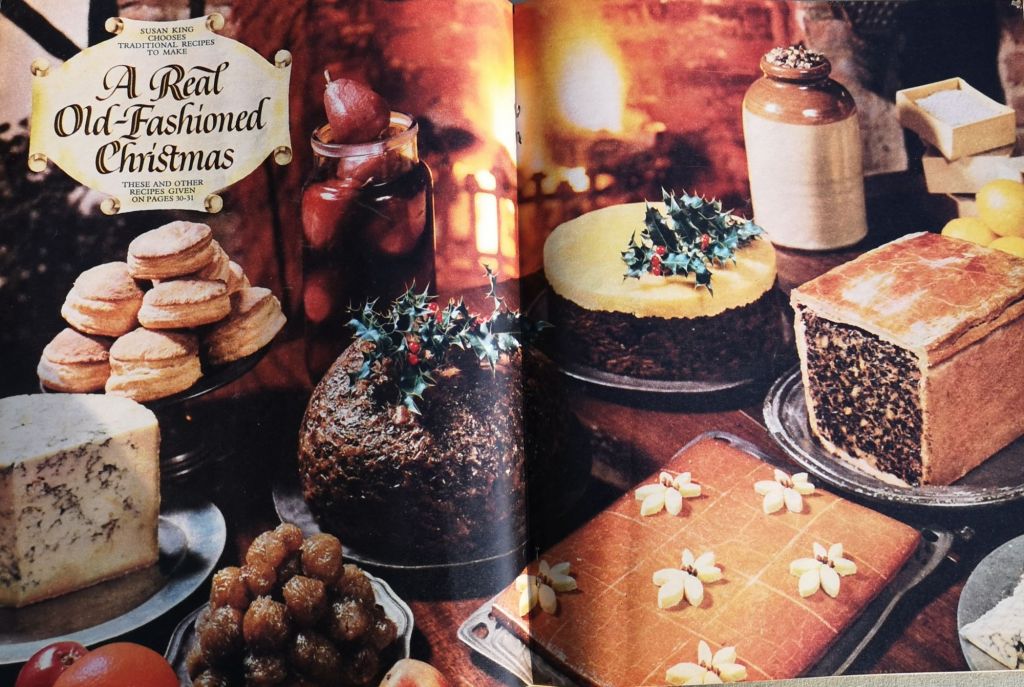
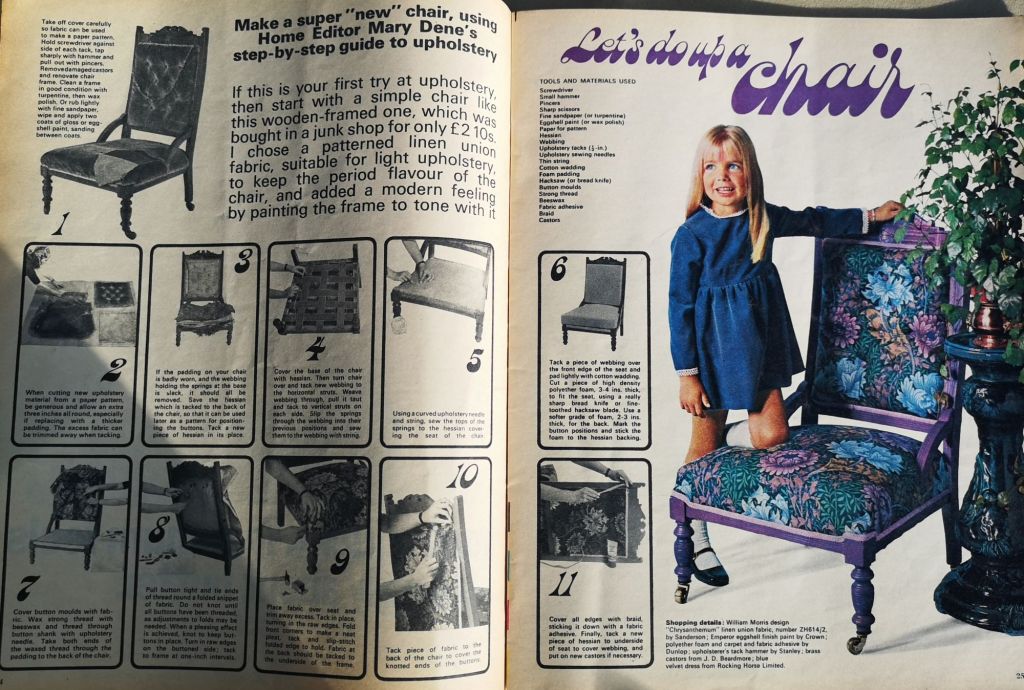
For the average woman in her own realm, she could cook Christmas Dinner courtesy of the recipes in the four page section ‘A Real Old-Fashioned Christmas’. We would still recognise Mincemeat, Puff Pastry for Mince Pies, Christmas Cake and Gingerbread. Plum Pudding, Candied Chestnuts and Spiced Pears would be less familiar, and probably only read about in old novels, while Black Bun and Drunken Prunes would be absolutely baffling! For the record, Black Bun is a Scottish cake encased in pastry, which you don’t eat and Drunken Prunes are soaked in sherry for four days, which might do it! She could knit the aforementioned jumper, girls’ dresses and a cuddly Lennie the Lion. With the time she would probably have left (!) she could also upholster a chair! This definitely reflects the ‘make do and mend’ approach required of so many families in those days. Yes, you could afford the occasional treat but only if you saved money where you could.
What interested me on flicking through the magazine was the fact that the family are referred to only in passing. Children and husband are there, but they are not necessarily the centre of these women’s lives. The different slant on the life of the average reader is quite clear when you compare it to the previous two decades. No longer do women have to clean the house, prepare the dinner and still look desirable when their hard working husband comes home!
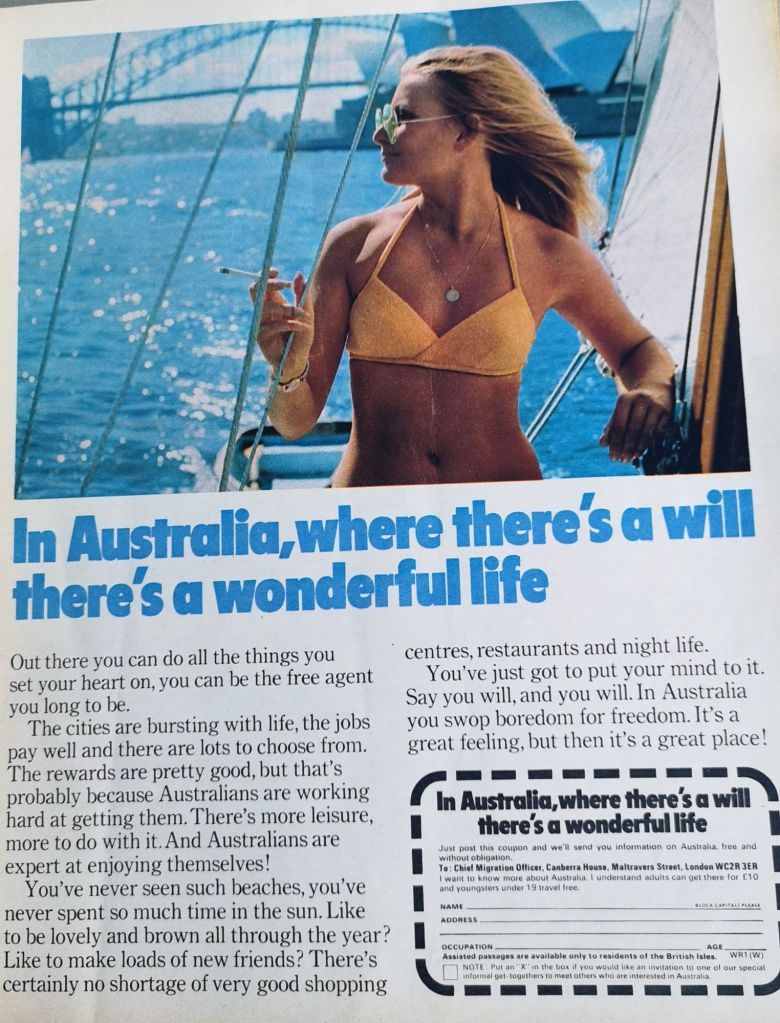
In terms of the adverts, significantly fewer than would be the case in years to come, they were again very focused on the woman herself. It is very much a practical set of products that would enhance their lives quite easily and relatively cheaply. If all else failed and you had had enough of the cold British Winter, which actually gave us a rare White Christmas in the South of the UK, then Australia was interested in you! Assisted Passages, known to everyone else as the Ten Pound Pom scheme, are advertised with the ultimate in aspirational lifestyle style for a British woman. As you can see, they could transform themselves into bikini clad Australians smoking a cigarette on a boat with Sydney Opera House in the background!
Final Reflections
This is, perhaps more than any of the others I have read, a most fascinating time capsule. We are on the cusp of a new era for women, and it is an era that Woman’s Realm are very much at the forefront of. They tread a very fine line between what was possible at the time and what may be possible in the future. Their vision of a more independent lifestyle is at odds with a time when women wouldn’t be trusted with their own money, but change was in the air and Woman’s Realm could sense it. They seem to be saying the future is here, and it could be female.
 David Pearce - Popular Culture and Personal Passions