
What’s a quote that perfectly describes your outlook on life?
We had a daily prompt about quotes three months ago, and again three days ago. Has the AI generator got some rogue code somewhere? I included a quote about repetition three days ago and another about time so I am not giving you any more quotes. Instead I will give you a reflection on my blogging over the past year.
I have posted every day for over a year and in that time my views have increased from single figures each day to 50 plus views pretty much every day except Saturdays, oddly enough! I have mentioned the dopamine hit I get from that before but it’s got a knock on effect in making me more determined to improve my posts. If there are more people reading them they had better be worth reading! The daily prompt drives both the increased views and the focus on improvement so even on days like today I appreciate both the discipline and the visibility. In a couple of weeks I will have finished my summer teaching and I will start to add extra posts to my daily prompt, but I still haven’t quite worked out how to get more people reading them yet. That’s the next step I suppose. Thank you for reading, I really appreciate the support 🙏
My first try at a blogging challenge that looks really good
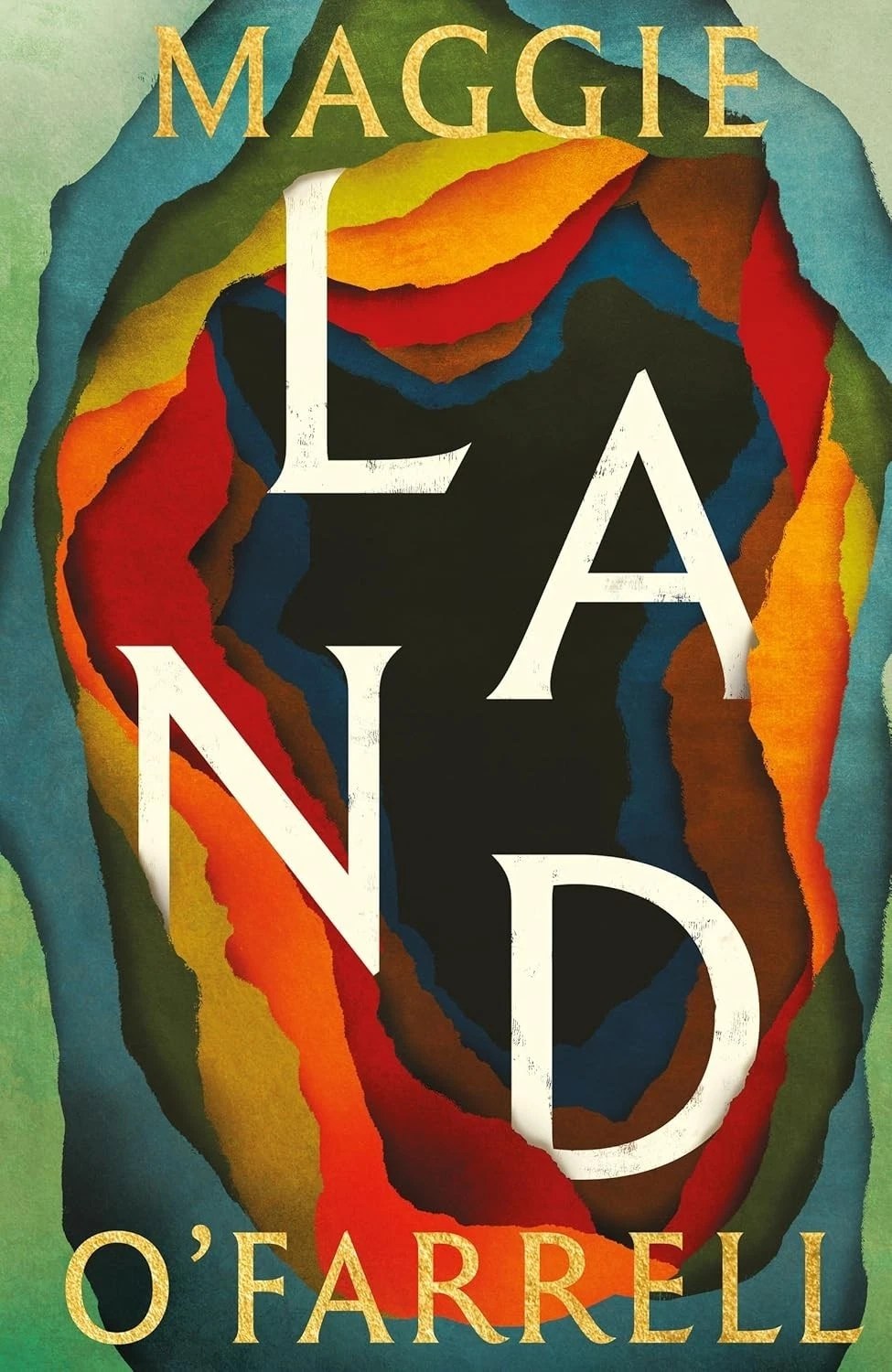
From Land by Maggie O’Farrell
This is a monthly link-up hosted by Kate at Books Are My Favourite and Best. Each month a book is chosen as a starting point and linked to six other books to form a chain. A book doesn’t need to be connected to all the other books on the list, only to the one next to it in the chain. The rules are:
- Link the books together in any way you like.
- Provide a link in your post to the meme at Books are My Favourite and Best.
- Share these rules in your post.
- Paste the link to your post in the comments on Kate’s post and/or the Linky Tool on that post.
- Invite your blog readers to join in and paste their links in the comments and/or the Linky Tool.
- Share you post on Twitter using the #6Degrees hash tag.
- Be nice! Visit and comment on other posts and/or retweet other #6Degrees posts.
Degree 1 So, here goes. I’ve not read Land by Maggie O’ Farrell yet but I loved Hamnet so I probably will. Land is about a man who works for the Ordnance Survey in Ireland in 1865. My first link is a map
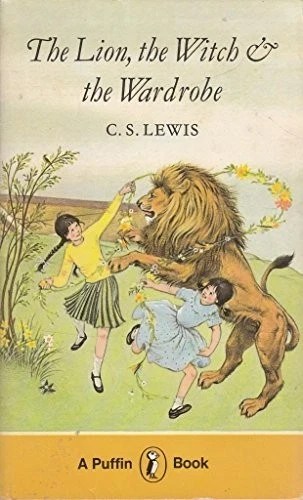
Degree 2 When I bought The Lion The Witch & The Wardrobe at a little bookshop in Felsted, Essex at the age of seven, one of the first things that drew me in was the map inside the front cover. It introduced me to a new world and it captivated me as soon as I saw The Lamppost and The Witch’s Castle. Along with that book in my first visit to the bookshop I bought two other books that set me on the path to collecting another series.
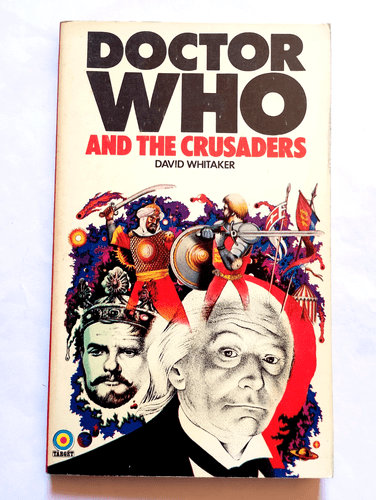
Degree 3 The Target Doctor Who books were an obsession of mine for a number of years, but the first time I went to the Felsted bookshop, I bought two as my one pound was enough for three paperbacks in 1972! I bought was The Daleks, which was an obvious choice as they were the most famous monsters. The other book was less obvious. It was The Crusaders, one of the historical stories, but the cover looked so good I decided to get it.
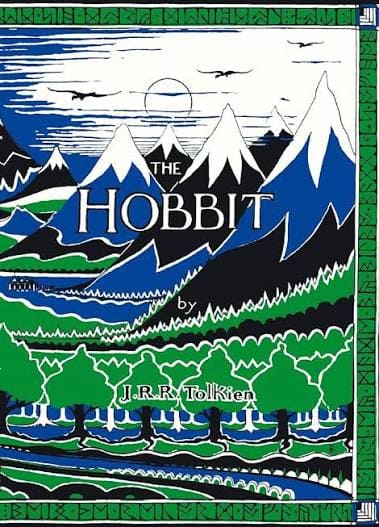
Degree 4 Another cover that I judged a book by was The Hobbit in it’s original JRR Tolkein design. It’s one of the most arresting covers ever and perhaps unique in being designed by the writer themselves. At 11 it introduced me to a fantasy world I loved as I went on a journey with Bilbo. Sadly, the magic vanished when I tried to read Lord of the Rings a year later. I couldn’t get into the story and started it twice, never getting out of the Shire either time. Some books just don’t appeal for whatever reason. However, it set off a liking for fantasy that one author above all others satisfied.
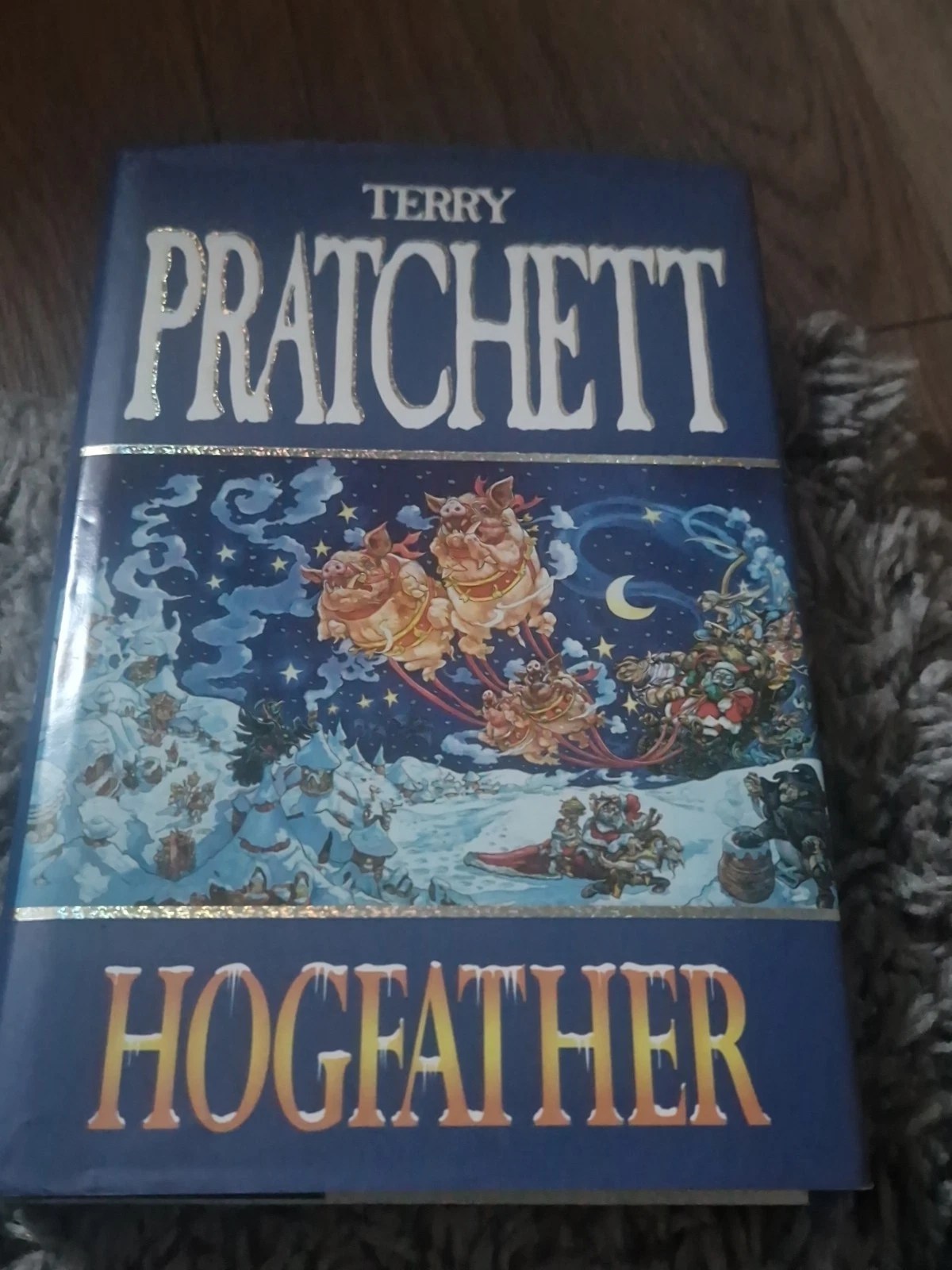
Degree 5 Terry Pratchett was simply a genius. If his books weren’t set in Discworld and full of wizards, dwarves, trolls, orcs and vampires they would be acknowledged as the finest series of books written by any British author in the last 50 years. I have read most of the Discworld series of over 40 books and loved nearly all of them. The Hogfather was the first one I picked up in the compound library when I was working in Saudi Arabia because it was about Christmas (or perhaps a version of the Solstice) and within a few weeks I had read every single Terry Pratchett in there!
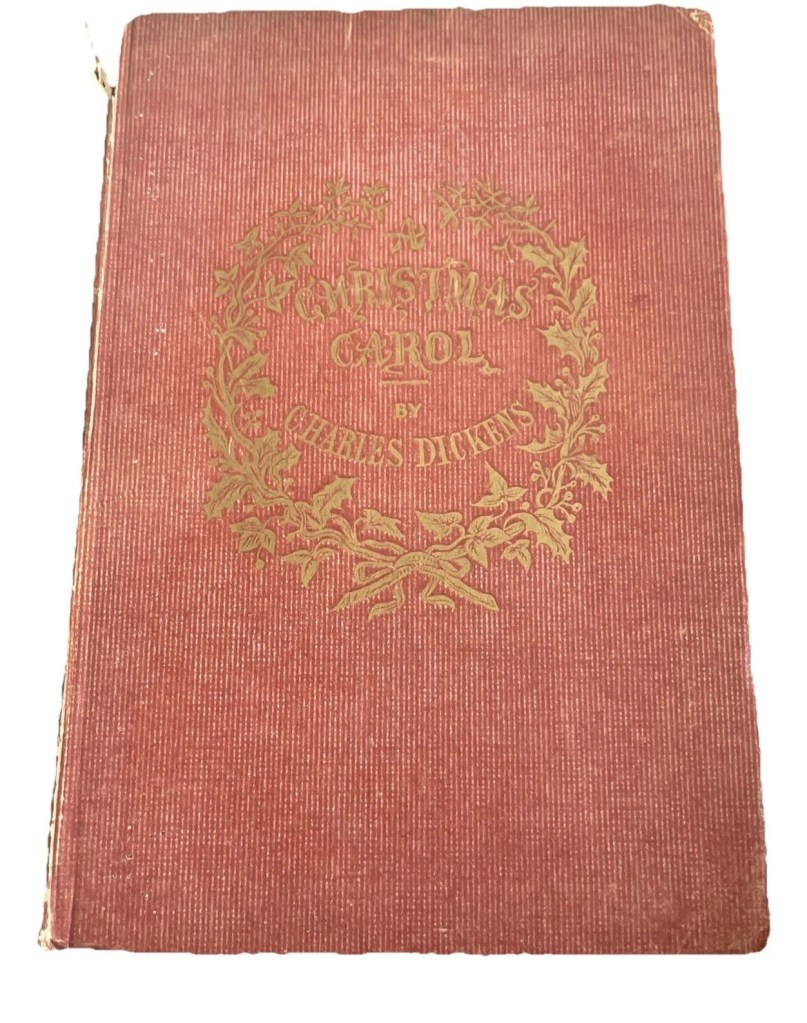
Degree 6 Any regular reader of my blog will know that one book stands above all others in my affection. It was the story that became central to my view of the world from very early on, A Christmas Carol LIke The Hogfather this is set at Christmas, but the Christmases it depicts vary according to time, character and money. It is a book that contains life in all its glory and captivates me anew every year.
What are your top 10 travel destinations?
I have a number of ideas for holidays, mostly in colder climes, but my Top 10 are a combination of first visits and revisiting places we have been to previously.
Northern Lights – wherever gives me the best chance of seeing them.
Sweden and Denmark – a trip that might extend to other Scandinavian countries.
Faroe Islands – off the beaten track but a place I have wanted to visit for 40 years.
World Cup Ski Races – as a huge fan until Discovery and TNT put it behind a pay wall I always wanted to see a competition live.
German Christmas Market – not sure which one but it’s pencilled in for 2028.
Pompeii – never been to Italy but I have always wanted to visit the archaeological centre of the world.
Japan – revisiting the place where we lived for 3 years in the 1990s.
Singapore – where I lived as a small child and a place I have always wanted to see as an adult.
Port Douglas, Australia – a place that we visited a couple of years back that is one of my favourites. I want to see the prehistoric rain forest up close.
Antarctica – a place that has been a dream of mine since childhood and which would require a lottery win or similar, but I can dream!
If you had to give one life-changing tip, what would it be?
OK, this isn’t profound or indeed important in the greater scheme of things, but for the last two months or so, I have kept to a strict policy of just one weekend trip to the supermarket. For ages we had found ourselves shopping on Saturday and then going again on a Sunday. Why? Well, because it was open. I was talking about how much simpler Sundays were in the 70s and 80s when suddenly I realised that I could recreate them as long as I only went to the shop on Saturday. It was so simple and so obvious when I thought about it. Modern Capitalist society has not just said that shops are open on a Sunday now, it has persuaded us that we need them. The truth is that as long as we plan effectively, we don’t. Now, if you have shifts that mean a rolling two day weekend, you can still apply this policy by making one of those days a day you don’t go to the shops.
So, what has been the impact? Well, first of all, it’s really focused me on planning meals, something I promised myself I would do. It’s made me buy what’s really needed rather than being led astray by shopping on a whim. Yes, that still happens from time to time but less than it used to. Much the most important effect though has been the much more relaxed Sundays when we can now look at the day and plan to do something or not do something with freedom. I know it sounds unlikely in a sense, but I have actually relaxed far more as a result of this approach. Knowing that the day has no requirement to shop has given me a sense of calm and ease. I know that many of you probably already do it or that it may not always be possible for many others, but if you can make it a regular thing I promise you will find it makes a real difference.

