
I am sure I have always thought of Christmas time, when it has come round—apart from the veneration due to its sacred name and origin, if anything belonging to it can be apart from that—as a good time; a kind, forgiving, charitable, pleasant time; the only time I know of, in the long calendar of the year, when men and women seem by one consent to open their shut-up hearts freely, and to think of people below them as if they really were fellow-passengers to the grave, and not another race of creatures bound on other journeys.
A Christmas Carol by Charles Dickens
When I first scheduled this Blogmas entry, I was intending to make it a very light and silly piece, but the more I thought about it, the more I realised that it would be quite insubstantial compared to my other entries, and largely unsatisfying to write. To be honest, the approach I decided to take only came to me this morning.
I want to state at the beginning that I am writing this article through curiosity, academic and personal, and I am not decrying other points of view, which I know are as genuinely held as my own. All shades of opinion should find themselves reflected here, or at least that is the intention.
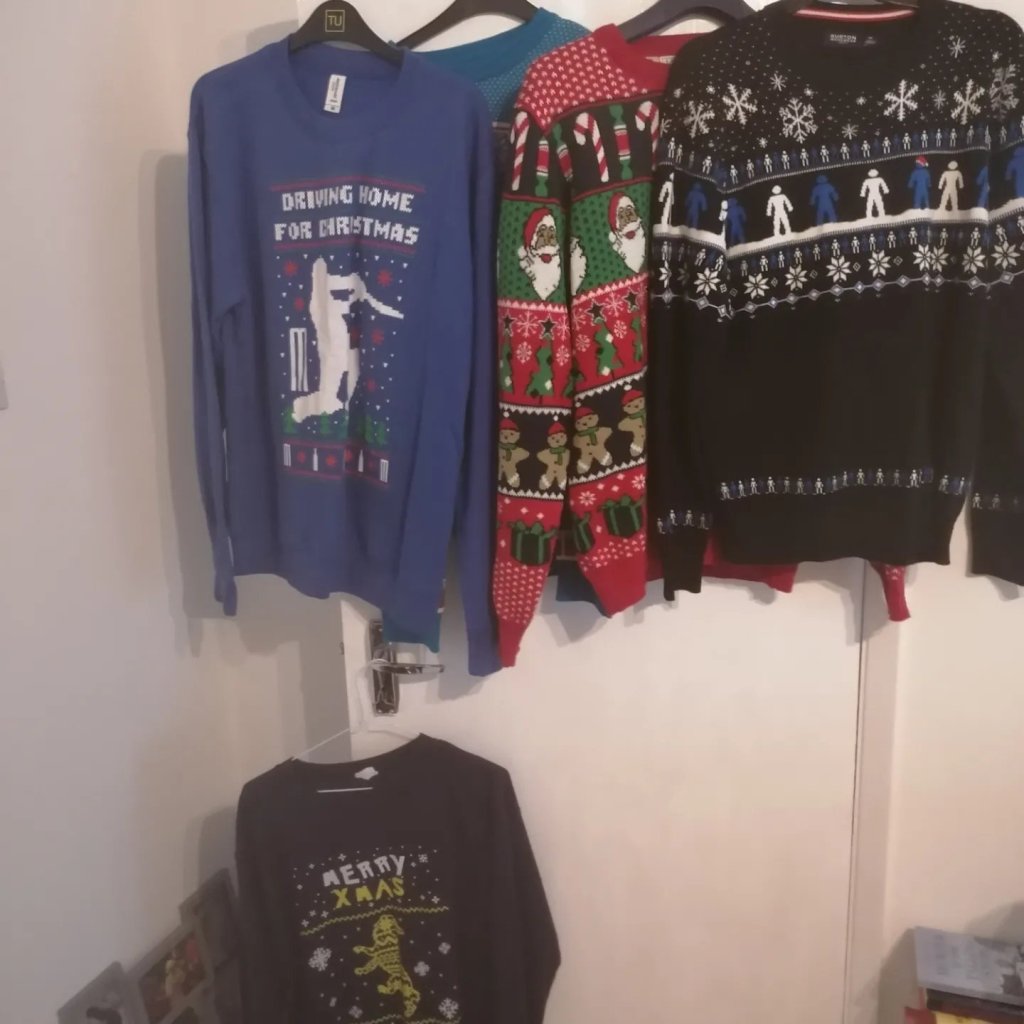
When I say I love Christmas Jumpers, which I do, the reaction to this statement ranges from ‘So Do I’ to ‘I hate them’! It is a reflection of the widely divergent attitudes you find to all aspects of Christmas. No one that I know has ever said ‘I hate Shrove Tuesday’, although to be fair, I don’t like pancakes myself (!), or ‘I hate Easter Sunday’, so why is Christmas ‘hatred’ so widespread? I have put the word ‘hatred’ in inverted commas, because I genuinely think it is as much about hyperbole as ‘I really don’t enjoy Christmas’ doesn’t have the same impact. You hear it used about music, films, TV, presents, parties etc.
What fascinates me from a Popular Culture standpoint is the way that those who dislike Christmas appear to portray themselves as somehow reflecting a viewpoint that is superior to those who enjoy the festival. In that sense, dislike of Christmas seems to be placed on the same level as a love for fine arts, opera and ballet as the preserve of the more discerning elite. Elite culture has been placed in opposition to mass culture for centuries, and Christmas is merely the seasonal battleground that we seem to have decided upon.
Now, I fully accept that people can actively dislike the whole Christmas season, as indeed my own Dad did. He disliked the commercialism of a time of the year which had a message that he profoundly believed in. He felt that it cheapened the whole festival, although he would eventually get into the Christmas spirit around Christmas Eve, but I think he did that more for me than for himself. He took the Scrooge accusations in good part and as something of a badge of honour! (This perhaps goes back to the elite culture v mass culture element I referred to in the previous paragraph.) What he objected to was quite clear, as it is for many others. For many, Christmas is a sad time of year for many reasons. For others, the expectation that everyone will enjoy the season understandably gets backs up. Some people find that loneliness at Christmas is worse than at other times of year. We must always respect and acknowledge this.
Those of us who love Christmas can often be at fault by being overly demonstrative and making comments such as ‘Don’t be such a Scrooge’ unthinkingly, and without trying to understand the opposite point of view. Here, the binary approach that is taken to many things in life has become more obvious. We need to let people join in if they want to, and leave them alone if they don’t. ‘Encouragement’ sometimes becomes expectation and social pressure, so it is no surprise that people can react to this negatively. We need to avoid being like the title character in Elf (a film I really, really dislike by the way!) and being over-enthusiastic about all things Christmassy. We need to accept that there are bad Christmas films and bad Christmas music, just as those on the other side should acknowledge that there are good Christmas films and good Christmas music. Too often we can take an uncritical approach to every aspect of our favourite time of year. It is flawed in both principle and practice because we as human beings are flawed. Hearing Christmas songs in the shops in November may fill many of us with joy, but it also fills other people with annoyance. Yesterday, I wrote about the lower key and more concentrated build up to Christmas in the 1970s. Perhaps it would be best to return to that, although with modern technology that horse (or reindeer) has definitely bolted!
My Christmas ‘resolution’ is to find like-minded people who I can share my enthusiasm with and to live and let live when talking to people who find that enthusiasm baffling or even irritating. To all who read this, Christmas lovers or not, may I wish you all that you wish yourself at this or any other time of the year. I do love Christmas jumpers though!

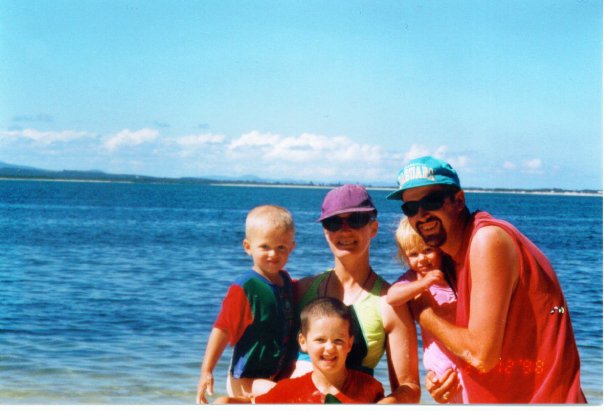
I have been lucky enough to spend three Christmases in Australia with my family. One in 1998, and then 2003 & 2004 when I was studying at Wollongong University for a Masters Degree. These three Christmases left a lasting effect, not just on our memories, but on the way we celebrated Christmas itself when we returned to the UK. So, let me introduce you to the similarities and differences of a Christmas Down Under.
Pre-Christmas Events
Obviously, the fact that it is Summer in Australia makes a big difference to how Christmas is celebrated. A lot of events take place outside, and they take place in the evening once the heat of the sun has lessened somewhat. One of the signature events of the Christmas season is Channel 7’s Carols in the Domain, which has taken place in the Domain Gardens in Sydney almost every year since 1986. Given that it is hosted by Channel 7, there are always appearances for the cast of long running soap Home and Away. However, superstar entertainers The Wiggles, in their various incarnations, are probably the most enduring part of this tradition, having appeared every year, bar two, since 1993! I wrote about The Wiggles in my section on children’s music, and it was largely thanks to these three Christmases, going to their Christmas concert in Sydney and seeing them on Carols in the Domain, that they became an enduring part of the season for our family. The recording takes place before a live audience before being shown in the week before Christmas – December 23 this year (2022) if you are in Australia and wish to tune in. For its role in ‘starting’ Christmas, I would see it as the Australian equivalent of Carols from King’s.
The other pre-Christmas event we went to each year we were there was Carols by Candlelight near the beach at Cronulla in New South Wales. It was a genuinely magical event for the whole family which was made even more special for the children by staying up for a late night by their standards! Once again, it was an indispensable start to Christmas for us, and the chance to sing the old familiar carols in such an unfamiliar setting, in a very unfamiliar temperature (!) was fantastic.
Other than these two events, the basic ingredients of the build-up to an Australian Christmas were very similar to those of a British Christmas. Opening Advent calendars, buying presents, listening to Christmas music on the beach – well OK not the venue but you know what I mean! By Christmas Eve, the children were just as excited to see Santa Claus in Australia as they were in any year we spent in England. Me? I enjoyed it all the more, because I loved the opportunity we had to do so much more outside as a family in December.
Christmas Day
Well, Santa has obviously been, but with his sleigh pulled by distinctly Australian animals!
The stockings are emptied, breakfast is eaten and the first presents are opened. Time to cook lunch. It’s a bit hot for a roast though, isn’t it? For many Australians it is indeed! An Australian Christmas dinner consists of turkey crown – to save on cooking time in a very hot kitchen – coleslaw, potato salad and pasta salad. I got to love the relative lightness of the meal so much, that to this day I serve exactly the same accompaniments to the turkey, even though the weather is colder. To some, this may seem like sacrilege, but to me, it is a welcome respite from Christmas Day overeating, and it leaves room for Janet’s homemade Christmas Pudding, mince pies and Christmas Cake!
Once lunch is served, eaten and tidied away, it is time for a walk. For two of our three Australian Christmases, we went to the North of New South Wales to a place called Nelson Bay, which had a fantastic beach and miles of rolling sand dunes. Shorts and t-shirts were the order of the day as we walked on the beach to help our dinner go down. The end of the day involved films, music and games, much like it would in a British Christmas, but if you wanted to, there was the option of one last warm, moonlit walk, as long as you remembered to cot yourself in mozzie spray!
Boxing Day

This is the big beach day for residents of any state who are lucky enough to be within driving distance, or walking distance, of a stretch of sand. It is an incredible sight for the average Northern Hemisphere dweller as the beach is full of families as far as the eye can see. There is an atmosphere of joy very much in keeping with the season, but it takes place to the accompaniment of Test Match commentary from the MCG! It is also full of the smell of barbecues with food and drink from a dozen different cultures. It is perhaps the ultimate expression of the modern melting pot that is Australia with families of all faiths and none, observers of Christmas or not, alongside each other marking the day in their own ways. I hope to get back to the beach one Christmas to experience this unique atmosphere once more.


When I was planning my Blogmas entries, I thought this would be one of the easier entries to write. I mean, I lived through it, and it has been endlessly replayed in so many ways. ‘Aye, there’s the rub’ as Shakespeare once wrote. When you drift back in your memories, it isn’t always clear what is the individual memory of Christmas past, and which is the cultural memory that we are now familiar with? I wanted to make this entry as personal as possible, and to reflect what Christmas was actually like for those of us who were children at the time. As a result this entry is a fragmentary kaleidoscope of memories.
The build-up
As a youngster in the 70s, I do remember the build-up to Christmas, in the shops particularly, being a lot shorter than it is now. I suppose we would be eyeing up possible gifts from late October onwards, but the real build up didn’t get under way until after Bonfire Night fireworks had finished.
At school, the main focus was on the carol service, especially if the class you were in was presenting part of it. I remember that my primary school St Andrews went to a nearby church for our service, and it was a large church so the children chosen to read would need a strong voice to fill it. Our headmaster, who had somewhat idiosyncratic methods, decided that the way to discover if our voices carried was to shut the door to his study and position potential readers two flights of stairs below him! Apparently, he could hear me loud and clear over that distance and through a closed door (!) so I had the opportunity to read a lesson in the church during my final year at the school. The carol service was full of songs that we all knew, songs that we sang year after year. I am sure that my love for carols directly stems from those three years at St Andrews. As well as that, we made Christmas decorations, very inexpertly in my case, although I have strong memories of making a bell using a deodorant can lid covered in foil containing bells made from balls of foil around two pieces of wire topped off with a red bow. That decoration appeared on the Christmas tree for a few years, which I considered a success! We had a post box in the school hall in to which we posted our cards for our classmates and other pupils. Although I loved the feeling of a card being delivered by a postie – a prefect – I do remember certain pupils in the class getting way more cards than others. It certainly put you in a clear pecking order in terms of popularity! Finally, I remember the class parties with small sandwiches, crisps, jelly, games and party hats. They were always on the last afternoon and sent us off on our Christmas holidays in the right way.
Outside of school, our cub pack went to a local church for the Christingle service on one Sunday in Advent. The sight, smell and feeling of those services has never left me. There was something magical about a church lit only by candles, and something even more magical about just the children singing Away in a Manger. My final memory of carol singing is that a couple of years whilst I was at primary school, I went out with the cubs and we went carol singing door to door. We probably weren’t very good, but I remember the feeling of the cold on my face and the lift we got when a household gave us money for the cub pack charity.
The presents

Well, there is the first element of a child’s Christmas, the presents. A few gifts stand out. My kaleidoscope was one of my joys as a young child, and I could sit there for hours watching the shapes form, change, collapse and reform over and over again. I remember a few other presents, but chief amongst them was my cassette recorder and two tapes which I received on the Christmas I was nine years old. I have blogged about that particular Christmas in this article as it is one of the strongest memories of my entire childhood. As technology started to become more accessible I remember a couple of cutting edge gifts that I received. The first was Pong, the original computer game, and the second was a hand held Space Invaders console game. They were both incredibly primitive, but they were incredibly exciting to a child in the 70s. The final thing I remember about childhood Christmas presents are of course the stockings, which genuinely did have satsumas in the toes and much bigger and better selection boxes with full size chocolates and packs of Smarties, Jelly Tots and Tiger Tots. I really miss the latter!
Christmas Day
Now, bear in mind I was an only child, so I never really felt the same magic on the day itself that others might have felt. Once the presents had been opened, the day itself was similar to a Sunday for our family. My Dad often went to his local pub, which always had a lunchtime session on Christmas Day, and most years he invited friends of his who were going to be on their own otherwise. It was his quiet, very personal way of marking a day whose message meant a lot to him. Every Christmas lunch started off with Baxter’s Royal Game soup, so ever since it is the one soup that is associated with celebrations for me! We would always watch the Queen’s Speech of course, a tradition I still maintain with my own family. After that, it was all about the TV. In those days, of course, there were three channels, and BBC1 ruled supreme, so my memories are of those programmes. Morecambe and Wise were, of course, the undoubted kings of festive television, but actually it is Mike Yarwood who holds the 70s crown in terms of audience size. In 1977, his Christmas show had 21.4 million viewers, beating the Morecambe and Wise special by just under 100,000 viewers.
Thinking back to the 1970s, the Christmas was simpler and, probably, less oriented towards children, although as an only child that could well be just my own personal experience. It shaped my adult attitude to the festival and also shaped the type of Christmas I wanted to create for my family for a host of reasons. The one thing that has stayed the same is that sense of magic that lies at the heart of it.

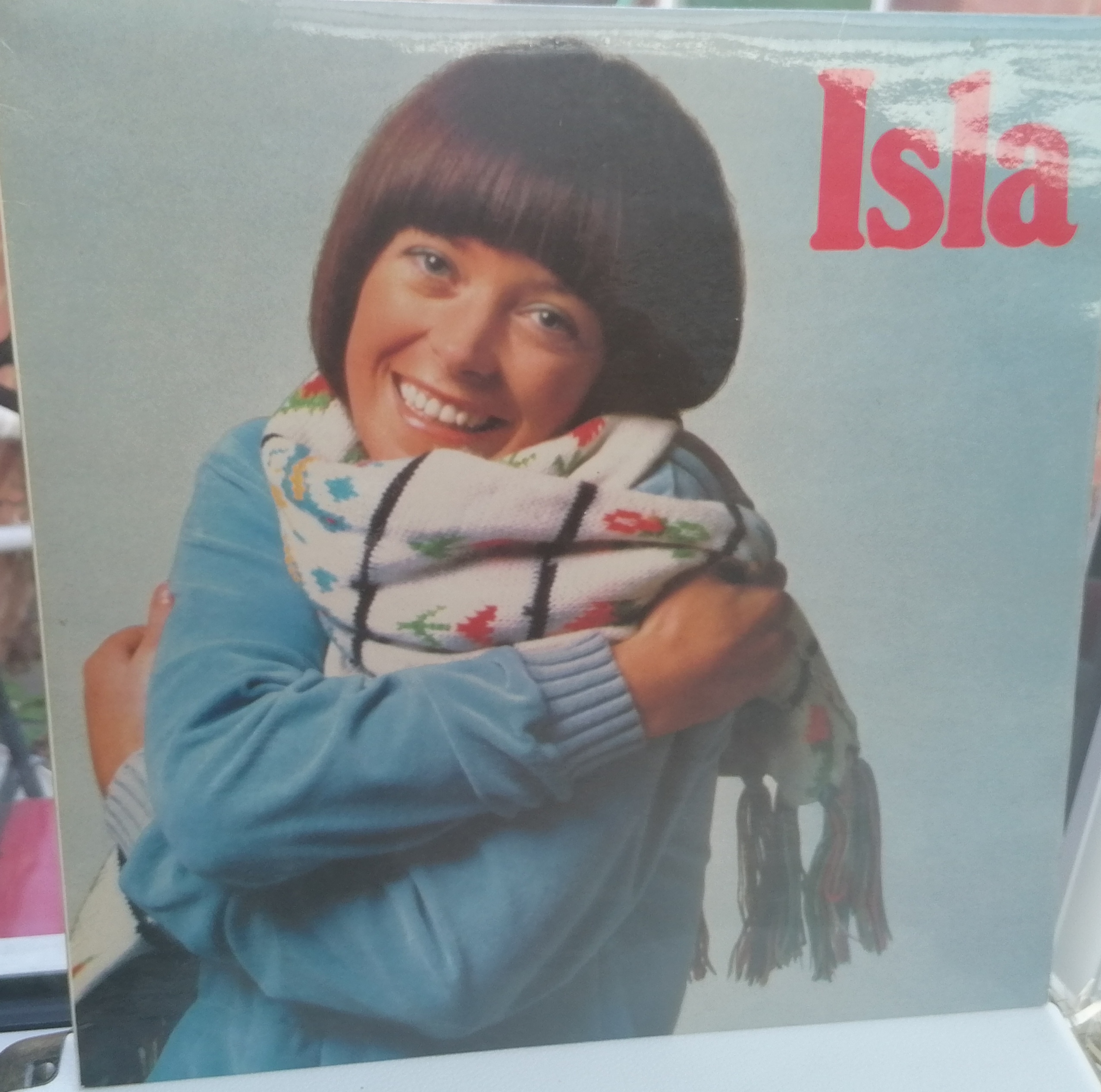
In the late 70s there were many potential TV crushes for a teenage boy. There were American actresses who were impossibly glamorous to our eyes, female pop singers like Blondie and actresses from all areas of England who could and did catch your eye. For me, however, one woman stood above all others, the Scottish co-host of Larry Grayson’s Generation Game, the beautiful Isla St Clair. She was the first celebrity whose autograph I requested, and much to my delight she wrote back enclosing a signed photo, which started a hobby that has been continued with a number of peaks and troughs ever since. Now, her real talent lay beyond the TV studio, although she did have occasional opportunities to demonstrate that talent on the Generation Game and beyond. She is one of the foremost interpreters of Scottish Folk music, and a singer whose recordings are used in university courses as reference points for academics and students alike.
In 1979, she recorded an album of Christmas music, simply entitled Isla, which is a jewel amongst all the Christmas albums in my collection. It has, in my opinion, been consigned to completely undeserved obscurity, and in my own very, very small way I would like to rescue it from that obscurity and bring this lovely album to your attention.
Side 1
The album starts with a softly sung version of Mary’s Boy Child, a track Boney M took to Number One the previous year. While it isn’t home territory for Isla, she makes the most of her incredible voice to turn it in to a lullaby style carol that is absolutely lovely. Once she gets to the chorus her voice just soars, but not in the showy way we are now used to. Green is the Holly is a traditional song that, judging by the lyrics, has a history that moves beyond the era of Christianity whilst still blending in the Christmas story. I had never heard it before, nor have I heard anyone sing it since. It is a gorgeous air. The next carol is Little Drummer Boy, which is delivered with beauty and quiet power as Isla shows the full range of her voice. One thing you notice with all of these songs is the subtlety of the arrangements which suit her perfectly. The First Noel is absolutely heavenly in both senses of the word. Here, Isla takes an overly familiar carol and gives it new life. As you can imagine I have a large number of versions of this carol on vinyl and CD, but I can honestly say that none of them match this for beauty. Nativity is the penultimate song on Side 1 and is another unfamiliar tune. It is a very bouncy number, with a slightly Caribbean feel, that in other circumstances could have set Isla St Clair off on a middle of the road pop career, but like Charlotte Church later on, you feel that she preferred a different route but that she could definitely have pulled it off. She sounds far more at home with Isn’t it a Goodly Thing which reminds me, vocally, extremely strongly of the songs that Enya has had such success with. It is further evidence of the quality and versatility of Isla’s voice.
Side 2
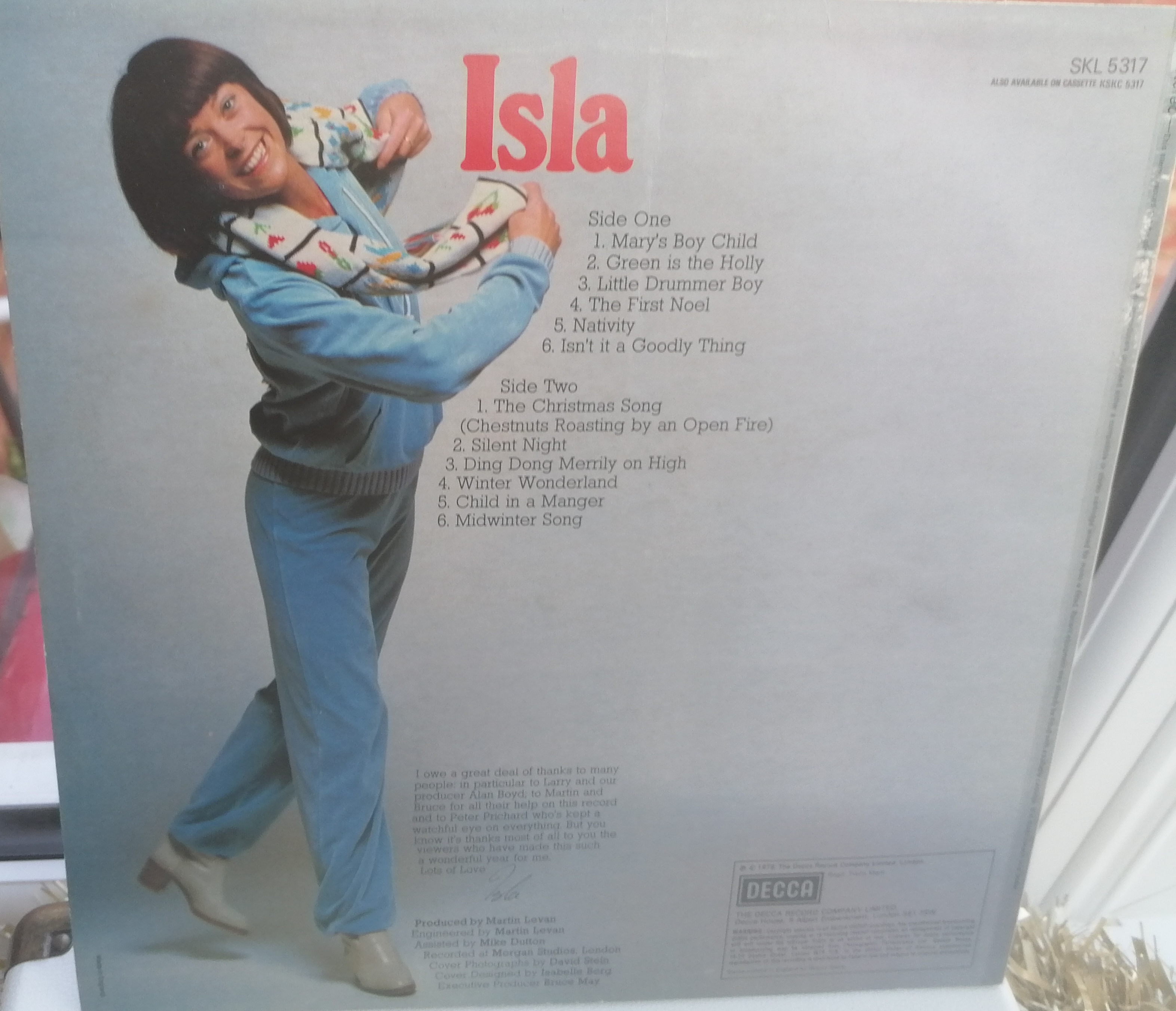
This side opens with Mel Torme’s famous The Christmas Song (Chestnuts Roasting by an Open Fire), and she shows a lightness of touch and delivers the lines with a smile in her voice which is absolutely enchanting. You can tell that she loves singing this song, and I love listening to a version that has a real point of difference. The vocals are, of course, amazing, but it is the way they are delivered that puts this version right at the top of the tree. Silent Night is next and I really liked the arrangement of the tune. In most of the songs, the skilful arrangements fall under the radar, as indeed they should, but this one really works incredibly well in giving fresh life to a song that everyone knows. The secret is that the arrangement serves the singer and vice versa, and that doesn’t always happen, particularly at Christmas. Ding Dong Merrily on High is usually belted out by a full choir with orchestra. To hear one voice is to hear the carol stripped down to its very essence, and it works marvellously. One of my favourite Secular songs is Winter Wonderland and this version makes it feel like Isla is singing directly to you rather than past you. It makes it almost conspiratorial as you imagine she is talking over plans with you alone, or perhaps that’s just me! It’s my favourite version of the many I have heard for these reasons and my favourite on the entire album. The next track is Child in a Manger, which is sung to the tune more familiar as Morning is Broken. Now, it is not my favourite tune, for which school assemblies get the blame (!), but it gets a pass on here as it is so beautifully delivered. The final track on the album is Midwinter Song, better known as In the Bleak Midwinter. I love the carol, but here the voice of Isla St Clair transcends the raw material and lifts it to a truly divine level. It is a beautiful end to a beautiful album.
Listening to this again has been an absolute treat, and inside I am a star struck 14 year old once more! If my review has piqued your interest in the Scottish songstress supreme, and if it hasn’t I haven’t done my job, you can listen to more of Isla St Clair’s incredible voice on her Spotify page, where you can sample the voice that defines traditional Scottish music. https://open.spotify.com/artist/1CIIhGiinCwOk1PCFz75iu?si=8Lm9XayjTRGR_hHiQ5osMA
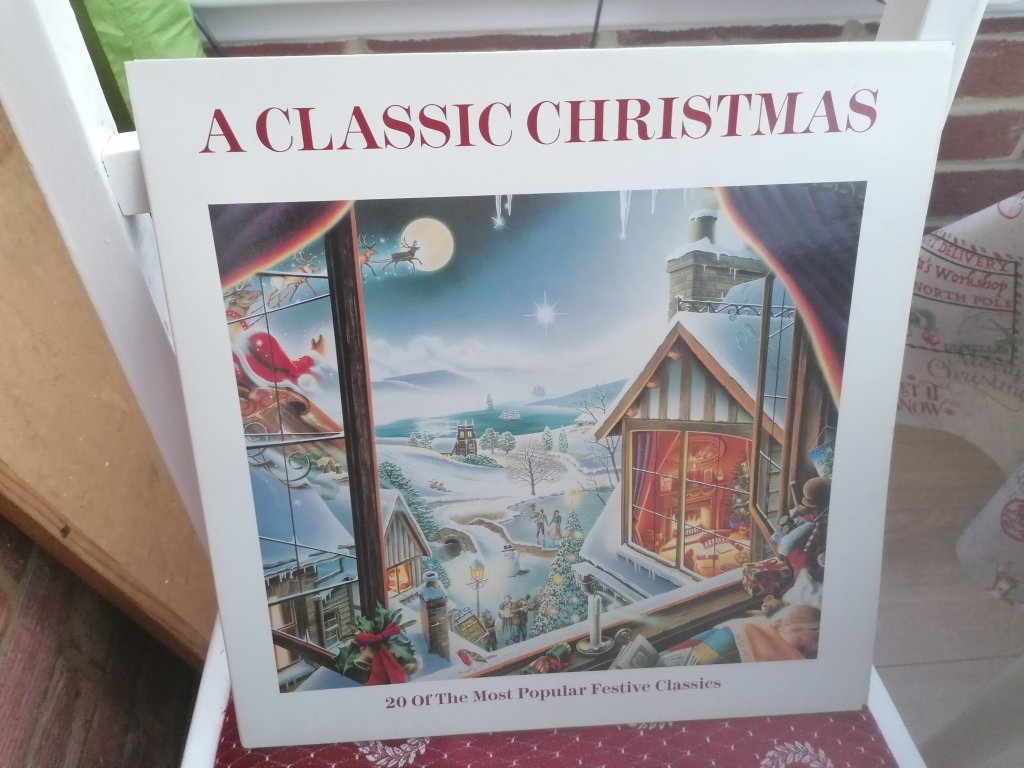
One of the delights of my Christmas listening is the classical music equivalent of the original Now That’s What I Call Christmas. It comes from the same stable as the Classic Collection I & II and like the Now album reviewed yesterday, it’s never been equalled or beaten. What makes this album so special? Well, the orchestras, soloists and conductors chosen for this set are like a who’s who of the classical world. As well as that, the excellent choice of composers and tunes, together with the playing order, make this collection seamless.

Side 1
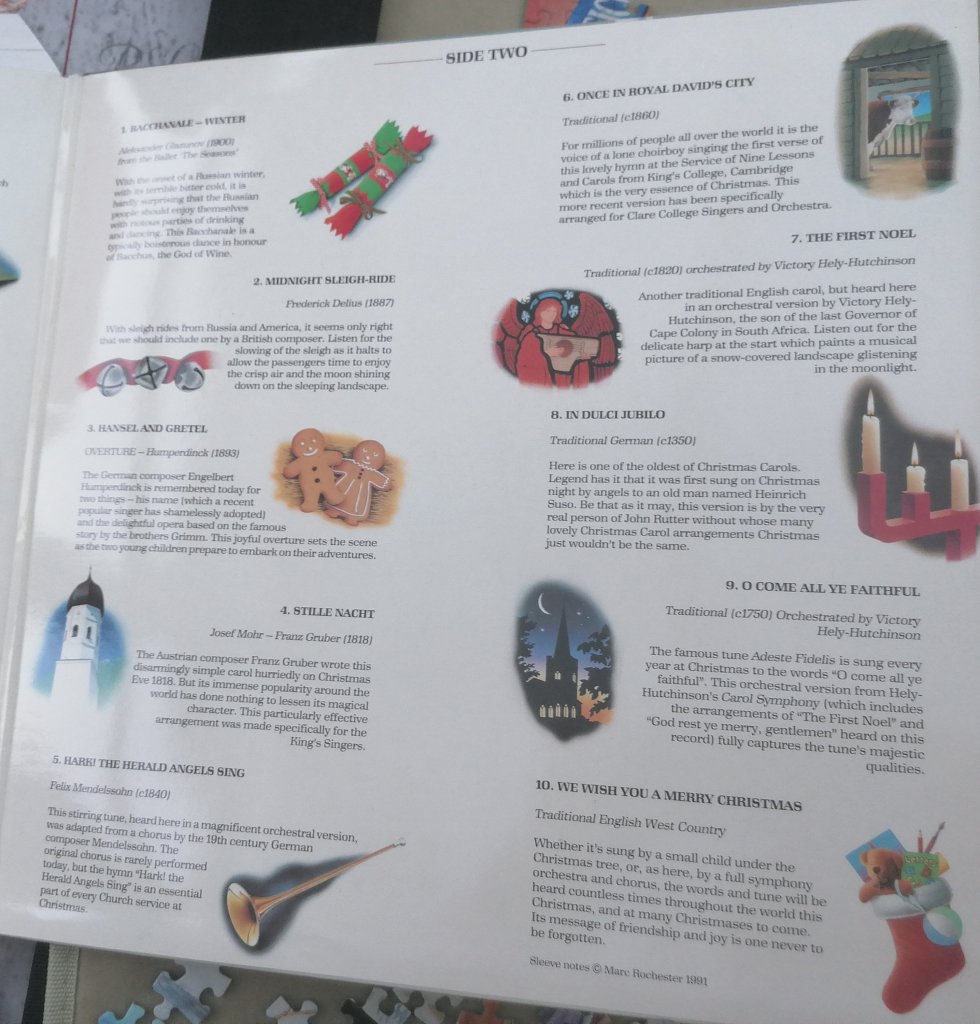
The selection starts with a rousing instrumental version of Deck the Halls which, according to the marvellous notes in the middle of the gatefold sleeve, is a Welsh secular song originally sung to commemorate New Year’s Eve. Second track is the instantly recognisable Troika. Don’t recognise the name? Well, it’s the music that forms the basis of Greg Lake’s I Believe in Father Christmas, and it sounds amazing here. The first carol featuring a choir is I Saw Three Ships featuring the Clare College Singers conducted by John Rutter. It is probably the best version of the carol I have heard. We’re back to the orchestra for Cantique De Noel, another song much better known by an alternative title, in this case O Holy Night. Sleigh Ride is given everything by an irrepressible Halle Orchestra who give perhaps the definitive version of the tune which incorporates lots of styles including jazz and some great sound effects. O Little Town of Bethlehem is once again sung by the Clare College singers and the notes include the priceless piece of information – for those who like to google – that the tune I have always loved is called The Ploughboy’s Dream. I always forget the notes from year to year so they are a source of fascination each Christmas time! Ding Dong Merrily on High is sung by The Bach Choir with a lightness of touch and enthusiasm befitting this marvellous carol. Jesu, Joy of Man’s Desiring is a tune written by Bach that some fans of the Kinks or the Beach Boys will recognise from tracks they recorded. The Hely-Hutchinson version of God Rest Ye Merry, Gentlemen, from his amazing Carol Symphony, is a track I always associate with the end of each episode of the Radio 4 Book at Bedtime A Christmas Carol, read by Martin Jarvis and Denise Briars. The final track on Side 1 is from the Vaughan Williams Fantasia on Christmas Carols, written in 1912. The London Symphony Orchestra and Chorus give real heft to the version of God Rest Ye Merry, Gentlemen from this orchestral setting of famous carols, whilst the performance of On Christmas Night is simply beautiful.

Side 2
The second side starts with a Russian Bacchanale from a 1900 ballet, The Seasons and has a tune that will be familiar to many of us who remember the Richard Dimbleby lecture. Next is Delius’ Midnight Sleigh Ride, which is probably the most unfamiliar of the 20 tunes on the album. However, it is perhaps the most beautiful. Engelbert Humperdinck, the singer, was born Tommy Dorsey, but took his name from the composer of the opera Hansel and Gretel, conducted here by Mr Andrew Preview! Yet again, it is a largely unfamiliar piece, but one that is just sublime and finishes the opening trio of tracks on this side with a flourish. Part of the beauty of the Classic Collection albums was the way it expanded your musical horizons. Now a quartet of showstoppers from any carol service. Stille Nacht, of course translates as Silent Night in English. It had a central role in the history and mythology of the Christmas Truce (Day 22 of Blogmas), but it is simply one of the best loved carols in the world. The Kings’ Singers version on here is absolutely sublime. Following on is my personal favourite, Hark the Herald Angels Sing in a version by The Hollywood Bowl Orchestra that brings Mendelssohn’s marvellous tune front and centre. The third carol is the start of Christmas for many when sung by a solo choirboy to begin Carols from King’s. It is of course Once in Royal David’s City and, once again, the Clare College Singers give it fresh life. Finally, The First Noel gets the Hely-Hutchinson treatment complete with falling snow played by a heavenly harp. Any fans of Box of Delights will recognise this tune instantly, although for me, once again, it is the end of every episode of the Book at Bedtime mentioned earlier. In Dulci Jubilo featured yesterday on the Now Christmas Album in the Mike Oldfield version. This version is no less entrancing especially as it features those incredible Clare College Singers once again. I really must find an album of theirs! O Come All Ye Faithful is the third selection from Hely-Hutchinson and I really cannot recommend the full symphony highly enough. Finally, the Halle Orchestra and choir Wish You A Merry Christmas in a properly festive finish to this marvellous album.
Stop Press
I ordered the full 2 CD set of Carols from Clare before this album ended!!

 David Pearce - Popular Culture and Personal Passions