


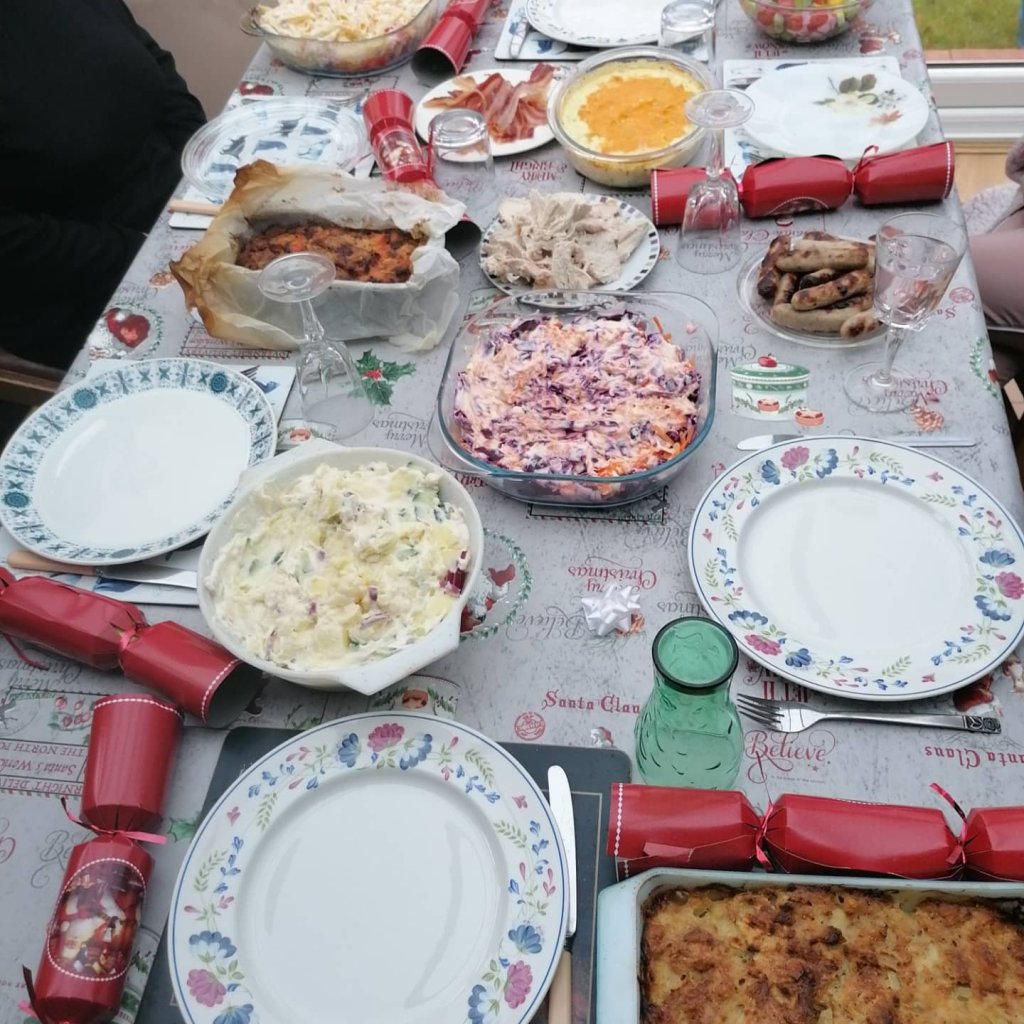
Sometimes, when I think of Christmas, the first thing that comes to mind is the food. Not because I am inherently greedy, but because the sight, smell and taste of Christmas food can evoke memories like few other things can. My relationship with Christmas food began in earnest the first Christmas after my wife and I got married. I asked her if there was anything she really didn’t like doing, and she said that she hated cooking on Christmas Day. I told her that she would never have to cook on Christmas Day again, and I kept my word – Christmas Dinner Number 32 of our married life on the horizon and I have cooked every one.
I can’t deny that I don’t occasionally have Gordon Ramsay style meltdowns on December 25th (!) but those have become less and less common over the years! After a while you learn shortcuts. On that first Christmas together I cooked enough food to feed the proverbial army! Now, my Christmas Dinners lean towards the much more frugal end of the festive scale. When I was over in Australia I discovered the delights of a Christmas Dinner with salads, now very much my favourite style of festive feast because you can prepare most of the dishes in advance. Also, in recent years, I have moved from full turkeys to turkey crowns, which are much easier to cook, and give me more free time. Woe betide anyone who tries to interfere with menus or cooking though, as I have become very protective of my territory! Our children have grown up seeing me cooking every Christmas, so I am sure that they will not see the kitchen as a place to avoid, apart from when I am swearing at the oven!
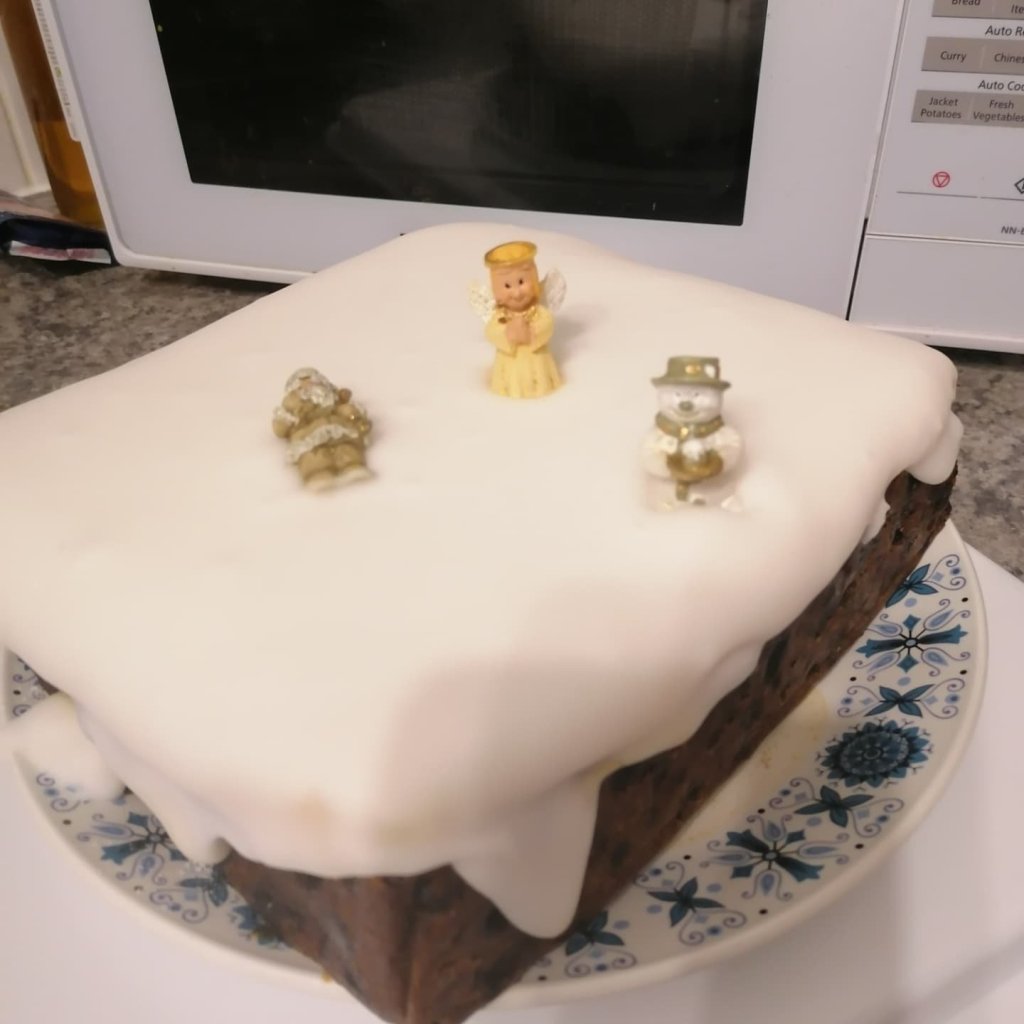
In return for Christmas Day away from the kitchen, Janet decided to take care of the baking of everything sweet! Each year she spends hours in the kitchen in October and November in particular, to make sure we have homemade Christmas Cake, Christmas Pudding and Mincemeat. Her home baking is so good, that I genuinely can’t have any shop bought alternatives. All three recipes that she uses come from Delia Smith’s Christmas, which to this day is the best festive recipe book of the lot. I always tell her that the extra ingredient she puts in there that makes everything taste so good is love, and I genuinely wonder if that affects my perception of the taste. As well as baking a fruit cake with large amounts of alcohol for Christmas, she makes a second for my birthday in March!
In common with many people, food is very much a centrepiece of our day, and it means a lot to me that everything we put on our table, with just a few exceptions, is prepared and cooked by us. Yes, we have chocolates – even me and I’m not a fan! – and lots of sweets of various kinds, but they are kept outside of the main meals as a treat. I am not a big drinker at any time of the year, so I don’t tend to have alcohol except in my cakes, puddings and mince pies! My one exception is New Year’s Eve when Janet makes mulled wine, another Delia Smith recipe. When she made it with red wine I would end up having a glass or two at the most, as it was a bit strong for me in terms of the taste, but she hit upon the idea of making it with rose rather than red and I started having three or four glasses very happily. The great thing about the mulled wine is that you can get a very cheap bottle because it tastes just the same once the cinnamon sticks and other spices are added! It is a great example of the way that our festive food and drink has evolved over the years to suit our changing tastes, family size and budget.
Festive food is, and will remain, central to the season, but far more important than what is on the table is who is round the table. A poor meal can be as good as the richest feast when you are sitting with those you love, as the Cratchits demonstrated in their Christmas Day celebration in A Christmas Carol.
May your own Christmas Dinners be tasty, and made and eaten with love.


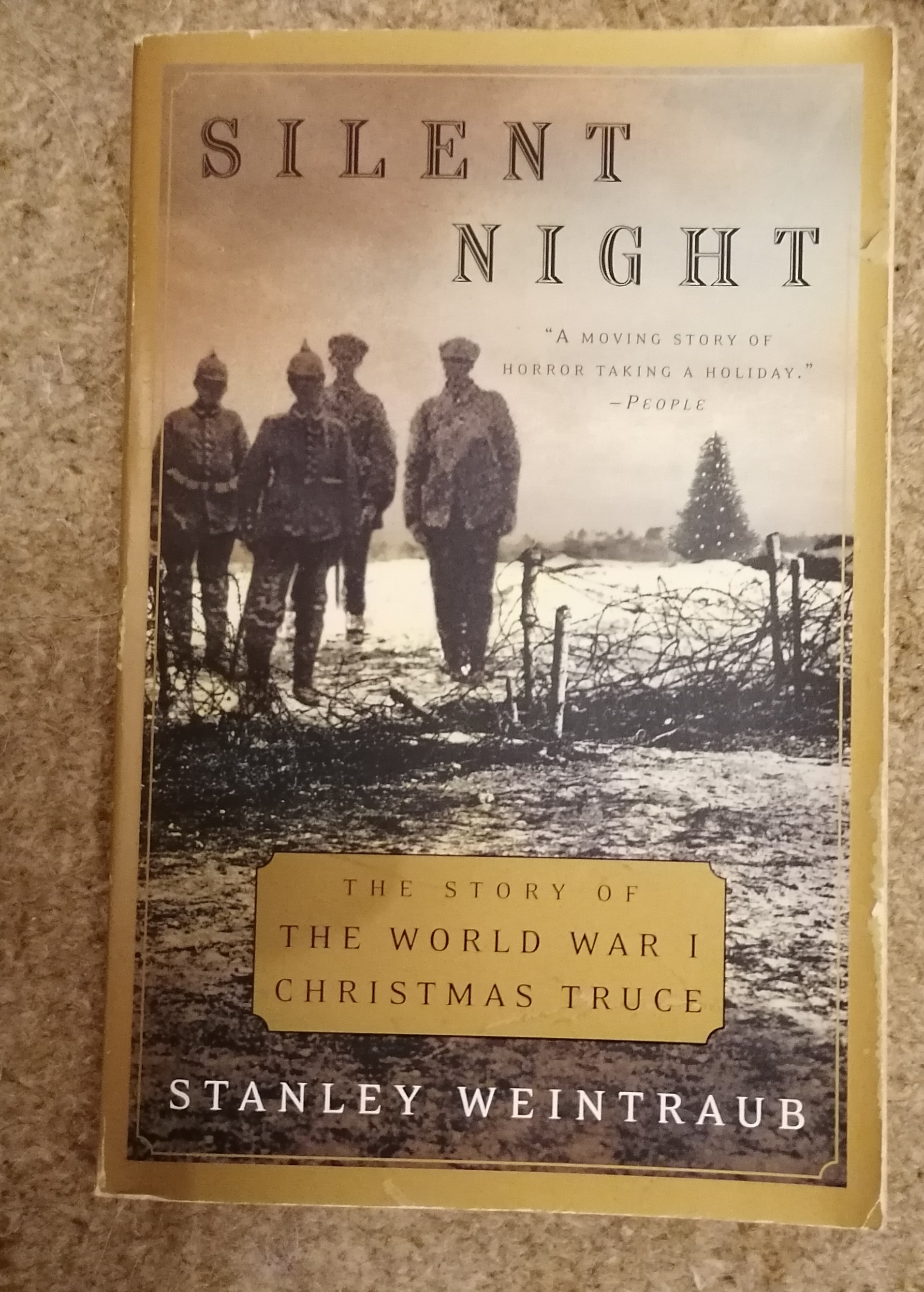
The Christmas Truce is one of the most fascinating events in modern warfare, perhaps because so little is known about it from official records. What we do know about it has been pieced together from soldiers’ letters home and some contemporary press articles. That it did take place is unarguable, even though many regiments at the time expunged the whole event from regimental records because they were ashamed of their troops for taking part. How it took place is more difficult to ascertain, but the book that serves as the basis for this article is Stanley Weintraub’s fascinating Silent Night which is definitely worth a read. In it, Weintraub traces the timeline from the initial overtures, that led to a series of truces across the front lines of the trenches, through to its eventual ending.
How did it start?
The truce was not one single event, but rather a series of unofficial arrangements that flew in the face of the wishes of the top ranks of both sides. Luckily for the troops, the highest ranks were, of course, very unlikely to inspect the trenches. They sat in comfortable billets and had fine dining to look forward to every day, whilst the troops were dirty, cold and lice-ridden with dead colleagues lying around them in rat infested trenches and in front of them in no-man’s land. It is hardly surprising that the donkeys wanted the lions to continue fighting, as they had no concept of the conditions. Equally, it is no surprise that the lions on both sides were open to a respite. In some areas the truces started before Christmas Eve, but this was very unusual. Interestingly, there is one detail common to every report, whether contained in letters home or, eventually, in the press when they could no longer ignore it. In every case, it was the German side that made the initial overtures to the Allies, perhaps because Christmas Eve to them was as sacred as Christmas Day, whereas to the Allies it was December 25 itself that was most important. Christmas Trees were put up on the top of the German trenches, and where no firing was forthcoming from the other side, carols were sung by the Germans and music hall songs by British troops, and requests for a ceasefire were shouted across no-man’s land. There was still an understandable suspicion on the part of the troops after months of bitter fighting, but it was an idea whose time had come. It has to be acknowledged that it was not a complete cessation of fighting, even on Christmas Day itself, but it was widespread enough to have a huge effect on both sides.
Christmas Day
The two sides met in no-man’s land in a large number of ceasefires with officers serving as the initial rangefinders. In some cases, the Germans knew English, or they had even lived in England before being called up by the German army. Once terms were agreed, and cigarettes, alcohol and other treats were swapped, the first task for many of the soldiers on that Christmas Morning was to bury the dead who remained above ground in the frosty wastes of no-man’s land. Often, the two sides assisted each other and, in at least one case, held a service for the dead that was presided over by a Padre or similar from each side. Some of the soldiers found out that their enemies came from the same areas as they did, and in at least one case a German who had been a barber in High Holborn in London gave haircuts to both sides, including one of his former customers! These meetings made one thing crystal clear to the troops. Their enemies were not the barbarians and brutes they had been told about, but people very much like them. It is hardly surprising that a few hours of fraternisation led to a wish for an even longer ceasefire. The enmity between both sides had largely disappeared and there was no way back for many of those involved.
Football
Perhaps the most argued about element of the Christmas Truce was whether there were football matches between the two sides. There is enough contemporary evidence to suggest that a form of football was played in a number of locations along the front line. How organised these games were, is of course open to question. However, where the two sides met on ground that was relatively clear, caps, tins and even footballs were used in free for all games between the two sides. They were generally played in good spirits, but they were unlikely to have been ‘organised’ in any real sense. As with so many elements of the Christmas Truce, we must rely on letters home from the participants for details. Captain Thomas Frost of the 1st Cheshire Regiment provides perhaps the earliest corroboration in a letter home to his father on December 31. Maybe the idea of the football matches has been romanticised, but there is little doubt that this romanticism has a basis in fact.
The End
In many places the ceasefire continued for a number of days as the two sides came to terms with the way that they had come together as human beings. It seemed somehow wrong to continue fighting, and in some places the two sides, when forced to fire by bloodthirsty senior officers, warned their opponents and deliberately fired to miss. Some regiments, especially those who were thought to have become too friendly, were replaced by soldiers who had not been involved in any truces and had the required level of propaganda inspired hatred for the enemy. The Germans who were involved were almost entirely from Bavarian units, but their replacements were often Prussians who were disliked by both sides for their brutality. Eventually, by a process of replacements, threats and courts martial the war started again. For me, the most shocking statistic is that if the truce had succeeded, and the two sides’ negotiators had been forced to sit around the table until a treaty was signed, 8.4 million men would not have lost their lives. It is a truly sobering thought.
A hundred years later
As it was a story that had always fascinated me, I came up with the idea of re-enacting the Christmas Truce matches at my daughter’s football club on Boxing Day 2014. After a bit of scepticism at the start, the enthusiasm for the project increased and we eventually ended up with nearly 70 players and a large number of spectators. I arranged games for different age groups from under-8 to adults and the goals were marked out with jumpers for a touch of authenticity. We arranged for special tops to be produced for the day and they were in two colours, red and white. (The only thing I forgot was to get a shirt for myself as I wasn’t actually playing! I wish I had.) Players didn’t know who their teammates were until the day, but within minutes they had that team spirit. I gave the players a quick introduction to the Christmas Truce and then they went out to play on a cold, bright Boxing Day morning. It was a very special morning that ended with a minute’s silence for those who lost their lives in World War I. The sacrifice of those young men who also loved their football brought the two distant generations together.

This list is designed to point you in the direction of some Christmas films you may not have come across. Some are on TV this year and if they are, then I will add the showing times. There are a couple of more recent ones and one that dates from 1947, so you’re bound to find something you enjoy. So, settle down with a hot chocolate and your choice of any of these films.
Falling for Christmas (2022)
Streaming on Netflix
This film is chiefly noteworthy for the return of one of the best young actresses of the late 90s/early 2000s, Lindsay Lohan. She plays Sierra Belmont, the spoilt heiress to a chain of hotels, who is used to having her every need met as she lazes around in her father’s hotel, waiting for her equally spoilt boyfriend, Tad Fairchild, an ‘influencer’ to whisk her off in his car. The film starts with Tad taking Sierra to the top of a mountain to propose to her. This goes disastrously wrong and leads to Sierra being knocked out and developing amnesia. She is rescued by the owner of a failing hotel, Jake Russell (played by Chord Overstreet) who agrees to look after her until she gets her memory back. Jake’s daughter, Avy, played by Olivia Perez, who bonds with Sarah, is a young actress who exhibits the same kind of winning personality that Lohan herself showed as a child star. Tad, meanwhile, finds himself bonding with a local ‘character’ who helps him to survive in the sub-zero conditions. It is a great way of spending an hour and a half where you don’t have to think, but as a bonus it is always engaging, often very funny and, I think, uniformly well-acted. Also look out for a great call back to Mean Girls that made me laugh out loud.
A Christmas Number One (2021)
Showing on Sky Cinema Christmas at 14:10 on December 24
I reviewed this film last year, and if you want to read my full review, then you can find it here However, it is simply a film whose soundtrack, mainly written by Guy Chambers, is crying out for a CD release. There are boyband pastiches that are absolutely hilarious, and a central song, Christmas Morning, co-written with Iwan Rheon who sings one of the versions, that is one of the best festive songs of the last decade. One of the plot strands tugs at the heartstrings in a way that few other Christmas films do. It is a marvellous way to spend two hours, and you can’t ask more of a film than that.
Lost at Christmas (2020)
Showing on BBC2 at 02:15 on December 25
First of all, please ignore the grossly unjust score of 5.0 on IMDB. It is way better than that. The plot revolves around a mismatched pair of travelling companions who find themselves stranded in the Highlands. They find a hotel which initially seems to lack any Christmas cheer at all, but unexpected things happen in the festive season. Yes, the plot may be a little predictable in places, but it has real heart with just a little bracing cynicism to offset the sweetness. However, it is the cast that makes this special. First off, you have Clare Grogan, famous for Gregory’s Girl and still touring with her band, Altered Images. Then, for Doctor Who fans, you have a three for one, covering nearly all of the series history. Sylvester McCoy (7th Doctor), Fraser Hines (Jamie) and Caitlin Blackwood (Amelia Pond) all appear in this film and provide a huge amount of fun. This hidden gem was one of my favourite films last Christmas and I can’t wait to see it again.
If You Believe (1999)
This is a Lifetime Television production starring Ally Walker and a very young Hayden Panettiere who many of you will recognise from the TV series Heroes, where she played Claire Bennett. Like many seasonal films it relies on a loose retelling of A Christmas Carol, in this case centred upon Susan Stone, a cynical book editor who fails to get any joy from anything in life including Christmas. After a bump on the head, she finds herself visited by Suzie (Panettiere), her carefree seven-year-old self who tries to encourage her to enjoy life once again as she used to. The film’s strength is the relationship between the two leads, which always feels believable and emotionally involving. I can’t find any showings on British Television this Christmas, but it is well worth tracking down one way or another.
The Bishop’s Wife (1947)
Available on Amazon Prime
I have recommended this film on various platforms at various times, and I make no apology for doing the same again. The Bishop’s Wife features two actors whose very presence lifts proceedings in even the weakest of films. In this case, they provide the icing on the Christmas cake for one of the best seasonal films of all. It is, in my own, perhaps controversial, opinion superior to It’s a Wonderful Life, which it outperformed at the box office on release. The two actors in question are David Niven, playing Bishop Henry Brougham, who prays for guidance to help with fund raising for a new cathedral, and Cary Grant, playing Dudley the angel who is sent in answer to that prayer. Soon, however, Henry regards Dudley as anything but the answer to his prayers as the two protagonists clash over the real path that Henry must tread. The stakes are raised when Julia Brougham, the title character beautifully played by Loretta Lynn, becomes the object of Dudley’s magical affections. Could Henry end up losing his wife in a very unfair fight? This is an absolute delight, and a film I return to year after year as the perfect comfort watch. It is definitely a divine comedy!
I hope you enjoyed this article and that you enjoy these films if you search any or all of them out.
Merry Christmas viewing!

I am sure I have always thought of Christmas time, when it has come round—apart from the veneration due to its sacred name and origin, if anything belonging to it can be apart from that—as a good time; a kind, forgiving, charitable, pleasant time; the only time I know of, in the long calendar of the year, when men and women seem by one consent to open their shut-up hearts freely, and to think of people below them as if they really were fellow-passengers to the grave, and not another race of creatures bound on other journeys.
A Christmas Carol by Charles Dickens
When I first scheduled this Blogmas entry, I was intending to make it a very light and silly piece, but the more I thought about it, the more I realised that it would be quite insubstantial compared to my other entries, and largely unsatisfying to write. To be honest, the approach I decided to take only came to me this morning.
I want to state at the beginning that I am writing this article through curiosity, academic and personal, and I am not decrying other points of view, which I know are as genuinely held as my own. All shades of opinion should find themselves reflected here, or at least that is the intention.
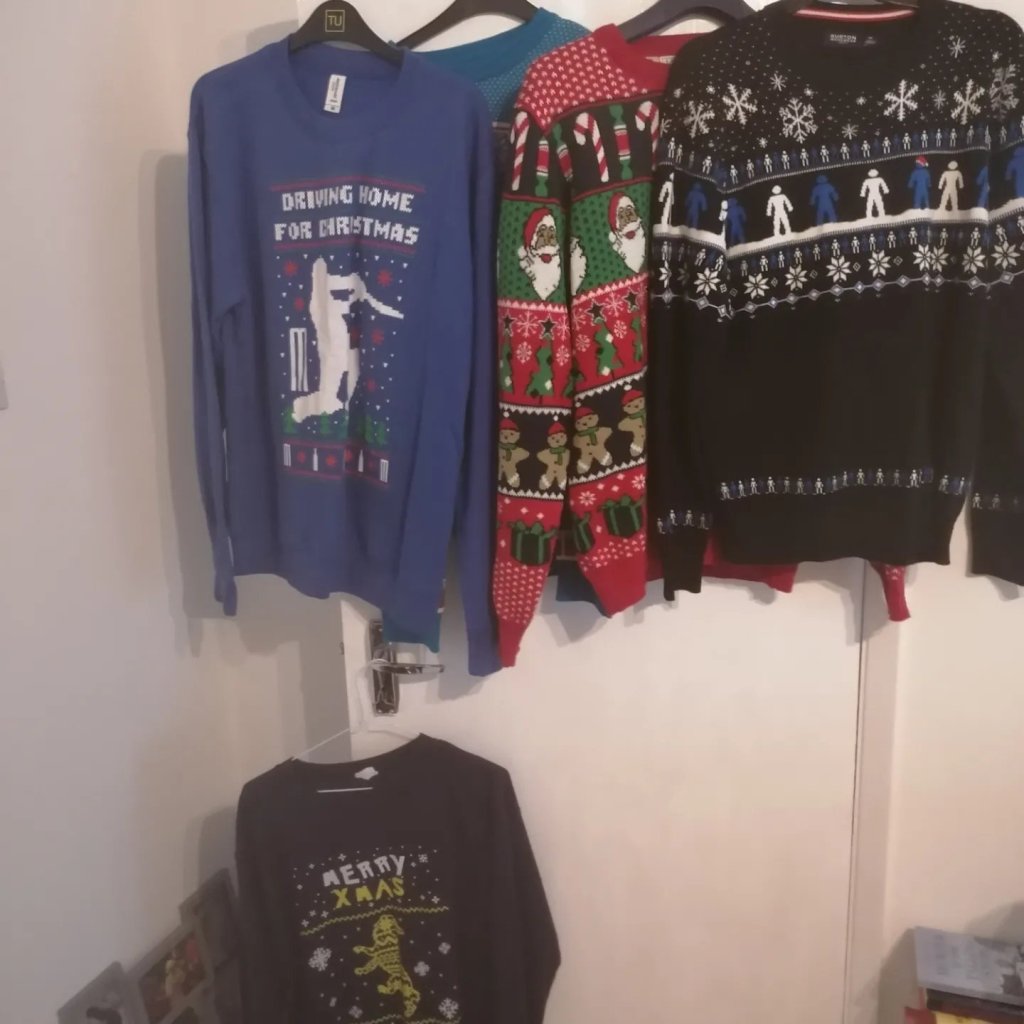
When I say I love Christmas Jumpers, which I do, the reaction to this statement ranges from ‘So Do I’ to ‘I hate them’! It is a reflection of the widely divergent attitudes you find to all aspects of Christmas. No one that I know has ever said ‘I hate Shrove Tuesday’, although to be fair, I don’t like pancakes myself (!), or ‘I hate Easter Sunday’, so why is Christmas ‘hatred’ so widespread? I have put the word ‘hatred’ in inverted commas, because I genuinely think it is as much about hyperbole as ‘I really don’t enjoy Christmas’ doesn’t have the same impact. You hear it used about music, films, TV, presents, parties etc.
What fascinates me from a Popular Culture standpoint is the way that those who dislike Christmas appear to portray themselves as somehow reflecting a viewpoint that is superior to those who enjoy the festival. In that sense, dislike of Christmas seems to be placed on the same level as a love for fine arts, opera and ballet as the preserve of the more discerning elite. Elite culture has been placed in opposition to mass culture for centuries, and Christmas is merely the seasonal battleground that we seem to have decided upon.
Now, I fully accept that people can actively dislike the whole Christmas season, as indeed my own Dad did. He disliked the commercialism of a time of the year which had a message that he profoundly believed in. He felt that it cheapened the whole festival, although he would eventually get into the Christmas spirit around Christmas Eve, but I think he did that more for me than for himself. He took the Scrooge accusations in good part and as something of a badge of honour! (This perhaps goes back to the elite culture v mass culture element I referred to in the previous paragraph.) What he objected to was quite clear, as it is for many others. For many, Christmas is a sad time of year for many reasons. For others, the expectation that everyone will enjoy the season understandably gets backs up. Some people find that loneliness at Christmas is worse than at other times of year. We must always respect and acknowledge this.
Those of us who love Christmas can often be at fault by being overly demonstrative and making comments such as ‘Don’t be such a Scrooge’ unthinkingly, and without trying to understand the opposite point of view. Here, the binary approach that is taken to many things in life has become more obvious. We need to let people join in if they want to, and leave them alone if they don’t. ‘Encouragement’ sometimes becomes expectation and social pressure, so it is no surprise that people can react to this negatively. We need to avoid being like the title character in Elf (a film I really, really dislike by the way!) and being over-enthusiastic about all things Christmassy. We need to accept that there are bad Christmas films and bad Christmas music, just as those on the other side should acknowledge that there are good Christmas films and good Christmas music. Too often we can take an uncritical approach to every aspect of our favourite time of year. It is flawed in both principle and practice because we as human beings are flawed. Hearing Christmas songs in the shops in November may fill many of us with joy, but it also fills other people with annoyance. Yesterday, I wrote about the lower key and more concentrated build up to Christmas in the 1970s. Perhaps it would be best to return to that, although with modern technology that horse (or reindeer) has definitely bolted!
My Christmas ‘resolution’ is to find like-minded people who I can share my enthusiasm with and to live and let live when talking to people who find that enthusiasm baffling or even irritating. To all who read this, Christmas lovers or not, may I wish you all that you wish yourself at this or any other time of the year. I do love Christmas jumpers though!

 David Pearce - Popular Culture and Personal Passions