

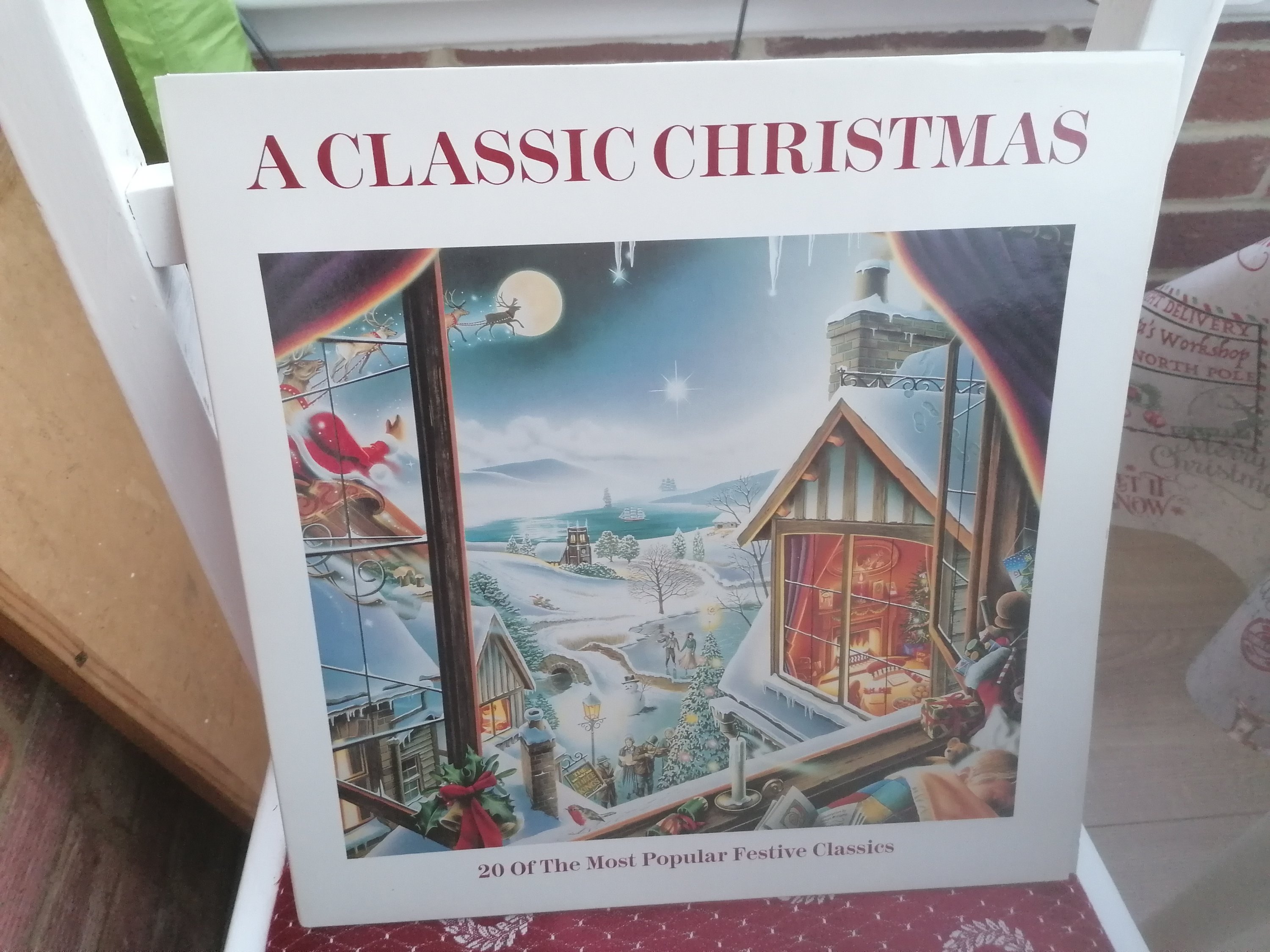
During the 24 days of Blogmas 2023 I have reviewed a number of very different types of Christmas music, as indeed I did last year during Blogmas 2022. It is an area that fascinates me from a Popular Culture perspective, as Christmas music is one area where the gatekeepers of ‘high’ and ‘low’ culture seem to be quite powerless to intervene. I put high and low in inverted commas purely because they are terms that mean whatever the speaker or writer decides they mean. There is a real cultural snobbery at large when it comes to Christmas music, and even music lovers who are live and let live at other times are more than happy to give their opinions about the quality, or otherwise, of Christmas music past and present. So, how did we get here? Join me on a whistle stop tour of the way that seasonal music has changed over the years, together with some observations from my own reading on the subject from a variety of sources.
The Earliest Christmas Music
As I observed when I reviewed my CD of Gregorian Chant the idea of music to celebrate the birth of Christ was codified at the end of the 6th Century. This meant that it had been in the common experience before then. Hymns like Veni Redemptor Gentium have been around since the 4th Century, as far as music historians can ascertain, and that’s just one of the musical fragments that have survived through chance. There will clearly be many other songs that have been lost to history. These songs were both devotional and instructional in nature. They celebrated the birth of Christ and they introduced, to those who could not read or write, the vast majority in those days, that story in a way they could easily access. For the first carols written in a language other than Latin, we turn to St Francis of Assisi who, in the 13th Century, collected devotional songs translated into the language of the population. The first set of carols written down in English date from the 15th Century, so clearly they were well known already and had been around for many years. Some of the songs we still sing, such as ‘God Rest You Merry, Gentlemen’ and ‘The 12 Days of Christmas’ were first written down in the 16th Century. The Puritans vehemently opposed the celebration of Christmas, considering it to be sinful. You can see in the approach they took to music in particular, the tone set for attitudes that persist to this day. This idea that popular culture in some way cheapens the celebration of the divine lies at the heart of the disdain for seasonal music we see to this day.
Classical Music at Christmas
The development of orchestral and choral works celebrating Christmas came to the fore in Europe towards the end of the 17th Century when the English were still wrestling with the complicated legacy of puritanism. Some of these early pieces contained devotional words. They required only limited musical accompaniment such as Corelli’s Christmas Concerto which was designed for string instruments that would have been accessible to many churches and wider communities. This was clearly designed to ensure that as many people as possible could hear it. In this way, the idea of Christmas music became more focused on listening rather than performing, as the original carols had been, which, in my opinion, was a very important step in how the genre developed.
The Victorians
The age of A Christmas Carol, Christmas Cards, Christmas Crackers and the Christmas Tree in the UK saw music brought to the fore, and that, for the Victorians, meant Christmas carols. The practice of Wassailing had fallen from favour, associated as it was with drunken singers going round to rich houses and demanding food and drink, often quite aggressively. This practice is of course referenced in ‘We Wish You a Merry Christmas’ which contains the lines,
Now bring us some figgy pudding, now bring us some figgy pudding, now bring us some figgy pudding and bring some out here. / And we won’t go until we’ve got some, we won’t go until we’ve got some, we won’t go until we’ve got some, so bring some out here!
Traditional
This Wassailing was replaced with the far more socially acceptable door to door carol singing. Money was still requested, either for charity or for the poor families themselves who were out singing, but a refusal merely meant that the carol singers moved on to another house. In this way, Christmas music once again became something you took part in, rather than listened to, for the general population. However, for the richer people, the gatekeepers of culture, classical oratorio like those written by Handel and Bach were a more socially acceptable form of seasonal music, played by professionals and listened to in silence, a view that is influential to this day.
During Victorian times, many carols from the past such as ‘The Holly and The Ivy’ and many new carols such as ‘Silent Night’ which have since become an integral part of our Christmas culture. They were not always religious in nature, but they were repurposed to reflect the importance of the festival where necessary. It is likely that it was this explosion of Christmas music in churches, and the fact that the story was much happier in nature, which led to the general public attaching far more importance to Christmas than to Easter. Amongst religious people there is a tendency to treat Easter as the more significant festival, though even here the Pagan forerunner of Easter, the celebration of the Goddess Eostre, was marked by the general giving and receiving of eggs, the symbol of new birth, and the iconography of lambs reflecting her probable place as the deity of Spring. It seems as though the religious, secular and Pagan are intertwined throughout the most important festivals of church and society.
The 20th Century
In cultural terms, the 20th Century Christmas had much more in common, musically speaking, with the Christmases of the Victorians and their ancestors than it did with our more familiar celebrations. Christmas Carols and classical music still dominated until after World War II, although in America the first stirrings of our modern secular Christmas can be seen in the 1930s and early 1940s. During a 10 year span from 1934 – 1944, the following songs were written
- Santa Claus is Comin’ to Town
- Winter Wonderland
- Carol of the Bells
- White Christmas
- The Little Drummer Boy
- Have Yourself a Merry Little Christmas
- The Christmas Song
It’s an impressive list of Christmas standards, and only two of them can be seen as religious in any way. The rest play with the iconography of Christmas including snow, snowmen, Santa Claus, fires and family gatherings. These songs became American Christmas standards long before they became Christmas standards around the world, but that was because of the extreme difficulty and prohibitive cost of getting hold of records from the US in those days.
These elements have become incredibly familiar and, I am sure that for many, when we see the Christmas season in our mind’s eye, it is always snowing, even though I have only seen it snow on Christmas Day once in my lifetime, in 1970. It was my first Christmas in England and I was assured by my parents in the lead up to Christmas Day itself, that it never snowed on Christmas Day, even in England! Apparently it was a few years before I stopped expecting it as a matter of course!
The second half of the 20th Century was when the Christmas record, be it a single or a whole album, became a must for many artists, and the Christmas variety special with Frank Sinatra, Bing Crosby, Dean Martin, Andy Williams et al became an integral part of the season. They sang the songs from the 34 – 44 decade mentioned above plus newer standards like ‘Rudolph the Red Nosed Reindeer’, ‘Rockin’ Around the Christmas Tree’ and ‘A Holly, Jolly Christmas’. Now, those three have one person in common, the songwriter Johnny Marks, who no doubt looked forward to his royalty cheques every January!
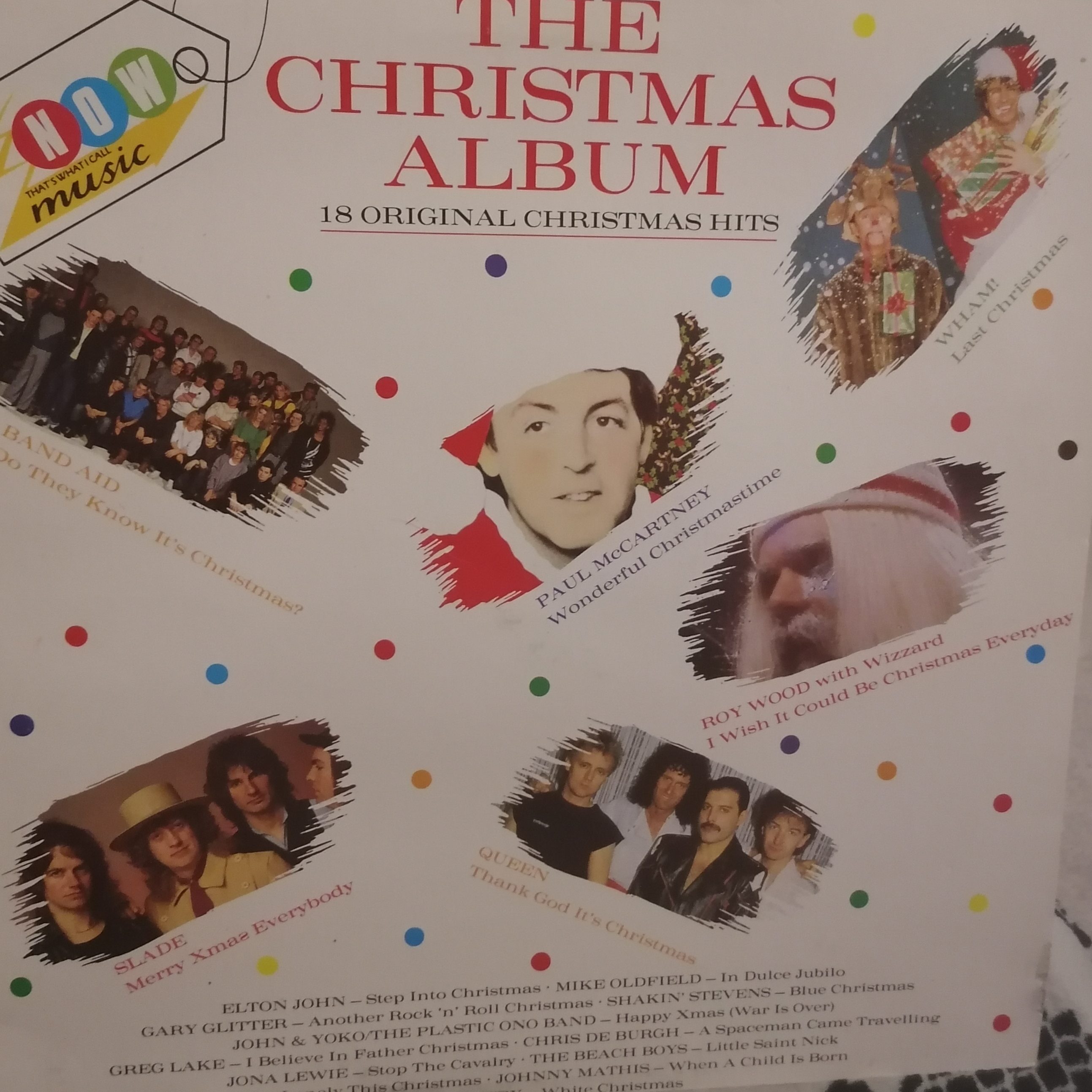
The UK Christmas record was a little bit later in starting, but after a few false dawns, along came the 1970s. Now I have written at great length about the Christmas Songs of my childhood and teenage years in my two H2G2 entries covering the 1970s and the 1980s which contains everything you could wish to know, and perhaps other things you don’t need to! If you’re interested in a deep dive into the season please take a look. Suffice it to say, the Christmas Number One battle between Slade and Wizzard made the top spot on December 25, a national obsession that has endured to this year (2023), despite the worst efforts of the appalling Ladbaby over the previous five years. The appearance of Last Christmas this week at Christmas Number One was undoubtedly the sign of the festive universe righting itself!
The 21st Century
What has been interesting in the era of streaming is how the Christmas pop record has come to totally dominate the festive charts particularly in the UK, with the same songs reappearing in the upper reaches of the charts year after year. If we look at the Christmas Chart of 2023 and compare it to the Christmas Chart of 2017 you will notice this phenomenon, one that has become more and more marked in the last decade. These chart positions are based on streaming figures, so they reflect what people are putting on their Christmas playlists, and it seems that all generations from Grandparents to Gen Z are listening to the same songs year after year as they have become an indelible part of our shared Christmas cultural heritage. They have not replaced the Christmas carols of previous centuries as the music of the season, but they are, I argue, far more significant nowadays. They carry the memories of Christmas with family and friends. Our children have grown up with those songs from their earliest days and they are word perfect on them, as are most of their friends. Their quality, or otherwise, is immaterial as they have become a cultural shorthand that epitomise the modern Christmas. The unfortunate by-product of this has been the huge difficulty new Christmas songs are faced with in terms of getting airplay against the avalanche of older songs. There have been some great new Christmas songs over the last decade, but if very few people are hearing them, how are they going to become the Christmas classics of future years? A perfect example of this is the brilliant My Kind of Christmas by Cats in Space, itself influenced by the 70s classic of Slade and Wizzard. Take a listen and introduce yourselves to a Christmas classic that just needs a chance.
The Future?
So, what lies ahead musically? My guess is that the current situation will continue for a few years yet, but if the last millennium and more has taught me that the world of Christmas music is always evolving. I await the next development with interest.
In this blog post I am going to take a look ahead to five elements of the festive season that I can see being transformed either by technology or society in the next 20 years or so. These ideas are not based on anything other than extrapolations or hunches, but I think I can make a reasonable case for all five. So, please join me as I look ahead to Christmas 2043.
1. Family Time
Christmas 2023 style is much the same as it has been for many years. People either take their cars or public transport, and make their way to someone else’s house or to a venue like a hotel or a restaurant for their celebrations. It is stressful, time consuming, environmentally unfriendly and often gets the Christmas period off to the worst possible start. Christmas 2043 will see many families using the full power of technology and joining each other using VR headsets. They are already very advanced, but for the moment require a virtual landscape. I think that in 20 years time you will be able to sit in a real life living room or around the Christmas dining table with other family members with the simple use of cameras in the host venue. Let’s face it, cameras are becoming increasingly powerful and the days of grainy images are pretty much gone, as doorbell cameras demonstrate. This could be a way to make the family gathering a more relaxing occasion for all as we are invited to each other’s homes without leaving our own.
2. Present Buying
Now, I absolutely love present buying. All year I listen to little comments people make, or take notice of what they are listening to, watching or reading, store them away and then start buying presents from July or August onwards, safe in the knowledge that they will love their gifts. I am also very straightforward to buy for with three themed gift lists on Amazon! However, I am aware that I am something of an outlier in this matter, so what will be done for those who hate present buying. Well in Christmas 2043 one of the tried and trusted pieces of Christmas tech will be the AI Shopping Assistant. The basis for this technology already exists because of our huge digital footprints. However, I see different levels of AI present choosing, with the lower level being based on any wish lists on any site, the medium level being based on the searches made by the intended recipient, and the highest level looking for unique presents based on the person’s entire digital footprint that moves past any lists or any searches that the person may have made. Yes, I am developing technology in my own image, but I firmly believe I am the best model for this!
3. Christmas Decorations
A common theme of Christmases past and present has been the many decisions to be made when putting your decorations up. We’ve all heard variations on the following. ‘Does this look good here?’ ‘Where can this go?’ ‘We can’t possibly fit everything on to the tree!’ This year, I reluctantly accepted that the children’s Christmas decorations, made at primary school or beyond, needed to be left in the attic due to lack of room. It got me thinking about how we avoid this situation in the future. How will technology help here? Well, I think it will be a two step process. Stage 1 uses existing technology. Even now, it’s a fairly straightforward process to take a picture of each room in the house and get AI to suggest a design. We can look at those designs using our VR headsets and then utilise the decorations we have to their best effect. Stage 2 is where the process gets more personal. The user uploads pictures of all of their decorations and the AI then fits each one into the room to their best effect. You can prioritise certain decorations above others at this stage to ensure that homemade decorations get their place in setting the tone for the festivities.
4. Christmas Cards
The decline in the number of people sending Christmas cards seems to be the end for a tradition that will be 200 years old in 2043. The days of hanging up Christmas cards, or putting them around the fireplace and on every available surface, are over for many in my generation and my children’s generation. Many of my online friends announce that they are not sending Christmas cards anymore. You now send cards in the hope rather than the expectation that they will reach the intended recipients before the end of Twelfth Night, due to the problems that the Post Office now has in terms of getting anything to us in time. Why would anyone send them in the future? Well, I have a theory that the 200th anniversary of Christmas cards will see a resurgence in the practice as the younger generation search for something more tangible. It happened with music, after all, as vinyl became a format of interest, not just for oldies like me, but for my children and their friends. They love the tactile nature of the vinyl records and they can see the way that it changes the way you listen to music. Cards will become, initially I think, a way of showing a real connection with your closest friends, and they will take their place as Christmas decorations as they did for my parents and for us. Christmas is about tradition and nostalgia and the resurgence of cards will provide both for a new generation of Christmas lovers.
5. Christmas Entertainment
For my entire childhood, and well into my twenties and to some extent beyond, Christmas television was a shared experience with massive audiences as all the family sat in front of the TV. Surely that is a thing of the past? Well, maybe not. There are Christmas Movie channels, repeats of Christmas TV in years gone by and communal experiences where people gather together to watch Christmas classics on the big screen, sometimes with full orchestras playing the music. It is already common for people of all ages to have favourite films that must be watched every year, so those films are the ones that, around the country, sell out venues months ahead of time. Looking ahead, I think that there will be more and more call for these shared experiences as our increasingly separate lives leave us ever more in need of real world connections. What form these connections will take is less certain, but I see the large screen events becoming a part of most people’s Christmas celebrations, and this will, I think, lead on to a resurgence in shared Christmas TV programmes on broadcast channels that can tap into this need.
Final Thoughts
So there you have it. Some aspects of Christmas Yet to Come may well look more familiar than we expect, but technology will change other aspects beyond all recognition. I hope you have found my predictions interesting, and perhaps persuasive. I would love to hear from you in the comments if you agree or disagree with any of them.

What is Christmas? Well, it is a question I have examined from pretty much every angle over the last two years during Blogmas, but it keeps coming back to one central idea, the accumulation of years of tradition. This is true for the wider celebration of Christmas around the world, and also for the family celebration of Christmas in each individual household. I initially decided to look at some of my own family traditions, but I realised that I had probably covered that in as much detail as anyone could want – and almost certainly more! Therefore, I have decided to look at the reasons why we feel the need to create our own Christmases.
The human need for tradition
We develop traditions as a species to try to find our place in the world. These traditions might be long standing or relatively recent, but when we follow them, we are reflecting our need to belong somewhere. That belonging may be based on a family, a club, an interest or a nationality, but wherever it comes from we are proclaiming ourselves to be part of that particular grouping. When we are with people who share our interests or our upbringing, we have a confirmation that we are part of something bigger. Many years ago, that grouping might have been the church or it might have been your village, but these days the groups tend to be more specific, based perhaps around a social or sports club. However, one unit has been constant throughout the centuries, the family, extended to include friends and nuclear. So how do traditions develop within the family?
Family at Christmas
Now, one of the main ways that any family develops their own traditions is by taking what they enjoyed as children and implanting it in their own Christmas. Just as important, if not more so, is the decision to leave behind those things that they did not enjoy as children. So, for example, their own family may have gone to church on Christmas Day, but that is something that the person didn’t enjoy so it doesn’t make it into their Christmas. For example, the traditional role of the wife and mother in the kitchen all morning may be shared or, as in our case, reversed. The person who grew up with turkey every year, and grew to dislike it, may decide not to let it near their Christmas table. Present opening may have been a free for all in the childhood home, so it is much more structured in their own home, with enough time for each present to be appreciated, at least in theory!
This, of course, can lead to conflict when their parents come to share Christmas with them, or when they go to their parents to re-enact a family Christmas of the past. The parents may miss their familiar patterns when they visit and they may make comments to that effect. The now grown up child may feel like they are trapped in a seasonal nightmare with no control over how the day goes. This can make Christmas a very stressful day for all concerned and contributes to the feeling that many have that they want to ignore the season. In many cases, this extends to all the trappings, all the preparations and all the expectations. Some people go away every Christmas, some put up the barricades at home! Some will simply refuse to spend any part of Christmas with their family in order to put as much distance between themselves and a very intense day or so.
The Two Extremes
The prevailing social media ecosystem, and indeed the way that many people behave in person, means live and let live as a concept has largely disappeared. People who ignore Christmas are Scrooges, people who throw themselves into it are childish or stupid, or so the prevailing narrative would have us believe. The truth is, as ever, far more complex than that. People who hate the season could have been brought up in families where Christmas was a time of argument and fear, people who love it could have grown up in families when it was a time of magic and celebration. Interestingly, the opposite is often true. Someone with bad memories may choose to celebrate Christmas extremely enthusiastically to assuage them. Someone brought up in ‘Santa’s Grotto’ may have had enough of it before they are out of their teens! Make no mistake, though, choosing to ignore the season is just as much of a Christmas tradition as throwing yourself into it. The same people post the same memes of Noddy Holder in November saying ‘Wait for it!’ or ‘It’s not Christmas until I say so!’ to stem the tide of early seasonal cheer. They throw themselves into ‘Whamaggedon’ to proclaim their opposition to all Christmas music which is, to them, inherently shallow. They will post comments below the line in the papers to ridicule those who like Christmas music, Christmas films or Christmas food. This happens every year, and I get the impression that the sheer ‘contrariness’ of their position is very appealing! The ‘opposition’ will join pages on Facebook that celebrate Christmas all year round and occasionally share posts from those pages well in advance of December 25, primarily to proclaim their position as keepers of the Christmas flame. That in itself is part of the Christmas tradition for lovers of the season as they like to think of themselves as the contrary ones, and occasionally seem to enjoy portraying the rest of the world as somehow lacking in magic.
Towards a deeper appreciation
Oddly enough, I have noticed that as I have got older, Christmas has become more important to me, and, I hope, to those I share it with. All but one of my children have left home, so I appreciate their visits more, especially at Christmas. Ironically, this has caused me to relax at Christmas, in an attempt to remove the inherent pressure I mentioned earlier. The day is no longer the big production number it was when the children were younger. That isn’t to say that I take it less seriously, because the opposite is true, but I now endeavour to make it as easy-going as possible, so that they want to come back year after year. They appreciate the fact that we do many of the same things that we did when they were younger. For example, Santa still visits all of us and fills our stockings! One thing I never lose sight of, though, is that we are very fortunate that they still want to spend part of Christmas with us and I will always value that.
Yes, Christmas starts earlier than ever and is way more commercial, although people have been saying this for a while;
There are People who will tell you that Christmas to them is not what it used to be.
We have lost the art of commanding our feelings so as to fit them to the season … Now we have separated very sharply the secular from the sacred part of Christmas.
First Quote – (Dickens, 1836) / Second Quote – (The Times, 1912)
There are undeniable issues with Christmas for many people, but there are undeniable benefits for many as well. How you celebrate the season, or indeed if you choose to ignore it, and what your traditions are, will differ from person to person, family to family, country to country. One thing remains true, however. The mid-Winter festival that probably started with Yuletide is still with us some 6000 years later. It is part of our social fabric and it helps us mark the passing of another year. In that sense, whatever your traditions, it is a chance to take stock, to look back, to look forward or simply to appreciate the here and now and those around you. Whatever you do around December 25 I hope you find peace and contentment.
Maybe, if you feel so inclined you can post a comment below to tell me what the season means to you and how it fits into your life. Do you celebrate wholeheartedly, or do you count down the days until you can get back to normal?

More than any other time of the year, we associate mid-Winter festivals from Yule to Saturnalia to Hanukah and Diwali with feasting. For example, during Yule, it was, paradoxically, a way of saving valuable resources for the long winter ahead. The bulk of the livestock were slaughtered so that food could be kept for the people within the village or tribe. As a result there was, unusually, a lot of fresh meat available so that was what was eaten. Saturnalia saw feasting to thank the deity Saturn, the god of Agriculture, for his bounty. Hanukah and Diwali are festivals that have huge emphasis on the role of light and feasting as celebration. That of course leaves Christmas, a combination of many previous festivals, which so many of us celebrate now, once again has feasting at its centre.
Now, this of course requires a lot of cooking and a lot of preparation and, unfortunately for many, a lot of stress. We can see the Christmas Day meal as the most significant meal of the year, turning the simple acts of cooking and baking into high stakes style tests of our ability. Even if the meal doesn’t go perfectly it doesn’t mean that you are a poor cook, but it means a meal that doesn’t go perfectly is eaten by two or three as many people as usual. So, what can we do to reduce these stresses? Well, the way my wife and I have done it over the years has been to rely on the Christmas Cookbook, so let me introduce you to two of our favourites and the recipes we make year after year.
Delia Smith’s Christmas
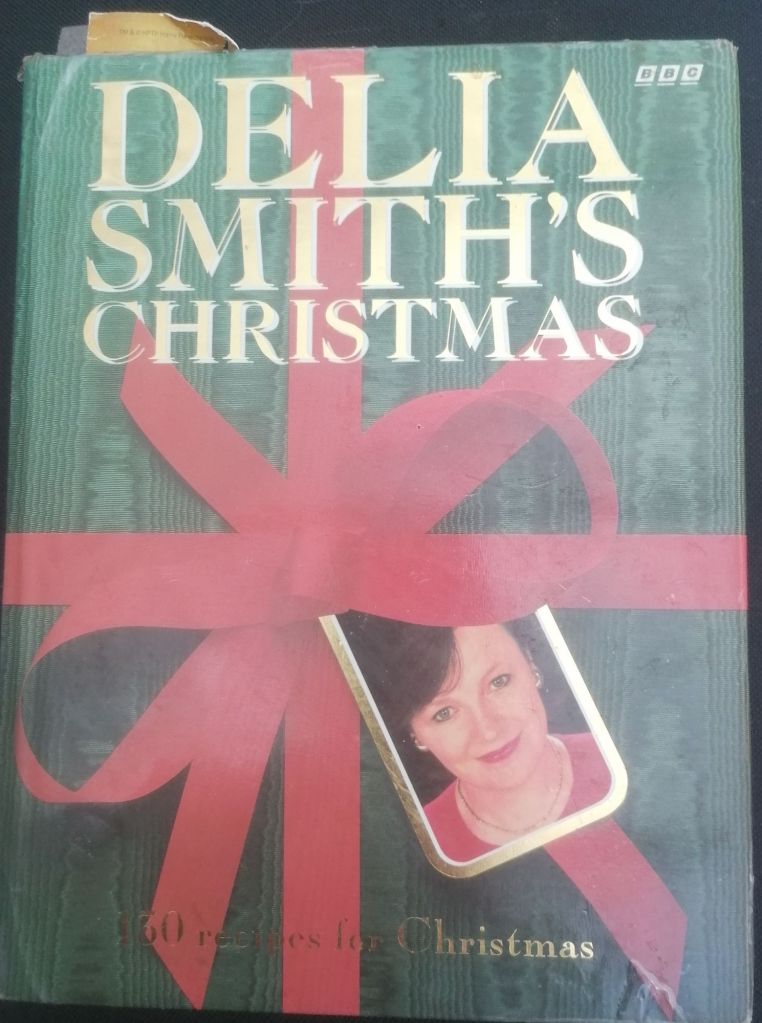
We bought this book in 1992, and in the 32 Christmases since then, it has been Janet’s go to for baking recipes. Mincemeat, Christmas Puddings and Christmas Cakes are the central sweet treats of our Christmas seasons and beyond. I haven’t had a shop bought Christmas Cake or Pudding since Janet started making them, and I haven’t had a shop bought mince pie in probably 15 years! One of the small things you notice when you use the same cookbook over and over again are the signs of very well used recipes. For example, on the page for Homemade Christmas Mincemeat you can see the splashes of ingredients on the pages that give the book that character and comfort that I really like to see.

Now, for most recipes Janet follows Delia’s ingredients and instructions to the letter. The only exception is the Mulled Wine. Delia uses red wine, but not being much of a drinker I found that too strong for me, so one year Janet tried Rosé and it was perfect for me. We’ve never gone back since, so if, like me, you find the wine hangover from red a bit too much as you get older, swap to Rosé and see what you think. For the first 10 years or so, I followed Delia’s turkey preparation and timings to the letter. Now, with a little more confidence I am happy to go with experience.
Delia Smith’s Christmas is obviously out of print, but you can still pick it up from sellers on Amazon or eBay, or you might want to look at the more recent Delia’s Happy Christmas which will no doubt be just as good.
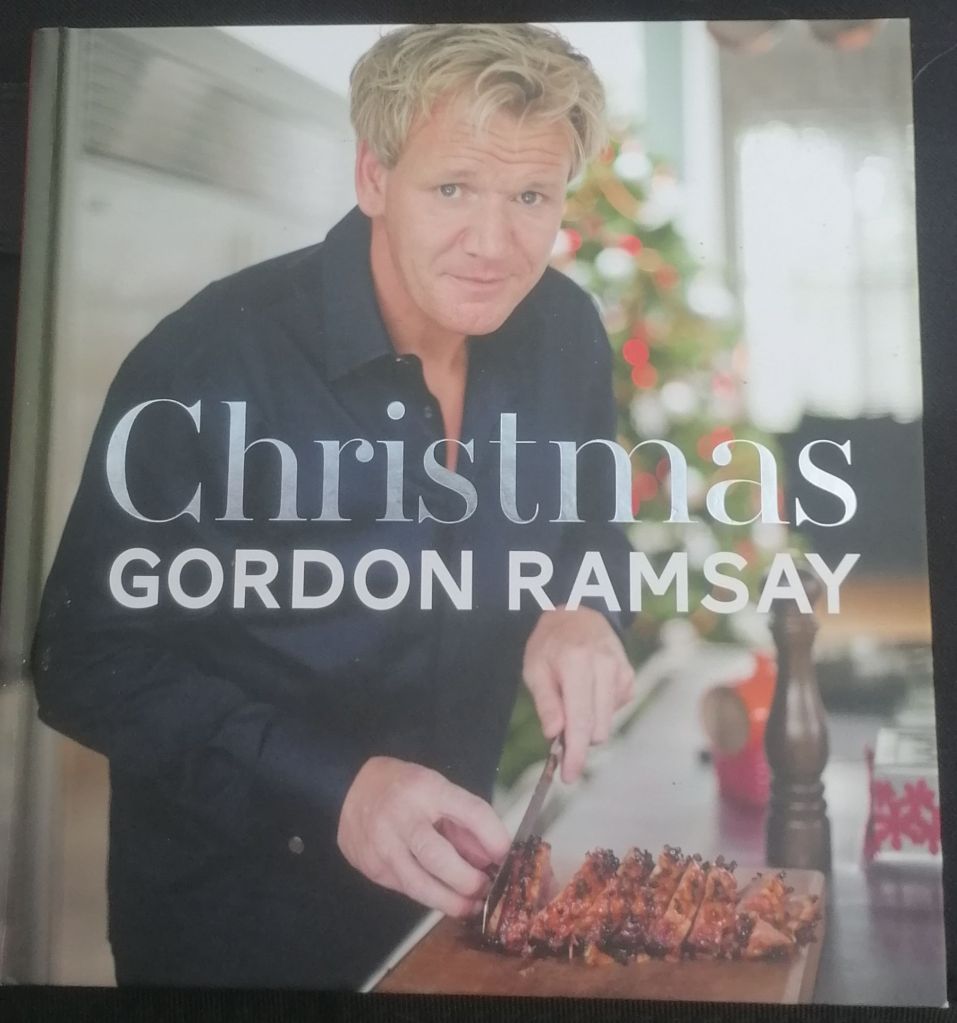
Christmas Gordon Ramsay
This is a superb book for anyone looking to add a little bit of variety to their Christmas Dinner. For many years, since the first Christmas in Australia in 1998 in fact, I have changed the traditional Christmas Dinner for the Australian style turkey and salads for two reasons. First, it is lighter and you don’t get that post Christmas Dinner discomfort that the traditional British style dinner gives you. Second, with salads you can obviously prepare them on Christmas Eve, thereby giving the Christmas Day cooking a less chaotic feel. However, in the last few years, at Janet’s request, I have started to add some hot dishes as well.
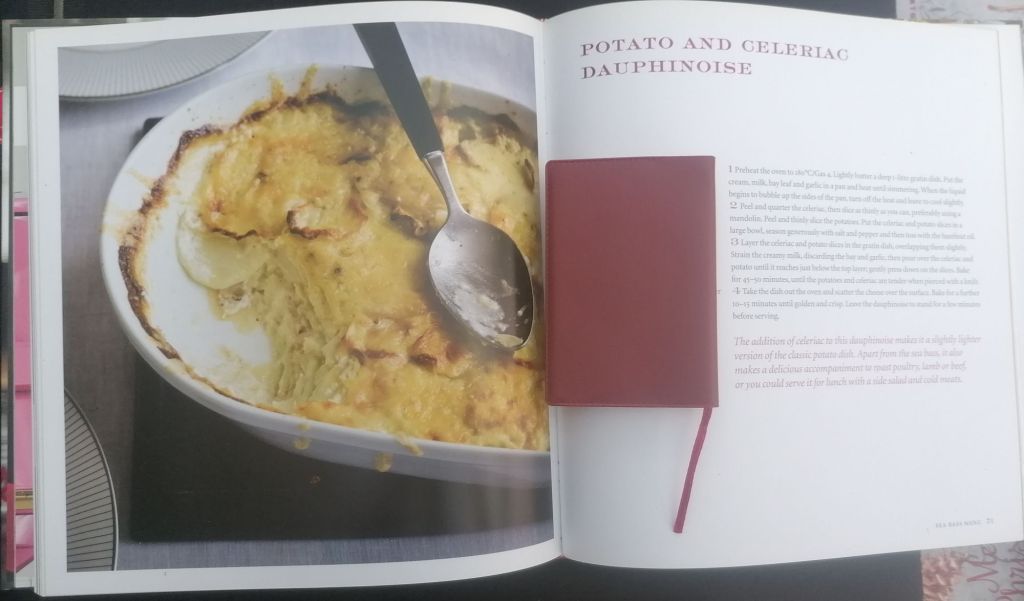
One of the recipes I have taken from Ramsay’s excellent book is the Potato and Celeriac Dauphinoise. As celeriac is often difficult to find, I use celery and leek instead and it seems to work extremely well. What I love about this particular book is that it is written for the everyday cook looking to do something different. As long as you follow the instructions, you will find the recipes straightforward, but the tastes are a real lift for any dinner at Christmas, or, indeed, at any other time. The dauphinoise in particular tastes absolutely delicious and is a perfect accompaniment.
There are some excellent desserts and other sweet recipes in this book, including a shortbread recipe that is easy to follow, and tastes lovely, but which I haven’t quite been able to crack in terms of texture. I will definitely try it out again and again until I am happy with it. The turkey is non-negotiable as far as I am concerned, but I am aware that for many of you, the turkey is not a popular choice. Ramsay also realises that and has included four other dishes that you can build a Christmas feast around, including Beef Wellington and pan-fried sea bass. As with the Delia Smith book, it is full of fantastic ideas and a great tasting meal is similarly attainable as long as you follow the recipe carefully.
Christmas Gordon Ramsay is very hard to get hold of now, so you might want to keep an eye on eBay or charity shops, although you certainly wouldn’t find mine in a charity shop as it’s so good!
Jamie Oliver
Now, I don’t have any Jamie Oliver cookbooks, but what I do have are two recipes that I copied down from Christmas programmes that he hosted. The first is Italian Style Stuffing which you can find on his Christmas Eve programme repeated every year. Now, this stuffing, as I make it, doesn’t include apricots or sultanas as shown on the show, because, as I may have mentioned before, I don’t do sweet and savoury on the same plate. I have never taken to it, because it is, to me, the taste equivalent of nails down a blackboard! The stuffing is so good when you cook it that you will never want to use the powdered stuff ever again! The second recipe, the Yorkshire Pudding Showstopper, just looks amazing but is so easy to make. The difference with this one, compared to a normal Yorkshire Pudding, is that it is given room to rise and ends up serving six people very easily! To make both recipes easy to find, the Italian Style Stuffing is stuck in to the back of the Delia book, while the Yorkshire Pudding Showstopper is stuck into the front of the Ramsay book!
Final Thoughts
As I said at the start, we put an awful lot of pressure on ourselves at the start of the Christmas cooking to make it ‘perfect’, I know I did. Some of my kitchen meltdowns were spectacular! I am better, but I would see myself as a work in progress! Try to take it easy on yourself. If you have put a dinner on the table that has been enough for everyone, and if your diners have enjoyed your food, then that’s success, isn’t it? If there are some issues and if the food isn’t as good as you would like it to be, just learn, adapt your recipes and try again next year. You will not remember the individual components of your Christmas Dinner next year, but you will remember the company of those you love. Take that thought away with you, and you may find the whole process at least a little easier.
 David Pearce - Popular Culture and Personal Passions