

28 Up saw two of the original 14 participants bow out, one temporarily, one permanently. Of the original three prep school boys, only Andrew took part. John said he had nothing to add to what he had said at 21, although he would return to the series 7 years later for 35 Up. Charles was a different matter. He had become an assistant producer at the BBC in the seven years since the previous programme. When he declined to take part, the producer Michael Apted rang him up and, by his own admission, ‘went berserk’ and completely destroyed the relationship he had built up with Charles over the previous programmes. Charles would make no more appearances in the programme and even tried to sue the programme makers to force them to remove all images of him from 49 Up onwards. He failed, but the programme did not mention him from then on, and he appeared only briefly in shots from the first three programmes of the three together. So, what of the remaining 12?

28 Up
Nick had moved to America by the time 28 Up was filmed. He had become a lecturer at University of Wisconsin specialising and lecturing in fusion science. Married to Jackie, he was building a career in the US after briefly working in the UK in the same field but concluding that the very low wages were a good indicator of the lack of importance attached to nuclear fusion in the UK. He is clearly very happy with his new lifestyle and extremely engaged with the academic side of life. When Jackie mentioned that she was able to work from home for about half the week as she had a computer at home, I just felt as though the US must have seemed light years ahead of the UK standard of living at the time. Given that 40 years ago the idea of working from home in academia was obviously widely accepted, it seems a great shame that it has become so controversial here and in the US in 2024. Jackie was clearly reluctant to be interviewed, but her guarded approach and comments about feeling so far away from family with so little opportunity to contact them apparently led viewers of the time to write letters about the marriage being doomed. She never appeared in the series again, but the fact that the partners of the original participants were becoming ‘fair game’ probably changed the nature of some of the interactions after this programme.
Tony had spent the seven years since the previous programme passing the Knowledge and becoming a London black cab driver and he had also married Debbie who had had two children by the time 28 Up came along. He really impressed me in this programme as someone who had become very comfortable in himself at work and at home. He spoke about education, which he had dismissed as unimportant seven years earlier, and admitted that it was a silly comment to make, expressing the hope that his children would make more of their own education than he had. He does however come out firmly against the idea of boarding school, saying that despite their other advantages those who are sent there lose out on so much family time, and that he as a Dad wants to be there to see every milestone of his children’s lives. Alongside his cab driving he was also training to become an actor after a couple of appearances as an extra. He was clearly not one to stand still, and his ebullience and humour were not only intact, but more obvious by the time he reached 28. You got the feeling that Debbie was perhaps effectively dealing with three ‘children’ at times (!) but they appeared to be very happy in their relationship. Particularly as he started from a lower base than most of the other participants, you could argue that Tony has been the most successful of the fourteen children up to this point, and he was definitely great fun to listen to.
Bruce, who was privately educated, was teaching mathematics in the East End of London when 28 Up was being filmed, ironically at Tony’s old school. He was clearly still very socially conscious at this point, having described himself as the only socialist in his village, and concerned about the inherent unfairness of life where opportunity comes much more easily to the upper classes. He sees his job in this instalment as a way of somehow ironing out the disparities and he has some choice words about the then Conservative government. Peter, who had also become a teacher made similarly disparaging comments, and those comments caused such a backlash in the tabloid press that he refused to come back to the series for nearly three decades. It was an unwitting, I think, insight into the influence of class that was the initial point of the series. Bruce got away with it because, I suppose, he was ‘one of us’ whilst Peter, a Liverpudlian of lower social status, was the chosen target because he was speaking out of turn about his ‘betters’. Well, that’s my take anyway!
Andrew, the remaining member of the trio of ‘posh boys’ had become a solicitor at the time of 28 Up and was married to Jane who described herself as a ‘down to earth Yorkshire girl’ in very cut glass tones! She was clearly from a similar social strata, but not, as she said herself, a ‘deb’! The two seemed to be very content both in their careers and their early married life and they already had a London flat as well as a country farmhouse that they were in the process of converting. Andrew always seemed a nice engaging personality, if quite reserved in front of the cameras, and in the way that he spoke you got the impression that he was getting more broad minded as the years progressed.
Paul and Symon, the two boys we first met at the charity boarding school when they were 7, could scarcely have had more divergent experiences in the next 21 years. Paul, now every inch an Aussie after living there for 20 years, had got married to Susie who had had two children, and now had his own business as a bricklayer. However, for me a couple of other elements of his life were of far more interest. Firstly, he was already a homeowner in a ‘working class suburb’ of Melbourne which looked every inch a middle class suburb to me and clearly part of the 80s version of the Australian dream that Erinsborough was based on. As with Nick in the US, you knew that there was no way he could have aspired to that standard of living in the UK had he stayed, something he somewhat uncomfortably admitted. Symon, on the other hand, was still working in the freezer store at Wall’s and had a wife and five children. He admitted that he had no drive to move or try for a promotion and was happy to see life chugging along. It left me wondering what would have happened if their life stories had been reversed. I got the impression that Paul would have succeeded in the UK but not reached the same level, while Symon would probably have been in a better situation but would almost certainly not have made as much of the opportunity. It makes you wonder how their basic natures and family backgrounds were part of the overall mix, as much as the differences between the ostensibly more egalitarian Australian society and the class bound UK.
Now on to Neil, the participant with the most extreme change of circumstances. After having dropped out of university, 21 Up found him squatting in London. By the time 28 Up came around he was living off grid in the Scottish Highlands in a caravan, relying on a combination of occasional work and social security benefits. He was clearly quite vulnerable in terms of his mental health, and it was very sad to see the happy seven year old two decades earlier become the withdrawn troubled young man of 28. It was quite riveting TV as he opened up on his regrets and his challenges in a way that appears to modern eyes to be very unusual. He wasn’t doing it for publicity, he was genuinely thinking through things on camera with a cameraman in attendance and Michael Apted off screen asking the questions but otherwise staying silent as he expounded his ideas at length. When you compare it to modern TV which would be full of leading questions, mawkish background music and voiceover commentary that alters the feel of an entire situation, based upon the prejudices of the filmmakers, it truly is a different and much better form of documentary making. I’m not sure that we can put the process into reverse, but I would love to see the response of modern audiences to careful, sympathetic film making like this.
Now, we turn to the four young women who were part of the original 14 children. Sue, Lynn and Jackie are once again interviewed as a trio. It’s really interesting how these three young women have kept their same roles in the friendship with Lynn, still a school librarian and therefore appropriately, being the quiet one, Sue the seemingly happy go lucky member of the trio, and Jackie the outspoken and combative one. All three are, at the time of 28 Up, married with children and seemingly quite content, although unlike the male participants we don’t see them with their partners. Jackie comments on the sexist nature of the questions asked to the girls as opposed to the boys, a theme that she apparently returned to in future programmes. Lynn has not got a particularly prominent role in this programme, perhaps because her life was in a very similar position to how it had been 7 years earlier. There is, as Jackie observes, still this gender divide that the programme is guilty of in assuming that women will become wives and mothers and give up their employment.
Much to my delight, Suzy had turned things around by 28. The 21 year old chain smoker with a cynical view of marriage has been replaced by a happily married, effervescent young woman with a seemingly besotted husband, Rupert, and two children. She looks back with a mixture of sensitivity and humour at her younger self and although she still regards the whole programme as somewhat silly is far more at ease than we’ve ever seen her before. She and Rupert both boarded from a very early age, but when she is asked whether she might want the same for her children she says that it is far too early to live away from home. It’s interesting how she echoes Tony’s views in her very different way.
It was a fascinating two hours spent in the company of a dozen people who I have started to really invest in emotionally. I think that having watched the first four episodes in a month, I have seen patterns in the lives of these young men and women that have been fascinating and as someone who loves social history I have seen changes in views, surroundings and society at large that give snapshots of what the world was like in the 60s, 70s and 80s. It truly is the jewel in the crown of British television and I can’t wait to see these people at the age of 35 at the beginning of the 90s. See you next time!
James Blunt and Lucy Spraggan Royal Albert Hall London April 10 2024
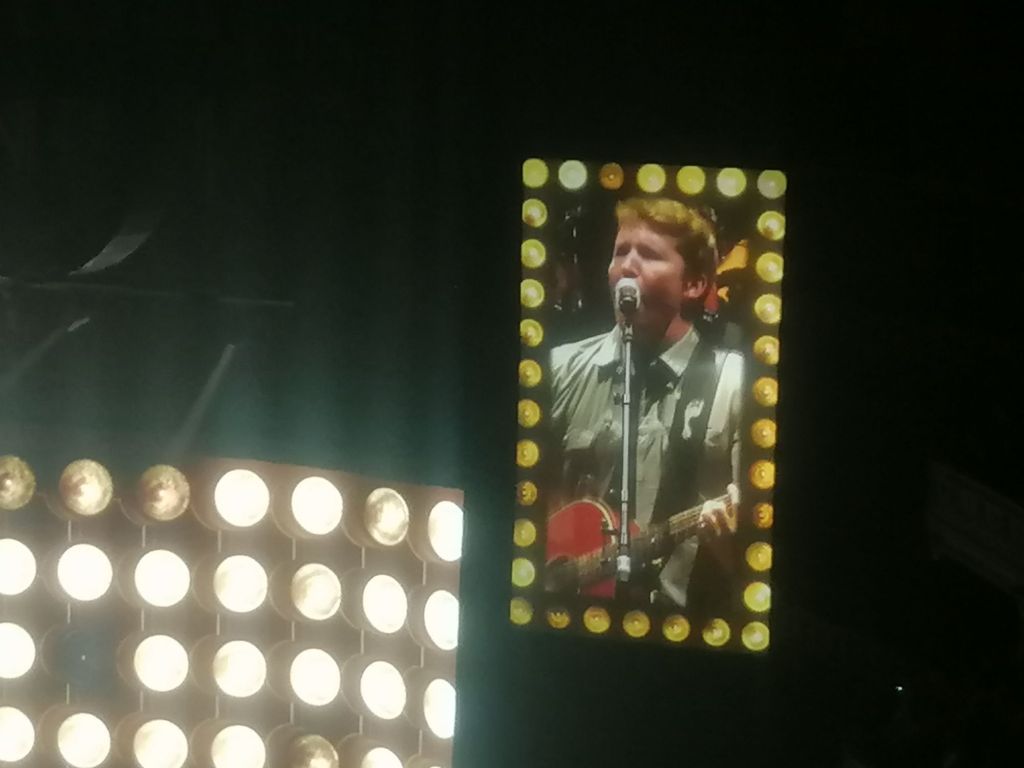
This concert was a present for my wife who is a massive James Blunt fan. It was November 2017 that we last saw him live, so I bought tickets for us to see him at her favourite venue, the peak of acoustic perfection that is the Royal Albert Hall. Last time I saw him I wrote this review of a concert I absolutely loved, so on the quiet I was really looking forward to it as well! At the merch stand I bought the tour programme, a sadly rare sight these days, and a t-shirt for my wife promising that ‘Life’s Better with James Blunt’!! Let’s see if it was shall we?
The support act for last night was Lucy Spraggan, whose name was familiar but whose songs weren’t. She bounced on to the stage with an enthusiasm that didn’t wane for 40 minutes. Her first two songs, Run and Lucky Stars were a good introduction to her style, lyrically interesting and accompanied by tunes that lodged into your head quite quickly. She told the audience that it was her job to warm us up for James Blunt and to make sure we were in good voice. A cover of 500 Miles by The Proclaimers led to some fairly enthusiastic communal singing which, we were assured, was louder than the audience the previous night at the same venue! Why do I have the suspicion that every audience is told this? 🤔🤣 Anyway, whatever the truth Spraggan’s warming up was very effective throughout. My favourite song of the set, Blues Song, had a very amusing story attached of her experience playing in a Blues club in Sheffield (if I remember rightly) where she delivered a set with no blues songs. A heckler pointed this out and she went home and wrote a blues song that night. She returned to the club a few months later, saw the same heckler and dedicated the song to him! He walked out apparently, probably through embarrassment, and missed a very amusing and authentically bluesy song as a result. My other favourite of the set was Balance, the title track from her 2023 album, a reflection of some very difficult times she endured and dedicated to her therapist. The lyrics were extremely honest and personal and I thought it was an excellent song in every respect. As a warm up act she was absolutely perfect, so if you haven’t heard Lucy Spraggan in many years, do yourself a favour and head over to Spotify
The main man himself took to the stage just after 9pm and from the start he was outstanding. James Blunt may be a figure of fun, a role he has amplified himself through his hilarious social media posts, but as an artist and a live performer he is deadly serious. A one-two start of Beside You and Saving a Life from the most recent album, ‘Who We Used to Be’ was delivered with punch and panache. He then told the audience that everything he had done so far on this tour was just practice for us, his most important audience! He also said that he was only playing new songs tonight and we couldn’t do anything about it because he’d locked the doors and he already had our money! 🤑 It was the same easy humour that he displayed on his tour in 2017, but he was rewarded with a huge laugh and an equally huge cheer when he ‘relented’ and played a couple of old tracks.
The new album, which Janet had listened to a number of times, is a reflective and in the case of some tracks very sad album. Dark Thoughts was a tribute to Carrie Fisher who was a close friend of his, but nothing could prepare me for The Girl That Never Was. I knew that the song was about loss, a loss that my wife and I had also suffered many years ago, and it brought me to tears as I listened to the heart breaking lyrics. It is one of the most powerful songs I have heard in years, and it wouldn’t be the last time he brought me to tears in his set.

It’s really interesting reflecting on how skilfully he balanced the sad songs and the upbeat crowd pleasers. In less adept hands the evening could have been brought to a halt by the sadness and the upbeat songs could have sounded out of place, but they never did. Why is that? Well, I think it has everything to do with his stage persona and his real persona being so similar. Yes, he is larger than life to the extent that any performer has to be, but he wears his heart on his sleeve, isn’t afraid to show his vulnerable side and is as genuinely grateful for the love and support of his audience as any act I have ever seen. He seemed close to tears himself at the reception given to his songs. After You’re Beautiful, which led to the expected mass singalong, he looked out at the audience with a sense of wonder and said, ‘I’m such a lucky little bugger!’ and the way he said it was just one of the most genuine, heartfelt moments of this or any other gig I’ve been to. I would say that he is one of the finest concert performers I have seen in over four decades of gig going. His voice is outstanding, his guitar playing excellent and his piano playing out of this world at times, especially on a cover of Slade’s Coz I Luv You. The encore started with the gut wrenching sadness of Monsters, a song about saying goodbye to his father, that once again had me in tears. You have to be incredibly sure of yourself and your audience to start an encore that way, but it was perfect. Then he did the song I’d been waiting for all evening, the magnificent Bonfire Heart, one of the best songs of the last 20 years in any genre. He followed this up with fan favourite 1973 and one of the best concerts imaginable ended in a wave of love and affection to and from the stage.
So if your wife or girlfriend (not to stereotype but the audience was quite female dominated!) ‘drags you along’ be prepared to enjoy yourself immensely as you surrender to the talent, humour and genuine emotion of the one and only James Blunt, a live performer from the very top rank.

Zoe Wees and Persia Holder The Jazz Café Camden April 4 2024
Well, last night was my first concert of the year and I thought it might be fun to start an occasional series of posts looking at my various live music experiences as I head towards the time when I might be too old to do this anymore!
I went to this concert with my youngest daughter, Hana, who I hadn’t been to a gig with for quite a while, so it was a real treat for me. I don’t get many opportunities to go out for an evening with her as she’s very much in demand and our days out have revolved around football in recent years. Anyway, we were both looking forward to seeing Zoe Wees so when the night arrived I was determined to enjoy it.
When we arrived at the venue, it was already quite busy with just half an hour until the support act. It was a standing only venue downstairs which can be a bit difficult at times for me. It’s not so much the physical element, as I am still quite fit for my age, it’s more the dynamic of the crowd and the feeling of being hemmed in. Luckily, in this case, there was enough room for me to have my own space and guard it as much as possible during both sets. When I was at the nearby Electric Ballroom, for the exclusive Pet Shop Boys concert that I won a pair of tickets to, the crowd started pressing in on me both front and back. Janet, who stood on the terraces as a teenager, was quite used to it but I got panicky and we moved to the side of the main standing room where we got a decent view without the fear. Knowing that we would be standing for over 2 hours I just made sure I was as relaxed as possible and awaited the support act, Persia Holder.
I always like to listen to the support act, and whenever I have written reviews, I have included a review of support sets which I feel are often not given their due. Anyone who arrived late missed an excellent set from Persia Holder who has built up a large following on Tik Tok (which I’m far too old for!) mainly singing covers, and whose set was around half an hour long. First things first, what a voice! Soulful, powerful and note perfect it just exploded into the venue helped by the excellent acoustics. She had a lot to pack in during such a short set, but she managed to fill every minute with real quality. Part of Persia’s appeal were the personal reflections and the stories she told between each song, especially the story as to how she got the support slot on the tour. Apparently she covered one of Zoe Wees’ songs and Wees herself started following and commented on the cover saying how much she enjoyed it. The rest, as they say, is history! For me, three songs stick out, the day after, two original songs and one cover. The two original songs were Passionate and What’s the Worst That Could Happen? which had excellent lyrics that trod an expert line between sadness and defiance in the first case and showed a knowing humour in the second. The tunes were excellent while the singing was passionate and effective at conveying a whole range of emotions. The cover of Becky Hill’s Remember had pretty much the whole audience singing along as Persia brought out a more emotional rendering of the song by slowing it down slightly and delivering it with real gusto. By the end of the set I was looking for Persia Holder on Spotify, Twitter and Instagram, finally finding her on the last of those. Wherever and whenever you find her, and she is on YouTube as well, you’ll be glad you did, because Persia Holder is absolutely terrific and I will definitely be following her career with interest from now on.
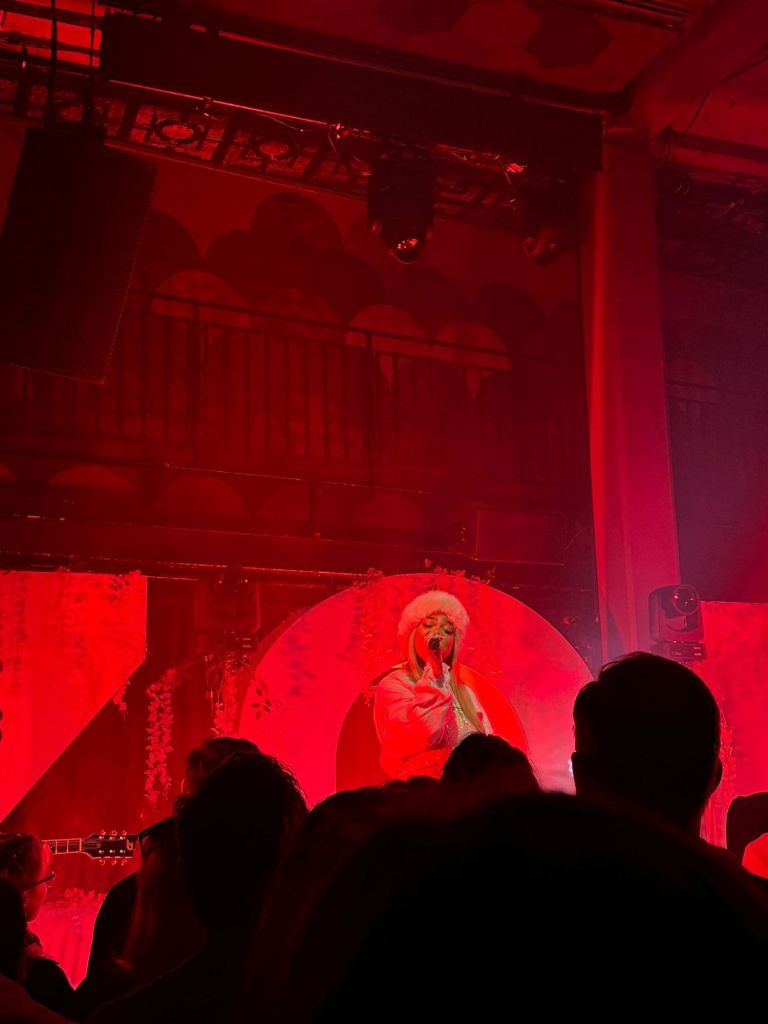
The arrival of Zoe Wees at 9pm really lifted the roof off. I had started listening to her in 2022 and was familiar with a number of tracks on her Therapy album, which I thoroughly recommend by the way, but judging by a number of the audience I was nowhere near as familiar with her songs as I thought. She started off with the fantastic Sorry for the Drama which is a song about her childhood. Zoe was brought up by a single mother after her father walked out and as a result the family struggled financially as you would expect. This song is Zoe’s apology to her mum for the way she acted out, as a result of the reactions of those around her. It is beautifully written and absolutely heart breaking. If you want to listen to it click on this link as it will confirm what an incredible talent she is. This song is part of a trilogy with 21 Candles and Daddy’s Eyes all of which deal with the effect of her father’s absence. 21 Candles reflects on her birthdays every year which saw her make a wish for her father to come back, a wish she eventually realised would never come true. Daddy’s Eyes, which is my favourite of all her songs, and the most devastating to listen to, tells the story of the one meeting she had with her father. She is deeply upset by the meeting and hates the fact that her eyes look exactly the same as his. This is the type of song writing power that far more famous artists could only dream of and is a reason why I think Zoe Wees is a generational talent. Throughout the set, Wees was chatty, personable, revealing and clearly overjoyed to be on stage in front of such an appreciative audience. Quite apart from her incredible writing talent, she has a voice that is incredibly expressive and powerful with a bluesy edge that really worked in the confines of the Camden Jazz Club. The quality never dropped at any point and it was a great first gig of the year.
Next week I am going to the Royal Albert Hall to see James Blunt, a present for my wife whose favourite venue this is. Variety is the spice of life and this counts as variety indeed! I will report back in further reflections of an ageing gig goer!
Bringing the cast together
This time, the film starts with the 14 children having been brought together as a whole group to watch the first two shows of the series in a small cinema. I can only imagine how mortifying it must have been for them to see their younger selves as (sometimes) precocious children and (mostly) moody mid teens! Don’t forget, documentaries seldom if ever got repeated so it would have been almost certainly the first time they had seen either documentary since its release. I would have hated it but like all the children, at this point, I would have felt something of a responsibility to keep going. After the showings they are shown having drinks and food together leading to a very interesting scene between would be East End wide boy, Tony, and the outwardly very privileged John. Tony, very perceptively muses on the ability of the documentary makers to choose the scenes they want to show in order to create characters for the participants. He talks about John being made to look like the good one and Tony made to look like the bad lad. John smiles and points out that he thinks it may well be the other way round to the audience! So, how were the 21 year olds portrayed and how did they react to the way their younger selves were shown?
21 Up
For me, the star of the show this time round was Tony. He has grown from a potential tearaway at 7 to a hard working 21 year old who has a fairly matter of fact attitude to the cards life deals him and invariably makes the most of his hand. An apprentice jockey at 14, he raced three times professionally for Tom Gosling’s stable. When asked by Michael Apted what happened he simply says that he obviously wasn’t good enough! At 14 he was asked what he would do if horse racing didn’t work out and he says he would become a taxi driver. At 21 he is on his moped getting the map of London fixed in his head for the famously tough test of black cab drivers, ‘The Knowledge’. He is a bookie’s runner at Walthamstow dog track and quite clearly fancies himself as a lady’s man. He talks about the three Fs which I will leave to your imagination and bemoans the fact that he couldn’t forget his current girlfriend! The overall impression you are left with is someone who is extremely adaptable and who will find a way to succeed whatever happens. He is certainly focused on whatever is next rather than what is past, a very useful skill to have.
John, who Tony was talking to in that opening scene is much more forthright about the way he and his class are viewed than either Andrew or Charles who perhaps feel the same way. He points out that just because they ended up going to the schools they predicted at 7 and, in two cases, the university courses they predicted, it wasn’t the fait accompli that it was perhaps portrayed as in the programme. The snapshots are simply that and don’t show the hours of study and exam preparation. While his point that they have to work hard is well made, he is still portrayed as very much a product of privilege, with a scene showing him as a ‘beater’ for hare coursing, which is now illegal, and a voiceover of him bemoaning the fact that opponents know nothing about it. He and Andrew are in their final years studying law at this point. Charles, meanwhile did not get into Oxbridge and was in his final year at Durham studying history. Although he still sounds very similar to John and Andrew, his long hair, casual clothing and casual demeanour indicate that he is now quite different from his two pre-prep school classmates.
The next trio are Jackie, Lynn and Sue, the three girls from the East End, two of whom went to comprehensive school and one who went to grammar. Lynn, the grammar school pupil, is married and working as a mobile school librarian by the time of 21 Up. She had thought of becoming a teacher but decided it was not for her, but she was clearly in her element as a librarian. Jackie also married at 19 and, amusingly, admits that there are times since the marriage when she has asked herself, ‘What have I done?’! Sue was not married at this point and worked in a bank, a job she was quite enjoying at the time. The three girls are apparently confident and still apparently a tight knit group despite the way that life has ushered them down different paths.
Nicholas, the boy who grew up on a Yorkshire Farm had lost his very strong regional accent, perhaps deliberately, and was at Oxford University studying physics. He seems to give a lie to the ‘show me the child at 7’ motto that set this documentary series on its path. He is no longer the shy, awkward child we saw at 7 or 14. Instead he is an outwardly, and seemingly inwardly, confident young man who knows where he wants to be and is enjoying Oxford enormously. When you saw him at 7, or actually 6 given that he was a year younger than the rest of the group, the young man in front of viewers now would be virtually impossible to picture.
Paul and Symon were two seven year olds we first met at a charity run boarding school. Symon stayed there until moving back in with his mother at 13 and Paul left at 8 when his family emigrated to Australia. Paul was flown back to the UK for the show and he and Paul are shown walking round their old school. Symon clearly sees it as a huge factor in his childhood but Paul remembers very little and is seemingly bored by the whole trip down memory lane. He has become a real Aussie in the intervening years with the accent and the lifestyle. He is a junior partner in a bricklaying firm and he has a settled relationship. Symon on the other hand is seemingly uncertain of where he wants to be in life and comes across as less confident and less focused. At that point, the era of £10 Poms, Australia truly was the land of opportunity and Paul has grabbed it with both hands. You wonder how different Symon’s life would have been if he had been given that opportunity.
Peter and Bruce are both at university at this point, the latter at Oxford studying Mathematics and taking his tutor through very complicated mathematical proofs that I couldn’t begin to follow! Bruce had been through a difficult time the previous year, when he signed up as secretary for four different societies and then had no time to do anything in any of his roles. Apparently he tried to avoid the rest of the students for 6 months as a result of the fallout! Peter doesn’t seem to want to be at university and has drifted through the course with little obvious enthusiasm. The two young men are still very much trying to find their way in the world.
Suzy, the star of Seven plus Seven saw her parents divorce at 14 and has since dropped out of university. Stress seems to have been an ever present theme of the intervening years and her brittleness is sad to see. She is travelling abroad on holidays seemingly to have something to do, but with the anchor of a strong family unit removed in many ways, she is drifting and cynical about the whole series and, indeed, pretty much anything else.
Finally, we have Neil, resentful of his own parents, another university drop out and squatting in a flat with a cat for company. He is quite matter of fact about squatting pointing out that otherwise this would be just one more empty flat with no purpose. It was quite interesting to see how squatting was so well organised and regulated at the time! Neil is clearly very unhappy and very directionless. Whether the documentary makers had an inkling that he would become such a central figure later on is open to conjecture, but you can’t help but see some foreshadowing here.
My reaction
This episode clearly shows that the adult versions of the children we already know are indeed shaped by their upbringing and experiences, but in ways that we can’t always predict. Seeing this series one instalment a week rather than one every seven years means you can make connections much more easily, but the danger is that you fall foul of the Latin phrase ‘Post Hoc Ergo Proctor Hoc’ which means ‘After it therefore because of it’. Are you looking for causal links that aren’t there? Perhaps. Did the viewers at the time do this? Almost certainly. It really gets into its stride here as a proper social and historical document and it is valuable far beyond that as an insight into lives you otherwise wouldn’t have any understanding of. 28 Up next and one of the most famous strands of the entire series. No spoilers though!
Catching up with the children
After a chance meeting in the Granada canteen, Michael Apted was commissioned to revisit the 14 children featured in the 7 Up documentary. The original was made in 1963 and broadcast in 1964, while this was made in 1970 and broadcast on December 15 of the same year. All 14 children took part, some more reluctantly than others, and clips of their seven year old selves answering questions help to frame the documentary. Given the age of the participants, and 14 is a very difficult age for all but the most fortunate, this was always likely to see them at their most guarded. However, I think it was absolutely vital for the future of the series. A 14 year gap would not have worked given the way that the children would bear little resemblance to their seven year old selves, but at 14 you have a fascinating glimpse of the child within and the adult to come. So what did I think watching this for the very first time?
7 plus Seven
The filming style is really interesting. We have gone from black and white to colour, but that colour is faded and gives the whole programme the air of a home movie. Gone are the scenes of school, play and family to be replaced by each of the 14 children on their own or in small groups, with an offscreen Michael Apted posing many of the same questions he did seven years earlier, and getting answers both similar and revealingly different.
For me, the star of this show was the most reluctant participant, Suzy. She makes it abundantly clear that she thinks the whole concept is a waste of time! Her eye rolls, impatient answers and undisguised frustration with Apted make her a real standard bearer of teenage irritation with the obtrusive older generation. For me, the best moment was when the family dog, playing in the garden of her father’s 4000 acre farm where she is being filmed, drags a dead rabbit out of the bushes. Suzy is almost completely unfazed, whereas Apted is clearly unsettled, and the reversal of roles is quite satisfying. You can tell that Suzy would rather be anywhere else and that she is doing this under sufferance, but that just makes her a counterpoint that the show needs.
Tony, who wanted to be a jockey at seven is on the way to achieving his ambition by being trained at a local professional stables and obviously eager to leave school behind. He is still confident, although the cheeky seven year old has faded to some extent, and he is fully focused on his chosen career. Interestingly, he is asked what he would do if he didn’t make it as a jockey and he already has a back up career of taxi driver in mind. He is asked the same questions as the other participants, and he answers them easily and confidently. I found myself urging him on as he clearly had ambition, determination and a real thirst for hard work.
Andrew, Charles and John are perhaps the most interesting to listen to five decades on. They are clearly set on the path to upper class success with two having gone to Charterhouse and one to Westminster. Somewhat dismissive of their younger selves, they have lost the more precocious edge they had at seven and developed what to modern eyes looks like a sense of entitlement within a world that perhaps exists as their stage. Their views on class, race and unions would definitely raise some eyebrows these days, but they were very much mainstream and reflective of their upbringing.
Jackie, Lynn and Sue, the three London girls seem to be just as tight knit as they were despite the fact that Lynn had made it to grammar school while the other two went to a comprehensive school. They are chatty, personable and, in their own way, as confident as the three upper class boys. However, and this is simply my own view, their confidence comes from supporting each other rather than competing with each other as Andrew, Charles and John seem to be. They often look to each other for agreement, but when they differ that seems to be just as supported by the other two. It’s a very nice example of that female friendship that seems to be a shield against the slings and arrows of life in general.
The other six boys are all interesting to listen to, but rarely rise above the expected in their answers. Perhaps Neil is the one whose responses were most revealing by the very fact of his nervous demeanour. I got the impression that it was deeper than appearing on camera, and more related to how he saw himself and his position in life. Paul and Symon who were at the same charity boarding school in 7 Up had moved to Australia and back home with his mother respectively. Nick, Peter and Bruce would have their times to shine in later episodes.
My Reaction
I have read a number of reviews from people who did not enjoy this instalment. In contrast, I found it fascinating and vital. Most of us, unless we have had particularly unpleasant teenage years, tend to look back at the age of 14 with rose coloured glasses. This programme lays bare the conflicts, difficulties and basic discomfort of a time when you are trying to find yourself as well as your place in society. Get past the faded colours and different viewpoints and you have a snapshot of what we all go through as teenagers.
 David Pearce - Popular Culture and Personal Passions