

Thinking back to when I was 35 – quite a feat of memory these days! – I am aware of a feeling of almost constant change. Family, friends, job and country all changed in and around that age, so I was ready to find that there were clear alterations amongst the participants. What did I actually see? Well, as the old saying has it, the more things change, the more they stay the same!

35 Up
Once again, we start with Tony, the most engaging and entertaining of the participants. Still every inch the East End boy, he reflects on a 7 years when he has continued to dabble in a variety of jobs. He is still a taxi driver and occasionally an extra in TV and films, including a Steven Spielberg film apparently, along with less than a year running a pub with a partner whose views differed from his own! The money is still coming in, as the scene at the stables where he owns two ponies for his daughters confirms, and he is clearly working very hard to get that money. His wife Debbie gets much more attention in this programme and comes across as a very strong character in her own right. This was part of the series trying to make up for the very unbalanced gender choices of the original with only four girls out of the original 14. Michael Apted is on record as saying that he regretted that short sighted approach and he concentrated, where possible, on the role of the spouses to even things up.
Nick has left the UK behind and made America his home. Still a university professor in Wisconsin, he gives every impression of being totally at ease with his life and career. The only fly in the ointment is the early stirrings of a reality TV backlash concerning his wife Jackie. Her comments in 28 Up were seen as a sign that the marriage was in trouble and she refused to take part in the series from then on. Presumably the press and letter writers were responsible, but one can only imagine the size of response there might have been had social media been around. I suppose it proves that we haven’t really been changed by the internet, merely amplified. Nick is the biggest success story, academically speaking, as he has continued to make progress in his field and has contributed to teaching a new generation. He appears to be the most content of the participants in their mid 30s, and his decision to leave the UK behind has been totally vindicated.
John reappears in 35 Up having given 28 Up a miss. His decision was to publicise the Bulgarian charities that he was involved in. He is a great-grandson of a former President of Bulgaria, and he had got involved in the charities having married the daughter of Sir Donald Logan who was the ambassador to Bulgaria. His appearances in the programme were focused on a UK based fundraiser and following him to Bulgaria when he went to a children’s home he was supporting. It’s a very good use of his time and it’s a very good use of the programme’s time as it gives a different perspective that balances the previous entitled posh kid portrayal. His former classmate Andrew is a successful solicitor and very happily married with two children. He considers the way that his two children enjoy playing together and regrets, in some ways, the fact that he was an only child and missed out on that.
Two of the participants have disproved to a large extent the central idea of the programme by leaving their earlier selves behind completely. Suzy is absolutely at ease with life at 35. Married with children and very much in love she has left behind the unhappy 14 year old and the chain smoking nervous 21 year old and blossomed into a very happy person. It’s lovely to see as she has been one of my favourite participants from the first programme. Similarly, Paul, the very subdued seven year old from a children’s home who moved to Melbourne with his family is a happily married father of four who has become more settled than many of the others in his life and his surroundings. It is interesting to consider whether his life would have been much less successful if his family had not emigrated. I think the likely answer is yes.
The three friends, Lynn, Jackie and Sue are all mothers and even more forthright than they were in earlier programmes. There is a certain world weariness about them reflecting their experiences of divorce, single parenthood and the loss of parents. One of the irritations seems to be the Up programme itself. Jackie appears to speak for most participants when she complains that she only considers her relative happiness when Michael Apted comes ‘nosing around’! It’s clear that as much as they perhaps don’t exactly welcome it, most participants feel a sense of obligation to the programme and perhaps see it as a necessary part of their lives.
Bruce and Neil are the most interesting participants this time, primarily because they have not yet settled down. Bruce is still a teacher in a primary school in London, but he also goes to Bangladesh where a number of his students’ families have come from. He seems driven to do something to offset the privilege he had as a child. At 35 he is still single and living in a flat in London but he does seem to be fulfilled in a way that perhaps some of the others are not. Neil, whose story shocked so many in 28 Up is now living in the Orkneys and has got into amateur dramatics having stayed in the same community for a few years. Despite all this he seems to be on the outside looking in with, perhaps, his mental health struggles making him difficult to connect with. For all that he seems more settled and slightly happier.
In a sense, the fact that many of the 35 year olds seem to be treading water to some extent reflects the fact that they are in their mid 30s where most of us settle down and life seems to lose its ability to surprise. Michael Apted himself regarded 35 Up as the most downbeat of the instalments, but it’s none the less a very interesting, reflective two hours.

When I first came back to the UK at the age of 5 I had missed a lot of cultural touchstones that many of the other children grew up with. Perhaps that’s why I very quickly became an avid watcher of TV, to try to catch up. When I think back to those early memories of TV two programmes come to mind most readily, Play School and Watch With Mother (WWM). The former fell foul of the over zealous wiping of old TV programmes that any Doctor Who fan will be familiar with, but the latter very luckily escaped the worst effects of the cull and even some of the early black and white programmes still exist in the archive. In this series of blogs I will be watching selected episodes of my favourite WWM programmes and reflecting on why I loved them at the time, and whether I still enjoy them now.
Mary, Mungo and Midge Re-view
Memory plays funny tricks on you at times. There is no doubt that a number of WWM programmes came and went without making any impression on me. At random, I chose the week of November 30 to December 4 1970 to look at what was on in the WWM schedule. Monday was Mary, Mungo and Midge, Tuesday was On the Farm which I have absolutely no memory of, Wednesday was Camberwick Green, Thursday was The Herbs and Friday was The Flowerpot Men. Despite remembering four of the five from that time, not all of them made a lasting impression. So, why was Mary, Mungo and Midge my first favourite programme? I decided to take a look at three of the episodes from the beginning, middle and end of the run to get a flavour of how it looks over 50 years on, and to see why it might have stood out.
Mary is a girl who lives on the 8th floor of a tower block in the flat with flowers growing in the window. Mungo is her often exasperated dog who has a lot of trouble with the mischievous mouse Midge. As soon as the music started I remembered it immediately and pictured myself as 5 or 6 years old watching it on a black and white TV. Every episode began with an introduction to the town with its tall buildings and short buildings courtesy of the fantastic narrator, Richard Baker. I remember recognising his voice when I heard the early evening news and feeling somehow that little bit safer. He takes us through the town until we see the tower block where Mary and her parents live. This was, I think, quite a new concept in the 1960s when the programme was made, and it was quite literally a window into how other children might live. It was an early attempt to show a child who the viewers could really identify with. Mary could easily have been that girl in your class that you sat next to if you were fortunate. She might even have been the girl you walked home with who seemed to be as relieved as you that school was over for the day. There was a reality to her that went beyond the simple animation. Other WWM programmes featured fantasy characters like the Clangers, or were set in towns in the county of Trumptonshire which were a vision of an England that had the social structures of the age of deference. They were fun, but you were never going to see them in real life.
The Crane
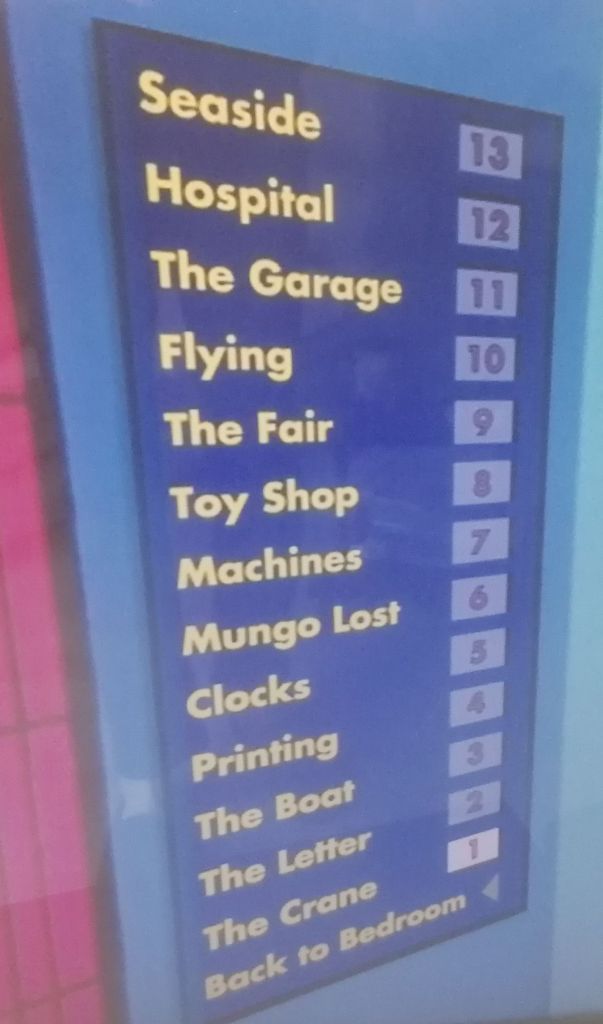
The first episode of all was The Crane, and it set the template for the series. Mary is playing with blocks and Mungo is pushing them over to her with his nose. He eventually complains that his nose is sore and that he could do with a crane to move the blocks across the playroom on to the tower that Mary is building. Mary looks across to the other side of the river where building is taking place. This would have been a very familiar sight to many children at the time, and although, or perhaps because, they were warned about the dangers children found construction sights fascinating. Unlike the adults in your life who would tell you not to do something because they said so, Mary, Mungo and Midge showed you how dangerous those places could be in an understated way. Mungo and Midge go over to the crane where the man who operates the crane and the man who loads the crates for the crane are going for their tea break! Midge takes advantage of their absence to run up to the cabin of the crane and see how it works. Mungo, who is searching for Midge, finds himself on top of a pallet attached to the crane just as Midge starts jumping on buttons! Although you know that Mungo will be fine it does demonstrate how going near cranes can be dangerous. It’s a nice first episode, but as children could join the series at any point, the introductions would be made in subsequent episodes.
Machines
Episode 7, the midpoint of the 13 episode series, focuses on the different machines that you might have seen in a town in the late 60s. We see it, as ever, through the adventures, or rather misadventures, of Mungo and Midge as the latter causes chaos in a very restrained way! There are machines that dispense milk, those that dispense chocolate, those you talk into (a telephone box) and those you put your clothes into at a launderette. It is educational in a Reithian way and it makes a trip to town an opportunity to discover something new.
Seaside
This is an episode that takes the trio outside of the town to the seaside. This makes it quite an unusual episode, and it turns out that for this final episode of the 13 programme series, the usual narrative format is very much thrown out. We find out what the countryside just outside the town looks like as the three are driven to the beach. There are people sunbathing, although no doubt they had suntan oil rather than sunscreen in those days! Mary and Mungo are busily building a sandcastle while Midge is getting up to mischief. Eventually, Midge settles down for a sleep on top of the sandcastle and has a fever dream! He finds himself in scenes from all twelve of the previous programmes which, of course, the regular viewer will have great fun trying to spot!
Final Thoughts
It was a real pleasure immersing myself in the simple, safe world of Mary, Mungo and Midge again. As an adult I could see the way that the programme sought to inform, educate and entertain all the young children who watched it, wherever they came from, and it succeeded on all three counts. The stories were simple, without being simplistic, the narration courtesy of Richard Baker brilliant and the animation very effective as they took you into its two dimensional world. I can see why it was my favourite programme at the time. It was invaluable to me as I tried to understand England after spending the three previous years in Singapore, and it would have given me an insight that allowed me to at least pretend that I knew what was going on in my new home.
Next time, I revisit a certain shop where a saggy old cloth cat has strange items brought to him every week!

Every so often, a book comes along that draws you in from the first page. You become completely wrapped up in the setting and you really care about the characters. When that happens in an author’s debut novel, you know you are dealing with a genuinely exciting new voice. That is the case with The List of Suspicious Things by Jennie Godfrey which is the best fiction book I’ve read this year, and I’ll be astonished if it doesn’t remain so. Hopefully this review will encourage you to read it for yourself and experience the alchemy of story and setting for yourself.
The Story
This novel takes place in Yorkshire in 1979 where the spectre of the Yorkshire Ripper hangs over the whole county, and the election of Margaret Thatcher as Prime Minister is seen as a great thing by many and anything but by many more. The murders have made people suspicious of each other and, for some, the situation has become so all consuming that they are thinking of moving away from the county. This is the situation Miv finds herself if when her Dad, Austin, mentions out of the blue that he is thinking of a fresh start away from the county. Miv can’t imagine leaving her home or, more importantly, her inseparable best friend Sharon. Miv asks her Dad if it’s something to do with the murders and he admits that this is partly the case. In order to avoid a situation she can’t imagine, Miv decides that she must investigate the murders herself in case there is something that the police have missed. She gets, initially at least, wholehearted support from Sharon and the two start to turn their gazes to some of the people in their own town who appear to have something to hide. It turns out they do, but not in the way that Miv thinks. Sadness, violence and tragedy combine as they turn their gaze on the hidden lives of those around them who find their way onto The List of Suspicious Things.
My thoughts
We all know the novels that try to set up a time and a place with a blitz of ‘iconic’ food brands, drinks, cars and music. Instead of bringing you into the world, it keeps you outside because you can see what the author is doing. They are like the websites and Facebook groups that try to grab your attention with cries of ‘Remember this?’ which is OK if you’re scrolling but incredibly distracting if you are reading a novel. The List of Suspicious Things has a far more effective approach to bringing you back to the world of 1979. Like a series of half remembered days, the spare descriptions of the surroundings and the lifestyles anchor this story in those days at the end of the 70s where the country was changing socially but not yet materially. I grew up ‘down South’ as they would say in this book, but I recognised the people and the streets because at that time the country had more in common than it seems to have nowadays. The chipped Formica, the corner shop where you got your sweets and just about everything else and that house you went to where your friend had a far brighter lifestyle at least on the surface. All of that was there, familiar and absolutely redolent of my mid teen years. Away from that surface of seemingly simple lives lived in simple styles, you had the casual and sometimes brutal cruelty dished out to anyone with a point of difference. What this book does so well is to bring you Miv’s point of view where she sees things that adults don’t but often fails to understand what she is seeing. Mixed in with her first person narrative, you get glimpses into the lives of the people she and Sharon are investigating. Omar, the corner shop owner with his constant battle against racism, the nagging pain of a personal loss and the feeling that he will never fit in. Mr Ware, the borderline bullying school teacher that we all had in the 1970s and 80s has a very different side that he keeps hidden. Helen, the school librarian whose husband has isolated her from everyone she knows including her own father. These characters and many others are shown to have their own struggles and it is Miv and Sharon who become inadvertent catalysts to bring those struggles to a head. Even her family have their secrets. The gruff, no nonsense Aunty Jean, who came to take over the household after Miv’s mother stopped speaking and retreated to her bedroom, turns out to have hidden depths that Miv is only dimly aware of. Until we step into these lives ourselves, we too are only dimly aware of what goes on behind those closed doors. It is so cleverly written that the pieces fall into place almost without you realising.
The book is full of humour, sadness, tragedy and stoicism. All human life is here and it leaps off of the page because of the incredibly skilful writing of Jennie Godfrey. At times, I quite literally gasped out loud at some of the twists. Then as I realised what had happened and why it had happened the shock turned to sympathy and sadness. It is a beautiful book that connects you with what it means to be human and part of the society around you. This is destined to become one of those rare books that I will want to reread at fairly regular intervals. I cannot wait to find out what Jennie Godfrey is going to write next, but I just know it will be amazing. This is my book of the year so far and I cannot recommend it highly enough.

Only about 400 people have ever travelled to more than 150 of the world’s 190 or so countries. The Travelling Ape, Michael MacKay Richards, is one of that select group. He has reflected on those experiences and written a book that is, by turns funny, shocking, sad, and always thought provoking.
The contents
This book is in four parts. The approach he takes throughout is to look at his experiences in a range of countries, blending anecdotes with insights as he develops his arguments. The anecdotes come from countries on every continent with the exception of Antarctica, and are never less than fascinating. He is engaging and very honest about his failings, frequently using these failings as the excuse for a very funny story. He is also quite happy to call out his fellow Westerners, not to mention the occasional local, but he does so with a lightness of touch that causes no real discomfort in the majority of cases.
Part 1 is a reflection on why we travel that covers psychology, anthropology, philosophy and history. He considers the effect of travel on our creativity, our perception of time, population growth, the majesty of big cities and the way that travel makes people better disposed to their fellow human beings. As with other parts of the book I found his arguments interesting but by no means agreed with all of them. Part 2 about the positive view he holds of humanity is definitely not one I instinctively share but I gave them due consideration and found myself wondering whether my world view was too pessimistic. The last chapter in Part 2 looks at religion and, suffice to say, he is not a fan of the central premise let alone the effect that he sees it as having had on human thought and their treatment of others. If you are religious you may find this chapter quite difficult, but I urge you to give it time and reflect on his viewpoints. I found a number of the elements of this whole section extremely eye opening and they certainly gave me cause to reconsider some ideas. This isn’t to say that I was converted, but I definitely decided to be more flexible in my attitude towards other people after reading this section.
Part 3 moves from the personal to the political with a very interesting take on capitalism, democracy and their competing models. His visit to North Korea was one the most unsettling parts of the entire book. Indeed, it was one of the most unsettling parts of any book I have read in ages. You are left in no doubt as to the appalling effect of the dictatorship, and here The Travelling Ape uses his day job as a political and economic researcher to excellent effect as he lays bare the way that partition has sent the North of the continent into permanent decline and the South into almost permanent growth. His argument that capitalism and democracy are better than any other system, despite the flaws that he lays out in detail, is pretty much case closed as far as I was concerned, and I am no great fan of the modern version of the economic model. Part 4 becomes much more personal as he looks at happiness and how people in the West are arguably less happy than we should be. It isn’t a hectoring chapter telling us that we should be happier, more a chapter examining the disconnect between our situation and our perception of that situation. He uses his travelling experiences to typically interesting effect as he develops his arguments and counter arguments. Finally, he takes the reader through seven key changes he made to his life to help him feel happier. I can see three of these perhaps working for me on the basis that the other four will be pretty much incompatible with my basic nature! That said, even those four make sense. It is the perfect end to a book that never allows the reader to disengage their brain.
Final Reflections
As someone who has lived abroad I always thought this book would be for me and it was, but not in the way I expected. It challenged what I now see as my increasing parochialism where the travel bug that I had seems to have left me behind. It asked me questions, sometimes uncomfortable questions, about my attitudes to people, countries and life in general. Finally, it told me that when energy and opportunity combine I really need to get back out there. It is truly a book that can change your outlook if you let it. I cannot recommend it highly enough.
Find out more at https://thetravellingape.com/
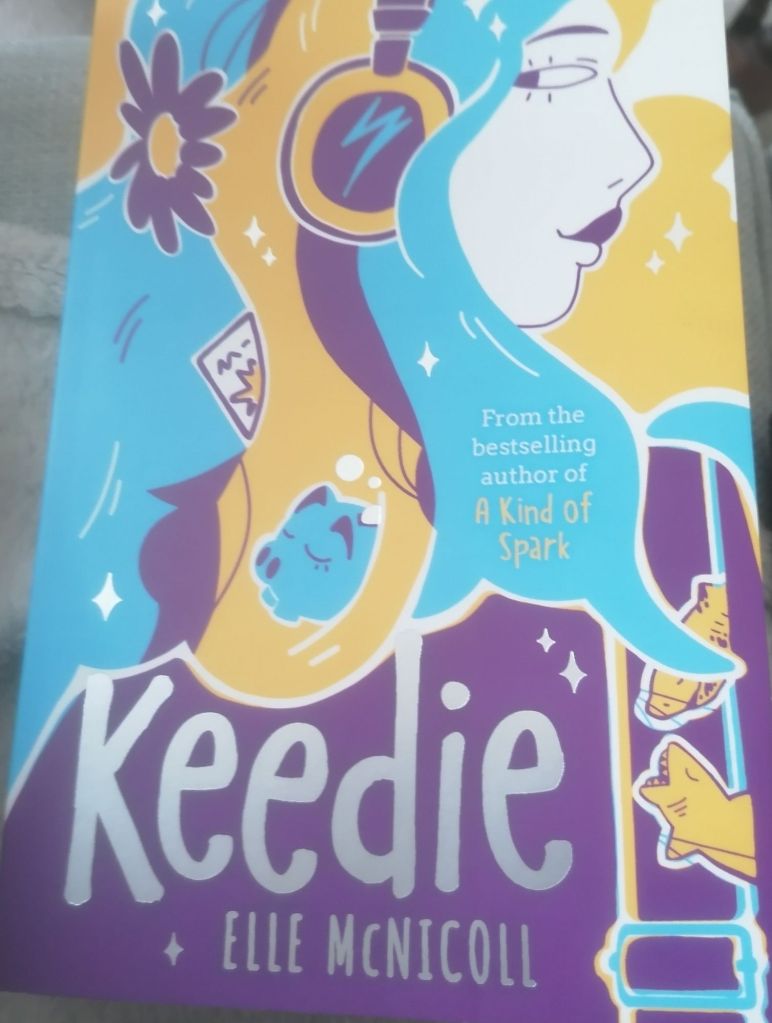
I addressed the personal connection that I have with A Kind of Spark in this article from April 2023 Almost exactly a year later I have read the prequel to that amazing book and I am going to reflect again on the power of writing to take you back to people and places in your life. Keedie by its very nature turned into a much more difficult and confronting read than A Kind of Spark, mainly because we meet Keedie at a time in her life where things are much more difficult because of the people around her, namely her fellow school pupils and of course the teachers.
The Story
When we meet Keedie, she and Nina are coming up for 14, and are at Juniper Senior School, but the easier relationship they had when they were younger has disappeared. Keedie is something of an outcast while Nina has gained admission to the cool set. Unfortunately for Keedie, that set contains some of the people most responsible for the bullying at the school which she is on the receiving end of. When she realises the extent to which bullying has affected the school, she sets herself up as a one person anti-bullying agency. This works well at first as she is able to help a number of her fellow students and her non-violent approach makes it very difficult for those on the receiving end to complain. Unfortunately, she finds out that when she exposes the school’s lack of action in this area she ends up in the firing line herself.
My reactions
I found myself thinking back to my own schooldays in the 1970s and 80s before anyone in education understood or even cared about making allowances for children on the autistic spectrum. School is a place where any hint of a difference from ‘the norm’ is jumped on and exploited by the vast majority of your fellow students. Knowing that human nature is to all intents and purposes immutable, I am not surprised that the situation for those on the Autistic Spectrum is still pretty difficult. I read an article a couple of weeks back which said that bullies at school are more successful in life than the people they bully. It is depressing to read that, but not in the slightest bit surprising. Society reflects human nature which means that bullying is tacitly encouraged at all levels and those who are good at it succeed in any setting.
That said, at least children like Keedie have an idea of what is making them different from their fellow students, even if it doesn’t help in the thick of the day to day battle that school is. The statement can be a way of accessing support, although that support is very much dependent on budgets, but it can also be a way of singling you out for other students and staff. I think that the character of Miss Murphy was the character that really plunged me back into my secondary school days where teachers took just as much pleasure in bullying students who were different as the other students did. The Miss Murphys of the world at least made me determined to support students as she epitomised the type of teacher I was never going to be. She is all too real and an example of what is sometimes called the ‘banality of evil’. Keedie says it best in her response to her headmaster who says he wants to understand her motivation for what he sees as a revenge mission.
If I wanted revenge against every person, and I mean person and not student, who has said something unwarranted and nasty, pushed me in the stairwell, slammed a door on my fingers, called me a slur, tripped me in the playground, ripped up my work, pinched me, told me I’m a freak – sir, if I wanted revenge on those people, I’m afraid there would not be enough lifetimes to carry that out.
Keedie by Elle McNicoll (2024)
That speech just hits so hard if you were one of the outcasts in school because of something out of your control. It was the main reason why I have taken a little while to put this review together, as I wanted to process how it made me feel. I would love to have got revenge against all those bullies, but as bullies seemingly accounted for about 90% of the students and staff at my secondary school that was, as Keedie recognises, absolutely impossible. Do I still detest those people? On balance yes I do, because only one of them ever apologised to me, and I always felt that was to make him feel better rather than to genuinely try to make amends. However I have made a good go of things professionally and personally so I guess my determination to avoid going under is my answer to them.
Anyone on the Autistic Spectrum is going to struggle and they will always be targets however hard they try to mask and fit in with the rest of society. That is as true now as it was in the 1970s and 80s. The difference for those facing the same situation now as I did then is that they have Elle McNicoll in their corner. She understands what we go through, she communicates that to us with flashes of humour and a good measure of anger. I wish I had had someone like her writing for me all those years ago. I would have felt much less lonely fighting against the world day after day. Thank you Elle, and I look forward to reading so much more from you over the next few years.
 David Pearce - Popular Culture and Personal Passions