
It’s been a busy, busy year as I may have mentioned on a few occasions! I will therefore not be doing any new posts for Blogmas this year. Blogmas for those who have never come across it before is 24 posts from December 1 to December 24.
I have enjoyed doing the blog challenge for the last two years and it has occurred to me that I already have 48 posts to choose from. This year, then, will be 24 posts that I think deserve another read. I will reintroduce them then link to the original post. If you like or even comment on the posts that would be fantastic, and shares on social media would even better!
A mixture of subjects, a mixture of successes and non-successes reader wise, and hopefully a nice accompaniment for Christmas. Hope it works and that you enjoy them anew or for the first time.
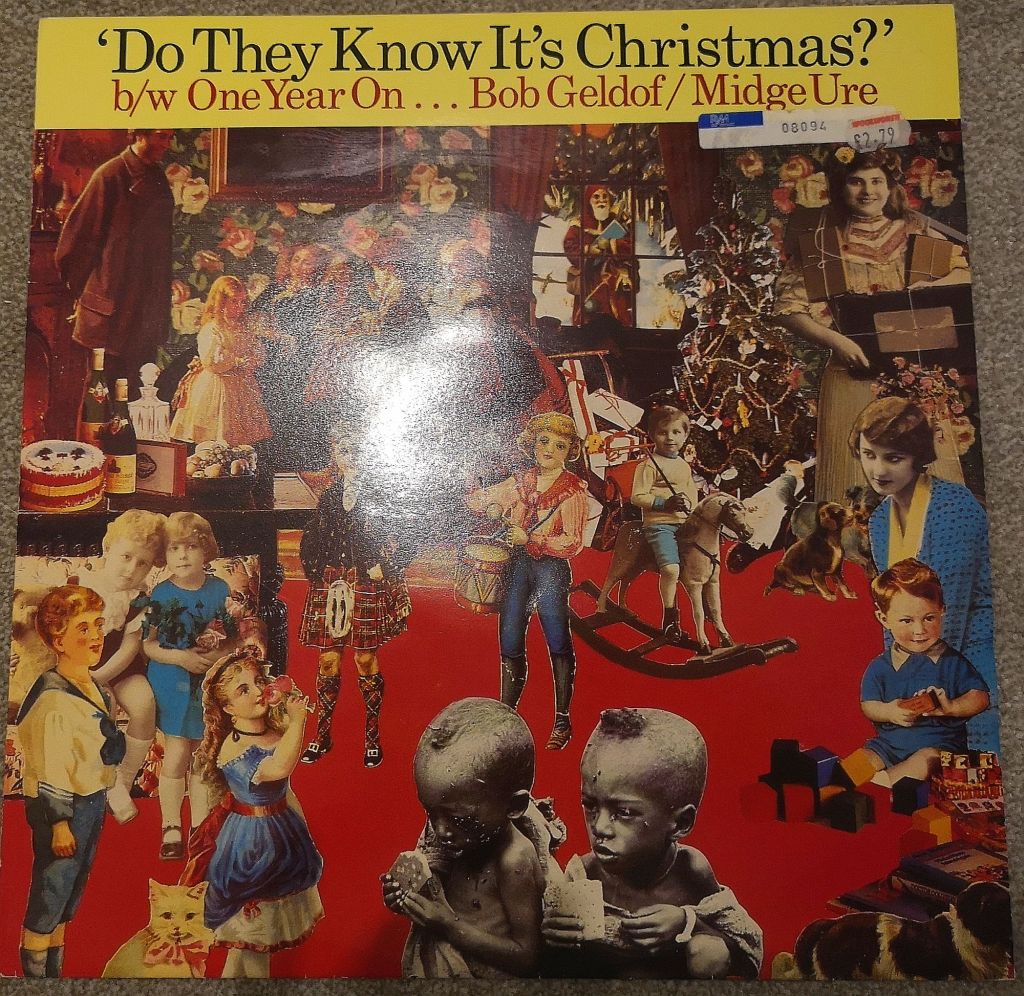
It was the single that became a phenomenon, selling over 3 million copies and becoming a Christmas staple. Band Aid was unlike anything that had been done before. Do They Know It’s Christmas was written, recorded and released within a month to raise funds for famine hit areas, and it raised £8 million pounds within a year. Never entirely without its detractors it has come in for a fresh wave of criticism four decades on, but I feel that it’s critics, despite making some valid points, should take much more account of the cultural and social landscape of the time.
Mass Communication in 1984
Television
When I look back to 1984, I remember an analogue world where BBC1 and ITV each had three news bulletins a day – definitely preferable to 24 hour news, but that’s another argument! There were four channels, the youngest of which had only been around since 1982. Breakfast television was still in its infancy and both channels had a magazine style approach into which news only intruded occasionally. There was still a closedown on all four major channels – again better than the 24 hour a day programming we have – the only exception being for the 1984 Olympics from Los Angeles which were broadcast through the night. News from Asia or Africa very rarely came to public attention, and if it did it was almost always to do with war, famine or an item on ‘And finally …’ on ITV when foreigners did something strange or amusing.
Computers
The computer rooms in major firms were just that, rooms with huge computers. They possessed a memory that was less extensive than the phone, tablet or laptop you are reading this on. Remember that the ZX Spectrum with a ‘massive’ 48k memory was only just over a year old and was still basically cutting edge. It loaded games using a cassette, and the graphics, amazing to an 80s teen, are considered positively prehistoric by today’s computer users! As for the internet, that existed purely in the realms of science fiction for the overwhelming majority of us. The thought of finding out what was happening everywhere and anywhere in the world in real time was fantasy.
Newspapers
This was the way that the majority of our news was delivered. Yes, TV was immediate but on most stories it could not go into the depth that newspapers could. With the luxury of a few hours or a couple of days, newspaper writers could provide a more considered take on the main events. They didn’t always succeed in this, but they certainly did quite well all things considered. The journalists got their own stories through instinct, interviews and simple hard work as they had no social media to rely on for hot takes – yes you’ve guessed it, a far better situation than the one we face today!
The Effect of Band Aid in 1984
Michael Buerk reported from Ethiopia, bringing the famine into the living rooms of the UK. There was shock, of course, at the sights and sounds of the famine, but we had seen these scenes before and we would see them again. I think it is fair to say that there was perhaps a parochialism to the majority of the UK at the time because flights were relatively much more expensive than they are now so we often stayed put, or we went to Europe on one or two week breaks. Obviously there were many people who didn’t fit in to that stereotype, but they tended to be very much the exception. Since most of our considerations were of a domestic nature, the foreign news, even the most horrifying foreign news, had far less impact than it does today. Without Bob Geldof and Midge Ure the famine would have faded from our collective consciousness very quickly. Their decision to do something about it gave an impetus to the fund raising that would never have happened otherwise. They kept the story in the news and actually enabled us to do something to help. We could buy the record and donate to a cause we would have probably walked past if it was the subject of a street collection. Many people, even if they didn’t buy the record, were aware of and remembered the story of the famine for far longer than they would have been in the normal run of things. By keeping the situation in the public eye Band Aid ensured that the famine remained on the front pages. At Christmas time when thoughts more typically strayed to family, friends, food and festivities, we were reminded that not everyone was as fortunate. That effect was intensified the following July when Bob Geldof headed the massive Live Aid concert, raising even more money for those who were still suffering and for those who were trying to rebuild their lives.
So, of course, there were decisions that may have been made under immense time pressure that those involved would change with hindsight. (There are many things I would change from those days, not least my fashion choices!) However, the lyrics, whatever their perceived weaknesses, struck a chord that turned a news report about a distant event into something that so many of us cared about deeply. What Bob Geldof, Midge Ure and the artists and technicians gave freely to the cause created something that we should still marvel at. Oh, and I still love the record, it’s bloody marvellous and absolutely one that stands the test of time.

On this day 40 years ago (7 November 1984) I found myself at RAF Swinderby about to spend my first day as AC (Aircraftman) Pearce after having completed my attestation at the Careers Information Office (CIO) in Chatham Kent with the following oath.
I swear by Almighty God [or: do solemnly, and truly declare and affirm] that I will be faithful and bear true allegiance to Her Majesty Queen Elizabeth II Her Heirs and Successors, and that I will, as in duty bound, honestly and faithfully defend Her Majesty, Her Heirs and Successors, in Person, Crown and Dignity against all enemies, and will observe and obey all orders of Her Majesty, Her Heirs and Successors, and of the air officers set over me.
I had accepted my first pay, signed on for a minimum of 9 years and agreed to potentially give up my life in the service of the country. When you think about it, that is quite something for a young person who wasn’t even 20 to do. At the time, a steady stream of young people in the UK were making a similar declaration, whether or not they fully understood how significant that oath was. Most young people who joined up were doing so for the career and the chance to escape their civvy lives. I was definitely one such young person.
The year before I had joined Lloyds’ of London working in their Chatham office as a Non-Marine Policy Checker. It was a job I was spectacularly ill-suited for! After about 8 months I realised that I needed to look for another job before I lost the one I had. The Lloyds’ building and the CIO were a couple of hundred yards apart and one day, in a very despondent mood, I thought ‘What the hell?’ and walked into to see if the services might be able to use my negligible talents! Well, it turned out they thought they could as a clerk in one of the offices, handing out pay, rail tickets and keeping records. I certainly wasn’t going to be any good at anything else! In the days of flexi-time I could chat to the Sergeant, decide on where I could best be fitted and undergo my entry test during my lunchtime. Luckily my lunchtime on that day could run from 11:30 – 2:00!! Within a month of the tests, two things happened, but not in the order I perhaps expected. I was called in to the manager’s office to be told that I was in last chance saloon. I responded by taking out my prepared resignation letter, dating it and handing it straight to my rather bemused boss! While I worked out my month’s notice I kept coming home looking for the letter from the CIO. Then, about a week before I finished at Lloyds I was officially looking at 9 years as an RAF Clerk!
I left Lloyds, almost certainly to their immense relief, and, despite my impending cashflow problem, mine, with the clear aim of getting fit. I was tall and thin but I had barely done any exercise since leaving school a year earlier. I resolved to get myself to a level where I could complete the one and a half mile run in under 11 minutes which was the benchmark to get through basic training. My first run saw me plod round two miles in 20 minutes and collapse in a heap! Well, that was my baseline and I had three months to improve things. I got up every day, put my tracksuit on, put a cassette in my Walkman and went out running before even having a cup of tea! Over the next three months I set myself targets to increase both my speed and my distance and within that time I was running a steady 5 miles in 30 minutes. Looking back, that was a pretty impressive rate of improvement! So I was ready to go … or so I thought!
I was not on my own at the attestation or the journey up to RAF Swinderby. Darren Wellard was joining up with me and it helped the nerves that we were on the same train for both legs of the journey. We got to Newark Northgate and then all hell broke loose! We were met by Corporal Hunter who proceeded to scream and shout at the 30 or so recruits who had caught that train in what seemed to be a completely deranged way! It was clearly designed to frighten and unsettle us and to let us know that civilian life was at an end, and it certainly worked. I am not going to pretend I had the slightest idea what to expect but the greeting from our Corporal sure as hell wasn’t in my wildest nightmares! What it gave all of the new recruits was a common enemy to force us to bond together as a flight. I really enjoyed the feeling of camaraderie and that is my abiding memory of my time there. I met young lads like myself from all over the country, getting on best with pretty much anyone from Wales, Scotland and anywhere from the Midlands northwards!

The biggest problem was the Sword of Damocles hanging over our collective heads. Every week, based on make or break tests, the decision was made whether or not to backflight the recruits. Backflighting was the nightmare scenario for all of us, taking us away from the lads we had got to know and rely on. I escaped the first two weeks, being much better than I expected at stripping and reassembling a rifle, doing it in 50 seconds, comfortably beating the 11 minutes for the run and being much better at PT than I had ever been at school! The third week was where things unravelled. I ended up in the medical unit with chest trouble after being forced to stand in the CS gas chamber for well over a minute by the Rockapes (RAF Regiment) who were generally nasty pieces of work, had a total disaster on the firing range and finally falling foul of foot drill which, with my dyspraxia, was a huge struggle throughout. My backflighting was inevitable. The shock was that I was sent back three weeks to the very start, which was totally unfair in my opinion, then and now. I was utterly demoralised, close to quitting and after another three weeks it was back to the start again. My original flight was due to pass out on the middle Wednesday of December and by the time that happened they were down to half their size. I’ll never forget them marching past to the RAF Swinderby band playing Winter Wonderland. I hated that song for years afterwards!
Oddly enough, when I went home for my Christmas break, it gave me much needed space and made me determined to go back for 6 weeks and get through after finding out how many people were rooting for me. Best laid plans and all that! Within one week I was back in the medical unit having torn all the ligaments in my right ankle and my achilles tendon for good measure due to a twisted ankle that just became more and more damaged. A few weeks later I was off to the Joint Services Medical Rehabilitation Unit Chessington where I stayed for three months before being returned to Swinderby to await a P8 medical discharge. The process dragged on until February 1986, a full 15 months after I joined. At the time I was, according to a couple of the chattier regulars, the longest serving AC they had ever had at Swinderby! Whether that was true or not it certainly felt like it.
So four decades on, how do I view my time in the RAF? For years I was reluctant to even think of myself as an ex serviceman, considering myself unworthy of counting in that number. Then on a Facebook chat in the RAF Swinderby group I wrote that down. The first response I got was to remind me that I had signed up to give my all to the country up to and including my life. On that basis I should always see myself as a proper ex serviceman. That comment changed my entire mindset.
My fifteen months changed me completely. I became a far more self reliant person and I learnt how to deal with, what was then, the absolute worst that could be thrown at me in a given situation. I also matured inwardly, if not outwardly, to an extent that would never have been possible in the safety net that my old life gave me. I used the compensation money from my medical discharge to go to America as an International Scout, something I would never have had the nerve to do without my time in the services. Those 15 months have shaped the next 40 years in many ways. I never paid my dues in terms of the nine years I signed up for, but I came to terms with the fact that it wasn’t entirely my fault. Would I do it again if I was sent back in time to 1984 and knew that the outcome would be the same? On balance yes. Per Ardua Ad Astra.

The Pretenders and The Picturebooks London Palladium October 23 2024
This was a concert that had been postponed from its original February date after Chrissie Hynde injured her knee. It was the middle date of three at the London Palladium and we went in eager to finally see a band that is amongst my wife’s favourites. There was never any chance that the main attraction would disappoint, but what about the support act?
The Picturebooks
The Picturebooks are a duo featuring lead guitar and drums and they were as compact as any band I have seen in terms of the space they took up on the stage. When they started playing they were compact in the other sense of the word. They looked like they had been playing together for years, but as we found out later the usual drummer was indisposed and this was his replacement for the tour. The drumming on PCH Diamond was the first thing I noticed. It was mesmerising and complex with a high energy level and it laid down the basis for a wall of sound that filled the hall. They followed up the excellent self penned track with two covers that demonstrated the range of their influences. First up was I Feel You, originally by Depeche Mode, which they totally made their own, with the intense interplay between drum and guitar aided by excellent vocals. This was followed by State Trooper, a Bruce Springsteen cover which was very well done. Then came the undoubted highlight of the set with the most unexpected background. Why Mother Why was a song that the lead singer dreamed about. When he woke up he quickly recorded a vocal guide of the tune which he built upon to create an absolutely epic song that had a choir in the recorded version. He then told the story of making the video and facing up to the horror of his father, who was shooting the video, being hit by a lorry that almost killed him! To the delight of the crowd, he told us that the story had a happy ending as it was his dad in the lighting booth for them that night. Well, given the incredible backstory it would have been a shame if the song was not particularly good! It was in fact absolutely terrific, and at the end of the song my wife in particular was already a committed fan! The last two tracks, The Rabbit and the Wolf and Your Kisses Burn Like Fire demonstrated the prowess of their song writing and the fact that Chrissie Hynde knew what she was doing in inviting such a brilliant support act along on the tour. My wife is telling everyone who will listen how good they are, and listening to their new album Albuquerque on repeat. Well, I can only echo those sentiments. Get The Picturebooks on your playlist and look out for them on their own tour of the UK in March 2025. They are a force to be reckoned with.

The Pretenders
When The Pretenders came out to start their set the excitement was at fever pitch. Theirs are one of the most committed fanbases you could ever see. Clearly Chrissie Hynde would be able to stuff the set full of singles and everyone would be overjoyed. However, she produced a set that was full of deep cuts that the die hard fans would know and that the less committed would enjoy even if they didn’t know them. Judging by the reaction to every album track The Palladium was full of the long standing fans that any band would really appreciate. Losing My Sense of Taste was the first song of the night, from their most recent album, Relentless, released last year, as was their second A Love, and the people around me seemed to know those as well as the songs I recognised from the earlier albums. The thing that stood out from the beginning was just how loud and intense the band were. They were a superb unit who were amongst the best I have seen live over the years. I was expecting Chrissie Hynde to still sound good, but in fact she sounded absolutely amazing! The power and range of her voice hasn’t diminished over the years and her guitar playing was outstanding throughout the night. It is incredible to think that The Pretenders first single Stop Your Sobbing was released in 1979, and here she is 45 years later still at the top of her game. The first song I recognised on the night was the marvellous Kid, one of their three releases from 1979, and it is such a good track that all these years later it sounds as fresh as anything you could hear now. This was when everything came together for me on the night and really drew me in. Before long there was the next highpoint for me, the magnificent Talk of the Town which raised a massive cheer from the entire Palladium as soon as that instantly recognisable intro rang out. Having said that, by the time that happened I had been completely won over by a band that seemed to get better and better song by song. Although the setlist didn’t include my two favourite songs from the band, Hymn for Her and 2000 Miles, it turned out to be as good a night as I could have imagined. Back on the Chain Gang and I Go To Sleep were presented with intensity and verve, sounding even better live than they had been on record. The punk style energy of their early incarnation was thoroughly matched by a band who were full of musicians at the top of their game and a lead singer who is absolutely ageless. For me, the highlight of the set was a raucous and rocking version of the brilliant 1986 single Don’t Get Me Wrong. I saw it on Top of the Pops recently and can only say that it was definitely even better on the night itself. By the time the last notes of Tattooed Love Boys from their very first album rang out the crowd were in raptures as they paid tribute to one of the best bands of the modern era with perhaps the greatest front woman of any era. Thank you Chrissie, you were amazing!
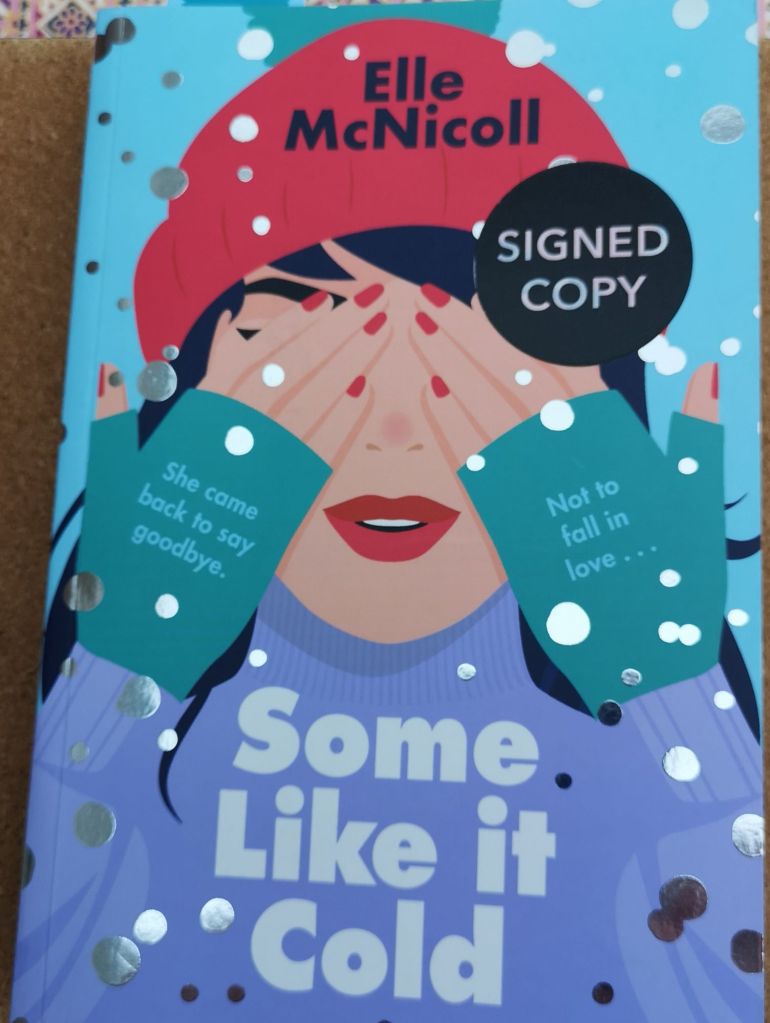
When I found out that Elle McNicoll was releasing a new book I went straight online to West End Lane Books and ordered a signed copy. There are only a few authors that I will do that for, but after A Kind of Spark and Keedie captured my heart and my imagination, I knew I was on safe ground. So, what did I think? Well read on!
The Story
This book is the story of Jasper Montgomery. She is at a crossroads in her life, having decided to give up her university course and move away from her home town of Pristine Lake for good. She returns home to find out that her Queen Bee sister, Christine, is getting married and quite literally crashes the proposal! She is clever, kind and incredibly hardworking. She is also, like Elle McNicoll’s previous heroines, neurodivergent, but very few people in town know that as her mother is at pains to keep that particular ’embarrassment’ a secret. Jasper is coming home to say goodbye to the town and to complete a list of things she has given herself to do. Two things seem to be getting in the way. She finds that her sister’s wedding is the talk of the town and that it is only getting bigger day by day, requiring her to help out with all the arrangements, and she has also come back when her nemesis Arthur Lancaster is making a film about Lake Pristine for a competition that will net $10,000 for the winner, money that he wants to put towards refurbishing the old cinema of his Dad’s that he now runs. As she gets to know ‘Art’ better she is getting confusing signals, which is situation normal for someone who is autistic of course, but she starts to think that maybe the signals aren’t actually confusing at all. Throw in the problems her estranged best friend is having with her boyfriend and the fact that she is directing The Nutcracker for her Mother’s ballet school, and Jasper is stretched to breaking point. When the rough cut of the film is shown with her and her sister heavily featured things get even more complicated. How is she going to tell everyone about university and finish her list before leaving Lake Pristine?
My thoughts
The idea of a neurodivergent romantic heroine was something that instantly intrigued me, particularly one written by a neurodivergent author who can communicate the reality of life on the autistic spectrum so brilliantly and so honestly. She has always been in the shadow of her sister, the queen of Lake Pristine, a situation reflected in Art’s sarcastic nickname for her, ‘Princess’. However, this isn’t a narrative of an ugly duckling turning into a swan, because the really fascinating thing about Jasper, is that her masking is so successful that she is actually incredibly popular in Lake Pristine. I had rarely seen an autistic character written like that before, and it was such a breath of fresh air. It’s marvellous to see the usual misfit narrative turned on its head and to see a socially successful character. Everyone, apart from Art apparently, loves her and values her for herself, although of course it isn’t her true self. Given this affection she inspires, why hasn’t she attracted more interest? When I think back to my own teenage years, albeit the polar opposite socially, I was totally ill equipped to enter into any romantic relationship. I either imagined a connection that wasn’t there or completely missed a connection that was – every single time! In this respect, Jasper is absolutely in tune with my teenage self.
Jasper has a huge amount of creativity, and design is her true passion, but people around her are reluctant to see it as anything more than a hobby. Her mother has always been extremely hard on her and made her dance until her feet bled in ballet class, whilst giving everyone else a much easier time. Jasper sees it as a reflection of her lack of perfection that her mother has seen since the diagnosis and which she seems to be punishing her for. It is her father who quietly supports her in everything except for her ambition to be a professional designer. We see a young woman forced into a family induced straitjacket of studying law which her parents are paying for. As they won’t pay for a design course, seeing it as a degree with no prospects, Jasper is saving every penny she can. This feeling of being pushed in the wrong direction for your talents is one I am very familiar with but unlike Jasper I never felt I was really in a position to plough my own furrow.
The supporting characters are so well drawn that you become immersed in Lake Pristine from the outset. Art is extremely complex with a number of threads that we have to unravel along with Jasper. His father has died leaving him as a surrogate parent to his little sister, Grace. His cousin, Marcus, is editing the film but it seems that he may be going his own way when putting together the final version. Odette, Jasper’s childhood best friend, is going out with Craig and the already strained relationship between the formerly inseparable duo looks like it could break down altogether with Jasper’s determination to show that Craig is bad news. Christine Montgomery is demanding, occasionally downright unpleasant, but is she more vulnerable than even Jasper realises?
Elle McNicoll drew me in to the world of Addie and Keedie and I really cared about the characters, but I grew to care about Jasper’s world even more. The town became utterly familiar to me as the story progressed and I wanted to learn more about the people in it, especially Art’s sister Grace, in many ways the second beating heart of the story. The romance was beautifully handled, avoiding cliché and easy sentiment throughout. Finally, the ending was simply perfect whilst, hopefully, leaving open the possibility of revisiting Jasper once again. For so long, The List of Suspicious Things was my favourite book of the year. This has now joined it and whatever age you are this wintry YA romance will enchant you and leave you feeling warm inside.
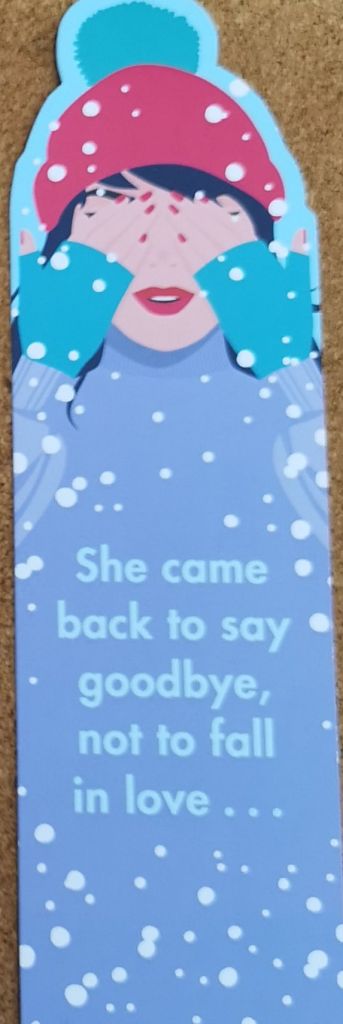
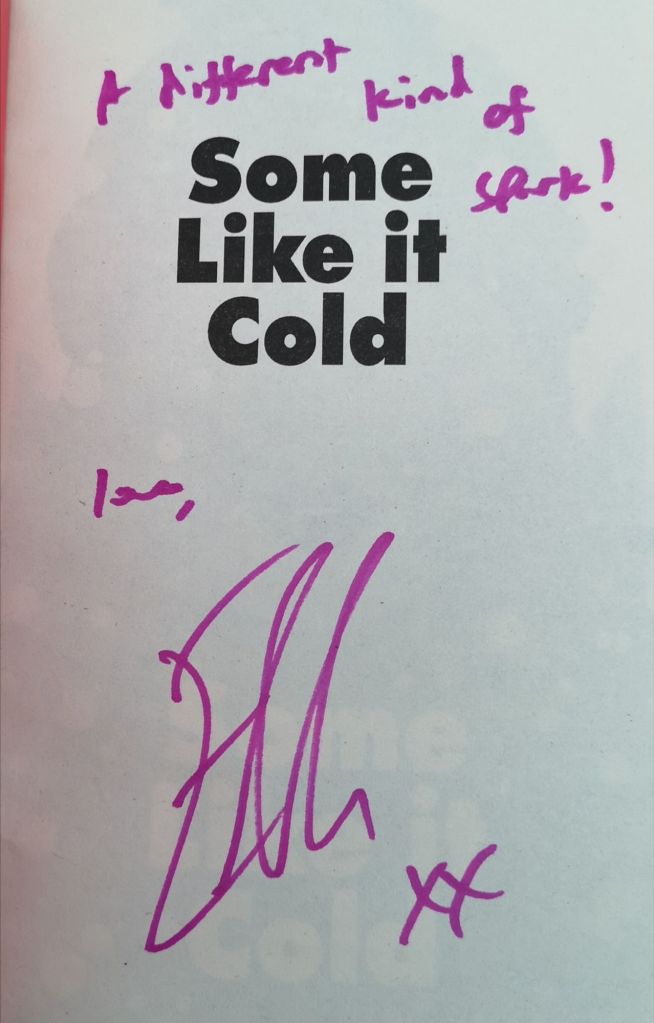
Finally, I must just give a shout out to West End Lane Books who have teamed up with Elle McNicoll to provide signed copies of this book and also Keedie. The book itself has a gorgeous cover and a lovely bookmark to go with it. It was simply the icing on the cake as far as I was concerned.
 David Pearce - Popular Culture and Personal Passions