
A fairly light two months in terms of number of books read – only nine – but that was due to two factors. Firstly, a deliberate decision to slow down rather than gallop through books as I tend to. Secondly, I had a full two weeks off at Easter for the first time in years and when I am not commuting I tend not to read. That’s definitely something I need to sort out when I finish full time work or my June and July reads could be a very short article indeed! Anyway, on with a typically eclectic selection of books.
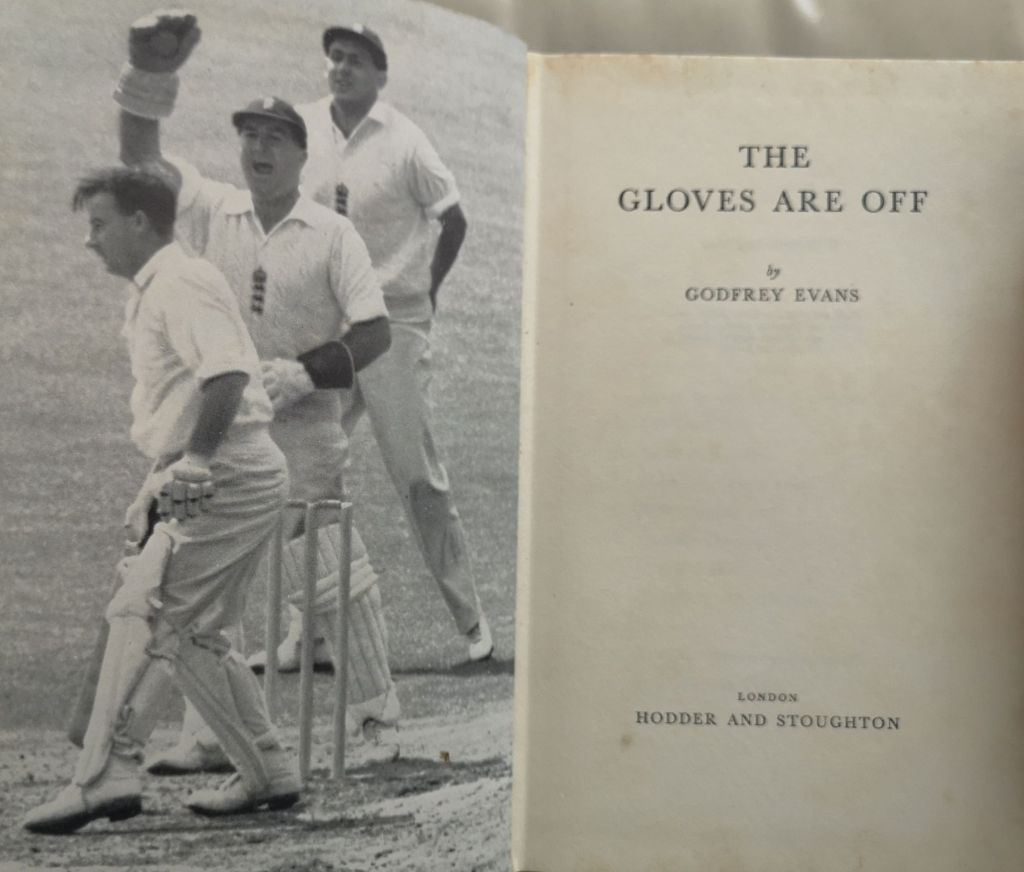
Godfrey Evans – The Gloves are Off
For any cricket lover with an interest in the history of the game, the name Godfrey Evans is instantly familiar. A wicketkeeper batsman he took the role and started to develop it into a central part of the side. In a sense he was probably the first of the modern keepers, highly influential in the development of the discipline and a larger than life celebrity who was known outside the game. His autobiography is a gem of sports writing and balanced in the way he sees his career. Where he was unfortunate, he makes that case and where he was culpable, he takes responsibility for his own failings. Engaging, thought provoking and fascinating in equal measure, Godfrey Evans brings to life a vanished world both socially and in sporting terms, but does so in a way that is still very modern in terms of the writing. If you love cricket, take a look in the second hand bookshops like I did and if you find it, you definitely won’t be disappointed.
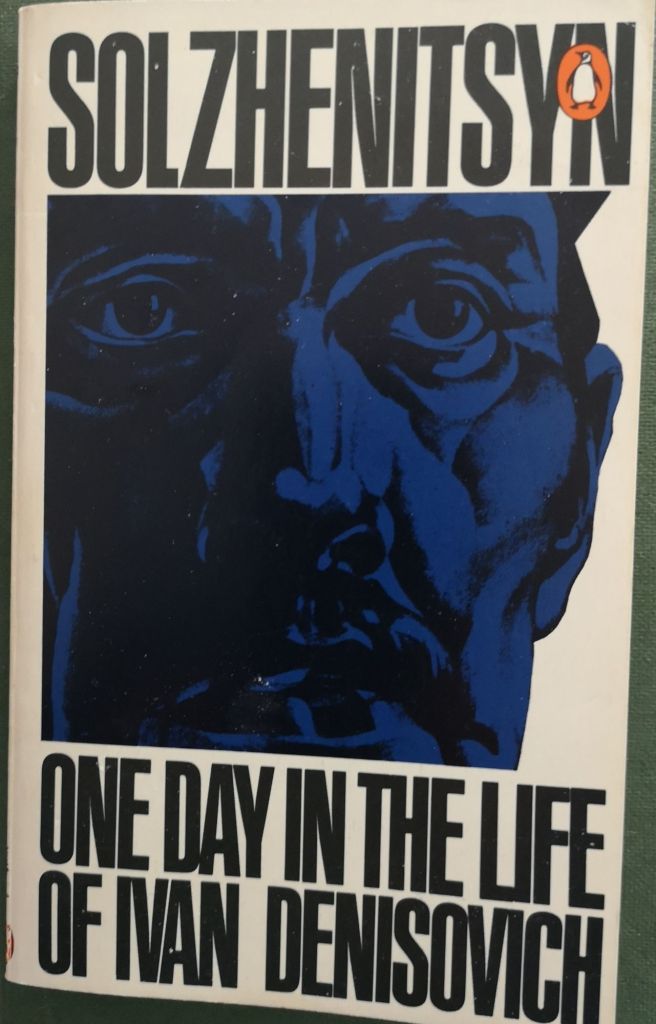
Alexander Solzhenitsyn – One Day in the Life of Ivan Denisovich
I have related, at some length, my thoughts on my secondary school, mainly that it was probably the worst time of my life. However, there were some high points to the experience, specifically the way in which I was introduced to books and plays which became real favourites of mine. I studied Macbeth and Great Expectations at O Level and still love both, The History Man at A Level, the finest university novel of all for me, and then this book in General English. In the far off days where education was about opening students’ minds, not just coaching them for exams as it is nowadays, General English was a 2 lesson a week course at Sixth Form level where teachers would get the students to read books and plays that they thought were worth exploring. One Day in the Life of Ivan Denisovich was my favourite book from these lessons. The teacher, Mr Worsnop, was also my history teacher at various points during school, so this book was definitely a dual purpose introduction to both historical context and contemporary Soviet writing. Over 40 years later, I found this book and immediately wanted to read it again, so strong was the impression it made on me. It is the story of a political prisoner in a Siberian Gulag, and as such is a reflection of Solzhenitsyn’s own experience. The aspect of the book that comes across most clearly is the fact that each day is a series of little victories and little defeats. Prisoners learnt to relish the former and minimise the latter, and as a lesson for life it is applicable outside of extreme situations. The writing is immediate, claustrophobic and intense, but it is also reflective, positive and inspiring. Rereading this novel was an absolute pleasure and it has definitely made me want to explore some of Solzhenitsyn’s other works. If you are interested in history, politics or the way that the human spirit survives against the odds I think you’ll really enjoy this book.
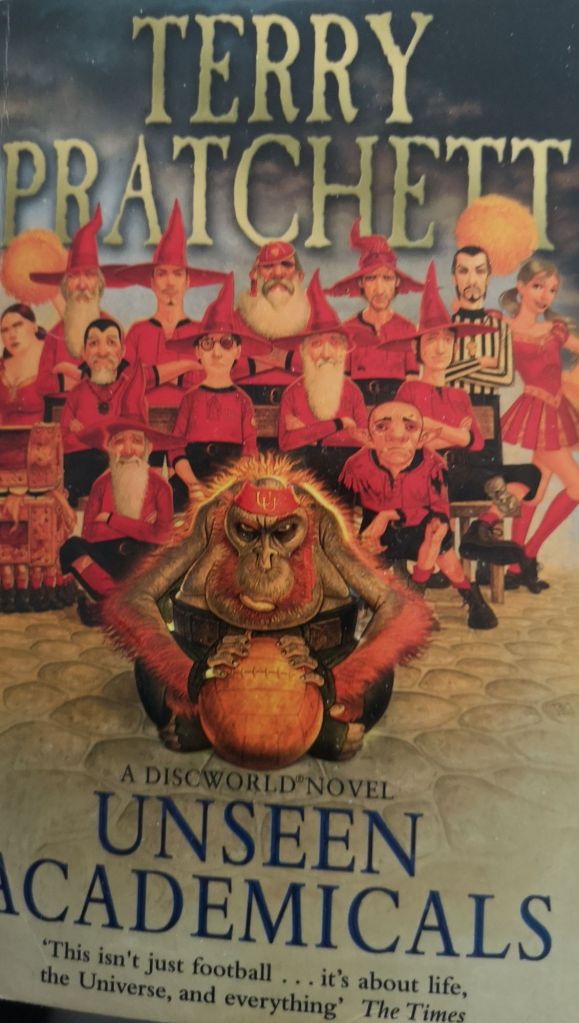
Terry Pratchett – Unseen Academicals
I love the Discworld novels and have read the majority of them over the years. This one is a later entry to the series and is one I have been meaning to read for quite a while. The story, as the cover indicates, revolves around the game of football, though it does have a typical Discworld twist as it has become almost a religion with its own mythology. The Unseen University is full of wizards who combine the power of magic with the complete inability of certain academics to show any hint of common sense! The bulk of the common sense comes from below stairs and the sub plots include dwarf fashion, the way that minorities are treated and the way that servants are treated. As with all Discworld novels there is a lightness of touch throughout that makes the satire and the philosophy accessible and entertaining. Sir Terry was one of the greatest novelists of the last 100 years and I think it’s only the genre of the books that has stopped him from being acknowledged alongside Dickens and Christie in the highest ranks of writers.
P. D. James – The Lighthouse
This is the penultimate Adam Dalgleish mystery and it is undoubtedly the most reflective and downbeat novel of the series. The police work revolves around the death of an author on an island that is meant to be a haven for those in the public eye. There are no shortage of motives flying around, and at points you wonder if this might stray into Murder on the Orient Express territory. In this book, however, it is the personal that takes precedence over the professional as all three members of Dalgleish’s team find themselves at crossroads in their lives and have to decide which way to go. If this is the first Dalgleish novel you read you would find yourself hard pushed to care, but if you have got to know the team in the other books it makes this a refreshingly deep read.

Peter Robinson – Cold is the Grave
This is the eleventh in a series of twenty eight novels about DCI Banks. It is a series that was suggested by a contributor to my #CastawayCollection challenge on Twitter where I asked people to choose 10 books, 10 films or TV series and 10 albums to take to a desert island. I have now read three of them and thoroughly enjoyed them. It is hard to get noticed in the ongoing detective series genre and DCI Banks is definitely something of an overlooked figure by many, but his mix of faults, failings and detective skills definitely makes him well worth checking out. In this book, Chief Constable Riddle, his regular antagonist, asks Banks to find his missing daughter. Initially reluctant to accede to this off the record request, he decides to assist the Chief Constable but the case, initially simple and apparently finished with, explodes back into Banks’ life in ways that he could never have anticipated.

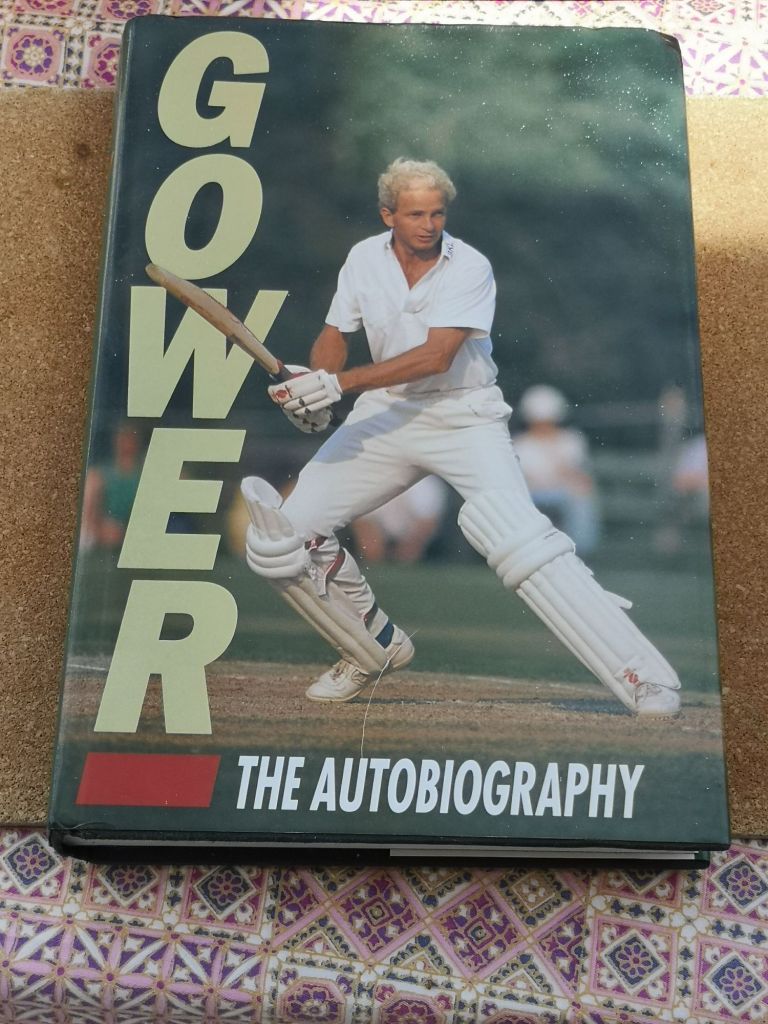
David Gower – Gower The Autobiography
You would expect anything written by David Gower to be entertaining and classy, just like his batting, and indeed it is. What you might not expect is the way in which he settles scores and makes it clear that he has been failed by captains, like Graham Gooch who turned from great friend to implacable opponent even though they were in the same team, and coaches who did not understand him or, in the case of Micky Stewart, even try to. What’s so strange about that, you may ask? Well, this autobiography was written while he was still playing and while he harboured hopes of getting back into the England team! David Gower was always his own man and, as this autobiography makes clear, far stronger and far less insouciant than his batting would have you believe. He talks openly and honestly about the highs and the lows and, by the end of the book, he has shown himself to be a much more complex character than his public persona ever hinted at. It reminded me how much I loved his playing style and how much I idolised him as a player. I definitely need to go back to YouTube and watch him in action!
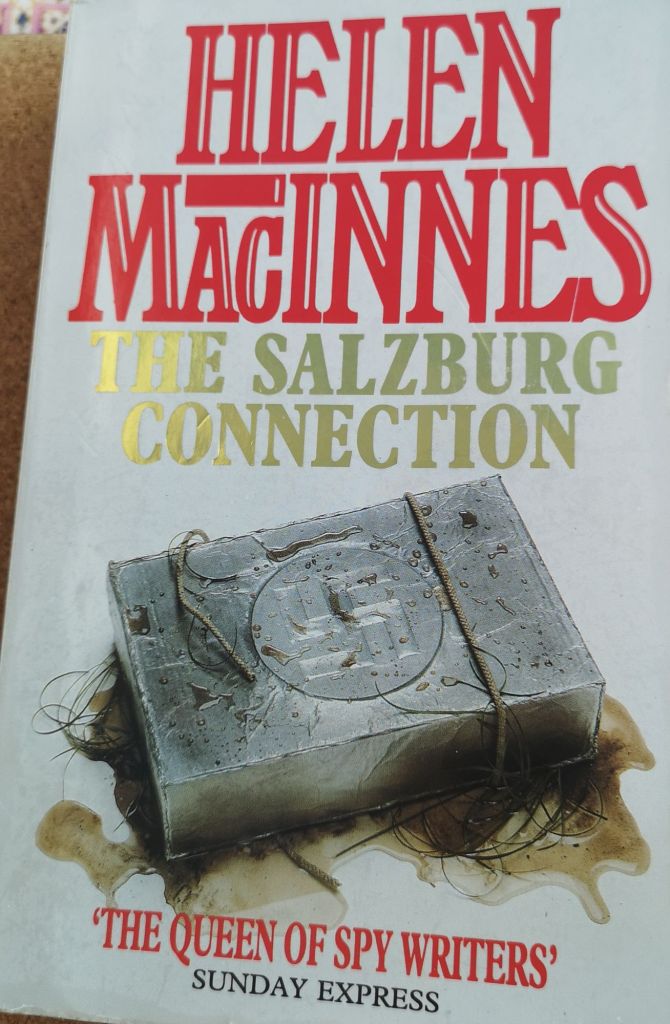
Helen MacInnes – The Salzburg Connection
This is definitely not the type of book I would ever choose to read normally. The sprawling espionage novel usually leaves me cold, and there were times when this novel from the 1960s had that effect, but by the end I have to admit to being gripped even if I couldn’t remember how each of the characters fitted in to the story at a number of times throughout the book. It is always good to test yourself with something different, and I really did appreciate the quality of the writing, but I think it’s a one and done for me in terms of that particular genre. My wife, on the other hand, was always a big fan of books in the espionage genre and she says it’s one of the best so if you are tempted to discover a writer who was terrifically successful in the 60s and 70s this is a really good start.
Helen Moat – While the Earth Holds its Breath
The subtitle is ‘Embracing the Winter Season’ and it chronicles the author’s attempts to tackle her dislike of the coldest and darkest time of the year. For Helen Moat, as for many others, that dislike had become Seasonal Affective Disorder or SAD. It is not something I could relate to, given that Winter is a time of the year I really love, but the book seemed to be very much up my street with her travels to Lapland and Japan, two places I have visited during the Winter season and which I really enjoyed. Moat is such a gifted writer that she immediately drew me in to a condition and thought process that I had never understood and explained it with real clarity. Ever chapter starts with a quote that sums up the content in some way. Some of them were profound, some beautiful and all were thought provoking. The journey to a form of acceptance is not a smooth one. There are times when the old experience of SAD rears its head, but when that happens Moat is reflective, honest and fascinating. It is a beautiful book that reminded me why Winter is my favourite season, and why I should start appreciating some of the little things even more.

Andrew Gant – Christmas Carols
Yes, I know! What on earth am I doing reading this in May? Perhaps some of my fellow commuters may have been wondering that when I took the book out of my rucksack every morning and evening! However, for me the love I have for Christmas means that I can read books or watch films to do with the festival at pretty much any time of the year. To read the stories behind the carols was absolutely fascinating, especially ones which I love and which are as familiar to me as anything else in my life. It turns out that they have backgrounds that you couldn’t even imagine. My favourite fact concerned While Shepherds Watched Their Flocks which was sung to the tune Cranford, better known as ‘On Ilkley Moor B’ah Tat’! Andrew Gant is an incredibly engaging writer who brings songs and their history to life in a way I haven’t seen before. There are words and music for each carol at the end and I was singing them in my head with a sense of how important they have been in my life over so many years. Whatever time of the year you read this you will appreciate both the scholarship and the quiet humour. It’s a must read for music lovers, social historians and popular culture devotees – and of course Christmas lovers! I am all four so it was perfect!

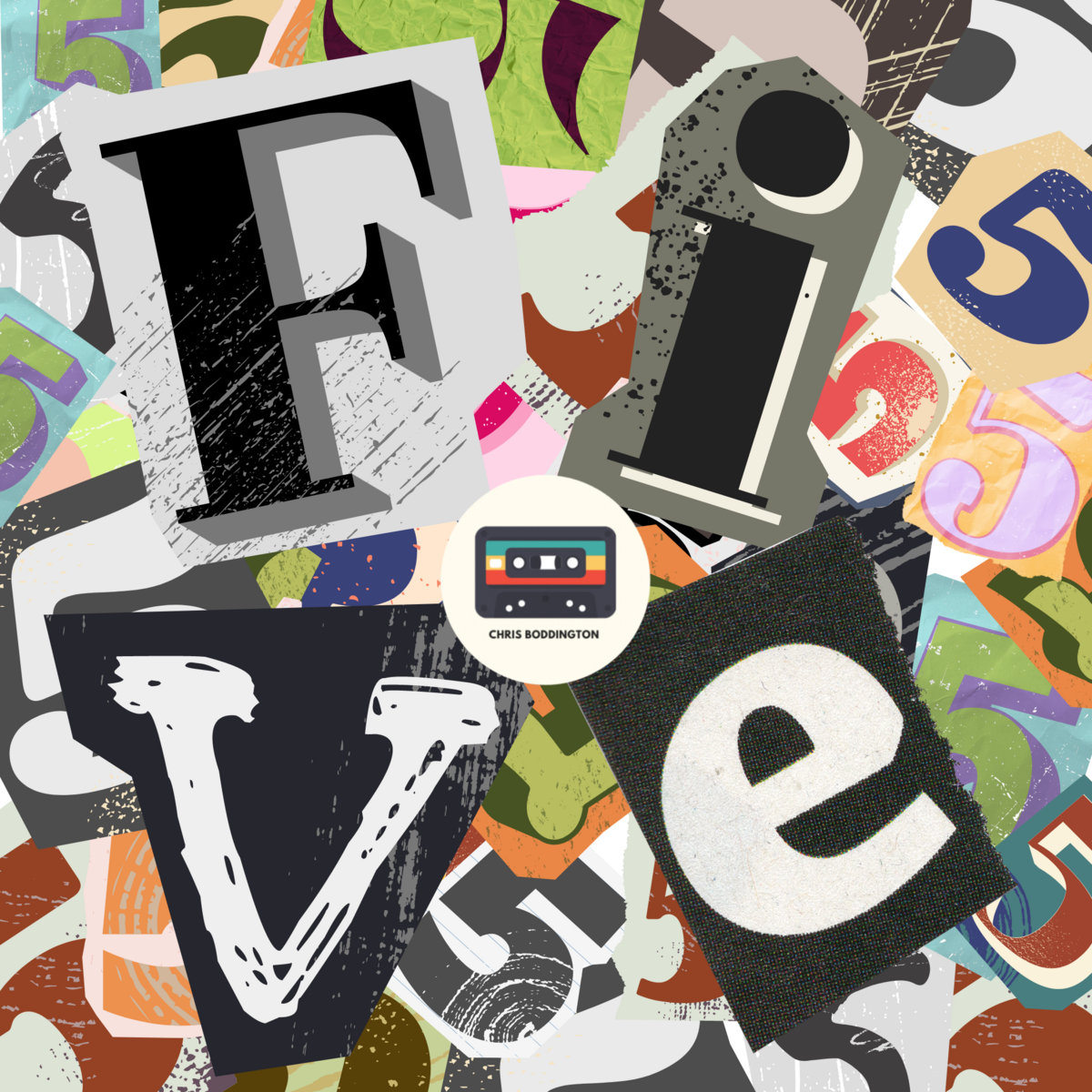
Five by Chris Boddington Review
Chris Boddington is an artist who never fails to engage his audience because he never settles for the safe option with his music. He continues to explore his huge musical hinterland and brings something new to the genre with every album he releases. Five is an album with 8 tracks in a tightly packed 30 minutes that bristles with ideas and an enthusiasm for dance music that is indefatigable. Give it a go. You’ll be glad you did.
Track 1 – Invisible Man The electronic accompaniment to Invisible Man reminds me of the brilliant Dead and Gone by T.I. with Justin Timberlake. It gives the track a real immediacy and a flair that starts off the album with a bang. It shows Chris’ knowledge of the different areas of the EDM scene through the ages, especially as it connected with the rap scene of the early to mid-2000s in particular, and his ability to pick out the sound of any era whilst making it entirely his own.
Track 2 – Do It This track is another rhythm heavy lyrical performance which means that this track has an unsettling edge to it and Chris moulds the tune around the words to great effect. At times you are listening to the lyrics, but then the tune hits you with its originality and intriguing use of effects that put me in mind of a chipmunk for some reason! It is a really complete and fascinating song that demonstrates the disparate influences that Chris can put together.
Track 3 – Hustlin’ This track is based around a jangly, almost C&W style guitar riff that draws you in and shows that Chris can make a dance tune in pretty much any genre. It’s like a really chilled Cotton Eye Joe. The lyrics are more in the background of this song and this allows you to concentrate on the great tune. I really enjoyed the more playful air to it as it contrasts very effectively with the heavier opening pair of tracks.
Track 4 – Marrakech This is my favourite on the album. It has an Arabic tinge as the title suggests and comes out of the speakers like the best of the Karma Lounge style tunes. It is simply hypnotic and absolutely sublime, and just the type of song to end a night of dancing under the stars in an open-air club. Musically it is an absolute gem that stands comparison with any dance track you care to name.
Track 5 – Odyssey Another really good tune that weaves in and out of what sounds like another blissed out track. It complements Marrakech very well, having a similar style but slightly more rapping that gives it another club friendly vibe that cleverly raises the pace and benefits from a heavier edge. One of the things that Chris has always done well on his albums is to create a cohesive sound that threads its way through the tracks.
Track 6 – Say Your Prayer This has a female vocal which is a throwback to a jazzier sound and, in places, has a feeling of the late 80s to it, but the tune is much more from the 2000s. It sounds as if two disparate songs had suddenly met up and realised that they suited each other, and this is why the track works so well. You realise that there is a lot going on here, and this is the result of Chris’ musical magpie tendencies and his ear for a song working together brilliantly.
Track 7 – I Like When U The Pet Shop Boys would recognise the use of the echoing lyrics, stealthy synth and occasional guitar break from their early albums, and I don’t think they would be too unhappy with the comparison. There’s a hint of Domino Dancing and a stripped back Surburbia which makes this song another favourite of mine on a strong and highly listenable album.
Track 8 – Loca The final track has a Spanish language vocal that brings it a completely different feel from the tracks on the rest of the album. The tune is also completely different with an increasing BPM and what sounds like the early internet dial up tone! This is Chris telling you that he has one more surprise up his sleeve and it is, by turns, hypnotic and completely let off the leash.
As the Sullivan-Barnes family reaches the third and final decade of the experiment, we are promised that the gadget count will go through the roof, but it’s the humble television that causes the first hint of friction. There are now three TVs for three bedrooms belonging to Adam and Georgie, Steff and Ellie, and Hamish. The children can’t wait to get their own choice of viewing, but Georgie questions whether they need a television in their room. Adam says he has missed it, which causes him to get a frosty glance in return! Georgie’s worry about the family splitting up looks like it is already coming true in the first year of the new decade. Hamish is looking forward to staying in his room far more, as he did in 2009 (their modern day), whereas Ellie is more uncertain as to whether it’s really a positive thing. This situation gets more acute outside the bedrooms when the Game Boy arrives in 1991 and, as Adam observes, Hamish only needs to communicate for food and drink! Even Adam is ambivalent about the situation as he says he has enjoyed talking to him over the previous two decades.
In 1992, it’s time for satellite TV, and it was very interesting to recall, as the programme does, the snobbery associated with the dishes when they first arrived. It was seen as something almost shameful to have a dish on the side of your house, and certain assumptions were made about you if you did. As Georgie observes, it indicates couch potato, despite only having 5 extra channels! As mobile phones were still too expensive the family are given pagers, which I never saw outside of hospital dramas (!), to help organise a shopping trip for the millennium party they are going to hold at the end of the experiment. The ‘girls team’ found it very easy to use and send messages via the pager, but the ‘boys team’ proved that any technology in the world was only as good as the person using it!
1993 was a year that reflected the disquiet about increasing technology and the use to which it was put. There was a huge moral panic after the murder of James Bulger and technology, particularly the ‘violent’ video games of the time, which were cast in the role of the evil influence. To reflect this, the tech team deliver new consoles with a selection of popular games of the time, together with a note asking Adam and Georgie to look at the games and decide which are suitable for the children. They decide that Mortal Kombat was so poor in terms of the graphics that it was comical rather than disturbing. The main issue was the total incompatibility of the two gaming systems, Nintendo and Sega. Both Ellie and Steph, and Hamish, want the Nintendo to play Super Mario, and Adam decides the only fair way to decide it is to toss a coin. Hamish, perhaps as a result of the 1980s experience sees it as his right to have it and he complains bitterly leading to a battle of wills between Adam and Hamish. The coin is tossed and Steph calls correctly, so the girls get the Nintendo console while he is left with the Sega! That wasn’t happening in the 1980s because the girls found the BBC computer so boring, which indicates that both genders were equally happy to play video games, something I saw with my own children. It begs the question as to why it is still seen as a largely male preserve to this day.
At the end of 1993, Georgie gets a mobile phone, which would have cost the equivalent of £1400 in 2009, to reflect the fact that she has the highest status job in the family. She is amused by Adam’s apparent discomfort at not having one of his own! However, Adam has been given his own digital camera which he will use the following day when the family go to France to celebrate the 1994 opening of the Channel Tunnel. It’s interesting to find out that in 1994, no one could make or receive calls from aboard, so there turns out to be no point to Georgie taking it over there. Adam’s cutting edge technology is little better as the memory holds eight pictures with a resolution of half a megapixel. As there is no preview screen Adam is unaware that the pictures are so dark and grainy. The model he is using would cost the equivalent of £740 in 2009!
By 1995 the prospect of remote working looked to have become more of a reality as laptops and mobile phones now allowed workers to communicate with their offices. In practice, however, they were more likely to work at home after work rather than from home during the day as the internet was not powerful enough or available enough to support full time working. As we have seen recently, businesses are very suspicious of working from home even when it has been proven to raise productivity, probably because it has shown that the majority of workers not only don’t need micro managing bosses but actually perform better when they have proper autonomy and can decide on the structure of their working days.
When an early Sony console arrives, complete with games like Tomb Raider, Adam immediately commandeers the living room for a ‘lad’s night’ leaving Georgie despondent as this was what she had been dreading. She is sitting in the kitchen listening to Adam and his friends enjoying the games and, as she mentions, it feels very exclusive and a pointer to the future. The children, banished from the living room go upstairs to their own rooms as they would have done in 2009 leaving a completely atomised family unit. Although the amount of technology has grown exponentially across the 90s, it’s still not enough. Ellie wants a mobile phone, but is told that she can’t have one because she ‘will look like she’s mugged a yuppie’! Then Steph wants the internet which turns out to be less unlikely than I thought. By 1997, surprisingly, over 6 million UK people were already surfing the ‘World Wide Web’ so it’s time for the Sullivan-Barnes family to find out just how good, or not, the internet was in it’s early days.
It’s quite incredible to think that Tim Berners-Lee and Robert Cailliau, who is interviewed in a fascinating section from CERN, decided to make the World Wide Web completely open and free to anyone to use. They could have made it subscription or payment based and put it in a silo along with all the intranets that were developed from the 1960s onwards. By putting the code in the public domain and allowing anyone to use it they completely changed the world, and arguably the brains of nearly every human being on the planet. It is unarguably the most important scientific and cultural moment in history.
The internet of 1997 was delivered through a phone line with the noise that became so familiar to so many of us, and the websites, just 1.5 million at the time, were much more primitive due to the lack of processing power. Steff comments that the internet is rubbish! Georgie tackles Adam that night about putting a games console in the living room, something they had agreed would not happen during the experiment. Adam tries to protest that it’s a PS1, but the look that Georgie gives him betrays her view of that feeble justification! In 1998, the children finally get their mobile phones amongst a blizzard of technology including smoothie makers, digital cameras and pretty much anything else that could contain a microchip. There are so many deliveries that year that even tech head Adam gets annoyed by the constant churn of gadgets!
There’s a very interesting conversation at the dinner table on the penultimate night. Ellie wants to see the adult only status of the living room in 2009 reversed. Adam is very reluctant to allow that to happen as he regards it as his, but he is outvoted by the rest of the family. In response he makes the condition that the family can come in but that he (and maybe even Georgie!) will decide what they are watching. It’s interesting that with our modern mobiles everyone in a family can once again be in the same room but they can be completely separate in terms of what they are viewing. I think, on balance, I prefer that, because at least there is the opportunity to communicate with each other that doesn’t arise in a house where everyone is in different rooms.
We return to the Sullivan-Barnes family a month after the experiment to see what has changed if anything. Interestingly, while Georgie has come round to the view that technology is absolutely central to the children, Adam has decided that they need to do more things together as a family, so the living room has indeed become a place where the family can come together.
Final Thoughts
I remember really enjoying this when it was first shown back in 2009, and I found it fascinating once again. However, much as you never read the same book twice, because you bring different experiences to bear on each reading and understand and react to it in a different way, so you can never watch the same film or TV programme twice. When I first watched it my oldest child was 16 and my youngest was 8, and we were not able to afford new technology, so we often had gadgets that were a year or two behind, sometimes more. I remember looking at the Sullivan-Barnes’ home and thinking I’d love to have all that tech. Now, all but one of the children has moved out and we have powerful mobile phones, superfast broadband, hundreds of channels on our TV, a bread maker in the kitchen and many other gadgets. However, what I notice now is that the tech is in the background as we have come to terms with its centrality to our lives, and we have seemingly reached a plateau of innovation. All new phones look the same, laptops are pretty much identical and the only reminder of the old incompatibility is Apple with its insistence on tying people into their technology to the exclusion of all other operating systems, the main reason I have never wanted any Apple products. Now, when the children visit we spend time together, generally happy in each other’s company but with phones at the ready to distract us, use IMDB to find out who that actor was(!), or to communicate with people outside the house for a variety of reasons. Technology is both all enveloping and less important as we have found ways to navigate modern life. I wonder how the Sullivan-Barnes family look back on their time on this show? I wonder if they have made changes since then that have stuck? It would be fascinating to find out, and who knows, they might even read this! If they do, I raise a glass to them for being part of this experiment.
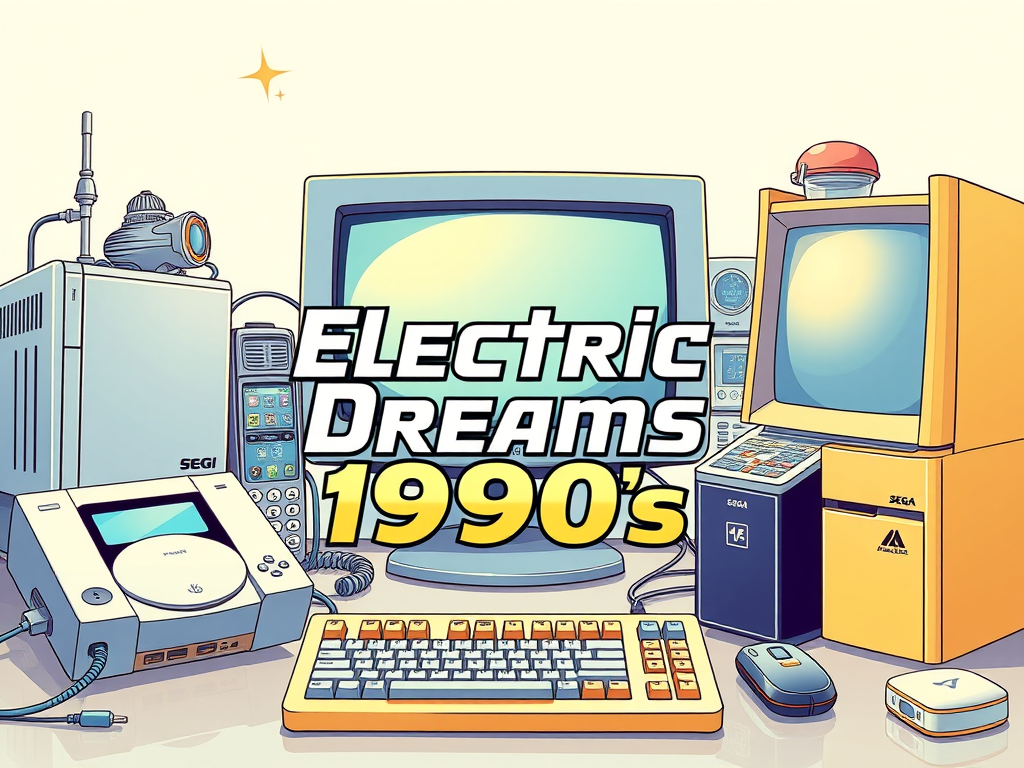
Oh, and one final note. I have created all the pictures to accompany this series using AI in WordPress and I have to say it is probably the most tangible (or non-tangible) form of technological progress I can think of. Even a year ago, AI like this would have to be paid for but now it is available to all of us.
Episode 2 The 1980s
The Sullivan-Barnes family found the 70s a very spartan decade in terms of technology, but the 80s promise to be very different decade for these gadget lovers. Fashion wise as our first glimpse of them shows, things have certainly improved from the flare dominated 70s. What will their house look like though? Will it still have the more closed off and smaller living spaces of the previous decade or will it showcase a more spacious way of life? Well, first impressions are of a brighter and more spacious looking sitting room, although the flowery old fashioned look that was popular at the time is not to Adam or Hamish’s taste, the latter comparing it to a granny’s house! Adam loves the huge hi-fi and Steff is impressed with the sleeker television, although she mentions that she is looking forward to having more channels. Georgie has to tell her that the fourth channel doesn’t arrive until 1982 and that’s it for the decade! The parents bedroom is now dominated by a four poster bed that looks awful! On the plus side they have their own ‘futuristic’ phone. Steff and Ellie have the nightmare inducing Cabbage Patch dolls in their room, but on the plus side they have their own tape player. It’s a very feminine house, which is interesting because it reflects the increasing influence of women when it came to decoration. Was it because women were taking full time jobs alongside their partners and therefore looked for more say on how their shared finances were spent? Was it that they were seen as more adept at coordinating interior decoration? Was it due to the marketing power of brands like Laura Ashley? I think it’s elements of all three myself that moved us from functional to ‘pretty’ in the home. It’s very funny watching Hamish and Adam trying to mark their territory in this feminine house! Adam in particular is adamant (no pun intended) that the man of the house would not allow women or children to touch the hi fi centre! Georgie, Steff and Ellie send him out of the room in retaliation.
In the kitchen, the microwave that the Sullivan-Barnes family have delivered by the tech team was not very popular in the early 80s because there was a documentary that erroneously equated microwave energy with radioactive leakage. It was an early example of fake news and the sales took a long time to recover even when the fears were proven groundless. I’d forgotten how incredibly large and heavy the early microwaves were. The use of the technology to cook the meal turns out to be very time consuming and a family meal that started cooking at 7pm was not ready to eat until nearly 9pm. However, one time saving gadget was available in the lounge, a very early remote control which is huge by today’s standards.
The kids are initially perplexed by their handheld games which were, of course, incredibly basic in 1981, although at the time they looked cutting edge, but they soon start playing them in silence. Adam has his Walkman and, like I did when I was training to go into the RAF, was soon off pounding the streets to the accompaniment of music on his cassette tape. Even Jude, who was only two when this was made, was captivated by a Speak and Spell gadget. It may not have been advanced, but the new tech was already pointing the way towards a more atomised future within the family structure. Georgie has the only new gadget that could be seen as inclusive, a polaroid camera, but even that required her to separate herself from the family to record their experiences. I remember that steady disconnection myself as a teen as I went upstairs at every opportunity to play records or watch television.
A really interesting section was the interview with Simon Webb of the National Museum of Computing. He reflects on the firms that produced Jupiter Ace, Oric-1 and Dragon 32, brands that disappeared without trace while the Commodore 64, ZX Spectrum and the BBC backed Acorn succeeded. Apparently the deciding factor was the availability of software in an era when no two computers exhibited any compatibility whatsoever. Obviously, in the case of the Acorn, the government putting one in every school helped enormously. I remember that the Computer Club at our school was restricted to those that the teachers thought would benefit most, so that of course meant the maths high fliers. I never got to touch the Acorn at school and I was at work when I bought my own computer for the first time. What a difference from today’s classrooms when paper based tests and exercises are virtually unheard of, and screens distract almost everyone from the actual content of the lesson. The family end up choosing the BBC Computer, but Georgie is really worried about the effect it will have on the children. Hamish is determined that the computer should be in his room but he is outvoted because everyone needs to be able to use it. However, as Steff observes, the males in the household will end up dominating it. In this, if in nothing else, Adam and Hamish are very much 80s men!
It’s interesting, from today’s standpoint of specialist computer programmers, that the expectation was that all children and older computer users would learn to code for themselves. Hamish quickly gets used to the idea, but Ellie watching the TV being taken over by very basic graphics is less impressed. However, the girls are more excited when a synthesiser is delivered, and Adam and Georgie star struck when Ultravox keyboardists Chris Cross and Billy Currie arrive to demonstrate how to play it!
1984 was the year that VHS and Betamax battled to become the biggest format with the latter having 25% of the market as the aficionados proclaimed it the better format. However, VHS won out because of the the simple fact that more home video tapes and films were produced for that format. We were quite early adopters as I remember having a video recorder in our house in 1981. When the VHS player is delivered, so is a camcorder, which Hamish once again decides is his area of expertise. In fairness the music video he makes with his sisters is actually very well put together, from the concept to the execution. To test the VHS recorder, they need a VHS tape. It takes Adam over 2 hours to find a shop with a VHS stock, but when he gets back the tape recorder mysteriously fails to work. Ellie keeps quiet about the fact that she tried to put a Betamax tape into it!
The CD player arrives in 1985 for the Sullivan-Barnes family and in this case it seems to be Adam who is out of step in wanting to keep his vinyl. Recent years have proved him right, that’s for sure! The repaired VHS player is very much a family thing, but the computer is still a ‘boys toy’ much to the frustration of the female members of the household. 1987 saw the mainstream adoption of microwave meals as both parents working became a much more universal situation in the 80s. It was great to see Ceefax at the end of the decade, but I had forgotten the recipe page!
The issues with the hardware which the 1980s was plagued by made things incredibly difficult for earlier adopters. It is interesting how quickly the gender gap arrived with the men and women wanting different things from their technology and the tech replacing the role of DIY in some ways as the medium through which men demonstrated their ‘prowess’. Having watched this again, I find myself in agreement with Adam who admits that all the amazing technology of the 80s was frankly ‘a bit rubbish’!


One of the jewels in the BBC crown in recent years, as far as I am concerned, has been a number of programmes which have pitched families into the past and required them to live like their predecessors. The appeal has been the reactions of the families to obsolete technology, the opportunity for people like me to return to their childhood and teenage years and the background provided by social scientists. The ‘Back in Time’ strand has done this very effectively with series looking at the Weekend, Dinner, Tea, Corner Shop and Christmas. Sadly, this mix of social and cultural history has seemingly vanished in recent years, as have the programmes themselves which are not available on iPlayer or YouTube except as snippets. When I discovered Electric Dreams on YouTube I was extremely happy, but knowing the way that YouTube can remove videos at little or no notice I thought I had better watch them fairly quickly. I decided to review the programmes to give those readers of my blog who are also fans of this type of programme the opportunity to watch it themselves before (in case) it disappears. So, with thanks to Nick Ranger here is Episode 1 of Electric Dreams.
The Background
Electric Dreams was something of a trailblazer for the social and cultural history strand mentioned above, being shown on BBC Four as part of the Electric Revolution season of programmes. However, it wasn’t entirely a new idea. Other programmes like the 1900 House (1999) and the 1940s House (2001) had appeared on Channel 4, and in the case of the first programme is still available on MY4 here. What Electric Dreams did that was new was to focus on the technology and social history in an academic context, and in fact it was commissioned by the Open University. The series featured the Sullivan-Barnes family from Reading. The Mum and Dad, Adam Barnes and Georgie Sullivan, with children Hamish, Ellie, Steff and Jude. Their own house was used for the experiment. For each decade, builders and designers went into the house to close off or reshape certain rooms to make it as near to the living conditions of the time as possible. In the 1970s, for example, the parents’ en-suite bathroom was closed off as this wouldn’t have been common at the time, the kitchen was reduced in size and the lounge became smaller and darker as it was no longer connected to the dining room. Their guides are a tech team, Gia Millinovich, Ben Highmore and Tom Wrigglesworth, who are charged with providing, and occasionally repairing, the old technology. The now familiar pieces to camera were delivered by all the participants, as they reacted to the experiment in real time.
Episode 1 The 1970s
Starting in 1970, the family move forward one year a day, and at various points new technology will arrive. They return to their house wearing the appropriate 70s clothes and hairstyles, which makes them look different from their 2009 selves already. It’s interesting how that happens in all of these programmes, because I think you forget how much fashions in clothing shapes not only your appearance but your interaction with the world. Their initial reaction to the house is a mixture of fascination at some points and thinly disguised dismay at others! The children are quickly aware of the way that their lives will change with Hamish saying he will spend far more time downstairs due to his bedroom full of tech now containing only a transistor radio. On the first night, for example, which is 1970, they watch black and white TV and play Kerplunk. The first tech delivery to their house is a Goblin Teasmade which Georgie loves, despite some sexist comments in the instruction book, and which Adam thinks of as a waste of time. The following morning the milk is delivered by, I think, Unigate! Adam goes off to work in his Ford Cortina listening to news about Decimalisation! Very quickly he realises that there are many shortcomings to the car, however good it looks on the outside. Georgie realises that being a housewife is a full time job with a twin tub washing machine taking two hours of work and no freezer meaning that she has to shop every day. Adam is worried about all the dangers in the 1970s house, while the kids are finding homework a chore with no internet. The second delivery is a parcel full of cameras to document their experience prior to a slide show at the end of the decade! The music centre that arrives the following year is equipped with a record player, along with a tape deck which will help with the mixtape the family need to accompany the slide show. Hamish in particular is very impressed with the tactile nature of vinyl. 1973 of course requires the family to experience a power cut!
With a paper round to be done, Hamish is up at 5am, meaning that Georgie also has to be up at that time. Perhaps the Raleigh Choppers delivered to the children will help, although the 70s style approach of Hamish later that day, going out early and returning at 7.30 does not go down well with Georgie, who has obviously forgotten what a 70s style childhood was like. Adam, though, really likes his planning and independence, and I was definitely with Adam here. The arrival of the deep freezer definitely helped Georgie who was over the moon with it, but, as was very common at the time, the chest freezer could only fit in the garage. Colour TV in 1976 was demonstrated using Generation Game and Come Dancing, but the real excitement for the house came with the delivery of Pong. I remember having one in our house, but as with most other games I was not possessed of the required hand/eye coordination! There is a short interview with Sir Clive Sinclair who introduced the pocket calculator to the masses, but Adam and Georgie use it to write BOOBS (58008) of course as we all did!
In 1978, South East England had a very snowy winter and, fittingly, the Sullivan-Barnes have their own snowstorm in 2009! Adam decides to cheat a little, using the 4×4 instead of the fundamentally unsafe Cortina. When he gets to the office, however, he finds out that an email was sent to the staff telling them to work from home so he is the only one there! He has been given a work computer, but its lack of memory and usability is a shock to Adam. He has to get to grips with a Commodore PET, loaded up with a programme via cassette tape, and as Gia points out, her 2009 mobile is already 16,000 times more powerful, so goodness knows how much more powerful today’s are. Adam gives up on work early and returns to join in with snowy games in the garden. I was really surprised to find out that 70s parents spent just an average of 25 minutes with their children each day, so it wasn’t the family time we perhaps remember. The final day of the decade sees the party for friends and neighbours, complete with typical 70s food and drink.
Final Thoughts
As I hadn’t seen this since it was first broadcast, the programme itself was a nostalgia piece. The mix of a really clear premise and a family who clearly enjoyed the opportunity they had been given, and were prepared to be very balanced in their reactions, gave this television experiment a focus that laid the foundation for Back in Time. I loved little touches of personal recognition like beaded curtains, big TVs, board games and bikes which took me straight back to my 70s childhood, and the snatches of music were very well chosen. Next time, it’s the 80s.
 David Pearce - Popular Culture and Personal Passions