
Something on your “to-do list” that never gets done.
I am and always have been a massive fan of collecting physical media. From my earliest days of cassettes and singles to the recent resurgence of vinyl records, I have always loved to have my own copies of music and films/TV and I still do. The problem, of course, is that I have discs and records everywhere! I have CDs and DVDs in those cases that used to be all the rage as I remove the outer plastic cases as soon as possible. The issue is that I end up with the cases everywhere and I forget what I have and what I haven’t played in ages. So, every year or so I take the cases off of my shelves fully intending to sort them once and for all. I often get a couple of hours in, make some headway and then get completely overwhelmed by the scale of the task!! 😱😱🤣🤣
So, on my to do list this year is sorting out my CDs and DVDs once and for all, as well as reducing the number of records I have. Will it happen? I doubt it somehow but I will definitely post about it if it ever happens!! 🤣🤣 If you are interested in the sheer scale of the task look at the pictures attached!
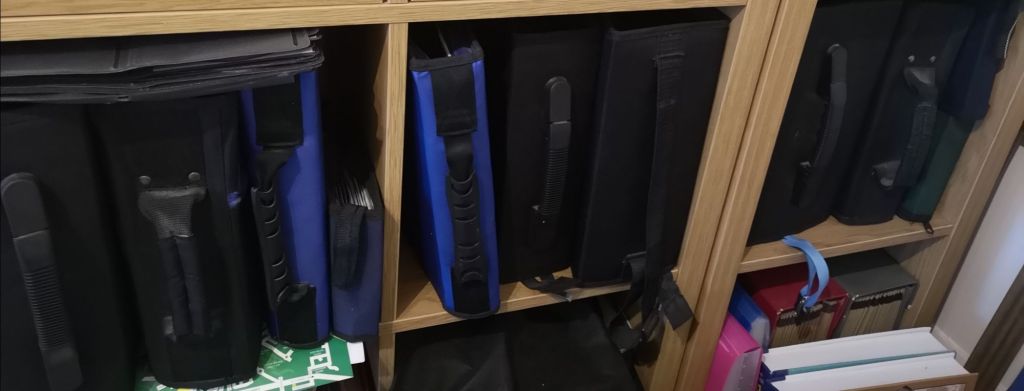
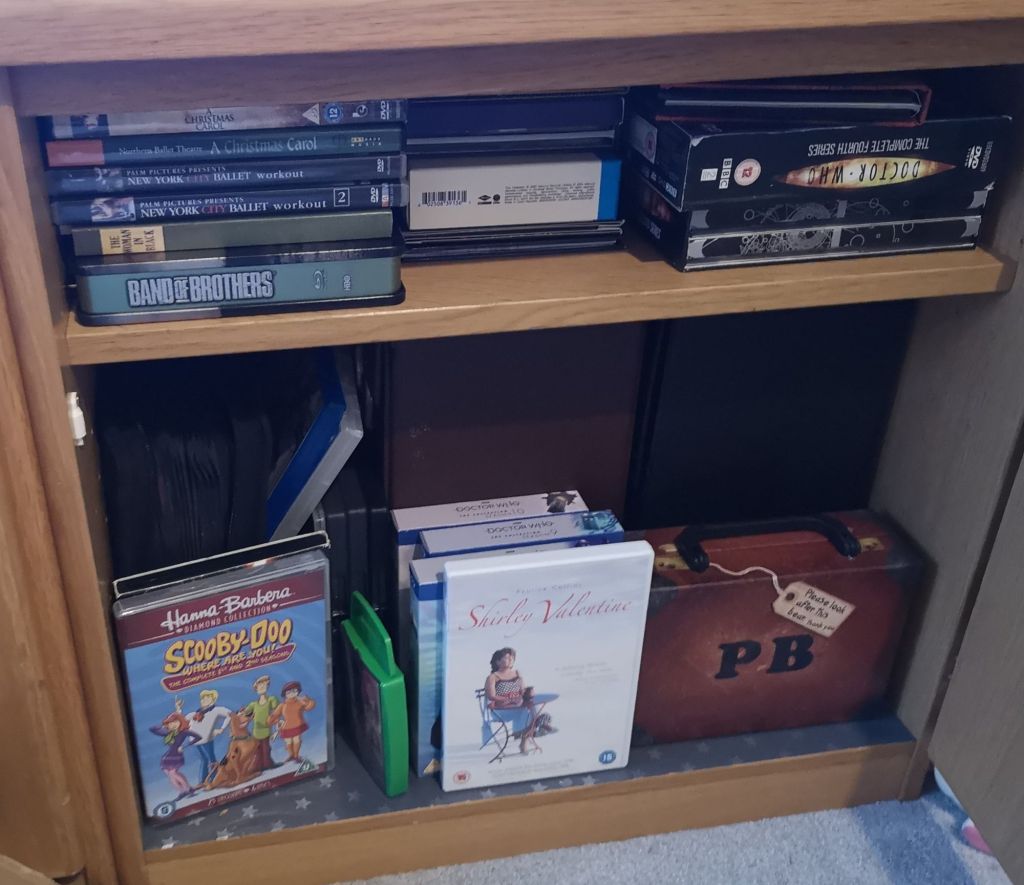
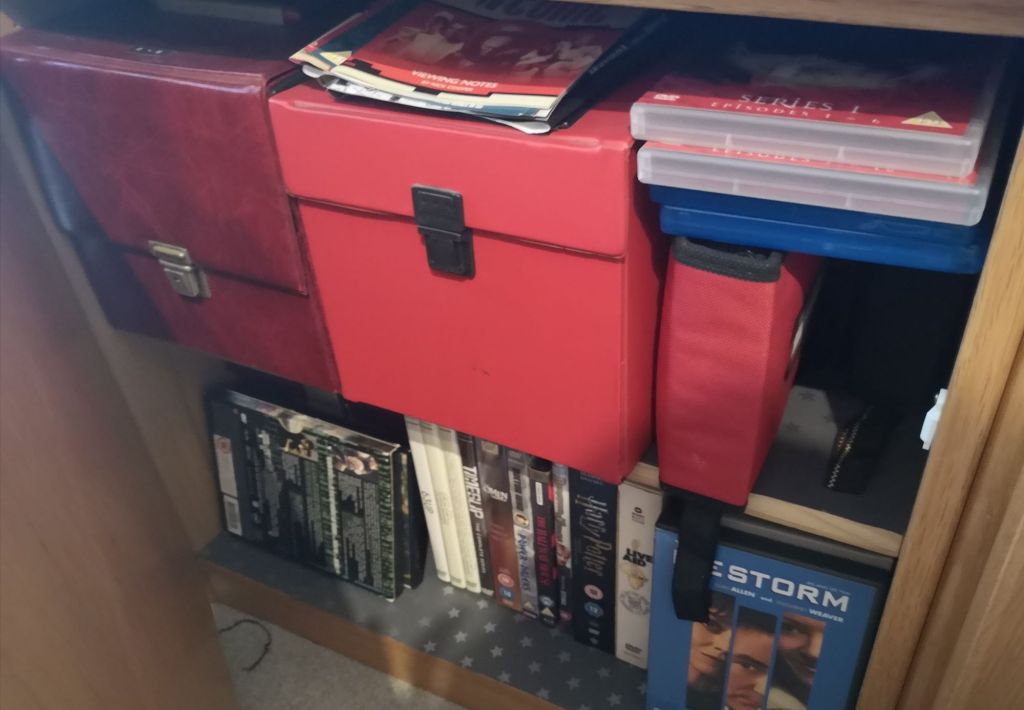
This is a companion piece of sorts to Life After Full Time Work. What comes next? What can and should I concentrate on? How do I approach the next stage of my life? Some of those questions and many more will be answered in next week’s episode of SOAP! (Extra points for anyone who recognises the reference and if you do, please let me know in the comments!)
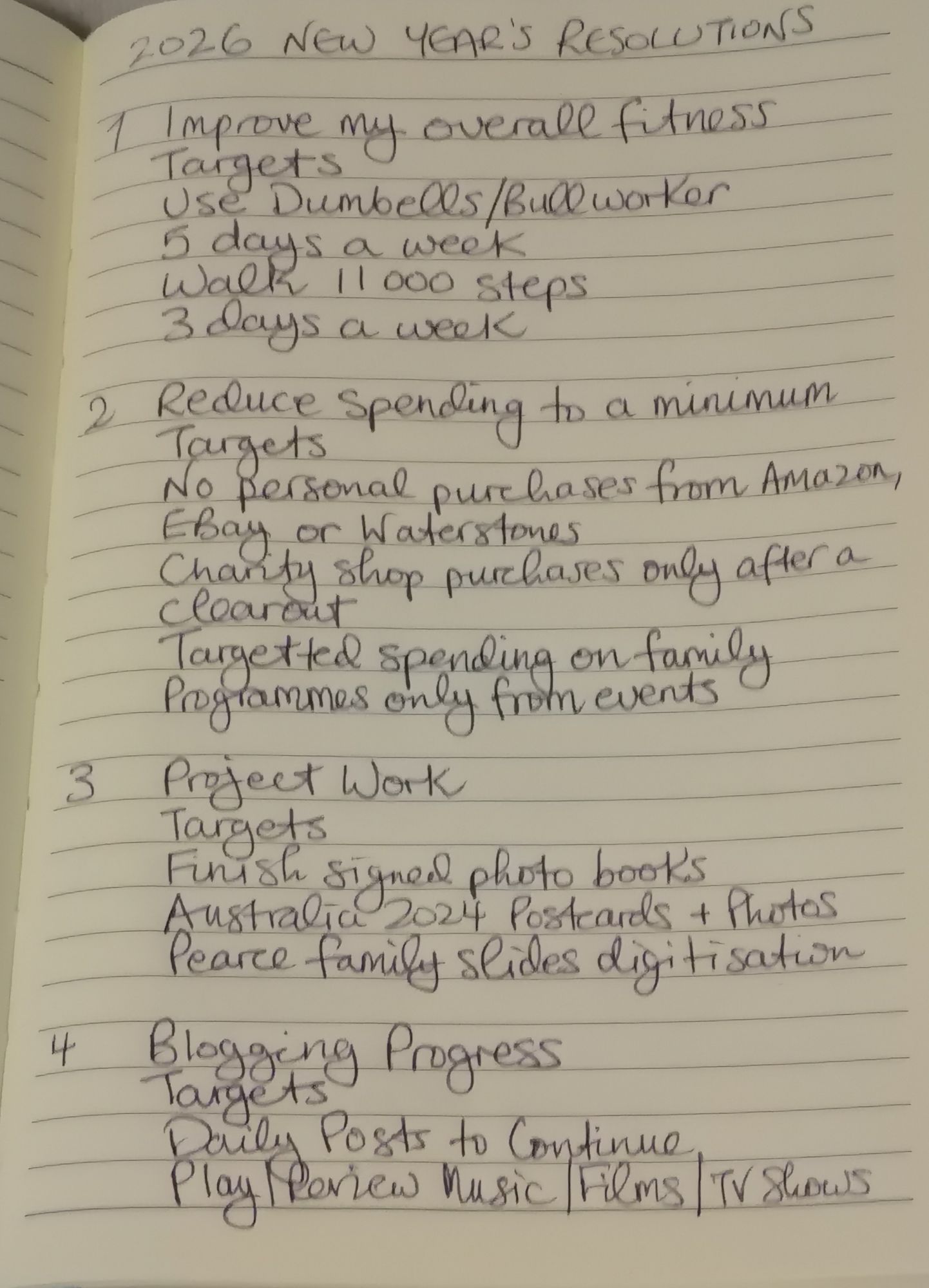
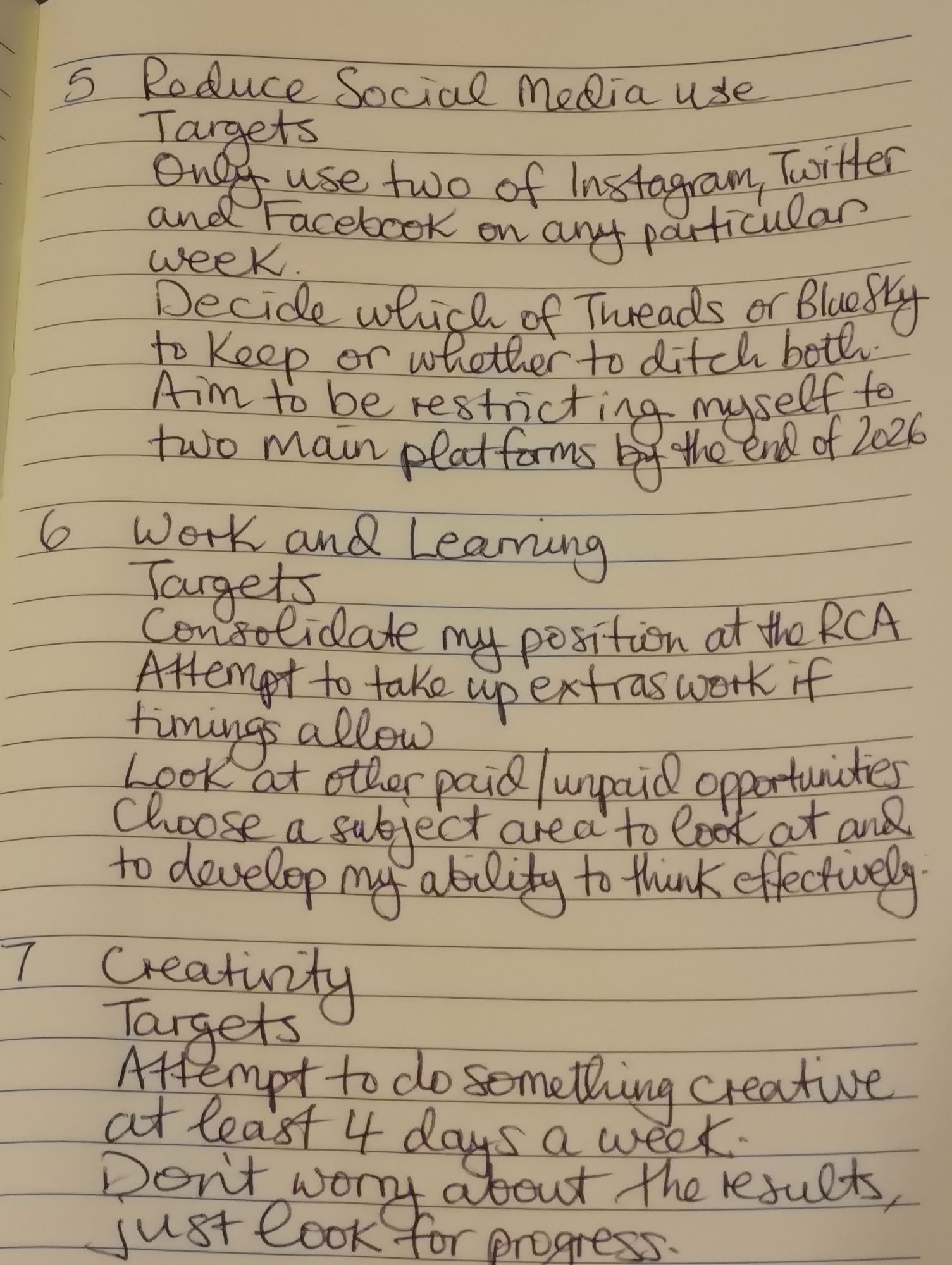
Progress Report
I have reposted my aims for this year to get a picture of how I am doing. It is entirely unrealistic, I think, to be working towards all seven goals in the first month of the year. How have I done, looking back at January?
Well, the fitness was a non starter as I have had a seemingly permanent and very heavy cold that has just not left me since just after Christmas. Fortunately, it has abated enough to allow me to start February with two morning workouts using the dumbbells. Full details in my post at the beginning of next month, dealing with February.
I have not spent anything on myself in the entire month. I have avoided my usual online stores, avoided high street stores and even avoided charity shops. Given that I am not bringing any money into the household, that is perhaps to be expected, but it has been far easier than I anticipated. Yes, there are 11 more months of 2026 to go, but I really think I can nail this target and perhaps even surpass it. I have gone back to using the library and have taken out four books, one of which I have read. Alongside those, I have been working my way through the books I received for Christmas and I have not even thought of buying any other books.
The project work has not yet progressed past the planning stage, but I am sure I will get moving on at least a couple of them within the first quarter.
The blogging has continued every day and I have now posted for more than 200 days in a row. My January figures were 1828 views, more than 10 times as many as last January! Two days into February my total views is very close to 2000, so things are looking really positive.
My social media use has really reduced. I have closed down my profiles on BlueSky and Threads and I don’t miss either platform. I barely opened Facebook until January 28 and only did so to post about my best friend 30 years on from his death. I realised that I didn’t really have Facebook FOMO! At present I will keep Facebook and dip into it, but daily use is now in the past. I still get value from Twitter and Instagram, but I am using them far less than I used to. To a very large extent I have stopped double-screening whilst watching TV. It still happens but when I catch myself doing it I put the phone face down and that’s enough. I am getting far more out of TV programmes and films and I don’t see myself slipping back.
Workwise I have an interview with the RCA next week, so that’s a positive sign. I have also started the process of becoming a volunteer reader for an organisation called Coram Beanstalk. It looks really interesting, but the next month or so will decide whether or not I am a good fit for the organisation and vice versa.
Creativity, rather like project work, is still in the abstract stage at the moment! I want to try poetry, short stories and maybe some drawing, but I can’t quite get myself in the mindset. Again, I hope to get moving on this during the first quarter.
Books Read
Cratchit by R.M. Bouknight
Estella’s Fury by Barbara Havelocke
Adam and Eve and Pinch Me by Ruth Rendell
The Two of Us by Sheila Hancock
The Familiars by Stacey Halls
Listening to the Music the Machines Make by Richard Evans (in progress)
Final Thoughts
I feel as though I have made a fairly decent start, and February is already looking positive with the fitness regime having been started. I will let you know how February goes at the start of March so watch this space if you are interested!
What’s your favorite thing to cook?
More repetition from the AI algorithm. So instead of retreading old ground, today I will reflect on those who do not cook.
My Dad taught me to cook at the age of 9 for two reasons, one timeless and one very much of the era! His first reason for teaching me to cook was that I would always be able to look after myself and my family if I had one. The second was, if I moved in with a woman I would always have the option to move out again rather than being dependent on one! What can I say? It was the 1970s and this was pretty mainstream thinking in the era of carefree bachelors and lounge lizards in the TV of the time!
By the time I was in my late teens I could make a limited range of meals to a reasonable standard. It is a fact that most cooks tend to have their go to meals when they are pressed for time or they are tired. It’s when we have more time and energy that we can spread our culinary wings. I can now cook a huge range of dishes and enjoy the process immensely.
So, why don’t people cook? First of all, it’s because they were never taught or encouraged at home or school. When I was at school, only pupils in Comprehensive schools received cooking lessons and these extended to both girls and boys. At an all boys Grammar school cooking was never even considered and instead we had woodwork and metalwork taught by two unpleasant individuals who gave me a lifelong hatred of DIY! I would have loved cooking classes, but to even mention it would lead to you being considered of a then questionable orientation! Interestingly, everyone I knew in Scouting became good cooks because everyone had to take their turns and, believe me, if you can cook over an open fire you can cook on anything! A cooker seemed like a breeze in comparison to a fire dependent on wind, weather conditions and the efficiency of the other patrol members in building it.
The great thing about cooking is that if you can read you can cook. As we have a very low rate of illiteracy, this means that the vast majority of people in the UK have the capability to learn. Even for those who are illiterate we have YouTube which demonstrates cooking step by step. There really is no excuse not to at least give it a go.
There is an issue in big city flats which are now being built in some cases without kitchens. This is both space saving and driven by the takeaway and Deliveroo culture we have now. However, an air fryer would be a very easy answer to this, and if you can afford a flat in a big city you can definitely afford an air fryer.
Finally, there is the argument that takeaway is simply the easy option. Well, yes it is, but it’s also usually the unhealthy option. Instead of mass produced burgers, make your own using mince, meat or vegetable based, onion, tomato puree, breadcrumbs and an egg to bind it. Add your favourite spices and you have a far healthier and far tastier burger than anything sold in a fast food place or an overpriced burger restaurant. Put it in the fridge the day before and take it out and put it in the oven. Pizzas are even easier. Buy some bases, spread tomato puree, add your toppings, cover it with cheese and put it in the oven or the air fryer and you have a better quality meal and ingredients that you can control.
So, cook for yourself if you don’t already, increase your range if you do and enjoy one of the most significant life skills you can learn.
Write about your first computer.
Sadly it was a brave new world I was completely unequipped for! 🤣🤣 I bought the ZX Spectrum 48k back in 1984 for the princely sum of £174.99. It was a huge investment on my part given my £300 monthly wage before tax, and an investment that my friends benefitted from far more than I did.
The ZX Spectrum was focused on games with its amazing full colour graphics. For younger readers of this blog you can look at YouTube for walk through videos or features like Top 10 ZX Spectrum games, and you are likely to be singularly unimpressed! For the time, however, they were amazing because the Spectrum name referred to the fact that the games were in colour, something made possible by the large 48kb memory, three times the size of the previous version.
The games were loaded via cassette using a long introductory tone to prime the computer then very fast bursts of binary tone that were read by the computer and turned into a game on screen. The two games I remember most are Pool, the only one I could play with any degree of success, and a game that put you in charge of a plane to bomb airfields, only a year and a half after the Falklands War that so obviously influenced it. My friends loved the game but I could never play it successfully. After about 3 months, the ZX Spectrum became a dust gathering white elephant that I ended up throwing away once I focused on my RAF basic training. Sadly, the computer age took off leaving me at the airport. I look back now and wish I had persevered with it more.
What’s the thing you’re most scared to do? What would it take to get you to do it?
To be honest, the list of things I am scared of is long and diverse. Heights, depths, confined spaces, flying, roller coasters and any kind of medical procedure. I have always been very nervous as a person and those nerves have got worse as I have got older. I put it partly down to my Asperger’s, because from what I have read it can either heighten or significantly reduce the sense of danger that the person feels. My oldest son, who is also on the Spectrum, seeks out thrills and danger so I have seen both sides of it.
The only thing that will force me to do something I am frightened of is necessity. If there is no option, I will try to gather up my reserves of courage, such as they are, and I will do it. Some things like flying and having blood taken, have become incrementally easier, though still not comfortable. Some things like heights and confined spaces have remained as fear inducing as they ever were. I am sure that if my family were at risk, I would bypass my fears, but I obviously hope never to test that out.
Some people enjoy the adrenaline rush of danger, real or controlled, others hate it. I will always hate it and go out of my way to avoid it. A life without physical risk is a life that for me is more enjoyable and much more sensible!

