
What’s a topic or issue about which you’ve changed your mind?
When I was younger I thought that human beings were going to continue to develop as a species. I thought it was a matter of time before progress, both scientific and social, would solve the main issues that worried us. For example, when I was in my teens we had a huge hole in the ozone layer caused by aerosol use. The world seemed to get together at that point across the divides to ban aerosols and start to reduce the damage being done. We were, as Queen put it in Hammer to Fall, the generation who ‘grew up tall and proud, neath the shadow of the mushroom cloud’. World leaders of completely different views negotiated to vastly reduce the dangers of nuclear war.
In the last decade or so it has become clear that we are regressing as a species. Science has become a political football where your beliefs are inextricably linked to whether you are left or right wing. Those who disagree with each other no longer talk, they shout and insult. Politicians focus on what they can get not on what they can do. Religious people of all stripes have increasingly retreated to their theological bunkers and typically refuse to engage with anyone who disagrees with them. Society has regressed on matters of equality and tolerance.
When we had children, I thought they were going to see a world that was moving forward, albeit with occasional bumps in the road. Instead they have a world that is going backwards by the day and they are facing a future of increasing and accelerating climate damage. I made the mistake of assuming that people were basically decent and wanted the best for each other. How wrong I was!
Tell us about a time when you felt out of place.
When I didn’t feel out of place. Having a place on the Autistic Spectrum is to feel permanently out of place with the rest of the world. We have to ‘translate’ neurotypical (NT) behaviour and speech every time we encounter a new person, school, workplace or social situation. I feel washed out after encounters with the NT world because the emphasis is always on us to understand and never on them.
This is why the world wants to explain us away as being freaks or wants to pretend we are caused by vaccines or paracetamol. We are bullied by all and sundry because we are vulnerable and human beings, who are basically bad, have a great time exploring how they can hurt the vulnerable.
I only ever truly feel in my rightful place when I am at home with my family. This is one of the reasons I tend to prefer home comforts. That’s not to say that I can’t enjoy myself out of the house, but I need to prepare and to plan and to predict where difficulties may lie before I go out. If those safeguards are in place then it is quite possible to relax. If you know anyone who is neurodivergent in any way, give them time, give them space and give them understanding and support them if things get a bit difficult. They may want to come out but they will do so on their own terms far more comfortably than on NT terms.

This t shirt from Neurominds kind of sums it all up! https://neurominds.shop/i-cant-talk-today-i-talked-to-two-people-yesterday?productId=6527e2bd98f6e4828fb31f98&color=BELLA_CANVAS-BLACK&fbclid=PAT01DUANPloNleHRuA2FlbQIxMAABpwhZj-0F1rZ5BY6Q1HdQ3eBvqiTw-N2bm_PXlF05eOYy2rswT5qwqKO6OReE_aem_M_Gr1t69cpnjj14ihUcqnA
Your life without a computer: what does it look like?
I am still young enough (and ironically old enough!) to have spent more than half my life without a computer. I started on my Mother’s dial up connection in the late 90s and got our own computer when we moved to Hong Kong in 2002. Smartphones didn’t arrive for me until about 10 years ago. So I can easily compare the two eras.
The first thing I should say is that on balance I think it’s been beneficial for me and the vast majority of people to have a computer. Yes, there are a lot of drawbacks but there are also a lot of benefits. This post isn’t about that, but it’s worth bearing in mind. The second thing is that I am reflecting on my own experiences and they will, naturally, be different from everyone else’s. That said, I think they will be representative of the wider picture. Now those two caveats are out of the way, let’s get on with it.
When I was in my teens and twenties, the home phone or the payphone were my messaging system. Gavin, who was my best friend / partner in crime for many years, and I used to organise parties and pub visits using the phone in the same way as my children and their friends use WhatsApp. In many ways our system was far more effective because it was more difficult to ignore a phone call. If you didn’t answer it someone else would! Anyway, our organisation was top notch and we would each ring one other person and instruct them to contact their friends. Most nights that system worked like a charm.
At work, as I have noted in a previous blog post, the lack of computer support was an absolute boon to our work-life balance. No expectation of instant replies, no blizzard of emails, no Teams alerts. What a marvellous time to be working, comparatively speaking. Once you clocked off, your work was at an end until the following day. I genuinely think that work is one area where the drawbacks way outweigh the benefits. The only thing I wholeheartedly support is the development of online teaching because it means that you don’t have to commute. I know there are problems with that but it’s down to you as a teacher to draw students into the lessons, and in any case laptops or tablets mean that students can ignore you under the guise of following the lesson right under your nose.
Moving on to music, Spotify allows me to listen to a much greater range of new music and to focus on the music I enjoy listening to. However, the hyper indivualisation of music has led to a fragmentation of the musical landscape. This has made us much poorer in my opinion. Even if my Dad would occasionally look at the artists on Top of the Pops and say ‘What the hell is that?!’ he still knew what was in the charts. Now, the charts are irrelevant to probably 95% of people and artists like Wet Leg and The Last Dinner Party, who would have been huge in the days before streaming, elicit blank looks even from people who are in their potential audience. I would love to see the charts become a national conversation again, but that will never happen. Last year the BBC even canned the Christmas Day Top of the Pops, a decision which shows how irrelevant the charts have become. We need a show that gives us a look at the huge range of amazing new music, but who would watch it?
This leads me seamlessly to the irrelevance of TV to the current generation of teenagers and twenty somethings. They will binge watch Netflix, scroll through YouTube, Instagram and Tik Tok, but they don’t watch TV when it is broadcast unless it’s something like the Lionesses in the European Championships. It’s not just that demographic either. Older people watch less TV and we, certainly me, will often be scrolling at the same time. Back in the 70s you had to watch live, or you missed it. Series were one episode a week so you could allow the stories to develop slowly and discuss them with your friends. Now, conversations about TV run a huge risk of spoilers because everyone is at different stages. Bring back the days when 25 million watched Morecambe and Wise, Mike Yarwood and To The Manor Born or 30 million watched Eastenders. One episode a week is enough for anyone and binge watching is the work of the devil 🤣🤣.
Finally, keeping in touch. It’s easier than ever to keep in touch with people now but so few of us do any more than throw in a like or a comment. Our communication is far more wide ranging and far more superficial than it has ever been, at least for people of my age. I suppose it’s the equivalent of the old Christmas Card List, another thing that is steadily disappearing from our lives because of technology, in that it’s a duty rather than an attempt to stay in proper contact. We don’t even have round robins with a yearly round up, partly because it’s on Facebook but also because it became a source of ridicule via memes and Gifs. When I went to Japan in 1995, I wrote about 50 letters to friends in the UK in my first six weeks. About half replied but those that did shared real news and real emotions. Now, I can send a message or update to 75 people and once and get nothing in return apart from a few likes, and I can do the same in return. It’s keeping in touch, Jim, but not as we know it! I know we can overcome the technology to make our communications meaningful, but it just seems like too much effort for so many of us, definitely including me.
So, there you have it. My reflections on the prompt of the day. Without computers you, of course, would never get to read it. I will leave it to you to decide whether that is a good thing or not!!
What skill would you like to learn?
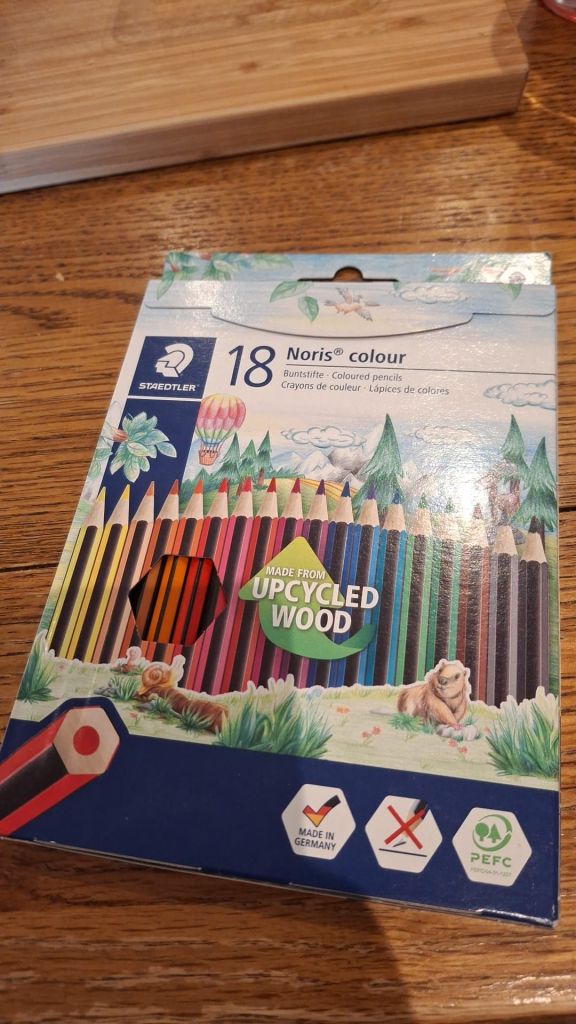
I have always been creative in my head. I can often see pictures that I would like to bring to life. However, I have never developed those ideas on paper. Why? Well, our awful approach to the arts in education is a big factor.
At Primary school, back in the 1970s, we had art lessons once a week where we were encouraged to explore our ideas using potato prints, collage, papier mache and tai dye. Some of the results were better than others and most of them were better than mine (!) but I enjoyed giving my imagination a creative outlet. When I got to Secondary school, however, the creativity was jettisoned in favour of ‘accuracy’ and following set ideas to produce what we were told to. Now, I know that those with artistic abilities were given the chance to experiment in their art O Levels and A Levels, but the rest of us were told we had no artistic ability.
Believe it or not, what I described above turned out to be the golden age of art education. Under the Conservative government of the 80s and 90s and again in the 2010s, art was sidelined in Primary schools and dismissed as not relevant in Secondary schools. To be perfectly fair, the Labour governments who punctuated the long periods of Tory rule did nothing to change the situation as they bought into the idea that only Maths, Science and English actually mattered. In fact the Blair government went one step further and sidelined languages and sport. Basically, all the subjects that explored other facets of our personality, beyond what could be measured, was jettisoned in the Gradgrindian approach of ‘just the facts’ of which Michael Gove was the most enthusiastic proponent.
So, there’s the background to my frustrations with anything artistic. This summer I taught on the RCA Pre-Sessional and I realised that this was an untapped area of myself that I was determined to try to explore. I have a short term subscription to the magazine Artists and Illustrators and I am going to use that to kick-start my artistic journey. I may find out that I am rubbish, but at least I will have given it a go. If I have anything worth showing you, rest assured it will make it’s way into a blog post! Wish me luck!
What details of your life could you pay more attention to?
When I was younger, I tried to learn juggling. It was a total non starter due to my dyspraxia and my general lack of fine motor skills and coordination! Once I had three items to juggle it all just fell apart, and to be honest ‘juggling’ two items was often a stretch! The same is true of my approach to life.
When you think about it, in its simplest form, life has three components, Work, family life and personal needs. From 18 to 22 I only needed to concentrate on two things, work and personal. When Janet and I moved in together the focus shifted to home and personal, because I was studying at Polytechnic and then Teacher Training college, although the personal was now just as focused on what she needed. However, when I had to start juggling, it made perfect sense for work and family to take the lead as we had young children, were often abroad in unfamiliar and stressful environments and very much flying by the seat of our pants.
Work and family, quite rightly, became my complete focus for 30 years or so. When I stepped back from full time work at the beginning of this month I found that I wasn’t really sure who I was as an individual or what I need to thrive. I have loads of ideas but none have coalesced as yet. Not really surprising of course, as I haven’t lived on my own since 1990. I remember the, perhaps apocryphal, story about Jon Pertwee, my Doctor Who as a child and still my favourite, who was advised to play the character as Jon Pertwee. His reply was ‘Who the hell’s that?’ and I can totally understand what he meant!!
So, the area of my life that needs the most attention is me. I need to find out who I am, without work but with time to fill. Once I get the answer to that I will know what to do next. I will be reflecting on this at greater length in another post this weekend as I review my first month post full-time work. Wish me luck!
 David Pearce - Popular Culture and Personal Passions