I often come across book offers on Instagram but I don’t generally click on them. However, when I saw KOIOS by Paul Fitzpatrick the blurb and, very unusually, the cover instantly drew me in. I made the instant decision, again very unusually, to get the book and waited for it to be delivered. I had a clear idea of what to expect, or so I thought, but it turned out I had no idea at all.
The Story
In 2029, Poland, the Baltic States, Ukraine, Romania and The Balkans have come together as the East Continental Alliance, effectively recreating the Warsaw Pact with one important difference. As much as they were concerned by the increasingly unstable United States and the NATO Alliance, they were determined to stand together against Russian expansion. By the time this book is set, 2067, the alliance is deeply embedded and almost entirely digital. Robots and increasingly powerful programmes oversee the East Grid where the book is set and society is becoming calmer, more efficient and is running increasingly smoothly. The Agency for Synthetic Regulation and Autonomy (ASRA) oversees the computer system, but one of their Enforcement Agents, Anya Kovacs, starts to realise that there is more going on than meets the eye, and she starts to dig. What she discovers will affect her whole life and force her to rewrite her own history. The problem is that the authorities know that she is starting to dig and she begins to realise that she might just have been given enough rope to hang herself. She doesn’t know who she can trust, and she finds out that she doesn’t even truly know herself.
Main Characters
ANYA KOVACS – The central character is a cynical agent who is accompanied everywhere by a drone called Nox who acts as a protector and provides her with something to bounce ideas off. Anya is the daughter of Janos and Aliwia Kovacs. Janos worked on a secret prototype called KV07 and was killed when something went wrong. She starts to suspect that Aliwia knows more than she’s letting on. Her colleagues treat her with a mixture of respect and wariness and the higher ups who deal with her on a regular basis treat her as something of a loose cannon.
TOMAS JELEN – Anya’s colleague and perhaps the nearest thing she has to a friend. He is diligent, logical and restrained, and those qualities make him a perfect counterpoint to the more headstrong approach that Anya tends to employ. Although he is nervous when he starts to discover anomalies in the system he is happy to help her where he can, even if it means putting himself at risk.
PAVEL ILLYN – The urbane boss in charge of the East Grid where Anya works, he knows what is going on at every level. This makes him very dangerous to Anya but potentially also very useful. He cannot be played like some others can be but his arms length approach means that he and Anya exist in a form of uneasy truce. However, the question is how far Anya can trust him?
DINA MARKOVIC – The Machine Logistics and Pattern Analyst has a similar breadth of knowledge to Illyn, but the smart and resourceful higher up seems happy to help Anya where she can, often smoothing her path and keeping her below the radar as much as possible. Is there a hidden agenda in Dina’s mentorship and if so, what is it?
My Thoughts
When I opened the book I was expecting a Blade Runner style dystopia. I definitely got that through Paul Fitzpatrick’s world building which was integrated seamlessly into the action. There was no massive exposition and at no point did you feel as though you were wading through details. The world that Anya Kovacs is living in sprang up around her bit by bit until, by about halfway through, you were able to picture the streets and the houses and the East Grid Docks where so much of the action is set. Was it a dystopia? Well that depends on the person reading it. For me, having the whole world smoothed out via algorithm sounds brilliant (!) but the cost in terms of people’s lives and freedoms that this necessitated definitely gave me pause.
What I also got was a 1960s style Cold War espionage thriller set in 2060s Eastern Europe, almost as if John Le Carre was trying out a new genre style. Double crossing, false trails and deliberately incomplete information were employed very cleverly to lead the reader and Anya into ever more complex webs of deceit and danger. I particularly liked the fact that the role of Anya and the roles of family and supervisors were kept deliberately opaque, meaning that the reader never got the whole picture until she did. I am not a great one for guessing ‘Whodunnit’ and the mystery here deepened and deepened to the extent that even when I did find that out I was no nearer the ‘Whydunnit’! This is a book that keeps you turning the pages and keeps you entirely invested in Anya’s fate, a fate that is never easy to predict even in the closing chapters.
In a sense it’s a slow burner of a novel, but it draws you in very quickly and keeps you there as the pieces are skilfully moved around the board. By the end I was fully invested in Anya’s fate and, to my surprise, the fate of Nox, her drone companion who transcended its AI creation to become a living, if not breathing, character. The similarity between that and ChatGPT and other digital companions was clever and hard to ignore.
You can get an idea of Anya’s world and story by clicking on the link below.
How to get the book
This book is published by Paul Fitzpatrick himself and he has 75 copies of this author’s edition available. You can only get a copy direct from him at the moment but I would genuinely encourage you to do so. Supporting independent authors in such a difficult marketplace is, I think, really important, and you can currently get it from the link below at the incredibly low price of £4. It’s clearly a labour of love on Fitzpatrick’s part, but as a reader you can do your part in making it a success.
What’s the most underrated life skill?
There are plenty of underrated life skills. For example, politicians around the world underestimate the importance of being decent human beings. Higher level executives underestimate the importance of admitting they could ever be wrong. Pretty much everyone with any influence over people’s lives underestimate the importance of empathy, a life skill that is extremely rare across the board. However, to concentrate on any or all of those would turn this post into a rant. Therefore I will look at the life skill of the title.
On a number of occasions during our marriage, Janet and I have found money very hard to come by. She has always found a way of making sure we got the maximum coming into the house from whatever source it was, while I made sure that 50p did the work of £1. So many people lack this skill, and I only realised that I had it when we were forced into the situation of having very little coming in. Budgeting is not about saving money, it’s about getting the absolute maximum from that money.
Just as an aside, if there’s anything that people in general lack completely it’s compassion for the poorest in society. I know because I got little or no understanding even from people I thought were friends.
Anyway, Janet worked out how much we had and set me a weekly limit for shopping for food and items for the children. The first thing I did was give up alcohol completely as it was an indefensible expense for me with a family to provide for. The next thing I did was to decide on what I was going to cook or what lunches I was going to prepare over the next few days. Pasta, rice, tinned tomatoes, vegetables and mince were the central components in our meals because they were the cheapest elements that I could stretch to as many meals as possible. I could use spices and cheap sauces to make sure there was good flavour to everything I cooked.
Holidays and days out were as cheap as possible but totally focused on what the children would enjoy. We got every offer and discount we could, and the children did enjoy whatever we could afford. We look back on the holidays at Pontins with affection because they were very cheap and they were great for the children.
We had no extra television channels but the children’s DVD collection was expanded using market stalls, eBay and charity shops so they didn’t lack for entertainment. New DVDs were Christmas and birthday presents and even then we got them from the supermarket where special offers were common. Birthdays were days out chosen by the child whose special day it was. We then worked out how we could do it as cheaply as possible and, if needed, adjusted the weekly food shop to give us extra leeway.
The interesting aspect of budgeting is that once you have done it for an extended period of time it becomes your default approach. Even when we have been comfortably off we have always looked for the best value for everything we buy. The budget changes in level through your life but budgeting is always incredibly important.
I didn’t mention Christmas because I did a whole blog post on the subject. Here’s the link
What’s a personal mantra or philosophy you live by?
On my favourite sweatshirt is the simple phrase ‘People Ruin Everything’! If you are looking for my personal philosophy that is it. Yes, I am being flippant but there is a large measure of truth to that phrase. When you look at what has been done by people working at scale you see wars, famine, environmental issues, bureaucracy that works against us not for us and the most stupid decisions being made under the guise of democracy. Individuals can be nice and they can help each other, but at scale People Ruin Everything.
It’s been nearly nine months since I last did one of these, so for any new readers it is a trawl through my somewhat enormous 7″ single collection in its entirety. Yes, the good, the bad, the weird and the downright appalling! I leave nothing out because at one time I enjoyed all these singles. […]
The A-Z of my singles collection Part 11
2 years since the last installment!! I really must get back to it.
What’s the best way to explore a new city?
When you reach your hotel in a new city you almost always get there by bus or taxi because you have luggage. When you deposit the luggage in your room that’s the time to start exploring your surroundings and there’s only one way to do that and that is by walking.
Salzburg was a nice compact city and from the first morning my wife and I walked from our hotel in to the centre. It was only a mile or so, so it was very easy. We were going to get the bus on the following mornings but we enjoyed the walk so much that we ended up walking in all five days. Now, there’s a few pieces of advice to really help you get the most out of walking through a strange place.
First, use a physical map not an app. That gives you the direction to go but it shows a number of routes. An app will tell you which roads to walk down and will usually take you along busy roads. To really explore you have to go off grid and allow the different routes to suggest themselves on the day. That brings me to my second piece of advice.
Embrace getting lost. You make your best discoveries walking down unfamiliar roads. We came across restaurants, stalls, small shops and out of the way tourist attractions because we steadfastly followed our instincts when we reached the city.
See where the locals go. Follow their routes as you are likely to discover much more interesting places and you are likely to avoid the higher priced tourist traps. Eat where they eat, shop where they shop. You will be introduced to the cuisine of the place far more effectively that way.
Finally, don’t make many plans that can’t be changed at a moment’s notice. Obviously there’s things you need to book, but generally it’s much better to have a general idea what you want to see and to then decide on the day or change your plans instantly because you have seen something that really interests you.
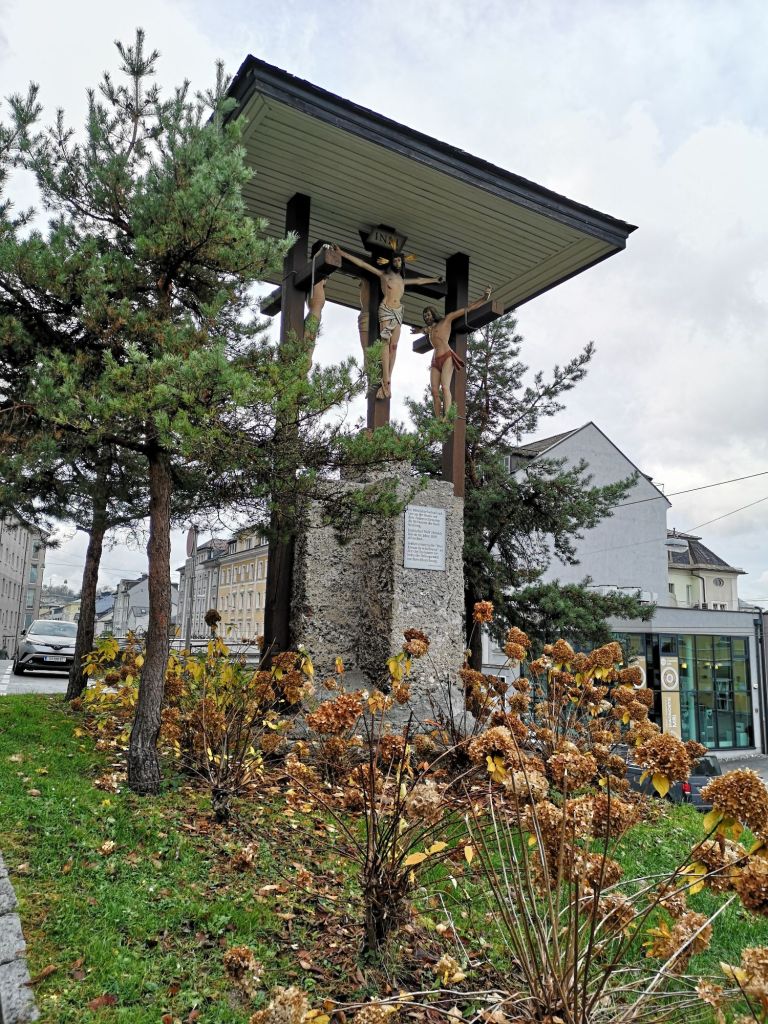
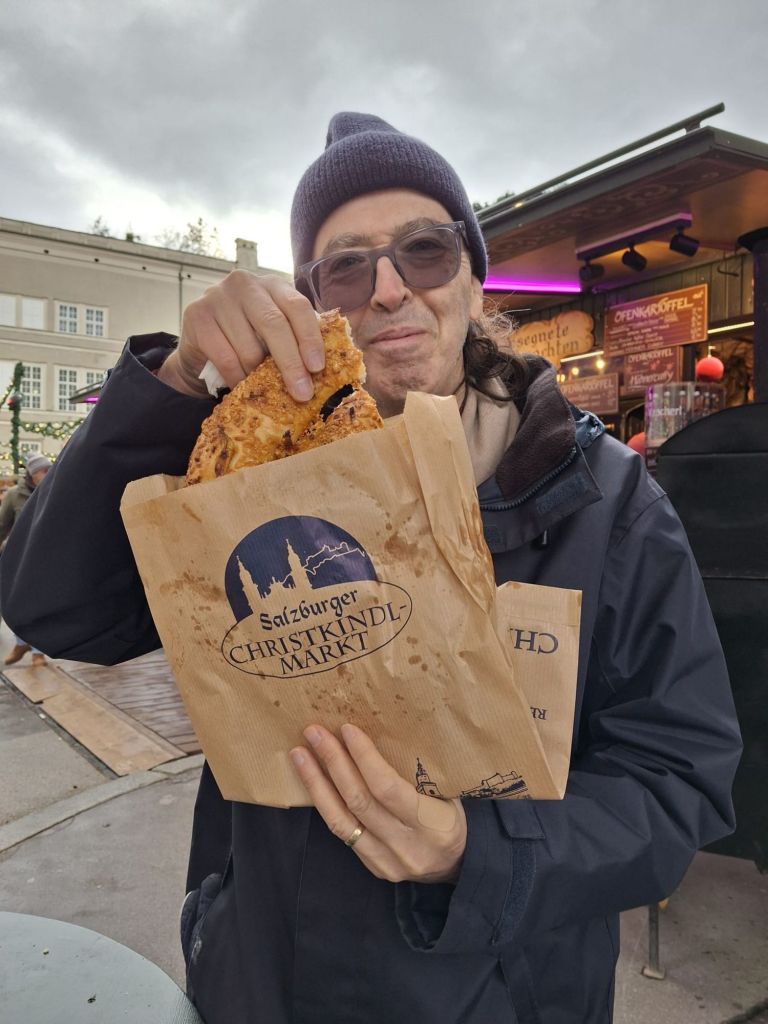
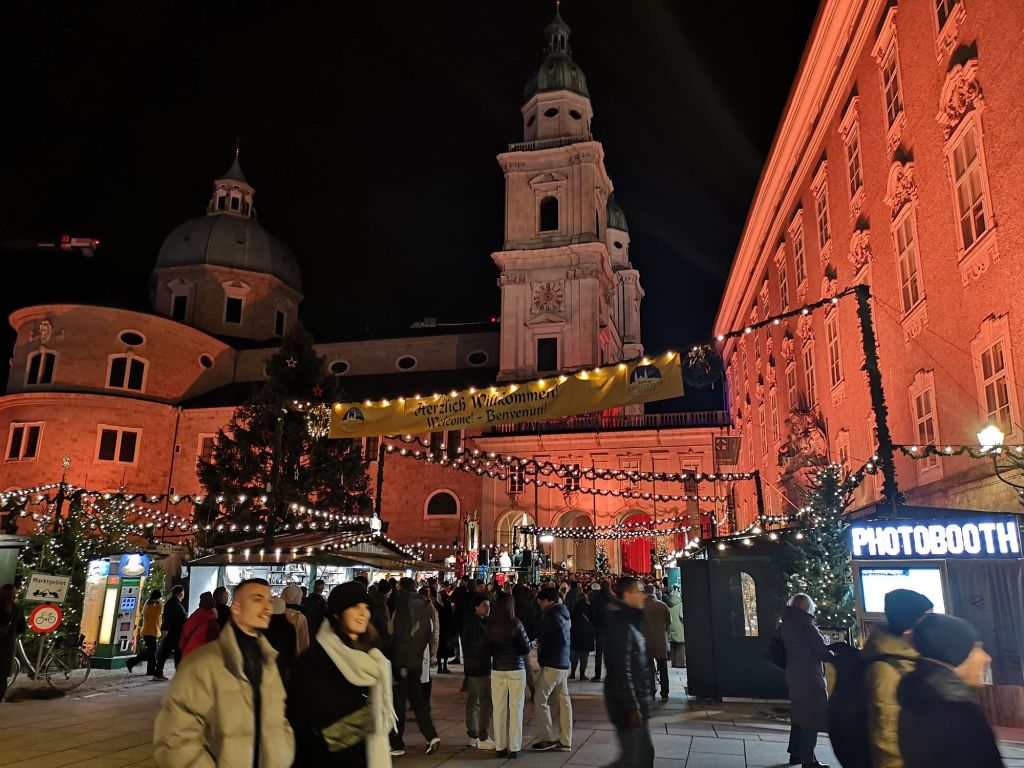
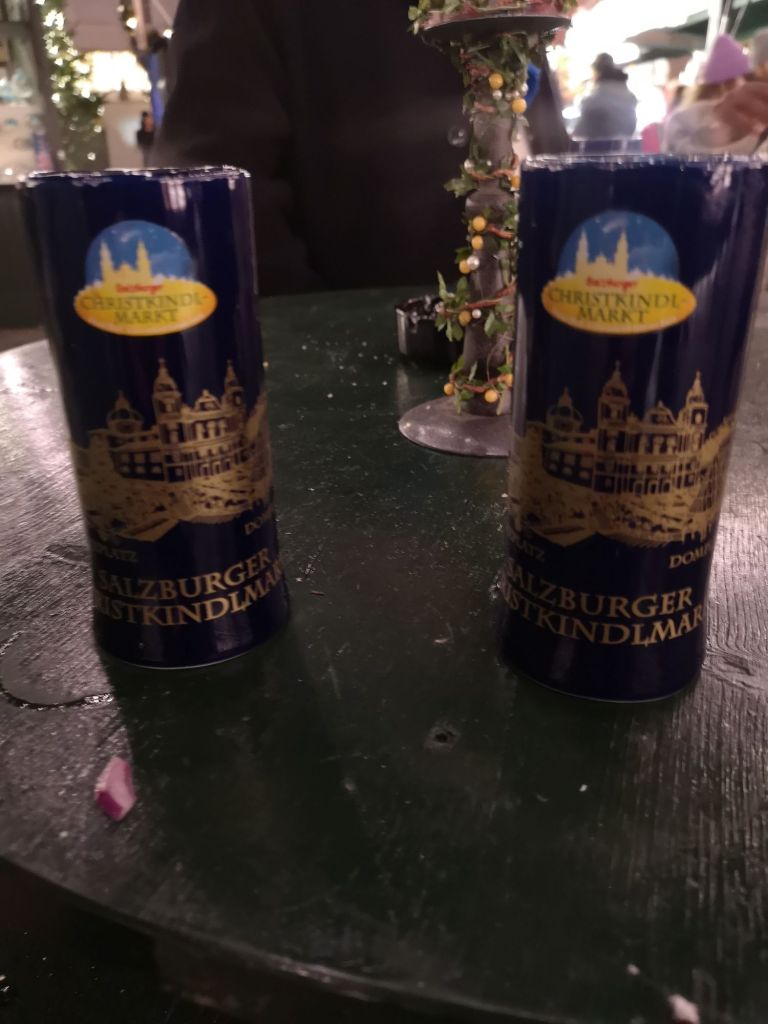
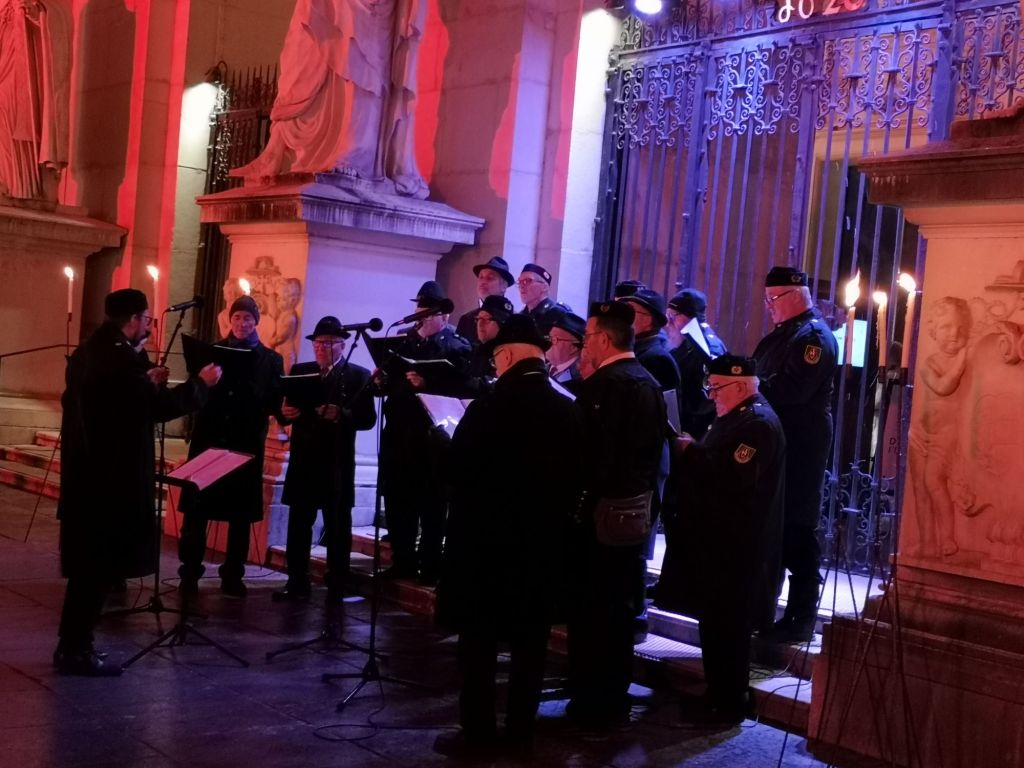
Follow these four tips and you won’t go wrong as the pictures below from our many walks into and around Salzburg show. Happy exploring.