
The most important invention in your lifetime is…
The invention that has completely changed the world and our behaviour is the mobile phone. It is a combination of old and new ideas and technology, with telephone communications being very well established for over a century before being combined with the increasingly rapid development of microchips.
When I look back at my teens and twenties my life was completely different to my own children’s lives. I would be out of contact with my parents for hours on end and they wouldn’t be even slightly concerned, because it was completely normal. In my late teens I would often be out of the house pretty much all weekend and my parents would assume that I was with one of my friends. If they got worried they could always ring up on the home phone and check, but to be honest after I got to 18 they weren’t in the slightest bit concerned.
When I was at Staffordshire Polytechnic I was totally reliant on phone boxes as I didn’t have a phone at home. If there was someone in the nearest phone box you either queued up or you went to find another one as they were quite common throughout the country. Things improved when we got a home phone but even then, costs were really high at certain times of the day and week so if you were on a tight budget you were really restricted to phoning people at the weekend. Any other time would count as urgent or even an emergency.
Looking back, it was in Japan that I think life and my contacts with people would have been so different. A phone call in Japan that came from overseas would be an emergency option only. Making a call back to the UK was a similar emergency option and whoever was calling would be spending a huge amount of money per minute so conversation was purposeful, quick and specific. The only other option was a letter so if you were no good at writing those contact withered. Now, there was a clear element of out of sight, out of mind as well because you were in a country your friends could barely picture living a life completely different from them. However, a mobile phone and a WhatsApp group would almost certainly have ensured that a number of my former friends would have stayed in touch.
We often talk about the advantages and disadvantages of mobile phone technology but it is to my mind the single most important development of my lifetime. In pure impact nothing has come close, not even the home computer. I think, on balance, I would say it has been a positive development but you have to use it really carefully or it will use you!
Just a final thought. I have two blocked ears, which I will get sorted out next Wednesday, but the mobile phone is a real lifeline for me. My family can WhatsApp me and it saves the shouting or sign language! Without the phone things would currently be far more difficult.
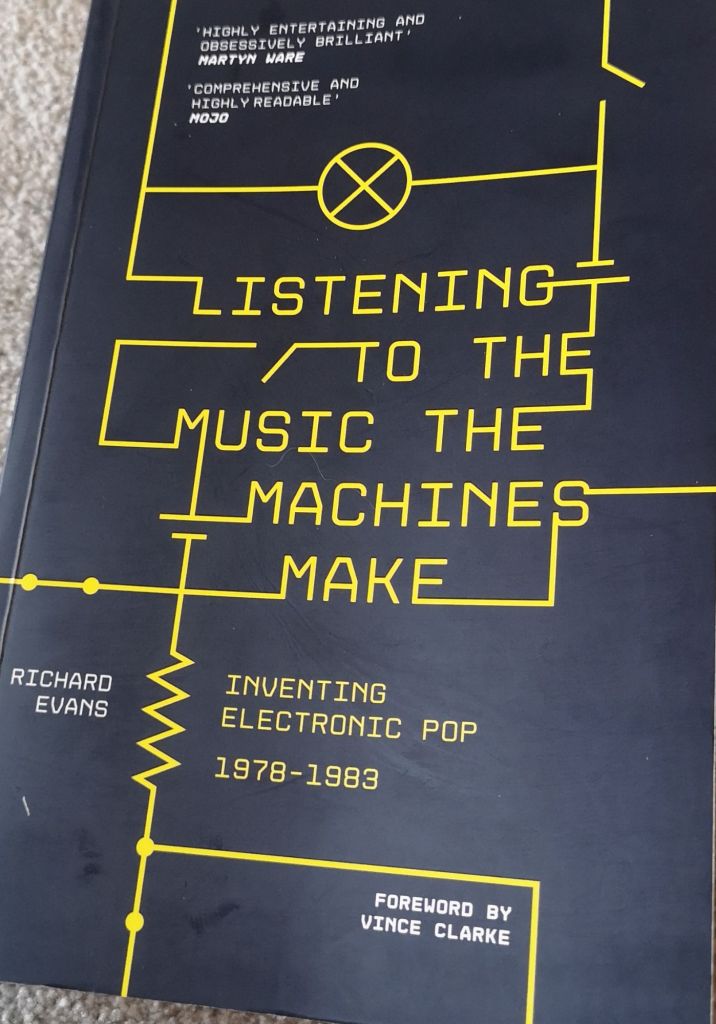
The Book
The subtitle of this book is Inventing Electronic Pop 1978 – 1983, and if that was all that Richard Evans did, the book would be excellent, but he covers so much more ground, putting the music in it’s correct musical, cultural and historical context, that the book is absolutely indispensable for any serious music lover.
Evans begins with David Bowie who was clearly a massive influence on the generation of musicians that came of age in the late 70s and early 80s. The ‘Starman’ performance on Top of the Pops was seminal for so many reasons and Gary Numan, Gary Kemp of Spandau Ballet, Nick Rhodes of Duran Duran and Marc Almond of Soft Cell were all enthralled by Bowie’s stage craft and sound. All four, of course, became major contributors to the electronic music boom of the late 70s and early 80s. It is early on that the real strength of the book becomes clear. There are very few new recollections, and the primary sources include music magazines whose contemporary interviews and record reviews give a fascinating insight into how the developing genre was regarded at the time. Numan himself got a thorough critical mauling pretty much from day 1 as most of the critics fell over themselves to make snide jokes and to dismiss him as lucky or fraudulent. He wouldn’t be the last to be completely misrepresented by Melody Maker and NME in particular. The great thing to reflect on is that reviewers like Sunie, Pete Silverton and Tony Rayns, to take random examples from the many quoted in the book, have disappeared into well merited obscurity whilst the acts they pilloried week after week have delighted millions across the globe. This reliance on primary sources is what makes this book so good. This is not opinion dressed up as fact, nor is it reliant on unreliable memories of 40 or 50 years ago, it is historically and culturally accurate and takes the reader back to the original events and reactions as they happened.
As you read through the book, old memories are rekindled of course, but much more often I found myself saying, ‘I didn’t know that’ or ‘I don’t remember that track’ or ‘I don’t remember that band at all’! It was a delight for me as a massive electronic music fan to find out how much I had no idea of. It makes this an absolute delight of a read for even an armchair ‘expert’ which you quickly realise you definitely are not! The writing is accessible, enjoyable, surprising, amusing and takes what could be a very dry reeling off of facts and figures and gives us more twists and turns than many fiction books. Even if you are not a reader of music books, because you prefer to listen to it rather than understand the context, and I know plenty of music lovers who are not interested in anything from this genre, please give ‘Listening To The Music The Machines Make’ a go. I can’t guarantee Richard Evans will change your mind, but he will give it more of a go than pretty much any music writer I have ever read.
The Playlist
I was at the end of the first couple of chapters when I thought that I could have a go at making a playlist for the book. It’s something I enjoy doing in a variety of situations, but this is definitely a first for a book. Originally, I was just thinking of picking out songs I enjoyed, but then I realised that the whole book was a voyage of discovery so the playlist must be as well. Accordingly, I chose no less than 80 tracks, 16 of which (20%) were songs I had never listened to. When I listen to these songs for the first time I will be broadening my horizons musically in a way I never anticipated. The playlist is just under 6 hours long and follows the book, very largely, on its journey, only choosing the tracks specifically mentioned in the text and with only a couple of exceptions mirror their order in the text. The playlist covers exactly 60 years with the earliest track being Telstar by The Tornados from 1962, and the latest being The Purple Zone by Soft Cell and Pet Shop Boys from 2022! The Spotify link is below, so please feel free to save it, like it and share it, but most of all enjoy it.
Describe your most ideal day from beginning to end.
One of my biggest problems has always been an inability to be satisfied with days that other people might consider ideal. I can see things that could have been even better and I have tended to focus on little irritations or problems that have robbed me of the feeling of an ideal day. A transport issue, a small disagreement or a perception of things being too expensive have always derailed me.
However, in the past year or so I have been making a real effort to appreciate what is happening in the moment. Two days recently come to mind as being close to ideal.
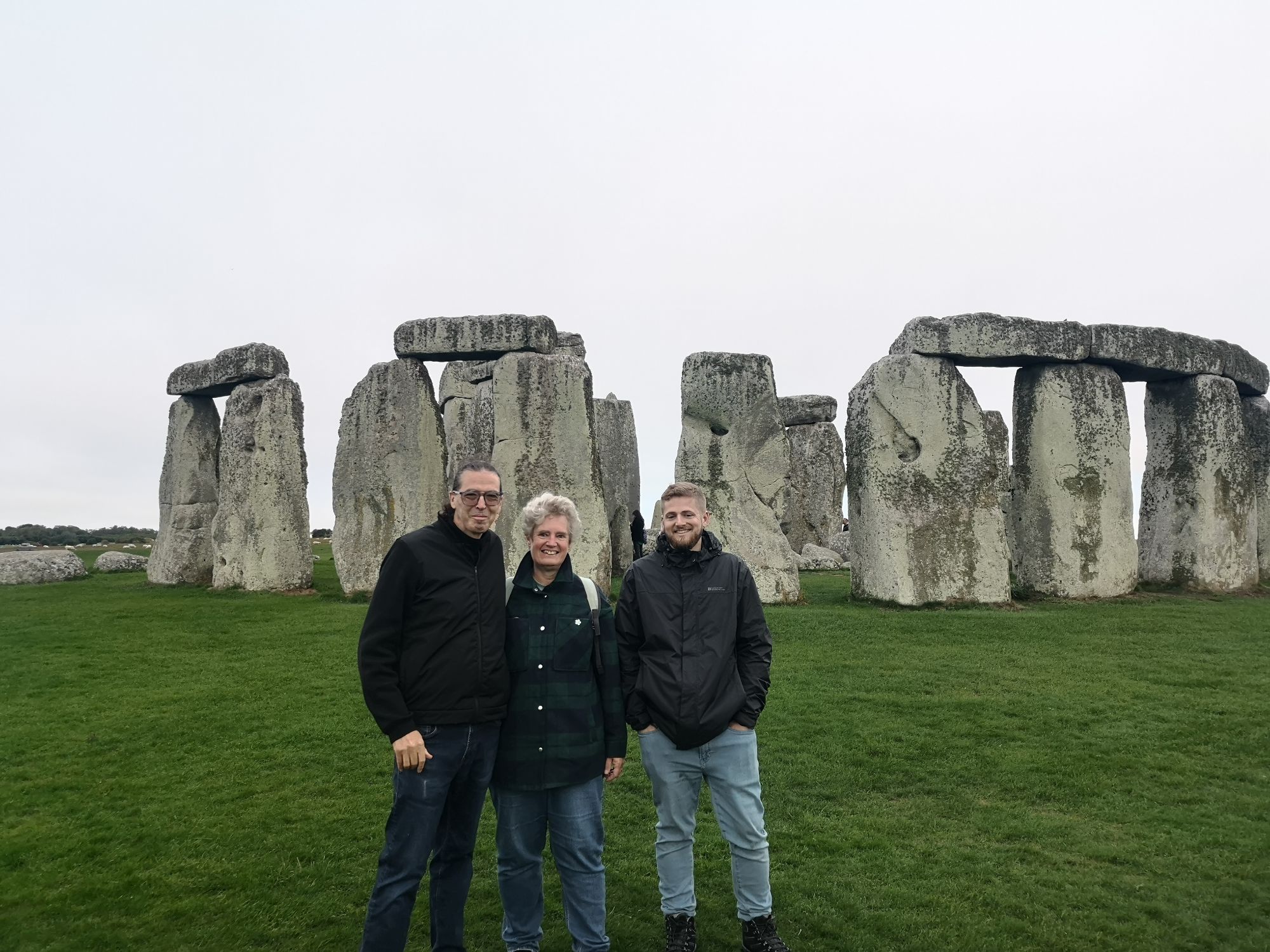
First there was the trip to Stonehenge to walk inside the Stone Circle. It was a morning of magic, peace and happiness, a feeling of coming face to face with an incredible construction whose magic reaches across the millenia. Having the opportunity to explore this incredible monument was an absolute privilege.
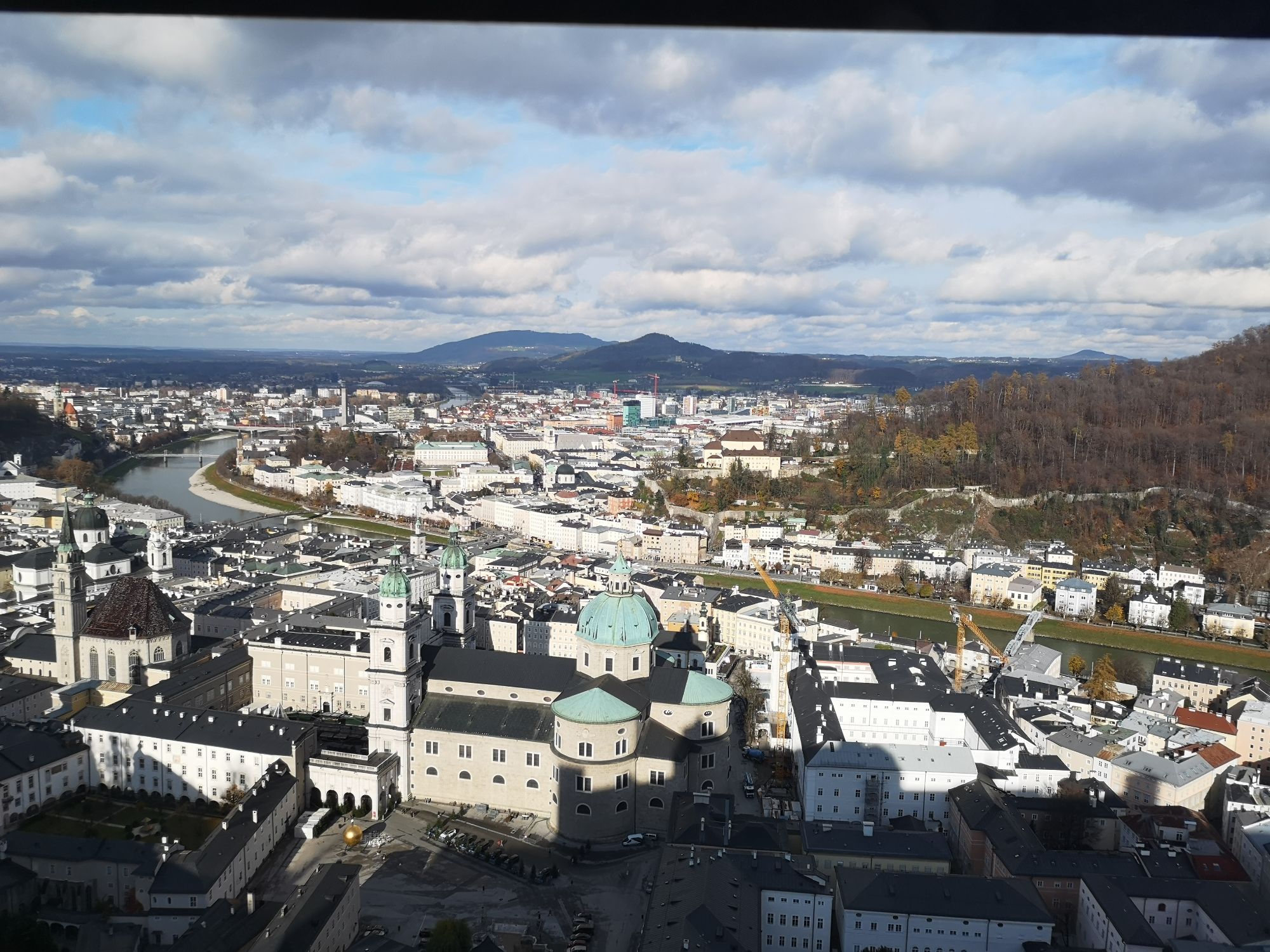
Second was our trip to the Salzburg Christmas Market which took place on a day which started with some flakes of snow to add a little touch of festive magic in November. The market was another piece of magic with an atmosphere of friendliness and happiness from everyone around. It was the most relaxed crowd I have ever been in and I loved every minute of it.
Perfect is the enemy of good and I was guilty of expecting perfection for so long. That’s not to say that I never enjoyed days for what they gave me, but I had that tendency to find fault where very little existed. My attitude has changed now and I am finding I am taking far more enjoyment from my experiences. Perhaps the most interesting element of this change is that I am looking back and realising, at last, that I did have more than my share of ideal days which I loved at the time but had recast in my mind as less enjoyable than they actually were. I am happier and now much more likely to have ideal days in many different forms.



How do significant life events or the passage of time influence your perspective on life?
Perspective is, to my way of thinking, a way for the mind to search for patterns. We seem to be genetically hard wired to look for patterns in order to make sense of life. Whether it is the narrow limit of our own life, or the global flow of events, we try to make sense of it with our use of perspective. Often, we impose patterns on things that have happened in retrospect, and those patterns are a case of ‘Post Hoc Ergo Proctor Hoc’ – ‘After it, therefore because of it’. We say, because this happened, that happened, or we were led to this point by whatever supernatural agency you favour. The truth is that our decisions are made from incomplete information, generally random and almost certainly not the result of fate or some guiding force from outside. Note, I say ‘almost certainly’ as I may possibly be wrong. One thing that my perspective has taught me is that I can’t be 100% certain about anything. It is wrong to dismiss someone that you are sure is incorrect or something you are sure is non existent, because, as I said earlier, you are working from very incomplete information.
I am happy to allow for a small element of doubt in the global picture and also to acknowledge that my path through life has been almost entirely random despite any apparent patterns. If you accept those two things ‘you can deal with triumph and disaster and treat those two imposters just the same’.
Something on your “to-do list” that never gets done.
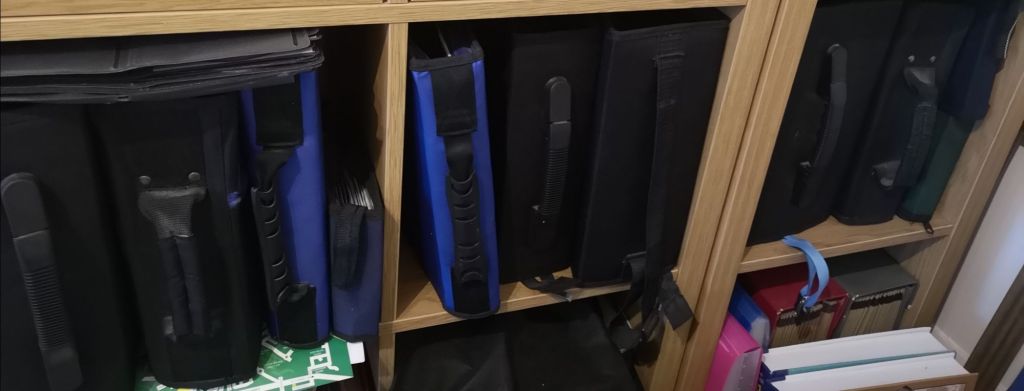
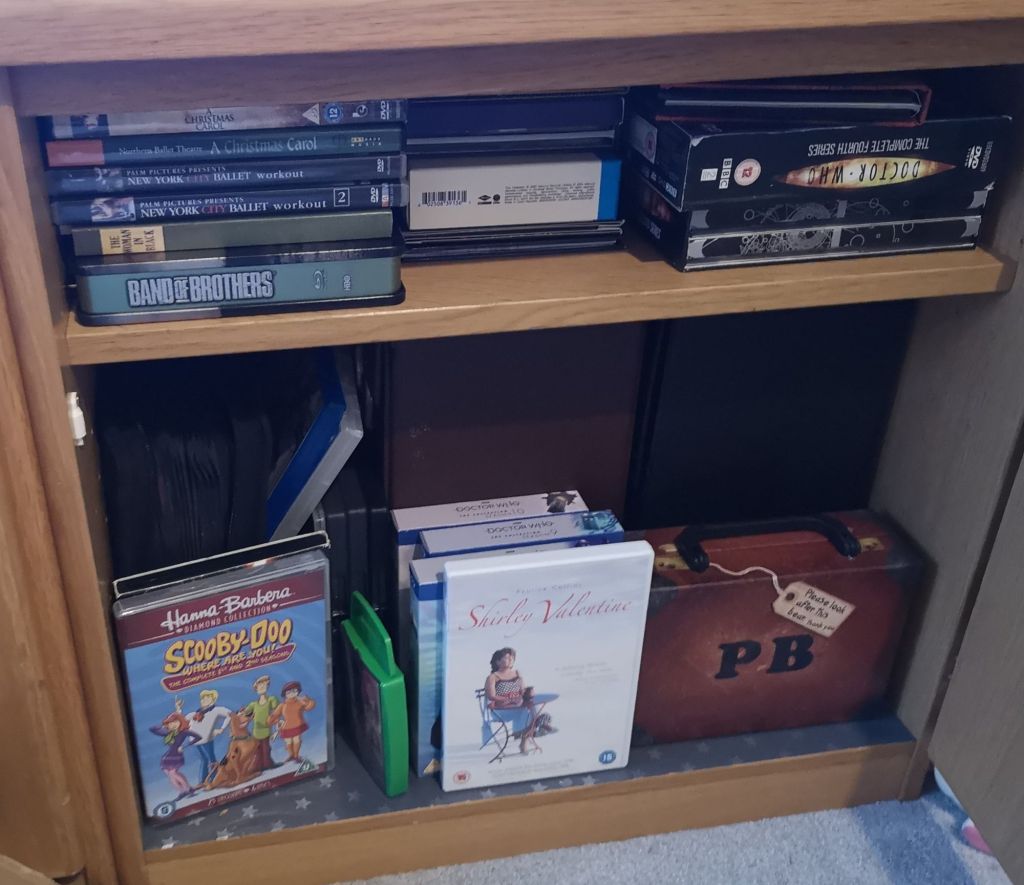
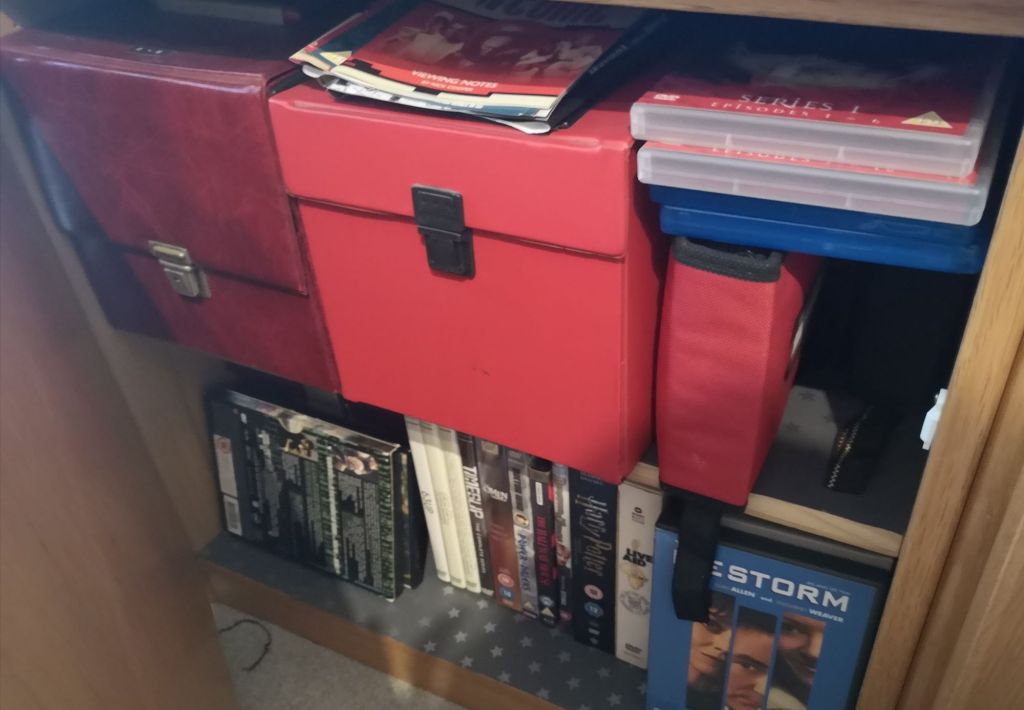
I am and always have been a massive fan of collecting physical media. From my earliest days of cassettes and singles to the recent resurgence of vinyl records, I have always loved to have my own copies of music and films/TV and I still do. The problem, of course, is that I have discs and records everywhere! I have CDs and DVDs in those cases that used to be all the rage as I remove the outer plastic cases as soon as possible. The issue is that I end up with the cases everywhere and I forget what I have and what I haven’t played in ages. So, every year or so I take the cases off of my shelves fully intending to sort them once and for all. I often get a couple of hours in, make some headway and then get completely overwhelmed by the scale of the task!! 😱😱🤣🤣
So, on my to do list this year is sorting out my CDs and DVDs once and for all, as well as reducing the number of records I have. Will it happen? I doubt it somehow but I will definitely post about it if it ever happens!! 🤣🤣 If you are interested in the sheer scale of the task look at the pictures attached!
 David Pearce - Popular Culture and Personal Passions