
The Lion The Witch and The Wardrobe (1988)
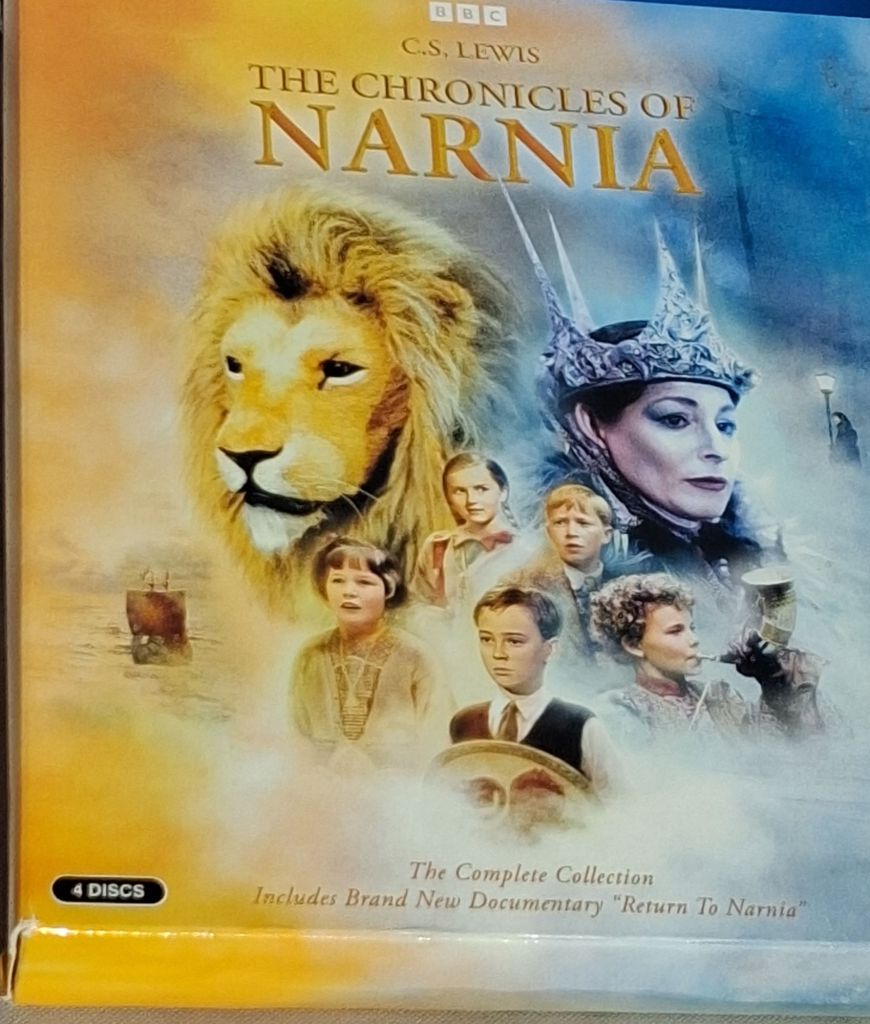
You may have noticed that there is some degree of disquiet about Greta Gerwig’s forthcoming production of The Magician’s Nephew, and that’s putting it mildly! I am definitely prepared to wait until I see it to pass judgement – always the best approach but sadly less and less common – and, as it’s never been filmed before I’m actively looking forward to it. It made me want to revisit the BBC productions from 1988 and buying the Blu Ray box set gave me the perfect excuse to do so. As with the Walden films of the 2000s this series bypassed The Magician’s Nephew and went straight to the first Narnia book that C.S. Lewis wrote. So, let’s start there.
Plot
It is 1940 and the four Pevensie children Peter, Susan, Edmund and Lucy, have been evacuated to the house of Professor Kirke in the country for safety. As Edmund observes, it’s only safe because nothing ever happens in the country. This appears to be the case until Lucy, playing hide and seek, decides to hide in a wardrobe in one of the many spare rooms in the Kirke house. Instead of the back of the wardrobe she finds herself in a strange land of snow which for some reason features a lamppost. While she is exploring she meets a faun called Mr Tumnus who seems strangely perturbed that she is a ‘Daughter of Eve’ and he makes her fall asleep by playing a magical tune on his pipes. He admits that he has been told by The White Witch to bring any human straight to her, but he decides to keep it a secret and lets her go. When Edmund gets into the land of Narnia he meets The Witch who calls herself Jadis, Queen of Narnia. She is alternately friendly and threatening, giving him hot chocolate and Turkish delight and then telling him he must bring his brother and sisters to Narnia to meet her and telling him there will be serious consequences if he doesn’t do so. When he gets back, Edmund tells the others he never saw Narnia and starts teasing Lucy. Peter and Susan go to Professor Kirke to ask what to do and whether she is mad or just a liar. Professor Kirke says that they should ask themselves instead if the story is true, something he considers to be the most likely explanation. When the wardrobe next opens all four of the children are inside and they find out that things have moved on with Mr Tumnus having been captured.
Production
This particular version is seemingly ingrained in the mind of lovers of Narnia as the perfect comfort show, and in many ways it is. From the sweeping music to the old fashioned look it is every Sunday tea time programme produced by the BBC writ large, and while so many were watched and forgotten about this has stayed fresh in the cultural memory banks. From the first scene in the railway station as the Pevensies are evacuated there is a real sense of time and place, evoked by the scenery, the clothes and the speech patterns of children and adults alike. When we first see Narnia, it is the Narnia of C S Lewis with the lamppost standing tall amid snow covered fir trees. The map that the viewer sweeps over in time with the music is brought to life very well indeed. It is a very post war Narnia, even though it is always winter, because food that the young Pevensies will not taste until perhaps a decade after the war is available, at least to Edmund! The overall look is very much helped by the sets and the, at the time, ground breaking special effects, which are overlaid on the real world giving Narnia an allegorical feel. Mr Tumnus, Mr & Mrs Beaver, Maugrim and Aslan are all clearly human beings in costume, but they inhabit their parts so well that the viewer looks past that and instead concentrates on the unfolding story. The Blu Ray helps the world building element by cleaning up the visuals and the soundtrack but the action continues to stand on its own merits.
The Cast
The four children are front and centre throughout the six episodes and, despite the perception that child actors are more polished these days, they turn in four very strong performances. It is, of course, true that styles of acting have developed over the years but they inhabit their parts fully and convincingly. Richard Dempsey plays Peter with a mix of uncertainty and bravery that is absolutely correct for a boy of 13 or 14 plunged into a situation that he has never been prepared for and knowing that he needs to protect his younger siblings. His battles with Edmund played by Jonathan R Scott are familiar to anyone who has been a sibling or seen them in action. Scott has the most unsympathetic part but he brings Edmund to life as a conflicted and lost boy rather than a total brat, and it is clear that there is room for redemption. The production cleverly reflects this when he his interrogated by his conscience and you see the bad side beginning to crumble. Sophie Cook plays Susan and does very well with an underwritten part, but that is in a sense because of Lewis’ original series of books where he made Susan a two dimensional character compared to her siblings. Finally, Sophie Wilcox plays the central character of Lucy, through whose eyes the new world is seen and understood. She is absolutely perfect for the role with her air of wonder and gratitude and a positive belief that things will turn out well.
Barbara Kellerman is the standard by which all other White Witches will be judged, and in my view no one has yet matched her air of danger. She is absolutely volcanic in her rages and vindictive in her actions, whether that be everyday cruelty to slaves and enemies or turning those who anger her to stone. When she leads the forces of evil to the Stone Table she takes the Sunday teatime story into the realms of folk horror. Ronald Pickup is the voice of Aslan and he brings a power to it that often belies its softness. Mr & Mrs Beaver played by Kerry Shale and Lesley Nicol are great fun with their bickering relationship. Jeffrey Perry is an ambivalent Mr Tumnus who makes it clear from the start that there is something untrustworthy about him that is fighting with his inner goodness. Finally, the marvellous Michael Aldridge makes a winning and amusing Professor Kirke and his views about ‘modern education’ definitely struck a few chords!
Reflection
This is a marvellous trip down memory lane and a huge pleasure to watch once again, particularly in its cleaned up format. I don’t remember the three further adaptations with anything like the same clarity but I am really looking forward to refreshing what memories I have as I work through the discs.
Discover more from David Pearce - Popular Culture and Personal Passions
Subscribe to get the latest posts sent to your email.


Wonderfully brought to life. I want to live there now!
LikeLiked by 1 person
Back in the days when stories were allowed time to breathe. 6 episodes – just over 2 and a half hours – with a 150 page book to cover. It allowed for much more depth even if it might be slow to some modern eyes.
LikeLiked by 1 person