
Christmas Magazines Through The Years Country Life Christmas Number 1996
What was 1996 like?
Queen Elizabeth II had been monarch for 44 years, but it’s fair to say that the past four had been some of the most difficult of her reign. From the annus horibilis of 1992 through the seemingly daily revelations of marital strife and infidelity and the finalising of divorce proceedings for both Charles and Diana, and Andrew and Sarah, she could be forgiven by thinking that it could get no worse. Of course, the following year it did, and it looked as though it could bring down the monarchy – but no spoilers! The government under John Major saw a Conservative Party limping towards an election they already expected to lose, riven by infighting and unable to command a majority in the House of Commons by the end of the year. The Labour Party under the telegenic Tony Blair energised as they saw government was within their reach, but they were kept under tight discipline by a Labour hierarchy scarred by 1992 and the triumphalist Sheffield Rally, which was seen as a contributory factor explaining why Neil Kinnock’s chance to get the keys to Number 10 did not succeed.
There were a number of shocking events in 1996, the worst being the Dunblane Massacre in Scotland where 16 children and their teacher were killed at a Scottish Primary School. Following this tragedy the government brought in legislation to make the possession of handguns illegal, saving future generations of children, to date, a similar situation to that in America where school shootings are a fact of life. There were attacks by the Provisional IRA which ended a ceasefire that had stood since late 1994. Three took place in England and one in Northern Ireland. It was a troubling return of the conflict that had claimed thousands of lives in the decades before.
In sport, football ‘came home’ when the 1996 European Championships took place in the UK. It completed the final rehabilitation of the sport internationally after the hooligan problems of the 1970s and 1980s made it inconceivable that England in particular could ever host such an event. England had a tournament to remember getting through to the semi-final before losing to the German team on penalties. It was a summer when football was taken to the heart of the nation in a way that had not happened since 1966, and it led to Baddiel, Skinner and the Lightning Seeds recording perhaps the finest football song ever, the brilliantly mordant but uplifting Three Lions. After that tournament, Alan Shearer set a new British transfer record by leaving Blackburn Rovers and joining Newcastle United for £15 million.
An interesting situation becomes clear when you read the data for average wages in the UK for 1996. In the rush for job creation in the service and tertiary industries from 1979 onwards, the manufacturing sector was all but destroyed. You might think that those left in that sector would be valued for their disappearing skills that were still needed. However, the average wages for manual workers came in at a shade under £300 per week whilst non-manual workers earned, on average, £460 per week, half as much again. It spoke of a complete lack of value, monetary now as well as social, ascribed by society as a whole towards those who worked with their hands. Apprenticeships were virtually non-existent in some industries and with the drive towards university, they were seen as almost valueless. The interesting thing is that we still do not value apprenticeships despite bemoaning the lack of practical skills demonstrated by workers in this country. I think you can trace back that line from today to 1979, and now it seems to be accepted by all parties, something that was arguably starting to happen in the mid 1990s.
Country Life Christmas Number 1996
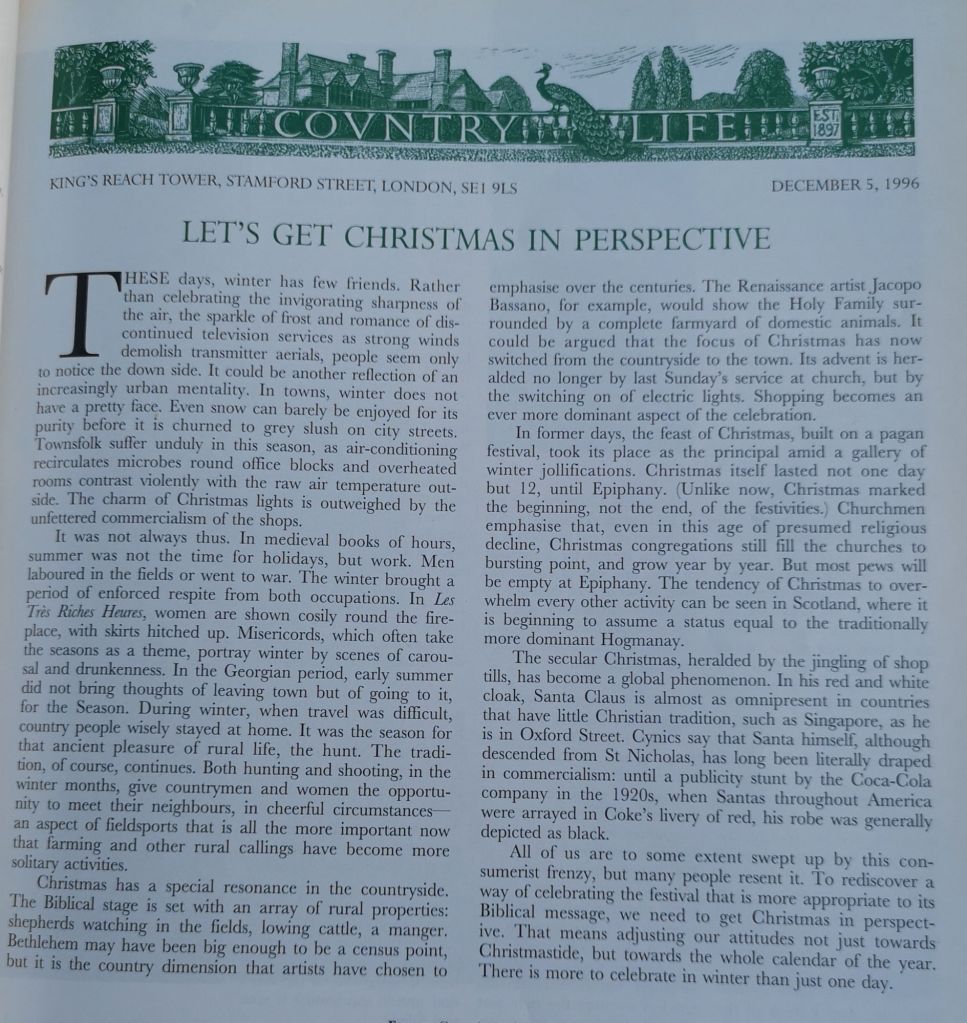
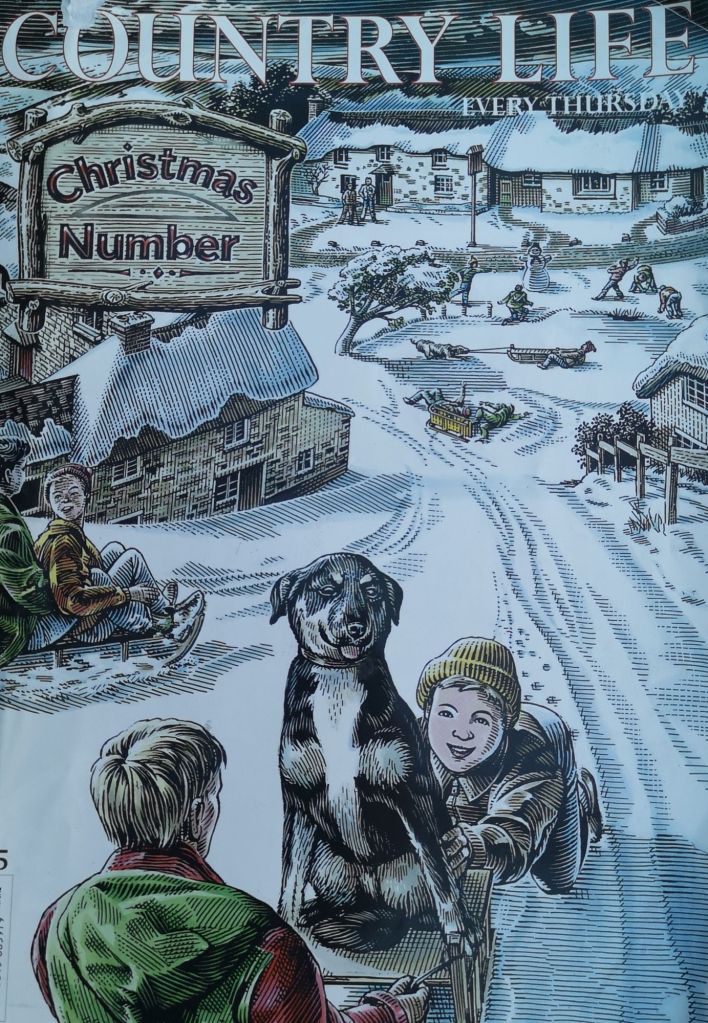
The cover is a clear indication of the approach this magazine takes to the season. The snow, the idyllic village and the smiling children on sleds show an idealised vision of an old fashioned Christmas, and this harking back to earlier, arguably better, times is definitely a theme of the contents throughout. The thought provoking editorial asks us to reflect on Winter as a whole not just Christmas itself. It points out that Winter in past times was a season of rest and celebration, where labourers and farmhands stayed at home or were found engaging in social activities such as the hunt. The piece reminds us that the Nativity was set in the countryside with shepherds, livestock and rural properties to the forefront. All of the above is compared to the situation, now even more entrenched, where the town is the centre of everything and the switching on of Christmas lights has superseded the first service of Advent as the start of the festive season. It is worth reading the editorial in full as it makes some interesting and, still, pertinent observations.
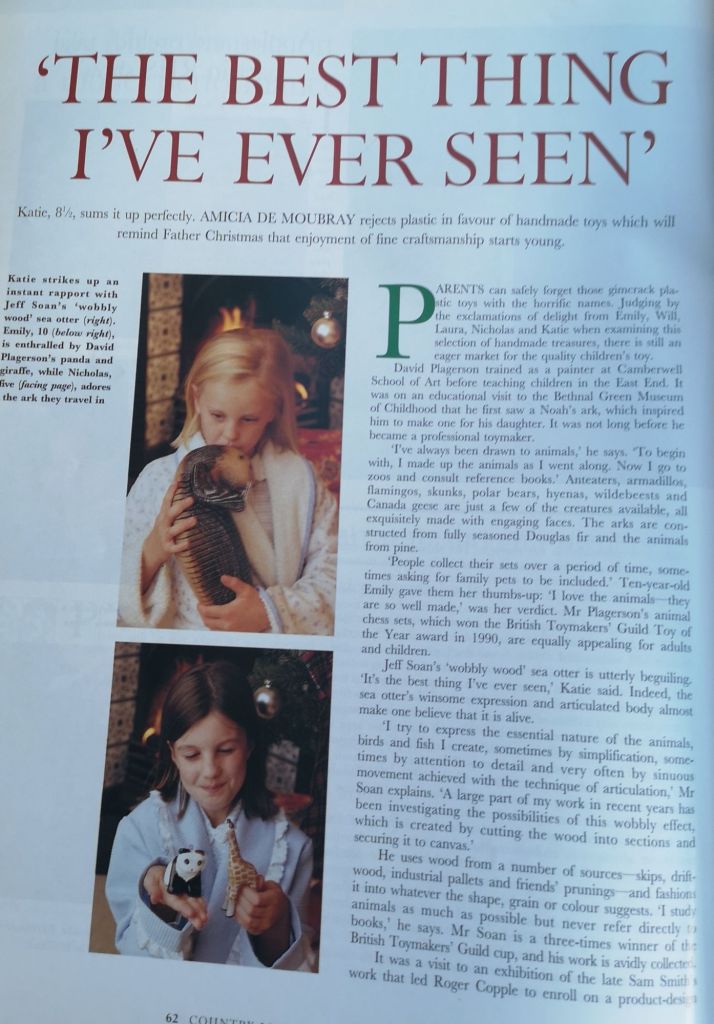
The idea of tradition is front and centre in the article ‘The Best Thing I’ve Ever Seen’ where children are introduced to the delights of traditional wooden toys to enable them to reject plastic alternatives. When you see the backgrounds of the houses, you realise that, like everything else in the magazine, it is aimed squarely at high end consumers of all ages. Carved animal chess sets, hobby horses and traditional farm sets are also more likely to reflect the lives of the children involved, thus increasing the interest level. Don’t get me wrong, I think that the appeal of a long lasting handmade toy is timeless, but it is very much a niche product that would be less likely to appeal to children in the towns and cities that lie outside the rural heartland of the readership.
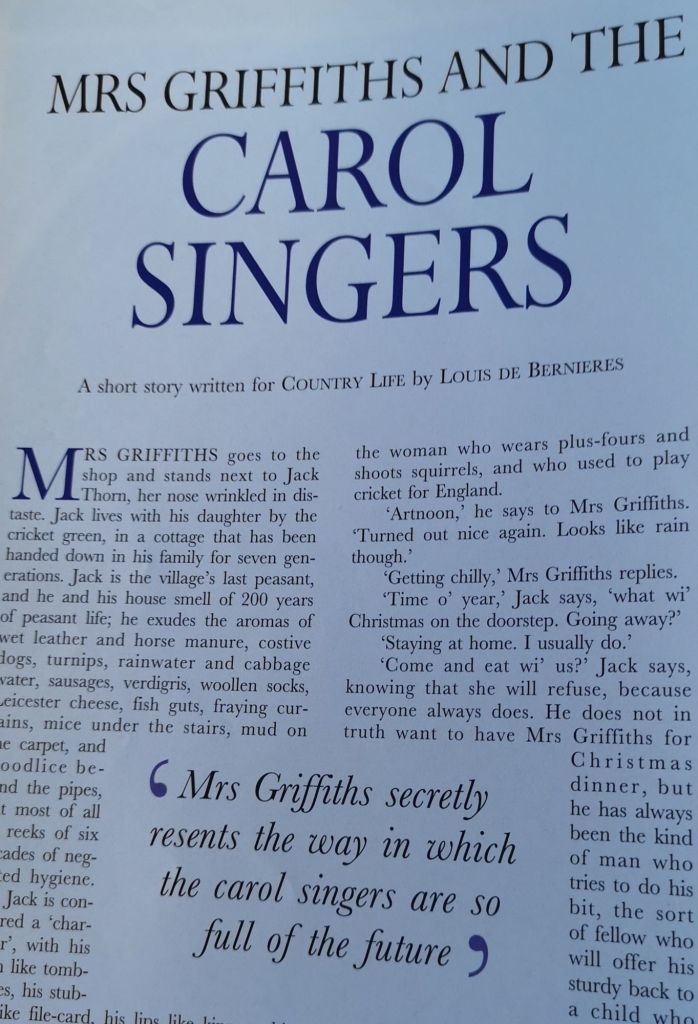
The story Mrs Griffiths and the Carol Singers is a lovely, nuanced piece of writing that perhaps invites the reader to sympathise with the views of Mrs Griffiths at the start, before delving into the reasons behind her behaviour. We see someone who wants to change but is not sure how to, and the events that occur when the carol singers do their rounds of the village are very sad. The story does end on a note of hope, and it earns that with its understanding of human nature.
The letters page is very interesting. In amongst the horror expressed about security lights and plastic windows, there is a letter that calls magpies avian hooligans! There is also an article about traditional skills focusing on the Skills Olympics which took place in 1993 and 1995, where the UK were mid-table, unlike the sporting Olympics where the Atlanta games saw the team take home just one gold in its worst ever performance. However, two letters at the foot of the second page are quite unsettling. Both bemoan the banning of handguns, which they see as criminalising their way of life, accusing politicians of lacking the courage to ignore public outcry following Dunblane. One writer actually predicts that it will have no success in preventing future massacres, but Nigel Kerner of Niden Manor has been proved comprehensively mistaken in the 29 years since he wrote this letter.
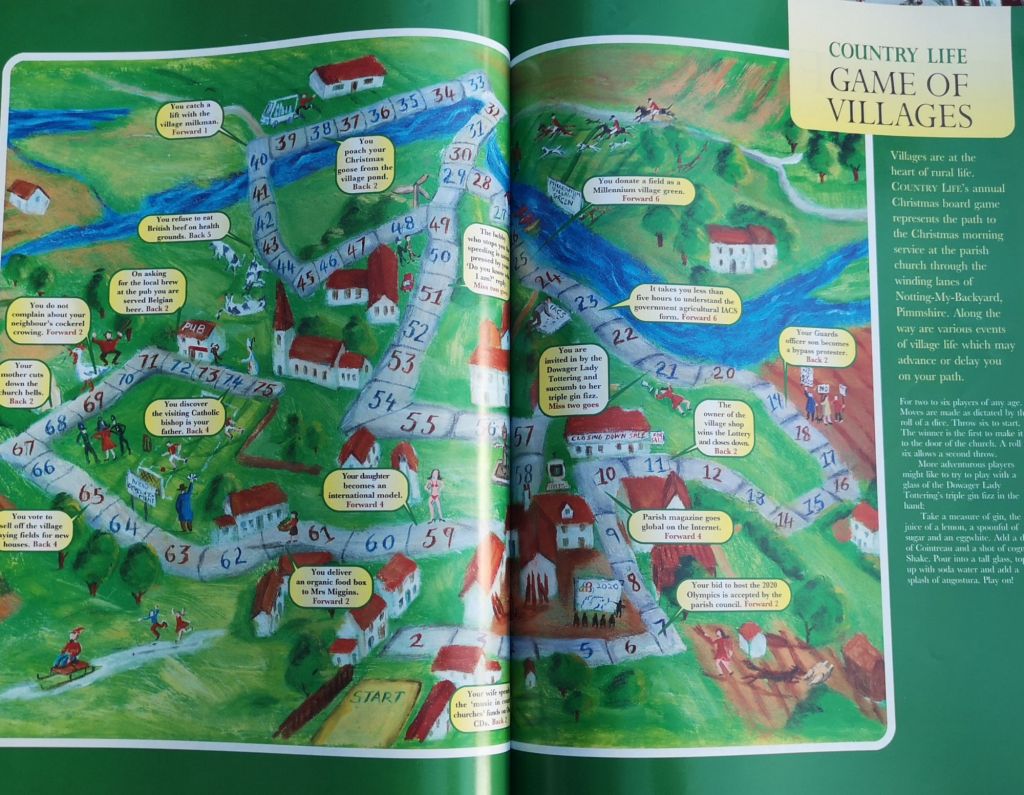
The final thing I wanted to share is the ‘board game for all the family’ on Pages 68 – 69 which follows the journey to church on Christmas morning! Let’s just say, it’s a game you wouldn’t find anywhere else!
Advertisements
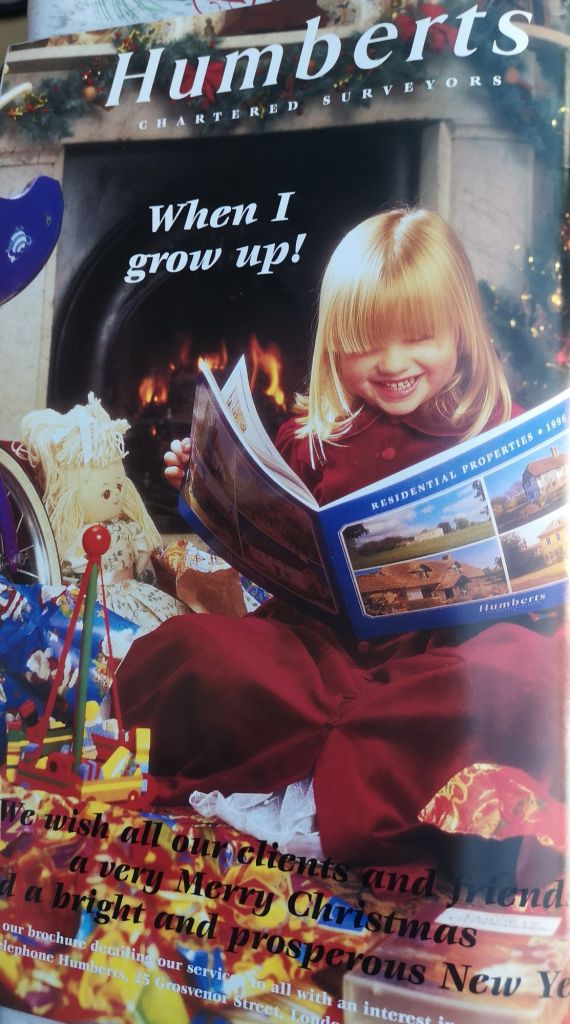
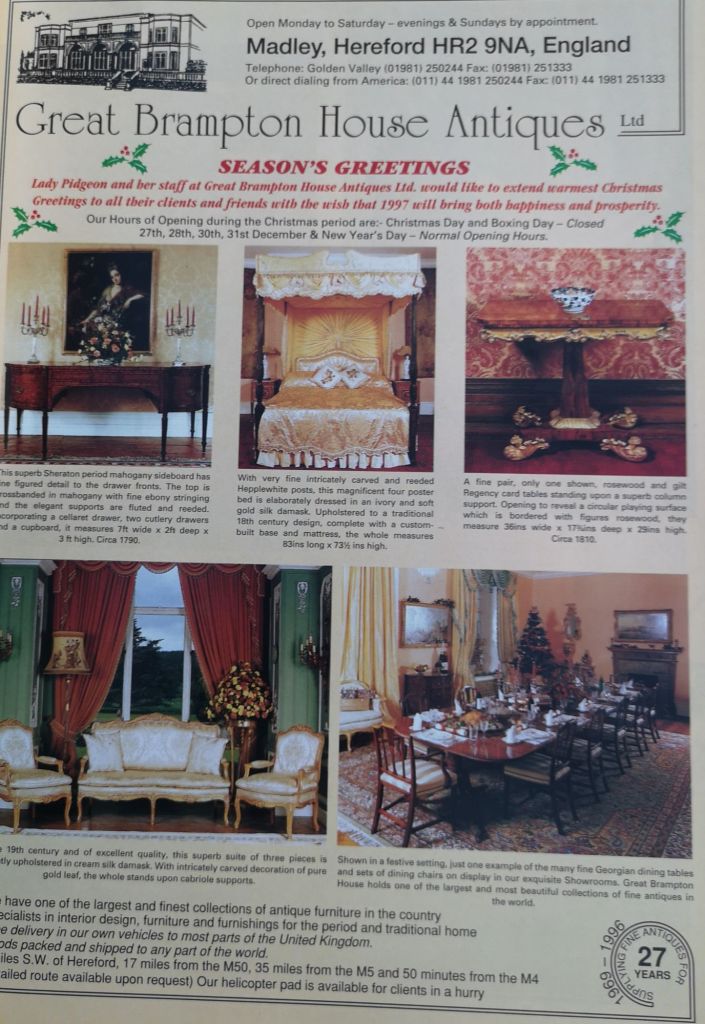
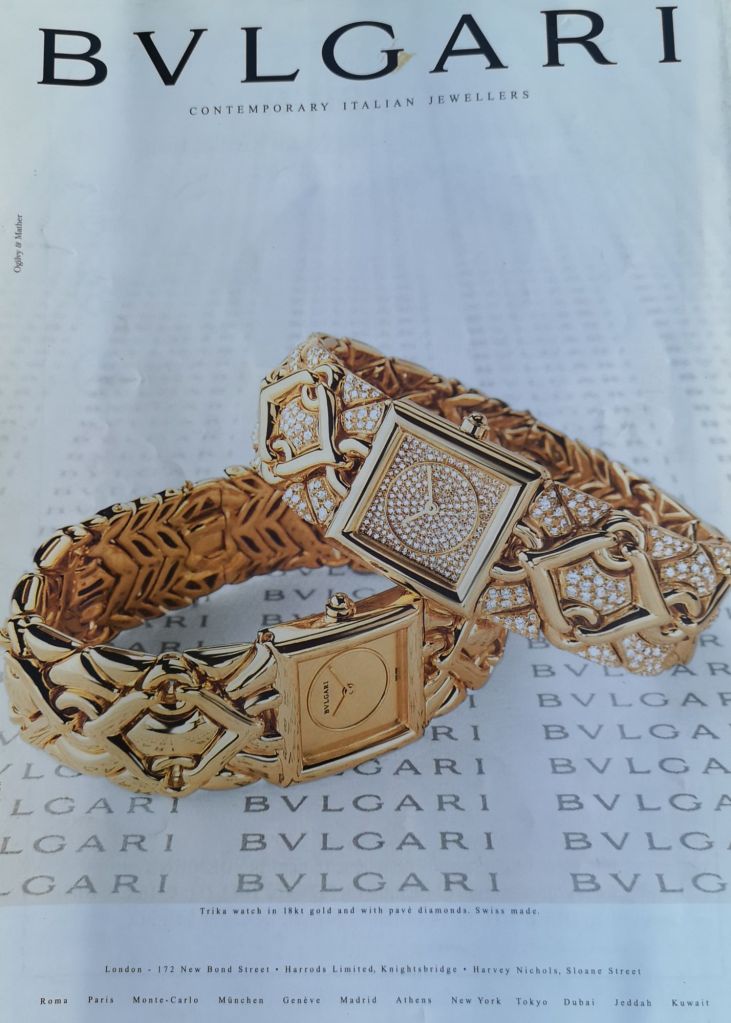
Even compared to the high end advertising of 1975’s Illustrated London News and 1986’s The Field, the 1996 Country Life is a riot of conspicuous consumption. The back cover is advertising the Bvlgari jewellers, whilst the bulk of the first 54 pages are dedicated to property, antiques and paintings, all with an eye to their investment potential. The top advertisement even acts as a career pointer for the average rural infant school pupil! Beyond this section there are advertisements for all things luxurious, the Concorde to Barbados holiday definitely caught my eye, and articles about fashion, wine and cigars!
Final Reflections
This magazine is from 29 years ago, but content wise it harks back to much earlier times, where the countryside was king and people were clearly placed within certain stations in life. The readership probably harked back to the awful verse in that hideous piece of music and lyrics that make up ‘All Things Bright and Beautiful’ where it proclaims that
‘The rich man at the castle, the poor man at his gate. God made them high and lowly and ordered their estate’!
To the majority of readers of this magazine, they were almost certainly there through divine plan, rather than generations of accumulated wealth. However, these people were clearly also driven by a sense of purpose, that of protecting the countryside and the traditions that were so important to them. In that respect, they have proven to be more in tune with the generations that followed than perhaps even they would have suspected. We may have our views about them, based on stereotypes and magazines like this, but when it comes down to it, they were people doing what they thought was important and doing it with determination and innovation as they faced rather than hid away from a modern world that didn’t really understand them.
Discover more from David Pearce - Popular Culture and Personal Passions
Subscribe to get the latest posts sent to your email.


This was very interesting to read as I actually remember the year fairly well, which means it is less like history for me than the others. I think I’ll buy a copy as I will be in the countryside over the season. I really hope the 2025 version has retained some of the charm. The plan is to carry it around and entertain/embarass the boy by putting on a posh voice and voicing old fashioned outrageous views. Anyway, thanks again for another great gem – the advert for Humbers Chartered Surveyers was particularly wonderful and I do like the way you end on such a kind note (very much in the spirit of Christmas).
LikeLiked by 1 person
I can actually picture you doing that!! 🤣🤣🤣🤣 Yes, this was a day when the Christmas spirit was flowing rather than ebbing!
LikeLiked by 1 person
The Christmas spirit has come through in these pieces throughout imo.
LikeLiked by 1 person
Oh, by the way, the 2025 Country Life Christmas Special is a really good one. It’s on sale now with a lovely Country illustration on the cover. Highly recommended.
LikeLike