
Christmas Magazines Through The Years Woman’s Own Christmas Annual 1965
What was 1965 like?
It was the 13th year of Queen Elizabeth II’s reign, and the year she saw the death of her first Prime Minister, the legendary Winston Churchill, in January. A third of a million people filed past his coffin when he lay in state for three days. Her Prime Minister throughout the year was Harold Wilson, the first Labour Prime Minister since Clement Atlee. Politically, there were two main events. First was the Abolition of the Death Penalty, a long overdue move towards a truly civilised society. However, it was initially a five year suspension allowing for a change of mind, which thankfully never came. Second was the Race Relations Act which made it an offence to discriminate against people based on their colour in a public space. It also introduced a crime of Incitement to Racial Hatred. The Beatles played live for the last time in Britain at the Capitol, Cardiff as the screaming from the audiences was drowning out their singing. However, in the rest of the year they filmed Help!, recorded and released the soundtrack, recorded Rubber Soul and released a Double A Side of Day Tripper/We Can Work It Out which was their third Christmas Number 1 in a row! Despite all this success, the biggest selling record of the year was Tears by Ken Dodd! The 1965 film year was dominated by The Sound of Music which was released in March and became a seemingly permanent fixture in cinemas across the country. The soundtrack also dominated the album charts even with all the huge acts around.
When looking at television in 1965, there was one big surprise. This was the year that cigarette adverts were banned, although cigar and pipe tobacco ads were allowed to continue! Given the prevalence of cigarette adverts in print media, it is interesting to speculate why ITV was relatively quick off the mark on this. My guess would be that in the position of relative power ITV found itself in – there were only two channels at the time – meant that it could be perceived to be encouraging a potentially extremely harmful pursuit, which may have led to legal action down the track. As with so many other dangers, from global warming to the effect of radiation, the evidence already existed in the scientific journals long before it became common knowledge in public circles.
Debuts made in this year included Till Death do us Part, Tomorrow’s World, Man Alive, Thunderbirds, one off play The War Game and The Magic Roundabout. Culturally, all of these have remained in the public imagination with the exception of Man Alive, but social history has much to thank that documentary strand for. Two Christmas Day events of note were the first ever Christmas Top of the Pops and The Feast of Steven, a Christmas themed Doctor Who episode, where William Hartnell as the Doctor broke the fourth wall to wish viewers compliments of the season.
Woman’s Own Christmas Annual 1965
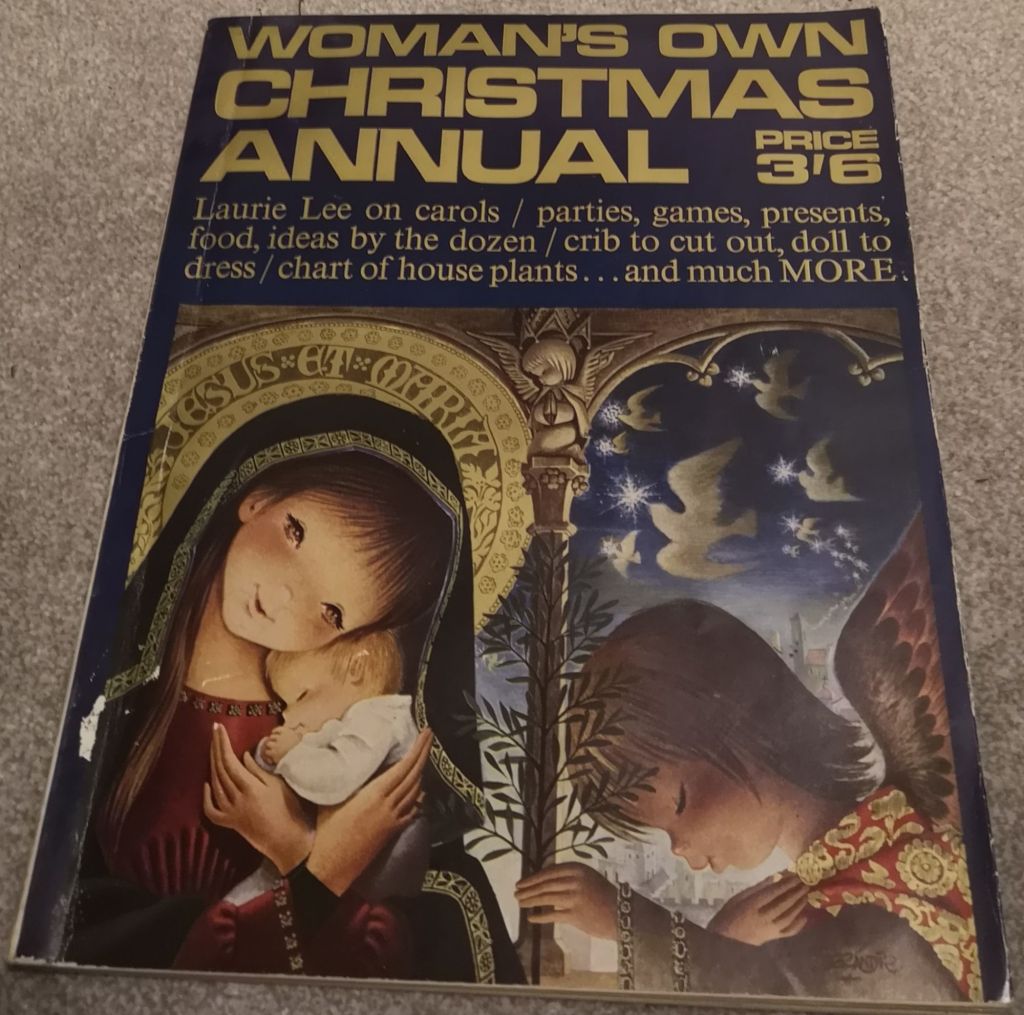
The cover at the top of this article is more effective at creating the mood for this magazine than almost any other. Although the use of children as Mary and an angel can seem a little cloying to modern readers, it reflects the children’s place right at the centre of the festival. It would have brought to mind the school Nativity play which was a staple at, almost certainly, every Infant and Junior school in the country at the time. The only element that might be called into question in that sense was the brunette Mary replacing the blonde Mary that was seemingly essential to almost every play I have ever watched!
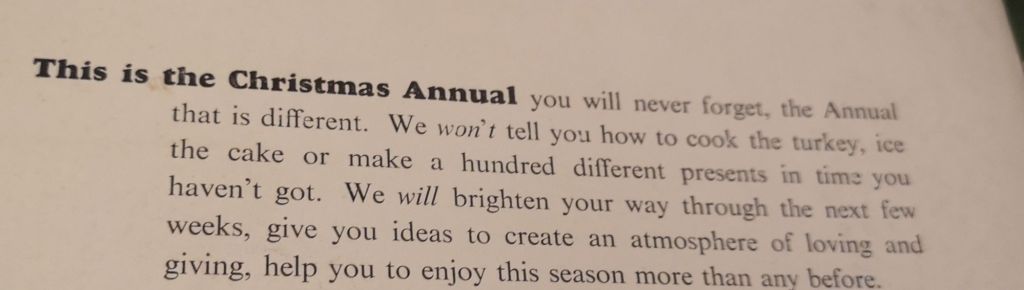
It’s interesting how this short paragraph sets out the stall for this magazine so succinctly. The intention seems to be to separate it from the ‘old fashioned’ magazines of the past and to attract a readership accordingly. It is probably one that would be more recognisable to a modern audience than the four that have preceded it in this series, which, given it is 60 years old, may indicate that the past is not so different a country as we might believe it to be. I certainly found it familiar in many ways and, of all the magazines I have read for this project it is probably my favourite.
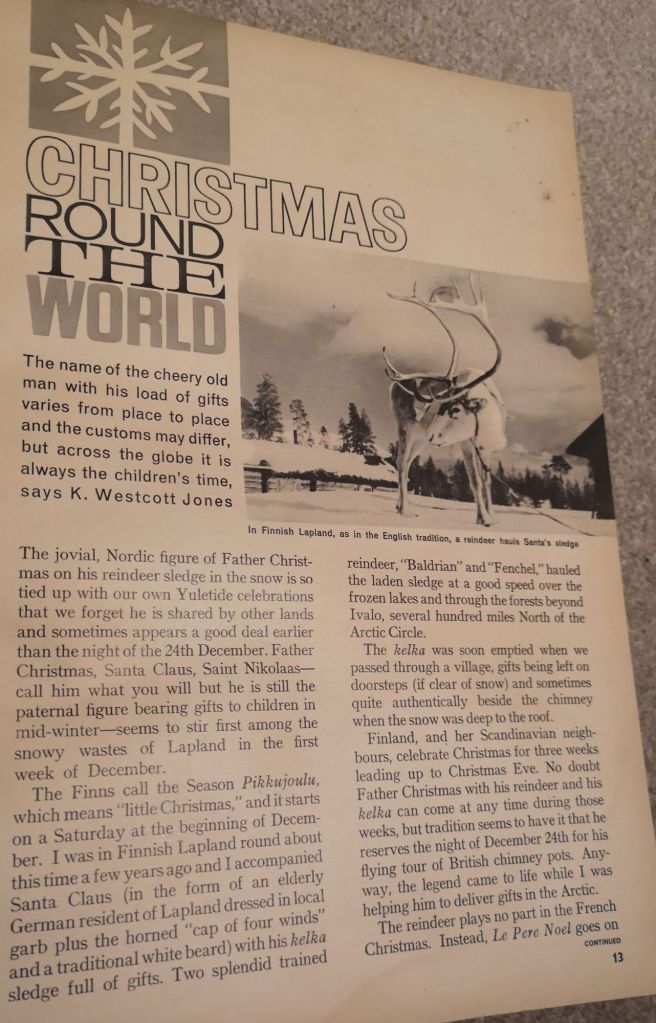
The first section I have picked out is the Christmas Round the World item that broadens the view from a British Christmas to a much more European festival, in keeping with the derivation of Father Christmas/Santa Claus/Sinterklass/Le Pere Noel. This type of article would have been as interesting to many children as it was to the Mothers whose magazine it was. Don’t forget that in those days this information was not readily available outside of heavy encyclopaedias or academic texts, so to have it in a well written and accessible form would have been very useful to all concerned.
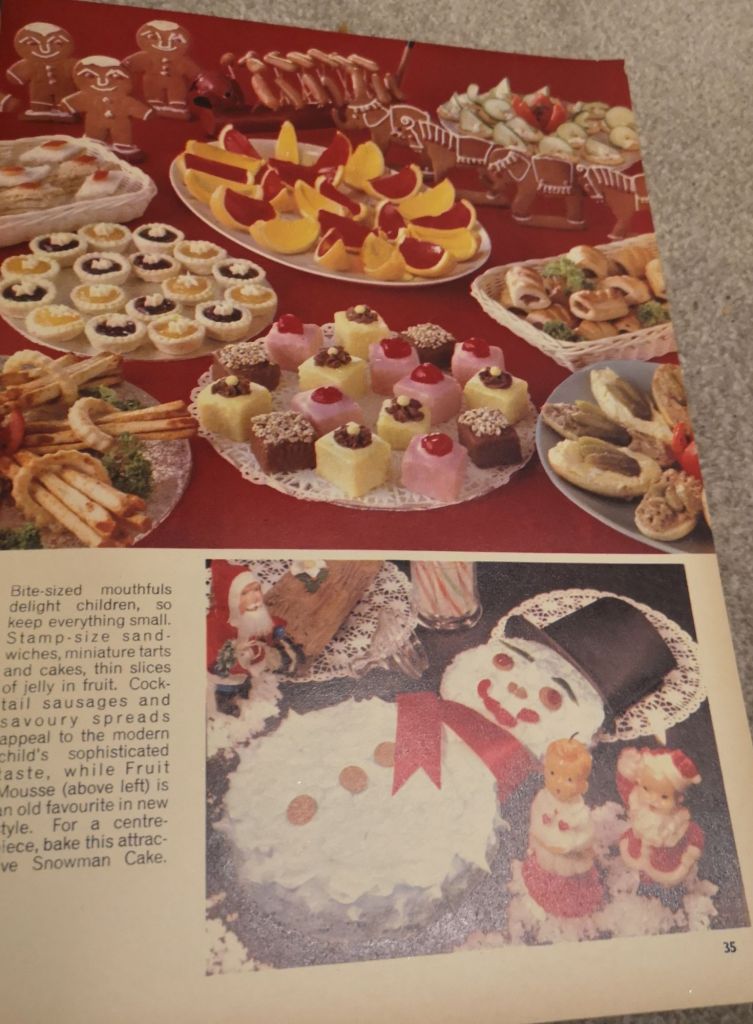
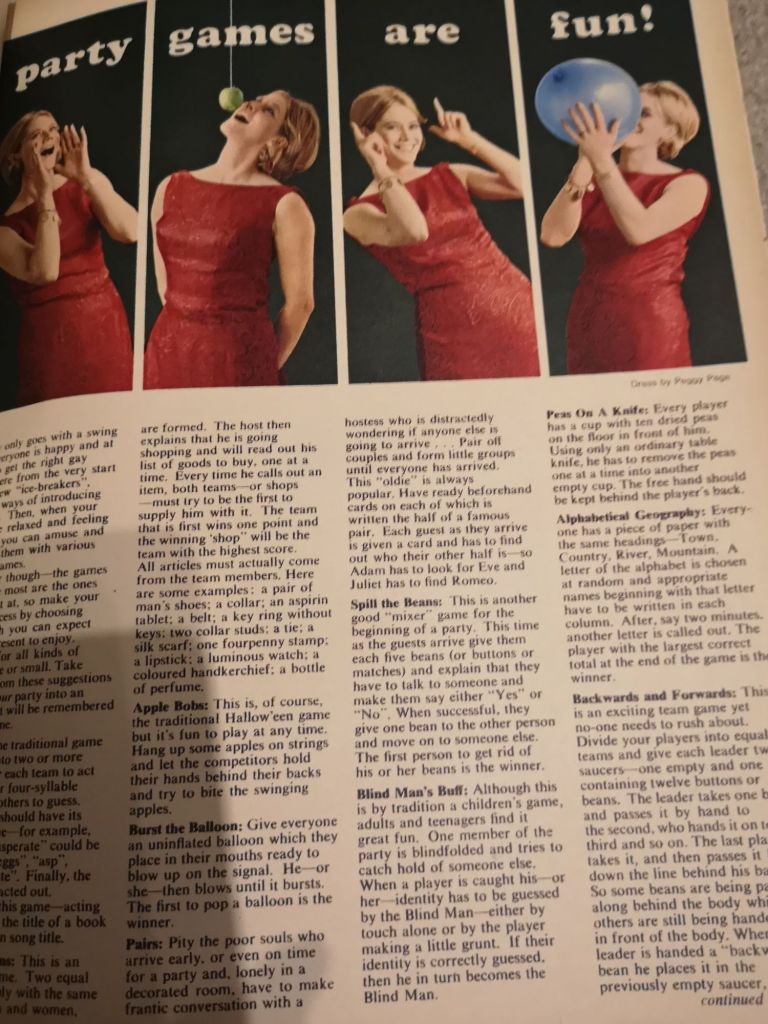
In the interest of brightening the way through the season there is an eight week Christmas Countdown that contains advice that is still very useful today. Of course, some advice like postage times to Ceylon and Rhodesia would be out of date, while references to ‘gay’ wrapping paper and tying a bow round pussy’s neck might raise eyebrows! However, timings for baking, early food buying, presents for all the family and party planning are still very good. As you flick through, there are four pages of lyrics for carols and using an ordinary pack of cards to tell fortunes as a fun party activity. Party food for children range from the now unfamiliar canapes, which are even rare at parties for grown ups, citrus segments with jellies replacing the orange and grapefruit and the show stopper, a Snowman Cake which does actually look like it would be very popular even with today’s children. Once the children have gone to bed then adults can play party games – no not those party games! As the magazine suggests you can create whatever atmosphere you choose with your choice of these games.
Finally, I want to pick out Laurie Lee’s short reflection on carol singing in his childhood. It is an extract from his incredibly successful memoir Cider with Rosie and is beautifully written. It is someone from our grandparents or great grandparents generation telling us about a world that no longer exists but which, through so many period dramas we can picture perfectly.
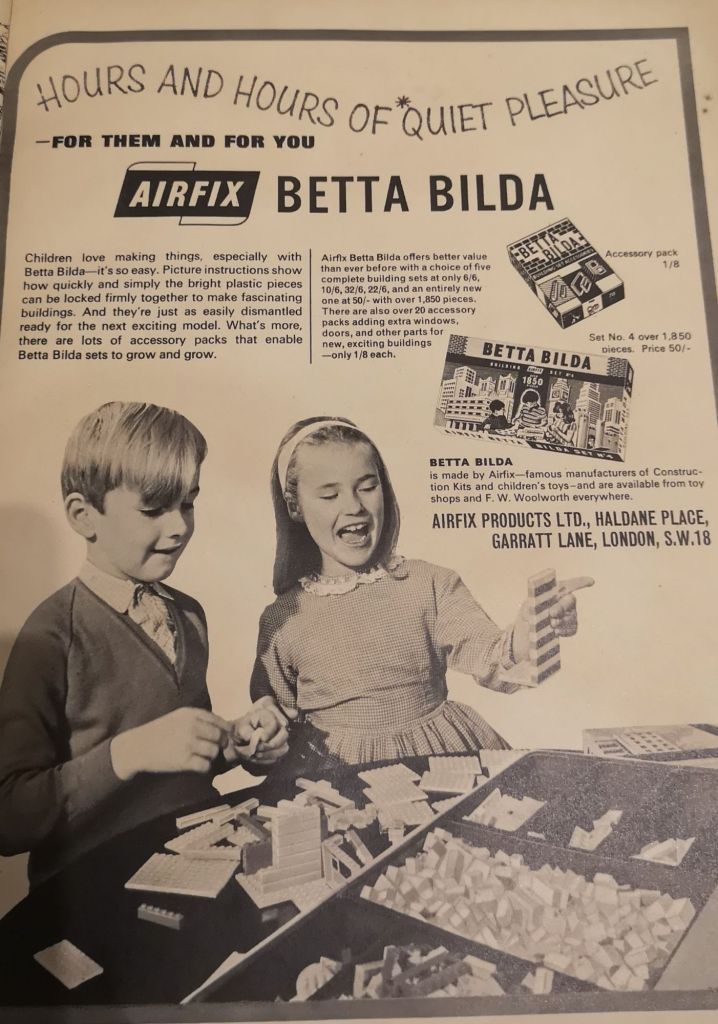
The adverts in the magazine include Lea and Perrins once again, Basildon Bond offering a whole year’s supply of stationery consisting of 220 sheets of writing paper, 148 envelopes, 25 correspondence cards, 20 brieflets and a jotter! That would last most people today a lifetime and more, sad to say. I think that of all the things that have disappeared in the last 60 years, it is letter writing I miss the most. There are Raleigh Bikes, familiar to any child of the 70s and Lindt Chocolate, probably more popular now than ever before. The advert I have featured is from Airfix and, to my surprise, is entirely gender neutral. It shows a boy and a girl using Airfix Betta Builda to construct their own towns. Who knows how many young women would have been encouraged into STEM if this kind of approach had remained the model for every construction toy in my 70s childhood. By then, Airfix and Meccano, neither of which suited me at all, were marketed almost exclusively to boys.
Final Reflections
If this magazine appeared on our supermarket shelves now, it would certainly not look out of place amongst the massed ranks of festive offerings except for the fact that it is very largely in black and white with colour used to create a ‘wow’ factor. The standard of writing and range of subjects could teach something to today’s celebrity obsessed Christmas issues, and I for one would probably find more of interest in it than in any of its modern competitors.
Next time, we look at the Woman’s Own magazine two years later.
Discover more from David Pearce - Popular Culture and Personal Passions
Subscribe to get the latest posts sent to your email.


Interesting to see a more recognisable world in this magazine, though it still is another world. The “Party Games Are Fun” piece almost seems like a spoof.
LikeLike
I hadn’t thought about that but you’re right! You can imagine it getting a more profane treatment if Viz got hold of it!
LikeLiked by 1 person
Ha ha ha!
LikeLike