
Christmas Magazines Through The Years Everywoman 1950
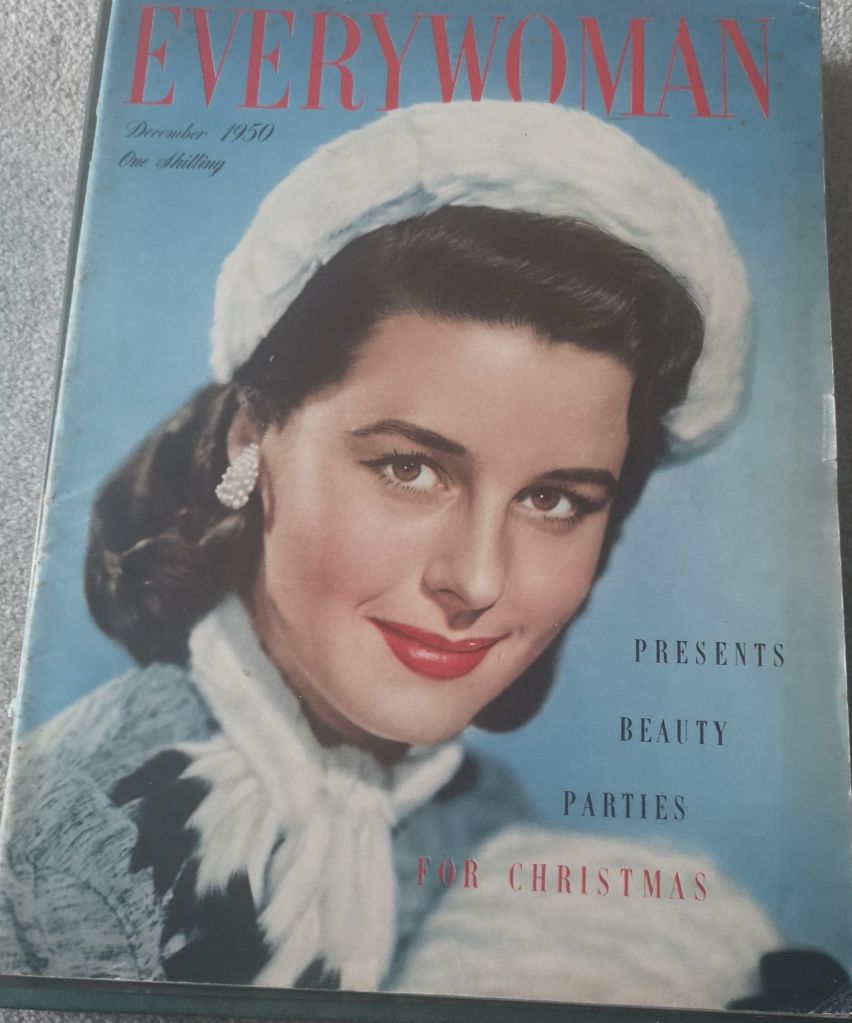
What was 1950 like?
The first thing to say is that rationing was still in effect for sweets, sugar, meat and petrol amongst other items. The bread and clothes rations had ended in 1948 and 1949 respectively, while the petrol ration was becoming much more generous. A few months before this magazine was published, the soap ration was removed. These were reactions to the growing unpopularity of the ruling Labour Party who had won the 1945 election with a majority of 146 seats. In the 1950 election Clement Atlee saw his Government, who foresaw no end to rationing given the weakness of the world economy, re-elected with a wafer thin majority of 5, the result of a Conservative campaign strategy based on ending rationing completely. It was clear that the country had had enough of restrictions and was extremely eager to return to an economy where the consumer could be free to spend what they wanted.
In a sense, 1950 was the first modern election, as it took place with no plural voting, which allowed you to vote more than once for various reasons, and no university constituencies which accounted for 12 seats with Oxford and Cambridge having two seats apiece. The turnout in the 1950 election was 83.9% of the eligible voters, an all time high. To put this in perspective, the turnout in the UK General Election of 2024 was 59.7%!
According to the Office of National Statistics, the average wage for male manual workers was £7 a week, whilst for those women who did work, they were paid just £4 a week on average. For young men called up for National Service, wages were significantly lower, even allowing for room and board, which were basic to say the least, amounting to around £1 10s a week. This was just one of the reasons why National Service was so disliked by the generation who came of age just after the war.
The UK Film industry was in very good health in 1950, producing a large number of films. The Blue Lamp saw the first appearance of Dixon of Dock Green. It was almost the last as he was shot by a young thug played by Dirk Bogarde! Luckily for Jack Warner, George Dixon was given a second life and ended up as a fixture of British TV for over 20 years. The pilot episode of The Archers was broadcast on BBC Radio in June, going in to full production the following year. On Television the first appearance of Andy Pandy took place in July in a strand called For The Children, that later became Watch with Mother. The first Chronicle of Narnia, The Lion, The Witch and The Wardrobe was published on October 16. Finally, one of the most loved British comics of the Post War era, The Eagle, first appeared on April 14.
Everywoman 1950
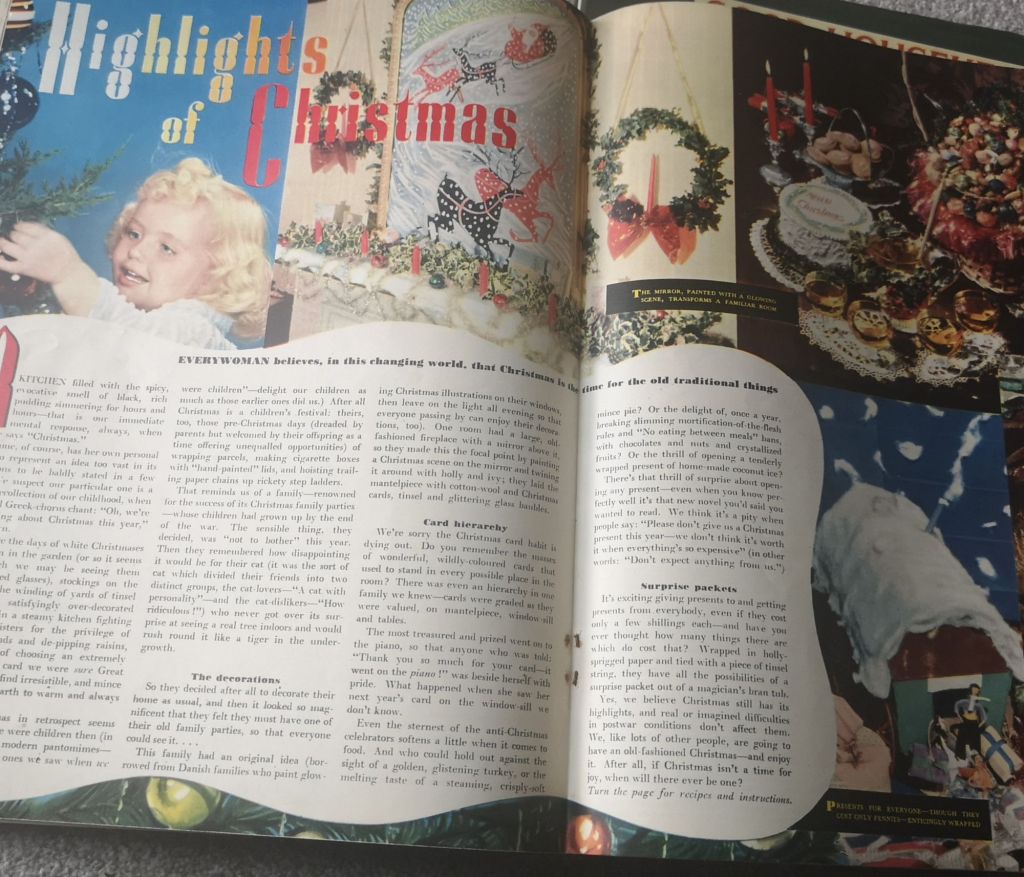
So, what caught my eye when I worked through the magazine. Overall, I would say that the sheer familiarity of many of the products and the approach to Christmas was a real surprise. As this is 75 years ago, and took place in a country still in the grips of economic turmoil and rationing, I expected it to be a very traditional approach. In some ways it is, but in others it is very much looking to a better future. In that sense, it was as much about influencing the celebration as it was about reflecting its reality. The adverts for presents included perfumes and cosmetics, which would definitely have counted as aspirational, but many of the articles concentrated on what limited budgets and restricted choice would have allowed. It was quite a difficult balance to maintain, but I think the readers would have felt that it had been done quite well. It’s likely that some of the Everywomen this was aimed at would have cut out both articles and adverts for future use.
The article entitled Highlights of Christmas is absolutely fascinating because many of the concerns expressed by the magazine are still expressed today. First of all, they describe the ‘Oh, we’re not bothering about Christmas’ brigade as a ‘Woeful Greek Chorus’ and I wholeheartedly agree. I know there are often very good reasons for people to avoid Christmas, and I certainly wouldn’t criticise anyone for not taking part, whatever those reasons are. The problem is that, very often, they tell us that they won’t bother to express an imagined superiority over those who love Christmas. In 1950, the magazine reliably informs us, the Christmas card habit was dying out. It’s a cry you hear much more nowadays, and with much more reason, as all but a very few homes end up with a couple of dozen Christmas cards at most. The younger generation never really sent cards to their classmates at school, so they have never got into the habit and I think it will go one of two ways. Either the Christmas card will be all but extinct in 10 years time, or it will make a comeback in the same way as vinyl has for a generation eager for a more tactile world. My money is, sadly, on the former. The final reflection mentions the ‘real or imagined difficulties in post-war conditions’ as a reason why many are turning away from the traditional Christmas. However, as the magazine points out, ‘if Christmas isn’t a time for joy, when will there be one?’
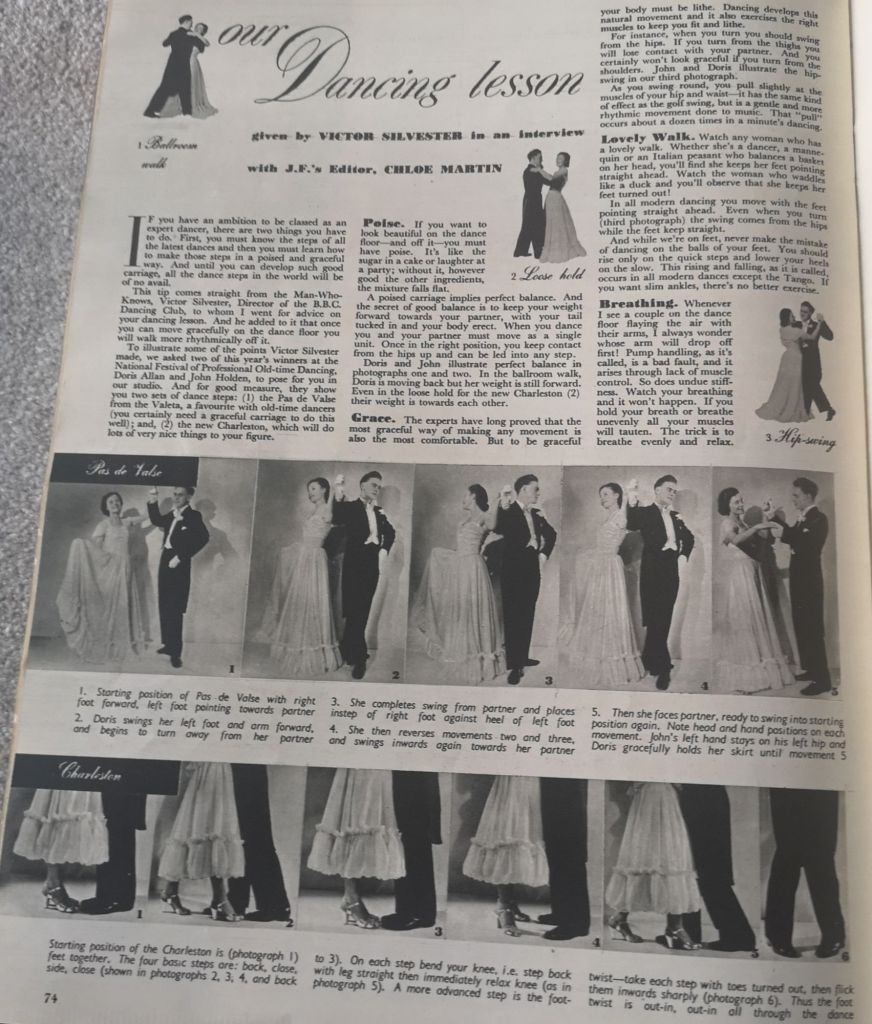
The name of Victor Silvester will be unfamiliar to very many these days, but in his time he was the most famous ballroom dancer of the post-war period and his book, Modern Ballroom Dancing was the most significant publication of the time. It was first published in 1927 and the last edition was published in 2005. To have a dancing lesson from this great exponent was a coup for the magazine and a way for its readers to improve their own prowess on the dancefloor in an era when this was absolutely central to the courting process.
Familiar Brands
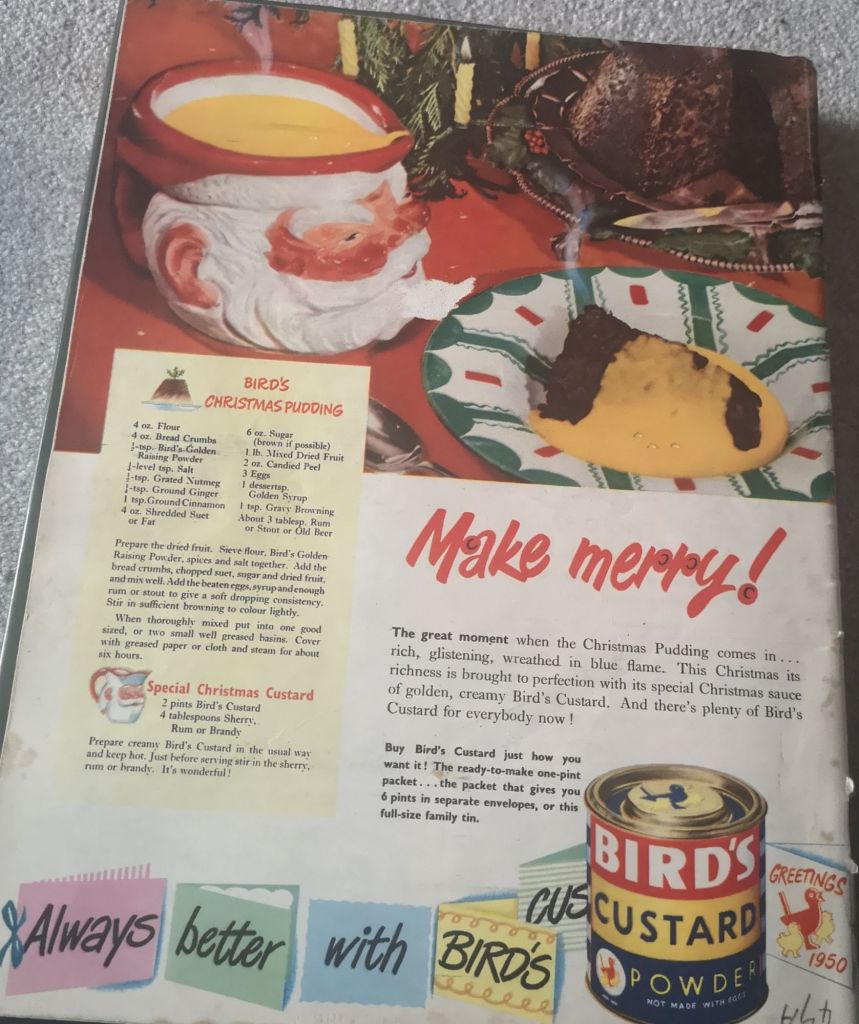
On the back cover you would have found the advert for Birds Custard, a product that featured in the 1896 Pears Annual! In this case, it is positioning itself as a central component of the Christmas dessert. It includes a very helpful recipe for Christmas Pudding and a ‘Christmas Custard’ which is just normal custard with a dash of spirits! However, that in itself is interesting as, for many families, alcohol would not be an integral ingredient of the season as the idea of excessive drinking was frowned upon. In addition to this somewhat Puritan view, it was also very expensive and out of the reach of many.
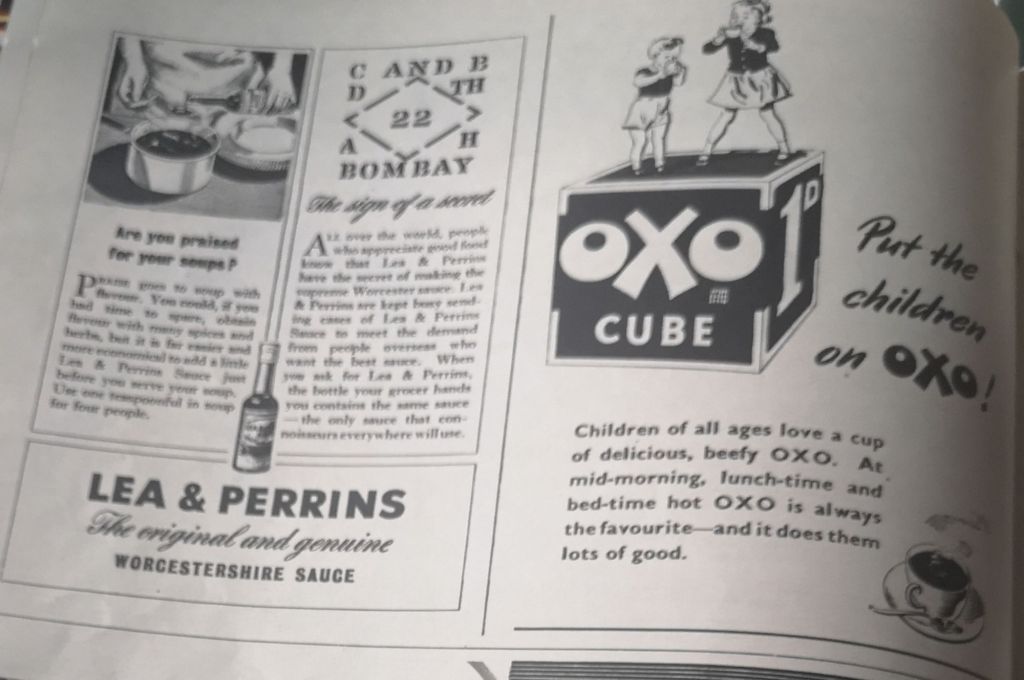
Lea and Perrins Worcestershire Sauce is still a staple of our cupboard as is Oxo. The more interesting advert here is for the latter. Instead of a gravy, it suggests that Oxo can be the basis for a healthy drink for children. The football crowds when I was much younger were reputed to be partial to a cup of Bovril along with their pie. If they were Oxo kids in the 40s or 50s that would make complete sense.
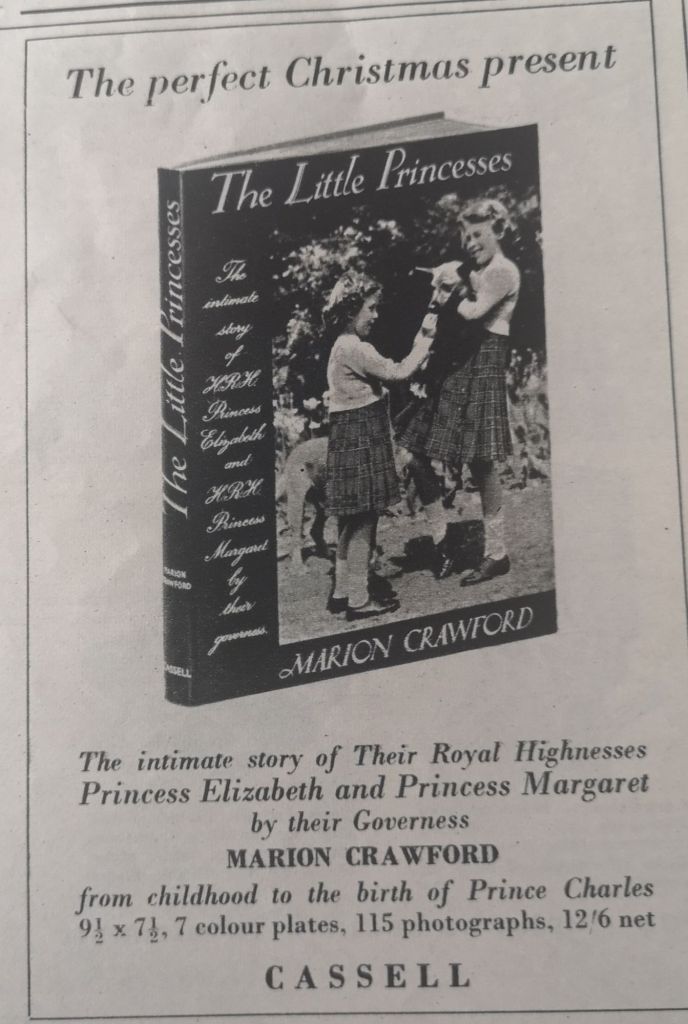
The final advert is quite bittersweet. It’s the book written by Marion Crawford, known by the Princesses Elizabeth and Margaret as Crawfie, beloved Nanny to the heir and spare. She published the book in 1950, which was filled with affectionate detail and was agreed to initially by the Royal Family. When it appeared under her own name she was ostracised, forced to leave her grace and favour cottage and never spoken or written to again by any member of the Windsors. Their coldness even extended to her death in 1988 when none of the Royal Family sent a wreath to her funeral. The double standards of the Royal Family in this matter are illustrated by the appearance of an article ‘The Day at Sandringham’ which freely gives the readers of Everywoman the type of anecdotes that peppered the book. It is a sad and disquieting story.
Final Reflections
I really enjoyed reading this magazine as so much was unfamiliar but so much was familiar to me as a child. When you consider that my Mum was 12 and my Dad was nearly 16, you can see the social structures that shaped their lives and attitudes.
Three stories in this magazine are very interesting as a reflection of 1950 society. Fanny was a Minx, quite apart from it’s now amusing name for the main character, is about a free spirited woman who ‘had not had a proper upbringing’. I wonder if she needs a man to bring her under control?! ‘When Grandma came to stay’ features an appalling Mother in Law whose aim is to sow discontent within the marriage of her daughter and son in law. Basically the stereotype of post war comedy until the 80s. Finally, ‘Fairies at the Christening’ features an ‘air headed’ woman who has, over the years promised at least a dozen friends that they could be Godmother to her first child. The idea of Godparents may be old fashioned now, but the social and personal knots she ties herself in are very familiar in what is a very enjoyable story.
So, in this magazine you see a reflection of an age that is still restricted, both socially and financially, but it points the way towards a better future in its articles and adverts.
Discover more from David Pearce - Popular Culture and Personal Passions
Subscribe to get the latest posts sent to your email.


That was a fascinating read David. Really enjoyed it and learned so much. Thank you
LikeLiked by 1 person
Thank you for letting me know, Paul. I have enjoyed researching and writing it, but I was worried that I was typing into the void! Hope you like the rest of them as well.
LikeLike
Again, a very interesting and accessible glimpse into the time. The stories in the magazine are laugh out loud funny too.
LikeLike
I loved the christening one because one of the potential godparents, the schoolfriend who has become very unconventional, turns up uninvited and no one is uncouth enough to ask her who she is!
LikeLike