
Re-Play The Muppet Show Album
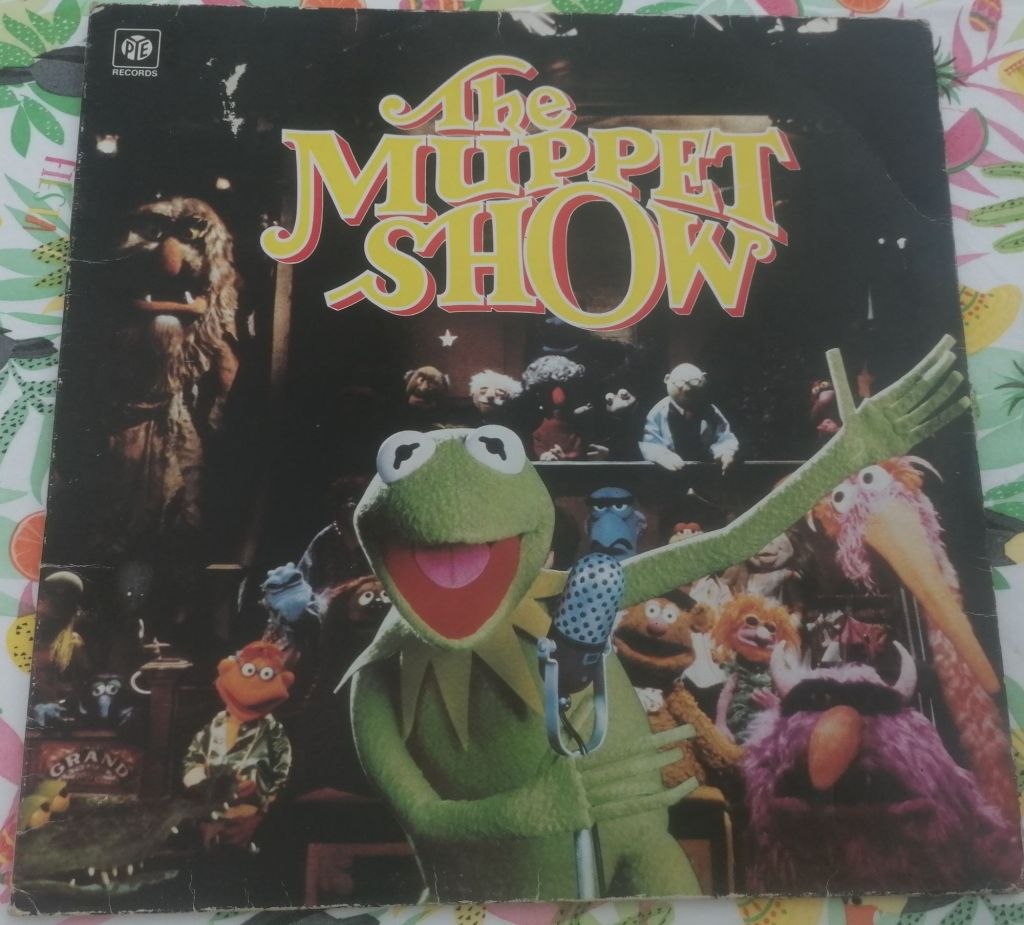
For me at the age of 12, as for so many others, children and adults alike, there was only one place to be on a Sunday evening, and that was watching The Muppet Show on ITV. Although the Muppets have been with us since the 1960s, and remain with us to this day as cultural touchstones, it is difficult to overstate the impact that the show had on audiences in 1977. For a start, the anarchic behaviour was unlike anything we’d ever seen before, and the readiness for sometimes very very famous guests to join in with this anarchy, send themselves up and play second fiddle to the Muppets was unheard of at the time. The other element that made it so original was the breadth of cultural and musical influences from classical to rock via country and jazz, and all points in between. I broadened my musical tastes because of The Muppet Show in much the same way as I had with Mike Batt’s Wombles a couple of years earlier. The Muppet Show album was a very well received Christmas present in 1977, and I played it until I was word perfect. It hasn’t been out of its sleeve for perhaps 45 years, so how will it stand the test of time? Only one way to find out!

Side One
We start off with The Muppet Show Theme as all the TV shows did and instantly I was reminded of teatime in the late 70s. It’s amazing how this simple tune took me straight back to my lounge in 1977. I could see the furniture, the fire, the rug and the TV in my mind’s eye. The sheer variety of the songs is astonishing, starting with Mississippi Mud, a song from 1927 that was originally recorded by Bing Crosby a year later, as part of Irene Taylor and The Rhythm Boys. It was a jazz influenced tune, but the Muppets turned it in a hoe down with stamping feet and a country and western feel. Next we have perhaps the most familiar song on the album, Mah Na Mah Na, a song that genuinely needs no introduction. The antics of the increasingly uncertain soloist are great on the album, and it loses very little from the lack of pictures. That, by the way, is a running joke throughout the album, perhaps best epitomised as we hear The Great Gonzo eating a rubber tyre to the music of Flight of the Bumble Bee! Mr Bassman by the ever cool Floyd, from Dr Teeth and the Electric Mayhem, the house band, accompanied by the less cool gopher, Scooter is an absolute delight. Originally a hit for Johnny Cymbal in 1963 it is given fresh life by the Muppet treatment. Musically, it is superb with tight instrumentation that never overshadows the interplay between the two singers. Also, having two singers gave it an edge over the original because Cymbal provided both voices himself, whereas here we already know both characters well which adds a backstory to the song that works perfectly. We move from that to the first of two A A Milne inspired songs, Cottleston Pie, originally a poem recited by Winnie The Pooh, then set to music. Rowlf, the piano player gives the backstory to the song and then intersperses the lyrics with various asides such as
This is where the song changes key. It’s what we call modulation. That’s G Sharp minor.
Cottleston Pie The Muppet Show Album 1977
It’s the kind of detail that is just delightful and set the Muppets apart. Who else would have thought of introducing music theory into a song for children? In a similar vein to the Rubber Tyre earlier, Marvin Suggs and his Muppaphone playing Lady of Spain, perhaps relies on having seen the original show, so for those of you who haven’t here it is.
The next two songs, Pachalafaka and Lydia the Tattooed Lady definitely appeal on different levels depending on the age of the listener. For a start, the ‘Turkish’ song Pachalafaka originally recorded by Earl Brown and Henry Mancini in 1958 has undertones of desire not immediately apparent to the average child, featuring as it does a veiled harem girl, who is enticing a tourist. The somewhat suggestive lyrics and the reveal at the end when the harem girl turns out to be a man with a moustache definitely puts a different spin on the tale! Lydia the Tattooed Lady comes from the film At the Circus and was sung by Groucho Marx. Once again, the potential double entendres which passed me by definitely don’t 45 years on. What is so clever, though, is that knowing the cheekier side of the song doesn’t make it feel any different, because the twelve year old inside of me still reacts in a relatively innocent way.
The final song on Side 1 was a very successful single in the UK, featuring Kermit’s nephew, Robin, with the absolutely lovely Halfway Down the Stairs. Sung with sensitivity and wistfulness it is two minutes of absolute magic that takes you back to your childhood in the purest and most marvellous way. It is the perfect end to a side that gives you a whistle stop tour of styles which epitomise the old style variety shows.
Side Two
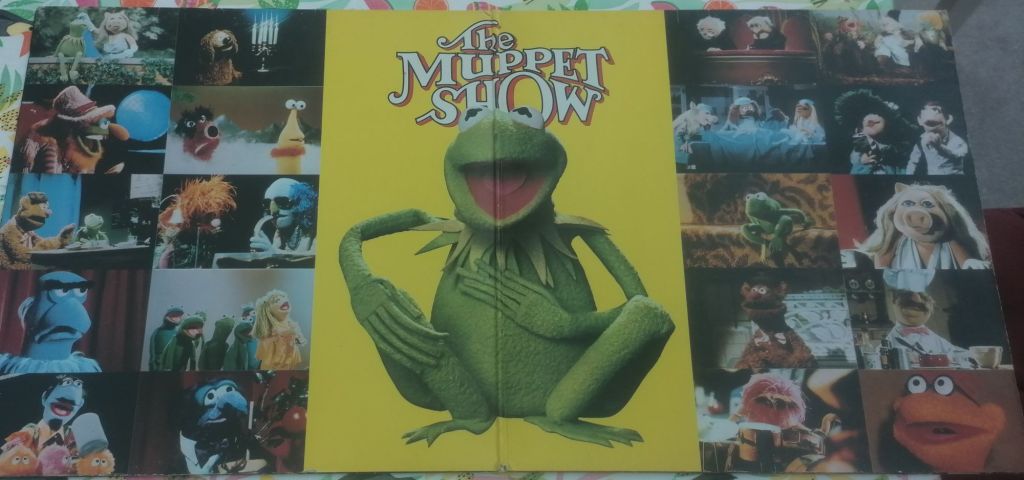
This side starts off with Dr Teeth and the Electric Mayhem playing Tenderly. The playing is, of course, anything but tender especially with Animal on drums! It’s an excellent musical joke, but, until I heard the Rosemary Clooney version many years later, I thought it was meant to sound like that! Next, I’m in Love with a Big Blue Frog, is perhaps the oddest song on the entire album, in a very competitive field. I didn’t know before today that the original version was sung by Peter, Paul and Mary, more famous for Puff the Magic Dragon. It contains some marvellous lyrics and is simply very funny throughout. Tit Willow, sung by Sam the Eagle, accompanied by Rowlf on vocals and piano comes from Gilbert and Sullivan’s The Mikado, and is a forlorn attempt by the highbrow bird to introduce some culture into the proceedings. It is sung completely straight in a way that I am sure the original writers would have appreciated. Veterinarian Hospital, a soap opera parody, may be the template for my sense of humour with its corny jokes and love of word play, something that my family and friends may not thank The Muppets for! It was replaced by Pigs in Space in subsequent series, an equally funny take on science fiction shows.
There follow two absolutely superb performances that show The Muppets’ ability to add something to a song just through their choice of performers. Simon Smith and his Amazing Dancing Bear sees Scooter and Fozzie team up for a song written by Randy Newman and recorded by Alan Price, formerly of The Animals. It’s a song that tells the story of a poor performer who gains favour from the rich and famous because of his act, an interesting reflection on the difficult path to success for those of limited means. Straight afterwards, Miss Piggy gets her solo song with the Bolero influenced, ‘What Now My Love?’, a standard written by Gilbert Becaud with the original French title of ‘Et Maintenant’ and recorded by Shirley Bassey, Sonny and Cher and Elvis Presley amongst others. None of them were as threatening as the spurned Miss Piggy though! In her version, you are left in no doubt that the man who abandoned her faces retribution in no uncertain terms!
In keeping with the variety bills of the old music hall that so clearly influence the show, we have a trio of tracks starting with Fozzie Bear, the failed comedian. We then move on to a song called Hugga Wugga which is sung by an aggressive alien who is constantly interrupted by other aliens singing other songs. Every time this happens, the Hugga Wugga monster blasts the other singer, but whatever he does, he cannot stop a small yellow alien singing You Are My Sunshine. It is completely weird and something only the Muppets could get away with. The final oddity is Wayne and Wanda, a very serious pair of musical performers singing Trees. A famous version by Paul Robeson lasts for two and a half minutes, but Wayne and Wanda only manage the first two lines before the tree is cut down and falls on Wayne!
Sax and Violence is a jazzy number with Zoot the saxophonist forced into the demeaning role of playing one note at a time. At the start of the song he says ‘Forgive me Charlie Parker wherever you are!’ but the song itself simply bounces out of the speakers. It’s brilliant and, musically speaking, a real highlight on the album. Finally, Being Green is the song that, above all others, articulates the feeling of not fitting in due to a characteristic you can’t help, and then turns it around to become a song that celebrates the difference that many others will pick on. It is a plea for tolerance that rings down the ages, and it makes the perfect end to the record.
Final Thoughts
It has been just as thought and emotion provoking to return to The Muppets as it was returning to Disney and The Wombles There is something about the music of your childhood that was, in many ways, aimed at children that takes us back as if in a time machine. I was having an awful time at secondary school and The Muppet Show album was definitely a safe haven for me. Even now, it serves the purpose of making me feel less cynical about things, if only for 45 minutes or so.
Discover more from David Pearce - Popular Culture and Personal Passions
Subscribe to get the latest posts sent to your email.
 David Pearce - Popular Culture and Personal Passions
My introduction to The Muppets was through re-runs in the mid-80s, Muppet Babies, and some of the later films. I do remember being fascinated by the characters, especially Animal and Gonzo, and wondering what the hell they were supposed to be!
LikeLiked by 1 person