
The Lion, The Witch and The Wardrobe Re-view
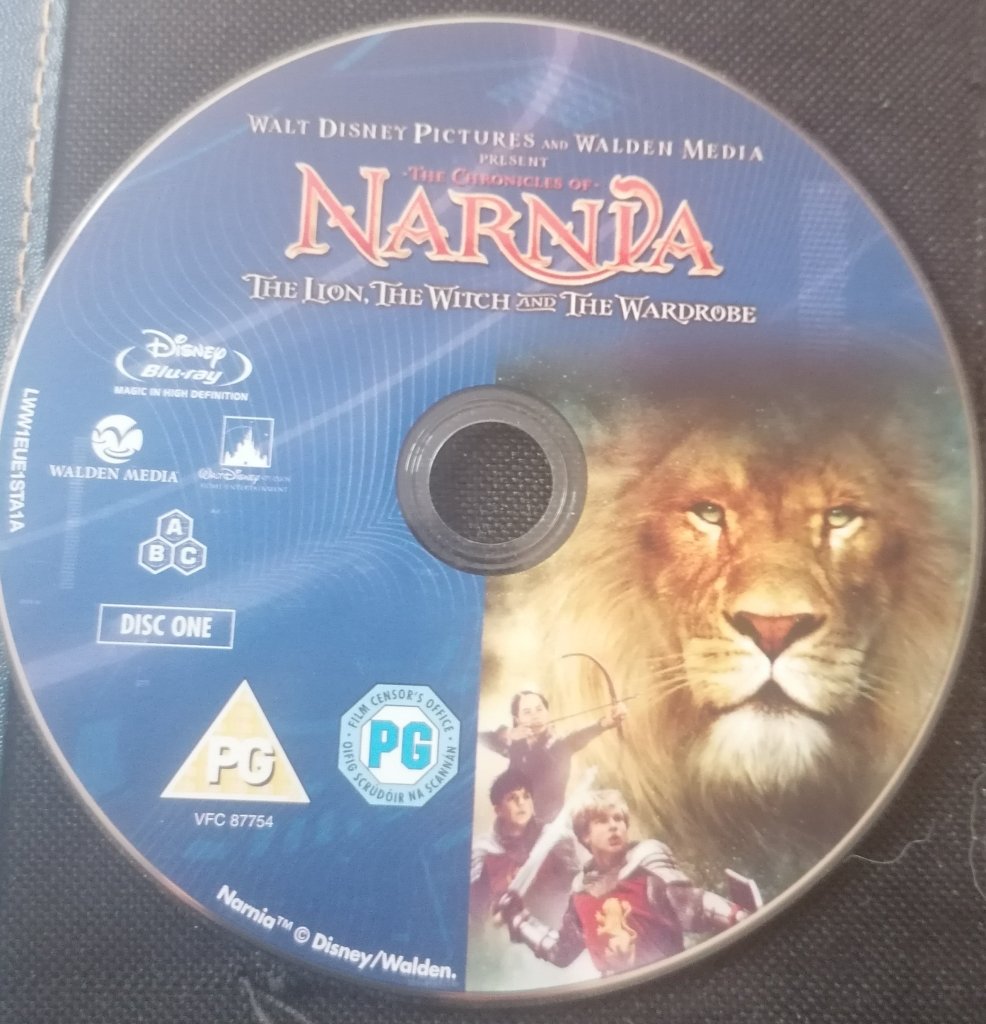
Sometimes, when I am looking through my DVD/Blu-ray collection, I come across a film or series I haven’t watched in ages. I put it on and I am reminded why I liked it in the first place and why I still enjoy it. One such film is the 2005 version of C.S. Lewis’ first Narnia novel. In order to focus properly on that film, I will address one of my irritations, the continued lack of a film or TV series based on The Magician’s Nephew. Why don’t the film makers start there? It explains how Narnia came into being, and is my favourite Narnia, perhaps because it was after all but The Last Battle had been completed, when Lewis had the entire story of Narnia from beginning to end. It fills in gaps in the narrative and provides Jadis with a fantastic backstory. There are often rumours of a new Narnia series being made, so I hope that my favourite Narnia story finally makes it to the screen. It is only fair to say that a number of scholars disagree with me on this, and suggest that the order in which Lewis wrote them with The Magician’s Nephew the penultimate book and The Last Battle, the final story, were always intended to be read after the rest of the Narnia Chronicles. Now that’s out of the way, I can get down to reviewing the Disney studios answer to the Harry Potter phenomenon.
The Plot
This must be a plot that must be extremely familiar to most of you reading this, but in case you aren’t, it sees the four Pevensie children, Peter, Susan, Edmund and Lucy evacuated during WWII to a large house in the country owned by Professor Kirke. One day, while playing hide and seek, Lucy hides in a wardrobe, but it’s no ordinary wardrobe. It turns out to be a portal into another world. This world is snowbound and apparently deserted, but whilst exploring she meets a faun, Mr Tumnus, who takes her home for tea after finding out that she is in fact human, something Tumnus seems unsettled by. When she gets home after hours spent in Narnia, she tells her siblings that she is back safely, but it turns out that no time at all has passed. Edmund is the next one to discover Narnia, and he runs into the White Witch, the self-styled ruler of Narnia, who finds out that he has three siblings and tells him to bring the others back after enticing him with hot chocolate and Turkish Delight. When all four finally make it into Narnia, they find out that the White Witch is an evil ruler who has enchanted the land, and that Tumnus has been arrested after Edmund carelessly told the Witch about Lucy’s visit to the faun. When the White Witch moves against the four children and their supporters, the stage is set for a battle between good and evil.
The Cast
As with the book, the story is seen largely through the eyes of the youngest of the siblings, Lucy. As such, the film makers had to get the casting right, and with Georgie Henley they succeeded. Although it was her first film, Henley proved to be equal to the task of guiding the audience into Narnia. She is appealing as a central character and her ability to show a combination of vulnerability and bravery made her performance strong enough to carry viewers with her. The relationship she has with her older siblings is believable, with the fraught dynamic between her and the second youngest Pevensie, Edmund, nicely authentic. Skandar Keynes has the most difficult journey as the treacherous Edmund, having to make himself unlikeable and occasionally spiteful, whilst leaving just enough goodwill in the audience to accept a possible redemption. Keynes walks this tightrope very well, and allows Edmund to be a character with shades of grey, and occasionally jet black. Anna Popplewell plays the older sister, Susan, and does an underwritten part full justice. In the original novels, Susan is given little character development and her main role seems to be as a viewer of events rather than integral to them. She becomes a very peripheral character in Prince Caspian and it seemed to me that C S Lewis spent little time trying to give her any defining traits. The final novel, The Last Battle, sees Susan shut out altogether in a move that outraged me as a child, and is the reason why I have never read that book again. Popplewell manages to show Susan’s strength and her role in bringing her occasionally warring siblings together. Finally, as the oldest sibling, Peter, William Moseley gets the bulk of the action sequences, having the chance to fight at the head of the forces of good. It is a role that could be a little one note, but Moseley shows concern for his brother and sisters that hints at a softer side.
The two main protagonists, at the head of their respective armies are Aslan, with the voice of Liam Neeson and the White Witch played by Tilda Swinton. Neeson has the required power and gravitas to portray the God of Narnia and is helped by a very effective realisation of Aslan on screen. It is, however, Tilda Swinton who takes her chance to steal the movie from everyone else with a truly superb and scary performance. Even as an adult with a good few viewings of this film under my belt, Swinton could still be genuinely terrifying at times, never more so than in the brutal Stone Table sequence, which is as dark as it gets in a family film.
Finally, I must mention Mr and Mrs Beaver played by Ray Winstone and Dawn French, who give the film humour in some of the darker moments with their excellent characterisation and comic timing. They were my children’s favourite characters when they first watched it, and remain so even now.
Overall
Nearly 20 years on from its first appearance when, by the way, it outperformed Goblet of Fire at the Box Office raking in $750m in cinemas, how does it hold up? Visually, it is still magnificent and the CGI is still extremely effective. The performances are strong throughout, and they help to create a fully rounded world that is built up in just a couple of hours. The story races along and the pace is never allowed to sag once the four Pevensies get to Narnia. Finally, the portrayal of the four as adults in Narnia shows how to do a 19 years later style epilogue! So why was it the only truly successful film in the series? A few reasons, but perhaps the three year gap between this film and its sequel, Prince Caspian, betrayed a lack of forethought that the Harry Potter films had in abundance. Each year, there was a new Harry Potter film, and the connection with the audience grew larger with each one. The audience, having waited three years between films, moved on in many cases to the darker toned fantasy films and never returned. Prince Caspian was a much darker film which further alienated their core audience of younger viewers, and when the more tonally similar Voyage of the Dawn Treader finally arrived in the cinemas 5 years after the first film, the Narnia bubble had well and truly burst.
While writing this entry, I have discovered that Netflix have bought the rights to all seven Narnia stories, and rumours are that Greta Gerwig will be directing two of the films. Nothing is confirmed yet, but it looks promising, and who knows, a new audience may yet be entranced by the adventures beyond the Wardrobe.

Discover more from David Pearce - Popular Culture and Personal Passions
Subscribe to get the latest posts sent to your email.
 David Pearce - Popular Culture and Personal Passions
I’ve never actually watched these movies but I’d like to! Great review.
LikeLiked by 1 person
Thanks for letting me know you enjoyed the review. I would say that this is pretty much the perfect rainy day film, at least first time round. It’s classic children’s story telling and we can all do with that at times. Let me know what you think if you do decide to watch it. 👍
LikeLike