
The Victor Book for Boys 1972 Re-read
My history with this book.
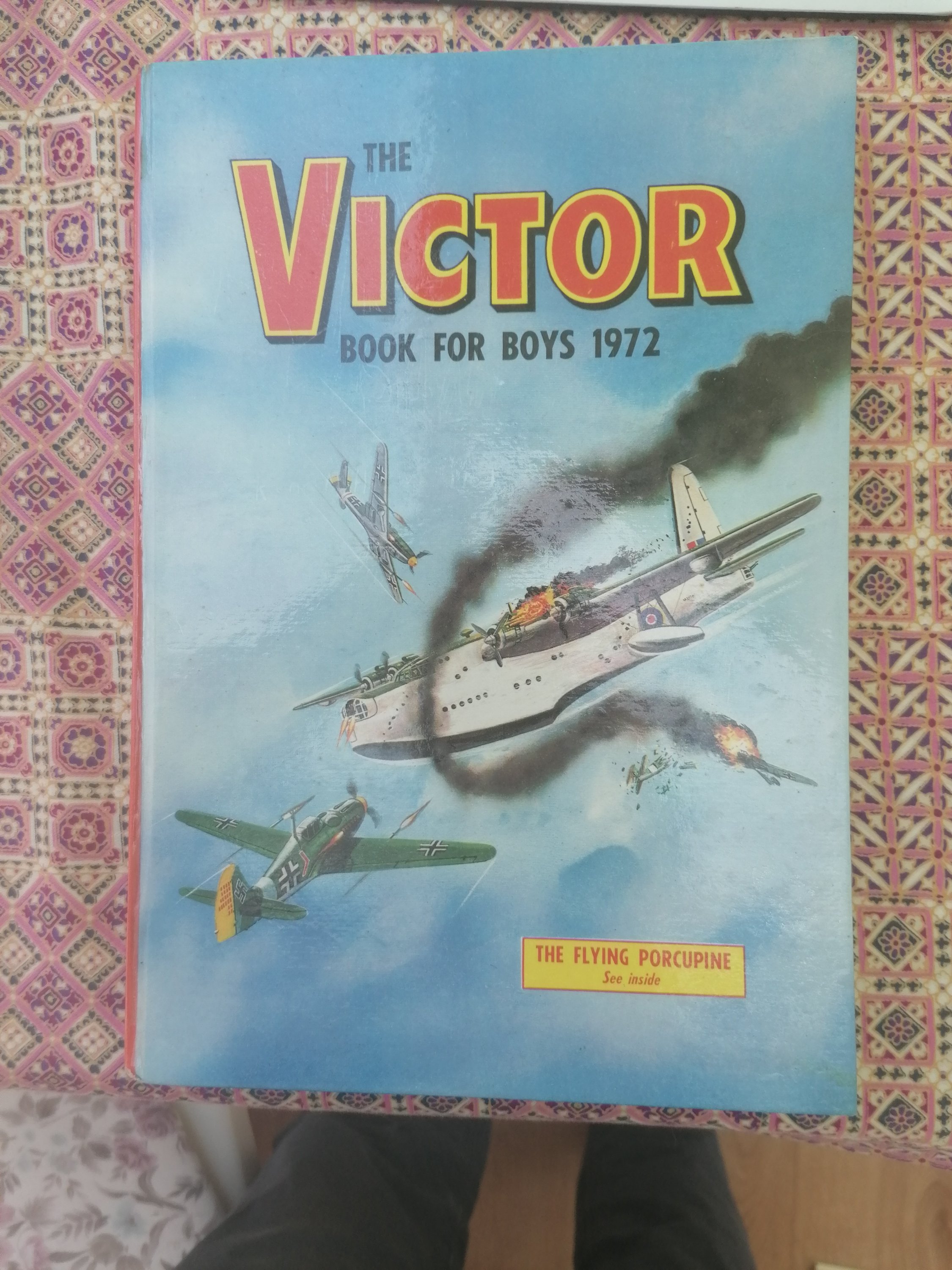
A few weeks back I found a copy of this book on eBay. I had been searching for a copy for a couple of months before taking the plunge on one that was in quite exceptional condition given its age. So, why this book? Well, it had a set of emotional memories connected with it. Let me explain. In the winter of 1971 I was in Guy’s Hospital in London waiting to have my tonsils and adenoids removed. This was common practice at the time for someone who had tonsillitis as badly as I did, but at 6 years old I really didn’t have much of a clue what I was facing, which was quite fortunate. The children’s ward was quite busy at the time, and we were all of similar ages, so prior to the operation it was something of an adventure. Post operation, it was altogether more of a battle as my throat was too sore to eat anything more than ice cream, and even that hurt. Well, just after the operation, my Uncle Ken (honorary rather than family) came to visit me as he was in London. It was great to see him because he wasn’t the type to let you be miserable. I remember laughing, which was painful, which I often did when he was around, and then being given a present. I eagerly tore off the wrapping paper and there was The Victor Book for Boys 1972. Part of the excitement was that I had never had an annual before Christmas before, and this was November! It was like being in my own TARDIS! The other part was that Ken had hit upon one of the comics that I had rarely read, but whose covers I loved in the paper shop. It kept me entertained during the rigours of recovery, both in the hospital and at home. It was often a book I returned to as a kind of comfort read even though I knew most of the stories word for word. So, my six year old self was gripped by it, but what about my older self, and what do its pages tell us about our changing times and attitudes over the last 50 years?
The social changes
When you look at the front cover, it is an RAF flying boat locked in combat with Luftwaffe planes, the former clearly damaged, but having destroyed one of the three attackers. The World War II theme recurs throughout the annual, which may seem strange to modern eyes, particularly those eyes which are younger than mine. However, you have to remember that the war had only ended 26 years earlier. Not only was it within living memory, but its youngest participants were still in their 40s so they were looking back with largely undimmed memories. On TV Dad’s Army was very popular and the TV channels had a regular diet of war films, documentaries and interviews. This was back in the days when there was no doubt in people’s minds that it had been a just war fought fairly against an enemy that was purely evil. It’s hardly surprising then that the Victor Book for Boys reflected this. Six of the picture stories dealt directly with the war as did the inside covers and three of the features.
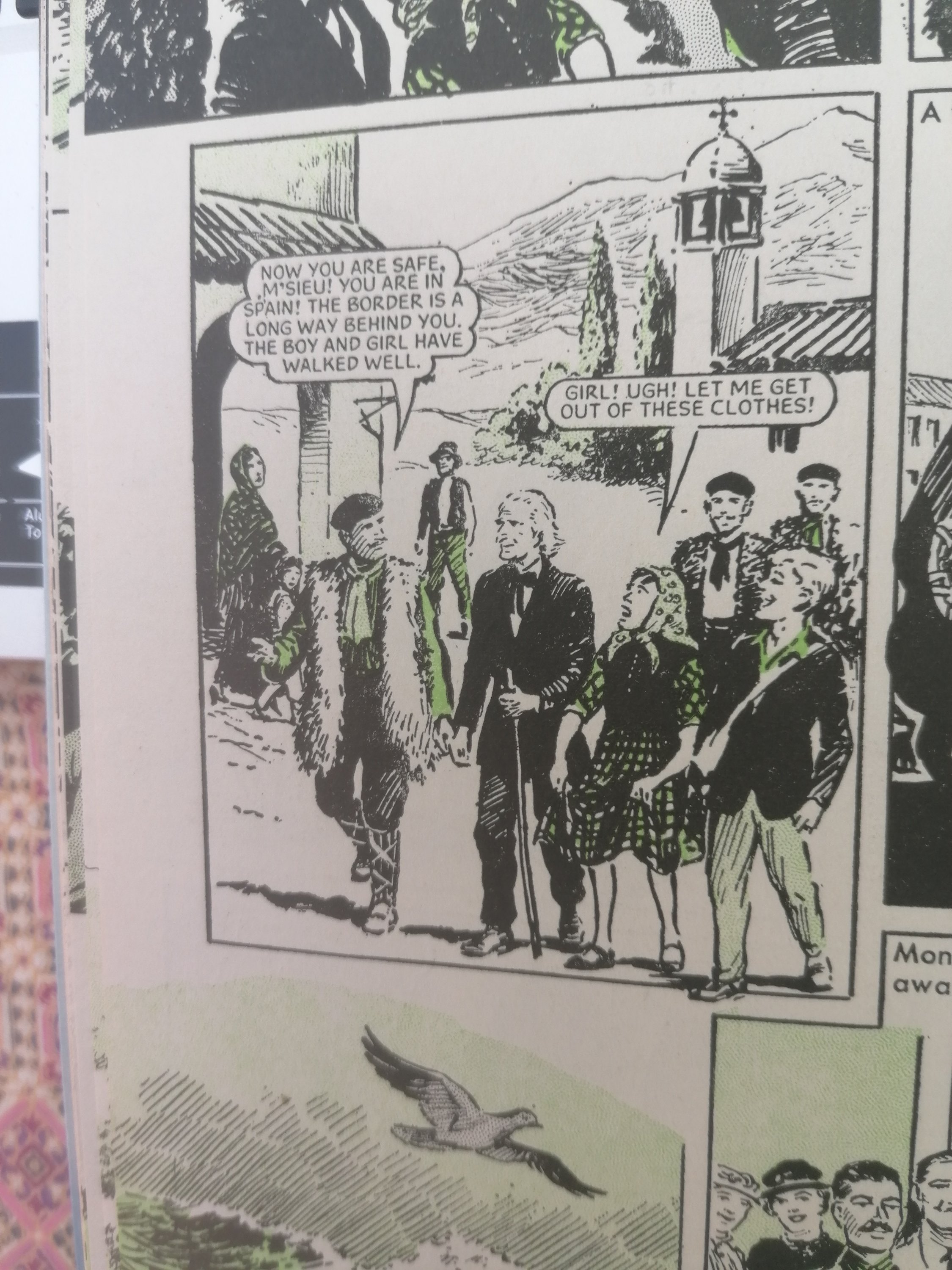
Representation was, shall we say, patchy! Again, this was quite in keeping with the times. Non English speaking people were portrayed as reliant on the Empire, which was still unambiguously a good thing, illiterate in one case leading to ‘humorous’ consequences or, in the case of those we fought in the war, irredeemably awful. Now, this would be quite difficult for the modern reader to understand, but then it was almost unquestioned except amongst ‘troublemakers’ that ‘to be born English was to win first prize in the lottery of life’ as Cecil Rhodes opined. What about women? There is not a single female character in the entire annual with any kind of role in the narratives. In fact, I can only find four frames with female characters in them in the 120 plus pages! That was to be expected by boys of the time, because only the occasional ‘tomboy’ was worth even bothering with if you were under the age of 10! A sub-plot of a World War II story revolves around the dressing up of a boy as a girl to evade the Germans who will be looking for a family with two boys. The horror of being treated like a girl for this character comes through loud and clear.
On the positive side, the central message of each story is that you will win out if you play fair and if you don’t it will catch up with you. The moral stance of this annual, and society in general at the time, was unambiguous. If you cheated or used violence in the wrong cause you were unacceptable in the eyes of right thinking society. Every hero wins out by being morally correct in everything and every villain’s cheating will be in vain. It may have been a message that had more than a little wishful thinking attached, but it meant that the morally ambiguous hero of today was not acceptable. Shades of grey were out. You either wore a white hat or a black hat!
The longer form stories, and even the comic strips to some extent, reflected the expectations that society had when it came to children. The vocabulary was, for a six year old, challenging to say the least, with stories that required a lot of guessing from context or trips to the bookcase to look words up in a dictionary. It is something that comes up time after time in books and TV shows of the era. In school, the lessons were fast paced and there was little time to quiz the teacher about new words, so you wrote the words in a little book, checked them in the dictionary and then wrote the definition. It is not unlike the approach that you take when learning a foreign language! Now, I am not subscribing to the view that all we do is spoon feed children these days, far from it, but there was less support in class especially as a primary school pupil and we were expected to be much more independent in the days when children were seen and rarely heard, even in classrooms!
So, I have set out the context. How did my adult self react to this piece of history from my childhood? Come with me as I board my TARDIS once again and return to 1971.

The comic strips
There are nine comic strips in this book, and I had extremely clear memories of three and vague memories of three more, which is not bad after so many years. The drawings range from the extremely realistic to the caricatured, but the sheer level of detail in those completely hand drawn frames is incredible. Battle scenes were full of action, sporting scenes were full of character and even the more sedate scenes had a huge amount of life. I’d love to able to give due recognition to these talented cartoonists, but their names don’t appear anywhere in the annual.
(The website http://www.victorhornetcomics.co.uk/index.html has a lot of background information that may help this process, and it is a fascinating resource in its own right.)
Anyway, the comic strip I have chosen is one that I recognised immediately, called The Manxman Returns. It is set on the Isle of Man in World War II and features an archaeological dig that uncovered a statue of King Orry, a King Arthur like figure who stood ready to protect his home island in times of oppression. A Japanese invasion taking place at that very moment provides the backdrop to a story that combines resistance fighting, one of the archaeologists putting on the helmet of King Orry and being imbued with his spirit and a supernatural twist. Reading it now, what really impressed me was the way that the story sped along without missing out on the little details that gave it a time and place. Yes, the characters were broad brush, but there was a real essence of humanity there, both good and bad. It was a real treat revisiting the Manxman, my favourite character and story in 1971 and 2023.

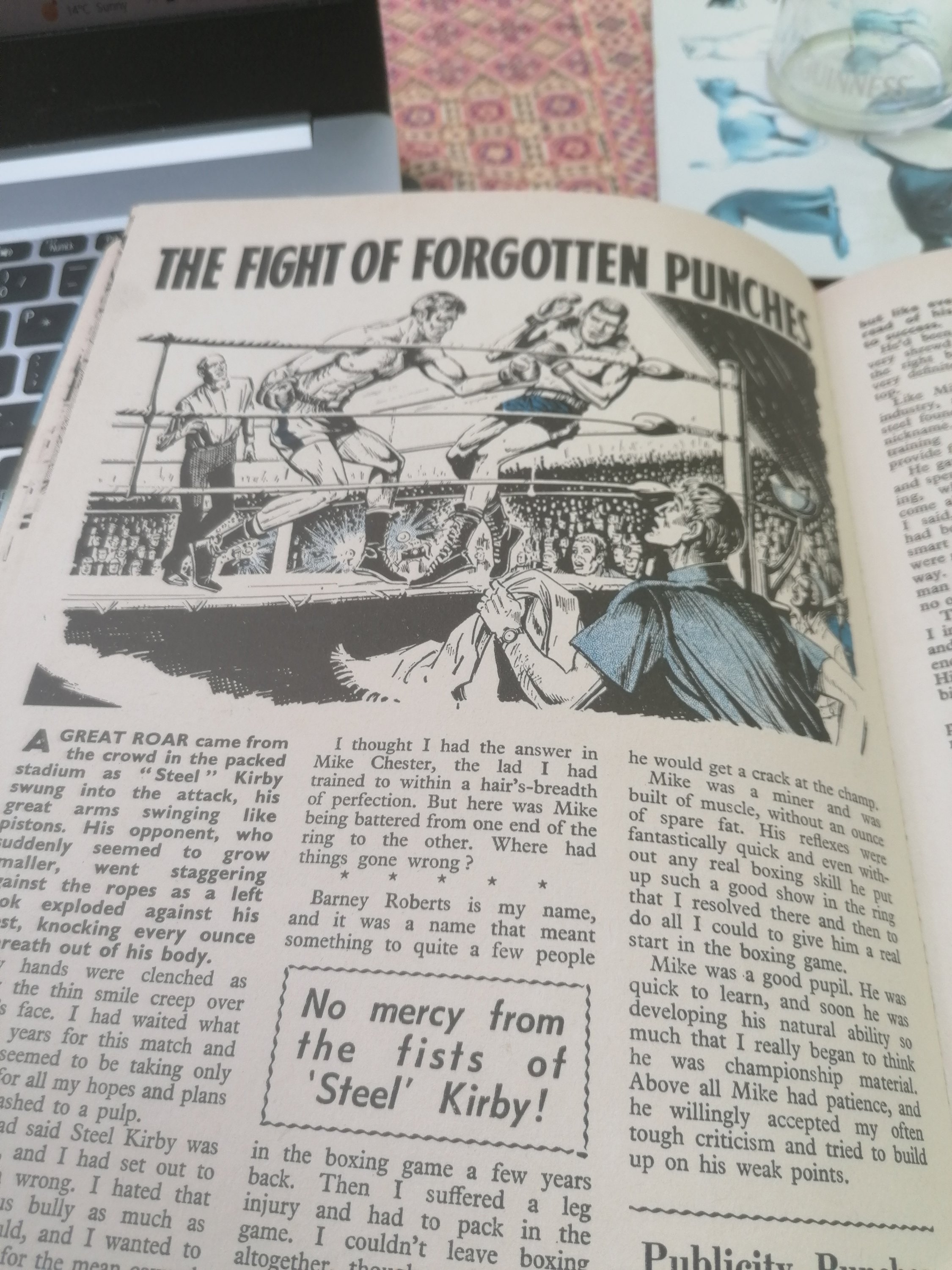
The longer stories revolved around the goldrush, the Wild West, an attempted hijack and a boxer on the comeback trail. It is the last of these that I have chosen to deal with in more detail. The Fight of Forgotten Punches is red in tooth and claw with violence at its heart, both inside and outside the ring. The part of the story that dealt with the attack on a young pretender by associates of the champion boxer determined to keep his title is still genuinely shocking. It is a story of redemption, of the use of force for good and evil and the way that your bad deeds will find you out. The language is spare but effective, especially in the more visceral passages and it is a story that could easily get the most reluctant of readers interested.
Finally, you have the features which are short introductions to conflict, sport and history. The one I have chosen to look at is The Trail-Blazers which looks at the history of exploration from Greek sailor Pytheas, who discovered Britain, to Neil Armstrong, who had been the first person to walk on the moon a couple of years earlier. These little pen portraits were a jumping off point for me at the time as I became fascinated by explorers and their achievements. Even in these more questioning times, the stories of these people who fought against so many odds are still amazing.

So, there you go. If you wanted to dive in yourself, there are copies for sale on eBay at a variety of prices and in a variety of conditions, but I’m keeping hold of the Victor Book for Boys 1972 this time!
Discover more from David Pearce - Popular Culture and Personal Passions
Subscribe to get the latest posts sent to your email.
 David Pearce - Popular Culture and Personal Passions
One of the joys of childhood Christmases – and the occasional birthday – was recieving annuals. Not being a very active child – sport was completely off my radar – and with interest in wartime action being very much my younger brothers thing, my annuals were mostly comic-related: Beano, Dandy, Beezer, Whizzer & Chips, and Transformers (huge in the mid-eighties when i was 8 – 10), with the odd space adventure styled stories whose names escape me!
LikeLiked by 1 person
They were the presents I looked forward to the most until I started getting cassettes. I could read and Re-Read them endlessly. My grandparents got given a couple of Eagle annuals for me to read which I loved and wish I had kept. I also had the Blue Peter annuals and The Beano every year. I may go to the charity shops and eBay for the former! The Val, John and Pete era were the gold standard!
LikeLiked by 1 person