
The Christmas Truce 1914
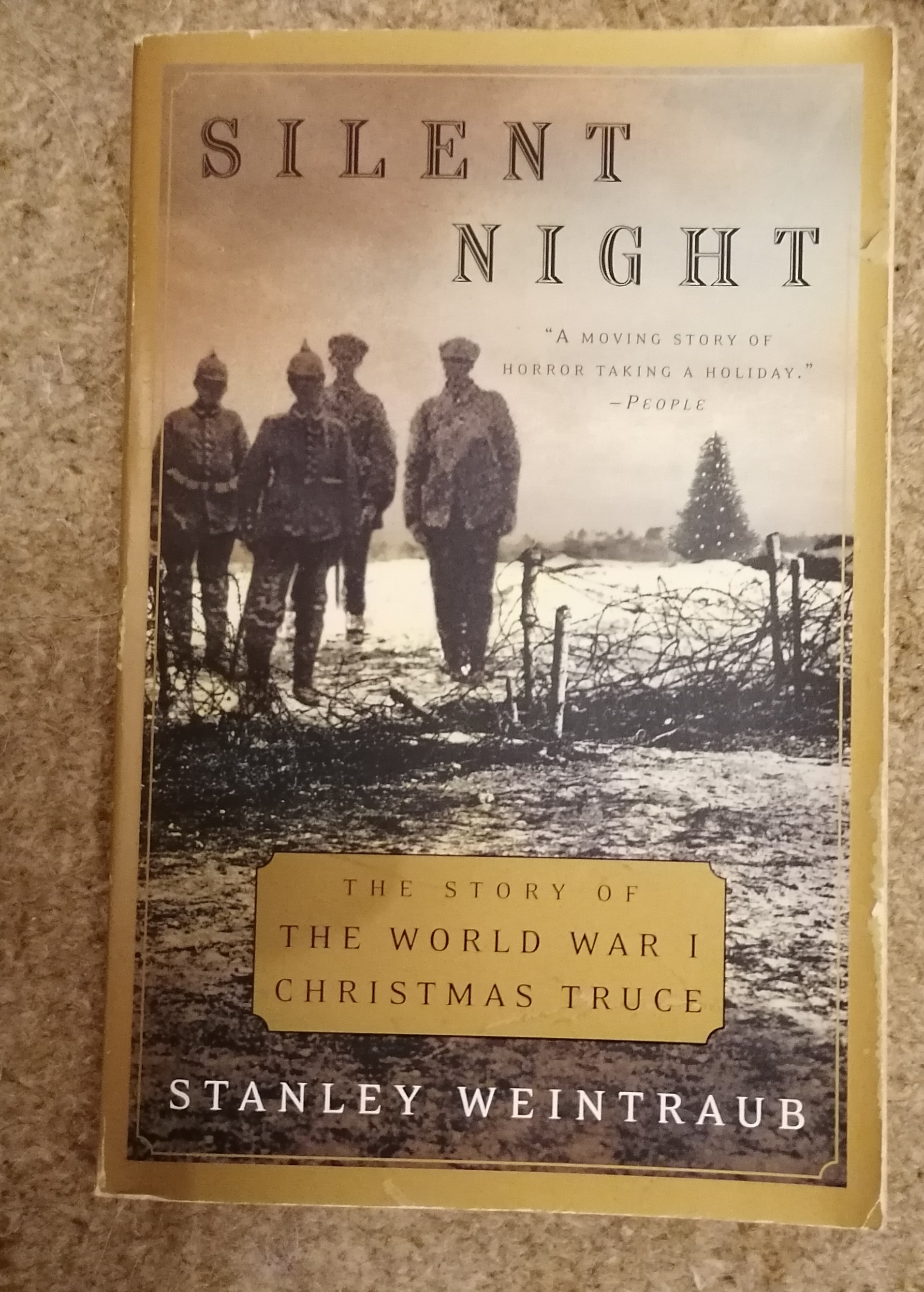
The Christmas Truce is one of the most fascinating events in modern warfare, perhaps because so little is known about it from official records. What we do know about it has been pieced together from soldiers’ letters home and some contemporary press articles. That it did take place is unarguable, even though many regiments at the time expunged the whole event from regimental records because they were ashamed of their troops for taking part. How it took place is more difficult to ascertain, but the book that serves as the basis for this article is Stanley Weintraub’s fascinating Silent Night which is definitely worth a read. In it, Weintraub traces the timeline from the initial overtures, that led to a series of truces across the front lines of the trenches, through to its eventual ending.
How did it start?
The truce was not one single event, but rather a series of unofficial arrangements that flew in the face of the wishes of the top ranks of both sides. Luckily for the troops, the highest ranks were, of course, very unlikely to inspect the trenches. They sat in comfortable billets and had fine dining to look forward to every day, whilst the troops were dirty, cold and lice-ridden with dead colleagues lying around them in rat infested trenches and in front of them in no-man’s land. It is hardly surprising that the donkeys wanted the lions to continue fighting, as they had no concept of the conditions. Equally, it is no surprise that the lions on both sides were open to a respite. In some areas the truces started before Christmas Eve, but this was very unusual. Interestingly, there is one detail common to every report, whether contained in letters home or, eventually, in the press when they could no longer ignore it. In every case, it was the German side that made the initial overtures to the Allies, perhaps because Christmas Eve to them was as sacred as Christmas Day, whereas to the Allies it was December 25 itself that was most important. Christmas Trees were put up on the top of the German trenches, and where no firing was forthcoming from the other side, carols were sung by the Germans and music hall songs by British troops, and requests for a ceasefire were shouted across no-man’s land. There was still an understandable suspicion on the part of the troops after months of bitter fighting, but it was an idea whose time had come. It has to be acknowledged that it was not a complete cessation of fighting, even on Christmas Day itself, but it was widespread enough to have a huge effect on both sides.
Christmas Day
The two sides met in no-man’s land in a large number of ceasefires with officers serving as the initial rangefinders. In some cases, the Germans knew English, or they had even lived in England before being called up by the German army. Once terms were agreed, and cigarettes, alcohol and other treats were swapped, the first task for many of the soldiers on that Christmas Morning was to bury the dead who remained above ground in the frosty wastes of no-man’s land. Often, the two sides assisted each other and, in at least one case, held a service for the dead that was presided over by a Padre or similar from each side. Some of the soldiers found out that their enemies came from the same areas as they did, and in at least one case a German who had been a barber in High Holborn in London gave haircuts to both sides, including one of his former customers! These meetings made one thing crystal clear to the troops. Their enemies were not the barbarians and brutes they had been told about, but people very much like them. It is hardly surprising that a few hours of fraternisation led to a wish for an even longer ceasefire. The enmity between both sides had largely disappeared and there was no way back for many of those involved.
Football
Perhaps the most argued about element of the Christmas Truce was whether there were football matches between the two sides. There is enough contemporary evidence to suggest that a form of football was played in a number of locations along the front line. How organised these games were, is of course open to question. However, where the two sides met on ground that was relatively clear, caps, tins and even footballs were used in free for all games between the two sides. They were generally played in good spirits, but they were unlikely to have been ‘organised’ in any real sense. As with so many elements of the Christmas Truce, we must rely on letters home from the participants for details. Captain Thomas Frost of the 1st Cheshire Regiment provides perhaps the earliest corroboration in a letter home to his father on December 31. Maybe the idea of the football matches has been romanticised, but there is little doubt that this romanticism has a basis in fact.
The End
In many places the ceasefire continued for a number of days as the two sides came to terms with the way that they had come together as human beings. It seemed somehow wrong to continue fighting, and in some places the two sides, when forced to fire by bloodthirsty senior officers, warned their opponents and deliberately fired to miss. Some regiments, especially those who were thought to have become too friendly, were replaced by soldiers who had not been involved in any truces and had the required level of propaganda inspired hatred for the enemy. The Germans who were involved were almost entirely from Bavarian units, but their replacements were often Prussians who were disliked by both sides for their brutality. Eventually, by a process of replacements, threats and courts martial the war started again. For me, the most shocking statistic is that if the truce had succeeded, and the two sides’ negotiators had been forced to sit around the table until a treaty was signed, 8.4 million men would not have lost their lives. It is a truly sobering thought.
A hundred years later
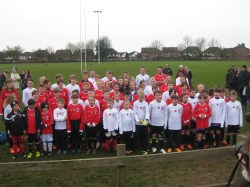
As it was a story that had always fascinated me, I came up with the idea of re-enacting the Christmas Truce matches at my daughter’s football club on Boxing Day 2014. After a bit of scepticism at the start, the enthusiasm for the project increased and we eventually ended up with nearly 70 players and a large number of spectators. I arranged games for different age groups from under-8 to adults and the goals were marked out with jumpers for a touch of authenticity. We arranged for special tops to be produced for the day and they were in two colours, red and white. (The only thing I forgot was to get a shirt for myself as I wasn’t actually playing! I wish I had.) Players didn’t know who their teammates were until the day, but within minutes they had that team spirit. I gave the players a quick introduction to the Christmas Truce and then they went out to play on a cold, bright Boxing Day morning. It was a very special morning that ended with a minute’s silence for those who lost their lives in World War I. The sacrifice of those young men who also loved their football brought the two distant generations together.

Discover more from David Pearce - Popular Culture and Personal Passions
Subscribe to get the latest posts sent to your email.
 David Pearce - Popular Culture and Personal Passions
A thought-provoking and beautifully written piece that reminds us that wars are fought by human beings, not weapons, and that peace is always an option if we remember that fact.
LikeLiked by 1 person
Wonderful piece!
LikeLiked by 1 person