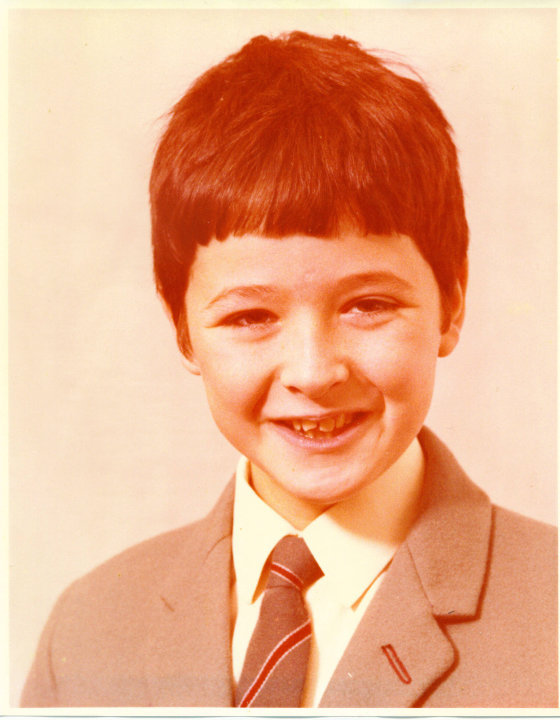
My history with this book.
A few weeks back I found a copy of this book on eBay. I had been searching for a copy for a couple of months before taking the plunge on one that was in quite exceptional condition given its age. So, why this book? Well, it had a set of emotional memories connected with it. Let me explain. In the winter of 1971 I was in Guy’s Hospital in London waiting to have my tonsils and adenoids removed. This was common practice at the time for someone who had tonsillitis as badly as I did, but at 6 years old I really didn’t have much of a clue what I was facing, which was quite fortunate. The children’s ward was quite busy at the time, and we were all of similar ages, so prior to the operation it was something of an adventure. Post operation, it was altogether more of a battle as my throat was too sore to eat anything more than ice cream, and even that hurt. Well, just after the operation, my Uncle Ken (honorary rather than family) came to visit me as he was in London. It was great to see him because he wasn’t the type to let you be miserable. I remember laughing, which was painful, which I often did when he was around, and then being given a present. I eagerly tore off the wrapping paper and there was The Victor Book for Boys 1972. Part of the excitement was that I had never had an annual before Christmas before, and this was November! It was like being in my own TARDIS! The other part was that Ken had hit upon one of the comics that I had rarely read, but whose covers I loved in the paper shop. It kept me entertained during the rigours of recovery, both in the hospital and at home. It was often a book I returned to as a kind of comfort read even though I knew most of the stories word for word. So, my six year old self was gripped by it, but what about my older self, and what do its pages tell us about our changing times and attitudes over the last 50 years?
The social changes
When you look at the front cover, it is an RAF flying boat locked in combat with Luftwaffe planes, the former clearly damaged, but having destroyed one of the three attackers. The World War II theme recurs throughout the annual, which may seem strange to modern eyes, particularly those eyes which are younger than mine. However, you have to remember that the war had only ended 26 years earlier. Not only was it within living memory, but its youngest participants were still in their 40s so they were looking back with largely undimmed memories. On TV Dad’s Army was very popular and the TV channels had a regular diet of war films, documentaries and interviews. This was back in the days when there was no doubt in people’s minds that it had been a just war fought fairly against an enemy that was purely evil. It’s hardly surprising then that the Victor Book for Boys reflected this. Six of the picture stories dealt directly with the war as did the inside covers and three of the features.
Representation was, shall we say, patchy! Again, this was quite in keeping with the times. Non English speaking people were portrayed as reliant on the Empire, which was still unambiguously a good thing, illiterate in one case leading to ‘humorous’ consequences or, in the case of those we fought in the war, irredeemably awful. Now, this would be quite difficult for the modern reader to understand, but then it was almost unquestioned except amongst ‘troublemakers’ that ‘to be born English was to win first prize in the lottery of life’ as Cecil Rhodes opined. What about women? There is not a single female character in the entire annual with any kind of role in the narratives. In fact, I can only find four frames with female characters in them in the 120 plus pages! That was to be expected by boys of the time, because only the occasional ‘tomboy’ was worth even bothering with if you were under the age of 10! A sub-plot of a World War II story revolves around the dressing up of a boy as a girl to evade the Germans who will be looking for a family with two boys. The horror of being treated like a girl for this character comes through loud and clear.

On the positive side, the central message of each story is that you will win out if you play fair and if you don’t it will catch up with you. The moral stance of this annual, and society in general at the time, was unambiguous. If you cheated or used violence in the wrong cause you were unacceptable in the eyes of right thinking society. Every hero wins out by being morally correct in everything and every villain’s cheating will be in vain. It may have been a message that had more than a little wishful thinking attached, but it meant that the morally ambiguous hero of today was not acceptable. Shades of grey were out. You either wore a white hat or a black hat!
The longer form stories, and even the comic strips to some extent, reflected the expectations that society had when it came to children. The vocabulary was, for a six year old, challenging to say the least, with stories that required a lot of guessing from context or trips to the bookcase to look words up in a dictionary. It is something that comes up time after time in books and TV shows of the era. In school, the lessons were fast paced and there was little time to quiz the teacher about new words, so you wrote the words in a little book, checked them in the dictionary and then wrote the definition. It is not unlike the approach that you take when learning a foreign language! Now, I am not subscribing to the view that all we do is spoon feed children these days, far from it, but there was less support in class especially as a primary school pupil and we were expected to be much more independent in the days when children were seen and rarely heard, even in classrooms!
So, I have set out the context. How did my adult self react to this piece of history from my childhood? Come with me as I board my TARDIS once again and return to 1971.

The comic strips
There are nine comic strips in this book, and I had extremely clear memories of three and vague memories of three more, which is not bad after so many years. The drawings range from the extremely realistic to the caricatured, but the sheer level of detail in those completely hand drawn frames is incredible. Battle scenes were full of action, sporting scenes were full of character and even the more sedate scenes had a huge amount of life. I’d love to able to give due recognition to these talented cartoonists, but their names don’t appear anywhere in the annual.
(The website http://www.victorhornetcomics.co.uk/index.html has a lot of background information that may help this process, and it is a fascinating resource in its own right.)
Anyway, the comic strip I have chosen is one that I recognised immediately, called The Manxman Returns. It is set on the Isle of Man in World War II and features an archaeological dig that uncovered a statue of King Orry, a King Arthur like figure who stood ready to protect his home island in times of oppression. A Japanese invasion taking place at that very moment provides the backdrop to a story that combines resistance fighting, one of the archaeologists putting on the helmet of King Orry and being imbued with his spirit and a supernatural twist. Reading it now, what really impressed me was the way that the story sped along without missing out on the little details that gave it a time and place. Yes, the characters were broad brush, but there was a real essence of humanity there, both good and bad. It was a real treat revisiting the Manxman, my favourite character and story in 1971 and 2023.

The longer stories revolved around the goldrush, the Wild West, an attempted hijack and a boxer on the comeback trail. It is the last of these that I have chosen to deal with in more detail. The Fight of Forgotten Punches is red in tooth and claw with violence at its heart, both inside and outside the ring. The part of the story that dealt with the attack on a young pretender by associates of the champion boxer determined to keep his title is still genuinely shocking. It is a story of redemption, of the use of force for good and evil and the way that your bad deeds will find you out. The language is spare but effective, especially in the more visceral passages and it is a story that could easily get the most reluctant of readers interested.

Finally, you have the features which are short introductions to conflict, sport and history. The one I have chosen to look at is The Trail-Blazers which looks at the history of exploration from Greek sailor Pytheas, who discovered Britain, to Neil Armstrong, who had been the first person to walk on the moon a couple of years earlier. These little pen portraits were a jumping off point for me at the time as I became fascinated by explorers and their achievements. Even in these more questioning times, the stories of these people who fought against so many odds are still amazing.

So, there you go. If you wanted to dive in yourself, there are copies for sale on eBay at a variety of prices and in a variety of conditions, but I’m keeping hold of the Victor Book for Boys 1972 this time!

So, we start the 4th part of this look at my singles by polishing off the Cs. The gorgeous voice of Randy Crawford was often one I enjoyed listening to, but it was only Almaz that I bought because of it’s gorgeous, aching chorus. It is only through looking back at these singles that I realise how certain songs captured my imagination before fading into the back of my mind. Almaz was definitely one of them and it’s like being reunited with an old friend. Next is a song from the 60s which came back into the wider public consciousness thanks to An American Werewolf in London’s ground breaking transformation scene. Credence Clearwater Revival were a classic rock group who produced a strong body of work, but Bad Moon Rising will always be my favourite. Crosby, Stills and Nash come next with Teach Your Children, a slice of 60s melancholy that has become part of my musical landscape over the years. It is simple yet profound and a song that reflects the passing of time in a powerful way.
In 1985, there was a dreadful fire at Valley Parade, the ground of Bradford City, which killed 56 people and injured over 200 others. The Crowd’s You’ll Never Walk Alone was the first charity record I can really remember and it set the template for many others. Led by Gerry Marsden of Gerry and the Pacemakers, who became the first person to reach Number One with two versions of the same song, You’ll Never Walk Alone raised money for the new Bradford Royal Infirmary burns unit. The voice and look of Boy George were twin emblems of the early 80s and Karma Chameleon was, and remains, one of the catchiest records made during that era. It’s a record that has transcended its time to become a favourite of music lovers of all ages. The final C is, to put it very mildly, aural Marmite! Billy Ray Cyrus would later become far more well known for appearing with daughter Miley in Hannah Montana, but he had one Top 10 hit with the insanely catchy or incredibly irritating (delete as appropriate!) Achy Breaky Heart! Let’s be honest, even if you hated it, that tune is now going round in your head isn’t it?!

On to the Ds and I start off with the one single every non-Damned fan bought! They passed me by in their punk days, purely because I wasn’t yet ready for that type of music. Eloise, however, was a gem of a remake that had the advantage of being a great singalong track and a showcase for Dave Vanian’s marvellous voice. It may have been an anomaly in their output, but what an anomaly! Next is another of the records I picked up from Kidderminster Town Hall’s occasional jumble sales. Darts were a doo-wop group who ploughed a different furrow to the smoother Showaddywaddy with chaotic performances and a revolving cast of lead singers. The track Come Back My Love was my favourite of theirs and still rewards the odd listen, always bringing a smile to my face. It’s Hard to be Humble by Mac Davis is a humorous record in the vein of Ray Stevens that reflects the trials of a man who is ‘perfect in every way’! He bemoans the fact that people cannot understand how much of a burden it is. I originally bought it for my Dad as a birthday present because it was him to a tee! I know he found it funny and appreciated the tongue in cheek compliment. It is 28 years since he died, but this song brings his larger than life personality back every time.
Dead or Alive were perhaps the most atypical act in Stock, Aitken and Waterman’s entire history, so it is odd that it was this band that gave the label their first Number One single. The combination of the unique showmanship of Pete Burns and the SAW ear for a tune made this a nailed on chart topper from the first few notes and set the trio off on their run of success, whether people liked it or not! Of all their artists, Hazell Dean was my absolute favourite. How her first two tracks, Searchin’ and Whatever I Do (Wherever I Go) failed to follow Dead or Alive to Number One will remain, to me, one of the great mysteries of the 80s charts. These two tracks were great to listen to, great to sing to, great to dance to and practically perfect in every way. The sheer cheek of SAW taking the tune for Blue Monday and layering Hi-NRG pop on top of it was amazing. In these more litigious days it would be impossible to get away with! The third of her trio of tracks, Back in my Arms Once Again was another belter. If you have forgotten how good Hazell Dean was, I urge you to take another listen to her. As with the first set of songs above, I have ended up with another love it or hate it track. I spent the whole of summer in 1986 in Florida as an International Scout at Camp Shands. As a result, I had a number of tracks to catch up with on my return. Lady in Red was one of them, and possibly because I hadn’t heard it week after week during August in its long run in the top 10, I came to it as a fresh song and loved it. I still do, so it can’t be all bad in my view!

Chris De Burgh’s other Top 10 hit came a couple of years later with the rather lovely Missing You. If you just listen to the song and somehow separate it from any views on De Burgh himself, I feel confident that you will agree with me. Three Depeche Mode singles are next in view, with See You being my favourite ever track of theirs. It is a gorgeous love song with just a hint of an uncomfortable edge when you listen to some of the lyrics, but it is the track that had me heading down to Strood Record Centre on the Saturday morning after I first heard it. My favourite album of theirs is Some Great Reward from 1984 and from that album comes one of the finest Double A Sides imaginable. Either ‘Somebody’ or ‘Blasphemous Rumours’ on their own would have made a really good single, but the two together had me rushing out to buy the cassette. The 7″ EP version I have includes live versions of Everything Counts and Told You So and it is four tracks of genius. I have the album on CD, and at some point I hope to find it on vinyl in a charity shop or record shop, to play it as it was meant to be played! It’s Called a Heart is another radio friendly track with great synth work that in some ways bridges the gap between their poppier music and the increasingly darker turn their music took that was hinted at in Some Great Reward.
What can I say about the summer hit of 1982, apart from the fact that it is one of the finest floor fillers ever recorded. I hear Come on Eileen and want to get on the dance floor, reliving my teenage years, every single time. Given that I haven’t danced in public for 6 or 7 years and that my ‘dancing’ at home is of the tapping my feet variety, the sheer rush of euphoria that this track gives me is incredible. Now on to three records that are Diamonds in their own right! The first two, by Jim of that ilk, are a welcome reminder of one of the most individual voices of that era. I Should Have Known Better is a gorgeous song, full of regrets and pathos but his piercing falsetto style tones add another layer to it and make it a puzzle that it’s a somewhat overlooked ballad these days. The second of his songs, by contrast is a rocking TV theme clearly inspired by Dennis Waterman’s I Could Be So Good for You. Hi Ho Silver has much less recognition these days, but it’s a decent track, once again raised to a different level by Jim Diamond’s delivery. The final Diamond is Neil, and it’s not that one! It is the tune from the Jazz Singer, which he starred in, called Love on the Rocks. His voice is, in its own way, just as recognisable as Jim’s, but it is a much more mainstream voice. That’s not damning with faint praise by the way, because in the type of company he kept in US singing at the time, the fact that you recognise him after a couple of notes is testament to the quality he has.

Finally, we come on to two of my favourite artists. Barbara Dickson is quite simply the possessor of one of the finest voices in music. She can sing folk, pop, rock, showtunes and ballads to make you stop in your tracks. The two examples here are Answer Me from the 70s and January February from the 80s. Both are excellent songs in their own right, both Top 10 hits and both delivered with breath taking quality. I saw Barbara Dickson live in 2019 and she was still incredible, as my review attests to https://www.subba-cultcha.com/reviews/2599
Dire Straits, who I never saw live, much to my disappointment were, of course, famous for their 1980s album Brothers in Arms. I had first discovered their music a few years previously via the fantastic Romeo and Juliet from their Making Movies album. It is a song of class and insouciant style, delivered with panache by the brilliant Mark Knopfler. From Brothers in Arms, my favourite song was the first track and first single So Far Away, a reflection on being split up from those you love that I returned to many times during solitude in Japan and Saudi Arabia when I didn’t have my family with me. Did it make me feel any better? Probably not! Did it make me feel as though someone else understood? Most definitely! Money for Nothing was a massive favourite on MTV during the afore mentioned summer of 1986 and is one of the tunes that takes me right back there. The final single that I bought from that album, Walk of Life, is noteworthy for one main reason. It was also the B Side of So Far Away!! D’oh as Homer might say!
See you next time when we’re sorted for Ds and Es!

Welcome to Part 3 of this trawl through my singles. Straight out of the blocks we have two singles from early 80s soundtrack royalty, Irene Cara, who followed up Number One hit Fame with another Top 5 hit in Flashdance (What a feeling). Rather like other US singers who were chiefly associated with the movies, her non-film songs met with far less success over here. Fame in 1982 and Flashdance in 1983 (which was kept off of the top spot by Baby Jane by Rod Stewart) sandwiched Out here on my own tonight which got to Number 58 and lasted just 3 weeks in the Top 75! Nothing else she released got into the Top 75. It always fascinates me when you see an artist who has massive success but is then ignored. Anthemic chart topper Heaven is a place on Earth by Belinda Carlisle still sounds great today and, to my surprise, turns out to be the only single of hers that I bought. Drive by The Cars was a song that I bought purely because of Live Aid where it memorably soundtracked the harrowing footage of the famine in Ethiopia. The counter point of the song and the images are still burned on my mind and will no doubt be burned on the mind of anyone who saw Live Aid. It was an incredible day of music, even if it lost its way, to my mind, when it started off over in America, a concert that sounded like an oldies music station, with Madonna and Run DMC being the only real nod to the creativity of young artists.
Next up is perhaps the best ballad from an 80s film. Yes, I’m aware that it is a crowded field, and a number of you may disagree, but Peter Cetera, the voice of Chicago, struck gold with the outstanding Glory of Love from Karate Kid II. It is a superb vocal performance and the chorus is a real lighters in the air moment! From the sublime to the Cor Blimey with the rather wonderful Chas and Dave. Although I bought and thoroughly enjoyed Gertcha and Rabbit, it was Ain’t No Pleasing You that was their high point. A superb, aching ballad with the strings lifting an already good song even higher, I guarantee that if it had been sung by a more fashionable artist it would have been considered a classic track and would still be incredibly well regarded. Take another listen, or indeed a first listen, and lose yourself in a marvellous and very sad song about a love gone sour.

Back in 1984, I was a committed armchair fan of Chelsea, so of course I bought Back on the Ball which celebrated their return to the top division as Champions of the old Second division. What can I say? It’s a record made by a football team, and it’s not a patch on their early 70s classic Blue is the Colour, one of the best football records ever. Despite Cher’s long and illustrious career, she only appears once in 7 inch form, but it is with the rather marvellous Shoop Shoop Song from Mermaids. There follows three classic tracks from Chicago. If You Leave Me Now was from another oldies rack and it is one that I remembered well from its original release when it made Number One. I thought, and still think, that Peter Cetera had one of the best voices in music, and no one could put across a ballad like he did. They came back in the early 80s with Hard to Say I’m Sorry which is another cracking song. Now, I was convinced that I had Hard Habit to Break as a single, but obviously not! I checked when it was released and the reason became clear. It was released just before I went into the RAF in November 1984, and, as you can imagine, singles were very much at the back of my mind for six weeks! As some of you may have seen on another post, the last of my Musical History posts, my RAF career was not one that went entirely to plan! I ended up snapping my Achilles tendon, and got a medical discharge in February 1986. I did, however buy the lovely follow up You’re the Inspiration. Finally, in this little section is a trio of top quality tracks from the largely forgotten synth wizards China Crisis who produced singles with real quality and never really got the success that quality deserved. The beautiful Wishful Thinking was their only Top 10 hit and it only made the Top 10 for one week. Black Man Ray and King in a Catholic Style were tracks that crept into the Top 20 but again deserved more. If you take another listen to China Crisis I think you will agree that they are well overdue a renaissance.

When I look at the late 80s and early 90s, one of the trends that becomes clear is the pointless remix! These are songs that the record companies decided to re-release with a slightly different sound or a slightly different tempo. What they all had in common was an ability to make the track far less memorable. It’s a shame, therefore, that my only Hot Chocolate single – and for reasons best known to my younger self they are filed under C for Chocolate! – is this insipid but entirely representative example of the pointless remake. The Clash famously would not go on Top of the Pops, keeping themselves away from the mainstream pigeon holing they wanted to avoid, and they passed me by at the time because I was too young to appreciate punk rock first time round. Anyway, along came a Levi’s advert and they had their first Number One and their only appearance in my singles collection! I had quite forgotten buying Is it a Dream by Classix Nouveaux, and was convinced I didn’t take to it at the time. A little mental detective work gave me my answer. For over two years in the early 90s I worked at the Town Hall in Kidderminster because no one would give me a teaching post. It was one of my favourite jobs ever. Pretty much every day was different, I saw plays, pantomimes, classical and pop concerts and I got to meet a whole range of different people. I loved it! Luckily for me, the occasional jumble sale (as they were called at the time) required a fair bit of setting up and I got first choice of anything I found on the record table! As perks go it may seem like a minor one to you but to me it was like being a teenager at Strood Record Centre again! Suffice to say that other gaps in my collection were filled at the time when singles and albums were being chucked out in the dash to CD. Now on to two generations of a singing dynasty, with the father and daughter Nat King Cole and Natalie Cole. When I first heard Miss You Like Crazy, I had no idea that Natalie was the daughter of singing genius Nat, but it didn’t matter because she produced a ballad that stood out even in an era when they proliferated. I loved her voice then and I love it now, but it was her Dad’s song that captured a proper place in my heart. When I Fall in Love was the 1987 Christmas single from Rick Astley which looked likely to grab the coveted Number One spot from Always on my Mind by the Pet Shop Boys. EMI, who were the label that the Pet Shop Boys were signed to, gave their act the vital advantage in the race with a stroke of genius. They re-released the original! When record buyers heard the definitive version they switched in their droves to the superior original and slowed down sales of Rick Astley’s otherwise very creditable stab at the classic song. I was one of those, and I helped to make Always on my Mind the Number One on the day Janet and I had our first date. Over 35 years later it’s still our song. When I Fall in Love had a similarly significant role in our lives when we chose it as our first dance at our wedding just under three years later. Finally, for this entry, we have a trio of tracks from the sometimes unfairly derided singer/songwriter Phil Collins. During the 80s I would argue that he didn’t put out a weak track and I could have bought all of them as singles if it hadn’t been for the Now compilations. The three solo tracks of his I did buy were all belters with You Can’t Hurry Love being the track that really caught my imagination and turned me into a committed fan, Sussudio an overlooked 80s classic and One More Night, an aching ballad that sounds better every time you listen to it. For what it’s worth, I think that his best track of the decade was Against All Odds, but that appeared on Now 4 so I didn’t need to have that in my singles box.
Next time, I finish the Cs and move on to the Ds, but don’t forget my first accompanying playlist on Spotify which is now complete and contains 30 superb tracks. https://open.spotify.com/playlist/4FjFIa3zqlRGgTqpT5swkj?si=e639a316881f40ac

This book is one that I won in a competition and promised the author I would review. The problem I had when thinking about this review was where to start! It is unlike any other book I’ve ever read, and a traditional review involving the plot and various events would not do justice to the book. What I have decided to do is to reflect the elements that made it so involving and I hope that it might encourage some of you to give this marvellous book a try.
The main character
In this book, the main character is the village of Underhill itself. It is where the action of the novel takes place and it is on a number of occasions the narrator and reflector of the story. Yes, the village talks to you at various points. Yes, it is slightly disconcerting at first, but very soon you just accept it and start to be drawn into the story. The village reflects on the progress, mostly negative, that has been brought about by the human beings that live on it. It describes the pain of pylons being driven into it and the way that the wildlife that ran free before human settlements arrived. There is an air of wistful regret, but there is also an engaging sense of humour and an ability to take a very long term view as befits the Earth itself. You get the impression that, despite itself at times, the village does care about its human residents and wishes it could intervene in their more damaging and short sighted activities. By being outside time as well as within it, it puts a lot of the action into context.
The stories
As well as choosing the village itself as the narrator, Tom Cox, decides to forgo a traditional narrative structure. There are not just flashbacks, but looks into the distant future. Characters appear, disappear, reappear and are reflected upon by their distant relatives both past and future. In less capable hands this could have been an annoying conceit, but here the delight of the novel for the reader is the detective work where you come across a clue to a story thread that was left hanging, and find out what actually happened. I lost count of the amount of times I smiled when a character reappeared or was mentioned and background was filled in. A lot of the stories have, somewhere in their narrative, the reclusive American singer/songwriter RJ McKendree who came to the village towards the end of the 60s and recorded an album of songs called Wallflower. He was captivated by village life and the album reflected this, in terms of the material and the style. However, the album is ‘lost’ for various reasons and becomes almost mythical as does McKendree himself. He does reappear in the village, almost as a ghost, or a legend, though still very much real and alive. One of my favourite details is that a single from the album was released, but only in Hungary, and due to its rarity it fetches £400 on eBay! When McKendree’s biographer appears later we read extracts from the rough copy of his book and a number of gaps are filled in, much to the reader’s delight.
The descriptions
Here is where the book really excels. The descriptions of the village, the environment around it and the interaction it has with the other characters is often breath-taking in its poetry and just as often unsparing in its details of the more unpleasant aspects, particularly those of its human residents.. I could see, feel, smell, hear and taste some of the writing. It is rare indeed to read a novel that is so immersive and so detailed, where the descriptions are absolutely integral to the story. If the village wasn’t so well realised, you would not care about its story quite so much. The insights into the lives of the villagers themselves come through with real power and authenticity and you can see the hedgerows, the fields, the river and the hills almost as if you are taking a stroll through Underhill. It is an utterly immersive experience that captivated me from the first page and never let up.
The reflection
I hope I have given a flavour of this book with this review and I hope you decide to give this a go, because it may well beguile you as it did me. My main advice is to lose yourself in the writing, much as you would when taking a walk around an unfamiliar place, but to look out for those incidents that give you some signposts leading you through the novel. I left this novel after the last page feeling completely satisfied and determined to return to Underhill again in the future. The only thing we need now is the soundtrack of Wallflower itself by the reclusive RJ McKendree!

Welcome to the first of my new style music reviews. In these posts I will review tracks or EPs in much more depth than Twitter allows and then get to know the artists I enjoy listening to by asking 5 questions inspired by their career and music. I will also answer any questions they may ask me. A huge thank you to Lines of Flight for agreeing to be the guinea pigs and entering into the spirit of things so wholeheartedly.
Extended Review Part 1
Lines of Flight – More Than Human EP
I have been a fan of Lines of Flight, a duo comprising Matthew Henderson and Helen Whale, since their very first release, Birthing Bell, which was two years ago now. When they asked me to review the lead single from their forthcoming EP, called Becoming Bear I enjoyed it so much I instantly wanted to listen to the whole lot. Having listened to all five tracks, I can say that my initial excitement was not misplaced.
Becoming Bear
This is a very strong opening track with seemingly opaque lyrics that, counter-intuitively, make their meaning very clear. We are increasingly confused and increasingly displaced in the world as it is, partly, perhaps, as a hangover from the pandemic, but partly as a result of our inherent hunter gatherer natures that are being brought into conflict with the way we now live. Musically, the synth took me right back to Some Great Reward era Depeche Mode with the early doomier style of the Pet Shop Boys on tracks like Surburbia. It suited the track perfectly and showed the confidence to reflect the greats of the synth movement and the ability to move the instrument forward in different and intriguing ways.
Left to Find
This is an incredibly unsettling track lyrically. It seems to hark back to the pandemic which ended up creating the group, then reflects on where we are as human beings. Returning to the imagery of wildlife looking in on us with increasing unease, the track talks about a dwindling floe, perhaps reflecting the famous picture of the lonely polar bear precariously perched on one tiny piece of ice, which became a visual motif for what we are doing to the planet. That is, as the song indicates, our probable fate as the question is, ‘How did my world get so small?’ and the realisation is that ‘There are no hiding places left to find.’ Once again, the synth is sombre, with elements of The Tubeway Army and Kraftwerk at the start before settling into a Depeche Mode style tune that superbly sets off Helen’s haunting vocals which reminded me of Annie Haslam of Renaissance.
Last Transmission
The third song on the EP reminds me of an updated version of Message in a Bottle, one of my favourite tracks as a teenager. It is someone trying to get in touch with someone, anyone who might be able to show that there is still someone listening in a world where we seem to be increasingly shouting into a void – my blog often, though not always, seeming to be a case in point! Instead of a bottle being thrown into the sea, you have disconnected, dislocated voices on the internet. ‘The silence broke my heart, tore our together apart.’ This could seem like a personal cry, but taken in the context of the EP itself, Lines of Flight are reflecting much more on our collective lack of communication. The OMD style riff immediately made me think of Enola Gay, which is appropriate given the theme of technology and its misuse. Musically, it is my favourite song on the EP and one I think could become the most popular.
House of Bears
We return to the ursine theme that was explicitly referenced in Becoming Bear, and hinted at in Left to Find, with the fourth track. In a sense there is a positive message, namely that the planet will survive long after we have gone, and that the safety for a number of species lies in being thought to be extinct. The flipside of that is, as the song acknowledges, that ‘The human condition is not built to last’. I have a sweatshirt that reads ‘People Ruin Everything’ and this song is the musical counterpoint to that! The Kraftwerk style opening reflects the fact that perhaps we would be better to acknowledge that we are becoming more dependent on the machine part of our civilisation, fatally disrupting society and life as we know it. Once again, there is an OMD nod here, especially in Matthew Henderson’s Andy McCluskey style vocals.
Breaking the Line
The opening lines to this final track on the EP, ‘You weren’t listening to understand, more to monitor.’ Is just a brilliant encapsulation of our current condition. We can be talking about something, and it will appear on Facebook or Instagram, we can see something that someone else posts, nod and move on, not really trying to go deeper into what is behind the post. Even with our friends, we often take the more superficial approach that we used to take with acquaintances. Deep reflections and deep connections – that sounds a bit like a Lines of Flight lyric right there which they are welcome to use! 😉 – seem like a thing of the past in our increasingly superficial lives. ‘We have been globally blind’ is a reflection perhaps on the increasing globalisation foisted upon us by technology. We have access to so much information, but like magpies we simply take the shiniest pieces and fly off with them rather than investigating further. We need to retrain ourselves to look and care more deeply in order to save ourselves, or possibly, make ourselves worth saving. It is a suitably reflective ending to a marvellous EP which is very dark when considering where we have led ourselves in recent years but holds out the smallest piece of hope for humanity in the future. It is that hope we must hold on to and use to somehow become better.
Extended Review Part 2
David’s Questions for Lines of Flight
- Can you tell people how the group came about?
Matthew Henderson – Yeah, it was the beginning of COVID, we all received unsettling news about lockdown. It gave me a huge need to write something new and that, because of lockdown, we had to do it differently to regular bands. I sent Helen a text, out of the blue, because I knew she sang in a choir and asked her, if I could get some music over to her from my phone to hers, would she like to sing some of the songs. She said yes and we began a really creative process that led to Signs of Life.
It’s strange to think back now – we didn’t meet or talk for months, just file sharing and Whatsapp messages.
Helen Whale – It is incredible, looking back now, to think how much time we had to give to the music, given how busy life feels now. Covid was obviously horrendous but we were both lucky to be able to use lockdown to pour energy and focus into the project. We’d each go for walks alone and listen to the updated music files; it was a brilliant thing to have, a way of feeling connected.
- What were your main musical influences growing up and how have these fed into your music?
MH – I think The Cure would have to take top spot for me – I don’t love every track they’ve ever done but I love how they have done it all. Other music across a range of genres have all impacted me, there’s pretty much something in every decade from the 50’s to today that I have been influenced by. I grew up loving the melodrama of The Smashing Pumpkins and Depeche Mode and everything in between. I love it when a song is so well made (and I don’t mean complicated), that I don’t think about its constituent parts, I just get swept up in it – and for me that’s more important than genre, really.
HW – It’s similar for me, really, in that genre was never really the thing that defined my music taste, but I guess both as a child and in more recent years, folk music has had quite an influence; before Lines of Flight started, I always imagined that if I did get involved in writing and performing again it would go in that direction, and in fact the first lyrics/tune I shared with Matthew was what eventually became Birthing Bell (our first single). It might feel quite far away from it now but it started life as an acapella folk tune! The natural starting point for my lyric writing still feels rooted in folk narratives of people and places. Through the process of writing together, with each of us bringing our own influences to the table, I’m constantly discovering new things and new influences – I don’t think that will stop any time soon and it’s one of the great things about there being two of us and having otherwise quite separate lives – we share stuff with each other regularly and it means Lines of Flight will continue to change too, as we find new things we both love.
- What is your new EP about?
MH – The initial trigger for this EP was a collection of photos by Dmitry Koch – he found polar bears inhabiting an abandoned weather station, north west of the Bering Straits. It prompted us to ask a lot of questions of humans, about our nature; ‘the human condition’; our impact upon nature. Coming out of covid, where so much change had happened, it was so strange to see life returning to the normal we all said at the time, we didn’t want.
HW – I think for me, the photos of the bears got me thinking about all the complex ways that human lives are bound up with these creatures, the blurring of lines between humans and nature and the inextricable ways in which our fates align and interweave. We are creatures – trying to survive, make homes and live our lives – just like them. I often feel uneasy at the way in which nature and ‘culture’ are seen as so binary. When we were first working on these tracks, in early 2022, a lot was also happening in the world – new kinds of global unease and disruption were emerging, and I think that probably influenced things too.
- Where do Lines of Flight go next?
MH – Two things really – we are pressing the EP on to 12” vinyl, with the b-side being remixes. We’re working with Fairsound who help bands crowdsource and press vinyl – they are great, as is Press on Vinyl. We are aiming to release that in the autumn.
The other is that we are working on new material – As a way of adding something to the climate emergency discourse, we are looking at the world through non-human eyes and trying to write about what that destruction, loss of life, habitat and species must be like. We used a book called Mourning Nature as a starting point for this and we have 5 tracks in the bag.
Oh, and lastly, we are playing the Otley Music Festival on the 9th of July – and we are hoping to do it as a band!
HW – Writing was solace for me during Covid, and I guess it’s now my way of dealing with the personal grief of climate change. The book provides a way to see that through the eyes and word of others, but even though that’s our jumping off point, it’s still very much a personal way of channeling emotion, for both of us, I think. On a more upbeat note, as Matthew says, we’re looking to build our live act and this is really exciting!
- What is the best and worst thing about making your way in the music industry of today?
MH – I think there are some great elements to making music (tech and social media etc, have really changed the traditional methods), but for each and every one of them, there are con-artists trying to make money from peoples’ hopes and dreams. Promising quick results for cash is the worst – take your time, let things grow organically, build and work with your audience. It doesn’t have to happen overnight, it’s probably best if it doesn’t. Also, success can be so many things to so many people – define your own terms. Don’t give up, making music, being creative is as much about a war of attrition as it is about making a huge sudden impact.
HW – I’d absolutely agree with all of that. Tech made our project possible in the first place, and despite not even being able to be in the same room together, and with no possibility of playing live on the horizon, we were able to build an audience through Twitter – that’s amazing, really, and it was heartwarming and really affirming getting so much support for the music from that community. On the other hand, of course, you do need to work at it to make it work for you; I’m always feeling like there’s more we could do but you have to take a break from being online too – and that’s especially the case when you need to carve out time for songwriting and recording, and just letting your thoughts mill around without all the noise that social media can bring.
Lines of Flight’s Questions for David
When was the last time you cried?
Interesting starting question! 🤔 I think it’s more common for me as I get older to be emotionally moved by songs, films and TV programmes. I can definitely say that I get moist eyed more than I used to, but I have the hangover from my 70s childhood that seems to add as a break to the more outright expression of emotion, happy or sad. So, from that point of view, I would be hard pressed to remember the last time I cried.
What’s the hardest thing about blogging?
Definitely getting hung up on my very small readership! I try my best to get people reading this blog because I feel that what I write is good and interesting, and I live for the dopamine hits of a view or a like! Shallow, aren’t I? 🤣 Suffice to say, I love the writing, and I really should ignore the other stuff!
What musical instruments can you play?
Sadly, none! I have tried to play the guitar, but I just couldn’t co-ordinate my movements. Although many would say its never too late, I can’t see myself ever learning one now. I will content myself with listening to and supporting those artists who have a talent I can only dream of.
What did you learn about yourself during COVID?
That I’m more flexible than I realise and that I still love challenging myself. I set up my Twitter account during lockdown, I restarted this blog and I opened myself up to a huge range of music. I did the one million steps challenge for Diabetes from July to September in 2020 and raised a reasonable amount, discovering more about my local area in three months than I thought possible just by taking roads I had never walked along before. Sounds like a metaphor but every step was real! Professionally, three decades after I started teaching with chalk and talk (!) I became comfortable with teaching online and even ended up enjoying it.