
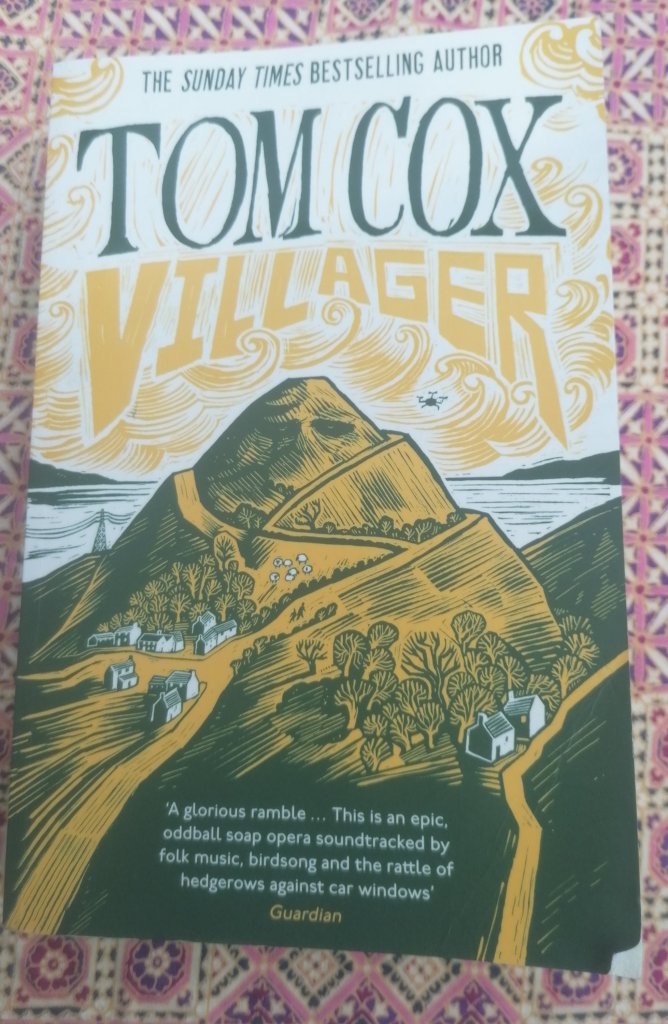
This book is one that I won in a competition and promised the author I would review. The problem I had when thinking about this review was where to start! It is unlike any other book I’ve ever read, and a traditional review involving the plot and various events would not do justice to the book. What I have decided to do is to reflect the elements that made it so involving and I hope that it might encourage some of you to give this marvellous book a try.
The main character
In this book, the main character is the village of Underhill itself. It is where the action of the novel takes place and it is on a number of occasions the narrator and reflector of the story. Yes, the village talks to you at various points. Yes, it is slightly disconcerting at first, but very soon you just accept it and start to be drawn into the story. The village reflects on the progress, mostly negative, that has been brought about by the human beings that live on it. It describes the pain of pylons being driven into it and the way that the wildlife that ran free before human settlements arrived. There is an air of wistful regret, but there is also an engaging sense of humour and an ability to take a very long term view as befits the Earth itself. You get the impression that, despite itself at times, the village does care about its human residents and wishes it could intervene in their more damaging and short sighted activities. By being outside time as well as within it, it puts a lot of the action into context.
The stories
As well as choosing the village itself as the narrator, Tom Cox, decides to forgo a traditional narrative structure. There are not just flashbacks, but looks into the distant future. Characters appear, disappear, reappear and are reflected upon by their distant relatives both past and future. In less capable hands this could have been an annoying conceit, but here the delight of the novel for the reader is the detective work where you come across a clue to a story thread that was left hanging, and find out what actually happened. I lost count of the amount of times I smiled when a character reappeared or was mentioned and background was filled in. A lot of the stories have, somewhere in their narrative, the reclusive American singer/songwriter RJ McKendree who came to the village towards the end of the 60s and recorded an album of songs called Wallflower. He was captivated by village life and the album reflected this, in terms of the material and the style. However, the album is ‘lost’ for various reasons and becomes almost mythical as does McKendree himself. He does reappear in the village, almost as a ghost, or a legend, though still very much real and alive. One of my favourite details is that a single from the album was released, but only in Hungary, and due to its rarity it fetches £400 on eBay! When McKendree’s biographer appears later we read extracts from the rough copy of his book and a number of gaps are filled in, much to the reader’s delight.
The descriptions
Here is where the book really excels. The descriptions of the village, the environment around it and the interaction it has with the other characters is often breath-taking in its poetry and just as often unsparing in its details of the more unpleasant aspects, particularly those of its human residents.. I could see, feel, smell, hear and taste some of the writing. It is rare indeed to read a novel that is so immersive and so detailed, where the descriptions are absolutely integral to the story. If the village wasn’t so well realised, you would not care about its story quite so much. The insights into the lives of the villagers themselves come through with real power and authenticity and you can see the hedgerows, the fields, the river and the hills almost as if you are taking a stroll through Underhill. It is an utterly immersive experience that captivated me from the first page and never let up.
The reflection
I hope I have given a flavour of this book with this review and I hope you decide to give this a go, because it may well beguile you as it did me. My main advice is to lose yourself in the writing, much as you would when taking a walk around an unfamiliar place, but to look out for those incidents that give you some signposts leading you through the novel. I left this novel after the last page feeling completely satisfied and determined to return to Underhill again in the future. The only thing we need now is the soundtrack of Wallflower itself by the reclusive RJ McKendree!
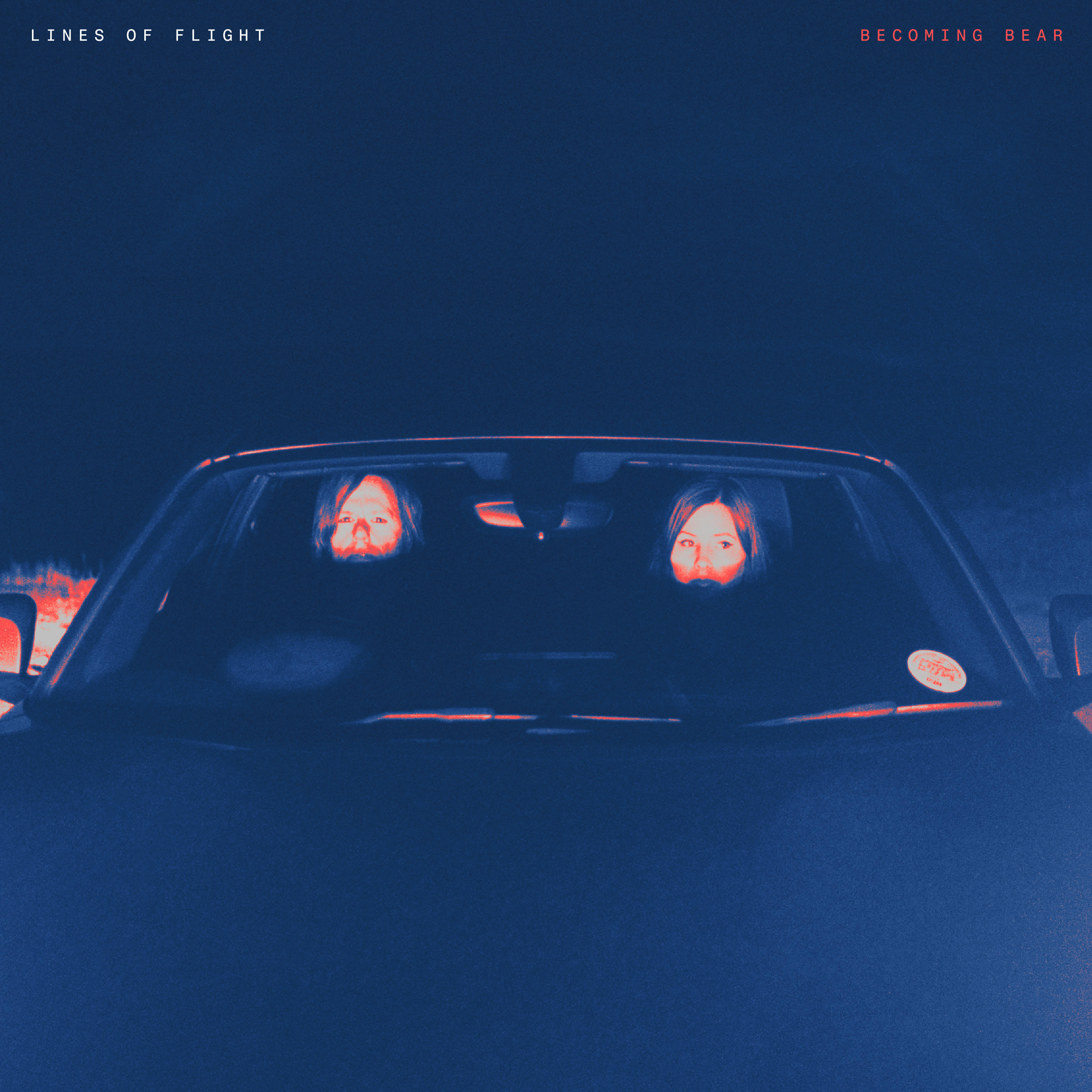
Welcome to the first of my new style music reviews. In these posts I will review tracks or EPs in much more depth than Twitter allows and then get to know the artists I enjoy listening to by asking 5 questions inspired by their career and music. I will also answer any questions they may ask me. A huge thank you to Lines of Flight for agreeing to be the guinea pigs and entering into the spirit of things so wholeheartedly.
Extended Review Part 1
Lines of Flight – More Than Human EP
I have been a fan of Lines of Flight, a duo comprising Matthew Henderson and Helen Whale, since their very first release, Birthing Bell, which was two years ago now. When they asked me to review the lead single from their forthcoming EP, called Becoming Bear I enjoyed it so much I instantly wanted to listen to the whole lot. Having listened to all five tracks, I can say that my initial excitement was not misplaced.
Becoming Bear
This is a very strong opening track with seemingly opaque lyrics that, counter-intuitively, make their meaning very clear. We are increasingly confused and increasingly displaced in the world as it is, partly, perhaps, as a hangover from the pandemic, but partly as a result of our inherent hunter gatherer natures that are being brought into conflict with the way we now live. Musically, the synth took me right back to Some Great Reward era Depeche Mode with the early doomier style of the Pet Shop Boys on tracks like Surburbia. It suited the track perfectly and showed the confidence to reflect the greats of the synth movement and the ability to move the instrument forward in different and intriguing ways.
Left to Find
This is an incredibly unsettling track lyrically. It seems to hark back to the pandemic which ended up creating the group, then reflects on where we are as human beings. Returning to the imagery of wildlife looking in on us with increasing unease, the track talks about a dwindling floe, perhaps reflecting the famous picture of the lonely polar bear precariously perched on one tiny piece of ice, which became a visual motif for what we are doing to the planet. That is, as the song indicates, our probable fate as the question is, ‘How did my world get so small?’ and the realisation is that ‘There are no hiding places left to find.’ Once again, the synth is sombre, with elements of The Tubeway Army and Kraftwerk at the start before settling into a Depeche Mode style tune that superbly sets off Helen’s haunting vocals which reminded me of Annie Haslam of Renaissance.
Last Transmission
The third song on the EP reminds me of an updated version of Message in a Bottle, one of my favourite tracks as a teenager. It is someone trying to get in touch with someone, anyone who might be able to show that there is still someone listening in a world where we seem to be increasingly shouting into a void – my blog often, though not always, seeming to be a case in point! Instead of a bottle being thrown into the sea, you have disconnected, dislocated voices on the internet. ‘The silence broke my heart, tore our together apart.’ This could seem like a personal cry, but taken in the context of the EP itself, Lines of Flight are reflecting much more on our collective lack of communication. The OMD style riff immediately made me think of Enola Gay, which is appropriate given the theme of technology and its misuse. Musically, it is my favourite song on the EP and one I think could become the most popular.
House of Bears
We return to the ursine theme that was explicitly referenced in Becoming Bear, and hinted at in Left to Find, with the fourth track. In a sense there is a positive message, namely that the planet will survive long after we have gone, and that the safety for a number of species lies in being thought to be extinct. The flipside of that is, as the song acknowledges, that ‘The human condition is not built to last’. I have a sweatshirt that reads ‘People Ruin Everything’ and this song is the musical counterpoint to that! The Kraftwerk style opening reflects the fact that perhaps we would be better to acknowledge that we are becoming more dependent on the machine part of our civilisation, fatally disrupting society and life as we know it. Once again, there is an OMD nod here, especially in Matthew Henderson’s Andy McCluskey style vocals.
Breaking the Line
The opening lines to this final track on the EP, ‘You weren’t listening to understand, more to monitor.’ Is just a brilliant encapsulation of our current condition. We can be talking about something, and it will appear on Facebook or Instagram, we can see something that someone else posts, nod and move on, not really trying to go deeper into what is behind the post. Even with our friends, we often take the more superficial approach that we used to take with acquaintances. Deep reflections and deep connections – that sounds a bit like a Lines of Flight lyric right there which they are welcome to use! 😉 – seem like a thing of the past in our increasingly superficial lives. ‘We have been globally blind’ is a reflection perhaps on the increasing globalisation foisted upon us by technology. We have access to so much information, but like magpies we simply take the shiniest pieces and fly off with them rather than investigating further. We need to retrain ourselves to look and care more deeply in order to save ourselves, or possibly, make ourselves worth saving. It is a suitably reflective ending to a marvellous EP which is very dark when considering where we have led ourselves in recent years but holds out the smallest piece of hope for humanity in the future. It is that hope we must hold on to and use to somehow become better.
Extended Review Part 2
David’s Questions for Lines of Flight
- Can you tell people how the group came about?
Matthew Henderson – Yeah, it was the beginning of COVID, we all received unsettling news about lockdown. It gave me a huge need to write something new and that, because of lockdown, we had to do it differently to regular bands. I sent Helen a text, out of the blue, because I knew she sang in a choir and asked her, if I could get some music over to her from my phone to hers, would she like to sing some of the songs. She said yes and we began a really creative process that led to Signs of Life.
It’s strange to think back now – we didn’t meet or talk for months, just file sharing and Whatsapp messages.
Helen Whale – It is incredible, looking back now, to think how much time we had to give to the music, given how busy life feels now. Covid was obviously horrendous but we were both lucky to be able to use lockdown to pour energy and focus into the project. We’d each go for walks alone and listen to the updated music files; it was a brilliant thing to have, a way of feeling connected.
- What were your main musical influences growing up and how have these fed into your music?
MH – I think The Cure would have to take top spot for me – I don’t love every track they’ve ever done but I love how they have done it all. Other music across a range of genres have all impacted me, there’s pretty much something in every decade from the 50’s to today that I have been influenced by. I grew up loving the melodrama of The Smashing Pumpkins and Depeche Mode and everything in between. I love it when a song is so well made (and I don’t mean complicated), that I don’t think about its constituent parts, I just get swept up in it – and for me that’s more important than genre, really.
HW – It’s similar for me, really, in that genre was never really the thing that defined my music taste, but I guess both as a child and in more recent years, folk music has had quite an influence; before Lines of Flight started, I always imagined that if I did get involved in writing and performing again it would go in that direction, and in fact the first lyrics/tune I shared with Matthew was what eventually became Birthing Bell (our first single). It might feel quite far away from it now but it started life as an acapella folk tune! The natural starting point for my lyric writing still feels rooted in folk narratives of people and places. Through the process of writing together, with each of us bringing our own influences to the table, I’m constantly discovering new things and new influences – I don’t think that will stop any time soon and it’s one of the great things about there being two of us and having otherwise quite separate lives – we share stuff with each other regularly and it means Lines of Flight will continue to change too, as we find new things we both love.
- What is your new EP about?
MH – The initial trigger for this EP was a collection of photos by Dmitry Koch – he found polar bears inhabiting an abandoned weather station, north west of the Bering Straits. It prompted us to ask a lot of questions of humans, about our nature; ‘the human condition’; our impact upon nature. Coming out of covid, where so much change had happened, it was so strange to see life returning to the normal we all said at the time, we didn’t want.
HW – I think for me, the photos of the bears got me thinking about all the complex ways that human lives are bound up with these creatures, the blurring of lines between humans and nature and the inextricable ways in which our fates align and interweave. We are creatures – trying to survive, make homes and live our lives – just like them. I often feel uneasy at the way in which nature and ‘culture’ are seen as so binary. When we were first working on these tracks, in early 2022, a lot was also happening in the world – new kinds of global unease and disruption were emerging, and I think that probably influenced things too.
- Where do Lines of Flight go next?
MH – Two things really – we are pressing the EP on to 12” vinyl, with the b-side being remixes. We’re working with Fairsound who help bands crowdsource and press vinyl – they are great, as is Press on Vinyl. We are aiming to release that in the autumn.
The other is that we are working on new material – As a way of adding something to the climate emergency discourse, we are looking at the world through non-human eyes and trying to write about what that destruction, loss of life, habitat and species must be like. We used a book called Mourning Nature as a starting point for this and we have 5 tracks in the bag.
Oh, and lastly, we are playing the Otley Music Festival on the 9th of July – and we are hoping to do it as a band!
HW – Writing was solace for me during Covid, and I guess it’s now my way of dealing with the personal grief of climate change. The book provides a way to see that through the eyes and word of others, but even though that’s our jumping off point, it’s still very much a personal way of channeling emotion, for both of us, I think. On a more upbeat note, as Matthew says, we’re looking to build our live act and this is really exciting!
- What is the best and worst thing about making your way in the music industry of today?
MH – I think there are some great elements to making music (tech and social media etc, have really changed the traditional methods), but for each and every one of them, there are con-artists trying to make money from peoples’ hopes and dreams. Promising quick results for cash is the worst – take your time, let things grow organically, build and work with your audience. It doesn’t have to happen overnight, it’s probably best if it doesn’t. Also, success can be so many things to so many people – define your own terms. Don’t give up, making music, being creative is as much about a war of attrition as it is about making a huge sudden impact.
HW – I’d absolutely agree with all of that. Tech made our project possible in the first place, and despite not even being able to be in the same room together, and with no possibility of playing live on the horizon, we were able to build an audience through Twitter – that’s amazing, really, and it was heartwarming and really affirming getting so much support for the music from that community. On the other hand, of course, you do need to work at it to make it work for you; I’m always feeling like there’s more we could do but you have to take a break from being online too – and that’s especially the case when you need to carve out time for songwriting and recording, and just letting your thoughts mill around without all the noise that social media can bring.
Lines of Flight’s Questions for David
When was the last time you cried?
Interesting starting question! 🤔 I think it’s more common for me as I get older to be emotionally moved by songs, films and TV programmes. I can definitely say that I get moist eyed more than I used to, but I have the hangover from my 70s childhood that seems to add as a break to the more outright expression of emotion, happy or sad. So, from that point of view, I would be hard pressed to remember the last time I cried.
What’s the hardest thing about blogging?
Definitely getting hung up on my very small readership! I try my best to get people reading this blog because I feel that what I write is good and interesting, and I live for the dopamine hits of a view or a like! Shallow, aren’t I? 🤣 Suffice to say, I love the writing, and I really should ignore the other stuff!
What musical instruments can you play?
Sadly, none! I have tried to play the guitar, but I just couldn’t co-ordinate my movements. Although many would say its never too late, I can’t see myself ever learning one now. I will content myself with listening to and supporting those artists who have a talent I can only dream of.
What did you learn about yourself during COVID?
That I’m more flexible than I realise and that I still love challenging myself. I set up my Twitter account during lockdown, I restarted this blog and I opened myself up to a huge range of music. I did the one million steps challenge for Diabetes from July to September in 2020 and raised a reasonable amount, discovering more about my local area in three months than I thought possible just by taking roads I had never walked along before. Sounds like a metaphor but every step was real! Professionally, three decades after I started teaching with chalk and talk (!) I became comfortable with teaching online and even ended up enjoying it.
This post covers the ‘Bs’ in my collection and there are some classics, some forgotten tracks and some eyebrow raisers!
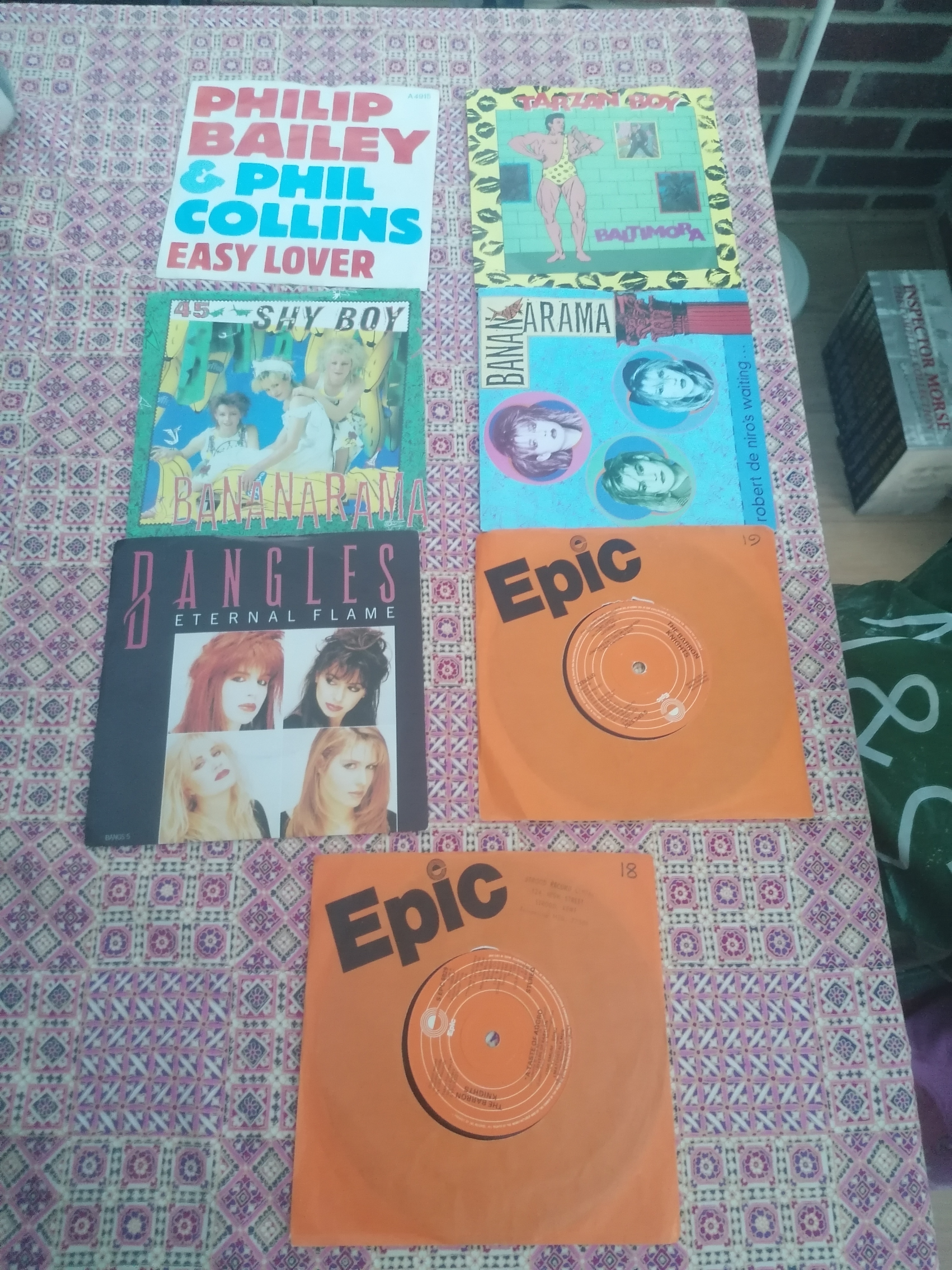
Well, we start off with one of those classics, the fantastic Easy Lover by Philip Bailey, the lead singer of Earth, Wind and Fire and Phil Collins, the lead singer of Genesis. As soon as I heard the track, which just sounded fantastic, I was straight off to the record shop to buy it, and it’s one of those that still sounds fantastic today. The blend of the voices is perfect and the tune is an absolute belter. There is also a video for this that has Collins playing up his cheeky chappy persona to the occasional bemusement of the cool and stylish Bailey. From the sublime to the apparently ridiculous with Baltimora’s Tarzan Boy. It was a hit in October 1985 at about the time I was preparing for life outside the RAF following a fairly catastrophic ankle injury during basic training – a ripped achilles tendon suffered at the start of 1985 that took years to heal properly – and I needed silly songs like this to lift my mood. A bit like the amazing film Inside Out, any happy memories of this period are inevitably tinged with sadness, but my friends at the time rallied round me and I have vague memories of the crowd of us letting loose on the chorus when drunk and I suppose I bought it to hold on to those feelings when I needed them. Who would have thought that Tarzan Boy would be so deep and meaningful?!
Bananarama have always been a favourite group of mine and from their first album, the brilliant Deep Sea Skiving, I have the rather gorgeous and very catchy Shy Boy. I bought this after seeing them on Top of the Pops, as I did with a number of singles. I loved the way that their dancing wasn’t choreographed to within an inch of its life and their voices blended together perfectly. Robert De Niro’s Waiting was arguably their best received single, and it showed off their more polished style very well indeed. From one all-female group to another with one of the best ballads of the 80s and the song that was the second dance at our wedding, being my wife’s favourite slow song at the time. It was very close to being our first dance, but a record that I will cover in the ‘Cs’ beat it by a whisker!
Finally, in this first section we have The Barron Knights, a parody group who had three successful singles in the space of four years. They specialised in songs that had linking lyrics before moving onto the parodies themselves. Live in Trouble parodied I Can’t Stop Dancing by Leo Sayer, Angelo by Brotherhood of Man (arguably itself a parody of Figaro by ABBA!) and Float On by The Floaters. A Taste of Aggro was even more successful, reaching Number 3 in the charts with the help of Boney M’s Rivers of Babylon, The Smurf Song and Matchstalk Men and Matchstalk Cats and Dogs. They were very good musicians in their own right which definitely helped the quality of the songs and the lyrics always left me laughing however many times I heard them.
As an aside, the second of the Barron Knights singles has the stamp of Strood Record Centre on it. That was my first port of call every weekend for years especially after I had finished the Panini Football 78 and Football 79 sticker albums. I pretty much built up my record collection at that one shop, because at that point I usually had £5 a week to spend on singles. Why that amount? Well, I used to have to go by bus to school and I didn’t get a free bus pass which most students from my neighbourhood received. Every week, my parents gave me £5 for my fares that week. In seven years at secondary school I was asked for a fare maybe half a dozen times! The assumption was that we were all on free bus passes and I saw no reason to offer my money to the driver, hence my extremely large singles collection! I feel safe admitting to that now as I think 40 years is past the statute of limitations, and in any case it was the only good thing about being at that school in the 7 years I was there.
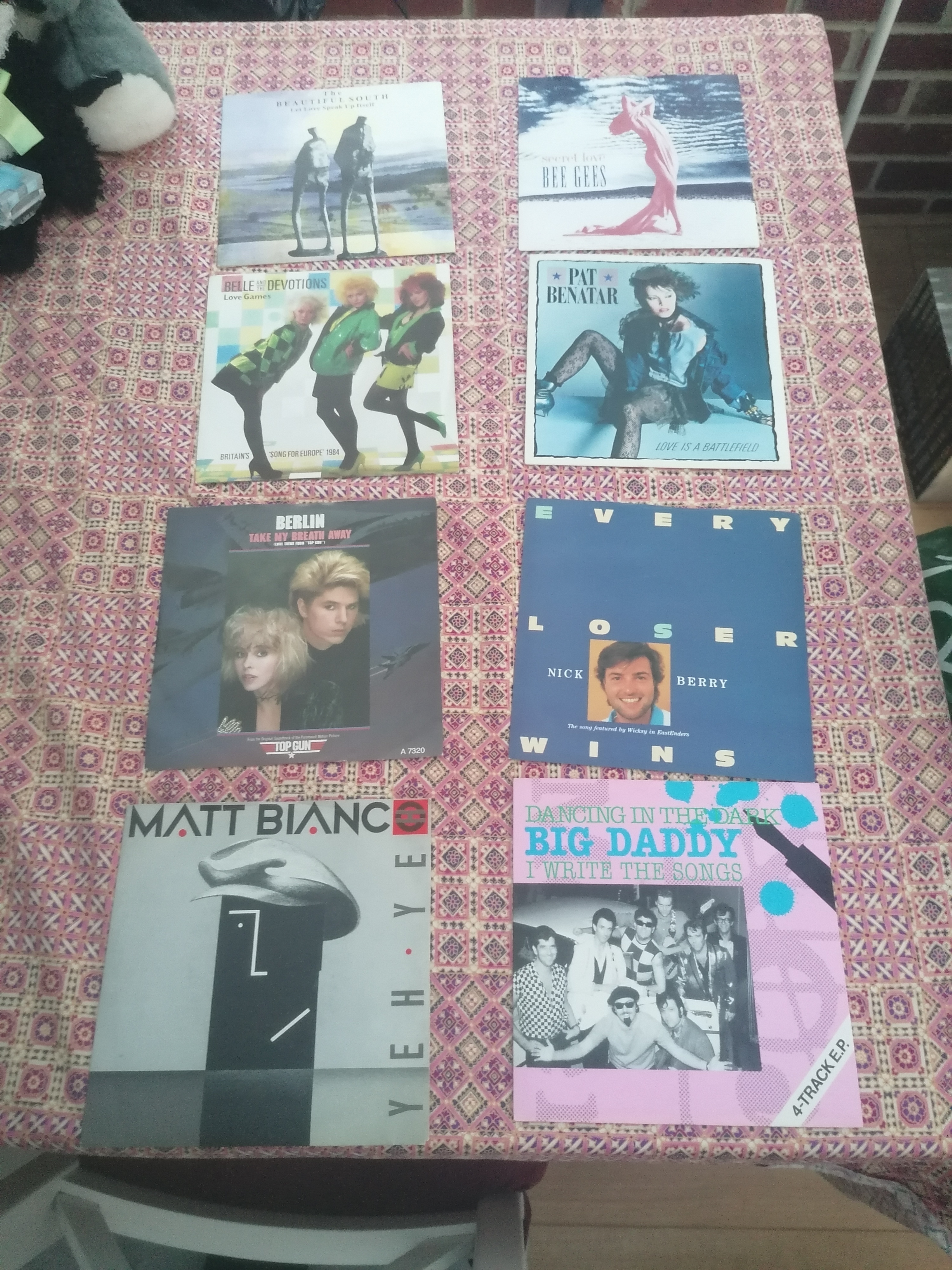
This next set starts with two singles from 1991, the year before I switched over to CD for best part of 30 years. By that time my single buying had slowed to a trickle, mainly because of the increasing price and declining manufacturing standards. They are an interesting pair. The only Beautiful South single I bought on vinyl spluttered to a halt at Number 51 in the charts despite being absolutely gorgeous. It’s well worth a listen, but it pretty much sank without trace at the time. The other one is Secret Love by the Bee Gees. Again, it was a very unusual choice for the only vinyl single from that multi-talented trio. To be honest, I had completely forgotten it until I embarked on this cataloguing. However, when I did put it on the turntable – for the first time in over three decades – I recognised it as soon as it got to the chorus. What a song it is! Take a listen when you put my Spotify playlist to use – you know you should!
Next up is Belle and the Devotions with Love Games. It was the UK entry for the last Eurovision song contest I watched and the only UK entry I ever bought as a single. It’s a Motown inflected blast that is virtually forgotten these days, as it’s scandalously low position of 35 in the countdown of 50 UK Eurovision songs attests to. 1984 was the year I joined the RAF and after that lots of things like Eurovision slipped off my radar, but it went out on a high with one of my favourite ever entries. A couple of US artists, Pat Benatar and Berlin follow, the latter instantly recognisable, the former largely forgotten but well overdue for a re-visit. From the sublime to the arguably ridiculous with Wicksy from Eastenders, in the days I used to watch it, otherwise known as Nick Berry. I don’t care what anyone says, it’s a lovely little ballad and he had a pretty decent voice. The final duo are both throwbacks to earlier eras. Matt Bianco with their infectious remake of Georgie Fame’s Yeh Yeh, and Big Daddy who were probably the first ‘mash-up’ band singing covers of modern tracks in an oldies style.
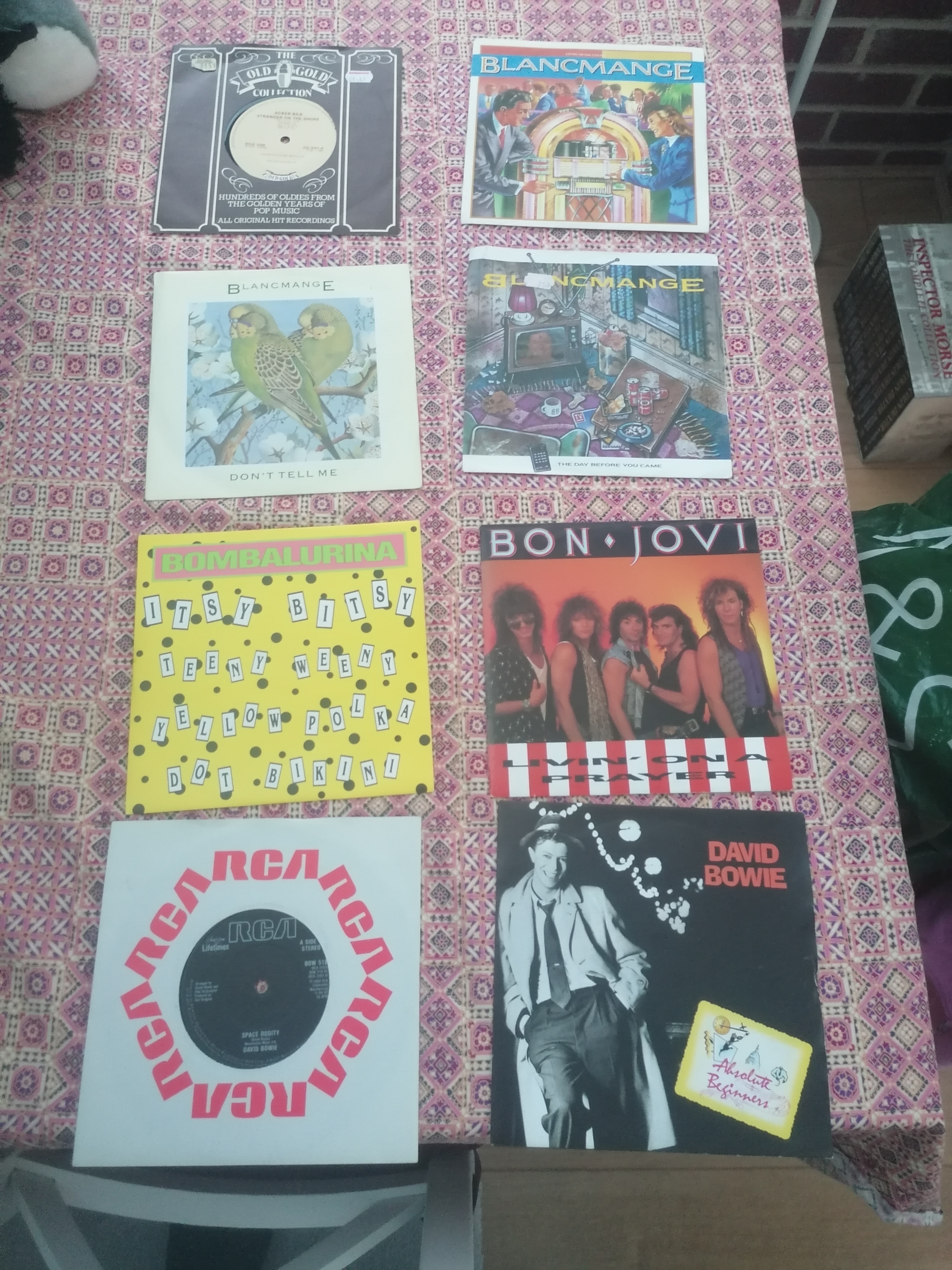
The single top left is an Old Gold find at the much missed Woolworths, according to the price sticker! When I had finished at Strood Record Centre, that was often my next port of call. Acker Bilk’s Stranger on the Shore was a piece of music I heard on the radio, and I grew to love it over the years. Did you know that it spent 55 weeks on the chart? It entered the Top 50 on December 6 1961 and left it on December 19 1961! Three records from synth legends Blancmange next, with each one a classic of its type. Living on the Ceiling had a Cairo set video, but its distinctive instrumental flavour came from the use of the unmistakably Indian tabla drums and a sitar. Either way, it was a sound that was utterly unique and extremely catchy. Don’t Tell Me was similarly catchy, but musically very different. That was something that fascinated me, Blancmange’s chameleon like qualities which ensured that you never knew quite what was coming next. What came next, for me, was the best ever cover of an ABBA song. The Day Before You Came has a quiet power in both versions, and the Blancmange video cleverly, and rather cheekily, uses some of the appearances of Agnetha from the original video alongside Neil Arthur. If I was forced to choose a favourite, I would very slightly favour this version.
Timmy Mallet in the guise of Bombalurina might, I admit, be something of a marmite single, but it was Number One on the day that Janet and I got married so I had to get it. It was played at our wedding and two of the guests danced quite brilliantly to it, so I always think of that and smile when I hear it. Only one Bon Jovi single, but what a single! It is of course, the brilliant Livin’ on a Prayer from Slippery When Wet, an album that I bought mainly on the strength of this track. Both single and album are just great. Two David Bowie singles, Space Oddity and Absolute Beginners complete the picture above and both, in their own way, are quintessential Bowie with that individuality that he was famous for. I don’t have Life on Mars, my favourite ever David Bowie track, having fallen under its spell quite late on. Perhaps I will find it in a record shop somewhere, but I will have to be careful or I might start collecting ‘missing’ singles which could become very expensive and time consuming!
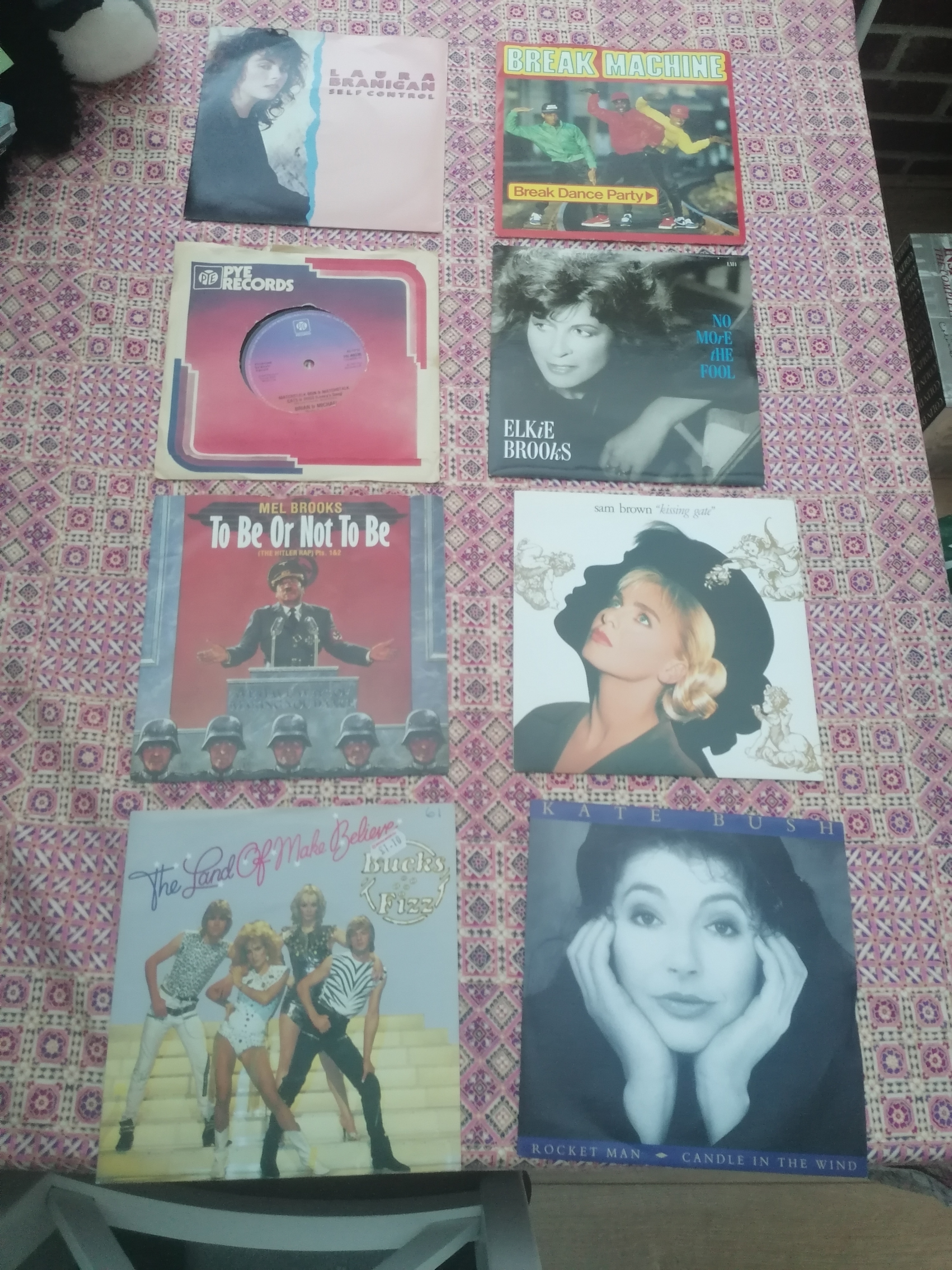
The final set of ‘Bs’ starts with one of the most recognisable tracks of the 80s. Self Control by Laura Branigan was one of those songs that you could play in your bedroom on the record player or dance to in the disco at full volume with the bass pounding through you. Either way it was totally fantastic, and it was one of those singles that I played almost non-stop when I bought it. Her voice and the staccato delivery made this utterly distinctive, then and now. Break Machine was one of those tracks that sounded great in a disco, so I bought it on the strength of that. It was quite a clever idea, catching hold of the Break Dancing wave via a single that sounded more like an off cut from Lionel Richie’s Can’t Slow Down album. It may not have held up as well as some other records but it’s still fun. Back to the 70s now with Brian and Michael and the rather lovely, rather brilliant Matchstalk Men and Matchstalk Cats and Dogs. It may have been parodied by the Barron Knights, but that just served to demonstrate the quality of the original. I loved it then, I love it now, but I urge you take a listen to the B Side The Old Rocking Chair, one of the most beautiful evocations of love ever committed to record. If it doesn’t make you emotional I will be very surprised. It’s not on Spotify so I have found it on YouTube instead
Two very different Brooks follow in this section. First, we have Elkie whose outstanding voice is heard to its best effect in No More The Fool, which has power to spare and a fantastic chorus. It is one of the classiest ballads you can imagine. Mel, by contrast led a full scale assault on good taste with the theme and lyrics for To Be or Not To Be. It comes from a remake of an anti-Nazi comedy that was one which I thoroughly enjoyed as a teenager. Yes, it will offend many, but I think it’s one of the greatest comedy records of the decade. I loved Sam Brown’s Stop, but I didn’t buy it. Instead I bought the follow-up Kissing Gate without hearing it. It’s good, but perhaps not as good as her more famous single, but that’s the way it goes sometimes. The last pair of ‘Bs’ are very familiar to most people, but as with many others in my singles collection, the ones I bought – only one for each artist – were not the obvious ones. Bucks Fizz had a very good run of hits in the early 80s, the starting point being Making Your Mind Up. Much though I liked it, it is not my favourite of theirs, my favourite is the one I bought, Land of Make Believe. It’s got an unsettling undertone in both the lyrics and the tune, with the nursery rhyme quality hiding something that is darker and more complex. Kate Bush wrote some amazing tracks, but I bought the single that showcased her ability to interpret someone else’s songs. Her versions of Rocket Man and Candle in the Wind are both excellent and her voice is in fine fettle.
Well, there you have it for the ‘Bs’. Next up, the first half of the ‘Cs’ – yes there’s quite a lot of those!

I started watching the CBBC dramatisation of A Kind of Spark last week and pretty much instantly bought the novel. I am of the opinion that good novels are good novels, whoever the target audience are. For many years I read to my children at bedtime, and in those years I came to the conclusion that some of the most enjoyable reads were to be found in the YA section. Unfortunately, YA books have been all too easily dismissed as a result of that label, rather like the romantic comedies written by female authors and aimed at a mainly female audience – I refuse to use the frankly insulting term used to dismiss them. I am, as it happens, a huge fan of books by such authors as Sophie Kinsella and Cecelia Ahern amongst others. So, what did I think of A Kind of Spark when I read it?
The Autism Experience
Well, I can only start in one place, the portrayal of autism from someone who can understand the experience intimately. Elle McNicoll is on the autistic spectrum, like myself, and it definitely shows. I thought I knew a lot about my own experience with undiagnosed Asperger’s, but I had only scratched the surface as it turned out. All I had done was to read about the views of Neurotypical (NT) researchers who could not hope to understand what goes on inside an autistic mind. So much fell into place when I started reading it. My initial fascination with history and with dates and the encyclopaedic knowledge I stored up about it is reflected by Addie, the central character, and her fascination, first with sharks and then with witches. Like me, her mind worked overtime when focused on a subject that interested her, but failed to work effectively in areas that didn’t. When I was at school I was very good at English and History, but struggled with Mathematics and Science. Like Addie, my handwriting was abysmal at first, although I trained myself to write in a very neat hand. I’ll come back to that later. Due to my dyspraxia my motor skills were very poor, which was most obvious in sport, art and design and technology. I used to dread all those lessons because I knew I would fail at them. This led to me having flashes of frustration and temper, another thing I will return to. Finally, like Addie and her sister Keedie, I was, as Addie points out near the end, very easy to bully at secondary school in particular and that made my entire seven years miserable, particularly as it came from the staff as well as the other pupils. In those days, I was always told to ‘pull myself together’ and to ‘deal with it like a man’, both at home and at school. It led me to withdraw into myself as that was the only place where I could find any respite.
When you read about autism from an NT perspective, the characters are automatons with little understanding or inclination to display or understand emotion. Now, that may be the experience of one section of the autistic community, but Addie’s experience of heightened emotions, heightened reactions and heightened impacts was finally my experience told in a way that chimed exactly with what I felt. This is why music can have such an effect on me, because I can end up living a song in a way that is as intense as anything I experience in everyday life. It explains why certain characters in books, TV series and films can have such a huge effect on me. This dichotomy between the NT view of autism and my own experience confused me until I started reading this book.
Coping strategies
As Addie says towards the end of the book, those of us on the Autistic Spectrum have to live in a world that isn’t built for us. As a result we fall back on certain strategies to deal with situations that we cannot fully understand throughout our childhood and indeed into adult life. Before reading this book I had heard of stimming, which are calming physical actions that help to bring your mind back to some state of equilibrium. I was aware of certain repetitive actions and behaviours which I indulged in, but these were always presented negatively by the NT people in my life. I was told I was weird or told to grow up so I tried my best to ignore my need to use that approach and ended up causing myself far more stress in the short and long run. If I did indulge in the behaviours it was in the safety of my own room and with a sense of guilt.
The next strategy, which I had not heard of, back in the darker days of my childhood where no one wanted to understand the ‘weirdos’ – I was called much worse, for example by other kids and even a teacher who referred to me by a term routinely used to describe people with cerebral palsy – purely because no one cared. Anyway, the strategy was masking. Masking is where the autistic person tries to mimic the behaviour of those around them in a vain effort to fit in. When I started to read about masking from a non NT perspective, elements of the last 50 years of my personal and social development finally fell into place. The way I constantly fought against my own instincts at home, at school and with friends was explained, as was the sheer exhaustion of having to do so, minute after minute, day after day, year after year. Keedie, Addie’s older sister, doesn’t tell anyone at the university she is at that she is autistic because she wants to make a fresh start. Eventually the effort completely exhausts her. I read this and remembered a three week stretch in my second year at university where I could barely get out of bed and I certainly couldn’t face anyone else. I stayed in my room, too exhausted to study or socialise, recuperating until I felt ready to face the world and mask again. This happened over 30 years ago, and at the time I had no idea what was wrong with me. Thanks to Elle McNicoll I do now – nothing! After so many years of practice I am now quite adept at masking, but the payback is that most weekends and holidays I spend a fair proportion of the time trying to recover from the mental effort that may be, apparently, less onerous as a result of experience, but which is definitely cumulative.
When you cannot mask any longer and someone does something so bad that you can’t control yourself you can end up having a meltdown. In a way, it’s another coping strategy, but it is definitely not one you want to resort you, it’s one you end up having no choice to resort to because you ‘snap’. In a world where NT people, often consciously, like to push you to that point, it’s a wonder it doesn’t happen more often. If I meltdown it tends to be verbal rather than physical, but I will also just walk away from a situation and keep walking to try to put mental and physical distance between myself and the situation. The reality of Addie’s situation is that her meltdown is met first with laughter and then with retribution by the NT world who pushed you there in the first place. On the couple of occasions I got physically aggressive, like Addie I was the one blamed and the one punished.
This book is apparently the most read book by Scottish secondary school pupils. All I can say is that if the NT students are educated and the students with one of the forms of autism are reassured by this book or the series, then it will be a huge step in the right direction. Thank you Elle McNicoll for opening the door for us, but to the NTs who might read it, please warn us before you come in as we don’t like surprises!
In this ongoing series of posts, I will keep to one golden rule. I will leave nothing out. If the single is in my collection it will be photographed and maybe commented on! There are songs I no longer like and songs I have no idea why I ever liked (!) but they were all songs I liked in my younger days and they should be acknowledged.
So, without further ado, let’s get on with it.
The Letter A

So, in alphabetical order, here are the first six. It starts off with an all-time classic. The Winner Takes It All was the first ballad I became totally obsessed with. I played it over and over again to learn every word and appreciate every nuance of Agnetha’s incredible delivery of such deeply personal lyrics. It is still one of those songs that can make me emotional every time I play it. The fact that I only have two ABBA singles shouldn’t be seen as a negative, because I had enjoyed pretty much everything else they released, but not to the extent of wanting to buy it. I got the Super Trouper cassette and bought the cassette of ABBA’s singles as soon as it came out. The ABC single was the one track of theirs that I really loved, and the B side, which is a classical overture is even better. You really need to take a listen if you haven’t.
Going from the sublime to the ridiculous! Yes, I have a Russ Abbot single, yes, I enjoyed his comedy, and, yes, I thought it was good fun at the time. Guess what? As these novelty singles go, I think it is a good example of the genre and it’s still very catchy. Trapped by Colonel Abrams was a great one to dance to and I think stands up pretty well. Finally, my one Adam and the Ants single, the classic Stand and Deliver with that instantly recognisable introduction. They were a real favourite of mine at the time, so why only the one single? Well, unusually, I had the album Kings of the Wild Frontier quite early on due to the title track, which I still think is their best song.

A trio of Bryan Adams singles next, with Run to You and Somebody in 1984, his first two big hits and tracks that still sound brilliant. Everything I Do is the song of his that you either love or hate, except it wasn’t always like that. It was the fact that it stayed at Number One for so long – 16 weeks to be exact! Take that out of the equation and it is one of the great ballads of the 1990s. The two A-ha singles are fairly common, if not ubiquitous, in virtually every 80s collection. I listen to them now and wonder how on earth it was The Sun Always Shines on TV not Take On Me that got to Number One. However, they both still sound great. Finally in this sextet, you have one of my favourite ever songs, All Out of Love by Air Supply. The tune, the vocals and the general air of heartbreak is just marvellous and as a slow dance record in my teens it was simply perfect – not that anyone was queueing up to dance with me of course! Just as well I loved listening to it and singing along with it.
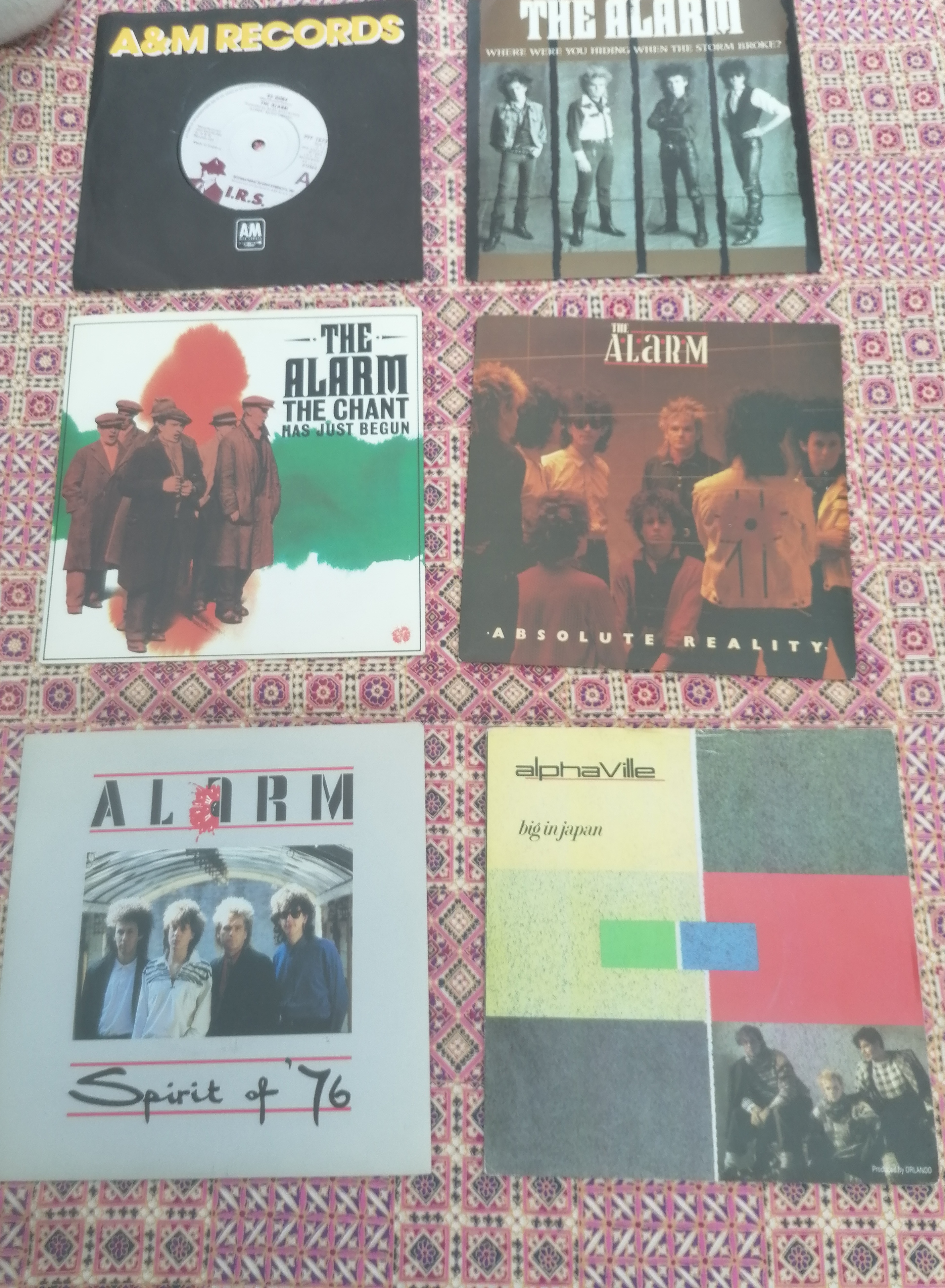
So, next up is Wales’ greatest rock band – I won’t be swayed on this so don’t try! I was obsessed with The Alarm from the very first time I heard 68 Guns. It was one of those records where I remember exactly when and where I first heard it. It was on Top of the Pops, and the opening just absolutely blew me away. The energy, the aggression, the superb tune and the amazing lyrics combined to make this an all-time classic. I heard it on the Thursday night and I was straight down to the local record shop on Saturday morning to buy it. A couple of months later I bought the follow-up Where Were You Hiding Where The Storm Broke? As with 68 Guns it is a classic piece of socially conscious rock with a sing along chorus and energy to spare. However, it is the B-Side which is really special here. Pavilion Steps reflects on the closing down of so many of the spaces where young people congregated, particularly in the 80s as the social fabric of the country started to break down. This was a theme carried on by the rabble rousing The Chant Has Just Begun, but this excellent single pretty much vanished without trace. Absolute Reality did get them back on TOTP, but even the epic Spirit of 76 couldn’t break through to the mainstream. 68 Guns stalled at Number 17 in the charts, but it was ridiculously their highest charting single. They are one of the great unappreciated groups of the 80s although their template must have had some influence on MCR when they made Black Parade. If you don’t know much about The Alarm get yourself to Spotify or YouTube and find some of the greatest socially conscious rock of all time. I always think that this group were the start of my leftwards move politically, and for that I thank them!
Although they were one hit wonders, Alphaville left a lasting legacy with the outstanding Big in Japan. This German group had many more hits in Europe, but at the time European groups found it very difficult to follow up even the biggest of hits with significant chart entries. At the time, radio or TOTP would make or break a record, and they tended to take a fairly sceptical view of any but the most radio friendly tracks, something that also affected Nena as she struggled to follow 99 Red Balloons.

A real mixed bag here! One of the things I used to like doing was trawling the record shops for Old Gold or The Original singles and similar oldies imprints. In this little set, you can see Amen Corner and Louis Armstrong, both hits way before my record buying began in earnest. In a sense, it was like discovering old songs through the internet these days. Next, we have two left field electronic tracks, the ‘marmite’ style track O Superman by Laurie Anderson and the electronic reworking of an obscure 50s track, Peter Gunn, featuring the original guitarist Duane Eddy. It’s a superb remake in every way. Finally, an absolute banger that I loved dancing to. Solid by Ashford and Simpson is a total soul classic and still gets me singing (shouting) along with the chorus whenever I hear it.

Two pairs of singles finish off the letter A. The rather brilliant debut single and follow-up from Rick Astley showcase that amazing voice to very good effect. Never Gonna Give You Up has, of course, entered popular internet culture thanks initially to Rick Rolling, but strip all that away and you have one of the finest singles of the 1980s. Together Forever would be the best track of many other debut albums, so don’t underestimate that one either. Finally, a couple of smooth ballads from the American group Atlantic Starr, the first of which, Secret Lovers always gets overlooked when the great ballads of the 1980s are played but it’s well worth checking out if you haven’t heard it. Always is a decent track as well, but it’s not at the same level.
Well, I hope you enjoyed that little whistle stop tour of the A’s. I have handpicked ten of those tracks to go with this article which I will be adding to next time when I work through the B’s.
Here’s the link https://open.spotify.com/playlist/4FjFIa3zqlRGgTqpT5swkj?si=0cacc6e2ae9045e7
 David Pearce - Popular Culture and Personal Passions