

Do you need time?
I have a vague memory of seeing someone giving a TED Talk or something similar. He spoke about a person being given money at the start of each day which they had to use by the end. They couldn’t save the money, so any not spent by the end of the day was taken from them. They could spend it on themselves or on others as they wished.
He suggested that you would think very carefully about how you spent that money every day if that was the case. You would ensure that you could put it to the best possible use. He then told his audience that it was how they should look at time. There are 1440 minutes in each day and we owe it to ourselves to spend as many of those minutes as possible in ways that benefit ourselves or others. Sleep is a good use of that time because it allows you to make more effective use of the fortune you are given if you are wise. Work is a good use of that fortune, but so too are family and friends. I would actually suggest that they are a more lasting and more important use, because they give you love and security, two things work does not. Writing my blog is a good use of my ‘money’ but just aimlessly scrolling is a waste of it. Watching TV or listening to music can help you to relax and maybe give you the opportunity to share your passion with someone else. Finally, spending that time with those you love will always be, to me at least, the most effective investment of all.
So, spend your time like you spend money. If you have wasted it, acknowledge that and move on, because self recrimination wastes even more! If you have spent it well, you can see it as an investment for the future in terms of lovely memories. I am now going to spend the rest of my 1440 minutes as wisely as I can.
What will your life be like in three years?
There is a saying, ‘God laughs at the plans of man’ and whether you believe in God or you wish to substitute the word Universe, the basis of that saying is an obvious truth.
At no point in my adult life have I ended up a 3 year period where I thought I would. At 18 I was just starting my first job. Three years later I had been in the Royal Air Force, been invalided out and spent a summer in Florida. Three years after that I had finished my first year at University and I was engaged. Three years after that I was a teacher. Three years further on I was in Japan. You get the picture!
Now, I realise that most people will not have as much variety in their lives as I do, but every year when I look back I see surprises, and if I look back in sets of three those surprises multiply, often by far more than a factor of three! I am sure that in work or personal lives, even the most predictable existence takes you to places you never expected. Three years ago I never expected to have given up full time year round teaching and I have no idea now what the next three months might hold let alone the next three years!
I think predictions are as good for everyday life as they are for the economy! Embrace the uncertainty, go along with the occasional discomfort and stop wasting your time trying to envision your life or even yourself in three years. You will find out where you will be in three years time on November 4, 2028 so you might as well wait until then!
Invent a holiday! Explain how and why everyone should celebrate.
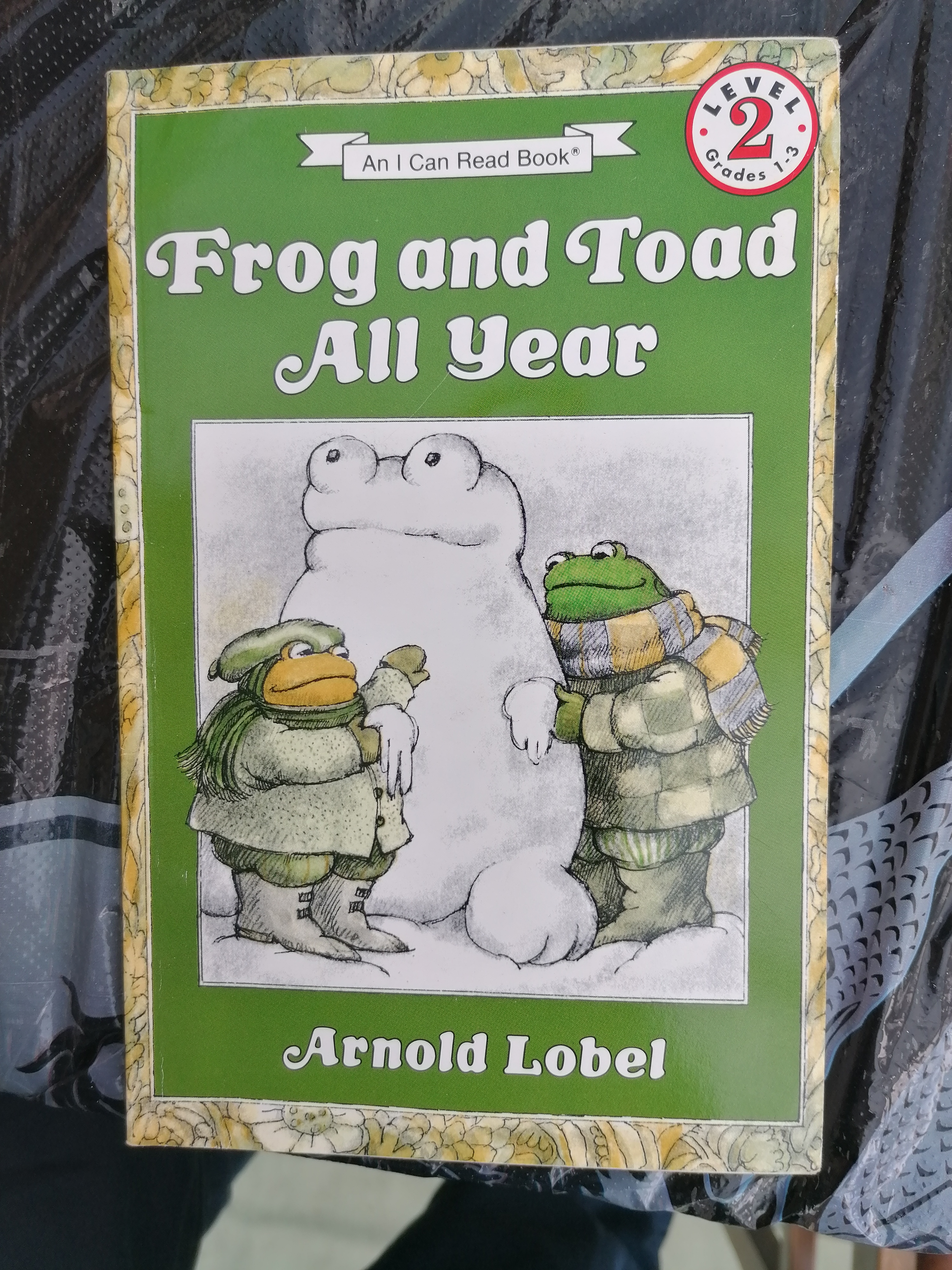
I was watching a Hallmark movie the other day called The Christmas Quest. They are films you can very easily take your brain out to watch and I frequently do! The film itself was a very different example of the genre, being set in Iceland and reflecting on the genuine Icelandic myth of the 13 Yule Lads. It’s a great piece of folklore that I may base a blog on nearer Christmas. Anyway, at one point in the movie one of the characters mentioned Jólabókaflóð or Christmas Book Flood. This is a traditional celebration of reading where, on the night of Christmas Eve, people give books to each other and then settle down to read them. It’s a fantastic idea and it is the basis of my own holiday Childhood Reading Day.
Taking place on December 28 this new festival will give everyone a chance to recover from the excesses of Christmas, which I absolutely love by the way, and to spend time with family, friends or just your memories. You either find, buy or are given a book from your childhood that you loved and you spend as much time as you like rereading it on the day itself and maybe on the following days. Now that’s the personal part of the holiday. This holiday, however, is meant to be a time for sharing with those who are close to you. You can tell your partner, children, grandchildren or friends why this book means so much to you. Maybe share stories or thoughts about your younger self to allow others to find out something about what you were like as a child. I say that because all too often, in the West in particular, we criticise people for revisiting their childhood selves. We tell them to ‘grow up’ if they are watching or reading something for a younger age group, and forget how important those years are and how we should keep in touch with them. I think it comes from the Bible verse requiring us to ‘put away childish things’ which we have taken to mean that we need to completely cut our current selves off from our younger selves. We do this at our detriment because it is that attitude that removes a lot of the wonder from life.
The date is movable but the sentiment is one that we should hold to all year round. If you live in the UK, value children’s imagination and you want to encourage those who cannot otherwise access books to brighten up their lives, go to https://www.booktrust.org.uk/ and take a look at their Christmas appeal. If you live elsewhere there will be similar organisations in your country.
Happy Childhood Reading Day
What are your favorite websites?
I have been spending a lot of time on my phone like the majority of the people in the world! When I was in full time work I had reasons to put the phone to one side. Over the last two months I have had to deal with my tendency to pick up my phone too much. So, how have I done this?
The first thing I have tried is reading a book in the morning rather than reading a screen. To an extent it’s working, though not perfectly, but it has proved to be a good first step. It is far more relaxing reading a paperback or hardback book than it is to read a screen. For that reason Kindle always has been and always will be a non starter for me. Anyway, since I left work I have reread the first two books in Philip Pullman’s Book of Dust trilogy to remind myself of the story and I am now over halfway through the final book which I preordered in June. Along with that I have read The Barbecue at No 9 by Jennie Godfrey and reviewed it on my blog. I am now looking forward to reading my collection of Christmas books with some I reread year after year.
The next way I have kept off of the screen is to prepare my project of analysing Christmas Magazines from 1896 to 2025. I have finished looking through every page and noting the contents, and this week I will be getting my highlighters out and picking out common themes and contrasts that I find across the years. Now, of course, this does mean that later this month I will spend huge amounts of time writing and editing blog posts but I feel like that is an excellent use of my screen time.
The real game changer, however, came just over two weeks ago. I decided that my screen time was getting out of control, with Instagram, Twitter, Chrome, Fishdom (a game app) and Facebook being the main culprits. I found an app called ScreenZen and it’s worked incredibly well for me. Initially, I included 9 websites on the restricted list, (which I was visiting for a combined time of about 4 hours a day!) and set ScreenZen to a maximum of 40 minutes each. The more adept at mental arithmetic will have quickly realised that this would still give me no less than 6 hours of screen time if I hit those limits!! 😱😱 However, the clever part is that it forces you to wait for 10 seconds before opening it and displays a message like ‘Do you need to check this now?’ This is working brilliantly because it is a proper stopping cue straight away. Many times I think, ‘You know what? I don’t!’ and I leave it unopened. Even if I do open it I have a limited amount of time to use it so I really need to prioritise my phone use and actually use it for a purpose rather than mindlessly looking at an endless scroll. I now use these websites for a short focused time. The four hours of scrolling a day is now down to 45 minutes! Yesterday I restricted myself still further and reduced screen time on those apps to 4 opens of 7 minutes each. If you are interested in the psychology of this take a look at the Ted Talk below from Adam Alter. I used it year after year in my lessons and every year it had at least a temporary effect on my screen use!
The unrestricted sites I have and use most are Word Press, Calm, Duolingo and Happy Color. All four contribute to improving my mental health and wellbeing through relaxation and focus. I wholeheartedly recommend all four.

Is there an age or year of your life you would re-live?
I have never understood why people would want to relive part of their lives. It’s an idea that has so many problems. Let’s take them one by one.
First problem – Are you reliving this year with all the knowledge that you have now or simply being thrown back to the same time with the knowledge you had then? If it’s the first, you would be very tempted to change things. If it’s the second you would simply make the same mistakes and the whole thing would be a waste of time.
Second problem – If you do have knowledge of how things turned out, what would you do about it? Would you kiss that person you always wanted to? Would you take pre-emptive revenge on someone who made your life a misery? Would you do a Biff Tannen and use your knowledge of sports to build up a fortune? Depending on which year you chose, you might end up doing all three. I certainly would!
Third problem – Let’s say yes to the second problem and see where that takes us. You come back to the present and it’s a completely different present to the one you were in before. You have done different things and the world around you has changed irrevocably. Maybe you are married to the same person, except you would almost certainly have changed them in ways you can’t understand. You might have missed out on all the things that you value because you wanted to make things better.
The Solution – Charles Dickens had it right in A Christmas Carol. Ebenezer Scrooge could see his previous Christmases but only as an observer. He couldn’t change anything but he could learn from it. I would love to relive times from my life that way. Well, of course, I do that already as does everyone else. We reflect on things we have done, both good and bad, and try to repeat the first and avoid the second. When we look at a picture, when we talk to people about the ‘old days’, when we hear a song or when we watch a film or TV programme, we are back in those times. I have very fond memories of some years of my life – with, for example, 1975 being one and 1987 being another. I can travel back to those years in my head. Would I want to travel back in person? No way!

