

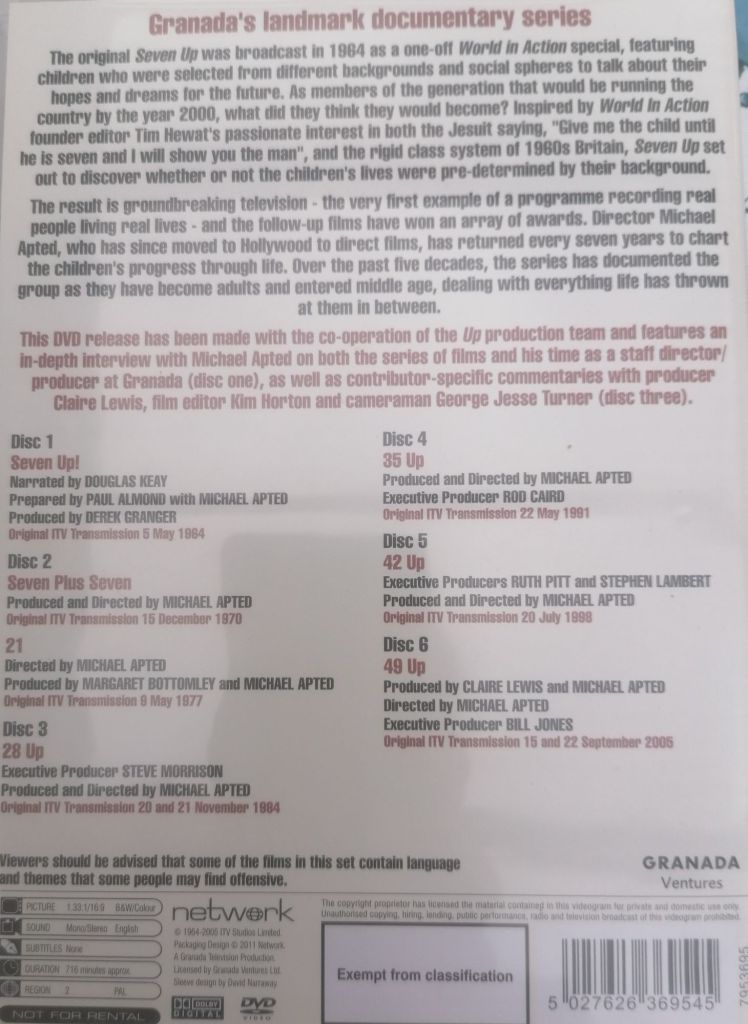
What was 7 Up?
7 Up was a one off show produced by Granada Television as part of their World in Action documentary programme. In essence World in Action was the ITV equivalent of the BBC programme Panorama. However, it had a wider brief and frequently courted controversy in a way that it’s more staid counterpart would not. As well as this controversial edge, it was often much more innovative and took chances on new film makers and new ideas. One idea that made it to the screen was that of finding a group of seven year old children whose cohort would be likely to be running the country in the year 2000. Given that these children were seven in 1963, they would be 44 and at the peak of their careers by the end of that year. Well, that was one reason. The other was the often quoted, and variously attributed, adage ‘Give me a child until he is 7 and I will show you the man’. Although girls were included in the 20 chosen children, it was very likely that the boys were the main focus in the minds of the documentary makers when it came to their future impact on the UK. In the end, 14 of the 20 children were chosen to be interviewed in more depth, 10 boys and 4 girls. Those 14 children were Bruce Balden, Jackie Bassett, Symon Basterfield, Andrew Brackfield, John Brisby, Peter Davies, Susan Davis, Charles Furneaux, Nicholas Hitchon, Neil Hughes, Lynn Johnson, Paul Kligerman, Suzanne Lusk and Tony Walker. They came from a range of backgrounds as the underlying aim was to examine the impact of class on the lives of this new generation. Accordingly, they chose working class boys and girls alongside upper class boys, but only one upper class girl interestingly, to get a snapshot of their lives. By the way, it’s interesting to note that a snapshot is all it was supposed to be, since at the time it was only ever seen as a one off programme. Michael Apted, the film maker involved with the project throughout its run, has gone on record as saying that the lack of girls was a mistake brought about by a lack of foresight regarding the impact of feminism would have. You need to give the documentary makers some leeway of course, as hardly anyone foresaw those societal changes. The UK was a very much less diverse country in 1963, so it’s perhaps reasonable to argue that in including Symon, the only child from a mixed ethnic background, they were being quite forward thinking in their own way. So, how does this programme look six decades on?
7 Up World in Action
I suppose the first thing that strikes you is the way that in London Zoo, where all the participants were treated to a day out, the children are just that, children. By looking at them, you can’t really tell which social background they come from, even if you can make a few educated guesses. There is a brief scene where a boy who doesn’t appear in the rest of the programme is shown throwing stones at one of the animals, and is told off by one of the other children. The telling off is caused by the fact that the boy throwing stones has transgressed against the social norms that we are, or should be, bound by.
The first scene after the day out shots shows the child who had been doing the telling off in his school classroom singing a song whose tune is instantly familiar, but whose words aren’t. It turns out that this is a class in a Pre-preparatory school where the 7 year olds are singing Waltzing Matilda in Latin! These 7 year olds can already conjugate Latin verbs from memory and are clearly expected to do so with ease. The children, all boys, are almost unnaturally well behaved. All of them are paying attention and showing total engagement in a subject I found difficult to master in secondary school at the age of 12. When we see the three chosen boys being interviewed, John, Andrew and Charles, they answer questions with ease, assurance and, to modern ears perhaps, a touch of coaching. For example, when they are asked what newspapers they read, their answers range from The Telegraph to Andrew’s response of the Financial Times! They also have suspiciously adult views about The Beatles who apparently should cut their hair and play less raucous music! Another scene shows a boy acting as a parade ground NCO instilling discipline into his seven year old compatriots as they practice military drill. These boys are clearly very privileged and they have opportunities that the lower class children would never be able to access. The other upper class participant, Suzy, is shown doing ballet and interviewed in her headmistress’ study where she answers questions quietly but with a seeming air of confidence.
The classroom and playground scenes in an East End school which Tony attends show the class and behaviour divide extremely clearly. Even in those days, it’s clear that a lot of the teacher’s job is crowd control as a clearly inattentive Tony has to be told multiple times to turn around. In the playground, tarmac rather than the grass of the pre-prep school, the girls play skipping games while the boys fight with each other to burn off some of their excess energy. Tony is far more comfortable in this environment and when he is asked what he wants to do when he leaves school he answers that he wants to be a jockey. The questions for Tony, Symon and the rest of the working class participants seem far less aspirational than those for the upper class children. This is emphasised when the three East London girls, Jackie, Lynn and Sue are asked how many children they think they are going to have.
The other participant that really stands out at this point is Nick who lives in a remote part of the Yorkshire Dales and walks four miles a day to attend school. His remoteness together with his age, at 6 the youngest participant, seems to give him a different perspective from the others. He is clearly quite isolated from other children and therefore, perhaps, more affected by his family and his surroundings given the lack of socialising cues available to the others.
My reaction
As anyone who follows me will know, I am fascinated by social history and popular culture in all its forms. The number of questions raised by 7 Up in terms of our progress, or otherwise, as a society will no doubt be reflected upon at length as I re-watch the other episodes in the series. Two things occurred to me as I was watching it. Firstly, how children in essence don’t really change that much. Yes, they have technology all around them and access to ideas and materials that the 7 Up cohort could never have dreamed of, but at heart they are no different from seven year olds today. Put the classroom scenes into colour and it would be quite easy to believe that you are watching a modern day classroom. Secondly, I reflected on the small amount of progress we made towards a more equal society in the 1970s and 80s, where social climbing was possible, and how even that progress seems to have been lost as the class system has rediscovered its rigidity. It is no doubt something I will return to before this series of posts finish.
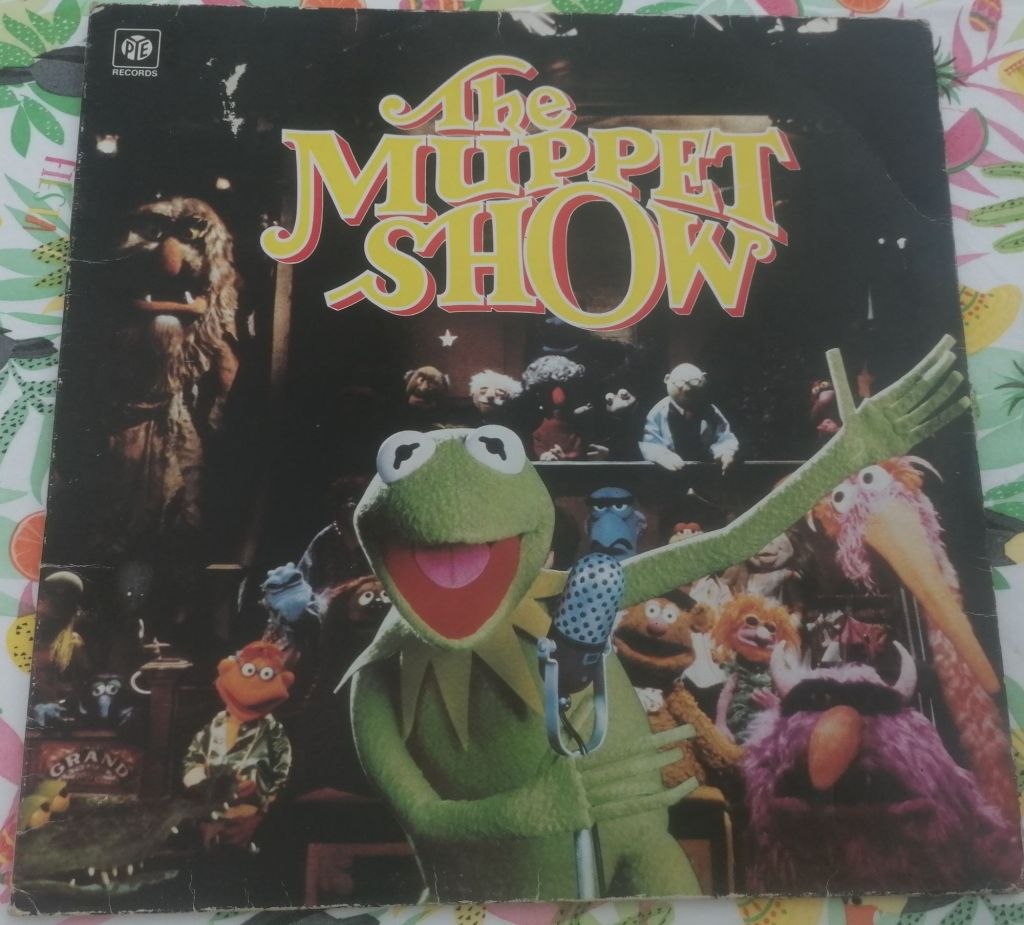
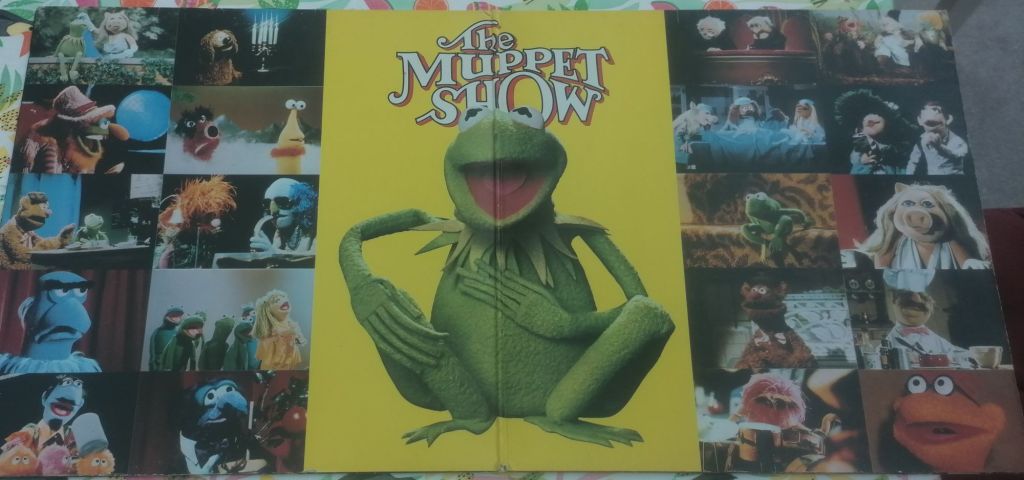
For me at the age of 12, as for so many others, children and adults alike, there was only one place to be on a Sunday evening, and that was watching The Muppet Show on ITV. Although the Muppets have been with us since the 1960s, and remain with us to this day as cultural touchstones, it is difficult to overstate the impact that the show had on audiences in 1977. For a start, the anarchic behaviour was unlike anything we’d ever seen before, and the readiness for sometimes very very famous guests to join in with this anarchy, send themselves up and play second fiddle to the Muppets was unheard of at the time. The other element that made it so original was the breadth of cultural and musical influences from classical to rock via country and jazz, and all points in between. I broadened my musical tastes because of The Muppet Show in much the same way as I had with Mike Batt’s Wombles a couple of years earlier. The Muppet Show album was a very well received Christmas present in 1977, and I played it until I was word perfect. It hasn’t been out of its sleeve for perhaps 45 years, so how will it stand the test of time? Only one way to find out!

Side One
We start off with The Muppet Show Theme as all the TV shows did and instantly I was reminded of teatime in the late 70s. It’s amazing how this simple tune took me straight back to my lounge in 1977. I could see the furniture, the fire, the rug and the TV in my mind’s eye. The sheer variety of the songs is astonishing, starting with Mississippi Mud, a song from 1927 that was originally recorded by Bing Crosby a year later, as part of Irene Taylor and The Rhythm Boys. It was a jazz influenced tune, but the Muppets turned it in a hoe down with stamping feet and a country and western feel. Next we have perhaps the most familiar song on the album, Mah Na Mah Na, a song that genuinely needs no introduction. The antics of the increasingly uncertain soloist are great on the album, and it loses very little from the lack of pictures. That, by the way, is a running joke throughout the album, perhaps best epitomised as we hear The Great Gonzo eating a rubber tyre to the music of Flight of the Bumble Bee! Mr Bassman by the ever cool Floyd, from Dr Teeth and the Electric Mayhem, the house band, accompanied by the less cool gopher, Scooter is an absolute delight. Originally a hit for Johnny Cymbal in 1963 it is given fresh life by the Muppet treatment. Musically, it is superb with tight instrumentation that never overshadows the interplay between the two singers. Also, having two singers gave it an edge over the original because Cymbal provided both voices himself, whereas here we already know both characters well which adds a backstory to the song that works perfectly. We move from that to the first of two A A Milne inspired songs, Cottleston Pie, originally a poem recited by Winnie The Pooh, then set to music. Rowlf, the piano player gives the backstory to the song and then intersperses the lyrics with various asides such as
This is where the song changes key. It’s what we call modulation. That’s G Sharp minor.
Cottleston Pie The Muppet Show Album 1977
It’s the kind of detail that is just delightful and set the Muppets apart. Who else would have thought of introducing music theory into a song for children? In a similar vein to the Rubber Tyre earlier, Marvin Suggs and his Muppaphone playing Lady of Spain, perhaps relies on having seen the original show, so for those of you who haven’t here it is.
The next two songs, Pachalafaka and Lydia the Tattooed Lady definitely appeal on different levels depending on the age of the listener. For a start, the ‘Turkish’ song Pachalafaka originally recorded by Earl Brown and Henry Mancini in 1958 has undertones of desire not immediately apparent to the average child, featuring as it does a veiled harem girl, who is enticing a tourist. The somewhat suggestive lyrics and the reveal at the end when the harem girl turns out to be a man with a moustache definitely puts a different spin on the tale! Lydia the Tattooed Lady comes from the film At the Circus and was sung by Groucho Marx. Once again, the potential double entendres which passed me by definitely don’t 45 years on. What is so clever, though, is that knowing the cheekier side of the song doesn’t make it feel any different, because the twelve year old inside of me still reacts in a relatively innocent way.
The final song on Side 1 was a very successful single in the UK, featuring Kermit’s nephew, Robin, with the absolutely lovely Halfway Down the Stairs. Sung with sensitivity and wistfulness it is two minutes of absolute magic that takes you back to your childhood in the purest and most marvellous way. It is the perfect end to a side that gives you a whistle stop tour of styles which epitomise the old style variety shows.
Side Two
This side starts off with Dr Teeth and the Electric Mayhem playing Tenderly. The playing is, of course, anything but tender especially with Animal on drums! It’s an excellent musical joke, but, until I heard the Rosemary Clooney version many years later, I thought it was meant to sound like that! Next, I’m in Love with a Big Blue Frog, is perhaps the oddest song on the entire album, in a very competitive field. I didn’t know before today that the original version was sung by Peter, Paul and Mary, more famous for Puff the Magic Dragon. It contains some marvellous lyrics and is simply very funny throughout. Tit Willow, sung by Sam the Eagle, accompanied by Rowlf on vocals and piano comes from Gilbert and Sullivan’s The Mikado, and is a forlorn attempt by the highbrow bird to introduce some culture into the proceedings. It is sung completely straight in a way that I am sure the original writers would have appreciated. Veterinarian Hospital, a soap opera parody, may be the template for my sense of humour with its corny jokes and love of word play, something that my family and friends may not thank The Muppets for! It was replaced by Pigs in Space in subsequent series, an equally funny take on science fiction shows.
There follow two absolutely superb performances that show The Muppets’ ability to add something to a song just through their choice of performers. Simon Smith and his Amazing Dancing Bear sees Scooter and Fozzie team up for a song written by Randy Newman and recorded by Alan Price, formerly of The Animals. It’s a song that tells the story of a poor performer who gains favour from the rich and famous because of his act, an interesting reflection on the difficult path to success for those of limited means. Straight afterwards, Miss Piggy gets her solo song with the Bolero influenced, ‘What Now My Love?’, a standard written by Gilbert Becaud with the original French title of ‘Et Maintenant’ and recorded by Shirley Bassey, Sonny and Cher and Elvis Presley amongst others. None of them were as threatening as the spurned Miss Piggy though! In her version, you are left in no doubt that the man who abandoned her faces retribution in no uncertain terms!
In keeping with the variety bills of the old music hall that so clearly influence the show, we have a trio of tracks starting with Fozzie Bear, the failed comedian. We then move on to a song called Hugga Wugga which is sung by an aggressive alien who is constantly interrupted by other aliens singing other songs. Every time this happens, the Hugga Wugga monster blasts the other singer, but whatever he does, he cannot stop a small yellow alien singing You Are My Sunshine. It is completely weird and something only the Muppets could get away with. The final oddity is Wayne and Wanda, a very serious pair of musical performers singing Trees. A famous version by Paul Robeson lasts for two and a half minutes, but Wayne and Wanda only manage the first two lines before the tree is cut down and falls on Wayne!
Sax and Violence is a jazzy number with Zoot the saxophonist forced into the demeaning role of playing one note at a time. At the start of the song he says ‘Forgive me Charlie Parker wherever you are!’ but the song itself simply bounces out of the speakers. It’s brilliant and, musically speaking, a real highlight on the album. Finally, Being Green is the song that, above all others, articulates the feeling of not fitting in due to a characteristic you can’t help, and then turns it around to become a song that celebrates the difference that many others will pick on. It is a plea for tolerance that rings down the ages, and it makes the perfect end to the record.
Final Thoughts
It has been just as thought and emotion provoking to return to The Muppets as it was returning to Disney and The Wombles There is something about the music of your childhood that was, in many ways, aimed at children that takes us back as if in a time machine. I was having an awful time at secondary school and The Muppet Show album was definitely a safe haven for me. Even now, it serves the purpose of making me feel less cynical about things, if only for 45 minutes or so.
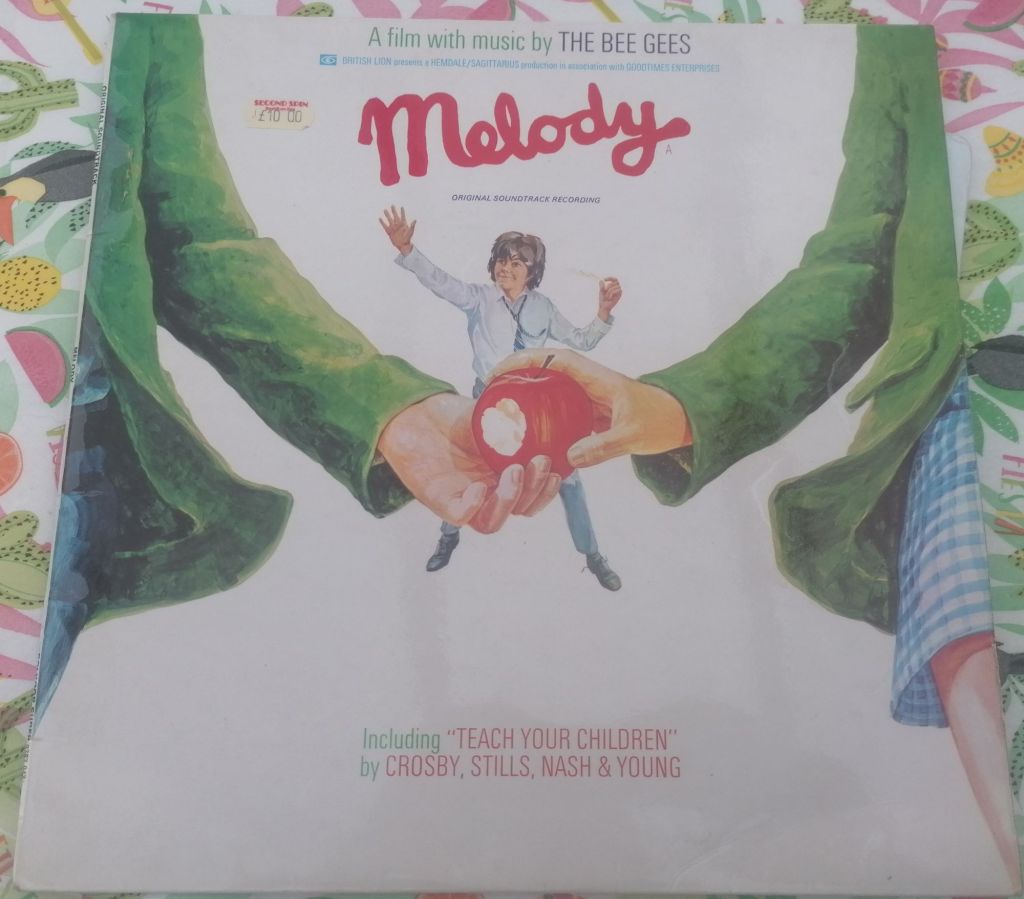
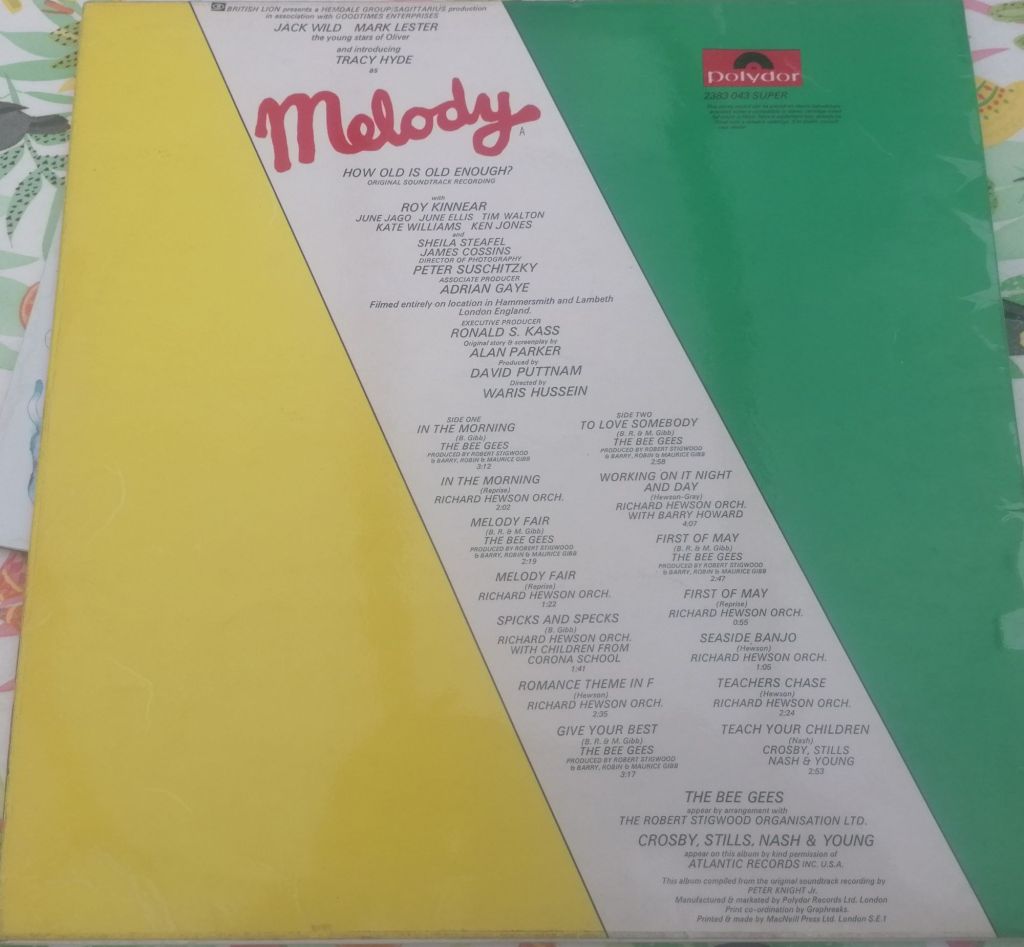
One of my favourite films from the 1970s is Melody (also known as SWALK on release in some countries). It stars Mark Lester and Jack Wild from Oliver and Tracy Hyde in her first film role. It tells the story of Daniel Latimer (Lester) who falls in love with Melody Perkins (Hyde), much to the bemusement and dismay of those around them. I got the soundtrack on CD, an import from Argentina, where the film was incredibly popular (as indeed it was in Japan), a number of years ago, but last year I hit the jackpot with a vinyl copy from a record shop in Bexhill, and as you know everything sounds better on vinyl! 😉😉 The soundtrack is absolutely central to the film, more so than usual, because the Bee Gees tracks, originally recorded in the 1960s by the group, informed the storyline and even the name of the titular character. In the film, the songs are as much a part of the charm of this underappreciated gem as the London locations of the 1970s, the authenticity of the grim school environment common at the time, and the acting of the children and adults alike.
Behind the scenes were Waris Hussain, the director, who took charge of the first Doctor Who episode and Henry VIII and his Six Wives amongst many others in a distinguished career, Alan Parker, the writer, who went on to direct Bugsy Malone, Fame, Midnight Express and Mississippi Burning amongst other films and David Puttnam, later the producer of Chariots of Fire, Midnight Express and The Mission. Whilst it was not a box office success in the UK, it gave Parker and Puttnam in particular a real start in the film industry. Wes Anderson, who loved the film as a child, said that Melody was the inspiration for Moonrise Kingdom. So, that’s the background of a film you really should catch if it is shown on TV, but now for the soundtrack.
Side 1
The album follows the film in terms of the running order, so the first song is the Beatles style In the Morning. It’s a gorgeous song that blends a lovely tune with deeply affecting lyrics, reflecting on the way that the days of childhood seem to last forever while your adult life seems to fly by. It is a reminder to make the most of your time. The second track is a rearranged instrumental version of the tune, as heard in the background of the film. Next we hear Melody Fair, the song which gave the film its name. Like the opening track it is a song about childhood and it’s simplicity and complications. It plays as we are introduced to Melody Perkins in a scene which starts the story of the film in earnest as she gets a goldfish which she frees to swim in a metal horse trough by the side of the road. It always makes me think of the restricted lives of so many people who can never really find enough room to stretch themselves. The rather lovely instrumental follows this. Spicks and Specks is a bouncy infectious piece of music that just seems to contain childhood high spirits throughout. Romance Theme in F is a classical style piano piece that makes the central relationship between Daniel and Melody timeless in its own way. It could come from a 1940s movie like Brief Encounter. The final track on Side One is Give Your Best, a song, initially with an old time music hall feel with the lyrics until the chorus which becomes unexpectedly darker. It’s a song that works beautifully within the context of the film, but which sounds a little out of place on this side of the album.
Side 2
At the time of this album, To Love Somebody was the best known of the songs on this soundtrack. It’s a powerful love song that is simply class personified. It proves that the Bee Gees were every bit as adept as Lennon and McCartney at writing a tune that makes you stop in your tracks. Working on it Night and Day is the song that the children dance to at the school disco. Sung by Barry Howard it’s OK but it doesn’t match up to the Bee Gees at their best. Now, my favourite song on the album and one of my favourite songs ever is the tear jerking First of May. Having had a girlfriend at primary school to whom I was devoted, I could really relate strongly to the lyrics. This is particularly true of the line ‘the day I kissed your cheek and you were gone’ as she left the school at the end of our second year together. It is a song for anyone who has ever been in love at any age. Three highly contrasting instrumentals follow, the First of May reprise, Seaside Banjo which plays on Daniel and Melody’s visit to the beach at Weymouth and then the knockabout comedy of Teachers Chase. Finally, the classic sound of Crosby, Stills, Nash and Young with the instantly familiar Teach Your Children. It actually makes you realise how good the Bee Gees songs for the soundtrack are, because they are not overshadowed at all. It’s an album that is gorgeous in its own right, but so much more effective if you know the film. If you want a taster then you can find eight of the tracks on the Spotify playlist linked below. Happy listening.

My Posts
I set myself the target of four posts a month in my post Looking ahead to 2024 and wrote six. Those six blogs were
Five in the space of twelve days gave the month a solid start, and I covered three of my promised blog targets, The Wonder Years Re-View, A-Z of my Singles Collection and a vinyl review, so that was really good. In terms of views, I had 221, my best January yet. Even more satisfying, though, was the fact that for the first month ever I had at least one visitor to my blog every day of the month! The top five blogs in terms of visitors were https://davidgpearce205.wordpress.com/2021/05/04/new-tricks-last-man-standing/ with 22 views
https://davidgpearce205.wordpress.com/2024/01/02/the-a-girl-trilogy-by-jessica-taylor-bearman-book-reviews/ with 20 views
https://davidgpearce205.wordpress.com/2024/01/13/relaxation/ with 17 views
https://davidgpearce205.wordpress.com/2022/12/17/isla-by-isla-st-clair-re-play/ with 12 views and
https://davidgpearce205.wordpress.com/2021/05/02/new-tricks-the-queens-speech/ with 10 views
Not viewing numbers to compete with the blogging juggernauts, but a pleasing mark of progress with two new blogs and three blogs from 2022 in that Top 5. The New Tricks phenomenon never ceases to amaze me, as they are the gift that keeps giving, racking up views every month without fail.
Looking at the countries my readers came from, I was pleased to note a couple of new locations, namely Mexico and Guatemala. I would love to know how these far flung readers find my little blog! Wherever you come from, I appreciate every view, and if you want to like or comment on any of my posts, that is always greatly appreciated.
Happy reading and I’ll see you for my February blogs!
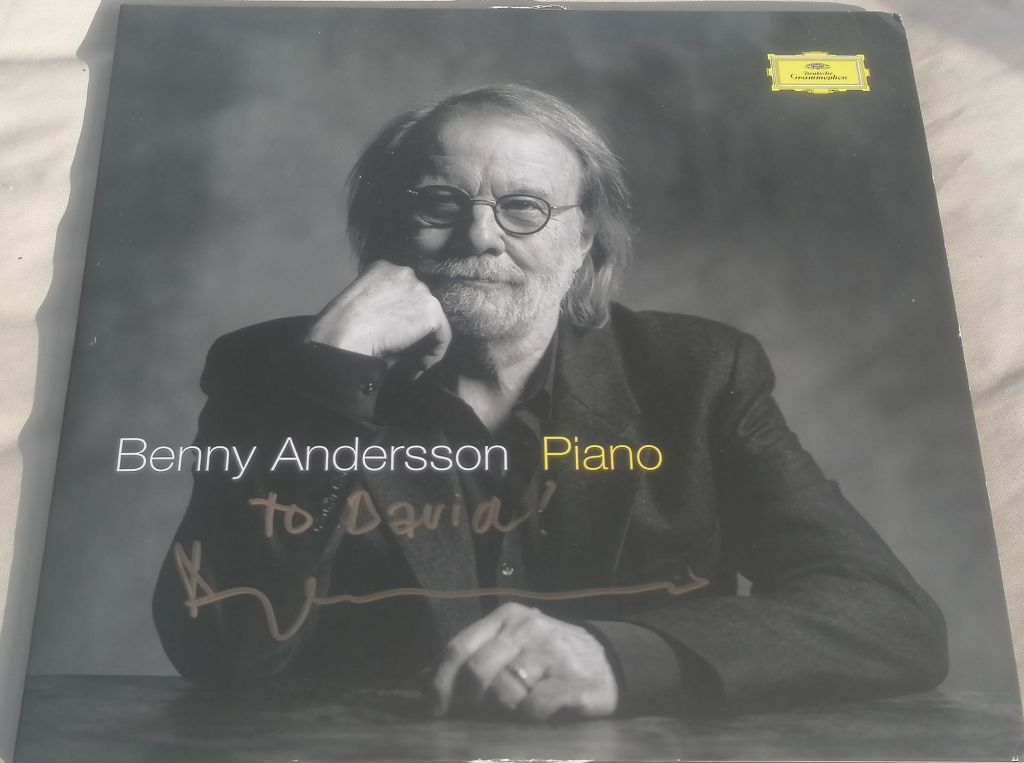
Back in 2017 Benny Andersson of ABBA revisited some of the songs from his career with the Swedish icons and beyond, taking in his work for the musical Chess, perhaps his most famous non-ABBA work, amongst others. He did this on the album Piano where, as the title suggests, he played them unaccompanied on his grand piano. You can hear his classical background in every single tune, so how do they stand on their own as pieces of music?
Disc One
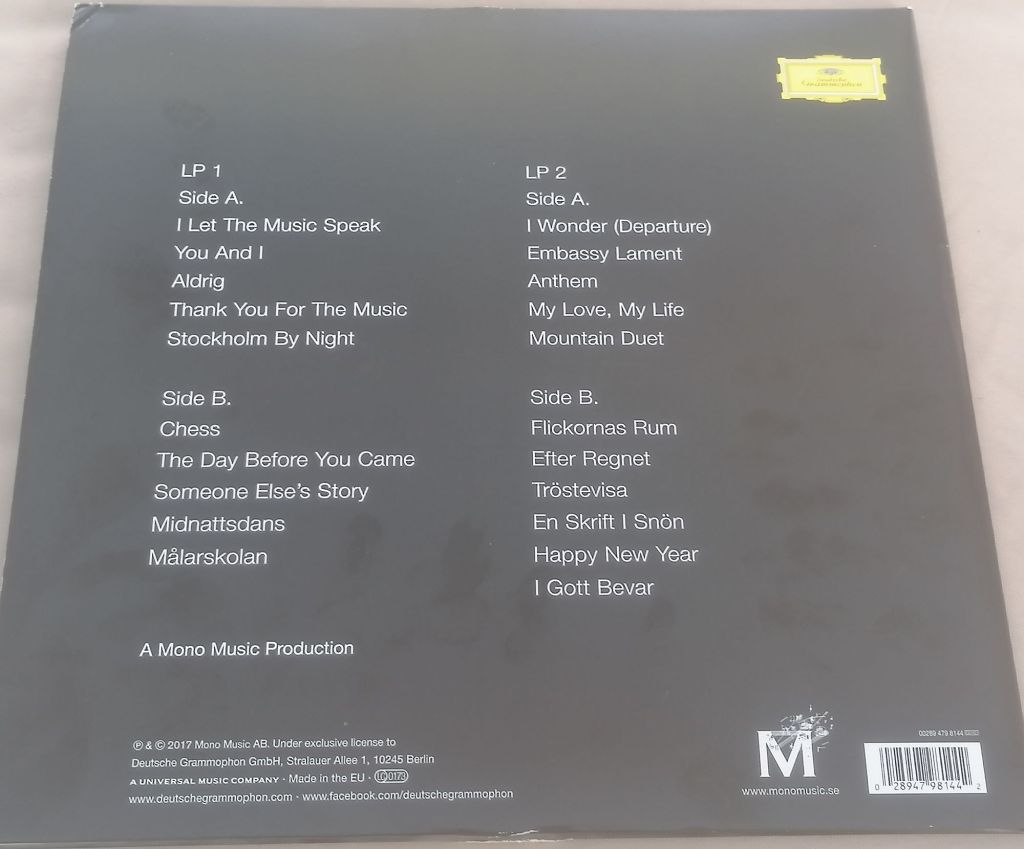
Benny starts off the album with the appropriately titled Let the Music Speak. It was originally on The Visitors in 1981, and it is reworked very cleverly. There are elements of this tune that sound familiar to someone who knows the album, but the arrangement and the playing give it depths that the original treatment was not able to do much more than hint at. There was often a classical underpinning to ABBA’s tunes, and this opener brings that out very effectively. Next, you have the Bach influenced You and I which was written for Chess. It’s the kind of tune that you can imagine being played at a classical concert and not sounding out of place. The same goes for Aldrig, a stately romantic tune from the Swedish musical Kristina fran Duvemala which was completely new to me. Thank You for The Music, on the other hand, could not be more familiar. Here, it is given a mix of Gershwin style jazz inflections and traditionally classical music from the era of the great composers. It is an absolute treat to hear it without the words, proving beyond doubt how good the musical underpinning to all of their songs were. The whole basis of ABBA’s success was the interplay between four individual artists who combined to lift their songs to the level of genius, but without the musical understanding of the writers, the singers could not have demonstrated their own abilities so effectively. The final track on Side A of the first disc is the lovely Stockholm by Night, originally written for his album, November 1989.
Side B begins with Chess, an instrumental track from the musical that plays during the chess match itself. As before, you can hear echoes of Bach, a composer who Andersson has an abiding love for. It’s not a musical I’ve ever seen or heard in its entirety. The only tunes I know were singles in the UK charts, Murray Head’s One Night in Bangkok and Barbara Dickson and Elaine Paige’s smash hit I Know Him So Well. It is a lovely tune, and if Chess is revived I would like to see it in its entirety. The Day Before You Came has long been one of my favourite ABBA songs, and the version on this LP really reaches down to the longing and sorrow that underpin the track. The feeling of a wasted life, stuck in the meaningless pursuit of money is superbly captured in the original lyrics, but the sadness inherent in that life is beautifully realised here and gives this an emotional charge that the original lacked to some extent. Someone Else’s Story is another track from Chess that makes me wonder why I have never sought it out either on vinyl, CD or Spotify. It is a gorgeous tune that stands comparison with any of the ballads from the musical genre. I was taken away by it in a way I never expected, and I can just imagine Agnetha singing it, even without knowing the lyrics, as it suits her voice so well. Midnattsdans was written for the Benny Andersson Orchestra in 2004 and represents his love for Swedish folk music. Once again, it is a track that is timeless, in the sense that you would not have been surprised if it had been written in the 1800s or early 1900s. His ear for music from any era, and his ability to reshape it, is what helped propel ABBA to greatness. Malarskolan is the final track on Disc One and it is a tune written for the November 1989 album. It has the air of a gavotte and you can feel yourself moving in time to the music almost as soon as it starts. It is two minutes and twelve seconds of musical delight.
Disc Two
The gorgeous I Wonder (Departure) is from ABBA’s 1977 album, simply called The Album, and despite not being a single is instantly recognisable. As the start of Side A of Disc Two, it couldn’t be bettered. The classical motifs are very much in evidence with a touch of Beethoven most apparent. It is gorgeous. Embassy Lament from Chess is a short but effective interlude, just under one and a half minutes long, but packing in a huge amount of musical virtuosity. Anthem, once again from Chess, is, paradoxically, played very subtly and effectively in a very non-anthemic style. My Love, My Life is from the 1976 ABBA album, Arrival, and epitomises how much Benny brings out of the album tracks that would have passed all but the most committed fans by. It seems only right to reflect on what a gifted classical pianist he is, especially at this point because he turns a piece of pop music into a composition to sit alongside any of the most renowned pieces within the classical repertoire. We were used to hearing his genius put to good use on synthesisers, but the purity of his grand piano shows what a great musician he really is. It seems strange to say that when ABBA’s songs are so popular, but it is incredibly difficult to break down the barriers between pop and classical and Benny Andersson is one of the few who can do it. The final track on Side One of Disc Two is Mountain Duet, the last selection from Chess. It is another song that recognisably belongs in the musical theatre genre given its construction, but which is given a very different feel when played on the grand piano.
Side B of Disc Two, with one exception, showcases Benny’s Swedish output with Flickornas Rum, the first track, coming from 2011 and originally contained on the Benny Andersson Orchestra’s album O Klang Och Jubeltid. It is a lovely light track that takes the listener away on a gentle wave of music. The second track Efter Regnet from his first post ABBA solo album Klinga Mina Klockor is one of the most effective of the unfamiliar tunes showcased here. It is quite simply beautiful and gives you a feeling of happiness. Trostevisa from the November 1989 album is much requested at Swedish funerals apparently, and I can quite understand that, given its gentle evocation of melancholy and deep sadness. It is a counterpoint to Efter Regnet that shows his ability to affect the emotions in a way few other modern composers could hope to do. En Skrift I Snon was written as part of an inauguration for an organ in Pitea. Sweden. Naturally, it doesn’t sound like a piece of organ music here, played as it is on the grand piano, but it has a lightness of touch that is quite enchanting. The final ABBA song on this collection is next, and it’s an absolute treat. Happy New Year is one of their best songs, in my opinion, but it came right at the end of their career when their star was on the wane. I am sure that if it had been recorded two or three years earlier, at the height of their success, it would have become a festive standard. It still deserves to be by the way! To listen to it on piano is to have your breath taken away by its reflective, regretful beauty and to really understand what a masterpiece of writing it is. Of all the ABBA tracks on this album, this is the one that just captures your heart and refuses to let it go. The final track, I Gott Bevar, comes from his musical Kristina Fran Duvemala and it brings the album to a peaceful, reflective close.
Final Thoughts
I got this album in 2017 and, although I played it a couple of times, I never really sat down properly and listened to it. Having had the opportunity to do so now, I can only say that I waited far too long before giving it another chance. It demonstrates the sheer brilliance of Benny Andersson the composer and Benny Andersson the pianist. To some extent the first always overshadowed the second. This album gives us the chance to appreciate both in perfect harmony. Oh, incidentally, if you are wondering about the inscription on the front, yes it is personally signed by Benny from a competition I won when the album first came out!
 David Pearce - Popular Culture and Personal Passions