
Christmas Magazines Through The Years Picture Post 1939
What Was 1939 Like?
On September 3, of course, Prime Minister Neville Chamberlain announced that a state of war existed between the United Kingdom and Germany. Prior to this, the whole country was switched to a war footing in preparation with the Women’s Auxilliary Air Force and the Women’s Land Army set up and reservists and Civil Defence Workers being called up. These actions were completed by the end of August. It is an event reflected in the pages of the magazine as I will investigate later.
However, World War II wasn’t the only thing that happened during the year. On January 2, 118,557 fans packed into Ibrox to watch Rangers v Celtic in the Old Firm Derby. It’s still the biggest crowd to turn up to a game in Great Britain and, with safety measures being what they are and terraces being a thing of the past, it will never be surpassed. The Sutton Hoo Viking treasure was excavated in the summer of 1939 and donated to the British Museum. Also, Greggs Bakery was founded in Tyneside in this year, and thus the future of sausage rolls and decent priced coffee was secured!
Average weekly wages in 1939 included 38 shillings a week for farmhands who were expected to put in a 50 hour week for 9 months a year, going down to 48 hours during Winter. Members of the Women’s Land Army had their wages set 10 shillings a week below that. Those working in the clerical professions would typically earn between 40 to 70 shillings per week. Shop assistants were low paid by the standards of the time with around 30 shillings a week being their average. Domestic servants would typically receive 15 shillings a week if they were live in and double that if they were not. Miners would typically receive nearer 60 shillings a week to reflect, at least to some extent the danger they faced every day.
Music that was recorded or released in 1939 included Run, Rabbit Run, There’ll Always Be An England, Wish Me Luck as You Wave Me Goodbye and We’ll Meet Again. All four songs became wartime standards that are still familiar to so many people today. One that has been forgotten is I’m Sending a Letter to Santa Claus by Vera Lynn which neatly brings us to the theme underlying this magazine.
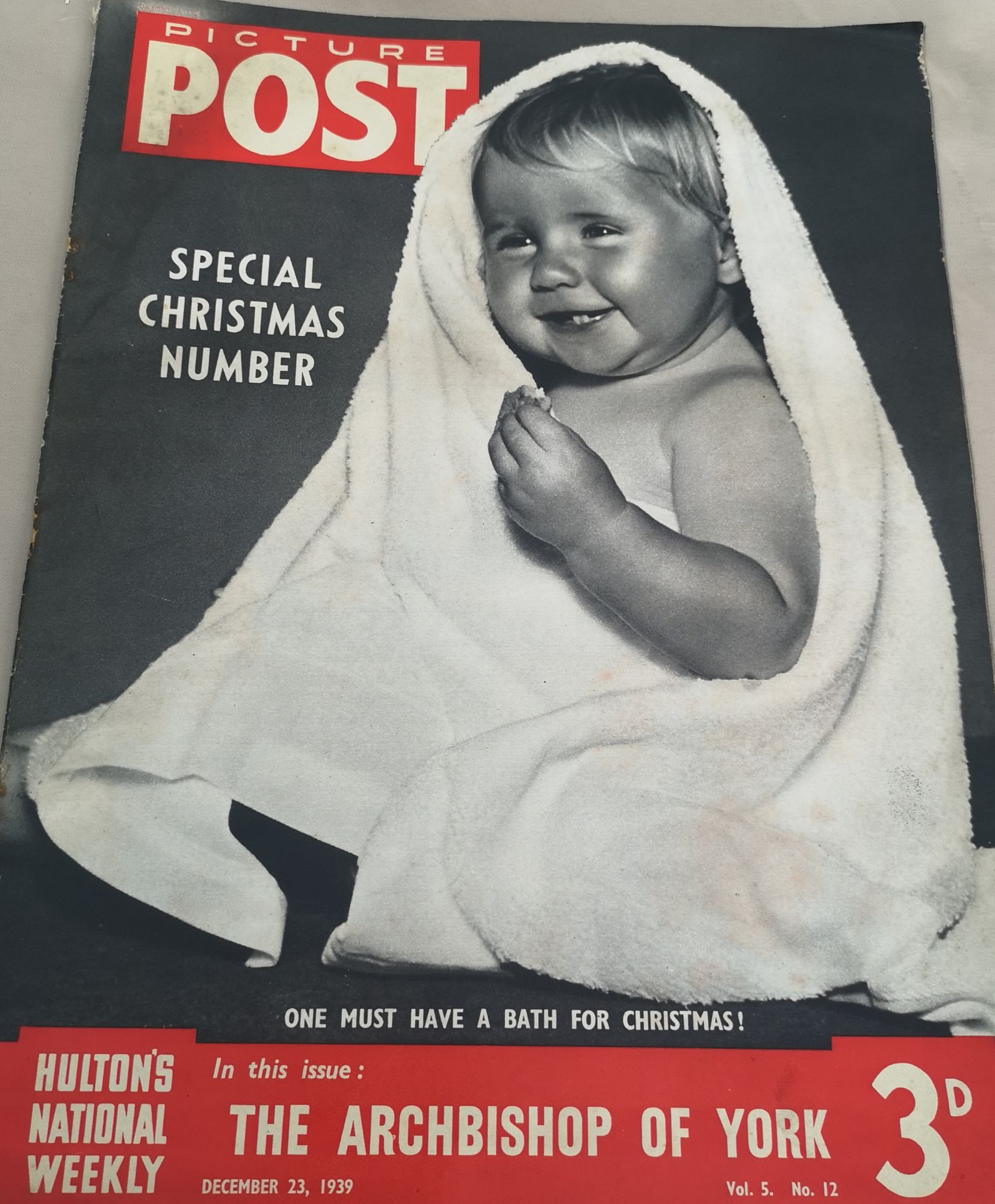
Picture Post 1939
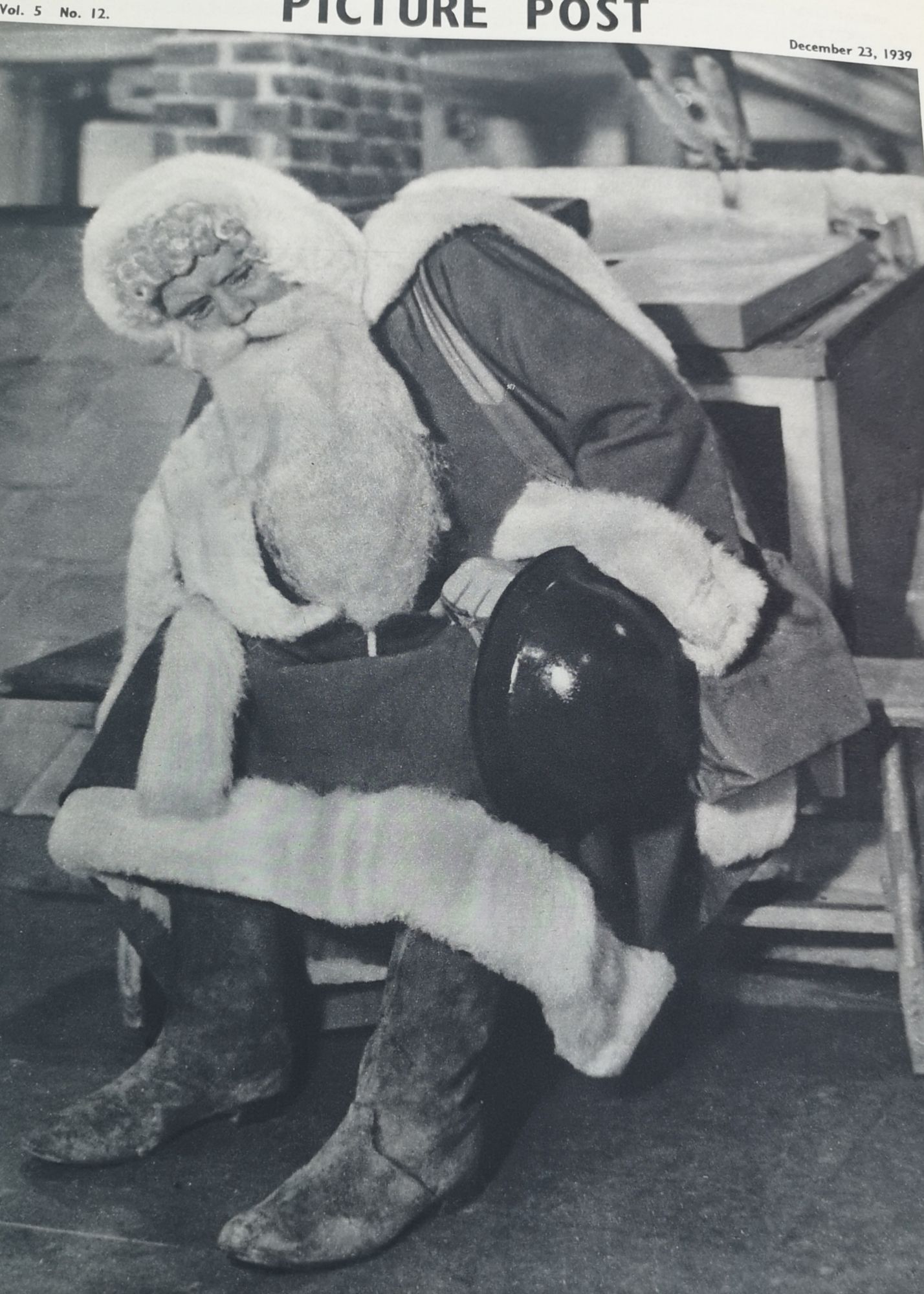
When I saw this on eBay I was really pleased because I was fascinated how the first Christmas of World War II would be treated. It turned out to be far more nuanced in its approach than I was expecting. The imagery of the front cover is, I think, the magazine saying, ‘This is what we are fighting for’. The ideas of innocence and future potential are a message to the readers that the war will be over and we need to protect the future of babies like this. Then, on Page 13 you have the picture of Father Christmas holding a tin helmet. Although war has begun, the festive season must carry on, as it did in World War I. Obviously, no one knew how long the war would continue for, and no one yet foresaw the Blitz which would bring civilians into the new front line. However, that spirit of trying to be as normal as possible shines through in that picture. We then see the Life of Jesus Christ recounted using bible verses and pictures from artists and photographers throughout the centuries. In a far more devout time, this was another way of reminding the readers that there was a higher power that would help and protect the country in its time of trouble.
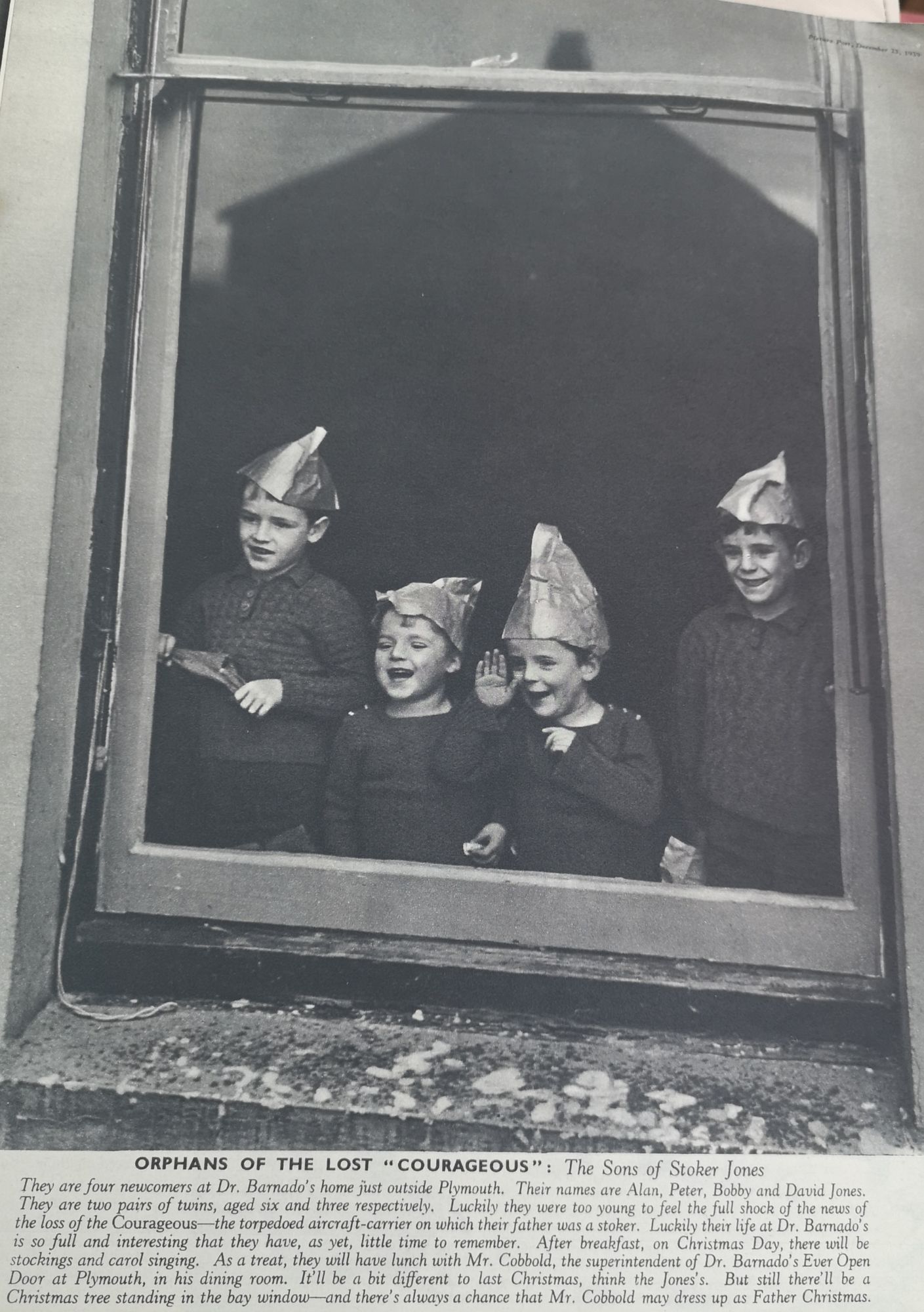
The stories of children in It’s Strange, This Christmas are sobering and upsetting. The picture in the middle of four boys is particularly affecting. They are the four sons of Stoker Jones who was killed when HMS Courageous was torpedoed, and we see them looking through the window of the Barnado’s Orphanage in Plymouth. Maybe the Mother is also dead, maybe she was unable to look after them, but the four Jones boys would be joined by millions of others in the next six years as the war ran its course. At the time, perhaps, they were representative of the way that lives were already being torn apart by Hitler’s evil regime and would have strengthened the desire of those on the frontline and on the Home Front to defeat the enemy at all costs. It is presented in that understated matter of fact way that films of the era tend to have, and is far more impactful as a result. Other stories reflect the Children of men abroad fighting for their country, men who had been injured and men who had lost their jobs as a result of the war. I must confess that I had never considered that people lost their jobs at a time of mass mobilisation.
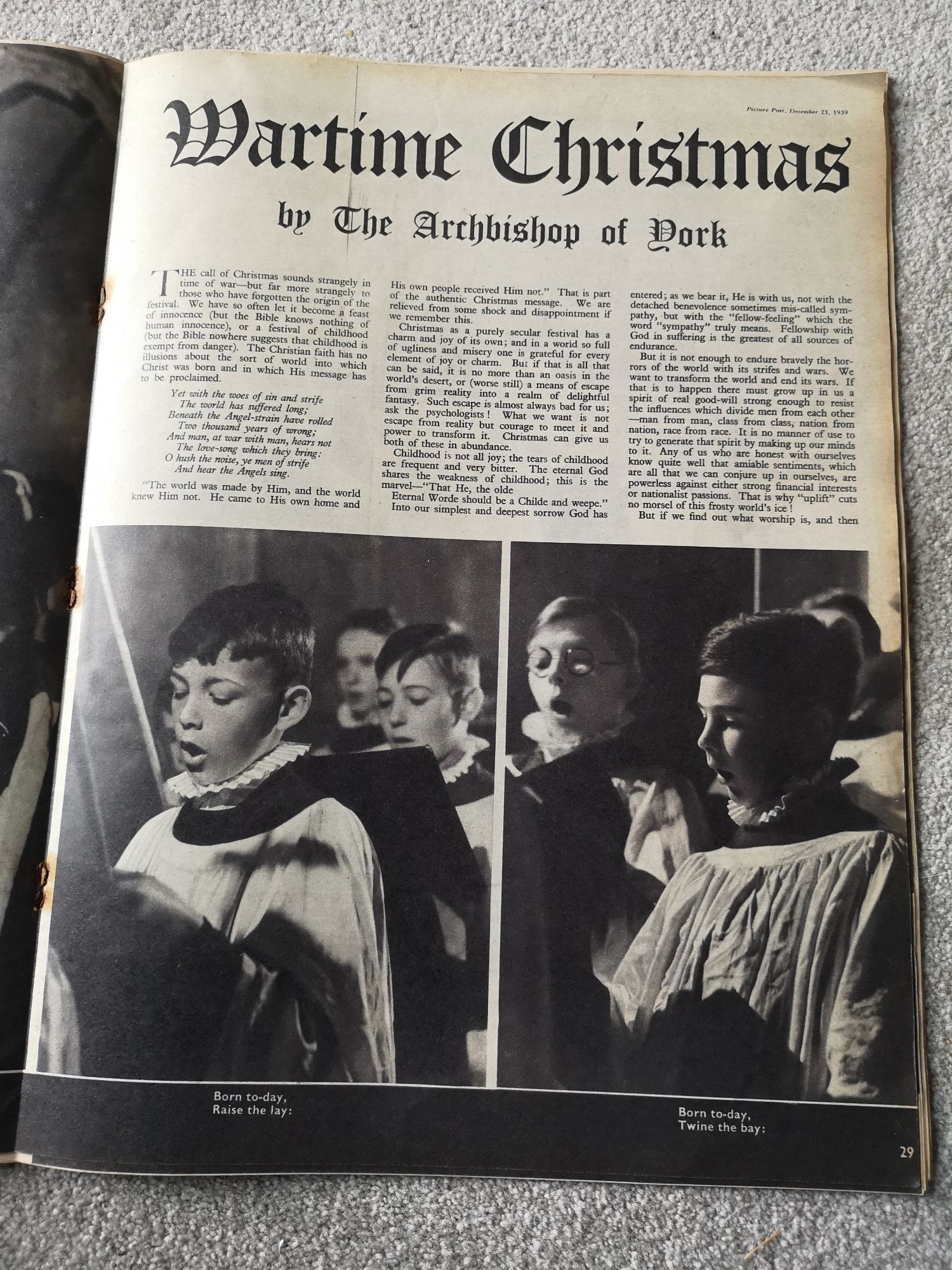
The main reflection in the magazine comes from the Archbishop of York, William Temple who signs himself William Ebor as tradition dictated – Ebor being short for Eboracum, the Roman name for York. It is, once again, very nuanced in its argument, even if, as you would expect, he invokes the shared religion of so many. He refers to the celebration of Christmas, observing that, ‘Christmas as a purely secular festival has a charm and joy of its own’. When you compare that to the language of today, it is very inclusive and tolerant, perhaps because the place of religion is so secure. Later on he treads into even more unexpected territory telling the readers that Christians in every part of the world were part of the same church and who were united by Christmas. He specifically mentioned German, Italian and Japanese Christians, the first two who had already fought against the UK, with the third joining them as a result of the treaty of 1940 that set up the Axis Powers. They were brave words in that context, and it would be interesting to know if they were received with open minds by most of the readership. That readership would have been at the sharp end of the war, the 3d price positioning it as a mass market magazine.
Familiar Brands
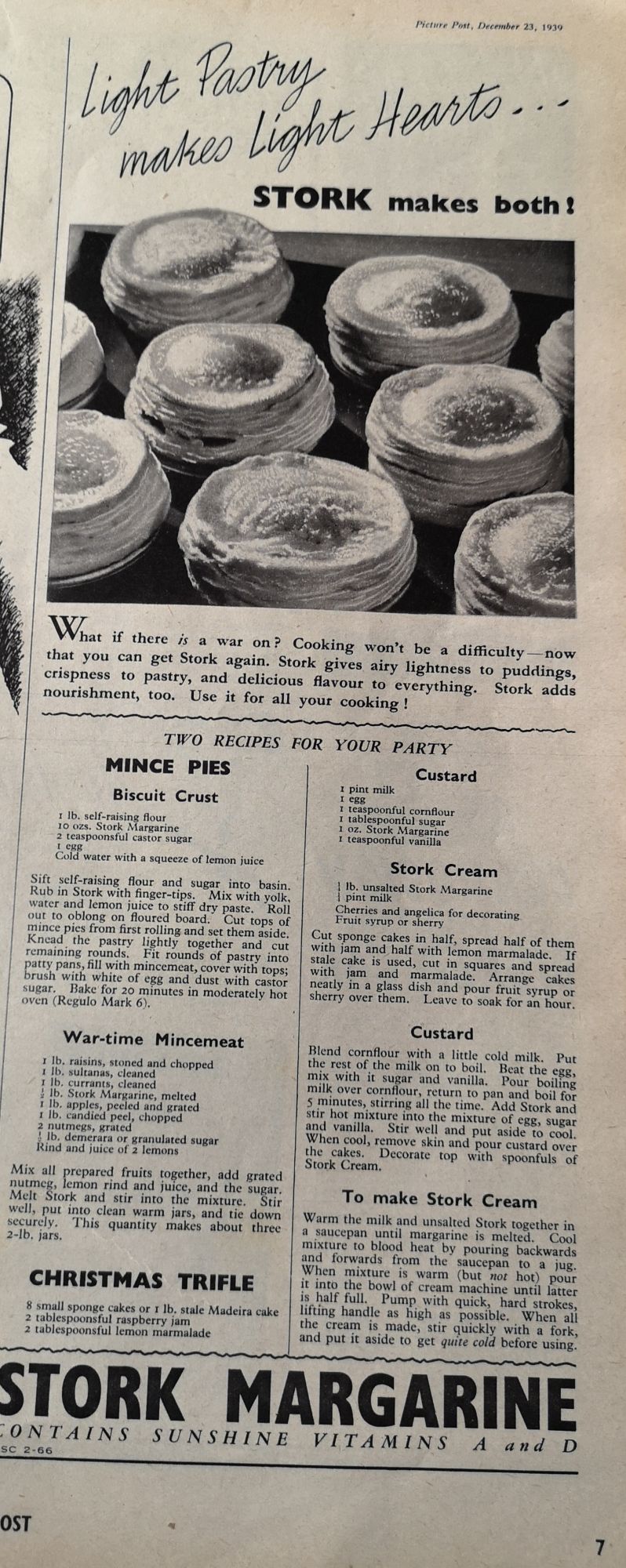
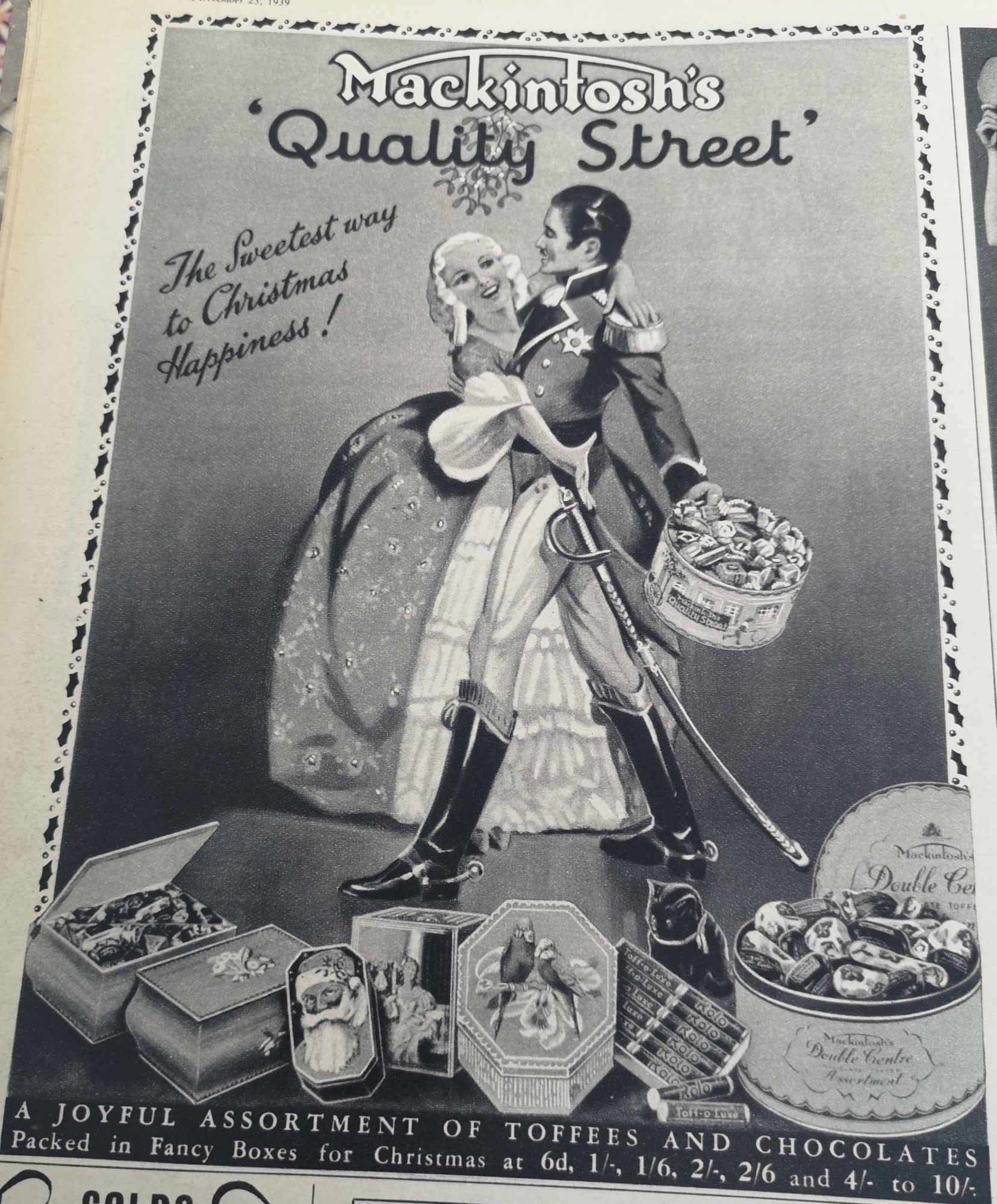
Below you will see four instantly recognisable products being advertised. Stork, Nescafe, Aero and Quality Street are still found in our homes, the latter especially at Christmas time. Stork provides recipes for Mince Pies and Christmas Trifle, Nescafe positions itself as a great tasting instant coffee, Aero as the chocolate that is good for your teeth (!) and Quality Street as the perfect sweet for Christmas. With the exception of Aero, the brand positioning hasn’t changed. The products themselves have of course changed, arguably for the worse in the case of Aero and Quality Street, but the fact that they are still around indicates that despite our complaints they are clearly doing something right.

Final Reflections
The Picture Post of 1939 was as fascinating and evocative as I hoped it would be, but the tone of the articles and the way that British life was portrayed was quite surprising. It wasn’t jingoistic – perhaps that tone came later in the war – and it didn’t seek to use emotion to strengthen its case as I might have expected. However, the restraint and the reportage style make this far more effective than any over the top journalism could ever do. There is a clear lesson for today’s journalists and writers both online and offline.
Discover more from David Pearce - Popular Culture and Personal Passions
Subscribe to get the latest posts sent to your email.
 David Pearce - Popular Culture and Personal Passions
Really enjoyable read and made even more so by the fact you can listen to the music of the day alongide. Quite the time capsule.
LikeLike