
My April and May Reads
A fairly light two months in terms of number of books read – only nine – but that was due to two factors. Firstly, a deliberate decision to slow down rather than gallop through books as I tend to. Secondly, I had a full two weeks off at Easter for the first time in years and when I am not commuting I tend not to read. That’s definitely something I need to sort out when I finish full time work or my June and July reads could be a very short article indeed! Anyway, on with a typically eclectic selection of books.
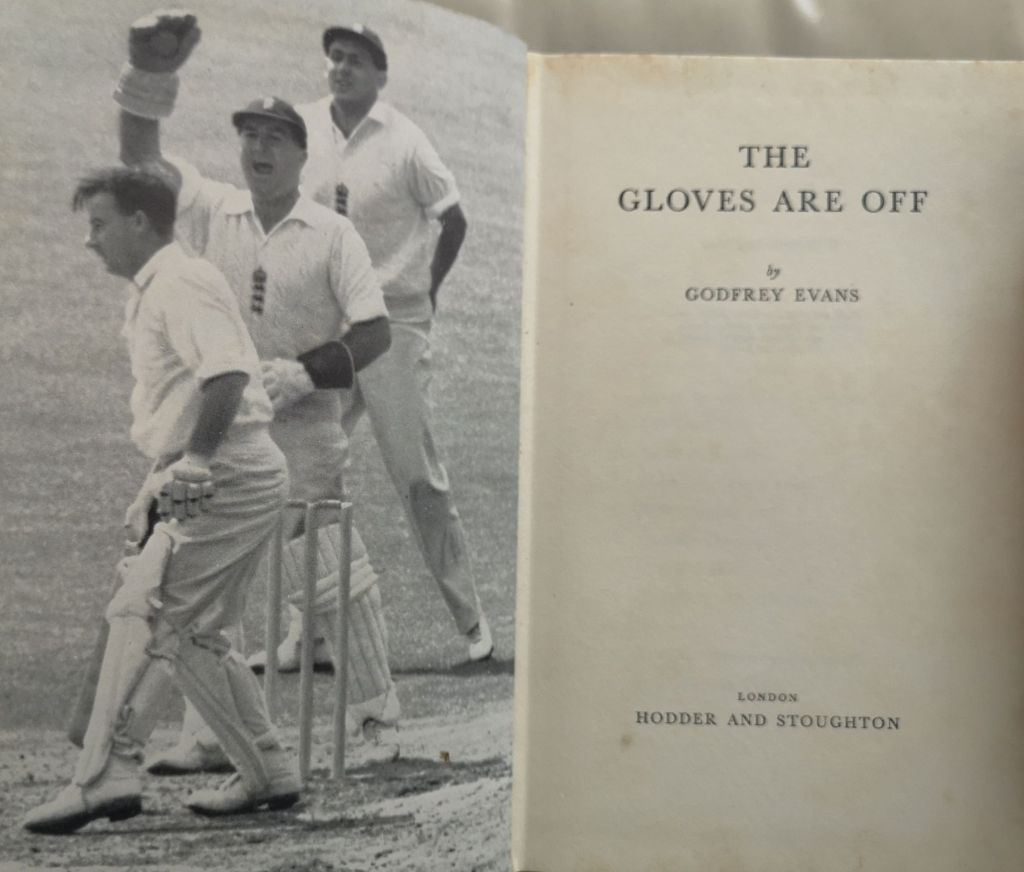
Godfrey Evans – The Gloves are Off
For any cricket lover with an interest in the history of the game, the name Godfrey Evans is instantly familiar. A wicketkeeper batsman he took the role and started to develop it into a central part of the side. In a sense he was probably the first of the modern keepers, highly influential in the development of the discipline and a larger than life celebrity who was known outside the game. His autobiography is a gem of sports writing and balanced in the way he sees his career. Where he was unfortunate, he makes that case and where he was culpable, he takes responsibility for his own failings. Engaging, thought provoking and fascinating in equal measure, Godfrey Evans brings to life a vanished world both socially and in sporting terms, but does so in a way that is still very modern in terms of the writing. If you love cricket, take a look in the second hand bookshops like I did and if you find it, you definitely won’t be disappointed.
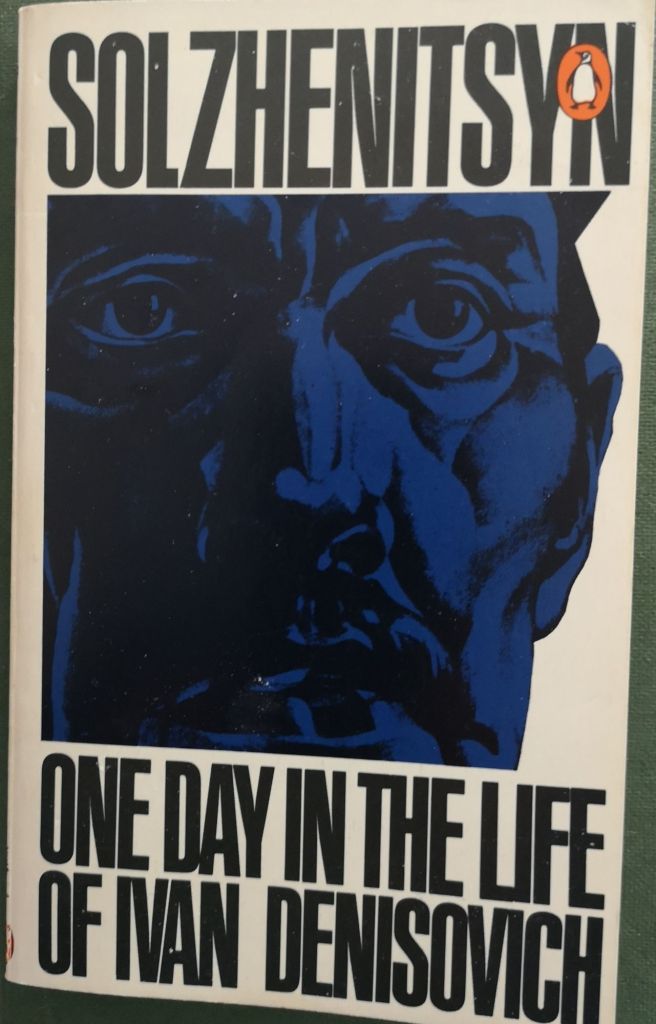
Alexander Solzhenitsyn – One Day in the Life of Ivan Denisovich
I have related, at some length, my thoughts on my secondary school, mainly that it was probably the worst time of my life. However, there were some high points to the experience, specifically the way in which I was introduced to books and plays which became real favourites of mine. I studied Macbeth and Great Expectations at O Level and still love both, The History Man at A Level, the finest university novel of all for me, and then this book in General English. In the far off days where education was about opening students’ minds, not just coaching them for exams as it is nowadays, General English was a 2 lesson a week course at Sixth Form level where teachers would get the students to read books and plays that they thought were worth exploring. One Day in the Life of Ivan Denisovich was my favourite book from these lessons. The teacher, Mr Worsnop, was also my history teacher at various points during school, so this book was definitely a dual purpose introduction to both historical context and contemporary Soviet writing. Over 40 years later, I found this book and immediately wanted to read it again, so strong was the impression it made on me. It is the story of a political prisoner in a Siberian Gulag, and as such is a reflection of Solzhenitsyn’s own experience. The aspect of the book that comes across most clearly is the fact that each day is a series of little victories and little defeats. Prisoners learnt to relish the former and minimise the latter, and as a lesson for life it is applicable outside of extreme situations. The writing is immediate, claustrophobic and intense, but it is also reflective, positive and inspiring. Rereading this novel was an absolute pleasure and it has definitely made me want to explore some of Solzhenitsyn’s other works. If you are interested in history, politics or the way that the human spirit survives against the odds I think you’ll really enjoy this book.
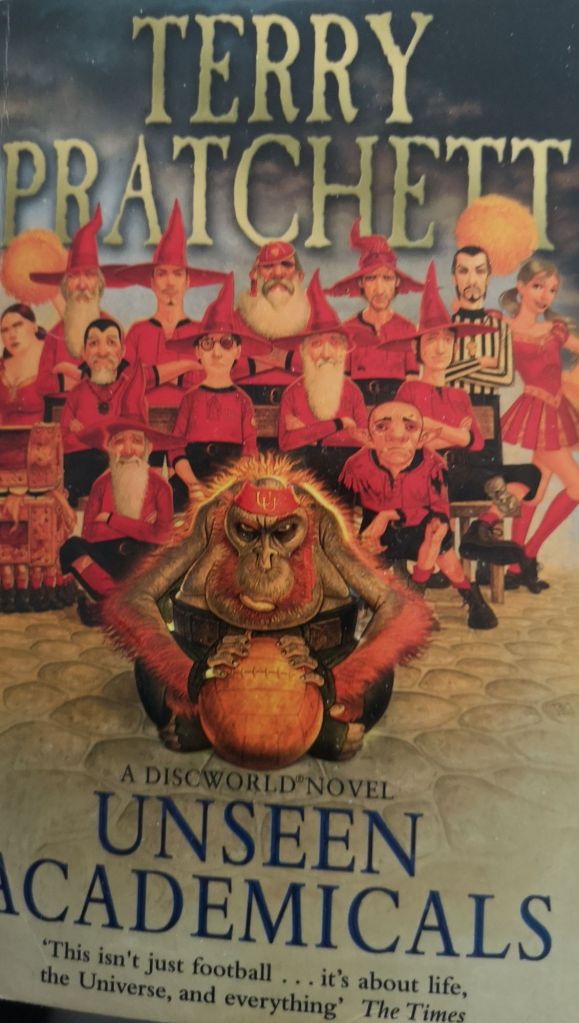
Terry Pratchett – Unseen Academicals
I love the Discworld novels and have read the majority of them over the years. This one is a later entry to the series and is one I have been meaning to read for quite a while. The story, as the cover indicates, revolves around the game of football, though it does have a typical Discworld twist as it has become almost a religion with its own mythology. The Unseen University is full of wizards who combine the power of magic with the complete inability of certain academics to show any hint of common sense! The bulk of the common sense comes from below stairs and the sub plots include dwarf fashion, the way that minorities are treated and the way that servants are treated. As with all Discworld novels there is a lightness of touch throughout that makes the satire and the philosophy accessible and entertaining. Sir Terry was one of the greatest novelists of the last 100 years and I think it’s only the genre of the books that has stopped him from being acknowledged alongside Dickens and Christie in the highest ranks of writers.
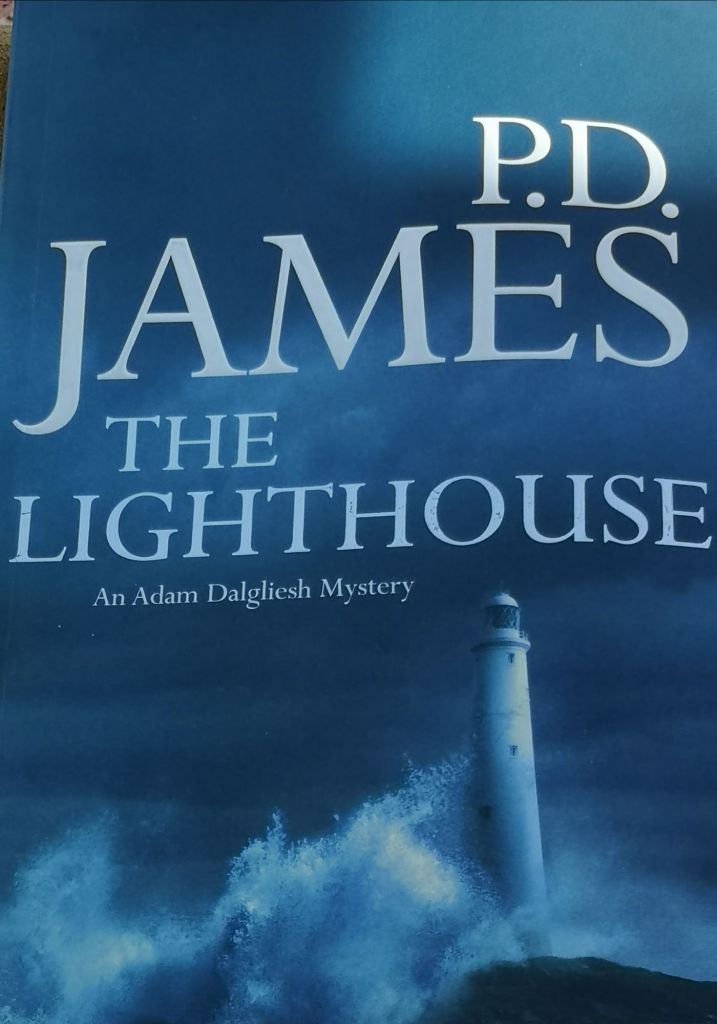
P. D. James – The Lighthouse
This is the penultimate Adam Dalgleish mystery and it is undoubtedly the most reflective and downbeat novel of the series. The police work revolves around the death of an author on an island that is meant to be a haven for those in the public eye. There are no shortage of motives flying around, and at points you wonder if this might stray into Murder on the Orient Express territory. In this book, however, it is the personal that takes precedence over the professional as all three members of Dalgleish’s team find themselves at crossroads in their lives and have to decide which way to go. If this is the first Dalgleish novel you read you would find yourself hard pushed to care, but if you have got to know the team in the other books it makes this a refreshingly deep read.
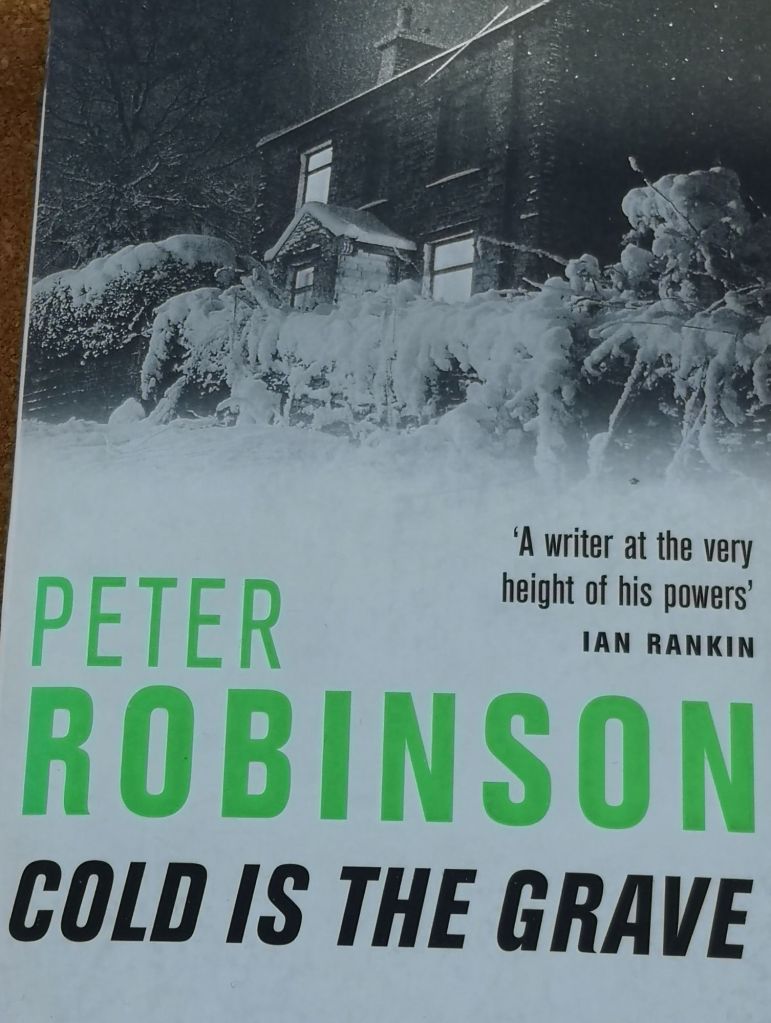
Peter Robinson – Cold is the Grave
This is the eleventh in a series of twenty eight novels about DCI Banks. It is a series that was suggested by a contributor to my #CastawayCollection challenge on Twitter where I asked people to choose 10 books, 10 films or TV series and 10 albums to take to a desert island. I have now read three of them and thoroughly enjoyed them. It is hard to get noticed in the ongoing detective series genre and DCI Banks is definitely something of an overlooked figure by many, but his mix of faults, failings and detective skills definitely makes him well worth checking out. In this book, Chief Constable Riddle, his regular antagonist, asks Banks to find his missing daughter. Initially reluctant to accede to this off the record request, he decides to assist the Chief Constable but the case, initially simple and apparently finished with, explodes back into Banks’ life in ways that he could never have anticipated.
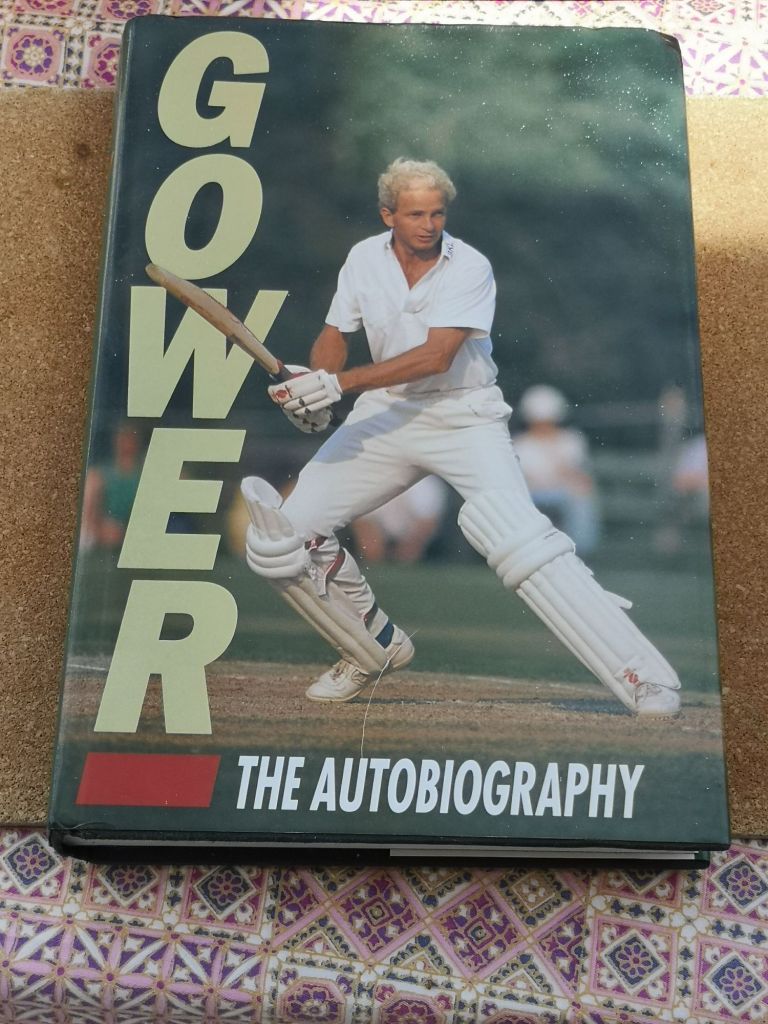
David Gower – Gower The Autobiography
You would expect anything written by David Gower to be entertaining and classy, just like his batting, and indeed it is. What you might not expect is the way in which he settles scores and makes it clear that he has been failed by captains, like Graham Gooch who turned from great friend to implacable opponent even though they were in the same team, and coaches who did not understand him or, in the case of Micky Stewart, even try to. What’s so strange about that, you may ask? Well, this autobiography was written while he was still playing and while he harboured hopes of getting back into the England team! David Gower was always his own man and, as this autobiography makes clear, far stronger and far less insouciant than his batting would have you believe. He talks openly and honestly about the highs and the lows and, by the end of the book, he has shown himself to be a much more complex character than his public persona ever hinted at. It reminded me how much I loved his playing style and how much I idolised him as a player. I definitely need to go back to YouTube and watch him in action!
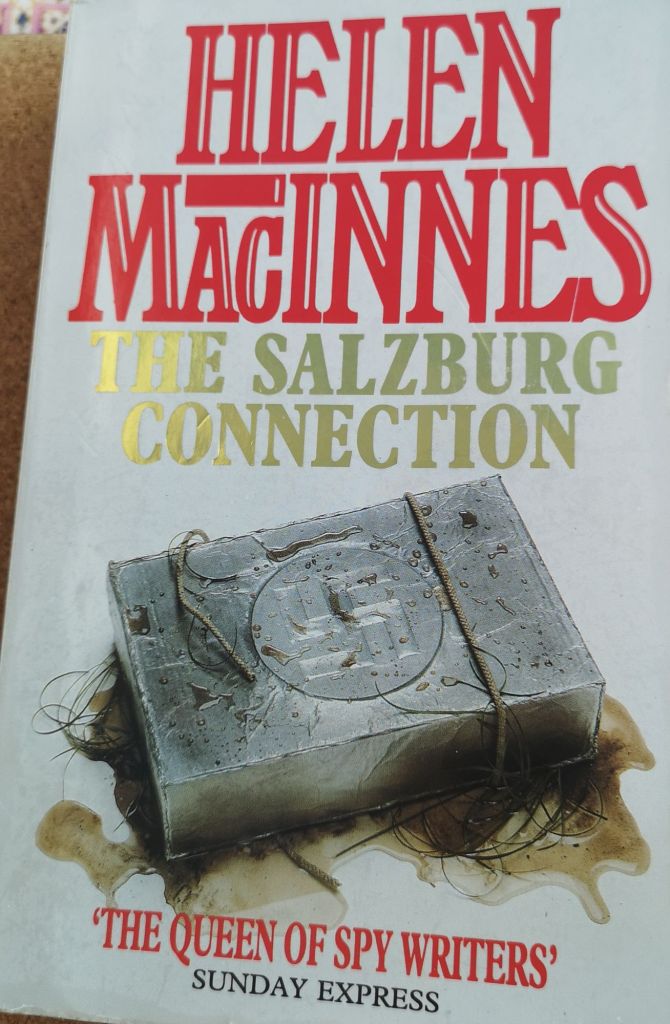
Helen MacInnes – The Salzburg Connection
This is definitely not the type of book I would ever choose to read normally. The sprawling espionage novel usually leaves me cold, and there were times when this novel from the 1960s had that effect, but by the end I have to admit to being gripped even if I couldn’t remember how each of the characters fitted in to the story at a number of times throughout the book. It is always good to test yourself with something different, and I really did appreciate the quality of the writing, but I think it’s a one and done for me in terms of that particular genre. My wife, on the other hand, was always a big fan of books in the espionage genre and she says it’s one of the best so if you are tempted to discover a writer who was terrifically successful in the 60s and 70s this is a really good start.
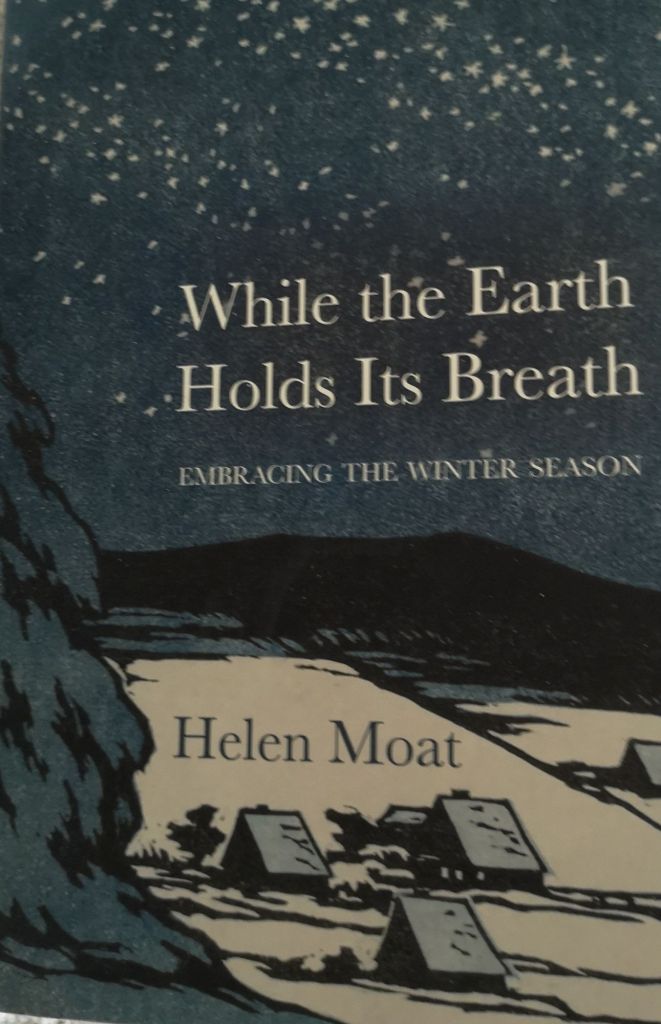
Helen Moat – While the Earth Holds its Breath
The subtitle is ‘Embracing the Winter Season’ and it chronicles the author’s attempts to tackle her dislike of the coldest and darkest time of the year. For Helen Moat, as for many others, that dislike had become Seasonal Affective Disorder or SAD. It is not something I could relate to, given that Winter is a time of the year I really love, but the book seemed to be very much up my street with her travels to Lapland and Japan, two places I have visited during the Winter season and which I really enjoyed. Moat is such a gifted writer that she immediately drew me in to a condition and thought process that I had never understood and explained it with real clarity. Ever chapter starts with a quote that sums up the content in some way. Some of them were profound, some beautiful and all were thought provoking. The journey to a form of acceptance is not a smooth one. There are times when the old experience of SAD rears its head, but when that happens Moat is reflective, honest and fascinating. It is a beautiful book that reminded me why Winter is my favourite season, and why I should start appreciating some of the little things even more.
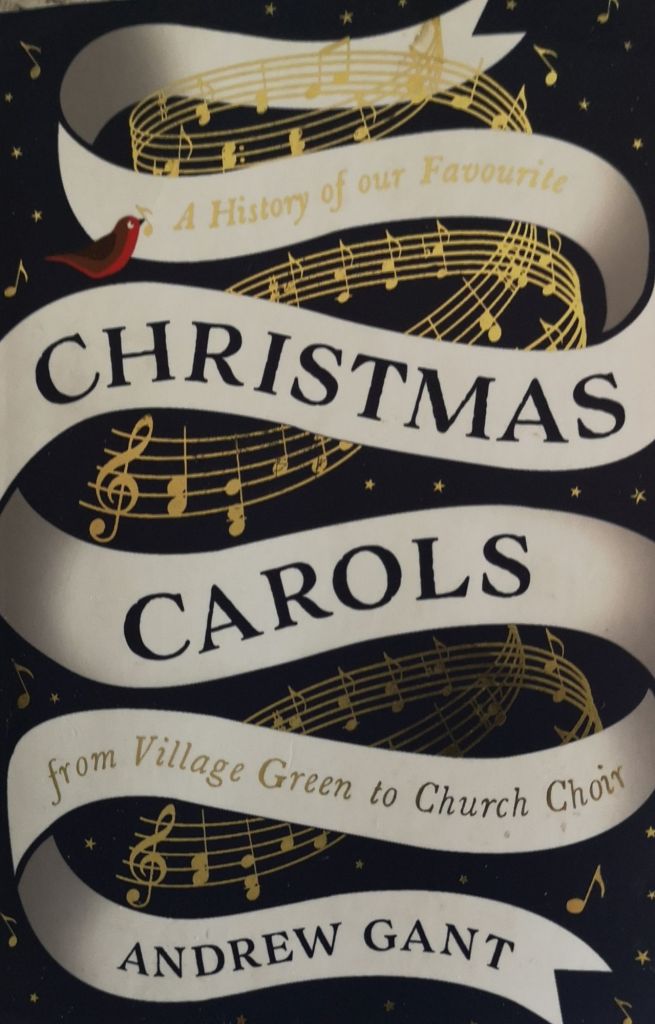
Andrew Gant – Christmas Carols
Yes, I know! What on earth am I doing reading this in May? Perhaps some of my fellow commuters may have been wondering that when I took the book out of my rucksack every morning and evening! However, for me the love I have for Christmas means that I can read books or watch films to do with the festival at pretty much any time of the year. To read the stories behind the carols was absolutely fascinating, especially ones which I love and which are as familiar to me as anything else in my life. It turns out that they have backgrounds that you couldn’t even imagine. My favourite fact concerned While Shepherds Watched Their Flocks which was sung to the tune Cranford, better known as ‘On Ilkley Moor B’ah Tat’! Andrew Gant is an incredibly engaging writer who brings songs and their history to life in a way I haven’t seen before. There are words and music for each carol at the end and I was singing them in my head with a sense of how important they have been in my life over so many years. Whatever time of the year you read this you will appreciate both the scholarship and the quiet humour. It’s a must read for music lovers, social historians and popular culture devotees – and of course Christmas lovers! I am all four so it was perfect!
Discover more from David Pearce - Popular Culture and Personal Passions
Subscribe to get the latest posts sent to your email.
 David Pearce - Popular Culture and Personal Passions