
Re-Play Benny Andersson Piano
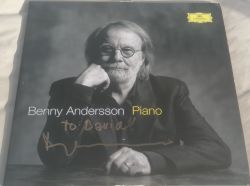
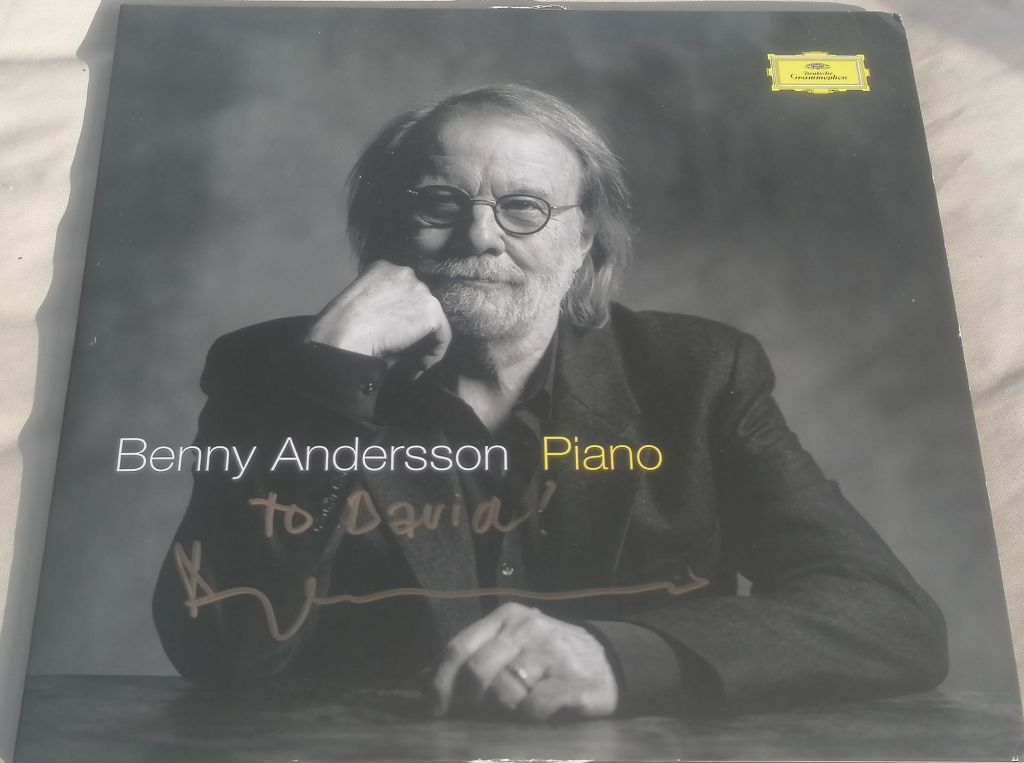
Back in 2017 Benny Andersson of ABBA revisited some of the songs from his career with the Swedish icons and beyond, taking in his work for the musical Chess, perhaps his most famous non-ABBA work, amongst others. He did this on the album Piano where, as the title suggests, he played them unaccompanied on his grand piano. You can hear his classical background in every single tune, so how do they stand on their own as pieces of music?
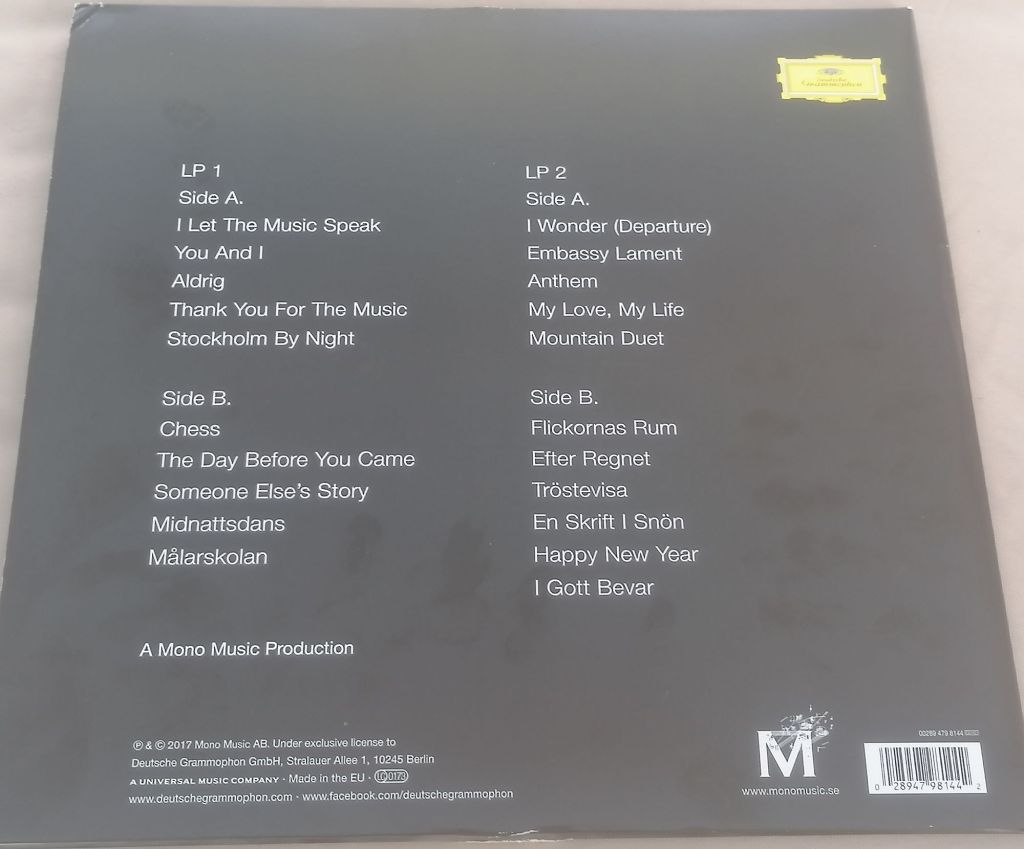
Disc One
Benny starts off the album with the appropriately titled Let the Music Speak. It was originally on The Visitors in 1981, and it is reworked very cleverly. There are elements of this tune that sound familiar to someone who knows the album, but the arrangement and the playing give it depths that the original treatment was not able to do much more than hint at. There was often a classical underpinning to ABBA’s tunes, and this opener brings that out very effectively. Next, you have the Bach influenced You and I which was written for Chess. It’s the kind of tune that you can imagine being played at a classical concert and not sounding out of place. The same goes for Aldrig, a stately romantic tune from the Swedish musical Kristina fran Duvemala which was completely new to me. Thank You for The Music, on the other hand, could not be more familiar. Here, it is given a mix of Gershwin style jazz inflections and traditionally classical music from the era of the great composers. It is an absolute treat to hear it without the words, proving beyond doubt how good the musical underpinning to all of their songs were. The whole basis of ABBA’s success was the interplay between four individual artists who combined to lift their songs to the level of genius, but without the musical understanding of the writers, the singers could not have demonstrated their own abilities so effectively. The final track on Side A of the first disc is the lovely Stockholm by Night, originally written for his album, November 1989.
Side B begins with Chess, an instrumental track from the musical that plays during the chess match itself. As before, you can hear echoes of Bach, a composer who Andersson has an abiding love for. It’s not a musical I’ve ever seen or heard in its entirety. The only tunes I know were singles in the UK charts, Murray Head’s One Night in Bangkok and Barbara Dickson and Elaine Paige’s smash hit I Know Him So Well. It is a lovely tune, and if Chess is revived I would like to see it in its entirety. The Day Before You Came has long been one of my favourite ABBA songs, and the version on this LP really reaches down to the longing and sorrow that underpin the track. The feeling of a wasted life, stuck in the meaningless pursuit of money is superbly captured in the original lyrics, but the sadness inherent in that life is beautifully realised here and gives this an emotional charge that the original lacked to some extent. Someone Else’s Story is another track from Chess that makes me wonder why I have never sought it out either on vinyl, CD or Spotify. It is a gorgeous tune that stands comparison with any of the ballads from the musical genre. I was taken away by it in a way I never expected, and I can just imagine Agnetha singing it, even without knowing the lyrics, as it suits her voice so well. Midnattsdans was written for the Benny Andersson Orchestra in 2004 and represents his love for Swedish folk music. Once again, it is a track that is timeless, in the sense that you would not have been surprised if it had been written in the 1800s or early 1900s. His ear for music from any era, and his ability to reshape it, is what helped propel ABBA to greatness. Malarskolan is the final track on Disc One and it is a tune written for the November 1989 album. It has the air of a gavotte and you can feel yourself moving in time to the music almost as soon as it starts. It is two minutes and twelve seconds of musical delight.
Disc Two
The gorgeous I Wonder (Departure) is from ABBA’s 1977 album, simply called The Album, and despite not being a single is instantly recognisable. As the start of Side A of Disc Two, it couldn’t be bettered. The classical motifs are very much in evidence with a touch of Beethoven most apparent. It is gorgeous. Embassy Lament from Chess is a short but effective interlude, just under one and a half minutes long, but packing in a huge amount of musical virtuosity. Anthem, once again from Chess, is, paradoxically, played very subtly and effectively in a very non-anthemic style. My Love, My Life is from the 1976 ABBA album, Arrival, and epitomises how much Benny brings out of the album tracks that would have passed all but the most committed fans by. It seems only right to reflect on what a gifted classical pianist he is, especially at this point because he turns a piece of pop music into a composition to sit alongside any of the most renowned pieces within the classical repertoire. We were used to hearing his genius put to good use on synthesisers, but the purity of his grand piano shows what a great musician he really is. It seems strange to say that when ABBA’s songs are so popular, but it is incredibly difficult to break down the barriers between pop and classical and Benny Andersson is one of the few who can do it. The final track on Side One of Disc Two is Mountain Duet, the last selection from Chess. It is another song that recognisably belongs in the musical theatre genre given its construction, but which is given a very different feel when played on the grand piano.
Side B of Disc Two, with one exception, showcases Benny’s Swedish output with Flickornas Rum, the first track, coming from 2011 and originally contained on the Benny Andersson Orchestra’s album O Klang Och Jubeltid. It is a lovely light track that takes the listener away on a gentle wave of music. The second track Efter Regnet from his first post ABBA solo album Klinga Mina Klockor is one of the most effective of the unfamiliar tunes showcased here. It is quite simply beautiful and gives you a feeling of happiness. Trostevisa from the November 1989 album is much requested at Swedish funerals apparently, and I can quite understand that, given its gentle evocation of melancholy and deep sadness. It is a counterpoint to Efter Regnet that shows his ability to affect the emotions in a way few other modern composers could hope to do. En Skrift I Snon was written as part of an inauguration for an organ in Pitea. Sweden. Naturally, it doesn’t sound like a piece of organ music here, played as it is on the grand piano, but it has a lightness of touch that is quite enchanting. The final ABBA song on this collection is next, and it’s an absolute treat. Happy New Year is one of their best songs, in my opinion, but it came right at the end of their career when their star was on the wane. I am sure that if it had been recorded two or three years earlier, at the height of their success, it would have become a festive standard. It still deserves to be by the way! To listen to it on piano is to have your breath taken away by its reflective, regretful beauty and to really understand what a masterpiece of writing it is. Of all the ABBA tracks on this album, this is the one that just captures your heart and refuses to let it go. The final track, I Gott Bevar, comes from his musical Kristina Fran Duvemala and it brings the album to a peaceful, reflective close.
Final Thoughts
I got this album in 2017 and, although I played it a couple of times, I never really sat down properly and listened to it. Having had the opportunity to do so now, I can only say that I waited far too long before giving it another chance. It demonstrates the sheer brilliance of Benny Andersson the composer and Benny Andersson the pianist. To some extent the first always overshadowed the second. This album gives us the chance to appreciate both in perfect harmony. Oh, incidentally, if you are wondering about the inscription on the front, yes it is personally signed by Benny from a competition I won when the album first came out!
Discover more from David Pearce - Popular Culture and Personal Passions
Subscribe to get the latest posts sent to your email.
 David Pearce - Popular Culture and Personal Passions
Trackbacks & Pingbacks