
Re-play Vltava by Bedrich Smetana
Background
As many people on my Twitter feed may know (because I tell them often enough!), there is one piece of classical music I love above all others. In 1874 Bedrich Smetana completed the second of the six pieces of music that make up the Ma Vlast, (My Country) cycle that pay tribute to his homeland of Bohemia, part of the modern-day Czech Republic. That second piece, Die Moldau or as it is more familiarly known Vltava, became his most famous and completely eclipsed the rest of his music. The Vltava is the river that flows through Prague on its way to the sea and the course of its journey from its origin to its eventual destination is told as a symphonic poem. It was a piece of music I was introduced to in a school music lesson and formed the only useful 45 minutes of music teaching in my secondary school career! Since I first heard it, it has been the orchestral piece I have gone back to when I wanted to relax or to think about things. It has that indefinable air of magic for me, and I can get quite evangelical about introducing it to others!
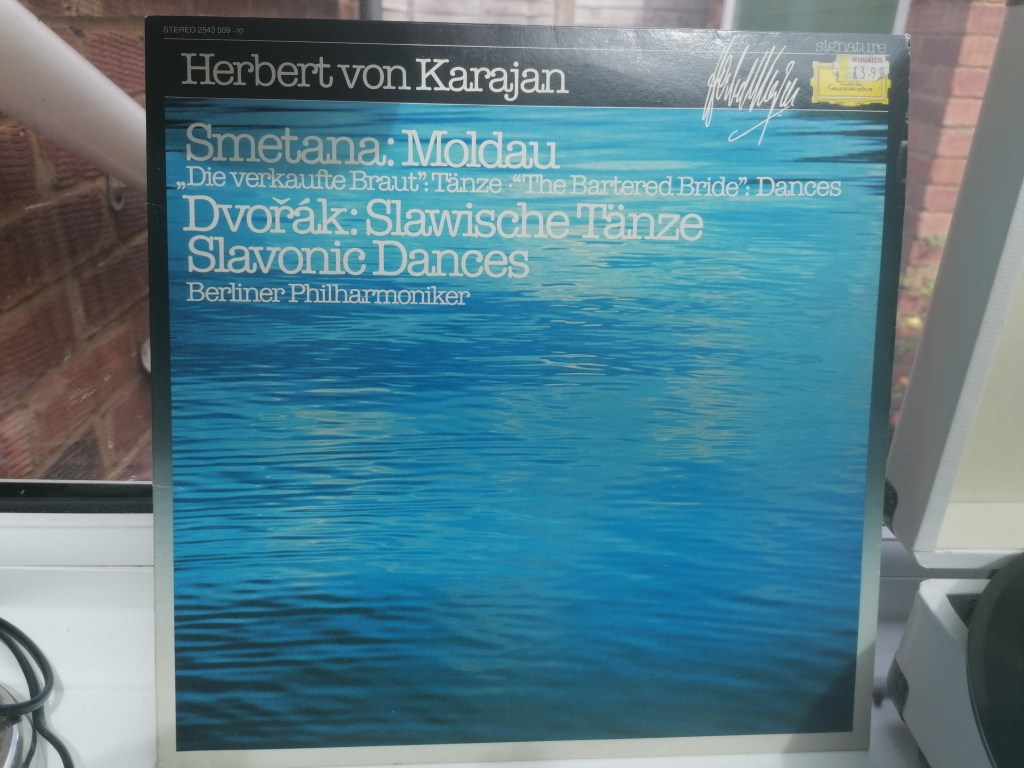
Smetana Moldau and other tracks
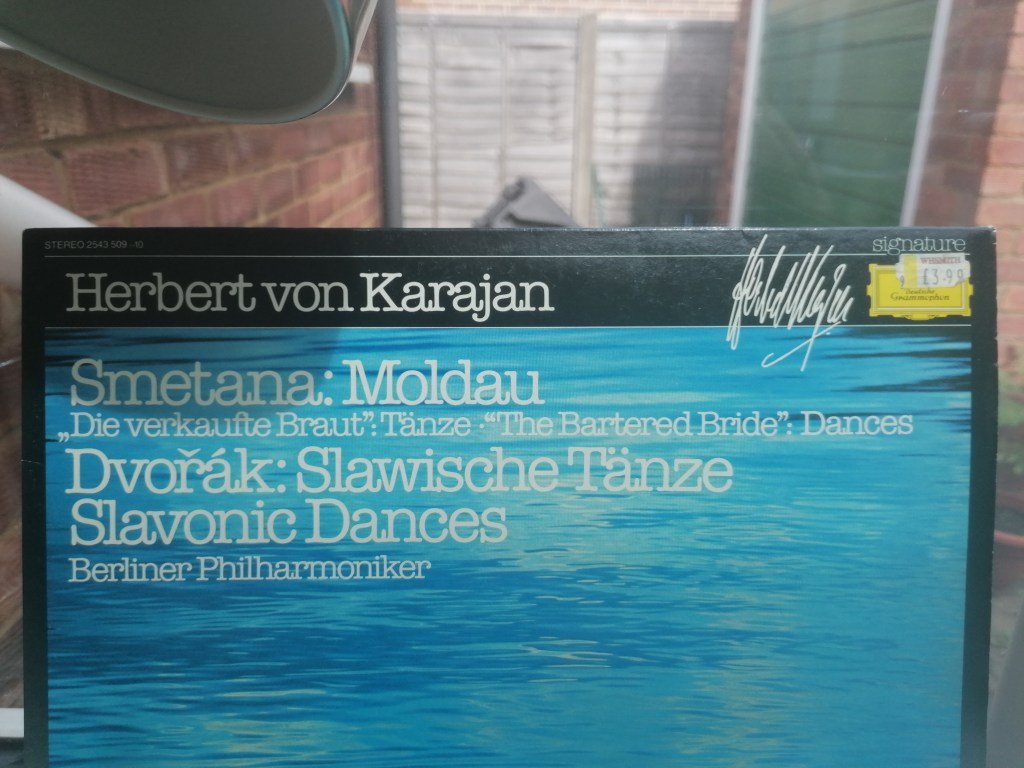
This recording, bought for the princely sum of £3.99 from W.H. Smith back in the 80s, is from the Deutsche Grammophon signature collection featuring the conducting of the legendary Herbert Von Karajan. As soon as you hear that familiar opening you know that with Karajan and the Berliner Philharmoniker you are in very safe hands indeed. It is the version I first heard and still, to my mind, the best. There is, appropriately, a real flow to the music and it just carries you along the river, dropping in on each scene and then moving on until the Vltava reaches the sea in an exhilarating finish. Straight after the main piece of music there are a series of dances from Smetana’s opera The Bartered Bride which, although unfamiliar and written in a very different style, complements Vltava beautifully. Although this is the first time in probably 30 years that I have listened to the dances I definitely recognised some of the movements. The ‘B side’ is devoted to the music of Dvorak who is of course most famous for the New World Symphony aka the Hovis advert theme! His symphonic dances are, to my relatively untutored ear, very similar to the Bartered Bride dances on the ‘A Side’ but not as immediately engaging. This is not to say that they are not worth flipping the record over for, because they are very well performed and definitely have their moments, but I can see why I tended to play the Smetana pieces and put the album back in its sleeve. It was very good to be able to listen to these somewhat neglected pieces from the standpoint of somewhat greater exposure to classical music over the years, and I can wholeheartedly recommend the second track on this side No. 10 e-moll Op 72 No 2: Allegretto grazioso which, in parts, reminded me of the theme from The Godfather.
Reflection
Many years on from my first listen to Vltava it still holds that incredible magic for me, and even now I think that this version from Karajan and the Berliner Philharmoniker reigns supreme. If you get a chance the vinyl has a depth and richness that I still don’t think CDs match and definitely more depth than streaming will make apparent.
Discover more from David Pearce - Popular Culture and Personal Passions
Subscribe to get the latest posts sent to your email.
 David Pearce - Popular Culture and Personal Passions
Trackbacks & Pingbacks